Monthly research review – April 2021

# # # #

At the end of each month the SoPD writes a post which provides an overview of some of the major pieces of Parkinson’s-related research that were made available during April 2021.

The post is divided into 10 parts based on the type of research:

# # # #


So, what happened during April 2021?

In world news:

April 4th


April 15th – Investigators in China and the United States reported the injection of human stem cells into primate embryos, to grow chimeras for up to 20 days (and the world asked “Why?!? What was the point?!?” – click here to read the report and click here to read the press summary).

April 18th – The Super league! (Just a really dumb idea – basically, when rich people have more dollars than sense)

April 19th – “117 years after the Wright brothers succeeded in making the first flight on our planet, Nasa’s Ingenuity helicopter has succeeded in performing this amazing feat on another world” – Thomas Zurbuchen, Nasa’s associate administrator for science

April 21st – No Super League! Following an outcry from football fans and the withdrawal of the English clubs, the Super League was placed “on standby” (yeah, good luck with that).

In the world of Parkinson’s research, a great deal of new research and news was reported:

In April 2021, there were 1,099 research articles added to the Pubmed website with the tag word “Parkinson’s” attached (4,548 for all of 2021 so far). In addition, there was a wave to news reports regarding various other bits of Parkinson’s research activity (clinical trials, etc).
The top 5 pieces of Parkinson’s news

Continue reading “Monthly research review – April 2021”

UCB at ANN looks A-OK

# # # #

Alpha synuclein is one of the most common proteins in our brains and it has long been associated with Parkinson’s. The protein appears to clump together forming dense clusters ( or “aggregates“) in the Parkinsonian brain, and this may be related to the progressive neurodegeneration.

Researchers have been desperately seeking small molecules that will break up (or dissociate) these aggregates in the hope that it will slow down the progression of PD and allow neurons to return to health.

One example of such a molecule is UCB0599, which is being clinically developed by the pharmaceutical company UCB. This week, UCB presented the first clinical results for UCB0599 from their Phase I trial.

In today’s post, we will look at what alpha synuclein is, review what is known about UCB0599, discuss the results of the study, and consider what comes next.

# # # #


Source: AAN

Last week at the 2021 American Academy of Neurology virtual meeting a poster was presented by the pharmaceutical company UCB.

Here at SoPD HQ, we have been eagerly awaiting these results.

They were the findings from the first Phase I clinical trial of a new molecule called UCB0599.

What is UCB0599?

UCB0599 is a brain-penetrant, oral small molecule alpha-synuclein misfolding inhibitor.

What does that mean?

Continue reading “UCB at ANN looks A-OK”

ISRIB: The ISR InhiBitor

# # # #

In December 2020, a research paper was published that drew a lot of attention.

It involved a molecule that reversed memory deficits in aged mice – even weeks after treatment has stopped.

The treatment involved inhibition of the integrated stress response.

In today’s post, we will explore what the integrated stress response is, review the data presented in new report, and consider what might happen next with this line of research (and be warned, there is quite a bit of biology to kick things off).

# # # #


Title: Small molecule cognitive enhancer reverses age-related memory decline in mice.
Authors: Krukowski K, Nolan A, Frias ES, Boone M, Ureta G, Grue K, Paladini MS, Elizarraras E, Delgado L, Bernales S, Walter P, Rosi S.
Journal: Elife. 2020 Dec 1;9:e62048.
PMID: 33258451                  (This report is OPEN ACCESS if you would like to read it)

This report was published in December 2020.

It starts with a quote:

Of the capacities that people hope will remain intact as they get older, perhaps the most treasured is to stay mentally sharp” (Source)

The report then proceeds to describe an experiment in which a small drug-like molecule reverses memory deficits in aged mice, even weeks after treatment has stopped.

Wow! What was the treatment?

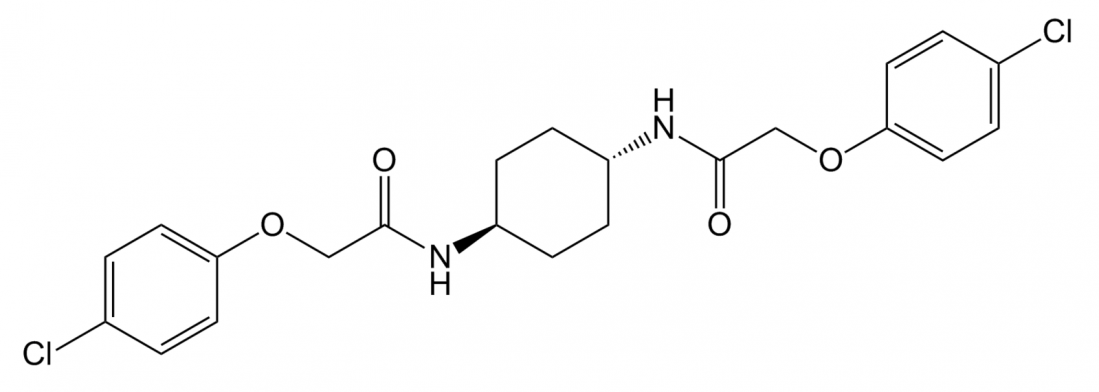
The molecule is an ‘integrated stress response‘ (or ISR) inhibitor that has conveniently been called ISRIB (or ISR InhiBitor).

What is ISR and why would the researchers be inhibiting it?

Continue reading “ISRIB: The ISR InhiBitor”

500

# # # #

I started writing about the research being conducted in Parkinson’s in 2014. 

If I’m honest, it was simply an experiment. Having failed to write the next great kiwi novel (think Katherine Mansfield, Margaret Mahy, Witi Ihimaera, Eleanor Catton, and most recently Rose Carlyle), to distract myself I started playing around with science writing to see if I liked it.

And what do ye know: I did

One thing led to another… and now there’s 500 posts on this thing called “The Science of Parkinson’s” (Click here for the full list). 

In today’s post, we will revisit some of the key moments and thoughts on that journey.

# # # #


MOMENT OF CONCEPTION

The Science of Parkinson’s began life in the clinic room in the photo above.

It is clinic room 1 at the Brain Repair Centre at the University of Cambridge.

Back in 2014, yours truly had been working as a postdoctoral research scientist in Prof Roger Barker‘s lab, and (this will sound cliché, but) after almost 15 years of researching the biology of the Parkinson’s, I realised that I didn’t have much practical experience with the disease itself. Kind of like a taxi driver who thinks he has memorised all the roads, but has never actually climbed behind the wheel and interacted with a stranger wanting to be driven somewhere.

So I volunteered to help out in the clinic once or twice a week, doing some of the cognitive assessments.

It was straight forward work – leading folks through the various standardised tests – but the experience was extremely enlightening. Not just because one saw the heterogeneity of cases and the impact that the condition has on a human body (over time, with periodic visits), but also the human side of the whole beastly thing. You met and got to know the people affected and their families. You learnt their stories and listened to their lived experience of PD. It was a fascinating experience – one which further energized my efforts in the lab.

Everything had been going smoothly for about 8-9 months…

And then Martin Taylor walked in.

Continue reading “500”