A bit of ADLL for RBD

# # # #

People diagnosed with REM sleep behavior disorder (or RBD) have a higher risk of developing Parkinson’s. RBD is a sleep condition in which the affected individual physically acts out their dreams as they sleep. 

Usually when we are dreaming, our bodies become momentarily paralysed. But sufferers of RBD loss this ability and begin moving about in bed, reacting to their dreams.

Recently, researchers have been testing a treatment for vertigo (called Tanganil) in people with RBD, and the results of a small pilot study are rather remarkable.

In today’s post, we will look at what RBD is, what the new pilot study found, and what this could mean for Parkinson’s.

# # # #


Dreaming. Source: Psypost

When we sleep, our brain (and body) pass through different phases of slumber. In general, there are two broad segments of sleep:

  1. Rapid eye movement (REM) sleep, and
  2. Non-rapid eye movement (NREM) sleep.

And we pass through these phases in a wave-like cycles across the night:

Stages of sleep. Source: Wikipedia

In addition, there are different stages that make up the NREM sleep parts of these cycles (stage 1-4, on the left hand side of the image above), which we pass through on our way down to stage 4 and back again.

These stages exhibit different patterns of brain activity, which – when recorded – look like this:

Brain activity during stages of sleep. Source: Homesteadschools

The brain is most active during REM sleep, and this is the period during which we dream. The first period of REM sleep begins about 90 minutes after you fall asleep. It typically lasts for approximately 10 minutes. Each period of REM sleep for the rest of the night gets longer and longer.

When we dream, there are cells in the brainstem region of the central nervous system that inhibit our ability to move. So while we may be dreaming of being a Hollywood action movie star at the Oscars, or perhaps walking on the moon, or maybe turning up at your high school reunion naked, our bodies are momentarily paralysed. One assumes that this mechanism has evolved within our species over time for our own safety – to prevent us from hurting ourselves or others. It is interesting to note that the phenomenon of sleepwalking occurs during the deeper states of NREM sleep when we are not temporarily paralysed (source).

This is very interesting, but what does it have to do with Parkinson’s?

Continue reading “A bit of ADLL for RBD”

Monthly Research Review – August 2024

# # # #

At the end of each month the SoPD writes a post which provides an overview of some of the major pieces of Parkinson’s-related research that were made available during August 2024.

The post is divided into 10 parts based on the type of research:

# # # #


So, what happened during August 2024?

In world news:

11th August – President Volodymyr Zelenskyy announces that the Ukrainian military is conducting a cross-border offensive inside Russia’s western Kursk Oblast. Russia says that 76,000 people have been evacuated from the region.


12th August – Liquid water is confirmed below the surface of Mars at depths of 10 to 20 km (6.2 to 12.4 miles), based on a new analysis of data from NASA’s InSight lander (Click here to read more about this).

 

14th August – The World Health Organization (WHO) declares mpox a public health emergency of international concern for the second time in two years, following the spread of the virus in African countries.


23rd August – BNT116, the world’s first mRNA lung cancer vaccine, begins a Phase I clinical trial in seven countries (Click here to read more about this).


28th August – The 2024 Summer Paralympics begin in Paris, France.


In the world of Parkinson’s research, a great deal of new research and news was reported:

In August 2024, there were 1,088 research articles added to the Pubmed website with the tag word “Parkinson’s” attached (7,928 for all of 2024 so far). In addition, there was a wave to news reports regarding various other bits of Parkinson’s research activity (clinical trials, etc).

The top 5 pieces of Parkinson’s news

Continue reading “Monthly Research Review – August 2024”

Monthly Research Review – July 2024

# # # #

At the end of each month the SoPD writes a post which provides an overview of some of the major pieces of Parkinson’s-related research that were made available during July 2024.

The post is divided into 10 parts based on the type of research:

# # # #


So, what happened during July 2024?

In world news:

1st July – The “Supreme Court” of the United States of America ruled in a 6–3 decision that US presidents have absolute immunity for acts committed as president within their core constitutional purview, at least presumptive immunity for official acts within the outer perimeter of their official responsibility, and no immunity for unofficial acts (What could possibly go wrong with this…)


4th July – 2024 United Kingdom general election: Sir Keir Starmer lead the Labour Party to a landslide victory, returning the party to government for the first time in 14 years. Incumbent Conservative Prime Minister Rishi Sunak resigned as the leader of the party the next day, with Starmer taking office.


5 July – The first mouse model with a complete, functional human immune system is demonstrated (Click here to read more about this).


19th July – A global IT outage occurred, affecting 8.5 million Microsoft Windows devices and causing widespread disruptions to businesses and governments. The outage was caused by a faulty update from cybersecurity firm CrowdStrike


21st July – Incumbent United States President Joe Biden ends his candidacy in the 2024 United States presidential election.


26th July – The 2024 Summer Olympics started with a bang in Paris, France.


In the world of Parkinson’s research, a great deal of new research and news was reported:

In July  2024, there were 901 research articles added to the Pubmed website with the tag word “Parkinson’s” attached (6,840 for all of 2024 so far). In addition, there was a wave to news reports regarding various other bits of Parkinson’s research activity (clinical trials, etc).

The top 7 pieces of Parkinson’s news

Continue reading “Monthly Research Review – July 2024”

Monthly Research Review – June 2024

# # # #

At the end of each month the SoPD writes a post which provides an overview of some of the major pieces of Parkinson’s-related research that were made available during June 2024.

The post is divided into 10 parts based on the type of research:

# # # #


So, what happened during June 2024?

In world news:

1st June – The 2024 Indian general election, which began on April 19, concludes with the  BJP party losing its outright majority, but its electoral alliance, the National Democratic Alliance, retains its majority. 642 million voters participated in the election.


4th June – Two days after the China National Space Administration’s Chang’e 6 spacecraft lands on the far side of the Moon, it lifts off carrying samples of lunar soil and rocks to bring back to Earth (the samples successfully reached Earth on the 25th June).


14th June – The UEFA Euro 2024 start in Germany, and is ultimately won by Spain on the 14th July.


20th June – Following a surge in population of the Iberian lynx – from 62 mature individuals in 2001 to 648 in 2022 – the International Union for Conservation of Nature removes the animal from its “endangered” list, classing the animal as “vulnerable” instead.


24th June – WikiLeaks founder Julian Assange leaves the United Kingdom after being freed from prison in a plea deal with the United States. He returns to his native Australia two days later.

In the world of Parkinson’s research, a great deal of new research and news was reported:

In June 2024, there were 1098 research articles added to the Pubmed website with the tag word “Parkinson’s” attached (5,939 for all of 2024 so far). In addition, there was a wave to news reports regarding various other bits of Parkinson’s research activity (clinical trials, etc).
The top 6 pieces of Parkinson’s news

Continue reading “Monthly Research Review – June 2024”

Monthly Research Review – May 2024

# # # #

At the end of each month the SoPD writes a post which provides an overview of some of the major pieces of Parkinson’s-related research that were made available during May 2024.

The post is divided into 10 parts based on the type of research:

# # # #


So, what happened during May 2024?

In world news:

May 9th – A cubic millimeter of the human brain is mapped at nanoscale resolution by a team at Google. This contains roughly 57,000 cells and 150 million synapses, incorporating 1.4 petabytes of data (Click here to read more about this).


May 10th – A series of solar storms and intense solar flares impact the Earth, creating aurorae at more southerly and northerly latitudes than usual.


May 20th – The chief prosecutor of the International Criminal Court seeks arrest warrants for Israeli Prime Minister Benjamin Netanyahu and Hamas leader in Gaza Yahya Sinwar over alleged war crimes.


May 30th – Former United States President Donald Trump is found guilty on 34 counts in his hush money trial, the first time any American president has been found guilty of a crime.


May 31st – Biologists report that Tmesipteris oblanceolata, a fern ally plant, was found to contain the largest known genome – over 50 times larger than humans (Click here to read more about this).


In the world of Parkinson’s research, a great deal of new research and news was reported:

In May 2024, there were 952 research articles added to the Pubmed website with the tag word “Parkinson’s” attached (4,841 for all of 2024 so far). In addition, there was a wave to news reports regarding various other bits of Parkinson’s research activity (clinical trials, etc).
The top 5 pieces of Parkinson’s news

Continue reading “Monthly Research Review – May 2024”

Monthly Research Review – April 2024

# # # #

At the end of each month the SoPD writes a post which provides an overview of some of the major pieces of Parkinson’s-related research that were made available during April 2024.

The post is divided into 10 parts based on the type of research:

# # # #


So, what happened during April 2024?

In world news:

April 1st – An entirely new class of antibiotics with potent activity against multi-drug resistant bacteria is discovered. These compounds target a protein called LpxH, and are shown to cure bloodstream infections in mice (Click here to read more about this and click here to read a press summary).


April 4th – A study in Nature reported that global CO2 emissions increased by only 0.1% in 2023, suggesting that a plateau may have been reached (Click here to read more about this).


April 8th – A total solar eclipse was visible across North America.


April 23rd – The world’s largest 3D printer, dubbed Factory of the Future 1.0 (FoF 1.0), was presented by the University of Maine. Using thermoplastic polymers, the machine can print objects as large as 96 feet (29 m) long by 32 feet (9.8 m) wide by 18 feet (5.5 m) high, at a rate of 500 pounds (230 kg) per hour.


April 24th – Researchers created synthetic diamond at 1 atmosphere of pressure in approximately 150 minutes without needing seeds (Click here to read more about this and click here to read a press summary).


In the world of Parkinson’s research, a great deal of new research and news was reported:

In April 2024, there were 861 research articles added to the Pubmed website with the tag word “Parkinson’s” attached (3,889 for all of 2024 so far). In addition, there was a wave to news reports regarding various other bits of Parkinson’s research activity (clinical trials, etc).

The top 6 pieces of Parkinson’s news

Continue reading “Monthly Research Review – April 2024”

A change in fate for Ophthalmate

# # # #

Levodopa is a key ingredient in the production of dopamine. As such it is used as a treatment for people with Parkinson’s to help replace levels of dopamine in the brain.

For a long time, the production of dopamine was believed to be the only function of levodopa. But recently, researchers have discovered that levodopa is doing other things in cells, when the dopamine production pathway is blocked.

And their investigations are providing new insights into the brain mechanisms of movement and pointing towards alternative routes to symptomatically treat Parkinson’s.

In today’s post, we will review new research introducing ophthalmic acid (or ophthalmate) to the world of Parkinson’s research.

# # # #


Source: Sciencesocks

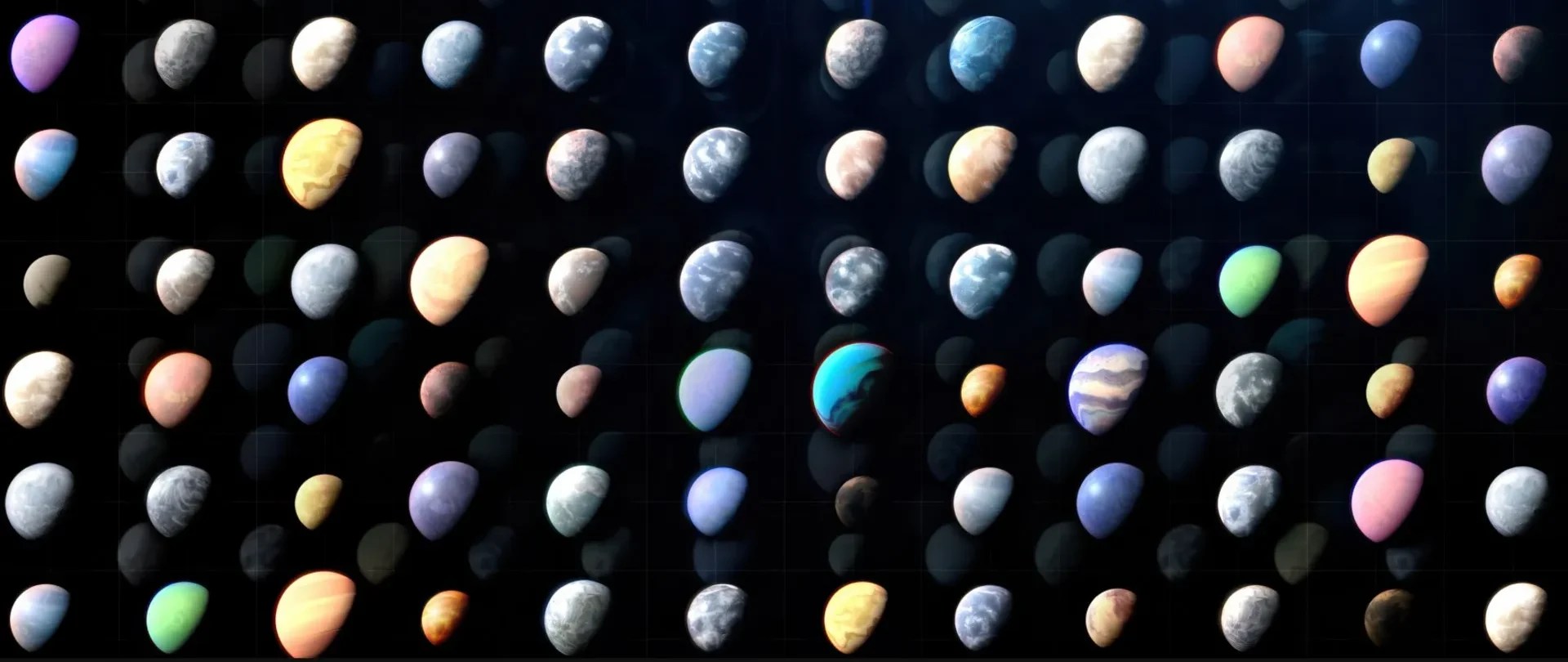
Between December 18th and 28th, 1995, researchers used the Hubble Space Telescope to take 342 images of a tiny “keyhole” region of the universe (just 1/24 millionth of the whole sky).

The project was called the Hubble Deep Field (or HDF) and it provided the most detailed image of a small region in the constellation Ursa Major (“Great Bear”) ever taken.

Ursa Major (HDF is the pin-hole spot that was imaged).Source: Firstpr

The most shocking detail of that collection of images was that there are over 3,000 objects in them, and all of them were galaxies (similar to our Milky way).

3,000 galaxies (not stars, but galaxies!) in just 1/24 millionth of the whole sky!

Three years later, a similar sized region in the south hemisphere was imaged. That project was called the Hubble Deep Field South and it gave the same results (thousands of galaxies in a tiny fragment of the sky), strengthened the belief that the universe is largely uniform.

Source: NASA

The data led to estimates that there could be as many as 2 trillion galaxies in the observable universe (Source).

Interesting intro. Is this post going to be about aliens? Aliens with Parkinson’s?

Continue reading “A change in fate for Ophthalmate”

Monthly Research Review – March 2024

# # # #

At the end of each month the SoPD writes a post which provides an overview of some of the major pieces of Parkinson’s-related research that were made available during March 2024.

The post is divided into 10 parts based on the type of research:

# # # #


So, what happened during March 2024?

In world news:

March 4th – Astronomers report that the surface of Europa, a moon of the planet Jupiter, may have much less oxygen than previously inferred, suggesting that the moon has a less hospitable environment for the existence of lifeforms than may have been considered earlier.


March 6th – The first creation of induced pluripotent stem cells for the Asian elephant is reported by Colossal Biosciences, a key step towards de-extinction of the woolly mammoth.


March 7th – As the final Nordic country to join the alliance, Sweden officially joins NATO, becoming its 32nd member after Finland a year earlier.

March 13th – The Artificial Intelligence Act, the world’s first comprehensive legal and regulatory framework for artificial intelligence, is passed by the European Union.


March 14th – SpaceX successfully launched their Starship spacecraft, but lost the rocket upon re-entering the atmosphere.


March 25th – The UN Security Council passed Resolution 2728  calling for an “immediate ceasefire” in Gaza during Ramadan and demanded the immediate and unconditional release of all hostages (14 votes in favour with the United States abstaining).

In the world of Parkinson’s research, a great deal of new research and news was reported:

In March 2024, there were 1,002 research articles added to the Pubmed website with the tag word “Parkinson’s” attached (3,028 for all of 2024 so far). In addition, there was a wave to news reports regarding various other bits of Parkinson’s research activity (clinical trials, etc).

The top 5 pieces of Parkinson’s news

Continue reading “Monthly Research Review – March 2024”

New website: The Science of NSD Stage 2A?

# # # #

The diagnosis of Parkinson’s has always been a decision based on clinical observations. It involves the presentation of a triad of motor symptoms (slowness of movement, rigidity, and a resting tremor) as well as additional non-motor features.

There have been efforts to develop staging systems, based on these clinical symptoms (such as the Hoehn and Yahr scale and the Unified Parkinson’s Disease Rating Scale – UPDRS) which have helped with assessing the progression of the disease.

But very recently researchers have been exploring the possibility of staging systems for Parkinson’s based on biological, rather than clinical features. 

In today’s post, we will examine two proposals for staging systems and we will consider what this means for the condition we currently know of as “Parkinson’s”.

# # # #


Source: Sage

In the 1940/50s, a French surgeon in Villejuif, France revolutionised the treatment of breast cancer.

Prof. Pierre Denoix developed a simple anatomic staging system which was dependent on the size of the tumor, nodal status, and metastatic findings. This simple, anatomically based approach became known as the TNM (tumor, node, metastases) staging system (Click here to read more about this).
Since that time, staging systems for other cancers have been developed and represent an important component of the diagnostic and treatment process. More sophisticated additional assessments have since been added, which have allowed for more targeted and personalised therapies to be employed. And this has led to significantly improved survival outcomes and better quality of life for cancer patients.

Source: Sciencedirect

Is there a staging system for Parkinson’s?

Continue reading “New website: The Science of NSD Stage 2A?”

The Science of Sci-comms

# # # #

During the pandemic lockdown in 2020, I was asked to speak to a group of medical students at the University of Cambridge about the communication of science. I was a little bemused by the invitation. Big university and little old me maintaining a small website (read: collection of typos and poor gramma). I did not feel like any kind of authority on the topic of science communication.

Feeling ridiculously unprepared for such a task, I naturally accepted the invitation and I decided to do a deep dive into the topic – delving into the history and the various formats. The content of my presentation probably put my young audience to sleep, but I found it interesting.

And at the risk of putting you to sleep, I thought I would post some of the contents here. 

In today’s post, we will discuss Sci-comms.

# # # #


Tom Hardy. Source: Theresident

After receiving a honorary fellowship at the University of the Arts London, actor Tom Hardy addressed the graduating class of 2015. In his speech, he said “My father told me that my job is to observe and reflect. And anything that gets in the way of the telescope has to go including the self” (Source).

And evidently Tom has taken his novelist father (Chips Hardy)’s words to heart as he has “II O&R” (“To Observe and Reflect”) tattooed on his right shoulder and claims this is his motto for life:

Source: Bodyartguru

Now, I’m not comparing myself to Tom (we can’t all be as good looking as me), but I really like his philosophy. And I used this to start my presentation on science communication (“Sci-comms”) to a group of undergraduate medical students at the University of Cambridge during the COVID pandemic.

My approach to Sci-comms is to observe and reflect.

Continue reading “The Science of Sci-comms”