Blood test for Parkinson’s disease?


blood-cells

Last week there was a press release from La Trobe University in Melbourne, Australia regarding the development of a new blood test for Parkinson’s disease. The announcement is a little bit odd as the results of the study are still being peer-reviewed (press announcements usually come after the publication of results). But the Parkinson’s community is excited by the idea of new diagnostic aids, especially those that can maybe tell us something new about the disease.

In this post, we will review what we know at present, and we will follow up this post once the results are eventually published.


As we have previously written, the diagnosis of Parkinson’s is rather difficult, with a 10-15% error rate becoming apparent when brains are analysed at the postmortem stage. Thus any new diagnostic tools/tests that can aid in this effort would be greatly appreciated.

La_Trobe_University_logo.svg

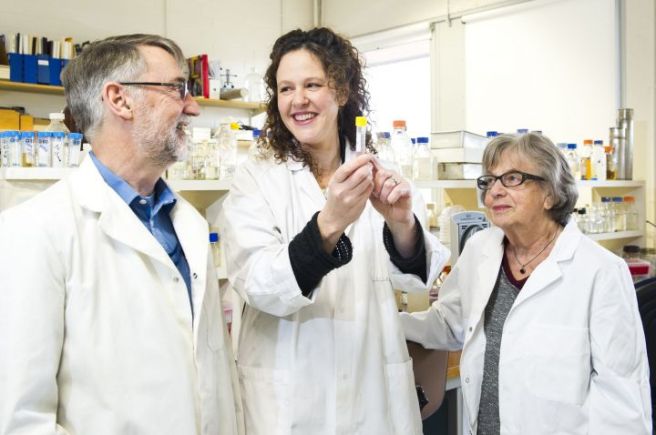
A group at La Trobe University in Melbourne have been studying the blood of people with neurodegenerative conditions, and have now announced that they may have a blood test for Parkinson’s disease.

preview

The La Trobe University team: (left to right) Professor Paul Fisher, Dr Sarah Annesley and Dr Danuta Loesch-Mdzewska. Source: La trobe

So what do we know thus far?

The test has been conducted on blood taken from a total of 38 people (29 people with Parkinson’s disease and 9 in a control group). Professor Paul Fisher – one of the lead scientists in the study – has reported that the tests have proven ‘very reliable’.

What does the test measure?

The test is apparently looking at the mitochondria in the blood cells.

And what are mitochondria?

A mitochondrion (singular) is a small structure inside a cell that is responsible for respiration and energy production. It is one of the powerhouses of the cell. Cells have lots of mitochondria (plural) because cells need lots of energy. But when the mitochondria start failing, the cell dies. As the mitochondria fails, they send out toxic chemical signals that tell the cell to begin shutting down.

biobook_cells_4

A schematic of a mitochondria, and where they are inside a cell. Source: Shmoop

The researchers at La Trobe found in their blood tests that there was no damage to the mitochondria of patients with Parkinson’s disease. That in itself is an interesting observation, but what they found next has larger implications:

“Based on the current literature we were expecting reduced oxygen consumption in the mitochondria, which leads to a buildup of toxic byproducts, but what we saw was the exact opposite,” Prof Fisher was quoted as saying. “We were able to show the mitochondria were perfectly normal but were working four times as hard, which also leads to increased production of poisonous byproducts to occur.”

A test that can measure these ‘hyperactive’ mitochondria is very useful as it can both identify people with Parkinson’s disease, but it may also help us to better understand the condition. Prof Fisher and his colleagues, in addition to taking the test forward, are also trying to understand the underlying mechanisms of the ‘hyperactive mitochondria’ – what is causing them to become the way they are.

What is going to happen now?

The scientists at La Trobe would like to repeat and expand on the results (after they are published), and the Michael J Fox foundation and Shake It Up Australia have given La Trobe University more than $640,000 to further develop the research. The plan is to now test 100 subjects – 70 people with Parkinson’s disease and a control group of 30. Prof Fisher is hoping that a test may be available for the clinic in five years time.

What about other neurodegenerative conditions?

So here’s the catch with the information provided thus far – the researchers have not had the funding to test whether this hyperactivity in the mitochondria is occurring exclusively in people with Parkinson’s. That is to say, they haven’t tested whether the effect is also present in people with other neurodegenerative diseases, such as Alzheimer’s, Huntington’s, or ALS. And this is where a little bit of the excitement comes out of the announcement.

But even if the hyperactivity in the mitochondria is shared between certain neurodegenerative diseases, a test highlighting the effect would still be very useful, especially if it can aid us in early detection of these conditions.

As we said above, we will be following this story closely and will report back here as and when information becomes available.

Stay tuned.

An update on the connection between Melanoma and Parkinson’s disease

We have previously discussed the strange connection between Melanoma and Parkinson’s disease (click here to read that post).

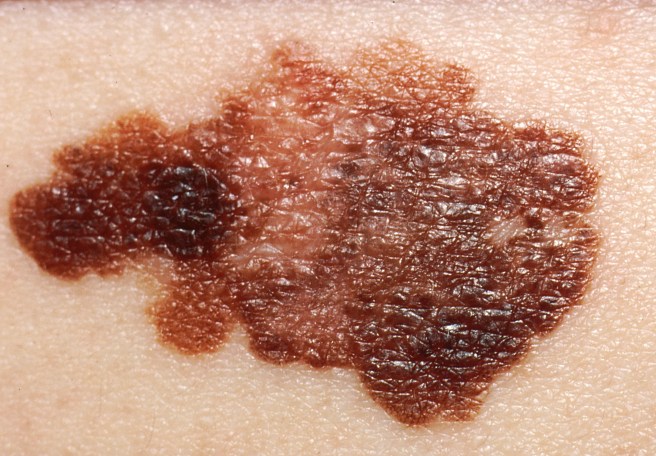
Melanoma

That post included the curious observations that:

  • People with Parkinson’s disease are 2-8 times more likely to develop melanoma than people without Parkinson’s.
  • People with melanoma are almost 3 times more likely to develop Parkinson’s disease than someone without melanoma.

And we have no idea why (there is no shared genetic predisposition for the two conditions).

Research published this week, however, may begin to explain part of the connection:

Melanoma-title

Title: Parkinson disease (PARK) genes are somatically mutated in cutaneous melanoma.
Authors: Inzelberg R, Samuels Y, Azizi E, Qutob N, Inzelberg L, Domany E, Schechtman E, Friedman E.
Journal: Neurol Genet. 2016 Apr 13;2(3):e70.
PMID: 27123489     (This research article is OPEN ACCESS if you would like to read it)

In this study, the scientists looked at somatic mutations in cells from 246 tissue samples of melanoma.

What are somatic mutations?

Somatic mutations are genetic alteration that have been acquired by a cell that can then be passed to the progeny of that mutated cell (via cell division). These somatic mutations are different from ‘germline’ mutations, which are inherited genetic alterations that are present in the sperm and egg that were used in making each of us.

germlinesomatic1

Somatic vs Germline mutations. Source: AutismScienceFoundation

In the 246 samples analysed, the researchers found 315,914 somatic mutations in 18,758 genes. Yes, that is a lot, but what was very interesting was their discovery of somatic mutations in many of the PARK genes.

What are PARK genes?

There are a number (approx. 20) genes that are now recognised as conferring vulnerability to developing Parkinson’s disease. These genes are referred to as PARK genes. They include the gene that makes the protein Alpha synuclein ( SNCA ) and many others with interesting names (like PINK1 and LRRK2). Approximately 15% of cases of Parkinson’s are believed to occur because of a mutation in one (or more) of the  PARK genes. As a result there is a lot of research being conducted on the PARK genes.

Were all of PARK genes mutated in the Melanoma samples?

Somatic mutation in 14 of the 15 PARK genes (that the researchers analysed) were present in the melanoma samples. This means that after the skin cells turned into melanoma cancer cells, they acquired mutations in some of the PARK genes. Overall, 48% of the analysed samples had a mutation in at least 1 PARK gene, and 25% had mutations in multiple PARK genes (2–8 mutated genes). One PARK gene in particular, PARK 8, was more significantly present in the melanoma cells than the others. PARK8 is also known as Leucine-rich repeat kinase 2 or LRRK2 (we have previously discussed Lrrk2 – click here to read that post). Three additional PARK genes (PARK2, PARK18, and PARK20) were also significantly present, but not as significant as Lrrk2.

So what does it all mean?

The researchers speculate in the discussion of their report about what the findings could mean, but it is interesting to note that many of the PARK genes are susceptible to acquiring mutations (particularly  Lrrk2). And this is important to consider when thinking about our development as individual human beings – even though you may not born with a particular mutation for Parkinson’s disease (you haven’t inherited it from our parents), somewhere along the developmental pathway (from egg fusing with sperm to full grown adult) you could acquire some of these mutations which would make you vulnerable to Parkinson’s disease.And here we should note that skin and brain share the same developmental source (called the ectoderm). A mutation in a PARK gene could occur during your development and you would never know.

We thought this was a very interesting study – certainly worthy of reporting here.

Helicobacter pylori and Parkinson’s disease

In her best selling book, ‘Gut’, author Giulia Enders wrote the following:

Gut book

‘Although doctors had known since the 1960s that patients with Parkinson’s disease have an increased incidence of stomach problems they did not know the nature of the connection between sore stomachs and trembling hands. It took a study of different population groups on the Pacific island of Guam to throw light on the subject. In some parts of the island, there was an astonishingly high incidence of Parkinson-like symptoms among the population. Those affected suffered from trembling hands, facial paralysis and motor problems. Researchers realised that the symptoms were most common in areas where people’s diets included cycad seeds. These seeds contain neurotoxins – substances that damage the nerves. Helicobacter pylori can produce an almost identical substance. When laboratory mice were fed with an extract of the bacteria without being infected with the living bacterium itself, the displayed very similar symptoms to the cycad eating Guamanians.’

While finding her book a very interesting read, we here at the Science of Parkinson’s were a little worried as to how the general audience would interpret this passage (“So Helico… whatever causes Parkinson’s disease?!?”).

But then this week a new study was published regarding Helicobacter pylori and Parkinson’s disease. And so we thought we’d do a post on it.


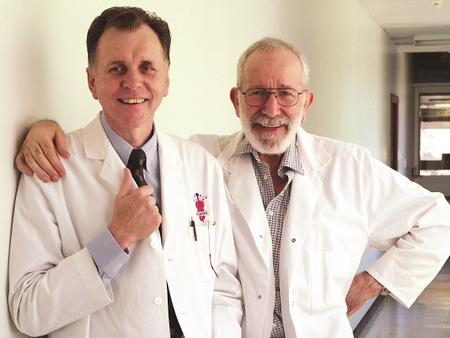
In 1982, two Australian scientists – Robin Warren and Barry Marshall – made an interesting discovery.
ILoad672___source

Barry Marshall (left) and Robin Warren. Source: AustraliaUnlimited 

They were studying the association between bacterial infection and peptic ulcers. Their research was ridiculed by the establishment who did not believe that bacteria could even live in the harsh acidic environment of the gut let alone influence or affect it. The general consensus was that stomach ulcers were caused by stress, fatigue, and too much acid.

After some unsuccessful initial experiments, Marshall took the rather bold step of making himself a guinea pig in his own study: he drank a petri dish containing cultured Helicobacter pylori.
images

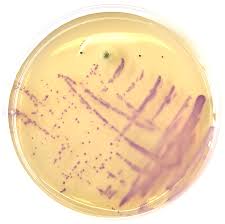
A petri dish of Helicobacter pylori. Yummy! Source: Liofilchem

Yes, I know how crazy that sounds, but that is what happened. And the resulting events changed the way we look at the intestinal system forever.

Marshall had expected the bacteria to take months (if not years) to embed and start to grow, so it came as a bit of a surprise when several days later he began feeling nausea and his mother commented about his bad breath. After a week, Marshall had a biopsy, which demonstrated severe inflammation and the growing of Helicobacter pylori bacteria in his gut. Warren and Marshall were awarded the Nobel prize in Medicine in 2005 for this work.

Since their discovery, we have discovered a small universe of microbes living in our intestinal system (and most of it is still waiting to be discovered). Importantly – as Miss Elders’ book emphasises – we are learning more and more about how the biological system living in our gut is influencing our bodies, both our normal and abnormal states of being.

There are even theories of Parkinson’s disease arising from our growing knowledge of the ‘microbiota’ (what scientists called the eco-system in our guts) and how it could be playing a role in the disease. And many of those theories involve Helicobacter pylori.

What is Helicobacter pylori?

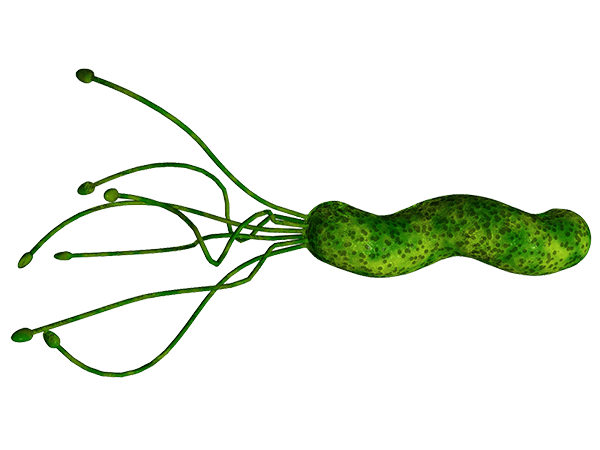
Helicobacter pylori is a spiral shaped bacterium that lives in the stomach and duodenum (that is the section of intestine just below stomach). Don’t be disturbed by that, the population of all microbes outnumber the cells in our body by approximately 10 to 1, and without them we wouldn’t last very long. And Helicobacter pylori are present in the gut of at least 50% of us (though 85% of people never display the symptoms of an infection).
o_helicobacter-pylori

Helicobacter pylori. Source: Helico

So are Helicobacter pylori involved in Parkinson’s disease?

There have been numerous studies that have assessed the Helicobacter pylori populations in the guts of people with Parkinson’s disease (for a very good open access review on this, please click here). These studies are difficult to judge, however, as the rate of Helicobacter pylori is very high and varies somewhat around the world. Different strains of Helicobacter pylori may be having different effects, but this is yet to be determined.

Helicobacter pylori does appear to have an effect, however, with regards to the standard treatment of Parkinson’s disease: L-dopa.

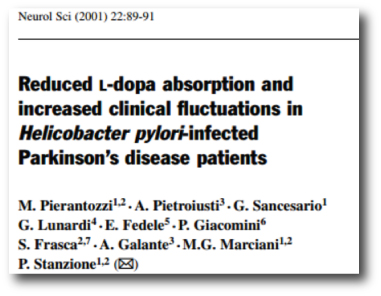
In 2001, Italian researchers noticed fluctuations in the absorption of L-dopa in six Helicobacter pylori infected people with Parkinson’s disease, but not in Helicobacter pylori-negative people with Parkinson’s disease. This was interesting, but even more interesting was that the ratings of these subjects (their UPDRS scores) decreased when they were treated with medication to eradicate Helicobacter pylori.
HP1-title

Title: Reduced L-dopa absorption and increased clinical fluctuations in Helicobacter pylori-infected Parkinson’s disease patients.
Authors: Pierantozzi M, Pietroiusti A, Sancesario G, Lunardi G, Fedele E, Giacomini P, Frasca S, Galante A, Marciani MG, Stanzione P.
Journal: Neurol Sci. 2001 Feb;22(1):89-91.
PMID: 11487216

Other studies have reported similar observations, including this study:
HP2-title

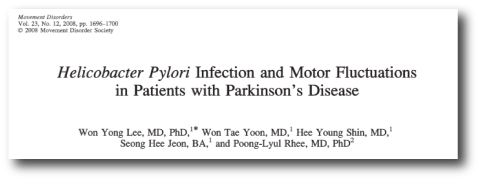
Title: Helicobacter pylori infection and motor fluctuations in patients with Parkinson’s disease.
Authors: Lee WY, Yoon WT, Shin HY, Jeon SH, Rhee PL.
Journal: Mov Disord. 2008 Sep 15;23(12):1696-700.
PMID: 18649391

The researchers in this study found that the onset time of L-dopa was longer, and the duration of the effect was shorter in people with Parkinson’s disease who also have  an Helicobacter pylori infection (compared to people with Parkinson’s disease who are Helicobacter pylori negative). This data supports the idea that Helicobacter pylori may be disrupting the absorption of L-dopa. And again, after administering antibiotic treatment to people with Parkinson’s disease to eradicate Helicobacter pylori, the ‘onset’ time decreased and the duration of the L-dopa effect increased when compared to the pretreatment measures.

So there appears to be some indication that Helicobacter pylori may be affecting the situation in Parkinson’s disease.

But is there any evidence that Helicobacter pylori causes Parkinson’s disease?

To our knowledge, there has been one study that has suggested any kind of causative role for Helicobacter pylori in Parkinson’s disease. That study was presented at the Annual general meeting of the American Society for Microbiology at New Orleans in 2011:

ASM_Logo_Fnl

Title: Helicobacter pylori Infection Induces Parkinson’s Disease Symptoms in Aged Mice.
Authors: Block: M. F. Salvatore, S. L. Spann, D. J. Mcgee, O. A. Senkovich, T. L. Testerman;
University: Louisiana State Univ. Hlth.Sci. Ctr.- Shreveport, Shreveport, LA.
Poster Presentation Number: 136

Poster Abstract:
Background: H. pylori has long been known to cause gastritis and ulcers, but mounting evidence suggests that this organism contributes to several extragastric diseases, including idiopathic Parkinson’s disease. It has been hypothesized that cholesteryl glucosides produced by H. pylori are the cause of neurotoxicity; however chronic inflammation may also cause neurological damage. We have recently developed a mouse model of H. pylori-mediated Parkinson’s disease which approximates many features of human disease, including locomotor dysfunction, decreased dopamine in certain brain regions, and increased susceptibility of older animals to Parkinsonian symptoms. Our experiments also revealed that a mutant strain causes more severe disease than the isogenic wild-type strain. AlpA and AlpB have previously been identified as adhesins.
Methods: We measured five locomotor activity parameters in aged mice persistently colonized with H. pylori SS1 AlpAB and in mice fed whole, killed H. pylori. Following euthanasia, we measured dopamine and tyrosine hydroxylase content in the substantia nigra and dorsal striatum. We also measured effects of the AlpAB mutation on H. pylori adherence and pathogenesis.
Results: Long-term administration of food containing killed H. pylori causes locomotor deficits similar to those seen in H. pylori-infected animals. We found that AlpA and AlpB bind host laminin. Contrary to expectations, the AlpAB mutant causes severe inflammation in gerbils.
Conclusions: The finding that feeding killed H. pylori causes locomotor deficits similar to those seen with active infection supports the hypothesis that products produced by H. pylori are neurotoxic. Our results also suggest alterations in laminin binding by the AlpAB strain could impact interactions with the host. This new mouse model offers an unprecedented opportunity to examine the mechanisms through which H. pylori contributes to Parkinson’s disease in humans.

(Click here for the original abstract)

Unfortunately this research has not been formally published (in a peer-reviewed fashion or otherwise), so many of the details regarding the study are unknown to us. The implications, however, are very interesting and exciting. It would be a worthwhile endeavour for the study to be independently replicated.

But there was a study published last week that raised some interesting possibilities regarding a role for Helicobacter pylori in the onset of Parkinson’s disease:
Helico-title

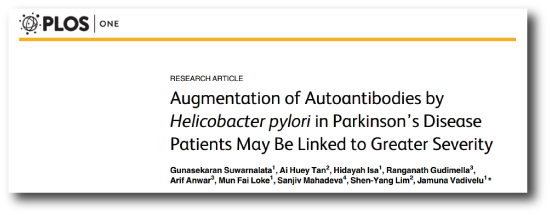
Title: Augmentation of Autoantibodies by Helicobacter pylori in Parkinson’s Disease Patients May Be Linked to Greater Severity.
Authors: Suwarnalata G, Tan AH, Isa H, Gudimella R, Anwar A, Loke MF, Mahadeva S, Lim SY, Vadivelu J.
Journal: PLoS One. 2016 Apr 21;11(4):e0153725.
PMID: 27100827     (this research article is OPEN ACCESS if you want to read it)

The researchers in this study took  blood from 30 Helicobacter pylori-positive people with Parkinson’s disease and 30 age- and gender-matched Helicobacter pylori-negative people with Parkinson’s disease. They then analysed the blood for autoantibodies (we’ve discussed these before in a previous post). Interestingly, some of the autoantibodies that were found to be elevated in Helicobacter pylori-positive group included antibodies that recognize proteins essential for normal brain function (such as Nuclear factor I subtype A (NFIA), Platelet-derived growth factor B (PDGFB) and Eukaryotic translation initiation factor 4A3 (eIFA3)). This suggests that Helicobacter pylori may be causing the immune system to attack proteins that are required, thus making people with Parkinson’s more vulnerable.


Finally, back to Miss Elder’s passage in her book ‘Gut’:

In the passage at the start of this post, we would suggest that Miss Elders may have been referring to ‘Lytico-bodig’ (also known as amyotrophic lateral sclerosis-parkinsonism-dementia complex (ALS-PDC) – coined by Hirano and colleagues in 1961). ALS-PDC is a neurodegenerative disease of unknown causes that exists in the United States territory of Guam. In fact, during 1950s, it was one of the leading causes of death for the Chamorros people of of Guam.

As the name suggests the disease has elements of several neurodegenerative conditions, and it is considered a separate condition to Parkinson’s disease. There is no treatment for ALS-PDC. The Parkinsonian drug L-DOPA alleviates only some of the symptoms of ALS-PDC, and window of efficacy is a lot shorter (only 1-2 hours) than that of Parkinson’s disease. ALS-PDC occurs within families, but no genetic connection has been found yet, so most scientists believe it is predominantly environment-based.

β-Methylamino-L-alanine (BMAA), is a neurotoxin produced by a bacteria called cyanobacteria and it has long been considered the culprit behind ALS-PDC. Miss Elders is correct that cycad seeds contain high levels of BMAA, and so too do animals that like eating the fleshy covering of the cycad seeds, such as flying foxes. Flying foxes were a popular dinner in Guam, but little did those consuming the meat realise that their meal probably contained high levels of BMAA. One theory of ALS-PDC causation is basically ‘Eat enough of those dinners across a lifetime and…’. But this theory is not supported by the evidence – flying foxes have been hunted to near extinction in Guam, but the rates of ALS-PDC have disappeared in parallel.

It is also interesting to note that high concentrations of BMAA are present in shark fins. Ignore any comments about the ‘libido enhancing properties’ and avoid shark fin soup.


While we here are very excited by the largely unexplored depths the gastrointestinal system and of the role that it could be playing in Parkinson’s disease, we think that Miss (soon to be Dr) Giulia Enders’ suggestion that Helicobacter pylori and Parkinson’s disease are intimately connected is a bit flimsy. Certainly unproven.

It is dangerous to write definitely about medically related research as it will often result in some individuals going off and self-testing all manner of different treatments in a desperate attempt to ‘cure themselves’.Sometimes this ‘definitive style’ is the suggestion of the editorial staff, hoping to cause something sensational and sell more books.

We are of the mind that more research is required in order to determine the role of bacteria (not just Helicobacter pylori) in Parkinson’s disease.

Having said all this, we still think that soon-to-be-Dr Enders’ book is a good read!

Older siblings and Parkinson’s disease

Curious new research results out of Sweden this weekend…

To all of our readers who have older siblings that you grew up fighting with – you should  go and give them a hug today, because apparently they have lowered your risk of Parkinson’s disease.

Like I said ‘curious’.


enhanced-873-1401832891-14

Source: Buzzfeed

Older siblings. Nothing but trouble (a bit like younger siblings now that I think about it).

Who needs them.

Well, according to a massive new epidemiological study from the Karolinska Institutet, Stockholm (Sweden), we all do!

Siblings-title

Title: Early-Life Factors and Risk of Parkinson’s Disease: A Register-Based Cohort Study.
Authors: Liu B, Chen H, Fang F, Tillander A, Wirdefeldt K.
Journal: PLoS One. 2016 Apr 15;11(4):e0152841.
PMID: 27082111      (This article is OPEN ACCESS if you would like to read it)

This is a fascinating study, not only in its size and scale, but for the interesting details in the results.

The investigators collected a huge amount of information from multiple nationwide Swedish registers that are cross-linked thanks to the national personal identification number system that is used in Sweden (each Swedish resident is assigned a unique number).

sweden_stockholm

Stockholm, the capital of Sweden. Source: Budgetyourtrip

The information was collected from:

  • The Swedish Multi-Generation Register (MGR) – which holds information about the biological and adoptive parents for all residents born in 1932 or later, and were alive or lived in Sweden in 1961. This database covers over 95% of Swedish-born residents, plus more than 22% of foreign-born residents in Sweden.
  • The Swedish Patient Register – established in 1964/1965, this databases collects inpatient discharge records. It became nationwide in 1987, and since 2001, the Patient Register has recorded information on every inpatient visit and vast majority of the outpatient visits for all Swedish residents. 
  • They also linked their data to the Migration Register and Swedish Population and Housing Censuses from 1960, 1970, 1980, and 1990 for information on socio-economic status.

Like I said, ‘a huge amount of information’. They next set up a selection criteria. Within their pool of people for analysis, individuals had to:

  • be born in Sweden between 1932 and 1970
  • have information available regarding maternal links in the MGR
  • be alive and free of Parkinson’s disease on January 1, 2002,
  • 40 years or older on January 1, 2002 or turned 40 years during the study period

3 545 612 people fulfilled this criteria. 8779 cases of Parkinson’s disease were identified within that population of people (a further 2658 people were identified as having Parkinson’s disease, but since they were diagnosed before 2002, they were excluded). When looking at the findings of the analysis of this study:

Unsurprisingly:

  • the average age of diagnosis was 65.1 years of age
  • males had a higher risk than females (1.5 times more men than women)
  • parental occupation as farmers increased risk of Parkinson’s
  • a family history of the condition results in a higher risk of Parkinson’s disease.
  • No difference between blue or white collar occupations, or self employed roles
  • No difference between month/season of birth
  • No association with early life factors, including flu burden in the year of birth.

Surprisingly:

Compared to those without older siblings, the risk of developing Parkinson’s disease was 7% lower among participants with older siblings (HR = 0.93, 95% CI: 0.89, 0.98). The number of people with no older siblings was 1.68 million, of which 5384 had Parkinson’s disease. But of those with older siblings (1.86 million) only 3395 had Parkinson’s disease. Curiously, however, there was no further associations (eg. the number of older siblings or the interval length between the individual and their older siblings).

The effect (7%) is small, but the number of cases is very large, so we can assume that the finding is real. But how to explain it?!?

Even more surprisingly:

This is not the first time we’ve seen something like this:

Fang-title

Title: Maternal age, exposure to siblings, and risk of amyotrophic lateral sclerosis.
Authors: Fang F, Kamel F, Sandler DP, Sparén P, Ye W.
Journal: Am J Epidemiol. 2008 Jun 1;167(11):1281-6.
PMID: 18367467

In a similar sort of study published in 2008 (also from researchers at the Karolinska Institute in Sweden), it was reported that the risk of amyotrophic lateral sclerosis (ALS, also called Lou Gehrig’s disease; another neurodegenerative condition) increased with the number of younger siblings, and children whose first younger sibling was born after the age of 6 years had the highest risk of ALS. In contrast to the Parkinson’s research above, however, exposure to older siblings was not associated with an increased risk of ALS.

And a similar sort of result has also been observed in cases of Schizophrenia:

Westergaard-title

Title: Exposure to prenatal and childhood infections and the risk of schizophrenia: suggestions from a study of sibship characteristics and influenza prevalence.
Authors: Westergaard T, Mortensen PB, Pedersen CB, Wohlfahrt J, Melbye M.
Journal: Arch Gen Psychiatry. 1999 Nov;56(11):993-8.
PMID: 10565498

This research came from a different Scandinavian capital (Copenhagen), and involved only 1.74 million people, but it suggested that larger sibships were associated with an increased risk of developing schizophrenia. This result was independent of birth order or interval length between siblings. 

Why these effects exist is a question yet to be answered. In each of these studies, the authors propose elaborate possibilities (eg. developmental theories involving the immune system, etc), but there is no evidence (yet) to support them. Given that the effects are small (just a 7% reduction in risk in the case of Parkinson’s), it would be interesting to investigate differences between subjects within the Parkinson’s population, to determine if there is a subset of individuals more affected than others by this sibling phenomenon. By comparing which commonalities they may share (genetic, environmental or otherwise) we could identify patterns of risk factors for specific individuals.

So while the Parkinson’s connection is an interesting finding, obviously more research is required to better understand what is going on.

Curious result though, right?


The Parkinson’s UK 2016 Gretschen Amphlet Memorial Lecture

Gretschen Amphlet was a long-time resident of Cambridge (UK) who suffered from Parkinsons’s disease. Every year she is remembered in a memorial lecture in April.

This year, Prof Roger Barker of Cambridge University was asked to give the talk.

roger_barker

He is a Professor of Clinical Neuroscience at the University of Cambridge and an Honorary Consultant Neurologist at Addenbrooke’s Hospital in Cambridge. Prof |Barker conducts both lab-based and clinical research on Parkinson’s disease, co-ordinating large clinical studies such as the Transeuro cell transplantation trial currently being conducted.

His lecture was titled: Can stem cells deliver on their promise for Parkinson’s?

The event is organised by Parkinson’s UK.

logo

It was a beautiful evening outside the auditorium at FitzWilliams college in Cambridge…

FitzCollege

…and we were present in the lecture hall for the event. Parkinson’s UK filmed the lecture and that footage is available online (click here to watch it). We also offer a transcript of the lecture – to read the transcript, please click here.


Chromosome 22 and Parkinson’s disease

A wise man once told me:

“When trying to understand genetics, think of DNA as the stream of words in a book. The nucleotides (A, G, T and C) are the individual letters. These ‘letters’ collect together to make up the genes (the sentences) which give the  book meaning and convey information. And the chromosomes are the chapters in that book.

Some of these ‘books’ are short reads – the fly has only 139.5 million nucleotides (‘words’) and 15,682 genes (sentences) spread across just 4 chromosomes (‘chapters’), while others are long books – humans = 3 billion words, divided into 22,000 sentences, and 23 chapters.

They were helpful words – putting things in perspective – and I hope that they might aid you dear reader as we tackle the topic of this post – a genetic mutation in a particular location of chromosome 22 and its relationship with Parkinson’s disease.

Oh, and do not be fooled into thinking that size matters when it comes to chromosomes. The mighty hedgehog and faultless pigeon have almost twice as many chromosomes as we do (45 and 40 pairs, respectively), and yet…


As most of you will be aware, human beings have 23 pairs of chromosomes.

Chromosomes are a concept that many people are aware of (a pub quiz type of topic), but what are they?

What exactly is a chromosome?

In a nutshell, a chromosome is a very efficient way of packing a lot of DNA into a cell.

Within most of the cells in your body, DNA is densely coiled into discrete packages called chromosomes. Without such packaging, the stringy DNA molecules would be too long to fit inside the cell. In fact, if you uncoiled all of the DNA molecules in a single human cell and placed them end-to-end, they would stretch for at least 6 feet. And that’s just for one cell – remember that the humans have approx. 40 trillion cells in their body!

CDR761781 A schematic demonstrating the arrangement of DNA- Genes-Chromosomes. Source: cancergenome.nih.gov
When a cell is not dividing, the chromosomes usually sit in the nucleus of the cell in loose strands called chromatin. When the cell decides to divide, the chromatin condenses and wrap up very tightly, becoming chromosomes. Both loose chromatin and tightly wound chromosomes are very difficult to see, even with a microscope.

Chromosomes come in pairs – one set of 23 chromosomes from each parent, giving us a total of 46 chromosomes per cell. All of these pairs reside inside the nucleus of each cell, where their DNA is read and instructions (RNA) are sent off to be made into proteins which performs functions within the cell.

Within the DNA in the chromosomes there are sometimes mistakes (think of them as spelling mistakes in the book example we mentioned above). The mistakes are called ‘mutations’ or variants. They can involve sections of DNA being absent or sections of DNA being replicated multiple times.

This week new research was published dealing with Parkinson’s disease and a mutation in chromosome 22.

What do we know about Chromosome 22?

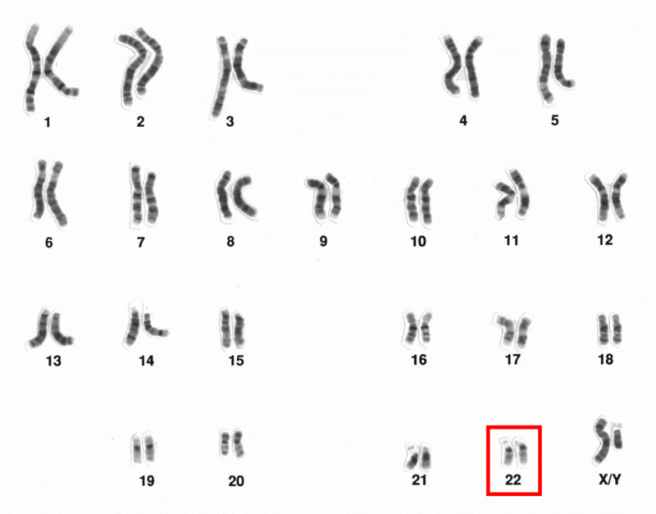
Chromosome 22 is the second smallest human chromosome, being only slightly larger than chromosome 21. Chromosome 22 spans approximately 50 million DNA base pairs and represents 1.5-2% of the total DNA in each cell.

Human_male_karyotpe_high_resolution_-_Chromosome_22

The 23 chromosomes of humans (this set is from a male). Chromosome 22 is highlighted. Source: Wikipedia

There are approx. 1000 genes on chromosome 22. The functions of many of these genes (what they tell the cell/body to do) is still being determined. Mutations in some of those genes, however, are associated with certain diseases. One particular disease associated with Chromosome 22 is called chromosome 22q11.2 deletion syndrome.

What is 22q11.2 deletion syndrome?
Chromosome 22q11.2 deletion syndrome (also known as DiGeorge syndrome) is a condition that arises from a section of chromosome 22 being absent. The ’22q11.2′ code part of the name relates to the specific location on chromosome 22 where the missing sections become apparent. About 87% of deletions occur within a 3 million base pair (nucleotides) region in the middle of one copy of chromosome 22 in each cell (remember that chromosomes come in pairs). The region contains at least 52 known genes.

Given the number of possible gene affected, there are numerous clinical features associated with 22q11.2 deletion syndrome, including heart defects, an opening in the roof of the mouth (a cleft palate), subtle facial features, learning issues, and low calcium levels.

Small ‘micro deletions’ within chromosome 22 are some of the most frequent known deletions found in human beings, occurring in about 25 in 100 000 people. These micro deletions are inherited from an affected parent in 5–10% of cases, while the rest occur spontaneously.


So what does Chromosome 22 have to do with Parkinson’s disease?

In 2009, this research report was published:

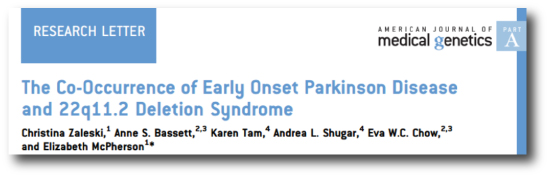
Zaleski-title

Title: The co-occurrence of early onset Parkinson disease and 22q11.2 deletion syndrome.
Authors: Zaleski C, Bassett AS, Tam K, Shugar AL, Chow EW, McPherson E.
Journal: Am J Med Genet A. 2009 Mar;149A(3):525-8.
PMID: 19208384

In this report the researchers described two patients, both with chromosome 22q11.2 deletion syndrome and early onset Parkinson’s disease (diagnosed before 45 years of age). The researchers suggested that this co-occurrence of chromosome 22q11.2 deletion syndrome and Parkinson’s disease in two unrelated patients was unlikely to be coincidence (given the low frequency of the conditions).

That first study was followed up by a second study:

Butcher-title

Title: Association between early-onset Parkinson disease and 22q11.2 deletion syndrome: identification of a novel genetic form of Parkinson disease and its clinical implications.
Authors: Butcher NJ, Kiehl TR, Hazrati LN, Chow EW, Rogaeva E, Lang AE, Bassett AS.
Journal: JAMA Neurol. 2013 Nov;70(11):1359-66.
PMID: 24018986

In this report, the scientists conducted an observational study of the occurrence of Parkinson’s disease in the world’s largest cohort of well-characterized adults with a chromosome 22q11.2 deletion syndrome (n = 159; age range = 18.1-68.6 years). They found that people with chromosome 22q11.2 deletion syndrome had a significantly elevated occurrence of Parkinson’s disease compared with standard population estimates.

Curiously, they suggested that the common use of antipsychotics in patients with chromosome 22q11.2 deletion syndrome (to manage associated psychiatric symptoms) delayed diagnosis of Parkinson’s disease by up to 10 years. And in postmortem analysis of the brains of people with both conditions, they found the loss of dopamine neurons and the occurrence of Lewy bodies – characteristic features of Parkinson’s disease.

This was proof that people with chromosome 22q11.2 deletion syndrome were more vulnerable to developing Parkinson’s disease. But what about people with Parkinson’s disease? Do they have deletions with chromosome 22q11.2?

This week we got the answer to that question:

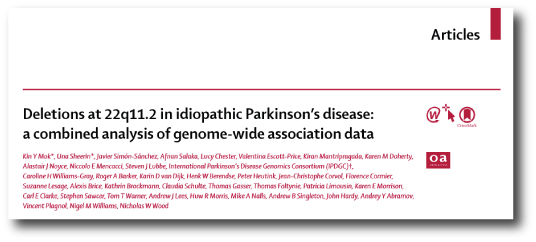
Mok-title

Title: Deletions at 22q11.2 in idiopathic Parkinson’s disease: a combined analysis of genome-wide association data.
Authors: Mok KY, Sheerin U, Simón-Sánchez J, Salaka A, Chester L, Escott-Price V, Mantripragada K, Doherty KM, Noyce AJ, Mencacci NE, Lubbe SJ; International Parkinson’s Disease Genomics Consortium (IPDGC), Williams-Gray CH, Barker RA, van Dijk KD, Berendse HW, Heutink P, Corvol JC, Cormier F, Lesage S, Brice A, Brockmann K, Schulte C, Gasser T, Foltynie T, Limousin P, Morrison KE, Clarke CE, Sawcer S, Warner TT, Lees AJ, Morris HR, Nalls MA, Singleton AB, Hardy J, Abramov AY, Plagnol V, Williams NM, Wood NW.
Journal: Lancet Neurol. 2016 Mar 23. [Epub ahead of print]
PMID: 27017469

The researchers analysed the DNA of 9387 people with Parkinson’s disease and 13 863 controls. They identified eight unrelated people with Parkinson’s disease who carried the chromosome 22q11.2 deletions. None of the controls had any of these deletions. Those people with Parkinson’s disease who had chromosome 22q11.2 deletions had earlier ages of onset (average age of diagnosis = 41 years old) than people with Parkinson’s disease who did not have the deletions (average age of diagnosis = 60.3 years). The researchers concluded that chromosome 22q11.2 deletions are associated with early onset Parkinson’s disease.

Some concluding thoughts

While the results of the Lancet Neurology study are very interesting, there are several important aspects to consider.

Firstly, the researchers noted that the estimated prevalence of 22q11.2 deletion syndrome in the general population is 0·024% or 24 in every 100,000 people. More importantly, as the study indicated the frequency of a 22q deletion among people with early-onset Parkinson’s disease is also very low (0·49% or 5 in every 1000 people with early-onset Parkinson’s disease). In fact, the number of people with the 22q11.2 deletion syndrome mutation and Parkinson’s disease is less than 20. So obviously this is a very low frequency event.

It is also interesting to consider that only 3% of patients with 22q11.2 deletion syndrome go on to develop Parkinson’s disease. Also a low frequency event. But studying this small population of people with a very specific genetic circumstance may enlighten us to some of the biological mechanisms causing this low frequency occurrence. And that may further aid us in better understanding other forms of Parkinson’s disease.

And that really is the take home message from this study:  we are gradually building a map of the connections between genetics and Parkinson’s disease, and while genetics will not explain every case of this condition, the knowledge we gain from this process will allow us to better target the disease in the long run.

And now spit!

Did you know that human saliva is 99.5% water?

1369155421_drool

But a recent set of studies have suggested that the remaining 0.5% holds some interesting insights into Parkinson’s disease.


Interesting fact about saliva – while there is a lot of debate as to how much saliva we produce on a daily basis (anywhere between 0.75 to 1.5 litres per day), it is generally accepted that during sleep the amount of saliva produced drops to almost nothing. Why? Big shrug.


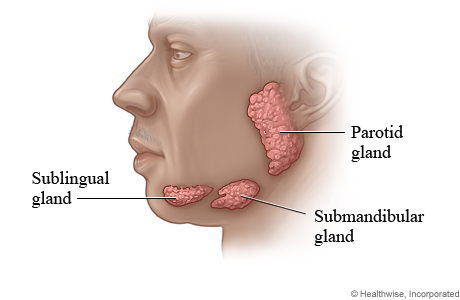
Saliva is a solution produced by three main sets of glands in our mouth: the parotid, Sublingual, and Submandibular glands:

h9991831_001

The human salivary glands. Source: WebMD 

The solution produced serves several important functions, namely:

  • beginning the process of digestion by breaking down food particles.
  • protecting teeth from bacterial decay.
  • Moisturising food to aid in the initiation of swallowing.

As we mentioned above, 99.5% of saliva is water. The remaining 0.5% is made up of enzymes and antimicrobial agents. There is also a number of cells in each millilitre of saliva (as many as 8 million human and 500 million bacterial cells per millilitre).

By analysing those human cells, scientists can learn a lot about a person. For example, they can conduct genetic analysis and determine if a person has a particular mutation.

So what has this got to do with Parkinson’s disease?

Well, recently several research groups have been looking at saliva with the hope that biomarkers – chemicals that may allow for early detection or better monitoring of Parkinson’s disease – could be found.

And recently, some of that research has seemingly paid big dividends:

Spit3-title

Title: Prevalence of Submandibular Gland Synucleinopathy in Parkinson’s Disease, Dementia with Lewy Bodies and other Lewy Body Disorders.
Authors: Beach TG, Adler CH, Serrano G, Sue LI, Walker DG, Dugger BN, Shill HA, Driver-Dunckley E, Caviness JN, Intorcia A, Filon J, Scott S, Garcia A, Hoffman B, Belden CM, Davis KJ, Sabbagh MN.
Journal: J Parkinsons Dis. 2016 [Epub ahead of print]
PMID: 26756744

In this study, published in January of this year, the researchers collected small biopsies of the submandibular gland (one of the three primary producers of saliva) from the bodies of people who died with various conditions (including Parkinson’s disease). They analysed the biopsies for alpha synuclein – the chemical in the brain associated with Parkinson’s disease. We have previously written about alpha synuclein, a chemical in the brain that is associated with Parkinson’s disease (for a primer on alpha synuclein, click here). They found that alpha synuclein was present in the saliva gland of 89% of the subjects who died with Parkinson’s disease, but none of the 110 control samples.

This result led the same research groups to attempt a similar study on live subjects and they published the results of that study in February of this year:

Spit2--title

Title: Peripheral Synucleinopathy in Early Parkinson’s Disease: Submandibular Gland Needle Biopsy Findings.
Authors: Adler CH, Dugger BN, Hentz JG, Hinni ML, Lott DG, Driver-Dunckley E, Mehta S, Serrano G, Sue LI, Duffy A, Intorcia A, Filon J, Pullen J, Walker DG, Beach TG.
Journal: Mov Disord. 2016 Feb;31(2):250-6.
PMID: 26799362

The researchers enrolled 25 people with early-stage Parkinson’s disease (less than  5 years since diagnosis) and 10 control subjects. All of these subjects underwent a small biopsy of the submandibular gland. Those biopsies were then analysed for alpha synuclein and the researchers found that 74% of the Parkinsonian biopsies and 22% control biopsies had alpha synuclein present in the submandibular gland.

And remarkably, this report was followed up this last week by a group in Italy, who published some very interesting data:

Spit1-title

Title: Abnormal Salivary Total and Oligomeric Alpha-Synuclein in Parkinson’s Disease.
Authors: Vivacqua G, Latorre A, Suppa A, Nardi M, Pietracupa S, Mancinelli R, Fabbrini G, Colosimo C, Gaudio E, Berardelli A.
Journal: PLoS One. 2016 Mar 24;11(3):e0151156.
PMID: 27011009    (this report is OPEN-ACCESS if you would like to read it)

The researchers collected salivary samples – actual spit – from 60 people with Parkinson’s disease and 40 age/sex matched control subjects. They then measured the saliva for different types of alpha synuclein. In this study, the researchers measured both the total amount of alpha synuclein in the saliva and also special forms of alpha synuclein.

Alpha synuclein initially starts out in the brain in a monomeric form – as a single version of alpha synuclein. This form of alpha synuclein is believed to be safe. A more mature form of alpha synuclein, called oligomeric, is believed to be the seed of the aggregations found in the Parkinsonian brain, Lewy bodies.

Curiously, in this study the researchers found that the total amount of alpha synuclein in the salivary of people with Parkinson’s disease was lower than that of the control subjects. But – and it’s a big ‘but’ – the amount of alpha synuclein oligomers was higher in the people with Parkinson’s disease than normal healthy controls.

The researchers proposed that the decreased concentration of total alpha-synuclein may reflect the formation of lewy bodies in the brain, and that this test might help the early diagnosis of Parkinson’s disease.


Here at the Science of Parkinson’s we are approaching this research cautiously. Previous attempts at measuring saliva in Parkinson’s disease have not had such significant results when comparing people with Parkinson’s disease and controls (click here for more about that study). The need for better biomarkers of Parkinson’s disease provides the reasons for this research, but the variability between the results different groups are getting leaves one wondering about the viability of the approach. It would indeed make for a very easy, non-invasive testing platform for Parkinson’s disease (‘Please spit into this tube for me’), but more research is needed before it can be applied on the large scale.

We’ll keep watching and hoping.

Another connection between skin and Parkinson’s disease

This is very interesting.

We have previously written blog posts dealing with the connection between melanoma and Parkinson’s disease. And now, there is new research providing a new link between another skin condition and Parkinson’s disease.


What is Rosacea?

Rosacea is a chronic skin condition, classically characterized by a redness of the face. This is the result of dilation of blood vessels in the facial skin, and is usually accompanied by pustules and swelling. Rosacea is indiscriminate in which age group it afflicts and there are four subtypes: three specifically affecting the skin and another affecting the eyes (ocular rosacea).

ps_150331_rosacea_800x600

An example of Rosacea.Source: Medscape

Rosacea is diagnosed in women almost three times more than men. It is also more common in people between the ages of 30 and 50, and appears to have a preference for Caucasians of northwestern European descent (hence it’s nickname: the “curse of the Celts”).

What has this skin condition got to do with Parkinson’s disease?

Well, back in 2001 this study was published:

Fischer-title

Title: Skin function and skin disorders in Parkinson’s disease.
Authors: Fischer M, Gemende I, Marsch WC, Fischer PA.
Journal: J Neural Transm. 2001;108(2):205-13.
PMID: 11314773

In this study, the researchers were investigating seborrheic dermatitis (similar to rosacea, this is an inflammation condition that presents itself as flaky, itchy, and red skin) and hyperhidrosis (abnormal increase in sweating) in Parkinson’s disease. They measured these afflictions in  70 people with Parkinson’s disease and 22 matched control subjects. Almost 20% of the people with Parkinson’s disease had seborrheic dermatitis and half of the Parkinson’s population had hyperhidrosis. The researchers also found that half of the Parkinson’s group also had abnormal sebum levels – sebum being a waxy substance produced by the skin (interestingly, we have previously mentioned sebum in a post about a lady who can smell Parkinson’s disease).

This was an interesting result, but it was never really followed up…until this last week, when another study was published:

Egeberg-title

Title: Exploring the Association Between Rosacea and Parkinson Disease: A Danish Nationwide Cohort Study.
Authors: Egeberg A, Hansen PR, Gislason GH, Thyssen JP.
Journal: JAMA Neurol. 2016 Mar 21. [Epub ahead of print]
PMID: 26999031

The size of this new study is amazing: the researchers looked at data from an national database which includes all Danish citizens 18 years or older from January 1, 1997 to December 31, 2011. That is a reference population of 5.4 million individuals!

Of these, 22 387 individuals (43.8% women) received a diagnosis of Parkinson disease between 1997 -2011, and 68 053 individuals (67.2% women) had a history of the skin condition rosacea.

The general population rate of Parkinson disease was 3.5 cases per 10 000 person. But in the population that had a history of rosacea the rate of Parkinson’s disease was 7.6 cases per 10 000 people – almost twice as high as the general population. Interestingly, when they looked at the subtypes of rosacea, the researchers found that there was a more than 2-fold increase in the risk of Parkinson disease in patients who had a history of ocular rosacea.

Even more interesting: treatment with tetracycline – an antibiotic – appears to have reduced the risk of Parkinson’s disease. The researchers also noted that people with severe rosacea have the same risk of developing Parkinson’s disease as do those who have more moderate rosacea.

This is an interesting study, further indicating a connection between the skin and Parkinson’s disease. Whether the relationship indicates anything causal or simply occurring in parallel is yet to be determined. But given similar previous association, we obviously need to take a closer look at skin.

Does the age of onset make a difference?

This is Dr Henri Huchard (1844-1910; a French neurologist and cardiologist):

Henri_Huchard

Source: Wikipedia

In 1875, he described the case was of a child who, at just 3 years of age, presented with all the clinical features of Parkinson’s disease. Since that report, there have been many studies detailing the condition that has come to be known as ‘juvenile Parkinsonism‘. Currently the youngest person diagnosed with Parkinson’s disease is a young lady from Oklahoma. She was diagnosed at 10-years of age, but had shown symptoms since the age of 2.

We are going to explore juvenile Parkinson’s disease in future post, but today’s post will review some new research that looks at the differences in Parkinson’s disease features of people diagnosed at different ages.


For most members of the general public, Parkinson’s disease is considered a condition of the elderly. And this is a fair line of thinking given what they probably observe out there in the big wide world.


A few years ago though, Parkinson’s UK commissioned and published a report of the statistics/demographics of Parkinson’s disease in the UK (Click here for a copy of that report). In that report, they present this table:

Table1

It illustrates the estimated number of people in each age bracket that have Parkinson’s disease. As you can see, the bulk of the people affected are over the age of 60. But this does not mean that Parkinson’s disease is simply a condition of the aged. It is believed that worldwide at least 5% of diagnoses are to people below the age of 50 – this is considered early onset Parkinson’s disease.

There are many people – actor Michael J Fox among them – who have been diagnosed below the age of 40.

leadership-fox-m-img_2

Actor Michael J Fox was diagnosed with Parkinson’s disease at age 30.
Source: MJFox foundation

Given this wide spectrum of age of onset, it is curious that more research has not been conducted comparing the differences in features of the condition between the different age groups. This situation, however was remedied recently:

Age-of-onset-PD

Title: Age at onset and Parkinson disease phenotype.
Authors: Pagano G, Ferrara N, Brooks DJ, Pavese N.
Journal: Neurology. 2016 Feb 10.
PMID: 26865518

The investigators in this study took 422 people who had recently been diagnosed with Parkinson’s disease (none of them were on any anti-Parkinson’s medication, eg. L-dopa). The subjects were divided into 4 groups according to their age at diagnosis:

  1. younger than 50 years (58 subjects)
  2. 50-59 years (117 subjects)
  3. 60-69 years (168 subjects)
  4. older than 70 years (79 subjects)

The researchers then investigated differences in:

  • side of onset (left or right; dominant or non-dominant side of the body)
  • type of symptoms (rigidity or tremor, etc)
  • localization of symptoms occurrence (eg. arms, legs, etc)
  • severity of motor features (rigidity, tremor,…)
  • severity of nonmotor features (memory, attention,…)
  • severity nigrostriatal function (brain imaging of the dopamine system)
  • CSF biomarkers (Chemicals in the cerebrospinal fluid which surrounds the brain)

Curiously in all of the four groups, a quarter of the people had a family history of Parkinson’s disease. Familial history could suggest a genetic connection, and the genetic aspect of Parkinson’s disease has generally been associated with the early onset group. But this does not appear to be the case in this  study – there was no bias towards the younger onset group.

Asymmetry of motor features onset (eg. tremor, etc) was apparent in 97.8% of the total population, with 55% of those subjects having symptoms on their dominant side. It is interesting to note here, however, that the young onset group were the only group in which the non-dominant side was more affected than the dominant. Similarly, almost all of the symmetrical onset individuals (exhibiting no asymmetry in their motor features) were in the oldest group.

In all four groups, the arm was the more likely site of motor features (this was the case in approx. 85% in all groups). When considering other sites of onset, the head was more frequent in the older groups than the younger group, while the leg was more common in the younger group than the older group.

The older the age at onset the more severe the motor (eg. resting tremor, and postural instability scores) and nonmotor features (including autonomic, olfactory, and cognitive functions). This was accompanied by a greater dopaminergic dysfunction on the brain scan, and a reduction of alpha synuclein floating around in the cerebrospinal fluid.

Rigidity was more common in the young-onset group.

There were no differences between the groups in terms of issues associated with activities of daily living, measures of depression and anxiety, impulsive control, or sleep problems.

What does it all mean?

Why these difference exist and what they might tell us about the condition is yet to be determined. The results are interesting when one considers that the subjects had similar disease duration (they had all just been diagnosed; within 6 months of diagnosis). This suggests that the observed differences may be specific to the different age groups. A direct contribution of the aging process, however, has to be considered when assessing the older group.

This kind of analysis is necessary as it is the only way small details about the disease can be determined. We thought this was an interesting study

Herpes Simplex virus and Alpha-Synuclein

The theory of universal gravitation is not cast-iron. No theory is, and there is always room for improvement – Isaac Asimov


Previously we have discussed the possibility that a virus could be one of the causative agents in Parkinson’s disease (Click here for that post).

Well, recently an interesting research report was published that offers evidence to support that idea and proposes an interesting new idea:

Caggiu1

Title: Humoral cross reactivity between α-synuclein and herpes simplex-1 epitope in Parkinson’s disease, a triggering role in the disease?
Authors: Caggiu E, Paulus K, Arru G, Piredda R, Sechi GP, Sechi LA.
Journal: J Neuroimmunol. 2016 Feb 15;291:110-4.
PMID: 26857504

In this study, the researchers began with a simple hypothesis:

Pathogens that resemble normal proteins in the body may cause the immune system to attack cells that have those normal proteins.

A pathogen is a biological entity that can cause damage or disease in our bodies. Our immune system’s response is to generate antibodies – small proteins that label the pathogen as foreign (or ‘not self’). The removal cells in the immune system then know which stuff in the body to attack and which to leave alone.

But what happens if parts of a particular pathogen look very similar to a normal protein in the body? Causing an immune response through a process of ‘molecular mimicry’. This is the question that the scientists behind today’s study were asking.

To test their hypothesis, the scientists looked at the herpes simplex virus 1 and compared it with the Parkinson’s disease-related protein, alpha synuclein. They found that there were two regions on the herpes simplex virus 1 that exhibited the same appearance as regions on the alpha synuclein protein.

Importantly, when they analysed the blood of people with Parkinson’s disease and some age-matched control, they found a statistically significant difference in the levels of antibodies generated against of those one regions of the Herpes simplex virus 1 (that regions was Ul4222–36) in people with Parkinson’s disease. Those antibodies were also reactive to a site on the alpha synuclein protein (that region was 100–114).

The researchers suggested that the results may implicate the involvement of Herpes simplex virus 1 in stimulating immune cells against the alpha synuclein resulting in neurons that have a lot of alpha synuclein in the brain being attacked (especially those that have alpha synuclein containing Lewy bodies).

What is Herpes simplex virus 1?

Herpes_simplex_virus_TEM_B82-0474_lores

Herpes simplex virus. Source: Wikipedia

Herpes simplex virus 1 and 2 are members of the herpesvirus (Herpesviridae) family of viruses that infect humans. The two viruses should not be confused – Herpes simplex virus 1 produces cold sores, while herpes simplex virus 2 is associated with genital herpes.

Both herpes simplex virus 1 & 2 are not only able to infect neurons in the brain, but they can able to become dormant and hide in neurons, away from the immune system. They can remain in that state until suddenly/spontaneously becoming reactivated for reasons unknown.

Is there any association between Parkinson’s disease and Herpes simplex virus 1?

There is one paper published in 1993, that found an association between previous exposure to Herpes and developing Parkinson’s disease:

Title: Infections as a risk factor for Parkinson’s disease: a case-control study.
Authors: Vlajinac H, Dzoljic E, Maksimovic J, Marinkovic J, Sipetic S, Kostic V.
Journal: Int J Neurosci. 2013 May;123(5):329-32. doi: 10.3109/00207454.2012.760560. Epub 2013 Feb 4.
PMID: 23270425

In this study, the researchers found that Parkinson’s Disease was also significantly associated to mumps, scarlet fever, influenza, and whooping cough as well as herpes simplex 1 infections. They found no association between Parkinson’s disease and Tuberculosis, measles or chickenpox though.

This result raises the tantalizing possibility that other viruses may be stimulating the immune system by ‘molecular mimicry’. Obviously this still needs to be tested. Plus that study was based only 110 people with Parkinson’s (compared with 220 controls) in one particular geographical location (Belgrade, Serbia).

Other than making the immune system attack cells, could the antibodies to the virus be having other effects?

In the discussion of their paper, the authors of the Herpes simplex virus 1 study point out that alpha synuclein can be divided in three parts:

  1. the N-terminal region (which contains several of the point mutations related to early onset Parkinson’s disease)
  2. the central region (which appears to promote aggregation)
  3. the C-terminal portion (which tends to decrease protein aggregation)

The segment of alpha synuclein (100–114) that cross reacts with antibodies for Herpes simplex virus 1 (Ul4222–36) is part of the C-terminal region. Given that antibodies are binding to and removing to that non-aggregating section of alpha synuclein, are the remaining segments of α-synuclein left in place to foster aggregation (and perhaps forming Lewy bodies)?

Interesting research report that leaves us with new questions to explore.