Neu-Ro-Mela-Nin


Recently a really interesting research report was published that presented several rather amazing findings.

The researchers forced dopamine-producing cells in a rodent brain to start making a protein called neuromelanin and by doing this, they witnessed the occurence of Parkinson’s-like features (motor issues, Lewy body-like structures, and cell death).

The report also suggested a method by which this outcome could be reduced or rescued.

But the amazing part is that neuromelanin was previously considered to be protective and this new finding suggests we may need to rethink that idea.

In today’s post, we will discuss what neuromelanin is, what this new report found, and how this new knowledge could be useful in the context of Parkinson’s.


heiko-braak-01Prof Heiko Braak. Source – Memim.com

This is Prof Heiko Braak.

Many years ago, he sat down and examined hundreds of postmortem brains from people with Parkinson’s.

He had collected brains from people who passed away at different stages of the condition, and was looking for any kind of pattern that might explain where and how the disease starts. His research led to what is referred to as the “Braak staging” model of Parkinson’s – a six step explanation of how the condition spreads up from the brain stem (the top of the spinal cord) and into the rest of the brain (Click here and here to read more about this).

nrneurol.2012.80-f1The Braak stages of PD. Source: Nature

Braak found that certain populations of cells in the brain were more vulnerable to Parkinson’s than others, such as the dopamine neurons in a region called the substantia nigra, the noradrenergic neurons of the locus coeruleus, and the neurons of the dorsal motor nucleus of the vagus (don’t worry about what any of those names actually mean, I’m just trying to sound smart and make you think that I know what I’m taking about).

One feature that all of these populations of neurons all share in common – in addition to vulnerability to Parkinson’s – is the production of pigment called neuromelanin.

What is neuromelanin?

Continue reading “Neu-Ro-Mela-Nin”

The Eve of Parkinson’s

Approximately 40% of the people affected by Parkinson’s are female. This number can vary across regions, but women still make up a large portion of the affected community.

That said, there is unfortunately very little research investigating women’s issues in Parkinson’s.

There are now efforts to correct this situation, however, and this change is being brought about by members of the affected community.

In today’s post, we will discuss some of what is known about how Parkinson’s affects women differently.


Source: Electricrunway

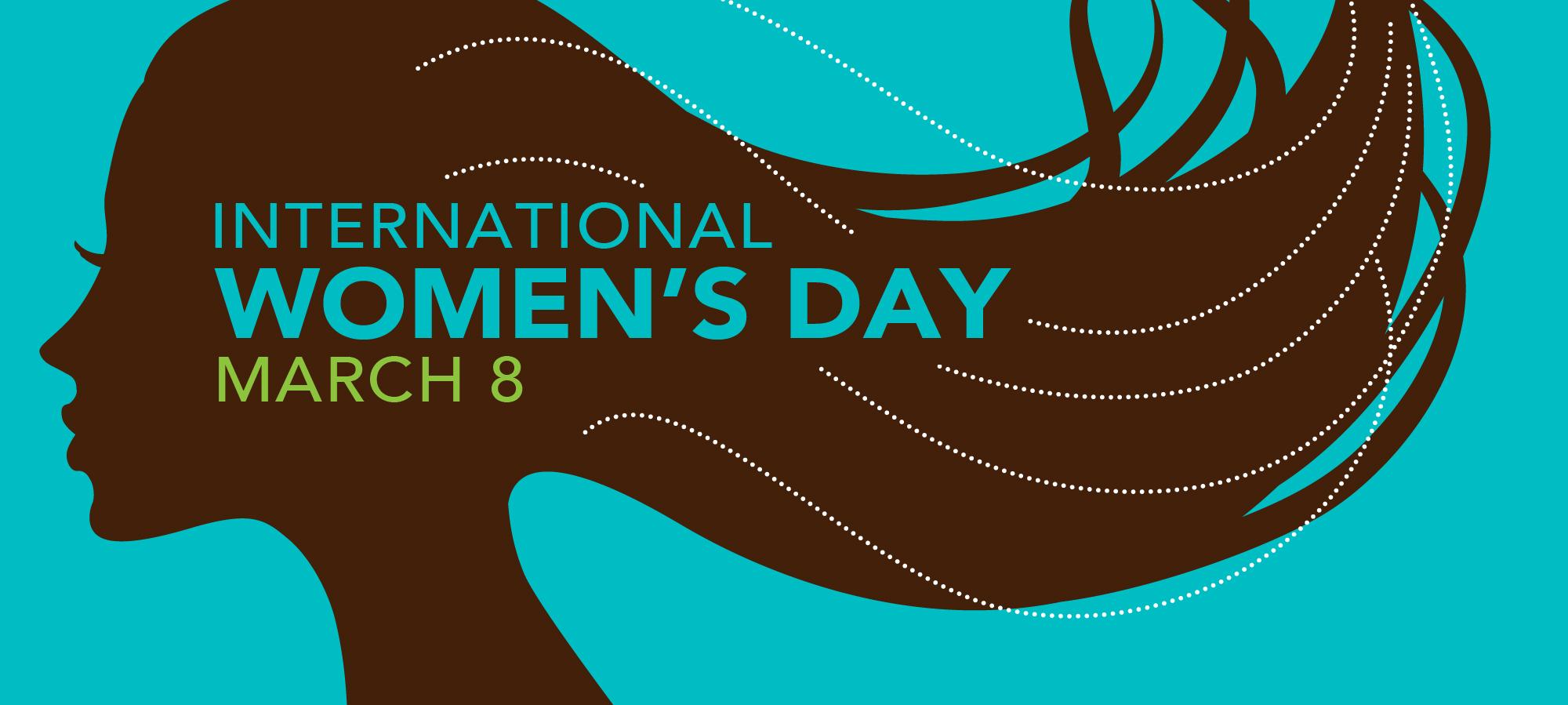
Why is today – the 8th March – called International women’s day? (backdated due to @#%$£&* technical issues!).

I don’t actually know. Perhaps because it’s politically correct that everyone should get their own day/month now?

Nice try.

The United Nations began celebrating International Women’s Day on the 8th March in 1975. But observation of the day date back to the early years of that century, and although the suffrage movement was occurring at the same time, International women’s day was very much a socialist idea.

And this shows itself in the timeline of events. For example, International Women’s Day was first observed on the 19th March, 1911 in Germany thanks to socialist activists like Luise Zietz, Käte Duncker and Clara Zetkin. But it wasn’t until 1918 that women were actually given the right to vote.

And remarkably, it was not until 1977 that the United Nations General Assembly invited its member states to proclaim the 8th March as the “UN Day for women’s rights and world peace”.

Source: IWD

Interesting. But what does this have to do with Parkinson’s?

There is an imbalance in the amount of research being conducted on women in Parkinson’s.

In particular, there is a poverty of information regarding aspects of daily life for women living with Parkinson’s, especially those with young onset Parkinson’s.

What do you mean?

If you go to the medical research search engine Pubmed, and type in Parkinson’s and menopause, there are only 107 publications (dating back to 1971, 41 of them since 2010). To put that in context, there are over 105,000 research reports on Parkinson’s on the pubmed database. And most of them are not about menopause research, they simply mention the word menopause in their text. Similarly there are only 25 reports on parkinson’s and menstruation (and only 6 of them have been conducted since 2000!?!?).

Searching for male associated key words such as parkinson’s and prostate yeilds 177 publications (104 of which have been published since 2010 only).

And searching for Parkinson’s and male results in 43,000 reports, but searching for Parkinson’s and female only gives 36,000 reports.

So why the disparity?

Continue reading “The Eve of Parkinson’s”

We need to talk about the UPDRS


“The measure of who we are is what we do with what we have” – Vince Lombardi

The measuring of Parkinson’s is complicated. There is such enormous variability between individual cases that the task of assessing people is very difficult.

The primary method that is used in clinics around the world is the Unified Parkinson’s Disease Rating Scale (or UPDRS). It is by no means perfect, and recently (in the wake of several unsuccessful clinical trials) there has been heated debate as to whether it is really up to the task.

Does it accurately reflect the condition? Does it really capture the lived experience? Can it pick up subtle changes associated with potentially disease modifying therapies in clinical trials? Or is it simply a “we’ve always done it this way” kind of tool?

In today’s post, we will look at what the UPDRS is, discuss some of the criticisms associated with it, and consider what solutions to those issues could look like.


Source: Wired

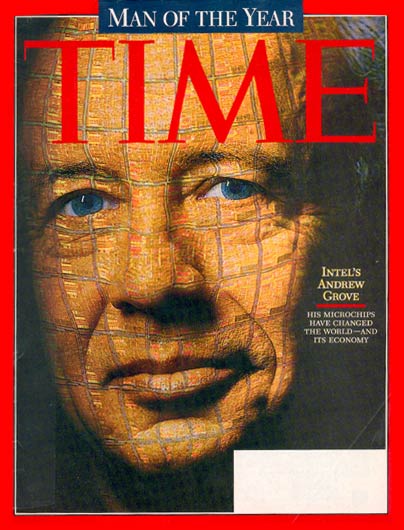
This is Andy Grove and his story is rather remarkable.

Born in 1936 to a Jewish family in Budapest, he managed to survive the Nazis, and then fleed Hungary when Soviet tanks started rolling in. Arriving in the US with absolutely nothing, he taught himself English, before going to City College of New York and later the University of California (Berkeley) where he received a PhD in chemical engineering.

And that was just the start of his amazing tale.

After completing his PhD (and publishing a textbook on semiconductors), Grove joined the seminal Silicon Valley company – Fairchild Semiconductor – in 1963. He worked his way up from researcher to assistant director of development, before becoming the first person that Robert Noyce and Gordon Moore (of Moore’s Law fame) hired after they departed Fairchild to start their own little company in 1968.

The name of that company was Intel.

Source: Wikipedia

Grove also worked his way up the ladder at Intel – from director of engineering to CEO – and he is credited with transforming the company from a struggling memory chip maker into the processor powerhouse it is today. He was Time’s ‘Man of the Year’ in 1997 and he was a widely revered figure in Silicon valley.

Source: Time

But the path to success was not easy.

Having survived prostate cancer in 1995, Grove was diagnosed with Parkinson’s in 2000. Viewing the situation as a problem solving exercise, he poured tens of millions of his own money into researching Parkinson’s.

Andy & Michael J Fox. Source: MJFF

But coming from the world of ‘Moore’s Law’, Grove became frustrated by a.) the slow speed of progress in the world of biomedical research and b.) the tools used to assess it.

In particular, he disliked the UPDRS, which he referred to as a “piece of crap” (Source – you should read the linked article).

What is the UPDRS?

Continue reading “We need to talk about the UPDRS”

Distinctly human?


It is often said that Parkinson’s is a ‘distinctly human’ condition. Researchers will write in their reports that other animals do not naturally develop the features of the condition, even at late stages of life.

But how true is this statement?

Recently, some research has been published which brings into question this idea.

In today’s post, we will review these new findings and discuss how they may provide us with a means of testing both novel disease modifying therapies AND our very notion of what Parkinson’s means.


Checking his Tinder account? Source: LSE

Deep philosphical question: What makes humans unique?

Seriously, what differentiates us from other members of the animal kingdom?

Some researchers suggest that our tendency to wear clothes is a uniquely human trait.

The clothes we wear make us distinct. Source: Si-ta

But this is certainly not specific to us. While humans dress up to ‘stand out’ in a crowd, there are many species of animals that dress up to hide themselves from both predator and prey.

A good example of this is the ‘decorator crab’ (Naxia tumida; common name Little seaweed crab). These creatures spend a great deal of time dressing up, by sticking stuff (think plants and even some sedentary animals) to their exoskeleton in order to better blend into their environment. Here is a good example:

Many different kinds of insects also dress themselves up, such as Chrysopidae larva:

Dressed for success. Source: Bogleech

In fact, for most of the examples that people propose for “human unique” traits (for example, syntax, art, empathy), mother nature provides many counters (Humpback whales, bower birds, chickens – respectively).

So why is it that we think Parkinson’s is any different?

Wait a minute. Are there other animals that get Parkinson’s?

Continue reading “Distinctly human?”

Monthly Research Review – February 2019


At the end of each month the SoPD writes a post which provides an overview of some of the major pieces of Parkinson’s-related research that were made available during February 2019.

The post is divided into seven parts based on the type of research:

  • Basic biology
  • Disease mechanism
  • Clinical research
  • New clinical trials
  • Clinical trial news
  • Other news
  • Review articles/videos


So, what happened during February 2019?

In world news:

31st January – Not exactly February I know, but this is amazing: Forget everything you know about 3D printing, because now we can 3D print with light! (Click here for the research report and click here for the press release).


3rd February – Pope Francis visited Abu Dhabi, in the United Arab Emirates. He is the first pope to visit the Arabian Peninsula.

19th February – Star Wars Lightsaber duelling was registered as an official sport in France, as part of an effort to encourage young people to engage more in sports (Click here to read more about this).

21st February – Israeli tech firm SpaceIL launched the Beresheet probe – the world’s first privately financed mission to the Moon. The company is competing in the Google Lunar X Prize, and it is hoping that the craft will land on the surface of the moon on the 12th April.

22nd February – “Wallace’s giant bee” (Megachile pluto) was the world’s largest species of bee – with a wingspan measuring more than six centimetres (2.5 inches) – until the species disappeared in 1981. An international team of scientists and conservationists have now re-discovered it in an Indonesian rainforest, giving hope that other lost species may also be found.

In the world of Parkinson’s research, a great deal of new research and news was reported:

In February 2019, there were 696 research articles added to the Pubmed website with the tag word “Parkinson’s” attached (1555 for all of 2019 so far). In addition, there was a wave to news reports regarding various other bits of Parkinson’s research activity (clinical trials, etc).

The top 7 pieces of Parkinson’s news

Continue reading “Monthly Research Review – February 2019”

The Bristol GDNF results


Today – 27th February, 2019 – the long-awaited results of the Phase II GDNF clinical trial were published.

GDNF (or glial cell line-derived neurotrophic factor) is a protein that our bodies naturally produce to nurture and support cells. Extensive preclinical research suggested that this protein was particularly supportive of dopamine neurons – a group of cells in the brain that are affected by Parkinson’s.

The results of the Phase II clinical trial suggest that the treatment was having an effect in the brain (based on imaging data), but the clinic-based methods of assessment indicated no significant effect between the treatment and placebo groups.

In today’s post we will look at what GDNF is, review the previous research on the protein, discuss the results of the latest study, and look at what happens next.

And be warned this is going to be a long post!


Boulder, Colorado. Source: Rps

It all began way back in 1991.

George H. W. Bush was half way into his presidency, a rock band called Nirvana released their second album (‘Nevermind’), Michael Jordan and the Chicago Bulls rolled over the LA Lakers to win the NBA championship, and Arnold Schwarzenegger’s ‘Terminator 2’ was the top grossing movie of the year.

Source: Stmed

But in the city of Boulder (Colorado), a discovery was being made that would change Parkinson’s research forever.

In 1991, Dr Leu-Fen Lin and Dr Frank Collins – both research scientists at a small biotech company called Synergen, isolated a protein that they called glial cell-derived neurotrophic factor, or GDNF.

And in 1993, they shared their discovery with the world in this publication:

Title: GDNF: a glial cell line-derived neurotrophic factor for midbrain dopaminergic neurons.
Authors: Lin LF, Doherty DH, Lile JD, Bektesh S, Collins F.
Journal: Science, 1993 May 21;260(5111):1130-2.
PMID: 8493557

For the uninitiated among you, when future historians write the full history of Parkinson’s, there will be no greater saga than GDNF.

In fact, in the full history of medicine, there are few experimental treatments that people get more excited, divided, impassioned and evangelical than GDNF.

This ‘wonder drug’ has been on a rollercoaster ride of a journey.

What exactly is GDNF?

Continue reading “The Bristol GDNF results”

One ring to rule them all


An important aspect of developing new potentially ‘curative’ treatments for Parkinson’s is our ability to accurately test and evaluate them. Our current methods of assessing Parkinson’s are basic at best (UPDRS and brain imaging), and if we do not improve our ability to measure Parkinson’s, many of those novel treatments will fail the clinical trial process and forever remain just “potentially” curative.

The ideal method of monitoring Parkinson’s would be a device that requires little effort from the individual being monitored, is completely non-intrusive in their daily living, and is continually collecting information.

In today’s post, we will explore the potential of the Ōura ring.


Harry’s first appearance on the SoPD. Source: Bild

Prince Harry has one and I want it.

A Megan?

No.

A smart, ginger beard?

No.

What then?

An Ōura ring.

What is an Ōura ring?

Only the best interesting thing to come out of Finland since… um… hang on… give me a second… to google search… for… something… Finnish. Oh yeah: Nokia mobile phones, the Linux operating system, and person-to-person text messaging (Radiolinja, 1993).

Very techinically minded those Finnish folk!

And the Ōura ring is an EXTREMELY clever piece of technology that simply sits on your finger.

07577-1-e1538154995164-800x298Source: Soukie

But what does the Ōura ring do?

Continue reading “One ring to rule them all”

A focus on GBA-Parkinson’s

This week the ‘Michael J. Fox Foundation for Parkinson’s Research’ and ‘The Silverstein Foundation for Parkinson’s with GBA’ announced that they are collaboratively awarding nearly US$3 million in research grants to fund studies investigating an enzyme called beta glucocerebrosidase (or GCase).

Why is this enzyme important to Parkinson’s?

In today’s post, we will discuss what GCase does, how it is associated with Parkinson’s, and review what some of these projects will be exploring.


Source: DenisonMag

This is Jonathan Silverstein.

He is a General Partner of Global Private Equity at OrbiMed – the world’s largest fully dedicated healthcare fund manager. During his time at OrbiMed, the company has invested in healthcare companies that have been involved with over 60 FDA approved products.

In February 2017 – at just 49 years of age – Jonathan was diagnosed with Parkinson’s.

Rather than simply accepting this diagnosis, however, Mr Silverstein decided to apply the skills that he has built over a long and successful career in funding biotech technology, and in March 2017, he and his wife, Natalie, set up the Silverstein Foundation for Parkinson’s with GBA.

The foundation has just one mission: “to actively pursue and invest in cutting edge research with the goal of discovering new therapies for the treatment of Parkinson’s Disease in GBA mutation carriers

And it seeks to address this by achieving three goals:

  1. to find a way to halt the progression of Parkinson’s with GBA.
  2. to identify regenerative approaches to replace the damaged/lost cells
  3. to find preventative measures

This week, the Silverstein foundation and the Michael J. Fox Foundation for Parkinson’s Research made a big anoouncement.

The two organisations announced nearly US$3 million in grants to fund studies investigating an enzyme called glucocerebrosidase beta acid (or GCase).

And what exactly is glucocerebrosidase?

Continue reading “A focus on GBA-Parkinson’s”

Clinical trials: Trying to make them SEAMless


The clinical testing new compounds is horrifically slow. There is simply no easy way to word it. From lab bench to regulator approval, we are currently looking at a process which will take at least a decade.

The repurposing of clinically available treatments has shortened this process, but there are a limited number of drugs that can be repurposed, and the periods of time between clinical trials is still too long.

Acknowledging this situation, we can do one of two things: Accept the circumstances and carry on doing things the way we have always done it (hoping that it will be different next time – a la Einstein’s definition of insanity),… OR we can try to change it.

In today’s post, we will discuss an interesting project that is seeking to do the latter.


The guy at the podium (and in the upper left inset) is Barry Chandler.

A few months ago, Barry came to me and asked “What can I do to help?

And I replied by asking “What do you do?

Two things you need to know about Barry:

  1. He was diagnosed with young onset Parkinson’s 6 years ago, and
  2. He is a very well connected guy.

VERY well connected!

I am the green string. Barry is everything else. Source: Philiphemme

By day, Barry works in the city of London as a DevOps practitioner (that was a new one for me too – “a combination of cultural philosophies, practices, and tools that increases an organization’s ability to deliver applications and services at high velocity“). But in the evenings and on weekends, Barry is an events co-ordinator.

And these two worlds merge nicely in the form of a meetup group that Barry runs, called “SEAM”.

What is SEAM?

Continue reading “Clinical trials: Trying to make them SEAMless”

Parkinson’s: When evolution leaves parts of us behind?


Recently researchers have proposed an interesting idea for why Parkinson’s is a distinctly human condition: There are parts of our brains that have not kept up with evolution, and as we live longer those areas become strained which ultimately results in the features of Parkinson’s.

It’s a really interesting idea – one which could have major implications.

In today’s post, we will review the new proposal and consider how we could use it in our approach to therapeutic interventions.


2020 Tesla Roadster. Source: Motortrend

By nature and design, I am not a car person.

If I can actually fit in the car (I am rather tall) and it gets me from A to B, it’s a great car. I don’t really care what it looks like, because I usually look ridiculous in the more sporty versions (my knees up around my ears…). As long as it gets from A to B, I’m happy.

Having said that, I do appreciate the technological advancements that are being made by companies like Tesla (I mean seriously, their Roadster – pictured above – is an electric car that does 0-60 mph in 1.9-seconds, quarter-mile in less than 9-second, a 250-plus-mph top speed, and an all-electric range of 620-mile! All of those statistics are incredible!).

It is amazing the evolutionary process that automobiles have gone through.

The first petrol engine-propelled car invented by Karl Benz. Source: Oxfordsurfaces

Every aspect of these vehicles has changed over time. From the wheels to the engine and from petrol to electric based cars, each component has been adapted across the decades to keep up with the needs of its environment.

Researchers are now wondering if the same can be said for our brains. And just recently some scientists have questioned whether some evolutionary design faults could explain why humans develop Parkinson’s.

What?!? What do you mean?

Continue reading “Parkinson’s: When evolution leaves parts of us behind?”