A change of dogma for Alzheimer’s disease?

plaque-neuron-connection-loss-cropped

This week an interesting new study dealing with the biology of Alzheimer’s was published in the journal Science Translational Medicine. It has drawn a lot of attention as it may be turning our understanding of Alzheimer’s disease on it’s head. If the results are independently replicated and verified, it could potentially have major implications for Parkinson’s disease.


For the last 30 years, a protein called beta-amyloid has been considered one of the bad boys of the most common neurodegenerative condition, Alzheimer’s disease.

What is Alzheimer’s disease?

Alzheimer’s disease is a progressive neurodegenerative condition that can occur in middle or old age. It involves a generalized degeneration of the brain, not localised to specific regions like Parkinson’s disease.

What happens in the Alzheimer’s brain?

In the brain, in addition to cellular loss, Alzheimer’s is characterised by the presence of two features:

  • Neurofibrillary tangles
  • Amyloid plaques

The tangles are aggregations of a protein called ‘Tau’ (we’ll comeback to Tau in a future post). These tangles reside within neurons initially, but as the disease progresses the tangles can be found in the space between cells – believed to be the last remains of a dying cell.

F1.large

A normal brain vs an Alzheimer’s affected brain. Source: MMCNeuro

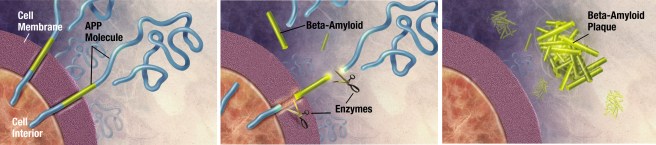
Amyloid plaques are clusters of proteins that sit between cells. A key component of the plaque is beta amyloid. Beta-amyloid is a piece of a larger protein that sits in the outer wall of nerve cells where it has certain functions. In certain circumstances, specific enzymes can cut it off and it floats away.

Amyloid-plaque_formation-big

Beta-Amyloid. Source: Wikimedia

Beta-amyloid is a very “sticky” protein and for a long time it has been believed that free floating beta-amyloid proteins begin sticking together, gradually building up into the large amyloid plaques. And these large plaques were considered to be involved in the neurodegenerative process of Alzheimer’s disease.

So what was discovered this week?

This week a study was published that suggests a new (and positive) function for beta amyloid:

BetaAm

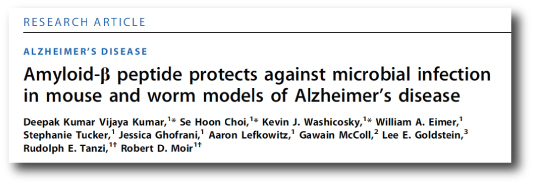
Title: Amyloid-β peptide protects against microbial infection in mouse and worm models of Alzheimer’s disease.
Authors: Kumar DK, Choi SH, Washicosky KJ, Eimer WA, Tucker S, Ghofrani J, Lefkowitz A, McColl G, Goldstein LE, Tanzi RE, Moir RD.
Journal: Sci Transl Med. 2016 May 25;8(340):340ra72.
PMID: 27225182

The researchers took three types of mice:

  • genetically normal mice
  • mice with no beta amyloid
  • mice producing a lot of beta amyloid

They infected all of the mice with the microbe that causes meningitis, and they found that the mice producing a lot of beta amyloid lived significantly longer than other groups of mice. They then repeated the experiment in a species of microscopic worm – called C.elegans – and found similar results. These findings suggested that beta amyloid was having a positive effect in the brain.

But then they noticed something strange.

The mice producing a lot of beta amyloid usually do not develop a lot of protein aggregation until old age, but when the researchers looked in the brains of the mice they infected with meningitis, they found significant levels of aggregation in the mice producing a lot of beta amyloid but at a young age..

This led the researchers to conduct some cell culture experiments in which they watched what was happening to the bacteria and beta amyloid. They found that the beta amyloid was sticking to the bacteria and this was leading to the formation of protein aggregates.

The results of these experiments suggested to the researchers an intriguing possibility that beta amyloid may be playing a protective in the brain – acting as an immune system for the brain – against infection.

Thus the aggregations we see in the brains of people with Alzheimer’s may not be the cause of the cell death associated with the disease, but rather evidence of the ‘brain’s immune system’ trying to fight back against unknown infectious agents. The researcher’s of the study were quick to point out that this antimicrobial action of beta amyloid is simply a new function of the protein, and it may have nothing to do with the disease itself. But it will be interesting to see where this research goes next.

What has this got to do with Parkinson’s disease?

Parkinson’s disease is only definitive diagnosed at the postmortem stage. This is done by microscopic examination of the brain. In the brains of people with Parkinson’s disease, there are protein aggregates calls Lewy bodies. These are densely packed clusters of a protein called ‘alpha synuclein‘.

Fig2_v1c

The brown spot is a Lewy body inside of a brain cell. Source: Cure Dementia

If the results of the study presented above are correct and beta amyloid is a protective protein in the brain against infection, could it not be that alpha synuclein may be playing a similar role? It is a fascinating idea that it will be interesting to test.

What are the implications of the study?

Currently, there are numerous clinical trials for Alzheimer’s disease, involving treatments that act against beta amyloid. If the study presented above is correct, and beta amyloid has a role in protecting the brain, these new treatments in clinical trial may actually be weakening the brain’s ability to fight infection.

Similarly, if alpha synuclein is found to exhibit ‘protective’ properties like beta amyloid, then the alpha synuclein vaccine clinical trials currently underway (in which the body’s immune system is primed to remove free floating alpha synuclein, in an attempt to stop the disease from spreading) may need to be reconsidered. At a minimum, investigations into whether alpha synuclein has antimicrobial properties need to be conducted.


Today’s banner was sourced from PBS.

The Autistic spectrum and Parkinson’s disease

The word Autism on a cork notice board

In August of 2015, groups of scientists from North Carolina and Perth (Australia) published a report together in which they noted the high occurrence of Parkinson’s-like features in aging people with Autism.

In this post we will have a look at what links (if any) there may be between Autism and Parkinson’s disease.


Recent estimates suggest that the prevalence of Autistic Spectrum Disorders in US children is approximately 1.5 %. Autism is generally associated with children, and in this way it is almost a mirror opposite of Parkinson’s disease (which is usually associated with the elderly). A fair number of people who were diagnosed with Autism early in their lives are now reaching the age of retirement, but we know very little about what happens in this condition in the aged.

What is Autism?

This is one of those questions that gets people into trouble. There is a great deal of debate over how this condition should be defined/described. We here at SoPD will chose to play it safe and provide the UK National Health System (NHS)‘s description:

Autism spectrum disorder (ASD) is a condition that affects social interaction, communication, interests and behaviour. In children with ASD, the symptoms are present before three years of age, although a diagnosis can sometimes be made after the age of three. It’s estimated that about 1 in every 100 people in the UK has ASD. More boys are diagnosed with the condition than girls.

Wikipedia also has a very thorough page Autism

So what was reported in the study finding a connection between Autism and Parkinson’s disease?

Last year two groups of researchers (from North Carolina, USA and Perth, Australia) noticed an interesting trend in some of the aging Autistic subjects they were observing.

They published their findings in the Journal of Neurodevelopmental disorders:

Autism-title1

Title: High rates of parkinsonism in adults with autism.
Authors: Starkstein S, Gellar S, Parlier M, Payne L, Piven J.
Journal: Journal of Neurodev Disord. 2015;7(1):29.
PMID: 26322138         (This report is OPEN ACCESS if you would like to read it)

The article reports the findings of two studies:

Study I (North Carolina) included 19 men with Autism (with an average age of 57 years). When the researchers investigated the cardinal features of Parkinson’s disease, they found that 22 % (N = 4) of the subjects exhibited bradykinesia (or slowness of movement), 16 % (N = 3) had a resting tremor, 32 % (N = 6) displayed rigidity, and 15 % (N = 2) had postural instability issues.

In fact, three of the 19 subjects (16 %) actually met the criteria for a full diagnosis of Parkinson’s disease (one of who was already responding well to L-dopa treatment).

Study II (Perth) was a larger study, involving 32 men and 5 women (with an average age of 51 years). 46 % (N = 17) of the subjects in this study exhibited bradykinesia, 19 % (N = 7) had a resting tremor, 19 % (N = 7) displayed rigidity, and 19 % (N = 7) had postural instability problems. In study II, 12 of the 37 subjects (32 %) met the full diagnostic criteria for Parkinson’s disease.

Given this collective result, the researchers concluded that there may well be an increased frequency of Parkinsonism in the aged people with Autism. They emphasize, however, the need to replicate the study before definitive conclusions can be made.

So how could this be happening?

The short answer is: we don’t have a clue.

The results of this study need to be replicated a few times before we can conclusively say that there is a connection. There are, however, some interesting similarities between Autism and Parkinson’s disease, for example (as the NHS mentioned above) males are more affected than females in both conditions.

There are genetic variations that both Parkinson’s and Autism share. Approximately 10-20% of people with Parkinson’s disease have a genetic variation in one of the PARK genes (we have discussed these before – click here to read that post). The genetics of Autism are less well understood. If you have one child with Autism, the risk for the next child also having the condition is only 2-6% (genetically speaking, it should be a 25-50% level of risk).

There are, however, some genes associated with Autism and one of those genes is the Parkinson’s associated gene, PARK2. it has previously been reported that variants in the PARK2 gene (Parkin) in children with Autism (click here for more on this).

It would be interesting to have a look at the brains of aged people with Autism. This could be done with brain scans (DAT-SCAN), but also at the postmortem stage to see if their brains have alpha synuclein clusters and Lewy bodies – the pathological characteristics of Parkinson’s disease. These studies may well be underway – we’ll keep an eye out for any reports.

Alternative explanations?

There are alternative explanations for the connection between Autism and Parkinson’s disease suggested by this study. For example, 36 of the 56 subjects involved in the two studies were on medication for their Autism (the medication is called neuroleptics). Those medications did not appear to explain the rates of parkinsonism in either study (after excluding subjects currently on neuroleptic medications, the frequency of parkinsonism was still 20 %). Most of the subjects in both studies have been prescribed neuroleptics at some point in their lives. Thus it is possible that long-term use of neuroleptics may have had the effect of increasing the risk for parkinsonism later in life. This is pure speculation, however, and yet to be tested. Any future studies would need to investigate this as a possibility.


EDITOR’S NOTE: If you have a child or loved one on the Autism spectrum, it is important to understand that the study summarised here are novel results that are yet to be replicated. And if it turns out that adults with Autism do have a higher risk of developing Parkinson’s disease it does not necessarily mean that they will – simply that they are at greater risk than normal. It is best to consult a medical practitioner if you have further concerns.


The banner at the  today’s post was sourced from Sailing Autistic Seas.

Manna from heaven? Mannitol and Parkinson’s disease

god-sends-manna

During the forty years that the Israelites wandered the desert after leaving Egypt, they faced many hardships, most notably a scarcity of food. To resolve this particular issue, God kindly provided the Israelites with “bread from heaven”. It was a “fine, flake-like thing, fine as frost on the ground” and “It was like coriander seed, white, and the taste of it was like wafers made with honey” (Exodus, Chapter 16).

They called “manna.” Hence the phrase: Like Manna from heaven

Today’s post deals with a substance called Manna, a group of Israeli scientists, and maybe a kind of salvation for people with Parkinson’s disease.


In 2013, in the Journal of Biological Chemistry, a group of Israeli scientists published the results of a study that suggested the sweetener ‘Mannitol’ (also known as Manna sugar – I kid you not) may be useful in the treatment of Parkinson’s disease.

152386jpg

A spoon full of Manna. Source: Qualifirst

What is Mannitol?

Mannitol is a colourless sweet-tasting, poorly metabolized crystalline alcohol sugar that is Food and Drug Administration (FDA)-approved as an osmotic diuretic agent.

In English: a sweetener.

Stick it on your tongue and it tastes like sugar.

Usually made from fructose and hydrogen, Mannitol increases blood glucose to a lesser extent than sucrose, and so it is commonly used as a sweetener for people with diabetes or sugar intolerance. The fact that Mannitol can be produced artificially is the only reason that it is often referred to as an ‘artificial sweetener’, but it does not fall into the same class as proper artificial sweetener, such as aspartame.

So what does the research say?

Manna-title.

Title: A blood-brain barrier (BBB) disrupter is also a potent α-synuclein (α-syn) aggregation inhibitor: a novel dual mechanism of mannitol for the treatment of Parkinson disease (PD).
Authors: Shaltiel-Karyo R, Frenkel-Pinter M, Rockenstein E, Patrick C, Levy-Sakin M, Schiller A, Egoz-Matia N, Masliah E, Segal D, Gazit E.
Journal: J Biol Chem. 2013 Jun 14;288(24):17579-88.
PMID: 23637226                              (This study is OPEN ACCESS if you want to read it)

The Israeli scientists were interested in the ability of Mannitol to inhibit the formation of alpha synuclein aggregates (clumps of the protein that is associated with Parkinson’s disease). Chemicals similar to Mannitol have exhibited protein destabilizing properties, so it was an interesting idea to test.

The researchers used different concentrations of mannitol and added it to a solution of alpha-synuclein. They left this concoction shaking for 6 days (at 37°C) and then assessed the levels of aggregation. Curiously the low levels of Mannitol had the strongest inhibitory effect, while the higher concentrations had no effect. The researchers repeated the experiments and found similar results.

Given this success, they turned their attention to an animal model of alpha synuclein: a genetically engineered fly that produces a lot of alpha synuclein. They found that Mannitol treated flies had significantly less alpha synuclein aggregation in their brain than untreated flies. This study was then repeated in genetically engineered mice (that produce too much alpha synuclein) and guess what? They found the same results.

These results led the scientists to suggest that “mannitol administration in combination with other drugs could be a promising new approach for treating PD and other brain-related diseases such as Alzheimer disease”.

It is believed that that aggregation of alpha synuclein (and the presence of Lewy bodies) is one of the pathological hallmarks of Parkinson’s disease, and thus any substance that inhibits that aggregation would potentially be beneficial.While there is a lot of experimental evidence to suggest that aggregated alpha synuclein is involved in the cell death associated with Parkinson’s disease, it is yet to be determined that inhibiting that aggregation would be beneficial. There are clinical trials going on as we write, so we should have an answer to this issue shortly.

A warning regarding Mannitol 

Before you rush out and start loading up on Mannitol there are a few things you should know about it.

It is used medically, usually to treat increased pressure within the skull.

It should not be abused, however, as it can have an osmotic effect (in particular, attracting water from the intestinal wall). Consumed in excess, it will cause diarrhea, abdominal pain, and excessive gas.

In addition to intestinal problems, Mannitol has also been associated with worsening heart failure, electrolyte abnormalities, or low blood volume. We also do not know what effect it may have on absorption of L-dopa and other Parkinson’s disease medications.


EDITORIAL NOTE HERE: Whenever we discuss new experimental drugs and treatments on SoPD, we point out to the reader that what we are presenting here is experimental research. Under absolutely no circumstances should anyone reading this matter consider it medical advice. Much of what is presented are novel results that need to be replicated and verified before being considered gospel (this certainly applies to the current post). Before considering or attempting any change in your treatment regime, please consult with your doctor or neurologist. 


The Header for today’s post is a depiction of manna from heaven. Source: History.com

The debate surrounding a new Stem cell transplantation trial for Parkinson’s

Deep-Brain-Stimulation-60pghfsukanm4j4bljb8mbq9hyafm3pj0e6t4iuyndm

In December last year, the Australian government gave official clearance for an American company – International Stem Cell Corporation – to conduct a stem cell based clinical trial at the Royal Melbourne Hospital in Melbourne. This news was greeted with both excited hope from the Parkinson’s support community, but also concern from the Parkinson’s research community. In this post we will explore exactly what is going on.

Before reading on it may be wise for those unfamiliar with transplantation therapy in Parkinson’s disease to read our previous post about the topic, where we discuss the concept and the history of the field. Click here to read that post.


logo

On the 14th December, the ‘Therapeutics Goods Administration’ (TGA) of Australia passed a regulatory submission from International Stem Cell Corporation (ISCO) for its wholly owned subsidiary, Cyto Therapeutics, to conduct a Phase I/II clinical trial of human stem cell-derived neural cells in patients with moderate to severe Parkinson’s disease. The hospital where the trial will be conducted -the  Royal Melbourne Hospital in Melbourne – gave ethical approval in March this year for the trial to start and the company is now recruiting subjects.

What are the details of the trial?

logo

Cyto Therapeutics (the subsidiary of ISCO) is planning a Phase I/IIa clinical study. This will evaluate the safety of the technique and provide some preliminary efficacy results. They are going to transplant human parthenogenetic stem cells-derived neural stem cells (ISC-hpNSC, for an explanation of this, please see below) into the brains of 12 patients with moderate to severe Parkinson’s disease. The study will be:

  • an open-label (meaning that everyone knows what they are being treated with),
  • single center (Royal Melbourne Hospital in Melbourne),
  • uncontrolled (there wil be no sham/placebo treated group for comparison)
  • an evaluation of three different doses of neural cells (from 30,000,000 to 70,000,000)

Following the transplantation procedure, the patients will be monitored for 12 months at specified intervals, to evaluate the safety and biologic activity of ISC-hpNSC. The monitoring process will include various neurological assessments and brain scans (PET) performed at baseline (as part of the initial screening assessment), and at 6 and 12 months post surgery.

What are ISC-hpNSCs?

Transplantation of cells is theoretically a good way of replacing the tissue that is lost in neurodegenerative conditions, like Parkinson’s disease. Previous (and the current Transeuro) clinical trials have usually used tissue dissected from aborted fetuses to supply the dopamine neurons required for the transplantations. Obviously there are major ethic and moral issues/problems with this approach. There are also procedural issues with these trials (surgeries being cancelled as not enough tissue is available – tissue from at least three fetuses is required for each transplant).

Growing dopamine cells in petri dishes solves many of these problems. Millions of cells can be grown from a small number of starting cells, and there are no ethical issues regarding the fetal donors. As a result, there has been a major effort in the research community to push stem cells to become dopamine neurons that can be used in transplantation procedures.

Embryonic stem (ES) cells are of particular interest to researchers as a good starting point because the cells have the potential to become any type of cell in the body – they are ‘pluripotent’. ES cells can be encouraged using specific chemicals to become whatever kind of cell you want.

Humanstemcell

Embryonic stem cells in a petridish. Source: Wikipedia

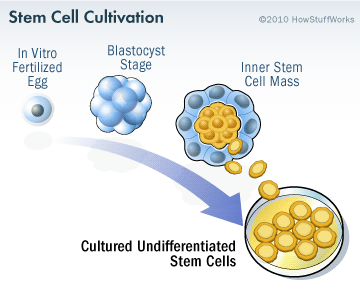
Embryonic stem cells are derived from a fertilized egg cell. The egg cell will divide, to become two cells, then four, eight, sixteen, etc. Gradually, it enters a stage called the ‘blastocyst’. Inside the blastocyst is a group of cell that are called the ‘inner stem cell mass’, and it is these cells that can be collected and used as ES cells.
stem-cell-cultivation-3

The process of attaining ES cells. Source: Howstuffworks

The human parthenogenetic stem cells-derived neural stem cells (hpNSC) that are going to be used in the Melbourne trial are slightly different. The hpNSCs come from an unfertilized egg – that is to say, no sperm cell is involved. The egg cell is chemically encouraged to start dividing and then becoming a blastocyst. This process is called ‘Parthenogenesis’, and it actually occurs naturally in some plants and animals.  Proponents of the parthenogenic approach suggest that this is a more ethical way of generating ES cells as it does not result in the destruction of a viable organism.

What has been the response to the announced trial?

In general, the response from the Parkinson’s community has been very positive. The announcement of the trial was greeted by numerous support groups as a positive step forward (for some examples see Parkinson’s UK and the stem cellar blog).

So why then is the research community concerned about the study?

Basically the research community is concerned that this trial will be a repeat of the infamous Colorado/Columbia Trial and Tampa Bay trial back in the 1990s (two double-blind studies which initially suggested no positive effect from transplantation). Both of these studies have been criticised for methodological flaws, but more importantly longer term follow-ups with patients have suggested that the period of observation was too short (12-24 months post transplant), and longer term the transplants have had more positive outcomes – the cells simply required a longer period of time to fully develop into mature neurons. This last detail is important when considering the new trial in Australia – the trial will only follow the subjects for a period of one year.

There are concerns that the absence of paternal genes in parthenogenic stem cells has not been thoroughly investigated (remember that these cells only have the genes from the female egg cell). Paternal genes are believed to be more dominant that female genes during development (Click here for more on this). They may play an important role in the development of dopamine neurons, but this has never been investigated. As a result, researchers are asking if it is wise to move to the clinic before such issues are addressed.

There is also concerns that the preclinical research supporting the trial from the companies involved (ISCO and Cyto Therapeutic) is lacking. While there has been some research into the use of parthenogenic stem cells in models of Parkinson’s (Click here for an example), the research from the company involved in this trial is limited to just a couple of peer-reviewed publications.

The research community has begun expressing their concerns in editorial comments in various journals – the most recent being in the Journal of Parkinson’s disease (Click here to read that article – it is open access).

What preclinical research is supporting the trial?

As far as we here at the SoPD are aware (and we would be very pleased to be corrected on this), there is one research article on the company website dealing with the production of dopamine neurons, and that study did not deal with transplantation. It simply described the recipe from making dopamine neurons.

SciRep-title

Title: Deriving dopaminergic neurons for clinical use. A practical approach.
Authors: Gonzalez R, Garitaonandia I, Abramihina T, Wambua GK, Ostrowska A, Brock M, Noskov A, Boscolo FS, Craw JS, Laurent LC, Snyder EY, Semechkin RA.
Journal: Sci Rep. 2013;3:1463.
PMID: 23492920                 (This article is OPEN ACCESS if you would like to read it)

(One important caveat here – the research published in this study was conducted using both embryonic stem cells (WA-09 cell line) and hpNSCs, but there is no indication in the text as to which cells were used for each result or whether the different types of pluripotent cells gave the same results. The text is unclear on this)

The company also published a study last year in which they transplanted the hpNSCs into both a rodent and primate model of Parkinson’s disease:

Gonzalez-title

Title: Proof of concept studies exploring the safety and functional activity of human parthenogenetic-derived neural stem cells for the treatment of Parkinson’s disease.
Authors: Gonzalez R, Garitaonandia I, Crain A, Poustovoitov M, Abramihina T, Noskov A, Jiang C, Morey R, Laurent LC, Elsworth JD, Snyder EY, Redmond DE Jr, Semechkin R.
Journal: Cell Transplant. 2015;24(4):681-90.
PMID: 25839189

The researchers in this study grew the hpNSCs in petridishes and pushed the cells towards becoming dopamine neurons, and then transplanted them into ten Parkinsonian rats and two Parkinsonian primates. Several months after transplantation, the researchers found the hpNSCs inside the brain and some of them had become dopamine neurons. There was, unfortunately, no indication as to how many of the hpNSCs survived the transplantation procedure. Nor any indication as to how many of them actually became dopamine neurons.

In addition, no behavioural data is presented in the study so there is no evidence that the cells had any functional effect. The researchers did measure the amount of dopamine in the brain, but those result suggested that there was only marginally more dopamine in the transplanted animals than the control animals (which had lesioned dopamine systems and saline injections rather than hpNSCs). Thus there is very evidence that the cells are functional inside the brain.

The researchers wrote in the report that “Most of the engrafted hpNSCs were dispersed from the graft site and remained undifferentiated”. This is not an ideal situation for a cell being transplanted into a particular region of the brain. Nor is it ideal for an undifferentiated cell to be going to the clinic.

And given that these two papers form the bulk of what has been published by the company with regards to their Parkinson’s disease work, researchers are concerned that the company is moving so aggressively to trial.

To be completely fair, ISCO has stated in a press release from April 2014, that their hpNSCs have been tested in 18 Parkinsonian primates. They suggested that those transplanted animals presented “significant improvement in the main Parkinson’s rating score”. Given that those results have never been made public, however, we are unclear as to what they actually mean (what is the “main Parkinson’s rating score”?).


We will follow the proceedings here at the Science of Parkinson’s with great interest.


FULL DISCLOSURE – The author of this blog is associated with research groups conducting the current Transeuro transplantation trials and the proposed G-Force embryonic stem cell trials planned for 2018. He has endeavoured to present an unbiased review of the current situation, but ultimately he is human and it is difficult to remain unbiased. He shares the concerns of the Parkinson’s scientific community that the research supporting the current Australian trial is lacking in its thoroughness. 

It is important for all readers of this post to appreciate that cell transplantation for Parkinson’s disease is still experimental. Anyone declaring otherwise (or selling a procedure based on this approach) should not be trusted. While we appreciate the desperate desire of the Parkinson’s community to treat the disease ‘by any means possible’, bad or poor outcomes at the clinical trial stage for this technology could have serious consequences for the individuals receiving the procedure and negative ramifications for all future research in the stem cell transplantation area. 


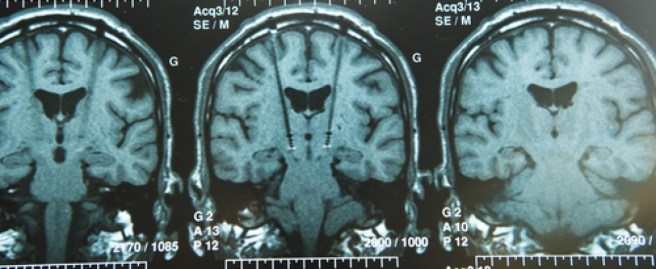
The header is of a scan of a brain after surgery. Source: Bionews-tx


UPDATE: 26/05/2016
ISCO has published further pre-clinical data this week regarding the cells that will be transplanted in their clinical trial. The data presented is from 18 transplanted monkeys:

Title: Neural Stem Cells Derived from Human Parthenogenetic Stem Cells Engraft and Promote Recovery in a Nonhuman Primate Model of Parkinson’s Disease.
Authors: Gonzalez R, Garitaonandia I, Poustovoitov M, Abramihina T, McEntire C, Culp B, Attwood J, Noskov A, Christiansen-Weber T, Khater M, Mora-Castilla S, To C, Crain A, Sherman G, Semechkin A, Laurent LC, Elsworth JD, Sladek J, Snyder EY, Jr DE, Kern RA.
Journal: Cell Transplant. 2016 May 20. [Epub ahead of print]
PMID: 27213850     (This article is OPEN ACCESS if you would like to read it)

In this study, 12 African Green monkeys with induced Parkinson’s disease (caused by the neurotoxin MPTP) were transplanted with hpNSCs in the midbrain and the striatum. 6 additional monkeys with induced Parkinson’s disease received saline as a control condition. Behavioural testing was conducted and the brains were inspected at 6 and 12 months.

Behaviourally, there was very little difference between the animals that were transplanted versus the control animals when they were compared at 12 months of age. This suggests that the transplant procedure is safe, but may not be having an effect at 12 months.

An inspection of the brain suggested that 10% of the transplanted cells survive to 12 months of age, and a few of them become dopamine neurons.

Some concerns regarding this new study:
Again the researchers have chosen to use saline injections as their control condition. It would be useful to see a comparison of hpNSCs with other types of transplanted cells (eg. fetal tissue or embryonic stem cells) – for a fairer comparison of efficiency.

The biochemical readings (the amount of dopamine in the brain) suggest an small increase in dopamine levels following transplantation, but only in one or two areas of the brain. Most of the analysed regions show no difference. And there is no comparison with a normal brain so it is difficult judge how truly restorative this procedure is. The increases that are observed may be minimal compared to what they should be in a normal brain.

Less than 2% of the transplanted cells became dopamine neurons. This is a bit of a worry given that we don’t know what the rest of the transplanted cells are doing. And the authors noted extensive migration of the cells into other areas of the brain. They reported this in their previous study. This is cause for real concern leading up to their clinical trial. The cells are being transplanted into a specific region of the brain for a specific reason (localised production of dopamine). If that dopamine is being produced in different areas of the brain, there may be unexpected side-effects from the procedure.

Another cause for concern leading up to the clinical trial is that the follow up period for the trial is only 12 months. Given that so little improvement has been seen in these monkeys over 12 months, how do the investigators expect to see significant changes in human over 12 months? The cells may well have an effect long term, but from the behavioural results presented in this new study, it is apparent that it will be extremely difficult to judge efficacy within 12 months.

Even when trying to view the study with an unbiased eye, it is difficult to agree with the researchers conclusion that the results “support the approval of the world’s first pluripotent stem cell based Phase I/IIa study for the treatment of Parkinson’s disease”. The lack of effect over 12 months and the migration of the transplanted cells suggest a serious rethink of the planned clinical study is required.

Finding PARK16

o-GENETICS-facebook

The genetics of any disease is very complicated. We are, however, gradually identifying the genetic mutations/variations that are associated with Parkinson’s disease and coming to understand that role of those genes in the condition. This week, researchers have identified a mutation underlying one form of Parkinson’s disease, which is associated with the name PARK16.

In this post we will review what the scientists have found and what it means.


Parkinson's-disease-regulatory-network-The-genes-and-miRNAs-implicated-in-PD-pathology

A map of some of the genetic interactions associated with Parkinson’s disease. Source: Pubmed

As the image above demonstrates the genetic interactions underlying some forms of Parkinson’s disease are extremely complicated. And it is important to note, dear reader, that that schematic provides only a partially completed picture. It maps out only a portion of the interactions that we know of, and we can only guess at the interactions that we don’t know of. Complicated right?

Approximately 10-15% of cases of Parkinson’s disease are associated with a genetic variation in the DNA that renders an individual vulnerable to the condition.

The region of DNA in which a mutations occurs is called the ‘Locus’. There are more than 20 loci (these  regions of mutations) now associated with Parkinson’s disease. The loci are referred to as ‘PARK genes’.

What are the PARK genes?

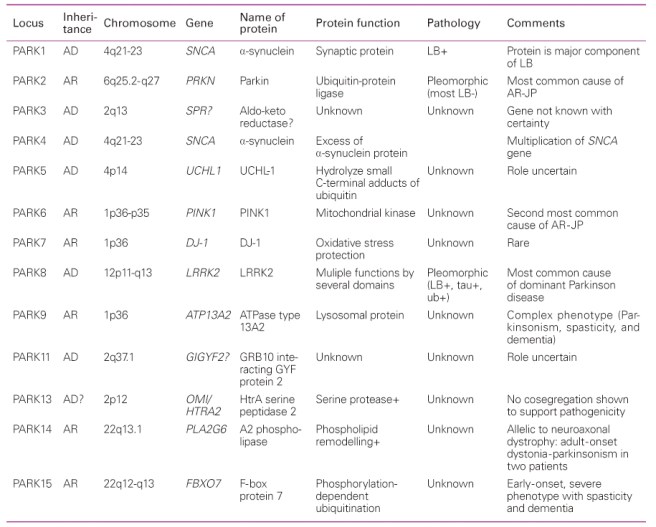
Below is a table of the first 15 PARK genes to be associated with Parkinson’s disease:

jkma-54-70-i001-l

A list of the PARK genes. Source: JKMA

The PARK genes in the table are numbered 1 to 15 (16-20 are not mentioned here), and their genetic location is indicated under the label ‘Chromosome’ (this tells us which chromosome the locus is located on and where on that chromosome it is). The specific gene and protein that are affected by the mutation are also labelled (for example the gene (and protein) associated with PARK8 is Lrrk2). It is interesting to note that the gene responsible for making the protein alpha synuclein (SNCA) has two PARK gene loci within it (PARK 1 and PARK4), further emphasizing the importance of this gene in the disease.

You may also notice that there are a lot of unknowns under the labels ‘protein function’ and ‘Pathology’ (with regards to Parkinson’s disease), this is because we are still researching these genes. Furthermore, PARK3 and PARK11 both have question marks beside the genes associated with these loci, indicating that we are still not sure if these are the genes responsible for the dysfunction we observed in these forms of Parkinson’s disease.

Obviously the PARK  genes list is a work in progress.

That said, this week researchers from the University of Tehran (Iran) published a report about the gene they believe is responsible for the dysfunction associated with PARK16 mutations:

Adora1-title

Title: Mutation in ADORA1 identified as likely cause of early-onset parkinsonism and cognitive dysfunction.
Author: Jaberi E, Rohani M, Shahidi GA, Nafissi S, Arefian E, Soleimani M, Moghadam A, Arzenani MK, Keramatian F, Klotzle B, Fan JB, Turk C, Steemers F, Elahi E.
Journal: Mov Disord. 2016 May 2.
PMID: 27134041

The researchers had two siblings (brothers) referred to them that had been diagnosed with early onset Parkinson’s disease (2 siblings from a family of 8 children). Both of the siblings were in their early 30s, but had exhibited Parkinson’s-like features since their early 20s. They had responded to L-dopa therapy, but involuntary movements (L-dopa-induced dyskinesias) had started to appear after just 2 years of treatment.

Naturally the researchers were keen to determine if there was a genetic reason for this situation. To this end, they conducted whole genome analysis to determine what genetic variations the two siblings shared.

They took DNA from white blood cells of the 10 family members (two parents and eight children), and sequenced the genomes for analysis. What they found was two regions of DNA that were the same in the two affected siblings, but different in the rest of the family. In one of these regions was in the gene ADORA1, which encodes a receptor for a particular protein that can influence dopamine release. Importantly, the ADORA1 gene is located within the domain of the PARK16 locus.

When the researcher checked the sibling’s genetic variation inside the ADORA1 gene on a database of 60,000 normal individuals, they found only one other individual who was partially affected by it, suggesting that this mutation is very rare. Based on these findings, the researchers concluded that variations in ADORA1 may explain some of the cases of PARK16 -associated Parkinson’s disease.

So what does it all mean?

It means that we have another piece of the puzzle, and each week other pieces are falling into place. ADORA1 may not be the only genetic variant within the PARK16 locus, but it will explain some cases of PARK16 Parkinson’s disease. Next we need to work out what the variation does to the gene function of ADORA1.

And that will hopefully be a future blog post.

Blood test for Parkinson’s disease?


blood-cells

Last week there was a press release from La Trobe University in Melbourne, Australia regarding the development of a new blood test for Parkinson’s disease. The announcement is a little bit odd as the results of the study are still being peer-reviewed (press announcements usually come after the publication of results). But the Parkinson’s community is excited by the idea of new diagnostic aids, especially those that can maybe tell us something new about the disease.

In this post, we will review what we know at present, and we will follow up this post once the results are eventually published.


As we have previously written, the diagnosis of Parkinson’s is rather difficult, with a 10-15% error rate becoming apparent when brains are analysed at the postmortem stage. Thus any new diagnostic tools/tests that can aid in this effort would be greatly appreciated.

La_Trobe_University_logo.svg

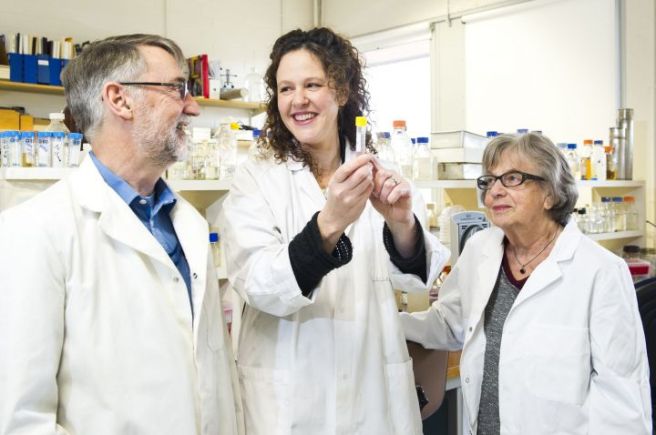
A group at La Trobe University in Melbourne have been studying the blood of people with neurodegenerative conditions, and have now announced that they may have a blood test for Parkinson’s disease.

preview

The La Trobe University team: (left to right) Professor Paul Fisher, Dr Sarah Annesley and Dr Danuta Loesch-Mdzewska. Source: La trobe

So what do we know thus far?

The test has been conducted on blood taken from a total of 38 people (29 people with Parkinson’s disease and 9 in a control group). Professor Paul Fisher – one of the lead scientists in the study – has reported that the tests have proven ‘very reliable’.

What does the test measure?

The test is apparently looking at the mitochondria in the blood cells.

And what are mitochondria?

A mitochondrion (singular) is a small structure inside a cell that is responsible for respiration and energy production. It is one of the powerhouses of the cell. Cells have lots of mitochondria (plural) because cells need lots of energy. But when the mitochondria start failing, the cell dies. As the mitochondria fails, they send out toxic chemical signals that tell the cell to begin shutting down.

biobook_cells_4

A schematic of a mitochondria, and where they are inside a cell. Source: Shmoop

The researchers at La Trobe found in their blood tests that there was no damage to the mitochondria of patients with Parkinson’s disease. That in itself is an interesting observation, but what they found next has larger implications:

“Based on the current literature we were expecting reduced oxygen consumption in the mitochondria, which leads to a buildup of toxic byproducts, but what we saw was the exact opposite,” Prof Fisher was quoted as saying. “We were able to show the mitochondria were perfectly normal but were working four times as hard, which also leads to increased production of poisonous byproducts to occur.”

A test that can measure these ‘hyperactive’ mitochondria is very useful as it can both identify people with Parkinson’s disease, but it may also help us to better understand the condition. Prof Fisher and his colleagues, in addition to taking the test forward, are also trying to understand the underlying mechanisms of the ‘hyperactive mitochondria’ – what is causing them to become the way they are.

What is going to happen now?

The scientists at La Trobe would like to repeat and expand on the results (after they are published), and the Michael J Fox foundation and Shake It Up Australia have given La Trobe University more than $640,000 to further develop the research. The plan is to now test 100 subjects – 70 people with Parkinson’s disease and a control group of 30. Prof Fisher is hoping that a test may be available for the clinic in five years time.

What about other neurodegenerative conditions?

So here’s the catch with the information provided thus far – the researchers have not had the funding to test whether this hyperactivity in the mitochondria is occurring exclusively in people with Parkinson’s. That is to say, they haven’t tested whether the effect is also present in people with other neurodegenerative diseases, such as Alzheimer’s, Huntington’s, or ALS. And this is where a little bit of the excitement comes out of the announcement.

But even if the hyperactivity in the mitochondria is shared between certain neurodegenerative diseases, a test highlighting the effect would still be very useful, especially if it can aid us in early detection of these conditions.

As we said above, we will be following this story closely and will report back here as and when information becomes available.

Stay tuned.