Monthly Research Review – November 2022

# # # #

At the end of each month the SoPD writes a post which provides an overview of some of the major pieces of Parkinson’s-related research that were made available during November 2022.

The post is divided into 10 parts based on the type of research:

# # # #


So, what happened during November 2022?

In world news:

November 11th – The cryptocurrency exchange FTX (once valued at $18 billion) filed for Chapter 11 bankruptcy, in a collapse that affected the entire cryptocurrency environment.

 

November 15th – the world’s population of humans reached 8 billion.

November 16th – NASA launches Artemis 1, the first uncrewed mission of its Space Launch System, the most powerful rocket ever to reach orbit. The onboard Orion capsule orbits the Moon before returning to Earth, as a demonstration of planned human missions. The image below is of the far side of the moon visible beyond the Orion spacecraft on the  21st November:

 

November 29th – Biotech companies Eisai and Biogen published the results of their Phase 3 study of Lecanemab. They reported that it “reduced markers of amyloid in early Alzheimer’s disease and resulted in moderately less decline on measures of cognition and function than placebo at 18 months but was associated with adverse events” (Click here to read more about this).
 

November 30th – OpenAI released a prototype of an artificial intelligence chatbot called ChatGPT, capable of answering questions and write essays in real time…. is this the end of the Science of PD?

In the world of Parkinson’s research, a great deal of new research and news was reported:

In November 2022, there were 901 research articles added to the Pubmed website with the tag word “Parkinson’s” attached (9785 for all of 2022 so far). In addition, there was a wave to news reports regarding various other bits of Parkinson’s research activity (clinical trials, etc).

The top 5 pieces of Parkinson’s news

Continue reading “Monthly Research Review – November 2022”

The trans-omics of -omics

# # # #

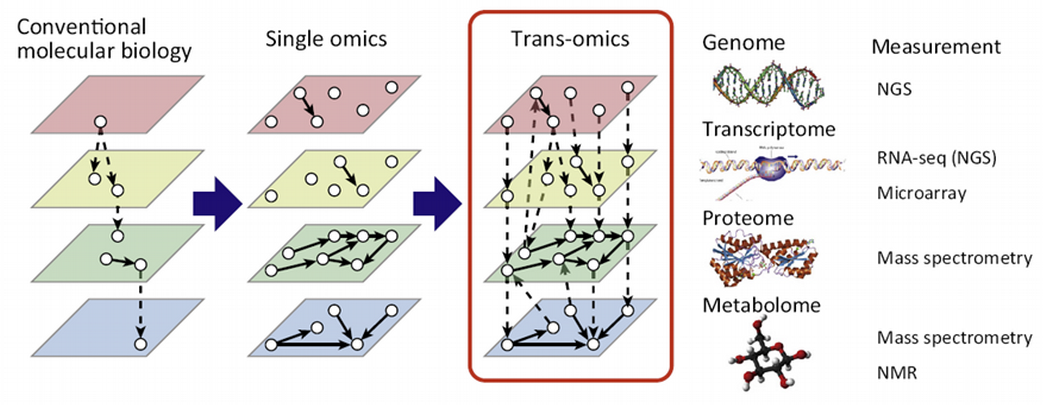
“Precision medicine” is an emerging model of therapeutic intervention in which treatment options are tailored to a specific subtype of a condition or even on an individual patient-based metric that involves an intergrated analysis of his/her comprehensive “-omics” data.

Many different methods of stratifying patients have been proposed and many of them involve adding the word “-omics” to the end of their labels. But these efforts may start to pay big dividends in clinical trials exploring potentially disease modifying therapies in the not too distant future, including in the case of Parkinson’s.

In today’s post, we will look at one such clinical study exploring better patient stratification in Parkinson’s.

# # # #


The original “Make America Great Again”. Source: NYTimes

I think it all started with Ronald Regan.

But I’m not really too sure.

Or more specifically, not Reagan himself, but rather the 1980s conservative radio broadcaster Paul Harvey.

Paul Harvey. Source: Youtube

You see, Harvey was the person who apparently came up with the portmanteau “Reaganomics“. People liked the play on words and thought that it was a clever little label to explain a rather complex subject. But the name kicked off a barrage of imitators with every man and his dog coming up with their own version of -omics.

And scientists really got carried away with the adoption of different kinds of -omics. Every field of research it seems has continuously been inventing new “-omics”. There’s even a wikipedia page for all the different kinds of -omics, and their use has changed our speecheomics (and yes, that really is an actual word).

I am used your posts having odd starting points, but where exactly is this intro going?

Well, I needed to introduce that idea of “-omics” in order for the rest of this post to work.

Oh I see. So what do we mean by -omics?

Continue reading “The trans-omics of -omics”

Disease modification-ish

# # # #

Semantics matters – particularly regarding our communication on ideas like “disease modification” for neurodegenerative conditions.

There is a big difference between “disease eradication” (zero worldwide incidence), “disease correction” (the halting/reversing of progression) and “disease modification” (improving the trajectory of disease).

Recently, researchers in Japan have demonstrated “disease modification” in motor neuron disease with a form of vitamin B12.

In today’s post, we will review this new research and discuss how it could be relevant to Parkinson’s.

# # # #


Source: LexFridman

During labourious household chores (think: washing the dishes, hanging laundry, or spending time with my daughter), I am usually listening to an audiobook or podcast. One favourite podcast is that of Dr Lex Fridman – an AI researchers at MIT who interviews interesting individuals and discusses a broad range of topics (from neuroscience to weird stuff like aliens, and the meaning of life often gets dragged in as well).

In episode #158, Lex spoke with Zev Weinstein (15 year old son of Prof Eric Weinstein) and I was really struck with how eloquently this young man spoke about philosophy and science, but also the communication of ideas.

Source: Youtube

And at one point in the discussion, Zev said: “Many underestimate the extent to which language and communication really impacts and shapes the ideas and thoughts that are being communicated, and I think if we are willing to accept imperfect labels to categorize particular people or thoughts, in some sense we are corrupting an abstraction in order to represent it and communicate about it. And I think, as we have discussed, those abstractions are particularly important when everything is on fire” – Zev Weinstein (18.03 minutes into the video). The interview occurred in early 2021 around the events of 6th January, hence the “everything on fire” reference.

But the words on “corrupting an abstraction in order to represent it and communicate about it” resonated with me.

And it got me thinking.

Thinking about what?

Continue reading “Disease modification-ish”