
|
# # # # During the pandemic lockdown in 2020, I was asked to speak to a group of medical students at the University of Cambridge about the communication of science. I was a little bemused by the invitation. Big university and little old me maintaining a small website (read: collection of typos and poor gramma). I did not feel like any kind of authority on the topic of science communication. Feeling ridiculously unprepared for such a task, I naturally accepted the invitation and I decided to do a deep dive into the topic – delving into the history and the various formats. The content of my presentation probably put my young audience to sleep, but I found it interesting. And at the risk of putting you to sleep, I thought I would post some of the contents here. In today’s post, we will discuss Sci-comms. # # # # |
 Tom Hardy. Source: Theresident
After receiving a honorary fellowship at the University of the Arts London, actor Tom Hardy addressed the graduating class of 2015. In his speech, he said “My father told me that my job is to observe and reflect. And anything that gets in the way of the telescope has to go including the self” (Source).
And evidently Tom has taken his novelist father (Chips Hardy)’s words to heart as he has “II O&R” (“To Observe and Reflect”) tattooed on his right shoulder and claims this is his motto for life:
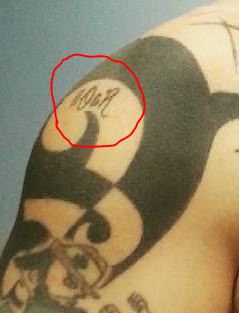 Source: Bodyartguru
Now, I’m not comparing myself to Tom (we can’t all be as good looking as me), but I really like his philosophy. And I used this to start my presentation on science communication (“Sci-comms”) to a group of undergraduate medical students at the University of Cambridge during the COVID pandemic.
My approach to Sci-comms is to observe and reflect.
Wikipedia defines science communication as “the practice of informing, educating, raising awareness of science-related topics, and increasing the sense of wonder about scientific discoveries and arguments”.
It applies to all facets of research, from press releases about new discoveries to explaining the background science to a participant in a clinical trial.
Sci-comms is important because it is an opportunity to :
- Share recent findings and excitement/enjoyment of science
- Increase knowledge, awareness and understanding of science
- Encourage future generations of curious minds
- Generate social acceptance, moral trust & appreciation of science
- Influence public opinion, policy preferences or behaviour of people
- Reinforce societal buy-in to the idea of public funds being spent on research
- Ensure that a diversity of perspectives & ideas
- Help ensure the ability to make informed consent in participating in research / Avoiding a knowledge divide
So crucial for the research community is the ability to communicate in lay terms the research they are doing that sci-comms really should be taught as part of the academic curriculum.

The history of sci-comms is interesting, and reflects changes in societal beliefs and faith. Prior to the Renaissance/Enlightenment, science was largely funded by individuals under private patronage and was studied in exclusive groups. Much ‘science’ was conducted under the guise of military development (and to be fair, a lot of it still is). Across the centuries (particularly from the sixteenth century onwards), the blending of Western and Asian technologies via trade helped to stimulate development and innovation.
“Invisible Colleges” (such as the Accademia dei Lincei – established 1603 – the Academie Française – established in 1635 – and The Royal Society of London for Improving Natural Knowledge – now the Royal Society, established in 1660) gradually began to appear, consisting of interacting scholars and curious minds who often met face-to-face to exchange ideas and encourage each other.
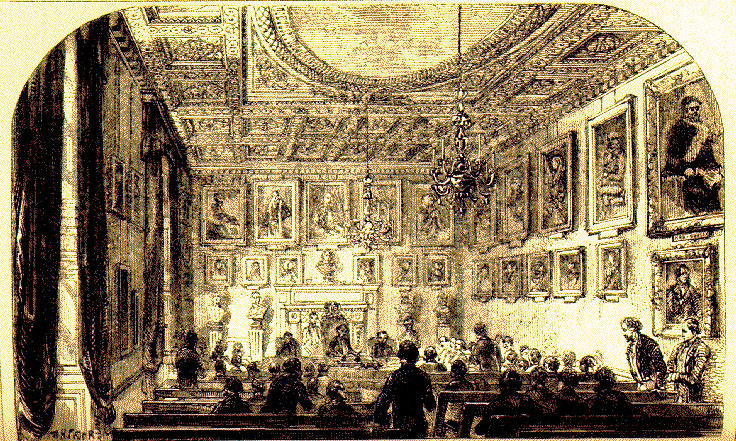 Source: Knarf
But Sci-comms at that time was almost no existent (outside of some very hard to find books, if you could read), and held in place by the strict doctrines that governed society.
As scientific study began to emerge into popular discourse in the 18th and 19th century in Europe, more learned societies began to pop up and became increasingly attended. Scientific institutions, like the National Academy of Sciences or the British Association for the Advancement of Science (now the British Science Association). And as science began to flourish, there was an ever increasing need to better communicate the new findings. Sir David Brewster (1781 – 1868), founder of the British Association for the Advancement of Science, believed in effectively communicating new discoveries through publications, “so that scientific students may know where to begin their labours“.
 Sir David Brewster. Source: Jedburgh
Public communication of science (outside of schooling), however, only really emerged with the rise of the middle class in the nineteenth century. ‘Common people’ started taking an interest in their changing world and they developed a thirst for information. Individuals like Michael Faraday (1791 – 1867) began holding public lectures in which they began presenting science to the general public in the hopes of inspiring them:
 Michael Faraday. Source: Linkedin
Between 1827 and 1860, Faraday gave a series of 19 Christmas lectures for young people at the Royal Institution in London. It is a series that continues to this very day (Click here to read more about this):
 “As you can see on my powerpoint presentation…”. Source: Royalsociety
Since those humble beginnings, sci-comms has become big business with numerous magazines, TV shows, Youtube channels, and websites dedicated to the task of explaining the world of science to the masses.
In 2017, a study conducted by the Pew Research Center found that “about a quarter of social media users follow science related pages and accounts” (Source).
So there is a definite audience and thirst for sci-comms.
During the Q&A session of my presentation to the students at Cambridge University, one of the students asked about how I approach writing a post for the SoPD website.
First, I explained that writing a post is easy if you understand Star Wars.

A good post should be an engaging piece of content that teaches the reader something new about a given topic. But the best blogs also tell a good story.
And stories can be told in different ways. Many blogs use pictures, animations, or short videos to keep the reader engaged and to break up the flow of the text. The author can also make the material personable by sharing their particular viewpoint of the story.
But the first step in writing a good story is structuring it like a Star Wars movie.
You see, the original Star Wars films all employed the same three act frame work:
- Act One: The introduction – setting the scene (an inciting event with a dramatic escape)
- Act Two: The middle – building the story (an infiltration of some kind, with the story gradually building around it)
- Act Three: The resolution – the climax and happily ever after (big battle, stuff blowing up, and the good guys winning… sometimes)
 Source: Discover.hubpages
The reader comes to your website seeking information and wanting you to teach them something about a given topic. After giving them the basics, the hook to keep them reading should be an exciting new discovery (this represents the end of Act 1: The introduction). Next, they will want to be given more details/context on that topic, and a better understanding about what adventures were undertaken that led to the new discovery (this is naturally Act 2: The middle). And finally, the reader will be looking for you to share some insights on how this new finding will potentially change the nature of the topic and possibly the wider world. What are the implications of it all? (Act 3: The resolution – the Death Star goes bang and what are the consequences).
So, when writing a blog post, always remember to follow the Star Wars formula.
The second thing to know about writing blog posts is that it should never be done to any kind of formula.
When it comes to blogging, you have to mix things up and make the subject matter as interesting as possible for the reader. And this applies to both the style and the content of the blog.
On the topic of style, one should avoid the “Wall of Text” approach. A blog is not a textbook, a press release, or a journal paper. Break the wording into easily consumed chunks, to help the reader take in the information faster, and also to emphasize your main points.
 Source: Melschwartz
The third (and most important) thing to realise about blogging is that there is a very human side to “impact”.
By this, I mean that people are going to consume whatever you have produced. And their reaction to it is going to depend on what kind of situation they have come from (they may be a butcher, a baker, a stressed-out-home-maker). And it is going to depend on what kind of day they have had (a good day, a bad day, a stressed-out-home-maker day). Most of these details, of course, are going to be unknown to you when you put your post into the public domain, but you have to be cognizant of them as you write your blog and consider carefully what you write.
When writing a blog, it is important to remember that the words we chose have very real impact.
A good example of this in the Parkinson’s community is that many individuals living with Parkinson’s do not like the word ‘patient’. While Parkinson’s is debilitating and impacts their quality of life, they do not feel like a patient sitting in a hospital. Nor do they like the word ‘disease’ or being referred to as ‘subjects’ in the context of a clinical study (they are ‘participants’ or ‘volunteers’, but they are not being “subjected” to anything). And always remember that some words like ‘cure’ are extremely emotive.
So please be careful and thoughtful about what and how you write.
Another student asked me about the current state of the sci-comms with so much “fake news” in the world (you must remember that this was back in the height of the pandemic and pre-ChatGTP, but in truth it certainly still applies today).
 Source: Internetmatters
I replied that in a world of “factlessness” and ill-informed opinions, all one should do is share just the published facts (citing references) and double check/verify everything. One wants to be a useful source of information. And here I reminded them what the character ‘Red’ said in Stephen King’s The Shawshank Redemption when he explained why he continues to supply the prison with contraband. He said: I do it for the same reason that a good butcher will only sell you fresh meat: I got a reputation and I want to keep it.
 Ellis Boyd “Red” Redding. Source: Charactour
I also emphasized to the students that the modern desire for ‘likes’ and ‘follows’ is soul-less point scoring that only leads to gaming of the system and rubbish shock-jock content. If you are doing Sci-Comms just for likes, you need to reassess what you are doing with your life.
As I say, I’m not sure the student got much out of it, and I’m quite certain you have gained nothing here (I thank you for reading this far if you have). But I never said I was a Sci-Comms expert, and this was just a little bit of what I have learnt along the way. While this post hasn’t really followed the Star Wars formula, it has been useful for me to put some of these ideas down here.
# # # # # # #
Before the pandemic, I was presenting at a local Parkinson’s support group and an elderly lady came up to me afterwards. She said, as sweet as a button, “I just wanted to say that I like your website“, to which I thanked her for the kind words. Then she frowned and added “You’re not an influencer, but I like the content you produce“.
I generally don’t take myself too seriously, but whenever I do, a miniature version of that lady comes walking out on my left shoulder and puts me in my place. I tell her that I am not attempting to influence anyone. But she never listens. As she walks away, I explain that all I am trying to do is observe and reflect.
 All of the material on this website is licensed under a
Creative Commons Attribution 4.0 International License
You can do whatever you like with it!
The banner for today’s post was sourced from Eutopia

 The Science of Parkinson's
i SEE, YOU EMPLOY YOUR POOR GRAMMA TO HELP KEEP US AWAKE. Along with your fine sense of humor you could also use my “oops caps lock” technique. Is your “gramma” still poor.
My comments should be freely rearranged to make them funny.
LikeLike
Should have been – “Is your gramma still poor – now that she is employed?”
LikeLike
I have Parkinson’s. How should I look at it? What does it mean? Where can I get the level of info I want and think I need? SOP.com! You have influenced me quite a lot! Thanks.
LikeLike