
|
# # # # At the end of each month the SoPD writes a post which provides an overview of some of the major pieces of Parkinson’s-related research that were made available during March 2024. The post is divided into 10 parts based on the type of research:
# # # # |
So, what happened during March 2024?
In world news:
March 4th – Astronomers report that the surface of Europa, a moon of the planet Jupiter, may have much less oxygen than previously inferred, suggesting that the moon has a less hospitable environment for the existence of lifeforms than may have been considered earlier.

March 6th – The first creation of induced pluripotent stem cells for the Asian elephant is reported by Colossal Biosciences, a key step towards de-extinction of the woolly mammoth.

March 7th – As the final Nordic country to join the alliance, Sweden officially joins NATO, becoming its 32nd member after Finland a year earlier.

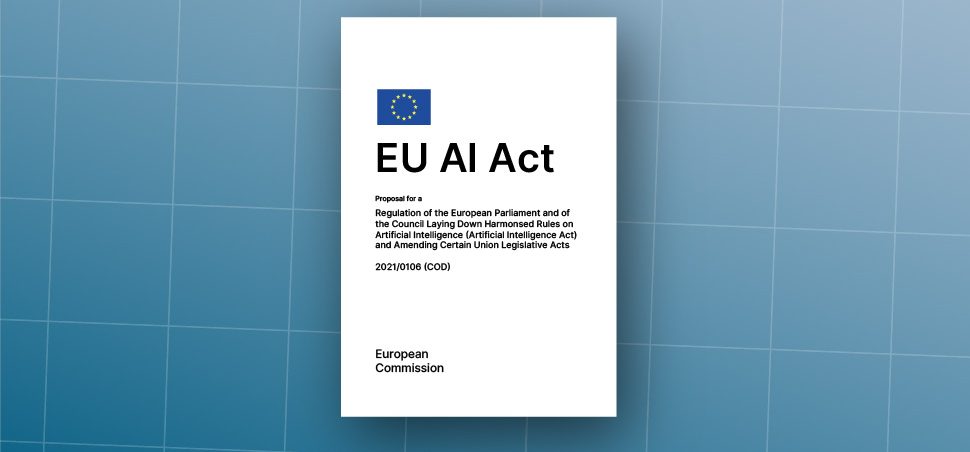
March 13th – The Artificial Intelligence Act, the world’s first comprehensive legal and regulatory framework for artificial intelligence, is passed by the European Union.
March 14th – SpaceX successfully launched their Starship spacecraft, but lost the rocket upon re-entering the atmosphere.
March 25th – The UN Security Council passed Resolution 2728 calling for an “immediate ceasefire” in Gaza during Ramadan and demanded the immediate and unconditional release of all hostages (14 votes in favour with the United States abstaining).

In the world of Parkinson’s research, a great deal of new research and news was reported:
In March 2024, there were 1,002 research articles added to the Pubmed website with the tag word “Parkinson’s” attached (3,028 for all of 2024 so far). In addition, there was a wave to news reports regarding various other bits of Parkinson’s research activity (clinical trials, etc).
The top 5 pieces of Parkinson’s news
1. More mitochondrial DNA damage data:
A new research paper reported that the Parkinson’s-associated LRRK2-G2019S mutations expressed at endogenous (normal) levels is sufficient to cause mitochondrial DNA damage in cells in culture. Treatment with LRRK2 inhibitors (both selective & non-selective) rescued the phenotype (Click here to read more about this). This is a further accumulation of data supporting mitochondrial DNA damage as a biomarker of Parkinson’s (Click here to read a previous SoPD post on this topic).
2. More DOPA decarboxylase data:
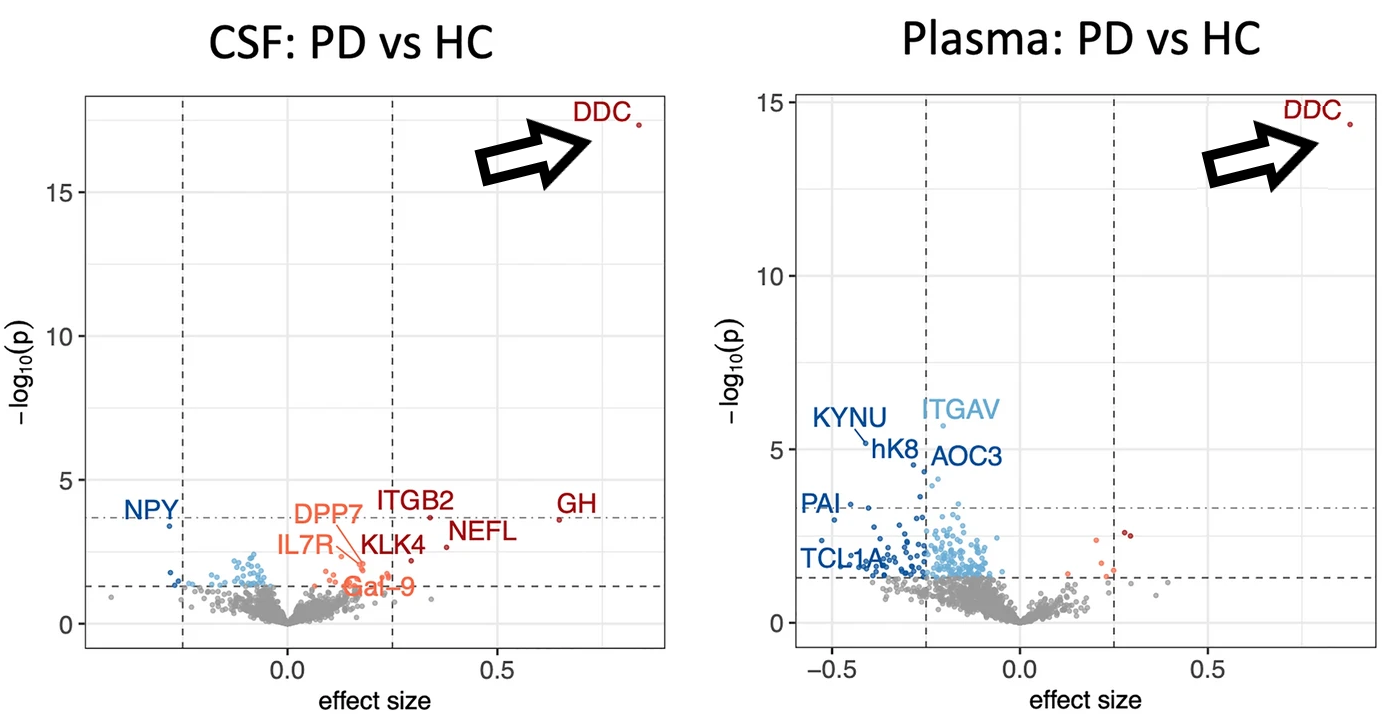
DOPA decarboxylase (DDC) is an enzyme that is involved in the production of dopamine. Recently data has been accumulating suggesting that it could be a useful biomarker for Parkinson’s. In a very recent study, researchers conducted a comprehensive proteomic analysis of 4877 cerebrospinal fluid, plasma, & urine samples from individuals recently diagnosed with Parkinson’s and they identified DDC as a potential biomarker (Click here to read more about this and click here to read a previous SoPD post on this topic). Look at DDC in the graphs below – way out there all by itself. It’s almost off the chart!
3. Phase 1 results for Lundbeck’s alpha synuclein immunotherapy for Parkinson’s:
The pharmaceutical company Lundbeck published the safety & pharmacokinetic profile of their alpha synuclein-targeting immunotherapy Lu AF82422. They report that the treatment was safe and well tolerated and indicated peripheral target engagement. The results “were appropriate for further clinical development” (Click here to read more about this).

4. New class of drug begins clinical testing for Parkinson’s:
Mission Therapeutics announced the commencement of Phase 1 testing of MTX325 (a CNS penetrant USP30 inhibitor). This is a new class of potentially disease-modifying treatment being tested for Parkinson’s (Click here to read more about this and click here to read a previous SoPD post on this topic).

5. Taking the STING out of inflammation:
Researchers report pharmacological inhibition of glucocerebrosidase (GCase) in mice results in inflammatory microglia in the cerebral cortex. The resulting accumulation of glucosylceramide in microglia caused the release of mitochondrial DNA & impaired lysosomal function. The consequence of this was STING activation, which could be rescued by the treatment of Rapamycin (Click here to read more about this).

Articles of general interest
- Give Prof Huw Morris a microphone, ask him to talk about the genetics of Parkinson’s & then get out of the way! Phenomenal podcast from the Michael J Fox Foundation. Absolute masterclass. So many insights, from Guam to dyskinesia – definitely recommended listening! (Click here to read more about this).
- Interesting piece explores the meaning of self-care, disease-specific knowledge, & self-tracking from the perspective of people with Parkinson’s in Sweden; Self-care needs to be acknowledged/discussed more often (Click here to read more about this).
Basic biology news
- New paper combines a genetically tractable iNeuron system with proteomic & computational tools to create a quantitative landscape of endoplasmic reticulum proteome remodelling; Impressive toolkit – a lot of work! (Click here to read more about this).
New paper suggests “cholinergic changes in Lewy body disease carry implications for understanding phenotypes & the influence of Alzheimer’s co-pathology, delineating subtypes & pathological spreading routes” (Click here to read more about this).
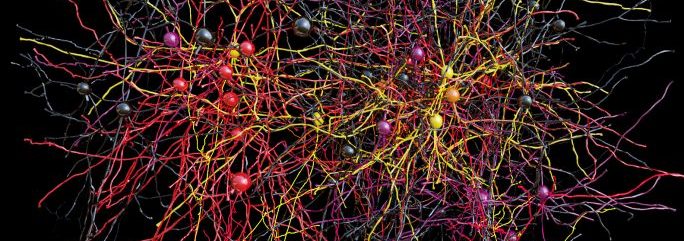
- Immunisation with structurally adapted fungal protein fibrils induces immunity to Parkinson’s pathology in mice; Antibodies from immunized mice recognized α-synuclein fibrils & brain homogenates from patients with PD, dementia with Lewy bodies & MSA (Click here to read more about this).
- Could the brain osmolyte N-acetyl aspartate (NAA) being influencing the aggregation of Parkinson’s-associated α-synuclein? New research a lower concentration of NAA inhibits α-Syn aggregation, whereas higher concentrations of NAA accelerate the aggregation (Click here to read more about this).
- Researchers report loss of WIPI4 function in neurodegeneration induces autophagy independent ferroptosis (Click here to read more about this).
- New study reports that tetrahydroauroglaucin (a polyketide isolated from a marine sponge) significantly improved lipid metabolism disorder in Parkinson’s models, markedly decreasing the accumulation of lipid droplets & promoting autophagic flux (Click here to read more about this).
- New research indicates that bacterial nitrate reduction may be influential for initiating intestinal α-syn aggregation; Respiration of nitrate creates an oxidizing redox potential, enabling the formation of dopamine-derived quinones & α-syn aggregates (Click here to read more about this).

- Engrailed 1 deficiency doesn’t interfere with dopamine neuron differentiation, but results in a reduced branching; Transcriptome analysis highlights cilia-associated pathways; EN1-/-= elongation of primary cilia; Wnt stimulation reduced ciliogenesis in EN1-/- (Click here to read more about this).
- New research suggests specific subsets of peripherally activated neurons differentially regulate the gut microbiome & GI physiology in mice without involvement of signals from the brain; Implications for Parkinson’s? (Click here to read more about this).
- Ageing increases α-synuclein expression in dopamine neurons. In modeling this, researchers identified the SKI Family Transcriptional Corepressor 1 (SKOR1) as a possible influence in normal nigral ageing vs increased risk of Parkinson’s (Click here to read more about this).
- New paper reports PDZ serine protease HTRA1 disaggregates Parkinson’s-associated α-synuclein amyloid fibrils & converts them into non-toxic/seeding incompetent species; Future = small molecule HTRA1 modulators (Click here to read more about this).
- Researchers report a metabolic switch controlling Parkinson’s-related Pink1 mRNA localization & PINK1 activity via insulin & AMPK signaling in neurons; A mechanistic connection between insulin resistance & mitochondrial dysfunction? (Click here to read more about this).
- New research reports that mitochondrial stress induces the formation of a PINK1-TOM-TIM23 supercomplex in human cultured cells; Tom20 gates PINK1 activity & mediates its tethering of the TOM & TIM23 translocases (Click here to read more about this).

- A new study clinically & functionally evaluates the SNCA p.V15A missense variant in a large Italian family affected by Parkinson’s; The research team reports accumulation of α-synV15A in PBMCs & significantly reduced glucocerebrosidase activity (Click here to read more about this).
- Researchers have discovered a novel deubiquitinase DUB3, whose N-terminal catalytic domain interacted with the C-terminal ligand-binding domain of VDR to reduce VDR ubiquitination; New insights into VDR regulation, plus therapeutic target for Parkinson’s? (Click here to read more about this).
- New research presents a new cellular ageing model within the Drosophila brain; They report that decay of the neuronal microtubule cytoskeleton precedes the onset of other ageing hallmarks (Click here to read more about this).
- Researchers find a positive correlation between ALDH2 rs671 polymorphism & Aβ pathology, but not susceptibility to Alzheimer’s; Increased Aβ40/42 ratio is dependent on ALDH2 activity; Decreased ALDH2 activity elevates Aβ40/42 ratio mainly via (R)−4-HNE mediation (Click here to read more about this).
- Analysing the MCI-Park (selectively disrupt mitochondrial complex I) mouse, researchers find that these mice exhibit sleep-wake abnormalities that resemble those identified in Parkinson’s (Click here to read more about this).

- Researchers report a definitive cytoprotective function for Parkinson’s-associated DJ-1 through its ability to inactivate by hydrolysis a highly reactive cyclic 3-phosphoglyceric anhydride that forms during glycolysis (Click here to read more about this).
- Researchers have designed the “artificial protein modulator” (APROM) via atomic-level engineering of heterogeneous catalysts to reprogram neuronal protein functions; They demonstrate utility by reprograming Parkinson’s-associated α-synuclein (Click here to read more about this).
- In vitro inactivation of Parkinson’s-associated β-glucocerebrosidase in oligodendrocytes = lysosomal dysfunction & inhibits myelination; In vivo = demyelination & early neurodegenerative hallmarks (axonal degen., α-synuclein accumulation & astrogliosis – click here to read more about this).
- New research reports systemic alterations in the progression of tau pathology in Parkinson’s-associated LRRK2-G2019S mice; LRRK2 kinase inhibition reversed these effects in LRRK2-G2019S mice, but no effect in WT mice (Click here to read more about this).

- New research indicates that hyperphosphorylation of RAB3A by Parkinson’s-associated LRRK2-p.R1441H disrupts binding to the motor adaptor MADD, reducing the trafficking of synaptic vesicle proteins within neurons (Click here to read more about this).
- New study unravels the intricate mechanisms controlling Parkinson’s-associated PINK1 protein stability & sheds light on the novel role of FBW7β (Click here to read more about this).
- New research identifies neurons vulnerable to Lewy pathology in the Parkinson’s cortex & describes a conserved signature of molecular dysfunction in both mice & humans (Click here to read more about this).
- New research reports genome-wide CRISPR/Cas9 screening results that show the loss of GET4 increases mitochondria-endoplasmic reticulum contact sites & is neuroprotective in fly models of Alzheimer’s (Click here to read more about this).
- New research presents the generation of α-Synuclein G51D & 3D transgenic mice, which reveal that decreased α-synuclein tetramer-monomer ratios can promote Parkinson’s phenotypes (Click here to read more about this).

Disease mechanism
- A virtual screening technique identifies ponciretin, danthron, chrysophanol, & N-p-coumaroyltyramine as potential BACE1 inhibitors to explore in preclinical models of Alzheimer’s & Parkinson’s. In vivo research is required to confirm these findings (Click here to read more about this).
- AI-driven drug repositioning study identifies the non-nucleoside reverse transcriptase inhibitor efavirenz (HIV medication) as a modulator of Parkinson’s-associated α-synuclein propagation; Efavirenz attenuates α-syn propagation in vivo & in vitro (Click here to read more about this).
- New research finds DPP-4 inhibitor sitagliptin elevates plasma & CSF incretin levels following oral administration to nonhuman primates; “This study provides a supportive translational step towards the clinical evaluation of sitagliptin in Parkinson’s” (Click here to read more about this).
- Using IBM Watson, researchers identify drugs for repurposing to treat L-DOPA-induced dyskinesia; Acamprosate, ganaxolone & lorcaserin (from 3539 drugs) were top hits & tested in rats; Only Lorcaserin decrease LIDs, but unfortunately it increases PD features (Click here to read more about this).

- Non-antibiotic tetracyclines were designed & tested as drug candidates to prevent pathological α-synuclein aggregation & neuroinflammation in in vitro models of Parkinson’s; 2 candidates identified for further investigation (Click here to read more about this).
- Researchers used a cocktail of RNA targeting therapeutics (“SB_NI_112” – catchy, gotta nice ring to it!) that downregulates NF-κB & NLRP3, prevents neuronal death, & slows neurodegeneration in prion-diseased mice; Now being tested in Parkinson’s model (Click here to read more about this).
- New research on N-acetylcysteine in the context of Parkinson’s; It increases dopamine release & prevents the deleterious effects of 6-OHDA on the expression of VMAT2, α-synuclein, & tyrosine hydroxylase (Click here to read more about this).
- New research presents the neuroprotective potential of NFPS (a GlyT1 inhibitor) against striatal damage in Parkinson’s & Huntington’s models (Click here to read more about this).
- New research explores the survival & maturation of human induced pluripotent stem cell-derived dopaminergic progenitors in rodent model of Parkinson’s & how it is enhanced by transplantation in a neurotrophin-enriched hydrogel (Click here to read more about this).
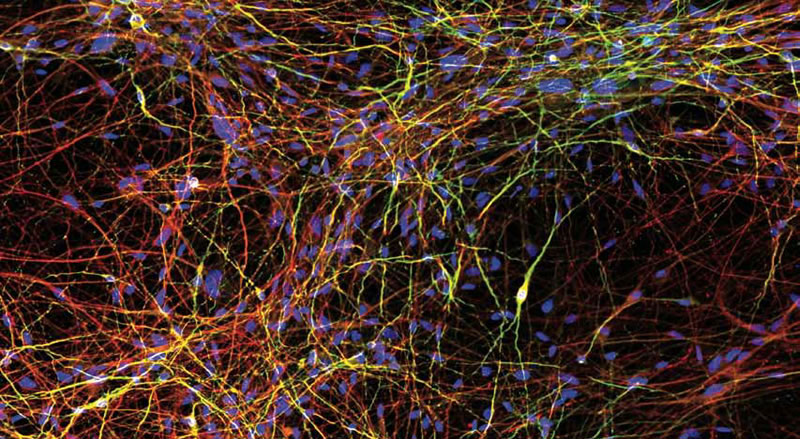
- New research uses disease phenotypic screening in neuron-glia cocultures to identify 29 agents that protected against LPS-induced neuronal loss, (affecting adrenergic, steroid, inflammatory & MAP kinase – click here to read more about this).
- Researchers report that depletion of dietary vitamin B12 (which induces propionate breakdown) & propionate supplementation suppress neurodegeneration & reverse Parkinson’s-associated transcriptomic aberrations (in C. elegans – click here to read more about this).
- New data indicating that metabotropic glutamate receptor 4 (mGlu4) positive allosteric modulators lack efficacy in both rat & marmoset models of L-DOPA-induced dyskinesia; Post foliglurax is there any hope for mGlu4 PAMS? (Click here to read more about this).
- Cell-permeable exogenous recombinant Heat shock protein 70 (HSP70) can protect neurons & astrocytes against cell death in the toxin (rotenone) & familial (PINK1 & LRRK2 fibroblasts) models of Parkinson’s (Click here to read more about this).
Clinical research
- Cortical mean diffusivity (cMD) is a novel imaging biomarker highly sensitive to detecting cortical microstructural changes; Now researchers report cMD can detect significant cortico-structural differences in Parkinson’s with pREM sleep behavior disorder (Click here to read more about this).
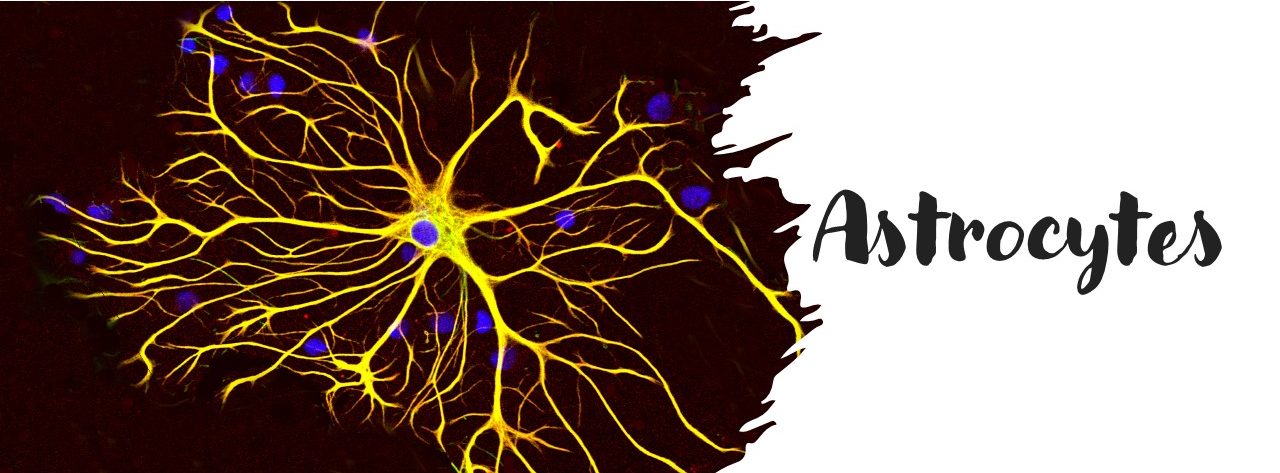
- New research describes how the human brain distribution of canonical cell types predicts tissue damage in 13 neurodegenerative conditions (including Parkinson’s); Strong mediating role for microglia & astrocytes (Click here to read more about this).
- A new commentary explores vascular risk factors as a possible disease modifying intervention in Parkinson’s; “Cardiovascular risk management should be individually tailored to the specific risk profile of the participant” (Click here to read more about this).
- New research provides a detailed characterization of Parkinson’s progression in diverse populations; Systemic divergences in the patient populations enrolled in research settings vs. patients in the real-world (Click here to read more about this).
- New study investigates glypican 4 (GPC-4) in biofluids from Parkinson’s patients (CSF, serum & tears); GPC-4 was confirmed in all 3 biofluids, with highest levels in serum; Levels were age-dependent & significant associated with MoCA (cognitive) scores (Click here to read more about this).
- New research used multi-night cortico-basal recordings to reveal mechanisms of NREM slow-wave suppression & spontaneous awakenings in people with Parkinson’s; Highlights impact of DBS on sleep in PD (Click here to read more about this).
- Assessments of 33 isolated REM sleep behavior disorder (iRBD) patients (& 29 controls) helped highlight motor dysfunction (speed, rhythm, & dual task motor deterioration) as indicators of incipient Parkinson’s (Click here to read more about this).

- Using 11C-(R)-PK11195 PET, researchers found increased microglial activation in the substantia nigra of isolated REM sleep behavior disorder (iRBD) patients along with reduced striatal dopaminergic function (Fluorodopa – click here to read more about this).
- So much REM Sleep Behavior Disorder data being published at the moment: Researchers report presynaptic dopaminergic imaging allows a good prediction of forthcoming phenoconversion diagnosis (Click here to read more about this).
- Researchers present clinical disease trajectories from 3,042 Netherlands Brain Bank donors, providing valuable new insights into neurodegenerative disorder symptomatology; Dataset highlights subtypes of early & late Parkinson’s (Click here to read more about this).
- A Mendelian randomization study reveals “the important role of monocytes in Parkinson’s & indicated that CX3CR1 expression on monocytes is associated with a reduced risk of PD” (Click here to read more about this).
- New research reports the largest cross-sectional study of synaptic density imaging in Parkinson’s to date; Synaptic density was reduced in key brain regions associated with PD & correlated with MDS-UPDRS motor scores (Click here to read more about this).

- New paper presents identification of 27 allele-specific regulatory variants in Parkinson’s (using a massively parallel reporter assay); 23/27 disrupt at least 1 transcription factor binding site (Click here to read more about this).
- Brain imaging of individuals with multiple system atrophy (MSA) often presents a hot-cross bun-like pattern in the pons; Interestingly, researchers now report a hot-cross bun-like pattern in anti-IgLON5 disease (Click here to read more about this).
- A nationwide study that controlled for diabetes duration & used 3-year lag between exposure & outcome to account for reverse causality does not provide support for the hypothesis that statin use decreases the risk of Parkinson’s (Click here to read more about this).
- New study finds that intermittent trans-spinal theta burst magnetic stimulation did not significantly improve gait or balance in Parkinson’s & gait disorders (Click here to read more about this).
- New research finds influenza vaccination is significantly associated with a reduced risk of incident dementia, but not Parkinson’s in community-dwelling adults in the UK Biobank cohort (n=70,938, 38,328 who got vaccinated – click here to read more about this).
- Free-water imaging of the Nucleus Basalis of Meynert in patients with idiopathic REM sleep behavior disorder (N=57), Parkinson’s (57) or controls (59) finds free-water values in the NBM associated with progress. of cognitive impairment & depression in iRBD (Click here to read more about this). The first study to investigate somatomotor-association impairment & MIRT-induced brain functional & structural alterations in Parkinson’s patients finds altered functional & structural gradients; New diagnostic index for differentiating controls vs PD? (Click here to read more about this).
- A graph from the Global Burden of Disease Study group’s report on global age-sex-specific mortality, life expectancy, & population estimates makes stark the Japanese ageing population issue; From 2000-21, the proportion of population aged >65yrs increased from 17% to 29% (Click here to read more about this).
- New research suggests that neuroinflammation in Parkinson’s proceeds even after anti-parkinsonian therapy is started, “but zonisamide coadministration might have the potential to ameliorate proinflammatory responses, exerting a neuroprotective effect” (Click here to read more about this).
- Oligodendrocytes again!!! Single-nuclei paired multiomic analysis of the human midbrain reveals age- & Parkinson’s–associated glial changes; Microglia & oligodendrocytes are altered in PD; “A previously undescribed role for oligodendrocytes in aging & PD” (Click here to read more about this).

- Cross-sectional study of 428 participants finds high proportion of cases meeting clinical criteria for Parkinson’s, multiple system atrophy (MSA), dementia with Lewy bodies (DLB), & pure autonomic failure had skin biopsy positive for phosphorylated α-synuclein (Click here to read more about this).
- Assessment of plasma extracellular vesicle synaptic proteins as biomarkers in Parkinson’s in 144 people (101 PD & 43 controls) over a 1-year period; No significant difference in plasma EV synaptic protein levels between people with Parkinson’s & healthy controls, but changes linked to motor decline (Click here to read more about this).
- New study finds corneal confocal microscopy may help to distinguish Multiple System Atrophy (MSA) from Parkinson’s; N=63 PD, 30 MSA, & 31 controls (Click here to read more about this).
- New study suggest that patients with Parkinson’s & cognitive impairment have advanced brain aging that is associated with poor cognitive functions. The identified neuroimaging features & brain age measures could serve as potential biomarkers (Click here to read more about this).
- Further data suggesting that calcineurin inhibitors, especially those acting within the brain, may reduce the prevalence of Parkinson’s; Data sourced from the TriNetX Diamond Network; N=194,753 adults >60yrs (Click here to read more about this).
- New research used mobile health technology assessment to identify subtle alterations of turning in idiopathic REM sleep Behavior Disorder; N=148 (23 with polysomnography-confirmed iRBD, 60 drug-naïve Parkinson’s, & 65 controls (Click here to read more about this).
- “AccessPD” is a unique platform that aims to create a registry of more than 2000 Parkinson’s patients & a rich database of PD-relevant information; Potential participants id.ed via electronic health records (Click here to read more about this).
- New research “demonstrates that the neuroprotection of coffee on Parkinson’s is attributed to caffeine & its metabolites by detailed quantification of plasma caffeine & its metabolites years before diagnosis” (Click here to read more about this).

- New research presents a comprehensive blood metabolomics profiling of 549 Parkinson’s patients & 590 controls. They reveal coordinated alterations in xanthine metabolism, particularly reduced in HPRT1 enzyme (Click here to read more about this).
- New study demonstrates alterations towards a proinflammatory state in the peripheral adaptive immune system in 44 isolated REM sleep behavior disorder patients (vs 36 unaffected control), specifically in CD4+ & INF-γ+ CD8+ T cell subsets (Click here to read more about this).
- The “Care of Late-Stage Parkinsonism” (CLaSP) study collected economic data from late-stage Parkinson’s patients & care partners in 5 European countries (France, Germany, UK, Netherlands & Sweden); Costs are substantially higher vs previously published data on earlier stage PD (Click here to read more about this).
- New study explores the biology of postmenopausal Parkinson’s; N=45 women with postmenopausal-onset PD vs 40 age-matched controls; PD = increased testosterone & reduced estradiol levels; Follicle-stimulating hormone levels correlated with worse cognitive scores (Click here to read more about this).
New clinical trials
- New clinical trial registered: AskBio (Bayer) has initiated a Phase 2, randomized, double-blind, sham surgery-controlled study of the efficacy & safety of intraputaminal AAV2-GDNF in 87 individuals with moderate Parkinson’s (Click here to read more about this).

- New clinical trial registered: The Canadian Parkinson’s Microbiome Initiative: A pilot 18 month, Phase 2, feasibility randomized controlled trial of the MIND diet in 40 individuals with Parkinson’s (Click here to read more about this).
- New clinical trial registered: Enterin has registered a 10 week, multicenter, open-label study to evaluate tolerability & efficacy of ENT-01 in 40 individuals with Parkinson’s disease dementia (Click here to read more about this).
- New clinical trial registered: Allyx Therapeutics has intiated a Phase 1, randomized, double-blind, placebo-controlled study of oral BMS-984923 (mGluR5 silent allosteric modulator) twice daily for 28 days in 18 participants with Parkinson’s (Click here to read more about this).

Clinical trial news
- Brief duration & ‘strong placebo response’ limits interpretation of a randomized, double-blind, placebo-controlled 2 week study assessing the efficacy & tolerability of relatively high cannabidiol (CBD)/low Δ-9-tetrahydrocannabinol (THC) in Parkinson’s (Click here to read more about this).
- Researchers from Abbvie present 1-year longitudinal progression of Parkinson’s using digital data from the WATCH-PD study; N=82 untreated PD & 50 age-matched controls; “Digital measures may enhance sensitivity to the progression of bradykinesia” (Click here to read more about this).

- Results of the phase 3, randomised, double-blind, double-dummy, multicentre trial investigating safety & efficacy of continuous subcutaneous levodopa–carbidopa infusion (ND0612) for Parkinson’s with motor fluctuations (BouNDless study) have been published (Click here to read more about this).
- Long-term safety & efficacy of open-label nabilone (a synthetic analog of tetrahydrocannabinol/THC) on sleep & pain in Parkinson’s; Well tolerated & improved overall non-motor symptom burden, sleep problems, as well as pain (Click here to read more about this).
Conferences/lectures
- The INSIGHT into PD Online Conference is back – starting on World Parkinson’s Day (11th April 2024), it’s the largest online conference dedicated to supporting the Parkinson’s community. And it is FREE! (Click here to read more about this).
- Cure Parkinson’s will be holding its Spring Research Update meeting at the Royal Society of Medicine (London) on the 17th April – and this too is FREE and will be available online! (Click here to read more about this).
- The inaugural GBA1 Meeting hosted by The Neuro in McGill University in Montreal (June 27-29th). Three days of lectures, discussions, networking & workshops on all things GBA1 (including GBA1-associated Parkinson’s – click here to read more about this).

Other news
- BlueRock Therapeutics reported at 18 months their cell transplant product bemdaneprocel is well tolerated/no major safety issues in 12 people with Parkinson’s. F-DOPA signal continues to increase after immune suppression stoppage (Click here to read more about this).
- Ventyx Biosciences announces plans to launch a Phase 2a clinical trial testing their oral CNS-penetrant NLRP3 inhibitor, VTX3232 in people with recently diagnosed Parkinson’s in the 2nd half of 2024 (Click here to read more about this).

- Bit.bio announced a multi-year collaboration with the Michael J Fox Foundation. The first project will prioritise the discovery & development of a key human cell type for Parkinson’s research & drug discovery (Click here to read more about this).
- Asha Therapeutics will be presenting preclinical data at the ADPD 2024 meeting on their mitochondrial DRP1 inhibitor ASHA-091 being targeted towards Parkinson’s & Alzheimer’s; The company anticipates clinical testing in late 2024 (Click here to read more about this).
- CuraSen Therapeutics present additional positive Phase 2a data with its combination adrenergic activator, CST-2032/CST-107, in patients with mild cognitive impairment (MCI) or mild dementia from either Alzheimer’s or Parkinson’s at the ADPD 2024 meeting (Click here to read more about this).

- NodThera will be presenting data from their Phase Ib/IIa studies at the ADPD 2024 meeting, indicating that their brain-penetrant NLRP3 inhibitor NT-0796 reverses neuroinflammation in people with Parkinson’s; Preparations for a Phase IIa/IIb study ongoing (Click here to read more about this).
- Athira Pharma is presenting both clinical & preclinical data supporting the therapeutic potential of their hepatocyte growth factor modulator ‘Fosgonimeton’ in Alzheimer’s & Parkinson’s at the ADPD 2024 meeting (Click here to read more about this).
- Amylyx announces that their Phase 3 PHOENIX trial of AMX0035/RELYVRIO (sodium phenylbutyrate & taurursodiol combo) in 664 participants with ALS “did not meet prespecified primary or secondary endpoints” (Click here to read more about this).

- Vaxxinity presents positive target engagement data from Phase 1 clinical trial of their alpha-synuclein targeting immunotherapy UB-312 in Parkinson’s at the ADPD 2024 meeting; They see a reduction of pathological alpha-synuclein in CSF of PD patients (Click here to read more about this).
- Vigil Neuroscience presented preclinical data on their small molecule TREM2 agonist VG-3927 in an oral presentation at the ADPD 2024 meeting. This agent is being developed for Alzheimer’s – I wonder if they have explored Parkinson’s? (Click here to read more about this).
- Pipeline update from BioVie announcing plans for a Phase 2b for NE3107 (β-androstenetriol derivative) as monotherapy for recently diagnosed Parkinson’s patients; Enrolling 100-150 participants; 6-month trial; Primary endpoint=UPDRS III (Click here to read more about this).

- Nitrase Therapeutics presented new data at the ADPD 2024 meeting on their antibodies targeting nitrated synuclein in preclinical (in vitro & in vivo) models of Parkinson’s; Specific nitrated α-synuclein binding affinity of <2 nM in vitro (Click here to read more about this).
- Yale Medical School has been awarded a $13M grant from The Marcus Foundation to support a clinical trial testing the ability of the anti-inflammatory medication Humira to preventive Parkinson’s. The study will be targeting prodromal PD (Click here to read more about this).
Review articles/videos
- A useful new review explores the role of the “lysosomal” enzyme β-glucocerebrosidase (GCase) in Parkinson’s pathogenesis & discusses promising examples of GCase-based therapeutics currently being tested (Click here to read more about this).
- New review article discuss Parkinson’s in sub-saharan Africa & the double-Eedged sword of pesticides; “A societal dilemma, having sacrificed safety for production” (Click here to read more about this).

- A new review asks for a “shift in the overall paradigm in neurodegeneration from a gain-of-function proteinopathy to a loss-of-function proteinopenia“; They propose testing a LOF synucleinopenia hypothesis for Parkinson’s (Click here to read more about this).
- A nice short piece on how two World Wars changed the life, work, & name of Frederic Lewy – he of the Parkinson’s-associated Lewy body; “Neither he nor the other German researchers during his lifetime ever used the eponym Lewy bodies” (Click here to read more about this).
- New review explores “the interconnected pathogenic features of different types of neurodegenerative disease, discuss the general strategy to modelling neurodegenerative diseases using a microfluidic chip, & introduce the organoid-on-a-chip as the next advanced relevant model” (Click here to read more about this).
- This useful review of molecular mechanisms & therapeutic potential of dietary intervention on human diseases (including Parkinson’s) has a reference list of 442 papers (Click here to read more about this).

- New review examines GBA1-& LRRK2-directed treatments being developed for Parkinson’s (Click here to read more about this).
- Interesting review on the past & future definitions of Parkinson’s: 1.) From the phenotype to underlying biology: evolution of concepts; 2.) Defining PD: past & current criteria; 3.) From clinical to a biological definition of PD; 4.) Future perspectives & unmet needs (Click here to read more about this).
* * * * * * * * * * * *
And there it is, just some of the highlights from March 2024 – another very busy month of Parkinson’s research. Hopefully there will be bits and pieces of interest for everyone in the list. Much of the material used here was collected from the Science of Parkinson’s Twitter feed (and there is a lot more posted there each day).
Any thoughts/feedback would be greatly appreciated (either in the comments below, or contact me directly).
And now: on to April!!!
 All of the material on this website is licensed under a
Creative Commons Attribution 4.0 International License
You can do whatever you like with it!
EDITOR’S NOTE: The author of this post is an employee of Cure Parkinson’s, so he might be a little bit biased in his views on research and clinical trials supported by the trust. That said, the trust has not requested the production of this post, and the author is sharing it simply because it may be of interest to the Parkinson’s community.
The information provided by the SoPD website is for information and educational purposes only. Under no circumstances should it ever be considered medical or actionable advice. It is provided by research scientists, not medical practitioners. Any actions taken – based on what has been read on the website – are the sole responsibility of the reader. Any actions being contemplated by readers should firstly be discussed with a qualified healthcare professional who is aware of your medical history. While some of the information discussed in this post may cause concern, please speak with your medical physician before attempting any change in an existing treatment regime.
In addition, many of the companies mentioned in this post are publicly traded companies. That said, the material presented on this page should under no circumstances be considered financial advice. Any actions taken by the reader based on reading this material is the sole responsibility of the reader. None of the companies have requested that this material be produced, nor has the author had any contact with any of the companies or associated parties. This post has been produced for educational purposes only.

 The Science of Parkinson's