
|
# # # # At the end of each month the SoPD writes a post which provides an overview of some of the major pieces of Parkinson’s-related research that were made available during July 2024. The post is divided into 10 parts based on the type of research:
# # # # |
So, what happened during July 2024?
In world news:
1st July – The “Supreme Court” of the United States of America ruled in a 6–3 decision that US presidents have absolute immunity for acts committed as president within their core constitutional purview, at least presumptive immunity for official acts within the outer perimeter of their official responsibility, and no immunity for unofficial acts (What could possibly go wrong with this…)

4th July – 2024 United Kingdom general election: Sir Keir Starmer lead the Labour Party to a landslide victory, returning the party to government for the first time in 14 years. Incumbent Conservative Prime Minister Rishi Sunak resigned as the leader of the party the next day, with Starmer taking office.

5 July – The first mouse model with a complete, functional human immune system is demonstrated (Click here to read more about this).

19th July – A global IT outage occurred, affecting 8.5 million Microsoft Windows devices and causing widespread disruptions to businesses and governments. The outage was caused by a faulty update from cybersecurity firm CrowdStrike

21st July – Incumbent United States President Joe Biden ends his candidacy in the 2024 United States presidential election.

26th July – The 2024 Summer Olympics started with a bang in Paris, France.

In the world of Parkinson’s research, a great deal of new research and news was reported:
In July 2024, there were 901 research articles added to the Pubmed website with the tag word “Parkinson’s” attached (6,840 for all of 2024 so far). In addition, there was a wave to news reports regarding various other bits of Parkinson’s research activity (clinical trials, etc).
The top 7 pieces of Parkinson’s news
1. The Parkinson’s Disease Drug Therapies in the Clinical Trial Pipeline report:
The 2024 report on Parkinson’s drug therapies in the clinical trial pipeline was published. There were 136 active Phase 1–3 trials evaluating drug therapies for PD, of which 76 (56%) were classified as symptomatic trials and 60 (44%) were designated disease modifying. And oooh, that’s a nice pie chart, instead of that ugly bulls eye from previous years (Click here to read more about this).

2. The PD GENEration genetic study of Parkinson’s:
Interesting data from the Parkinson’s Foundation’s PD GENEration study: Researchers report on the ongoing multicentre, observational study, involving 10,510 Parkinson’s participants across more than 85 research centers. 13% of cases=genetic variant; GBA1 variants in 7.7% of all participants, LRRK2=2.4%, PRKN=2.1%, SNCA=0.1%, & PINK1, PARK7 or VPS35=0.2%. Results observed in up to 18% in people with risk factors such as early age at onset, high-risk ancestry or an affected 1st degree relative, but also 9% in people with no risk factors (Click here to read more about this).
3. The connection between contact sports and Parkinson’s:
In a “cross-sectional study of contact sports athletes with chronic traumatic encephalopathy, years of contact sports participation were associated with substantia nigra tau pathology & neuronal loss, & these pathologies were associated with parkinsonism” (Click here to read more about this).

4. VAMPing up Parkinson’s:
Two papers published back-to-back on Vesicle-associated membrane protein 2 (VAMP2) and Parkinson’s-associated alpha synuclein: First, researchers show that α-synuclein condensates sequester vesicles and attract complexin-1 & -2, supporting a role in synaptic physiology and pathophysiology (Click here to read more about this). Next, researchers report VAMP2 binds to (interacting with the carboxy-terminal region) and protects α-synuclein against forming aggregation-prone oligomers and fibrils in condensates. Does the failure of this mechanism influence Parkinson’s? (Click here to read more about this).

5. Identifying those at risk:
A machine learning-based model integrating clinical-demographic variables with plasma proteins, identifies individuals at high risk for Parkinson’s. Key predictors included age, years of education, history of traumatic brain injury, & serum creatinine. Incorporation of 11 plasma proteins augments the model’s accuracy. They are: NFL, Integrin subunit αV, Hematopoietic PGD synthase, HNMT, TPPP3, Ectodysplasin A2 receptor, Latexin, IL-13R subunit α-1, BAG3, Tryptophanyl-TRNA synthetase, Secretogranin-2 (Click here to read more about this).

5. One of those “kitchen sink” papers:
Researchers use integrative analyses of multimodal data to identify 3 Parkinson’s “PACE” subtypes exhibiting distinct progression patterns, genetic/transcriptomic profiles, AND they propose repurposable drugs for them. They also estimated the treatment effects using 2 large-scale real-world patient databases, highlighting the potential of metformin in ameliorating Parkinson’s progression. Usage of metformin was associated with 22 + 31% decrease in likelihood of dementia, & 22 + 40% reduction in falls (Click here to read more about this).
7. More research on Camp Lejeune:
A new study explored exposure to contaminated water at Camp Lejeune and Parkinson’s progression. The researchers found “a higher risk of psychosis, falling, & fracture in a cohort of veterans with Parkinson’s who were exposed to trichloroethylene & other volatile organic compounds” (Click here to read more about this).

Articles of general interest
- An interesting write up on the GBA1 Meeting and the State of Science in Parkinson’s (Click here to read more about this).
- Parkinson’s advocate Kevin Kwok writes “I have personally witnessed Patient Focused Drug Development evolve from being a token afterthought implemented at late stages of clinical development to participating on panels where the patient voice is central in aiding translational research & early development decisions”(Click here to read more about this).

- Introducing the FIRE-UP PD study: Fostering inclusivity in research engagement for underrepresented populations in Parkinson’s (Click here to read more about this).
- A wonderful opportunity for women with Parkinson’s to take part in research!
👉Doesn’t matter where you are in the world
👉Doesn’t matter how old you are
👉Easy to use app
👉Only 4 months of tracking
👉Just follow this link to learn more: - I have recently been binging “2 Parkies in a pod” on the commute. Really enjoying Kuhan & Dave’s interviews. If you like the Movers and Shakers podcast & are looking for more Parkinson’s oriented discussions, give this a try! (Click here to read more about this).

Basic biology news
- Researchers present the development of Nurr1 agonists from amodiaquine by scaffold hopping & fragment growing; Their novel Nurr1 agonist rescues TH expression in dopamine neurons with Parkinson’s-associated LRRK2 mutations (Click here to read more about this).
- Parkinson’s-associated Leucine-Rich Repeat Kinase-2 (LRRK2) controls the differentiation & maturation of oligodendrocytes in mice & zebrafish; LRRK2 KO mice brains=reduced Olig2 & Mbp + alteration of Mbp striosomes, & lrrk2 knock-down zebrafish=reduced Ngf (Click here to read more about this).
- In new research raised 30 monoclonal antibodies against different forms of αSynuclein oligomers (variable binding to fibrils); 3 mAbs were particularly useful for pathological evaluation of postmortem brains, including early Parkinson’s (Click here to read more about this).

- New paper offers further support for tunneling nanotubes (TNT): Microglia rescue neurons from aggregate-induced neuronal dysfunction & death via TNT; TNT transfer is compromised in cells with Parkinson’s-related Lrrk2 variants (Click here to read more about this).
- New paper uses FosTRAP to explore the mechanisms that drive Parkinson’s-associated levodopa-induced dyskinesia; Subpopulations of direct pathway striatal neurons show enhanced dopamine sensitivity & excitatory synaptic input (Click here to read more about this).
- New research presents a toolbox for “screenable iPSC ‘inclusionopathy’ models utilizing piggyBac or targeted transgenes to rapidly induce CNS cells that express aggregation-prone proteins at brain-like levels”; They identify multiple inclusion classes, such as protective p62-positive inclusions vs neurotoxic lipid-rich inclusions – both identified in postmortem Parkinson’s patient brains; “We anticipate that scalable inclusionopathy models will be useful for biological & drug discovery” (Click here to read more about this).
- New research reports CD4+ T cell-associated cytokines induce a chronic pro-inflammatory phenotype in induced pluripotent stem cell-derived midbrain astrocytes (Click here to read more about this).
- Transgenic mice with rod-specific Vacuolar Protein Sorting 35 (VPS35) deletion exhibit “synapse loss & visual deficit, followed by progressive degeneration concomitant with the emergence of Lewy body-like inclusions & phospho-α-synuclein aggregation” (Click here to read more about this and click here to read a press summary about this research).
- New work “provides a structural rationale for the rapid & efficient ubiquitin turnover by [Parkinson’s-associated] parkin & helps explain the basis for some disease-causing variants” – interesting T415N data (Click here to read more about this).
- Why so slow? “Models of bradykinesia development in Parkinson’s based on observed neurophysiological correlates… have encouraged substantial research & therapeutic innovation but have demonstrated inconsistencies that may hamper further advances” (Click here to read more about this).
- A new quiescent SAA method “tailored for in situ amplification of αSyn aggregates in brain & skin samples while maintaining tissue integrity, providing a streamlined approach to diagnosing Parkinson’s” (Click here to read more about this).
- A new bioinformatics study analyzed the expression levels & regulatory mechanisms of Lipid metabolism-related genes in Parkinson’s. 4 biomarkers (MSMO1, ELOVL6, AACS, & CERS2) were highlighted; New biomarkers for diagnosing & treating PD? (Click here to read more about this).
- In a 3-phase system-level proteogenomic analytical framework study seeking to characterize disease-associated proteins & dysregulated mechanisms, researchers identify 577 proteins that enrich for Parkinson’s-related pathways (Click here to read more about this).
- New research reports Parkinson’s-associated LRRK2-G2019S derails α-amino-3-hydroxy-5-methyl-4-isoxazolepropionic acid-type glutamate receptors (AMPARs) trafficking, mobility, & composition in striatum of mice (Click here to read more about this).
- New research finds altered CaMKIIα-Ca2+/CaM interaction associated with idiopathic Parkinson’s; Oxidative stress disturbing the delicate balance of CaMKIIα signaling; CaMKIIα:Ca2+/CaM complex disruption in rotenone models of PD=CaMKIIα kinase hyperactivity (Click here to read more about this).
- Using an independent data set (Courage-PD), researchers conducted a 2-sample Mendelian randomization study & found an inverse association of genetically predicted body mass index with Parkinson’s (not explained by survival or incidence-prevalence biases – click here to read more about this).
- Researchers performed a comprehensive & unbiased evaluation of a large number of wild-type & bioengineered AAV capsids for their transduction efficiency in hiPSC-derived brain organoids (Click here to read more about this).
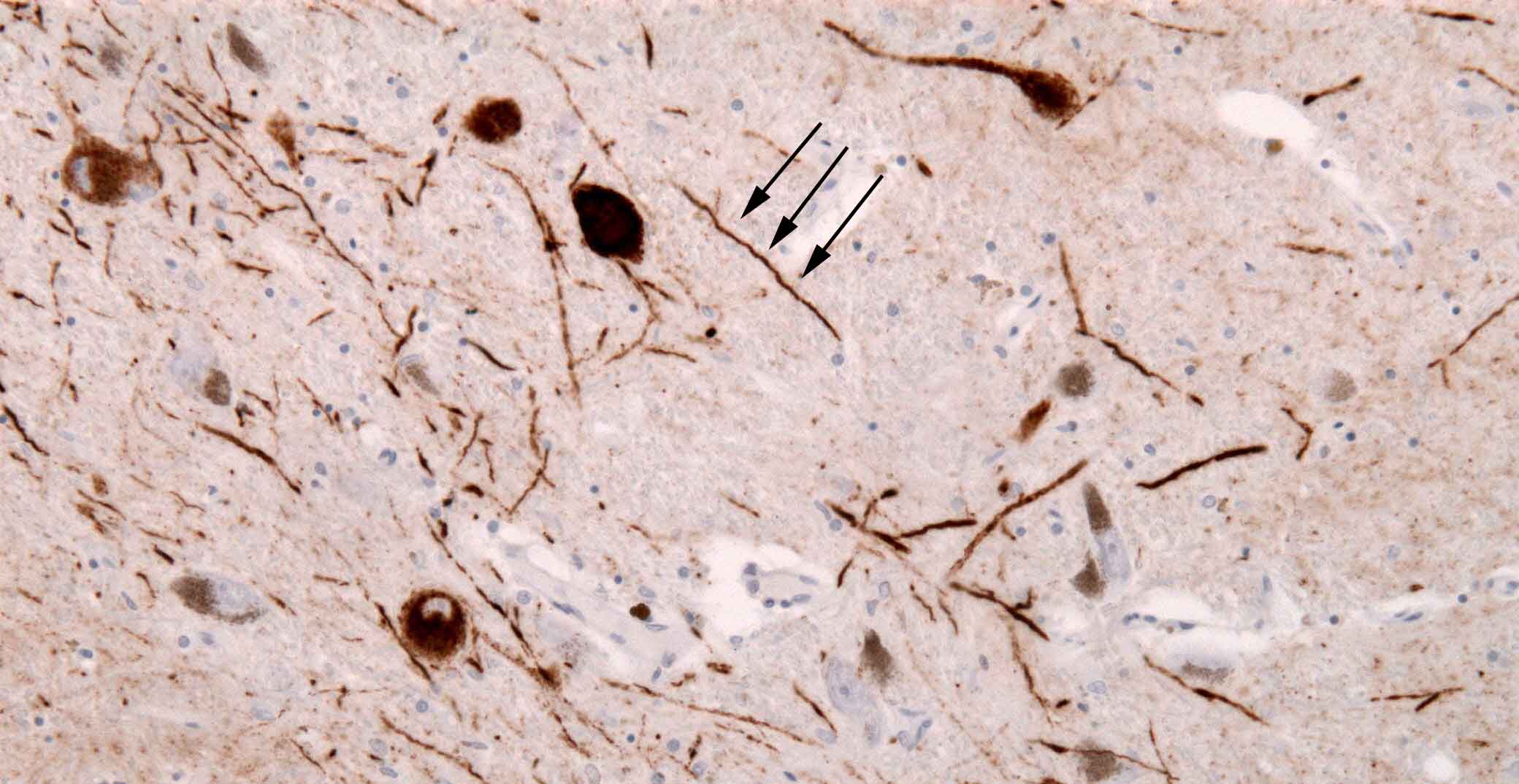
- New post-mortem brain study finds a strong (but regionally specific) change in unfolded protein response markers Grp78 & eIF2α levels, which positively correlates with soluble α-synuclein levels in Lewy body disease (including Parkinson’s cases – click here to read more about this).
- New research reports adult-onset deletion (via AAV-Cre) of Parkinson’s-associated ATP13A2 (PARK9) in mice induces progressive nigrostriatal pathway dopaminergic degeneration & lysosomal abnormalities (Click here to read more about this).
- P.gingivalis is back! Researchers report P.gingivalis (the main pathogenic bacteria of chronic periodontitis) promotes microglia M1 polarization through the NF-кB signaling pathway; IL-6 & IL-17 increased, while IL-10 decreased in brain tissue of infected mice (Click here to read more about this).
- New research finds the A53T mutation in Parkinson’s-associated α-synuclein enhances pro-inflammatory activation in human microglia upon inflammatory stimulus; Transplanted A53T mutant microglia=increased oxidative stress (Click here to read more about this).
- A meta-analysis & computational modelling study identifies 928 metabolites with significant changes in Parkinson’s patients, but only 190 were replicated with the same changes in >one study (60 up eg 3-methoxytyrosine & glycine, 54 down eg pantothenic acid & caffeine – click here to read more about this).

Disease mechanism
- Nicotinamide riboside rescues α-synuclein over-expressing C. Elegan, but in proteasome inhibition mouse model of Parkinson’s it alleviates symptoms only to later down-regulates dopamine metabolism; “Our results suggest that reduction in 26/20S function in combination with long term NR treatment may increase risk for developing reduced nigrostriatal dopamine function” (Click here to read more about this).
- Researchers engineer toxoplasma gondii secretion systems for intracellular delivery; Deep in Fig.1 they present GDNF & PARK2 Parkinson’s (Click here to read more about this).
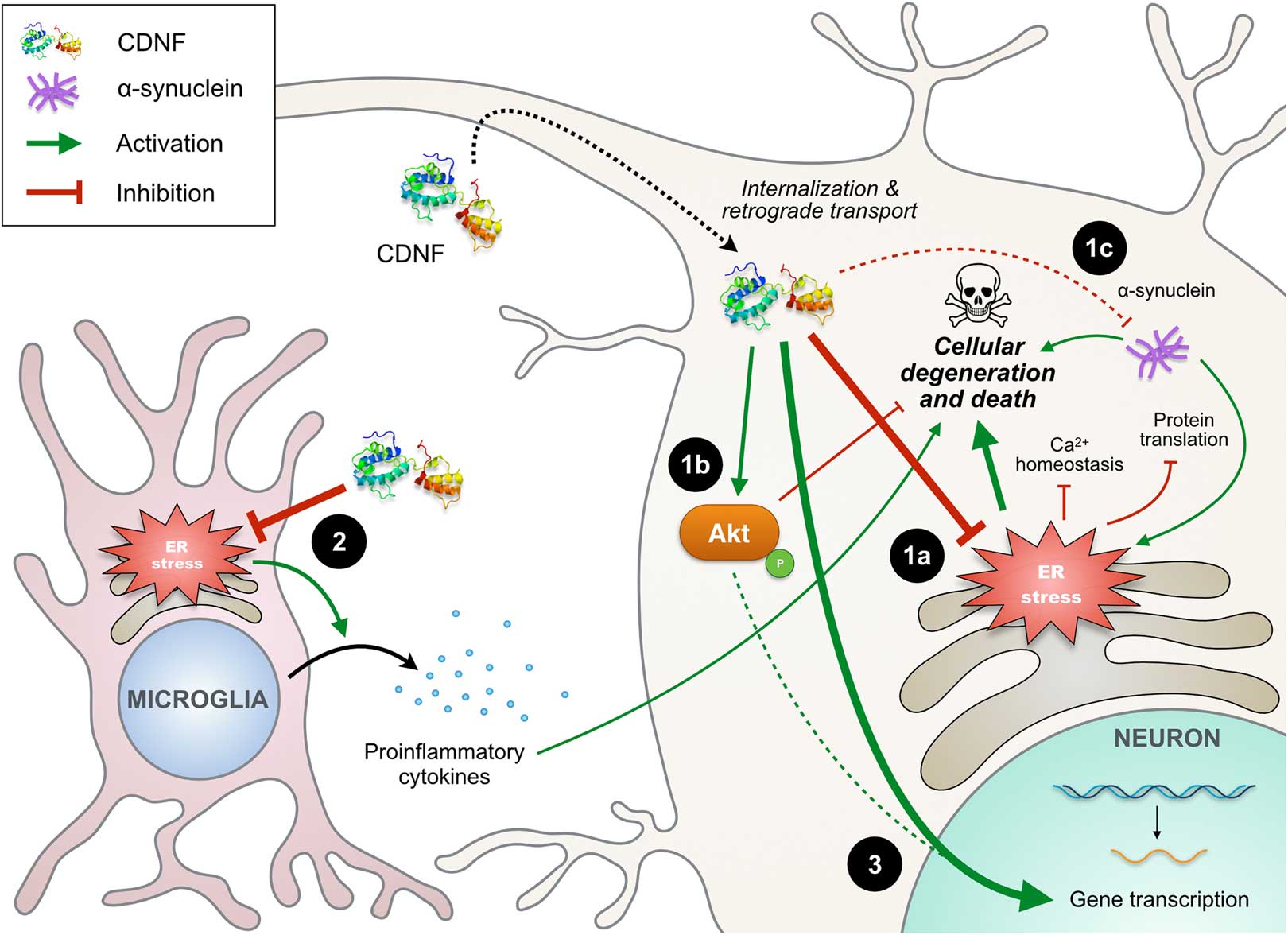
- Delivery of cerebral dopamine neurotrophic factor (CDNF) by AAV-mediated gene transfer protects dopamine neurons & regulates ER stress & inflammation in an acute MPTP mouse model of Parkinson’s (it’s not quite GDNF, no? – click here to read more about this).
- A fusion delivery therapeutic cargo called AAV-aMTD-Parkin, combining a hydrophobic cell-penetrating peptide sequence with the DNA sequences of AAV & Parkin; Corrects a model of Parkinson’s; Doesn’t just correct a 6-OHDA model, but also an α-Synuclein-induced Parkinson’s model, with treatment administered 12-weeks post AAV-synuclein (nice use of AAV-Parkin as an active control); Also displays efficacy in an Alzheimer’s model (Click here to read more about this).
- Researchers report sustained treatment with tricyclic & tetracyclic antidepressants upregulate VMAT2 activity & rescue disease-causing VMAT2 variants; Imipramine & mianserin rescue missense VMAT2 BMVTD variants (Click here to read more about this).
- Researchers present preclinical evaluation of transaxial intraputaminal trajectory for enhanced distribution of grafted cells in Parkinson’s – this is part of the Aspen Neuroscience cell transplantation programme which has recently gone into clinical testing (Click here to read more about this).
- New paper finds “high frequency electrical stimulation limits the accumulation of (Parkinson’s-associated) mutant A53T α-Syn & its derangements on cellular pathways involved in the clearance of misfolded proteins & damaged organelles” (Click here to read more about this).

- UNC-51-like kinase 1 (ULK1) activator “BL-918 activates PINK1/Parkin signaling pathway to ameliorate the progression of Parkinson’s disease” (in MPTP-injected mice – click here to read more about this).
- Researchers explore the mechanism of action for Ursolic Acid (a natural pentacyclic triterpenoid) in rescuing models of Parkinson’s disease using network pharmacology & experimental verification (Click here to read more about this).
- Reducing the lipase LIPE in mutant α-synuclein mice improves Parkinson’s-like deficits & reveals sex differences in fatty acid metabolism; Highlights fatty acid turnover as a therapeutic target & supports LIPE as a promising target in males (Click here to read more about this).
Clinical research
- New research explores the protective potential of the mitochondrial 2158 T > C variant in Parkinson’s & their results “did not support the findings reported by Kim et al. in 2024”, suggesting a type 1 error (Click here to read more about this).
- Using the Michael J Fox Foundation’s Fox Insight dataset (>6,000 variables), researchers find heart disease, colon cancer, & cranial brain surgery are associated with increased risk of Parkinson’s, while asthma, anemia, liver cirrhosis, cosmetic surgery & gastritis are protective (Click here to read more about this).

- A new meta analysis suggests “glycolysis-enhancing drugs are associated with a lower incidence of Parkinson’s when compared with tamsulosin in adults & elderly individuals with prostatic disease in use of alpha-blockers” (Click here to read more about this).
- High-depth whole-genome sequencing data from 466 Chinese PD patients & 513 controls identifies structure variants, copy number variants and short tandem repeats associated with Parkinson’s; MUC19 deletion & SLC2A13 5-copy repeat reduced penetrance of LRRK2 G2385R (Click here to read more about this).
- New research presents real time remote monitoring for Parkinson’s using a novel digital technology called Quantitative Digitography & details the development of a fully integrated connected care platform (QDG-Care – click here to read more about this).
- 41 Parkinson’s patients underwent comprehensive clinical evaluation as well as nerve conduction studies at baseline & at 2 years of follow-up; The results find high prevalence of polyneuropathy in PD (Click here to read more about this).
- “Exercise… to me, it’s freedom”; A qualitative study exploring motivation, support, & self-management to keep physically active with Parkinson’s

- In a new paper presents a clinical trial simulation tool that characterizes the natural history of Parkinson’s progression; MDS-UPDRS part III progresses approximately 3x faster than part II & I; Better for DMT trials (Click here to read more about this).
- “Glymphatic clearance, as measured with DTI-ALPS, has potential to serve as a marker of longitudinal disease progression. Interventions targeting glymphatic function should be explored for potential to slow cognitive decline in Parkinson’s (Click here to read more about this).
- A large-scale Mendelian randomization study finds no association between Crohn’s disease or ulcerative colitis & Parkinson’s (Click here to read more about this).
- HiCommunication is a novel group intervention for speech & communication in Parkinson’s; A randomized controlled trial (n=95) finds it shows promising effects on voice sound level & voice quality in PwPs, but no sustained effects at the 6-month follow-up (Click here to read more about this).
- New paper screens familial cases pf Parkinson’s from Central & South America; They selected 335 PD patients with family history & find pathogenic variants in 41 cases (12.7%) & GBA1 risk variants in 25 people (7.7% – click here to read more about this).

- New study provides “a proof of principle for the potential use of noninvasive brain stimulation techniques, such as transcranial direct current stimulation, as a therapeutic approach for Parkinson’s”; Double-blinded, crossover trial, N=21 PD patients (Click here to read more about this).
- “Our efforts of combining 2 large genetic Parkinson’s research initiatives underline that the future of research should be based on team science approaches, with an emphasis on including formerly underrepresented regions & populations” (Click here to read more about this).
- Genetic & clinical studies of 4 individuals with Parkinson’s harboring PARK7 variants All presented with levodopa-responsive parkinsonism & age at onset in the early 30s, but 2 had psychiatric complications; DATscan revealed nigrostriatal pathway dysfunction (Click here to read more about this).
- New research finds associations of body composition patterns (central obesity, muscle strength, & arm-dominant fat distribution) with both neurodegenerative conditions (Parkinson’s & Alzheimer’s) & brain aging, partially mediated by cardiovascular diseases (Click here to read more about this).
- Adapting exercise to the needs & preferences of a person is essential (Click here to read more about this).

- New meta-analysis (18 studies) confirms significant association between high uric acid & risk of Parkinson’s (especially in men <60 years old), & a dose-response trend of uric acid to reduce PD risk. LRRK2 variant carriers are more likely to benefit from high UA (Click here to read more about this).
- An evaluation of the evidence for α-Synuclein seed amplification assays from blood-based extracellular vesicles in Parkinson’s; “Although the concept of a blood-based EV SAA test is innovative & of significant interest, our experience suggests that its application in research & clinical practice requires a high degree of standardization, validation”, & replication in independent cohorts and laboratories, “and cautious interpretation. Therefore, we encourage further discussion & investigation of this methodology, which may constitute a game-changing turning point for the field, if confirmed” (Click here to read more about this).
- New research reports 72% (137/191) of their Dementia with Lewy Bodies cases had positive CSF α-Synuclein seeding amplification assay results (vs 4% of controls); Hyposmia=strongest clinical predictor of αSyn-SAA positivity (Click here to read more about this).
- Using UK Biobank data, a panel of 249 metabolites were quantified to profile the predating the Parkinson’s onset; Of the N=109,790 at the baseline, 639 (0.58%) developed PD after one year; 68 metabolites associated with incident PD: PUFA & omega-6 fatty (Click here to read more about this).

- New paper presents a discrete phenotype genome-wide association study comparing Lewy body diseases with & without dementia to decode disease heterogeneity by investigating the genetic drivers of dementia in LBD; They “found that risk allele rs429358 tagging APOEe4 increases the odds of developing dementia, & that rs7668531 near the MMRN1 & SNCA-AS1 genes & an intronic variant rs17442721 tagging LRRK2 G2019S on chromosome 12 are protective against dementia” (Click here to read more about this).
- The contribution of silencer variants to human diseases: Researchers profile GWAS variants in 2.8 million candidate silencers across 97 human samples derived from a diverse panel of tissues & developmental time points, using deep learning models; “In the loci of Parkinson’s-disease-hallmark genes TRIM31 & MAL, the associated SNPs densely populate clustered candidate silencers rather than enhancers displaying an overall twofold enrichment in silencers versus enhancers” (Click here to read more about this).
- A cross-comparative investigation of DNA methylation patterns in the frontal lobe white matter of multiple system atrophy, Parkinson’s & progressive supranuclear palsy points to common alterations & shared relevant pathogenic mechanisms in the 3 conditions (Click here to read more about this).

- Two cases of individuals with Multiple Sclerosis (MS) AND LRRK2-associated Parkinson’s; Does the occurrence of cases of MS in LRRK2 PD further support a role for immune function for LRRK2 PD? (Click here to read more about this).
- New research reveal a shared brain network modulation pattern of dopamine & deep brain stimulation that may underlie the acceleration of neural dynamics for augmentation of movement initiation in Parkinson’s (Click here to read more about this).
- A new systematic review & meta analysis explores the risk of dementia in Parkinson’s; Results “should be interpreted with caution because of the degree of heterogeneity” (higher mean age, geography, etc – click here to read more about this).
- New research reports an interaction between basal forebrain volume & time in predicting multiple cognitive domains in idiopathic Parkinson’s & GBA1-associated PD, but not in LRRK2-associated PD (Click here to read more about this).
- New cross-sectional study assessed everyday voice call data from individuals with isolated REM sleep behavior disorder (vs early Parkinson’s patients & controls) via a smartphone application & provides a pipeline of potential real-world speech biomarkers (Click here to read more about this).

- New research evaluates skin α-synuclein seeding activity as a potential biomarker for Parkinson’s in Gaucher disease; 51 GD-1 were enrolled, 36 consented to biopsy; Longitudinal follow-up required (Click here to read more about this).
- Researchers report mild to moderate decrease in motor nerve conduction velocity in multiple nerves is a significant electrophysiological hallmark associated with neuronal intranuclear inclusion disease (regardless of CNS- or PNS-predominant manifestations – click here to read more about this).
- New research highlights the centrality of the subthalamic nucleus in nociceptive circuits, its interaction with the dorsal horn of the spinal cord & its key involvement in pain sensation in Parkinson’s (Click here to read more about this).
- The “CLOCK4PD is a mono-centric, non-interventional observational study aiming at the molecular characterization of circadian rhythms alterations in Parkinson’s” – protocol for a new study has been published (Click here to read more about this).
- New results “indicate that higher CSF levels of α-Klotho are associated with a delayed cognitive decline in Parkinson’s“; The correlation is more prominently observed in PD patients with GBA1 mutations (Click here to read more about this).
- A cross-sectional 4-item survey finds that natural health products are commonly used by people with Parkinson’s, but “most users are unaware that these products can interact with PD medication & do not discuss their consumption” with their doctors (Click here to read more about this).

New clinical trials
- New clinical trial registered: Cedar Valley Digestive Health Center are conducting a 12 week Phase 2 study assessing Tenapanor (vs. placebo) for treating synucleinopathy-associated constipation in 30 individuals with Parkinson’s (Click here to read more about this).
- New clinical trial registered: Researchers in Turkey will be investigating the effect of virtual reality on freezing, balance, functional mobility, & participation in Parkinson’s (Click here to read more about this).
- New clinical trial registered: Researchers are initiating a pilot-intervention study to investigate the impact of diet on the microbiome-immune-brain axis in 75 people with Parkinson’s; An average German diet vs the plant-based New Nordic LPF-diet (Click here to read more about this).
- New clinical trial registered: Forest Hill labs registers a 52 week Phase 2, double-blind, placebo-controlled clinical study to evaluate the safety, tolerability, efficacy, & pharmacokinetics of FHL-301 (Gemfibrozil) in 32 individuals with Parkinson’s (Click here to read more about this).

- New clinical trial registered: Researchers at Stanford have registered a small (n=10), 24 month study investigating vibrotactile coordinated reset (using the Stanford Glove) for the treatment of post surgery refractory Parkinson’s (not including DBS – click here to read more about this).
- New clinical trial registered: The Bacillus Subtilis in Parkinson’s study is recruiting; N=52 & treatment (probiotic or placebo, 1:1 ratio) will be in a double-blind, randomised fashion for 24 weeks (Click here to read more about this).
- New Clinical Trial registered: Sumitomo Pharma registers a Phase 1 safety & efficacy of transplantation of human induced pluripotent stem cell-derived dopaminergic progenitors (CT1-DAP001) for Parkinson’s; 7 participants will be followed up for 24 months (Click here to read more about this).

- New Clinical Trial registered: Researchers have registered a study investigating theophylline nasal spray for Parkinson’s-related hyposmia & anosmia; N=15 for 32 weeks (Click here to read more about this).
- New clinical trial registered: The EQUIDIA study will explore the benefits of Hippotherapy in Parkinson’s; Researchers at Centre Hospitalier Saint-Quentin (France) are recruiting 36 participants to assess the use of horses as a complement to treatment (Click here to read more about this).
Clinical trial news
- The results of the UK GLP-1 receptor agonist liraglutide clinical trial in Alzheimer’s has been presented at the AAIC24 conference; N=204 (1:1 ratio) missed primary endpoint (change in the cerebral glucose metabolic rate), but showed 50% reduction in brain shrinkage (Click here to read more about this).
- A randomized (2:1) clinical trial of fecal microbiota transplantation in 45 people with Parkinson’s did not meet its primary end point (change in UPDRS I-III (III OFF) at 6 months); Gastrointestinal adverse events more frequent in FMT group (16 [53%] vs 1 [7%] – click here to read more about this).
- Annovis Bio (sort of) announced results from their Phase 3 clinical trial of Buntanetap in a Parkinson’s cohort; This was a 6 month study of 523 participants with early PD (NCT05357989); The drug was safe and well tolerated. The study missed primary and secondary endpoints, but post hoc analysis indicates positive outcomes in specific subtype of the trial cohort (Click here to read more about this and click here to read a press summary).

Conferences/lectures
- One for the diary: Cure Parkinson’s will be holding our Autumn Research Update meeting on the 27th November at the Royal Society of Medicine, London (Click here to read more about this).
- Interesting conference next year in Crete, designed for researchers interested in midbrain dopamine neurons, their development, circuitry, & modeling using IPS cells & organoids, towards a better understanding of Parkinson’s (Price includes lodging & food – click here to read more about this).
- Interesting lineup of speakers at the 2025 Parkinson’s Australia National Conference between April 6th to 8th (Click here to read more about this).
- The Edinburgh Parkinson’s Lecture (EPL) will take place on the evening of Tuesday 17th September, and will be given by the amazing Richelle Flanagan. She will be discussing how nutrition and diet can help you live better with Parkinson’s (Click here to read more about this).

Other news
- Biotech firm Neuraly announces a collaboration with NIH & John Hopkins to advance biomarker research using serum samples from patients involved in their Phase 2 clinical trial of the GLP-1R agonist NLY01 for Parkinson’s (Click here to read more about this).
- Parkinson’s UK & The Michael J Fox Foundation are awarding EUR3.6 million to fund Herantis Pharma’s Phase 1b safe & tolerability clinical trial of HER-096 (CDNF fragment) in people with Parkinson’s & expand their on-going biomarker project (Click here to read more about this).
- Busy times for The Michael J Fox Foundation & Parkinson’s UK: Mission therapeutics announce the awarding of $5.2m from MJFF & PUK to advance the development of their USP30 inhibitor MTX325; The funds will support 28-day dosing in Parkinson’s cohorts (Click here to read more about this).

- Brenig Therapeutics announces $65M in Series A financing to advance their LRKK2 inhibitor, BT-267, leading pre-clinical Parkinson’s; Proceeds will be used to advance BT-267 through healthy volunteer studies & proof of concept studies in PD patients (Click here to read more about this).
- New Cure Parkinson’s funded projects from our iLCT Pipeline Research Acceleration Grant Programme: First, researchers in India will be assessing probucol & chlorogenic acid in pre-clinical models of Parkinson’s. Second, scientists in Germany will be investigating whether carnosic acid can slow progression in models of Parkinson’s (Click here to read more about this).

- Lario Therapeutics has been awarded a $6M grant from The Michael J Fox Foundation to support preclinical research on developing new CaV2.3 calcium channel inhibitors for Parkinson’s (Click here to read more about this).
- A new $21 million public-private project (AMP PDRD) led by the FNIH will see US government agencies, nonprofits (The Michael J Fox Foundation, Cure PSP) & industry giants (GSK, Sanofi, Denali Therapeutics) hunt for biomarkers that distinguish Parkinson’s from similar conditions (Click here to read more about this).
- Big pharma Merck has signed a non-binding memorandum of understanding with the Gene Therapy Research Institution Co. (GTRI, a Japanese clinical-stage biotech start-up specializing in adeno-associated virus vectors) with a focus on Parkinson’s & ALS (Click here to read more about this).

Review articles/videos
- “The small & uncertain benefits, the worrisome & poorly understood risks, & the very high costs of treatment suggest that these drugs are promoted largely out of theoretical rather than practical benefits” – caveat emptor! A perspective on new Alzheimer’s treatments (Click here to read more about this).
- Researchers provide a new perspective on imaging approaches showing sensitivity to brain tissue composition & examine novel fluid biomarkers showing specificity for pathological processes involved in Parkinson’s (Click here to read more about this).
- Interesting new perspective piece from the team at Herantis Pharma on the development of BBB-penetrating CDNF mimetics for Parkinson’s; The safety & tolerability of their lead agent, HER-096, was recently tested in a Phase 1a study (Click here to read more about this).

- New review on the state of digital biomarkers for non-motor symptoms in Parkinson’s; “Autonomic biomarkers & neuropsych. biomarkers show the highest short-term potential”, but they first require further validation (Click here to read more about this).
- New review discusses Parkinson’s–related changes in frontal cortical motor regions, focusing on neuropath., plasticity, changes in neurotransmission, & altered network interactions; Also examines recent studies exploring possible targets for neuromodulation (Click here to read more about this).
- Considerations on how to prevent Parkinson’s via exercise: who to target? What exercise to do? How to measure engagement & efficacy? Which biomarkers/endpoints to use? (Click here to read more about this).

- “This synthesis of clinical, pathological, & molecular aspects underscores the assertion that GBA1-PD is a distinct clinical & pathobiological PD phenotype, necessitating specific management & research approaches to better understand & treat” it (Click here to read more about this).
- A new perspective on how lipid accumulation drives cellular senescence in dopaminergic neurons; Improving our understanding of “the role of lipids in aging & inflammaging in the context of cellular senescence”; Parkinson’s (Click here to read more about this).
- An update on the world of AAV-α-synuclein models for Parkinson’s research from the some of the best in the business (I did my PhD in Lund, so I might be a little biased!) A very useful review of the field (Click here to read more about this).
- A timely & thorough review of the history & status of dopamine cell therapies for Parkinson’s; “We now sit at an important crossroads in the treatment of PD”; “An important factor is that, unlike fetal tissue transplants, this is being done with major pharma support which means that this approach can more quickly move to market if these early trials prove that the cells are safe & effective” (Click here to read more about this).
- A useful new comprehensive review of the current knowledge regarding blood–brain barrier alterations & their impact on Parkinson’s pathogenesis & therapy; Discusses specific challenges in assessing the BBB in PD patients & implications for new therapies (Click here to read more about this).
- The Scientific Issues Committee of the Movement Disorder Society charged a panel of experts in the field of alpha synuclein to “discuss current scientific priorities & identify research strategies with potential for a breakthrough” for Parkinson’s (Click here to read more about this).

* * * * * * * * * * * *
And there it is, just some of the highlights from July 2024 – another very busy month of Parkinson’s research. Hopefully there will be bits and pieces of interest for everyone in the list. Much of the material used here was collected from the Science of Parkinson’s Twitter feed (and there is a lot more posted there each day).
Any thoughts/feedback would be greatly appreciated (either in the comments below, or contact me directly).
And now: on to August!!!
 All of the material on this website is licensed under a
Creative Commons Attribution 4.0 International License
You can do whatever you like with it!
EDITOR’S NOTE: The author of this post is an employee of Cure Parkinson’s, so he might be a little bit biased in his views on research and clinical trials supported by the trust. That said, the trust has not requested the production of this post, and the author is sharing it simply because it may be of interest to the Parkinson’s community.
The information provided by the SoPD website is for information and educational purposes only. Under no circumstances should it ever be considered medical or actionable advice. It is provided by research scientists, not medical practitioners. Any actions taken – based on what has been read on the website – are the sole responsibility of the reader. Any actions being contemplated by readers should firstly be discussed with a qualified healthcare professional who is aware of your medical history. While some of the information discussed in this post may cause concern, please speak with your medical physician before attempting any change in an existing treatment regime.
In addition, many of the companies mentioned in this post are publicly traded companies. That said, the material presented on this page should under no circumstances be considered financial advice. Any actions taken by the reader based on reading this material is the sole responsibility of the reader. None of the companies have requested that this material be produced, nor has the author had any contact with any of the companies or associated parties. This post has been produced for educational purposes only.

 The Science of Parkinson's