
|
# # # # At the end of each month the SoPD writes a post which provides an overview of some of the major pieces of Parkinson’s-related research that were made available during June 2025. The post is divided into 10 parts based on the type of research:
# # # # |
So, what happened during June 2025?
In world news:
June 1st – Ukraine launched Operation Spiderweb – a large drone attack on Russian military bases. More than 40 aircraft of the Russian Air Force were destroyed (Click here to read more about this).

June 11th – The European Space Agency’s Solar Orbiter provided the first ever view of the Sun’s south pole (Click here to read more about this).

June 14th – In Opatija (Croatia), Vitomir Maričić performed an oxygen-assisted breath hold clocking in at 29 min and 3 seconds – shattering the previous record by nearly a full five minutes (Click here to read more about this).

June 17th – A drone show in Chongqing, China featured 11,787 drones, setting a new Guinness World Record for the “largest aerial image formed by drones”. The show celebrated the city’s 28th anniversary as a municipality.
June 23rd – The first images from the Vera C. Rubin Observatory were released… and they did not disappoint!
June 26th – Researchers enable near-infrared spatiotemporal color vision in humans with contact lenses (Click here to read more about this).

In the world of Parkinson’s research, a great deal of new research and news was reported:
In June 2025, there were 1,028 research articles added to the Pubmed website with the tag word “Parkinson’s” attached (6,812 for all of 2025 so far). In addition, there was a wave to news reports regarding various other bits of Parkinson’s research activity (clinical trials, etc).
The top 5 pieces of Parkinson’s news
1. Digital biomarker results supporting PASADENA:
Exploratory digital outcome measures of motor sign progression in Parkinson’s collected by Roche in their Phase 2 PASADENA study of the anti-alpha-synuclein monoclonal antibody prasinezumab have been published – encouraging data for digital biomarkers (Click here to read more about this and click here to read a press summary on this).

2. Smart pills are back!
Researchers presented “PillTrek” – a 7mm wide, 25mm long pill that “houses a miniaturized wireless electrochemical workstation capable of executing a range of electrochemical measurement techniques” – impressive tech! (Click here to read more about this).

3. Another inflammasome drug gives encouraging results:
Ventyx Biosciences announces positive top-line data from their Phase 2a, 28-day, open label safety & biomarker study evaluating the NLRP3 inhibitor VTX3232 in 10 individuals with early-stage Parkinson’s; NCT06556173; Good pharmacokinetics – the agent was safe & tolerable (Click here to read more about this).

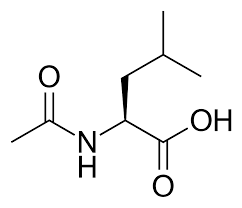
4. More data on tanganil (acetyl-leucine):
A 2-year case study in a patient with Parkinson’s & REM sleep behaviour disorder (RBD); Treatment helps with RBD symptoms; PD analysis is in the supplemental data file (Click here to read more about this).
5. More data on synuclein seeding:
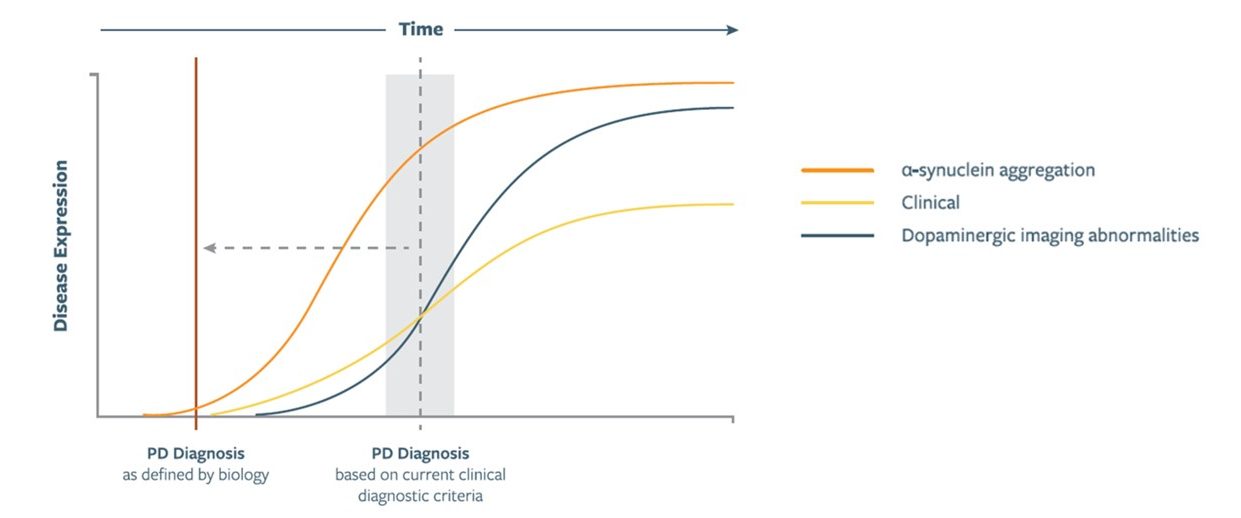
A longitudinal cohort study investigating the diagnostic & prognostic value of α-synuclein seed amplification assay kinetic measures in a large cohort of Parkinson’s cases (n=1631) reports faster seeding kinetics are found in GBA1-PD and predicts cognitive decline in idiopathic PD (Click here to read more about this and click here to read an editorial about this research).
Articles of general interest
- New perspective from the Michael J Fox Foundation & collaborators outlines the Targets to Therapies (T2T) programme – a community-led initiative to de-risk & advance Parkinson’s therapeutic targets (Click here to read more about this).
- Really excited about this: Cure Parkinson’s & Alzheimer’s Research UK are teaming up to look at overlapping biological pathways & whether we can identify agents that could be beneficial for both Parkinson’s & dementia/Alzheimer’s – new cross-disease initiative! (Click here to read more about this).
- More research on under-represented communities: Researchers held focus groups with 17 people with Parkinson’s & their care partners from Black communities to better understand barriers & facilitators to participation in research
(Click here to read more about this).
Basic biology news
- New research reports the presence of rare coding enzymatic loss-of-function variants in humans “with implications for our understanding of LRRK2 as a driver of disease & as a drug target” (Click here to read more about this).
- Researchers “reveal the role of lipid membranes in the aggregation process & uncover the mechanism by which small molecule inhibitors interfere with this process”; They present a global kinetic model of lipid-induced amyloid aggregation of α-synuclein (Click here to read more about this).
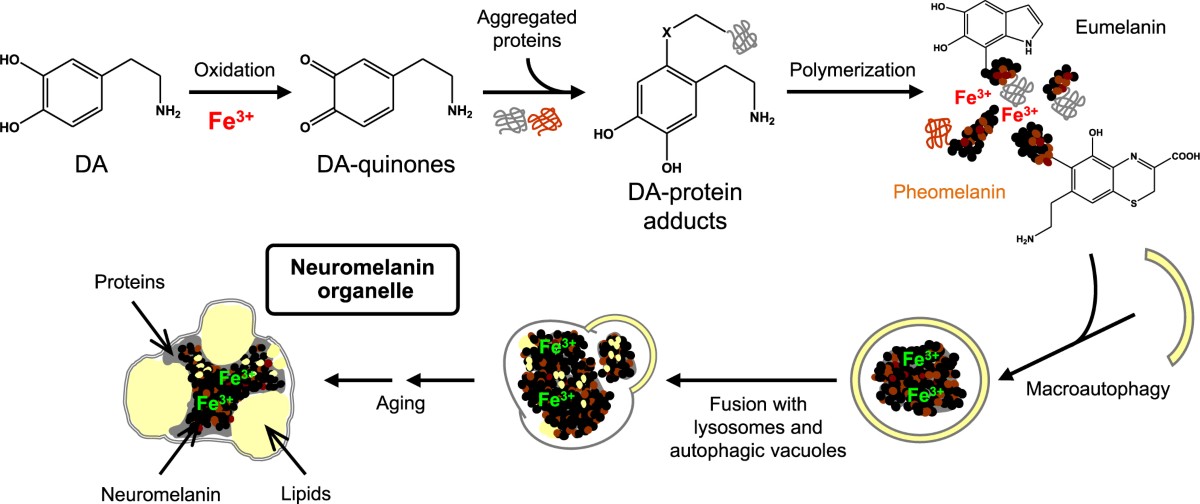
- Longitudinal neuromelanin (NM) changes in prodromal & early Parkinson’s in humans shows that NM-sensitive-MRI is a marker of the intracellular NM accumulation & then of neuronal degeneration & originates mainly from T1 reduction effect of NM (Click here to read more about this).
- Lipid profiling of postmortem brain samples from the primary motor cortex of Parkinson’s cases highlights disruption in Lysophosphatidylcholines, and triacylglycerol metabolism; Interesting sex-stratified analysis data (mitochondrial dysfunction – click here to read more about this).
- New research underscores the significance of mitochondrial fumarate as an endogenous regulator of Parkinson’s-associated PINK1-Parkin-mediated mitophagy (Click here to read more about this).
- Using human isogenic PARK2−/− induced pluripotent stem cell-derived neurons, researchers report the formation of seeding-competent α-synuclein aggregates; Challenging the view of PARK2-related Parkinson’s as a non-synucleinopathy (Click here to read more about this).
- Loss of Vps13d prevents clearance of mitochondria; Conditional Vps13d-knockout mice have behavioral changes & neurodegeneration; Depletion of microglia suppressed cell death & behavioral phenotypes but not mitochondrial changes (Click here to read more about this).
- Transient reduction of primary motor cortex perineuronal nets (by ChABC treatment) in normal mice results in temporary motor deficits. In 6-OHDA Parkinson’s mice, a transient decrease of primary motor cortex perineuronal nets unlocks motor recovery when coupled with motor stimulation (Click here to read more about this).

- More research on superoxide dismutase 1 (SOD1) in Parkinson’s – researchers report copper supplementation mitigates PD-like wild-type SOD1 pathology & nigrostriatal degeneration in a novel mouse model of PD (Click here to read more about this).
- New research reports G51D mutagenesis of the endogenous Snca rat gene caused reduced synaptic localisation of Parkinson’s-associated α-synuclein, proteomic evidence of early synaptic dysfunction, & increased propensity for α-syn path (Click here to read more about this).
- New research shows variations in lysosomal & mitochondrial dysfunction in dopamine & cortical neurons with different Parkinson’s-associated mutations (SNCA, LRRK2 & PRKN – click here to read more about this).
- New research suggests that Parkinson’s-associated α-synuclein is an accessory factor that positively modulates the anterograde transport of endolysosomes in melanoma cells & loss of α-syn expression results in significantly inhibited growth, invasion, & migration (Click here to read more about this).
- Researchers identify an (AGAGGG)n hexamer-containing RNA in the X-linked dystonia parkinsonism-causing SINE-VNTR-Alu retrotransposon that increases expression during organoid maturation & drives R-loop formation in organoids & neurodegeneration (Click here to read more about this).
- Alzheimer’s-associated amyloid precursor protein (APP)-targeting splice-switching oligonucleotide reduce Parkinson’s-associated α-synuclein (& P-Syn) in α-syn-transgenic mice; APP modulation as a potential strategy for synucleinopathies? (Click here to read more about this).
- New research suggests that abnormal α-synuclein binds to synaptotagmin 13 (SYT13), impairing extracellular vesicle release in synucleinopathies; SYT13 overexpression in SH-SY5Y cells also impaired extracellular vesicle release (Click here to read more about this).
- Multi-omics analyses of cells with duplication of the SNCA (alpha synuclein) gene finds up-regulation of vimentin; Similar changes observed in postmortem putamen tissue from patients with sporadic Parkinson’s; Okadaic acid or withaferin A highlighted (Click here to read more about this).
- New research findings “identify pathogenic trajectories associated with large or small α-synuclein aggregates, suggesting the existence of several possible concomitant pathogenic routes in Parkinson’s” (Click here to read more about this).
- Activating the lysosomal surveillance response pathway may represent an attractive mechanism to reduce proteotoxicity &, as such, potentially extend “healthspan”; Silencing vacuolar H+-ATPase subunits in C. elegans extends lifespan by ~60% (Click here to read more about this).

- Researchers characterize a conserved region in the flexible linker between the Ubl & RING0 domains of Parkinson’s-associated Parkin, which is indispensable for Parkin interaction with the mitochondrial GTPase Miro1 (Click here to read more about this).
- Researchers integrate structural information obtained from models of DJ-1/PARK7 complexed with cyclic 3-phosphoglyceric anhydride (cPGA) & biochemical assays to gain a comprehensive understanding of the DJ-1 reaction mechanism (Click here to read more about this).
- A mechanistic model of pure & lipidic α-synuclein aggregation that could help advance Parkinson’s therapies (Click here to read more about this).
- “Pharmacological blockade of glutamatergic inputs to the lateral substantia nigra reticulata disrupted saccadic control & impaired suppression of reflexive saccades, providing causal evidence for the role of excitatory input in behavioral inhibition” (Click here to read more about this).
Disease mechanism
- Researchers present the first type II kinase inhibitors that target LRRK2; “a new set of tool compounds, which will open avenues for therapeutic development for Parkinson’s & that harbor substantial research potential” (Click here to read more about this).
- New research reports that Hexokinase 2 interacts with Parkinson’s-associated PINK1 to facilitate mitophagy in astrocytes & restrain inflammation-induced neurotoxicity (Click here to read more about this).
- Researchers present the design of an orally bioavailable small molecule that modulates the microtubule-associated protein Tau’s pre-mRNA splicing (Click here to read more about this).
- Researchers report that GM1 oligosaccharide-mediated rescue in models of GBA-linked Parkinson’s (by modulating lysosomal & mitochondrial dysfunctions); Both GM1 & OligoGM1 reduced α-synuclein accumulation & improved cell viability (Click here to read more about this).
- Researchers present integrative multi-omics analyses & preclinical model data supporting the repurposing the memory-promoting meclofenoxate hydrochloride as a treatment for Parkinson’s (Click here to read more about this).
Clinical research
- In Parkinson’s brains, new research finds mitochondrial DJ-1 association with the F1Fo-ATP-synthase β subunit is lower (than controls) in the substantia nigra dopamine neurons, but unchanged in the neighbouring VTA neurons (Click here to read more about this).
- A brain imaging (18F-FEOBV & 18F-FDG PET) study finds that cholinergic patterns correlate with dopamine medication ON freezing of gait in 14 people with Parkinson’s (Click here to read more about this).
- New report describes an adaptive DBS algorithm “intended to mitigate movement slowness by delivering targeted stimulation increases during movement using decoded motor signals from the brain” (Click here to read more about this).
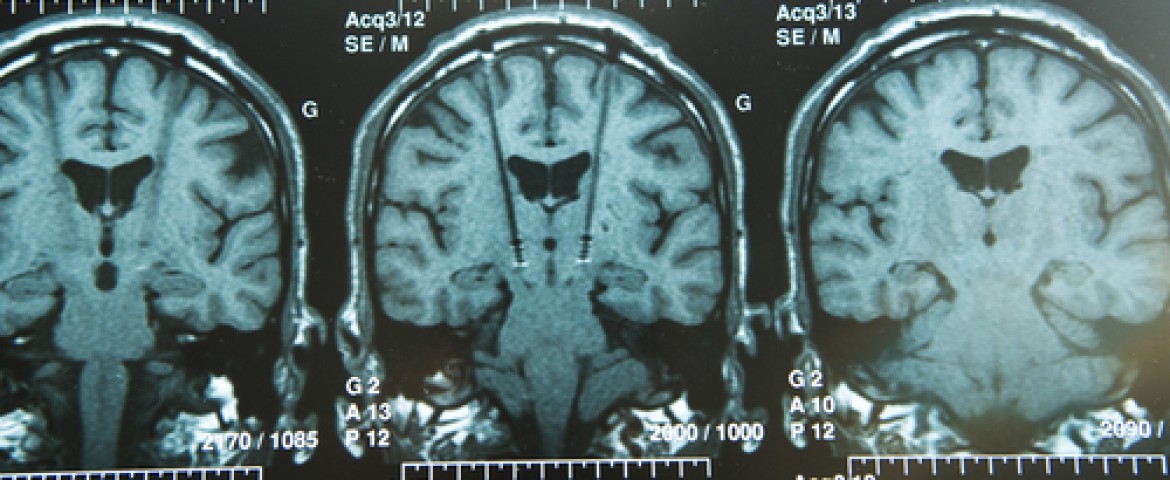
- Circulating plasma (but not CSF) a-synuclein strains separates Parkinson’s from Dementia with Lewy Bodies & may impact Lewy body diseases clinical presentation, particularly cognition (Click here to read more about this).
- New paper presents IMPACT (Integrative Multimodal Pipeline for Advanced Connectivity & Time-series) which converts 3D/4D fMRI scans into time-series signals; Accurately differentiating Parkinson’s from controls (Click here to read more about this).
- “It is now well established that co-pathologies are the rule rather than the exception. Many patients exhibit a combination of protein aggregates, including tau, α-synuclein, TDP-43, & amyloid-β, often alongside cerebrovascular disease” (Click here to read more about this).
- A new pilot study finds that physical activity & network attack tolerance preserve motor function in Parkinson’s; Network attack tolerance quantifies how well a network can maintain its structure/function when critical components of the network are removed (Click here to read more about this).
- A nationwide population-based study (29,581 US adults) finds higher Healthy Eating Index 2015 (HEI-2015) scores are associated with reduced risk of Parkinson’s; Data suggests that modifiable lifestyle factors may reduce the risk of PD (Click here to read more about this).

- Researchers present the results of a a randomized controlled trial assessing neuroanimation-based immersive exergaming in combination with physiotherapy in 30 people with Parkinson’s (NCT04699617 – click here to read more about this).
- New research suggests that penetrance of Parkinson’s in GBA1 variant carriers depends on the severity of the variant & their polygenic background, “highlighting implications for genetic counseling & clinical trial design in GBA1-associated PD” (Click here to read more about this).
- New paper identifies a subnetwork of reduced functional connectivity in individuals with the presence of hallucinations in Parkinson’s (Click here to read more about this).
- New research reports circadian disruption, changes in rest-activity cycles, & reduced Bmal1 expression, reflect increased pathological severity across the synucleinopathy spectrum (Click here to read more about this).
- A multicenter prospective longitudinal (3-time point) study will be conducted with a total sample size of 400 across Atypical Parkinsonian Syndromes, including Progressive Supranuclear Palsy, Multiple System Atrophy, & Corticobasal Syndrome (Click here to read more about this).
- A qualitative study explores neurologists’ perspectives on the management challenges & mitigation strategies for Parkinson’s in Iraq; They require policy-driven reforms, enhanced regulatory oversight & integration of multidisciplinary care frameworks (Click here to read more about this).

- “Among the blood biomarkers, a lower lymphocyte count was associated with worse outcomes in patients with Parkinson’s. Low peripheral lymphocyte counts may be predictive of subsequent worse PD outcomes” (Click here to read more about this).
- Physical activity may benefit Parkinson’s patients by reducing chronic inflammation. Researchers report strenuous activity may increase the proportions of natural killer & CD8T cells, though further research is needed to confirm shifts in immune subtypes (Click here to read more about this).
- Using cryo-electron microscopy, researchers demonstrate that Parkinson’s-associated α-synuclein can form a Lewy-MSA hybrid fold, leading to the atypical histopathological form of multiple systems atrophy (MSA; Click here to read more about this).
- Is personality associated with non-motor fluctuations in Parkinson’s? New study finds certain personality dimensions (harm avoidance & self-directedness) are associated with NMFs severity at baseline; Novelty seeking=better NMFs outcomes after STN-DBS (Click here to read more about this).
- A retrospective cohort study involving 54 individuals diagnosed with Lewy body disease who underwent autopsy & antemortem MRI with quantitative susceptibility mapping (QSM); Those with lewy bodies present had higher QSM values in the substantia nigra (Click here to read more about this).
- New data “suggest that pesticide exposure & lifestyle factors may affect motor severity in patients with LRRK2-Parkinson’s & idiopathic PD, demonstrating the impact on patients even after disease onset” (Click here to read more about this).

- There could be potential to use several serum cell-free DNA molecules that are elevated in both drug-naïve & drug-exposed Parkinson’s patients (compared to healthy controls – click here to read more about this).
- Small study, but Dementia with Lewy Bodies (n=30), Parkinson’s (n=10) & Multiple System Atrophy (n=12) were characterized by increased serum levels of Plasminogen Activator Inhibitor-1 (PAI-1) compared to controls (n=10; Click here to read more about this).
- Researchers report elevated cerebrospinal fluid levels of Plasminogen activator inhibitor-1 (SERPIN E1) in participants with lewy body diseases; Highest DLB, followed by Parkinson’s & control, & higher in males vs females (Click here to read more about this).
- Using data from the Michael J Fox Foundation’s PPMI dataset, researchers show that “nigral depigmentation can be robustly detected in prodromal & overt Parkinson’s populations” (Click here to read more about this).
- Researchers investigate InceptionTime & RandOm Convolutional KErnel Transform (ROCKET) for their ability to predict Parkinson’s symptom severity from wrist-worn accelerometer data (Click here to read more about this).
- Using longitudinal (>12 years) clinical, imaging, & genetic data from 910 prodromal & 1120 clinical Parkinson’s cases in the Michael J Fox Foundation’s PPMI study, researchers suggest the need to recognize “body-first & brain-first PD as distinct entities” (Click here to read more about this).

- New research evaluates cutaneous small fibers focusing on structural, functional, & pathological features, in a cohort of participants with Parkinson’s, atypical parkinsonism, & controls; Cervical skin SAA (PD vs controls)=100% sensitivity & 70% specificity (Click here to read more about this).
- New mendelian randomization study suggests a potential causal effect of higher coffee consumption on Parkinson’s age-at-onset, with no evidence of an association with PD risk or progression (Click here to read more about this).
- New paper presents a case-control study of Parkinson’s in a diverse population; 218 PD & 90 controls; 50% of patients identified as South Asian or black (Click here to read more about this).
- Researchers integrate structural MRI & clinical assessments of 172 patients REM sleep behavior disorder (& 126 controls) & identify 2 distinct subtypes: 1.) cortical-subcortical-cerebellar atrophy, & 2). increased area in limbic & parietal regions (Click here to read more about this).
New clinical trials
- New clinical trial registered: New study will explore whey protein & amino acid supplementation on amino acid & levodopa concentrations in 15 people with Parkinson’s (Click here to read more about this).
- New clinical trial registered: Nuwacell Biotechnologies starts a Phase 1 study to evaluate the safety, tolerability & preliminary efficacy of human induced pluripotent stem cell derived dopaminergic progenitor cells (NCR201) in 48 people with Parkinson’s (Click here to read more about this).
- New clinical trial registered: Biohaven Therapeutics initiate a Phase 2/3, double-blind, placebo-controlled study of BHV-8000 (their dual TYK2/JAK1 inhibitor) in 550 individuals with early Parkinson’s; 48 week study (Click here to read more about this).

- New clinical trial registered: New study explores the effects of ballet-based exercise training on respiratory functions, balance, cognitive functions, peripheral muscle strength, functional capacity & quality of life in 24 patients with Parkinson’s (Click here to read more about this).
- New clinical trial registered: Researchers initiate a study using the NUSHU shoe to analyze gait/balance & vibrotactile feedback in early, moderate & advanced Parkinson’s patients & healthy controls (Click here to read more about this).
Clinical trial news
- A new systematic review & meta-analysis explores the efficacy & safety of ND0612 (continuous subcutaneous infusion of levodopa/carbidopa) compared to oral & alternative regimens in managing motor fluctuations in Parkinson’s (Click here to read more about this).
Conferences/lectures
- The 35th Annual Symposium of the Network for European CNS Transplantation and Restoration (NECTAR 2025) will take place at Colégio da Trindade, University of Coimbra, Coimbra, Portugal from October 20th to 22th, 2025 (Click here to read more about this).

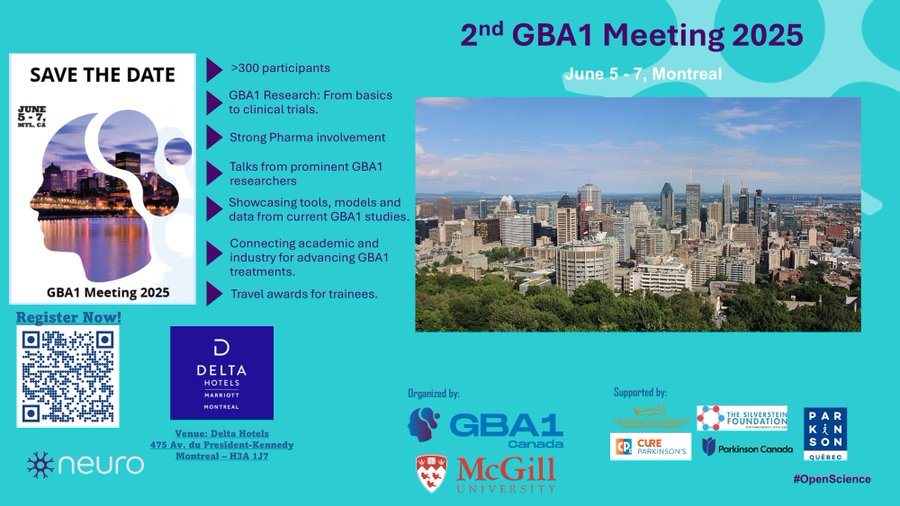
- The second GBA1 Meeting hosted by The Neuro in McGill University in Montreal (June 5th-7th). Three days of lectures, discussions, networking & workshops on all things GBA1 (including GBA1-associated Parkinson’s – click here to read more about this).
Other news
- Neuron23 announces $96.5 million in Series D financing & the first patient has been dosed in their global Phase 2 placebo-controlled NEULARK clinical trial of LRRK2 inhibitor NEU-411 for early-stage Parkinson’s (NCT06680830); N=150; 52-week study (Click here to read more about this).

Review articles/videos
- Useful review on in vivo & in silico models of Drosophila (flies) for Parkinson’s; “in silico studies of in vivo Drosophila models may be a promising starting point to elucidate intricate cellular mechanisms underlying PD in humans” (Click here to read more about this).A useful review of NAD+ metabolism & its modulation of mitochondria in aging and disease (Parkinson’s gets a mention – click here to read more about this).
- New review “provides a critical overview of the latest findings in biofluid & tissue-based biomarkers in isolated REM sleep behavior disorder, emphasizing the most promising candidates & outlining key directions for future research & clinical applications” (Click here to read more about this).

- New review provides a summary of the studies conducted on Volatile Organic Compounds that have been measured in various biological samples in Parkinson’s; Highlights short-chain fatty acids, produced by the gut microbiome, as a potential target (Click here to read more about this).
- A useful short review on the role of LRRK2 in axonal transport & Parkinson’s; “Hyperactive LRRK2 disrupts the normally processive retrograde transport of autophagosomes, leading to impaired fusion with lysosomes” (Click here to read more about this).
- New review highlights the advancements & addresses the current limitations of single-cell transcriptomics in the context of CSF & neurological conditions with autoimmune, neurodegenerative, infectious, or oncogenic origins (Parkinson’s gets a wee mention – click here to read more about this).
* * * * * * * * * * * *
And there it is, just some of the highlights from June 2025 – another very busy month of Parkinson’s research. Hopefully there will be bits and pieces of interest for everyone in the list. Much of the material used here was collected from the Science of Parkinson’s Twitter and Bluesky feeds (and there is a lot more posted there each day).
Any thoughts/feedback would be greatly appreciated (either in the comments below, or contact me directly).
And now: on to July!!!
 All of the material on this website is licensed under a
Creative Commons Attribution 4.0 International License
You can do whatever you like with it!
EDITOR’S NOTE: The author of this post is an employee of Cure Parkinson’s, so he might be a little bit biased in his views on research and clinical trials supported by the trust. That said, the trust has not requested the production of this post, and the author is sharing it simply because it may be of interest to the Parkinson’s community.
The information provided by the SoPD website is for information and educational purposes only. Under no circumstances should it ever be considered medical or actionable advice. It is provided by research scientists, not medical practitioners. Any actions taken – based on what has been read on the website – are the sole responsibility of the reader. Any actions being contemplated by readers should firstly be discussed with a qualified healthcare professional who is aware of your medical history. While some of the information discussed in this post may cause concern, please speak with your medical physician before attempting any change in an existing treatment regime.
In addition, many of the companies mentioned in this post are publicly traded companies. That said, the material presented on this page should under no circumstances be considered financial advice. Any actions taken by the reader based on reading this material is the sole responsibility of the reader. None of the companies have requested that this material be produced, nor has the author had any contact with any of the companies or associated parties. This post has been produced for educational purposes only.

 The Science of Parkinson's