Monthly Research Review – November 2023

# # # #

At the end of each month the SoPD writes a post which provides an overview of some of the major pieces of Parkinson’s-related research that were made available during November 2023.

The post is divided into 10 parts based on the type of research:

# # # #


So, what happened during November 2023?

In world news:

November 1st – The Beatles (I kid you not) released “Now and Then“, the band’s last ever song, featuring restored vocals by John Lennon (1940–1980), as well as guitar tracks by George Harrison (1943–2001).


November 2nd – Zoliflodacin, a first-in-class antibiotic being developed for treating drug-resistant ‘super-gonorrhoea’ presented positive results in Phase 3 clinical testing. The development of this agent has been led by the non-profit organization GARDP, and if approved, zoliflodacin will be the first new antibiotic for treating gonorrhoea in decades (Click here to read more about this).


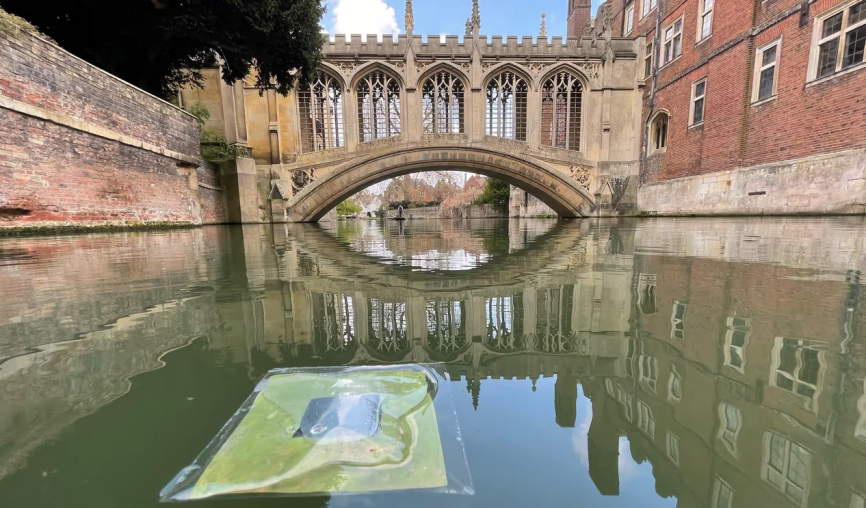
November 12th – Researchers at Cambridge University present a new floating artificial leaf which can turn sunlight, water and carbon dioxide into synthetic fuel (Click here to read more about this).


November 16th – Casgevy, a world-first gene therapy that aims to cure sickle-cell disease and transfusion-dependent beta thalassemia, is approved by the UK’s Medicines and Healthcare products Regulatory Agency, becoming the first drug using CRISPR to be licensed (Click here to read more about this).


November 28th – the passing of Charlie Munger was a sad moment for the author of this blog. A copy of “Poor Charlie’s Almanack” sits beside my bed. If you have never heard of Charlie, take a moment & listen to his “Psychology of Human Misjudgment” – wisdom, humor and not a word wasted:

(You should also listen to him roasting people for 5 minutes straight)

November 30th – Researchers reported that breeding chinstrap penguins nod off more than 10,000 times per day, engaging in tiny bouts of slow-wave sleep (lasting on average only 4 seconds, but resulting in the accumulation of >11 hours of sleep)


In the world of Parkinson’s research, a great deal of new research and news was reported:

In November 2023, there were 1,271 research articles added to the Pubmed website with the tag word “Parkinson’s” attached (10,282 for all of 2023 so far). In addition, there was a wave to news reports regarding various other bits of Parkinson’s research activity (clinical trials, etc).

The top 5 pieces of Parkinson’s news

Continue reading “Monthly Research Review – November 2023”

On a mitophagy MISSION

# # # #

Mitochondria are tiny structures inside of cells that function as power stations, providing cells with energy to conduct all of their functions. When mitochondria become dysfunctional, they can put a lot of stress on cells, potentially leading to cellular death. A common feature of Parkinson’s is mitochondrial dysfunction.

Evolution has provided various methods of removing dysfunctional mitochondria. One of these processes is called mitophagy.

One biotech company leading the charge in the field of enhancing mitophagy is Mission Therapeutics, and they have very recently published some interesting pre-clinical data on their lead clinical candidate.

In today’s post, we will look at what mitophagy is, how Mission Therapeutics is attempting to enhance it, and what their newly published data reports.

# # # #


Sir Steve. Source: bioc

Prof Sir Steve Jackson is a bit of a legend in research circles at the University of Cambridge.

In 1997, he founded a biotech called KuDOS Pharmaceuticals which developed a successful PARP1 inhibitor (Olaparib) for cancer. That company was acquired in 2005 by AstraZeneca who jointly (with Merck) owns and developed Olaparib (also known as Lynparza – and it may be of interest to readers that PARP1 inhibitors are now being considered for Parkinson’s – click here to read a previous SoPD post on this topic).

Not to sit on his laurels, Sir Steve then founded another biotech firm in 2011, called Mission Therapeutics. This company was focused on agents targeting deubiquitinating (DUB) enzymes (more on them in a moment).

Source: Mission

In November 2018, the large pharmaceutical company AbbVie made some waves by signing a drug discovery and development deal with the 7-year old Mission Therapeutics, to explore deubiquitylating enzymes (or DUBs) in the context of Alzheimer’s and Parkinson’s (Source).

And then in August of 2021, the companies signed another deal (Source), which involved AbbVie announcing progression of two selected DUB targets into the next phase of research.

Very recently, Mission Therapeutics has published research on its own research into Parkinson’s and the results are VERY interesting.

What did they find?

Continue reading “On a mitophagy MISSION”

A thesis on a neuroprosthesis

# # # #

While disease modifying therapies are the ultimate goal for better treating Parkinson’s, research into therapeutic approaches that can provide better quality of life of people living with the condition are equally important.

Neuroprosthetics are devices that use electrodes to interface with the nervous system and aim to restore function that has been lost. Cochlear implants are a good example of a neuroprosthetic that is improving people’s hearing.

Recently, researchers in Switzerland have presented initial findings for a spinal cord neuroprosthesis that can help alleviate the locomotor deficits experienced in Parkinson’s.

In today’s post, we will review the recent research and discuss what it could mean for the future of Parkinson’s treatment.

# # # #


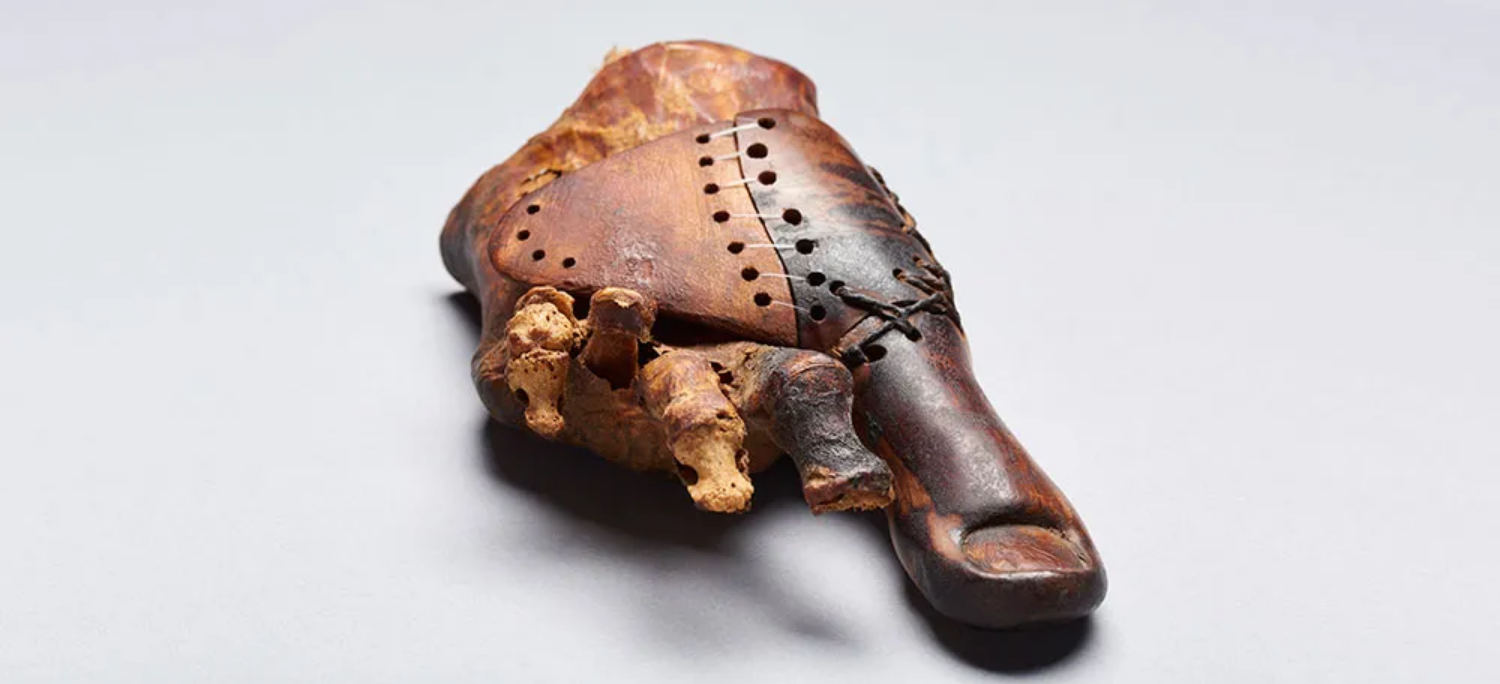
The “Cairo toe”. Source: Smithsonianmag

The experts will tell you that the “Cairo toe” is special because it is flexible.

That is to say, it physically bends.

And this ‘bending’ property makes it rather unique among ancient prosthetics.

You see, when it was constructed (between 2,700 and 3,000 years ago), most artificial limbs were only cosmetic, rather than functional. And this difference is made particularly clear when one compares the “Cairo toe” with other early prosthetics of the same age that do not bend (Source):

An unwillingness to bend. Source: britishmuseum

So for its time, the “Cairo toe” must have been positively state of the art technology. It was one of the first functional prosthetics.

Great, but what does this have to do with Parkinson’s???

Well, we have come a long way since the “Cairo toe” with prosthetics, and recently researchers have been exploring a new kind of functional prosthetic – an implant – with the goal of improving quality of life for people with Parkinson’s.

What do you mean?

Continue reading “A thesis on a neuroprosthesis”

5 years at Cure Parkinson’s

# # # #

In October 2018, the author of this blog left academia and joined the medical research charity “Cure Parkinson’s“. It was a tiny organisation focused on disease modification in Parkinson’s, and I was really excited by the opportunity.

Cure Parkinson’s is widely seen as punching well above its weight in terms of impact (there were only 18 members of staff when I joined) and relentless in their efforts to bring novel therapies forward for the Parkinson’s community. I was flattered by the invitation to join the team.

The last 5 years has been one of the busiest and most stimulating periods of my life. And I have absolutely no regrets with the decision I made. In today’s post, I will provide some observations and learnings from my experience over the last 5 years and discuss how the field of Parkinson’s research has changed.

# # # #


Source: Danielcolombo

Doesn’t time fly.

I was surprised recently when I received an email alert from LinkedIn. I very rarely use the service, but the message informed me that I have been with my current employer for five years now.

I scratched my head and thought, ‘no, that’s not possible‘.

But actually, yes it’s very possible (that whole COVID-related period of time really warped reality didn’t it?).

In October 2018, I finished up my post-doctoral research position at the University of Cambridge and joined the medical research charity Cure Parkinson’s as their deputy director of research.

The decision began in 2017 when I met Dr Richard Wyse, the director of research at the charity.

Continue reading “5 years at Cure Parkinson’s”

Cure Parkinson’s Autumn Research Update meeting – 2023

# # # #

Cure Parkinson’s is a medical research charity that is focused on disease modification for Parkinson’s. Our only goal is to slow, stop or reverse the condition. To achieve this aim, we fund and support preclinical projects (that are with 5 years of clinical testing) and clinical trials focused on testing new disease modifying therapies.

Twice a year we hold public events, where we share how the research we support is developing and progressing. It is an in-person event held in London, and we stream it live to the virtual audience who are unable to attend.

In today’s post, we will review the highlights of Cure Parkinson’s 2023 Autumn Research Update meeting.

# # # #


As long time readers will be aware, the freakishly tall, ridiculously good looking author of this blog is an employee of the medical research charity, Cure Parkinson’s.

He tries to be transparent about this and where Cure Parkinson’s is involved in the research being discussed on the SoPD website, he always indicates their involvement. He doesn’t want to be seen to be biasing the content here on the SoPD towards the charity’s activities, rather he prefers to take a broader view of all the interesting research that is going on in the Parkinson’s research world.

But, when there is Cure Parkinson’s related material that he thinks might be of interest to the wider Parkinson’s community, he is comfortable with highlighting it.

And today’s post is an example of this.

Recently, Cure Parkinson’s held their 2023 Autumn Research Update meeting at the Royal Society of Medicine in London:

The RSM. Source: RSM

Continue reading “Cure Parkinson’s Autumn Research Update meeting – 2023”

Monthly Research Review – October 2023

# # # #

At the end of each month the SoPD writes a post which provides an overview of some of the major pieces of Parkinson’s-related research that were made available during October 2023.

The post is divided into 10 parts based on the type of research:

# # # #


So, what happened during October 2023?

In world news:

October 3rd – Katalin Karikó and Drew Weissman shared the Nobel Prize in Physiology or Medicine for their work in developing mRNA vaccines, which played a crucial role in the COVID-19 pandemic.


October 3rd – The trial of Sam Bankman-Fried, founder of the cryptocurrency exchange company FTX, began. He faces seven charges of fraud and conspiracy.


October 7th – Hamas launched an incursion into southern Israel from the Gaza Strip, prompting a military response from the Israel Defense Forces – leading to the start of the Israel–Hamas war (click here to read more about this).


October 23rd – A significant breakthrough in treating cervical cancer was reported, with participants in a Phase III trial seeing a 35% reduction in the risk of both mortality or the disease returning. The study used a combination of existing, cheap drugs ahead of usual radiotherapy treatment (Click here to read more about this).


October 31st – Researchers released an AI system, called SIDE, to improve source-quality and reliability of Wikipedia by identifying problematic citations and recommending better ones to editors. They demonstrated potential AI applications in science such as for research suggestion tools and keeping track of accelerating scientific output (Click here to read more about this).


In the world of Parkinson’s research, a great deal of new research and news was reported:

In October 2023, there were 752 research articles added to the Pubmed website with the tag word “Parkinson’s” attached (9,011 for all of 2023 so far). In addition, there was a wave to news reports regarding various other bits of Parkinson’s research activity (clinical trials, etc).

The top 5 pieces of Parkinson’s news

Continue reading “Monthly Research Review – October 2023”

Monthly Research Review – September 2023

# # # #

At the end of each month the SoPD writes a post which provides an overview of some of the major pieces of Parkinson’s-related research that were made available during September 2023.

The post is divided into 10 parts based on the type of research:

# # # #


So, what happened during September 2023?

In world news:

September 8th – The Rugby World cup started!

September 10th – Storm Daniel, a Mediterranean tropical-like cyclone kills at least 5,000 people, with a further 10,000 to 100,000 reported missing. In the city of Derna in Libya, two dams collapse, resulting in a quarter of the city being destroyed.


September 14th – NASA’s independent study team investigating the nature and origins of Unidentified Anomalous Phenomena (UAP, or UFOs in the old parlance) released their long-awaited report. The committee shared their preliminary observations in May, finding that existing data and eyewitness reports are insufficient to draw firm conclusions (Click here to read more about this)


September 14th – the 33rd Ig Nobel Prizes were handed out – the team that won the medicine prize used cadavers to assess if there was an equal number of hairs in each of a person’s nostrils:

September 29th – NASA reports that their rover “Perseverance” captured images of a 60 meter-wide dust-filled Martian whirlwind on the 30th August (Click here to read more about this and see the video footage)


In the world of Parkinson’s research, a great deal of new research and news was reported:

In September 2023, there were 880 research articles added to the Pubmed website with the tag word “Parkinson’s” attached (8,259 for all of 2023 so far). In addition, there was a wave to news reports regarding various other bits of Parkinson’s research activity (clinical trials, etc).

The top 5 pieces of Parkinson’s news

Continue reading “Monthly Research Review – September 2023”

DOPA de-car-box-yl-ase

# # # #

Parkinson’s is a neurodegenerative condition that is diagnosed and monitored based on clinical observations and scoring systems – both of which are not perfect and subjective.

Biomarkers (a biological molecule found in bodily fluids or tissues that is an indicator of a normal or abnormal processes) represent an important development for medicine as they provide assurance and quantitative measures of disease, aiding the diagnostic and treatment process.

Recently there has been a lot of new research highlighting possible biomarkers for Parkinson’s, including proteins associated with the synthesis of dopamine (a chemical which is severely reduced in the brains of people with Parkinson’s).

In today’s post, we will discuss what a biomarker is and review some new research on a potential biomarker for ‘Lewy body disease’.

# # # #


The search for biomarkers. Source: NIH

2023 is quickly becoming the year of potential biomarkers for Parkinson’s. There has been a lot of new research in this space.

For example, earlier this year, the Michael J Fox Foundation and collaborators reported new data regarding the alpha synuclein seeding assay (Click here to read a previous SoPD post on this topic).

Tests that can clearly define and track medical conditions over time are critical to developing better treatments and would certainly be invaluable in Parkinson’s research.

And this week we saw researchers publish further data, highlighting another potential biomarker.

What did they report?

Continue reading “DOPA de-car-box-yl-ase”

Monthly Research Review – August 2023

# # # #

At the end of each month the SoPD writes a post which provides an overview of some of the major pieces of Parkinson’s-related research that were made available during August 2023.

The post is divided into 10 parts based on the type of research:

# # # #


So, what happened during August 2023?

In world news:

August 1- The world’s oceans reached a new record high temperature of 20.96 °C, exceeding the previous record in 2016.


August 8th – Christopher Lunsford (artist name: Oliver Anthony) released the single “Rich Men North of Richmond” independently, and it debuted at number 1 on the Billboard Hot 100 after going viral on YouTube:


August 14th – Researchers reported the first ever image of quantum entanglement (Click here and here to read more about this).


August 19th – As 1/4 of people going to the beach in the United Kingdom are avoiding swimming due to raw sewage releases, the UK Environment Agency (whose funding has been cut by 50% over the last 10 years – source) announced that nationwide annual health check of England’s water bodies which used to take place annually, will now take six years to complete (Click here to read more about this).


August 23rd – India’s Chandrayaan-3 becomes the first spacecraft to land near the south pole of the Moon, carrying a lunar lander named Vikram and a lunar rover named Pragyan.


In the world of Parkinson’s research, a great deal of new research and news was reported:

In August 2023, there were 831 research articles added to the Pubmed website with the tag word “Parkinson’s” attached (7,379 for all of 2023 so far). In addition, there was a wave to news reports regarding various other bits of Parkinson’s research activity (clinical trials, etc).

The top 8 pieces of Parkinson’s news

Continue reading “Monthly Research Review – August 2023”

Manifesting non-manifesting carriers

# # # #

The discovery of genetic risk factors for Parkinson’s has been very useful for the research community as they point towards associated biological pathways that could potentially be targeted for therapeutic intervention.

They also represent a topic of concern for the Parkinson’s community, who worry about passing on possible risk to their children and subsequent generations. The penetrance (which refers to the proportion of people with a particular genetic variant who ever actually exhibit signs and symptoms of a particular condition) of many of these risk factors has, however, been found to be mixed, which has helped to confuse the matter. 

Recently, researchers have been exploring assays and biomarkers related to some of these genetic risk factors to see if we can determine who is likely to go on and develop Parkinson’s compared to “non-manifesting carriers” of the genetic risk factors. 

In today’s post, we will discuss what is meant by terms like “penetrance” and “non-manifesting carriers”, and we will review some of the latest research in this area.

# # # #


Source: Businesstoday

This year represents the 25th anniversary since the discovery that tiny variations in a region of DNA called the “PARKIN gene” may increase the risk of developing Parkinson’s.

On the 9th April, 1998, this report was published in the journal Nature:

Title: Mutations in the parkin gene cause autosomal recessive juvenile parkinsonism.
Authors: Kitada T, Asakawa S, Hattori N, Matsumine H, Yamamura Y, Minoshima S, Yokochi M, Mizuno Y, Shimizu N
Journal: Nature. 1998 Apr 9; 392(6676):605-8
PMID: 9560156

This study highlighted 5 cases of ‘juvenile’ Parkinsonism from three unrelated Japanese families, in which genetic variations were found in the PARKIN gene. This finding came less than a year after the first genetic risk factor for Parkinson’s – in the alpha synuclein gene – had been announced (Click here to read a SoPD post about this).

It was an exciting time for Parkinson’s research as these new risk factors were pointing towards particular biological pathways that could be explored in the context of Parkinson’s (and manipulated for potentially therapeutic purposes).

Over the next 10-15 years, there was a genetic gold rush as researchers identified over 80 regions of DNA in which genetic variations (tiny alterations in the G,A,T & C coding) that increased one’s risk of developing PD (Click here to read a SoPD post on this topic).

But rather than being a genetic disease (a condition driven by a specific genetic cause), it quickly became apparent that the level of penetrance in Parkinson’s was not 100%, and questions started to be asked as to why.

What do you mean by “penetrance”?

Continue reading “Manifesting non-manifesting carriers”