Hepatitis – Parkinson’s goes viral?

maxresdefault

Last week a new piece of Parkinson’s disease research has been widely discussed in the media.

It involves Hepatitis – the viral version of it at least.

In today’s post we will review the research and discuss what it may mean for Parkinson’s disease.


Fig2_v1c

A lewy body (brown with a black arrow) inside a cell. Source: Cure Dementia

A definitive diagnosis of Parkinson’s disease can only be made at the postmortem stage with an examination of the brain. Until that moment, all cases of Parkinson’s disease are ‘suspected’.

Critical to that postmortem diagnosis is the presence of circular shaped, dense clusters of proteins, called Lewy bodies (see the image above for a good example).

What causes Lewy bodies? We don’t know, but many people have theories.

This is Friedrich Heinrich Lewy (1885-1950).

DrLewy

Friedrich Lewy. Source: Lewy Body Society

As you can probably guess, Friedrich was the first to discover the ‘Lewy body’. His finding came by examining the brains of 85 people who died with Parkinson’s disease between 1908 – 1923.

In 1931, Friedrich Lewy read a paper at the International Congress of Neurology in Bern. During that talk he noted the similarities between the circular inclusions (called ‘negri bodies’) in the brains of people who suffered from rabies and his own Lewy bodies (observed in Parkinson’s disease).

rabies

A Negri body in a cell affected by rabies (arrow). Source: Nethealthbook

Given the similarities, Lewy proposed a viral cause for Parkinson’s disease.

Now, the idea that Parkinson’s disease could have a viral component has existed for a long time – even before Lewy made his conclusion. As we have previous mentioned, theories of viral causes for Parkinson’s have been circulating ever since the 1918 flu pandemic (Click here to read our post on this topic).
vonecomo-parkinson

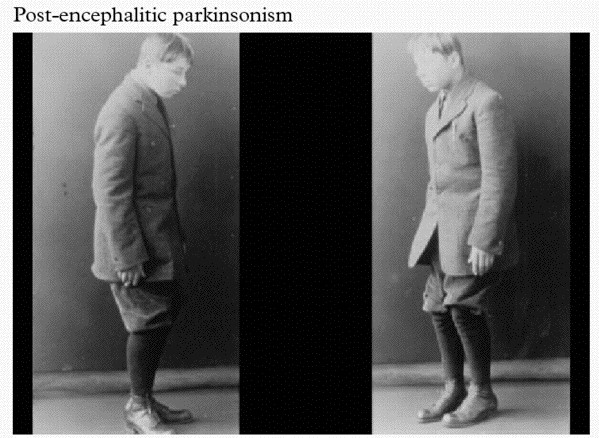
An example of post-encephalitic Parkinsonism. Source: Baillement

About the same time as the influenza virus was causing havoc around the world, another condition began to appear called ‘encephalitis lethargica‘ (also known as post-encephalitic Parkinsonism). This disease left many of the victims in a statue-like condition, both motionless and speechless – similar to Parkinson’s disease. Initially, it was assumed that the influenza virus was the causal factor, but more recent research has left us not so sure anymore.

Since then there, however, has been additional bits of evidence suggesting a viral role in Parkinson’s disease. Such as this report:
H1N1

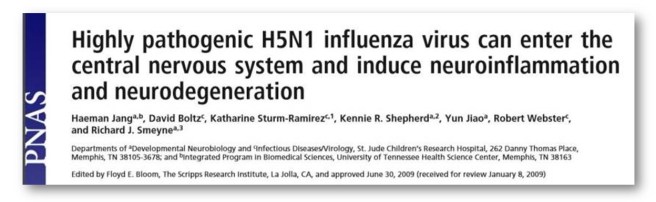
Title: Highly pathogenic H5N1 influenza virus can enter the central nervous system and induce neuroinflammation and neurodegeneration.
Author: Jang H, Boltz D, Sturm-Ramirez K, Shepherd KR, Jiao Y, Webster R, Smeyne RJ.
Journal: Proc Natl Acad Sci U S A. 2009 Aug 18;106(33):14063-8.
PMID: 19667183

The researchers in this study found that when they injected the highly infectious H5N1 influenza virus into mice, the virus progressed from the periphery (outside the brain) into the brain itself, where it induced Parkinson’s disease-like symptoms. The virus also caused a significant increase in the accumulation of the Parkinson’s associated protein Alpha Synuclein. Importantly, they witnessed the loss of dopamine neurons in the midbrain of the mice 60 days after resolution of the infection – that cell loss resembling what is observed in the brains of people with Parkinson’s disease.

The Parkinson’s associated protein alpha synuclein has also recently demonstrated anti-viral properties:

Beckham

Title: Alpha-Synuclein Expression Restricts RNA Viral Infections in the Brain.
Authors: Beatman EL, Massey A, Shives KD, Burrack KS, Chamanian M, Morrison TE, Beckham JD.
Journal: J Virol. 2015 Dec 30;90(6):2767-82. doi: 10.1128/JVI.02949-15.
PMID: 26719256               (This article is OPEN ACCESS if you would like to read it)

David Beckham (not the football player) and his research colleagues introduced West nile virus to brain cells grown in cell culture and they observed an increase in alpha synuclein production. They also found that the brains of people with West nile infections had increased levels of alpha synuclein.

The researchers then injected West Nile virus into both normal mice and genetically engineered mice (which produced no alpha synuclein) and they found that the genetically engineered mice which produced no alpha synuclein died quicker than the normal mice. They reported that there was an almost 10x increase in viral production in the genetically engineered mice. This suggested to them that alpha synuclein may be playing a role in protecting cells from viral infections.

Interesting, but what about this new data involving Hepatitis?

Yes, indeed. Let’s move on.

Wait a minute, what is Hepatitis exactly?

The name Hepatitis comes from the Greek: Hepat – liver; and itis – inflammation, burning sensation. Thus – as the label suggests – Hepatitis is inflammation of liver tissue.

Progress-of-Liver-Damage

Hepatitis and the liver. Source: HealthandLovepage

It can be caused by infectious agents (such as viruses, bacteria, and parasites), metabolic changes (induced by drugs and alcohol), or autoimmune/genetic causes (involving a genetic predisposition).

The most common cause of hepatitis is viral.

There are five main types of viral hepatitis (labelled A, B, C, D, and E). Hepatitis A and E are mainly spread by contaminated food and water. Both hepatitis B and hepatitis C are commonly spread through infected blood (though Hepatitis B is mainly sexually transmitted). Curiously, Hepatitis D can only infect people already infected with hepatitis B.

Hepatitis A, B, and D are preventable via the use of immunisation. A vaccine for hepatitis E has been developed and is licensed in China, but is not yet available elsewhere

Hepatitis C, however, is different.

There is currently no vaccine for it, mainly because the virus is highly variable between strains and the virus mutates very quickly, making an effective vaccine a difficult task. A number of vaccines under development (Click here for more on this).

What is known about Hepatitis C and the brain?

Quite a bit.

Similar to HIV (which we discussed in a previous post), the hepatitis C virus (HCV) enters the brain via infected blood-derived macrophage cells. In the brain, it is hosted by microglial cells, which results in altered functioning of those microglial cells. This causes problems for neuronal cells – including dopamine neurons. For example, people infected with HCV have reduced dopamine transmission, based on brain imaging studies (Click here and here for more on this result).

Have there been connections between hepatitis C virus and Parkinson’s disease before?

Yes.
Dopatitle


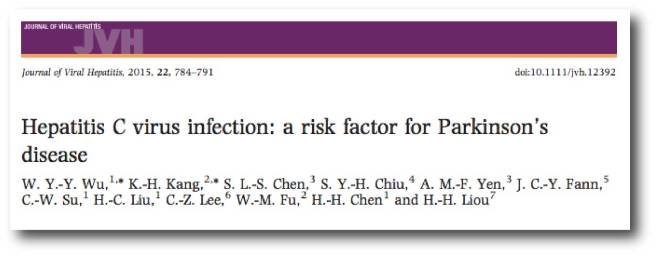
Title: Hepatitis C virus infection: a risk factor for Parkinson’s disease.
Authors: Wu WY, Kang KH, Chen SL, Chiu SY, Yen AM, Fann JC, Su CW, Liu HC, Lee CZ, Fu WM, Chen HH, Liou HH.
Journal: J Viral Hepat. 2015 Oct;22(10):784-91.
PMID: 25608223

The researchers in this study used data collected from a community-based screening program in north Taiwan which involved 62,276 people. The World Health Organisation (WHO) estimates that the prevalence of hepatitis C viral infection worldwide is approximately 2.2–3%, representing 130–170 million people. Taiwan is a high risk area for hepatitis, with antibodies for hepatitis viruses in Taiwan present in 4.4% in the general population (Source).

The researchers found that the significant association between hepatitis C viral infections and Parkinson’s disease – that is to say, a previous infection of hepatitis C increased the risk of developing Parkinson’s disease (by 40%). The researchers then looked at what the hepatitis C and B viral infections do to dopamine neurons growing in cell culture. They found that hepatitis C virus induced 60% dopaminergic cell death, while hepatitis B had no effect.

This study was followed up a few months later, by a second study suggesting an association between Hepatitis C virus and Parkinson’s disease:

Hep title

Title: Hepatitis C virus infection as a risk factor for Parkinson disease: A nationwide cohort study.
Authors: Tsai HH, Liou HH, Muo CH, Lee CZ, Yen RF, Kao CH.
Journal: Neurology. 2016 Mar 1;86(9):840-6.
PMID: 26701382

The researchers in this study wanted to investigate whether hepatitis C could be a risk factor for Parkinson’s disease. They did this by analyzing data from 2000-2010 drawn again from the Taiwan National Health Insurance Research Database.

The database included 49,967 people with either hepatitis B, hepatitis C or both, in addition to 199,868 people without hepatitis. During the 12 year period, 270 participants who had a history of hepatitis developed Parkinson’s disease (120 still had hepatitis C). This compared with 1,060 participants who were free of hepatitis, but went on to develop Parkinson’s disease.

When the researchers controlled for potentially confounding factors (such as age, sex, etc), the researchers found participants with hepatitis C had a 30% greater risk of developing Parkinson’s disease than the controls.

So if this has been demonstrated, why is this new study last week so important?

Good question.

The answer is very simple: This study is not based on statistics from Taiwan – this new study has found the same result from a new population.

HEP TITLE

Title: Viral hepatitis and Parkinson disease: A national record-linkage study.
Authors: Pakpoor J, Noyce A, Goldacre R, Selkihova M, Mullin S, Schrag A, Lees A, Goldacre M.
Journal: Neurology. 2017 Mar 29. [Epub ahead of print]
PMID: 28356465

These researchers used the English National Hospital Episode Statistics database and linked it to mortality data collected from 1999 till 2011. They too have found a strong association between hepatitis C and Parkinson’s disease (standardized rate ratio 1.51, 95% CI 1.18–1.9).

Curiously (and different from the previous studies), the researchers in this study also found a strong association for hepatitis B and Parkinson’s disease (standardized rate ratio 1.76, 95% CI 1.28–2.37). And these associations appear to be specific to Hepatitis B and C, as the investigators did not find any association between autoimmune hepatitis, chronic hepatitis, or HIV.

One important caveat with this new study, however, is that the authors could not
control for lifestyle factors (such as smoking or alcohol consumption). In addition, their system of linking medical records may underestimate the numbers of patients with
Parkinson’s disease as it would not take into account people with Parkinson’s disease who do not seek medical advice or those who are misdiagnosed (given a wrong diagnosis – it does happen!).

Regardless of these cautionary notes, the results still add to the accumulating evidence of an association between the virus that causes Hepatitis and the neurodegenerative condition of Parkinson’s disease.

But what about those people with Parkinson’s disease who have never had Hepatitis?

Yeah, this is a good question.

But there is a rather uncomfortable answer to it.

Here’s the rub: “Approximately 70%–80% of people with acute Hepatitis C do not have any symptoms” (Source: Centre for Disease Control). That is to say, the majority of people infected with the Hepatitis C virus will not be aware that they are infected. Some of those people who are infected may think that they have a case of the flu (HCV symptoms include fever, fatigue, loss of appetite,…), while others will simply not display any symptoms at all.

So many people with Parkinson’s disease may have had HCV, but never been aware of it.

And this is the really difficult part of researching the causal elements of Parkinson’s disease.

The responsible agent may actually leave little or no sign that they were ever present. For a long time, people have suggested that Parkinson’s disease is caused by a thief in the night – some agent that comes in, causes a problem and disappears without detection.

Perhaps Hepatitis is that thief.

But hang on a second, 60–70% of HCV infected people will go on to develop chronic liver disease (Source). Do people with Parkinson’s disease have liver issue?

Umm, well actually, in some cases: yes.

There have been studies of liver function in Parkinson’s disease where abnormalities have been found (Click here for more on this). And dopamine cell dysfunction has been seen in people with cirrhosis issues (Click here for more on this). In fact, the prevalence of Parkinsonism in people with cirrhosis has been estimated to be as high as 20% (and Click here for more on that).

So what are we saying? Hepatitis causes Parkinson’s disease???

No, we are not saying that.

Proving causality is the hardest task in science.

In addition, there have been a few studies in the past that have looked at viral infections as the cause of Parkinson’s disease that found strong associations with other viruses. For example this study:

Title: Infections as a risk factor for Parkinson’s disease: a case-control study.
Authors: Vlajinac H, Dzoljic E, Maksimovic J, Marinkovic J, Sipetic S, Kostic V.
Journal: Int J Neurosci. 2013 May;123(5):329-32.
PMID: 23270425

In this study, the researchers found that Parkinson’s Disease was also significantly associated to mumps, scarlet fever, influenza, and whooping cough as well as herpes simplex 1 infections. They found no association between Parkinson’s disease and Tuberculosis, measles or chickenpox though.

This result raises the tantalizing possibility that other viruses may also be involved with the onset of Parkinson’s disease (it should be added though that this study was based on only 110 people with Parkinson’s (compared with 220 controls) in one particular geographical location (Belgrade, Serbia)).

So different viruses may cause Parkinson’s disease?

We are not saying that either, but we would like to see more research on this topic.

And the situation may actually be more complicated than we think.

Recently, it has been reported that previous infection with flaviviruses (such as dengue) actually enhances the effect of Zika virus infect (Click here to read more on this). That is to say, a prior infection by one particular virus may exacerbate the infection of another virus. It could be that a previous infection by one virus increases that chance that a later infection by another virus – a particular combination of viral infections – may result in Parkinsonian symptoms (we are simply speculating here). 

Add to this complicated situation, the sheer number of unknown viruses. It is estimated that there are a minimum of 320,000 mammalian viruses still awaiting discovery (Click here for the source of this statistic), thus it is possible that additional unknown viruses may be involved with disease initiation for conditions like Parkinson’s disease.

A gang of unknown thieves in the night perhaps?

So what does it all mean?

Summing up: last week a new study was published that supported previous results that Hepatitis C viral infections could increase the risk of developing Parkinson’s disease. The results are important because they replicate previous findings from a different population of people.

The findings do not immediately mean that people with Hepatitis C are going to develop Parkinson’s disease, but it does suggest that they may be more vulnerable. The findings also suggest that more research is needed on the role of viral/infectious agents in the development of Parkinson’s disease.

We would certainly like to see more research in this area.


The banner for today’s post was sourced from Youtube

James: The man behind the disease (Part 1)

jamesp-signature

As part of Parkinson’s awareness month, and in observation of the 200 year anniversary of the first description of Parkinson’s disease, today we begin a four part set of posts looking at the man who made that first observation: James Parkinson.

Each week we will present various aspects about the man and his life.

Much of the material presented here has been replicated from our sister site Searching 4 James – a (much neglected) website celebrating the man and documenting the search for his likeness. To date, no portrait or image of the man has ever been found.

L0068467 The Villager's Friend and Physician

Source: Wellcome Images.

In her excellent book “James Parkinson, 1755-1824: From Apothecary to General Practitioner“, Shirley Roberts wrote that other sources have proposed that the man standing in the middle of the image above, talking to the villagers, is James Parkinson. The image appeared in James’ book ‘The Villager’s friend and physician’ (published in 1800), but (and I think you’ll agree) it does not give us much to work with.

Unfortunately Shirley Roberts made no reference to the sources of the proposal, but it is as close as we get to a likeness of the man, as he died before the first photographs were taken and there is no recorded painting of him.


Most people think of James Parkinson as a medical practitioner given his association with the disease that bears his name. But this singular association doesn’t really do the man credit. His contributions to medicine went well beyond the first description of ‘Parkinson’s disease’ – for example, James also gave the western world our first description of gout – a form of inflammatory arthritis that he and his father both suffered.

In addition, James was a ‘rockstar’ to the geological community, producing one of the most well regarded series of textbooks on the subject at the time. He was a political radical who wrote many pamphlets under the pseudonym “Old Hubert” and his associations with other radicals almost got him ‘transported’ (shipped out to the colonies). He was also a social reformist, calling for parliamentary reforms and universal suffrage. And his religious devotion made him a prominent figure within his church.

In short, he was a very interesting chap, who lived in (and had an impact on) interesting times.

THE WORLD OF JAMES

Before discussing the man himself, we must consider the world that James Parkinson was born into and the era he lived through. It provides us with the context within which we can fully appreciate the contributions that he made (including those beyond medicine).

James Parkinson was born on the 11th April 1755.

In the grand scale of things, the mid 1700’s was the peak of the little ice age, the middle of the age of enlightenment, and (critically) the start of the industrial revolution. The world was:

  • Pre USA (1776)
  • Pre French Revolution (1789)
  • Pre public electricity supply (1881)
  • Pre Napoleon (1769)
  • Pre Darwin (1809)

In London, King George II was on the English throne (soon to be replaced by George III), and Westminster bridge had just been finished (1750). The population of the city was approx. 700,000, but most of them lived in terrible conditions.

seutter_1750_london_view

A view of London (1750). Source: Historic Cities

James was born into a world where 74% of children born in London failed to reach the age of five. The medical world still practised humoral medicine (black bile, yellow bile, phlegm, and blood). Diseases were believed to be caused by an accumulation of “poisons” in the body, cured by bleeding, enemas, and sweating or blistering. The medical profession was:

  • Pre Ed Jenner’s vaccine for smallpox (1796)
  • Pre Rene Laennec’s stethoscope (1816)
  • Pre nitrous oxide (1800) or ether anaesthesia (1846)
  • Pre germ theory (Ignaz Semmelweis, 1847)
  • Pre Joseph Lister’s anti-septic surgery (1863).

Amputations were by far the most frequent surgeries, but the survival rate of the procedure was only 40% (and remember, there was no anaesthesia).

James Parkinson was born at no. 1 Hoxton Square in the liberty of Hoxton in Shoreditch, Middlesex. He would live all but the last 2 years of his life at that address.

In 1755, Hoxton was simply a scattering of houses, orchards and market gardens that lay approximately half a mile from one of the north-east gates of the walls of London. During the 17-1800s, Hoxton Square was considered a very fashionable area and young James would have grown up surrounded by open, reasonably well to do areas.

The maps below were made shortly before James was born, and it suggests open spaces, gardens, orchards and fields surrounding Hoxton.

London-1746

London in 1746 (Shoreditch is indicated by the black square)
Source: John Roque’s Map

Shoreditch

A map of Hoxton in 1746 – no 1. Hoxton Square (red arrow)
and St Leonard Church (blue arrow) are indicated.

James was born at the onset of the industrial revolution and with London prospering there was an enormous increase in the number of inhabitants. As more and more of London’s real estate became dedicated to business purposes, the inhabitants began spilling out into the surrounding areas. With transportation still limited to foot and horse, the people who worked in London needed to stay close to their place of employment, thus areas like Hoxton began to fill up rapidly. In 1788, there were 34,700 people living in Hoxton (in 5730 houses), which grew to 109,200 people in 1851 (in 15,433 houses).

Thus, during James’ life, Hoxton went through a radical transition. The large homes, orchards and gardens of his youth gave way to factories and over-crowding. And as a result, the ‘Parkinson and Son’ practise that he ran with his father (and later his own son) changed from serving a middle class clientele to dealing predominantly with the working class. With the prosperity of the time, there came a new trend of philanthropy, giving rise to the building of hospitals and mental asylums (‘madhouses’). James was the medical attendant for one of these madhouses, Holly House (Hoxton road, Hoxton).

The maps below were made in 1830 (shortly after James died – 1824) and indicate tremendous growth and expansion in London and the Hoxton area with the loss of much of the open spaces.

Greenwood

GREENWOOD MAP OF LONDON 1830 – Hoxton is indicated by the black square;
Tower of London (black arrow) and Westminster Abbey (red arrow) are also labelled – source: here

JP-Hoxton

 A map of Hoxton in 1830 – no 1. Hoxton Square (red arrow), St Leonard Church (blue arrow) and Holly House (Magenta arrow) are indicated.


THE FORMATIVE YEARS

James was baptised on the 29th of April 1755 in St Leonard’s church (Shoreditch) – the same church where he attended weekly services, got married, baptised his own children (and married some of them), and where he was eventually buried. The details of the baptism are recorded in the parish register, and read simply: James son of John and Mary Parkinson. Hoxton Square, Born 11th. Baptised 29th inst.

St Leonards

St Leonard’s church (1827) – Source

St Leonard’s church formed one of the key pillars of James’ life, and he could readily view the spire of the church one just block away from no.1 Hoxton Square.

The Parkinson family never owned the house at no. 1 Hoxton Square, which was owned by one Joshua Jenning. The building they lived in is gone now, but it was still standing in 1910 when Prof Leonard George Rowntree, a lecturer at Johns Hopkins Medical School (Baltimore), visited it and described it as:

“The house is a plain old three story building facing the east, on the northwest corner of Hoxton Square. Behind the main building and connected with it is a smaller two-story one with a central door opening into the little side street. This apparently was Parkinson’s office. Behind this again is another smaller building which may have served as a laboratory, as a library, or perhaps as a museum. Leading up to the deeply set, black, massive looking front door are a stone walk and deeply worn stone steps. The house is only a few feet back from the street and before it stands an old iron fence.

Uninteresting though the exterior is, upon entering this building one is impressed at the large size of the rooms and with the evidences of the prosperity of other days. We see in almost every room great carved open fire-places of elaborate design, and between some rooms large connecting arches. The deep panelling of walls and ceiling which was formerly so much in vogue is well preserved in some of the rooms on the second floor. One is surprised to find such an interesting interior behind such an uninviting exterior”  

(Rowntree, 1912)

url

An image of no.1 Hoxton Square – Source

James was the eldest surviving child of John (an apothecary and surgeon) and Mary Parkinson. James had two sisters who survived to adulthood, Margaret Townley Parkinson (born 3rd August,1759) and Mary Sedgewood (born 11th January, 1763).

Little is known about the formative years of James Parkinsons. From his own writings, we know that he had a solid education in Latin and Greek as well as chemistry, biology and mathematics. James was fortunate to grow up in a ‘comfortable, cultured home’ with ‘a medical atmosphere’. But a thriving literary, scientific, and religious atmosphere also existed in Hoxton square. No fewer than fifteen residents of the Square are biographized in the Dictionary of National Biography – a distinction not shared by any other London Square from that time. Nothing is known about where James received his education. His name does not appear on the registry of scholars of the well known public schools of London, such as St Paul’s, the charterhouse, Christ’s Hospital, Merchants Taylors – all of which were within walking distance of Hoxton Square. Private home schooling was very popular during this time. James certainly did not attend Cambridge or Oxford University.

At age 16, James began his training to be an apothecary. In accordance with an antiquated Elizabethan Act of Parliament, in order to become a surgeon a young man had to serve an apprenticeship of seven years. James was apprenticed to his father, but 20 years later he wrote that “no apprenticeship should be advisable except to a hospital”. James was extremely critical of the traditional methods used in the teaching of medicine at the time:

“The first four or five years are almost entirely appropriated to the compounding of medicines; the art of which,with every habit of necessary exactness, might just as well be obtained in as many months. The remaining years of his apprenticeship bring with them the acquisition of the art of bleeding, of dressing a blister, and, for the completion of the climax – of exhibiting an enema”  Parkinson, J. p32 (1800)

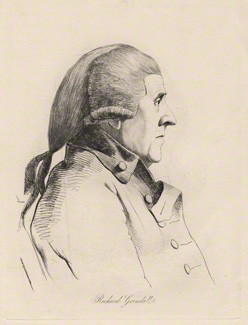
To further his training, James became one of the first medical students of the London Hospital Medical College (Whitechapel Road), founded by William Blizzard – surgeon of the Hospital. The college register records that he entered for training on Feb 20th 1776 when he was in his twentieth year. He was a ‘hospital pupil’ (or dresser) under Richard Grindall, FRS, at that time assistant surgeon. James remained for 6 months, but after this training he still felt ‘miserably ignorant’.

NPG D12199; Richard Grindall by William Daniell, after  George Dance

Richard Grindall (1716-1795) – by William Daniell, (21 Aug 1793)  – Source

On 1st April 1784, James was examined and granted the grand diploma of the Company of Surgeons. He then joined his father in a practice, called “Parkinson and Son” (that practice was to last through 4 generations – approx. 80 years). Unfortunately, John Parkinson died only 6 years later, and James was left to manage the practice single-handedly. James was fortunate to take over his father’s prosperous practise as he noted that ‘a physician seldom obtains bread by his profession until he has no teeth left to eat it’. The clientele requiring the services of Parkinson and son, however, would change dramatically during James’s life. Parkinson’s and son’s evolved from a upper-middle class practise to an almost entirely working class practise by the time James passed on.

It says a great deal about the man that he did not move away from the community as it evolved (as many early inhabitants of Hoxton Square did).

On 21st May 1783, James married Mary Dale in St Leonard’s Church, by special license which was the custom of the upper and middle classes of that period. He was 25 and she was 23 years old. James’s friend Wakelin Welch Jr of Lympstone (Devon) acted as his best man (many years later, James’ book ‘Organic Remains of a Former World’ was dedicated to Welch).

According to the Family Pursuits website, Mary Dale (daughter of John Dale and Mary Hardy) was born 2nd September, 1757 in Shoreditch, Middlesex. Her family lived lived in Charles Square, Hoxton. Mary’s grandfather, Francis Dale (1650-1716), was an apothecary in Hoxton Old Town. He had three sons: Francis (also an apothecary), Thomas (1699-1750), and John (a silk merchant and Mary’s father). Her family not only had a medical history, but also geological. Mary’s grand uncle, Samuel Dale (1659-1739) was a keen botanist and one of the first to describe the fossils in the cliffs of Harwich (Essex).


d88e38cf

Samuel Dale (1659-1739) – Source: The Essex Field Club

Thus the marriage was most likely a good fit for James. Mary Parkinson would live a long life, dying on 28 March 1838 of typhus fever (Gardner-Thorpe, 2013). Together with James, she had six children, key amongst them was John William Keys Parkinson (born 11th July, 1785) who apprenticed to his father and would later become the ‘Son’ in ‘Parkinson and Son’ (and ultimately John’s son James Keys Parkinson would follow in this process).


In the next post of this series, we will look at James’ early years as a physician and his foray into political radicalism.

ADHD and Parkinson’s disease

maxresdefault

The chemical dopamine plays a critical role in Parkinson’s disease.

It is also involved with the condition Attention deficit hyperactivity disorder, and recently researchers have been looking at whether there are any links between the two.

In today’s post we will look at what Attention deficit hyperactivity disorder is, how it relates to Parkinson’s disease, and what new research means for the community.


o-ADHD-facebook

Source: Huffington Post

We really have little idea about how Parkinson’s disease actually develops.

It could be kicked off by a virus or environmental factors or genetics…or perhaps a combination of these. We really don’t know, and it could vary from person to person.

There is a lot of speculation, however, as to what additional conditions could make one susceptible to Parkinson’s disease, even those conditions with early developmental onsets, such as autism (which we have previously written about – click here to see that post).

Recently researchers in Germany have asked if there is any connections between Parkinson’s and ADHD?

What is ADHD?

Attention deficit hyperactivity disorder (ADHD) is a neurodevelopmental condition that begins in childhood and persists into adulthood in 60% of affected individuals.

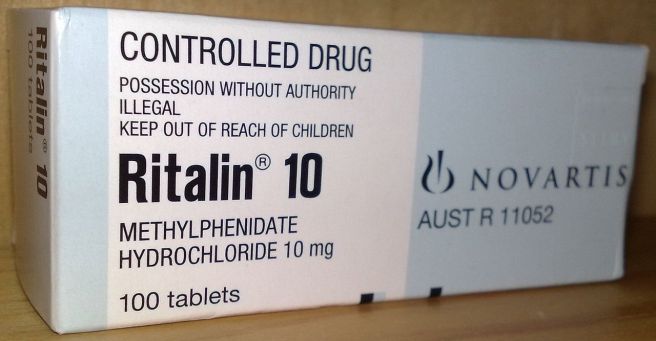
It is classically characterised in the media by hyperactive children who struggle to concentrate and stay focused on what they are doing. They are often treated with drugs such as Methylphenidate (also known as ritalin). Methylphenidate acts by blocking a protein called the dopamine transporter, which is involved with reabsorbing the chemical dopamine back into the cell after it has performed it’s function.

1280px-Ritalin

Ritalin. Source: Wikipedia

So are there any connections between ADHD and Parkinson’s disease?

This is an interesting question.

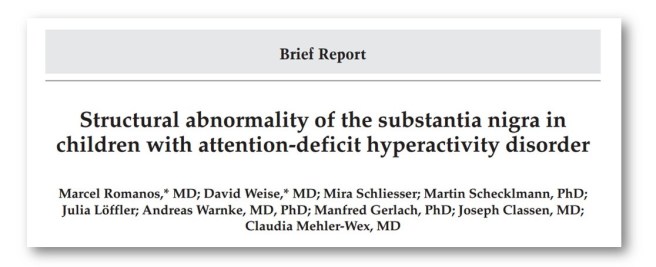
While there have been no reported findings of increased (or decreased) frequency of Parkinson’s disease in people with ADHD (to our knowledge), there are actually several bits of evidence suggesting a connection between the two conditions, such as abnormalities in the substantia nigra:

substantia

Title: Structural abnormality of the substantia nigra in children with attention-deficit hyperactivity disorder
Authors: Romanos M, Weise D, Schliesser M, Schecklmann M, Löffler J, Warnke A, Gerlach M, Classen J, Mehler-Wex C.
Journal: J Psychiatry Neurosci. 2010 Jan;35(1):55-8.
PMID: 20040247               (This article is OPEN ACCESS if you would like to read it)

The substantia nigra is a structure in the brain where the dopamine neurons reside. In Parkinson’s disease, the dopamine neurons of the substantia nigra start to degenerate – 50% are lost by the time a person is diagnosed with the condition.

In this study, the researchers used a technique called echogenicity to examine the substantia nigra of 22 children with ADHD and 22 healthy controls. Echogenicity is the ‘ability to bounce an echo’. This sort of assessment measures the return of an ultrasound signal that is aimed at a structure.

The researchers found that the ADHD subjects had a larger substantia nigra area than the healthy controls – which apparently indicates dopamine dysfunction. This finding is similar to results that have been observed in Parkinson’s disease (Click here to read more regarding that study).


Another connection between the two conditions was recent research has shown that genetic variations in the PARK2 gene (also known as Parkin) contribute to the genetic susceptibility to ADHD.

Parkin title

Title: Genome-wide analysis of rare copy number variations reveals PARK2 as a candidate gene for attention-deficit/hyperactivity disorder.
Authors: Jarick I, Volckmar AL, Pütter C, Pechlivanis S, Nguyen TT, Dauvermann MR, Beck S, Albayrak Ö, Scherag S, Gilsbach S, Cichon S, Hoffmann P, Degenhardt F, Nöthen MM, Schreiber S, Wichmann HE, Jöckel KH, Heinrich J, Tiesler CM, Faraone SV, Walitza S, Sinzig J, Freitag C, Meyer J, Herpertz-Dahlmann B, Lehmkuhl G, Renner TJ, Warnke A, Romanos M, Lesch KP, Reif A, Schimmelmann BG, Hebebrand J, Scherag A, Hinney A.
Journal: Mol Psychiatry. 2014 Jan;19(1):115-21.
PMID: 23164820         (This article is OPEN ACCESS if you would like to read it)

There are about 20 genes that have been associated with Parkinson’s disease, and they are referred to as the PARK genes. Approximately 10-20% of people with Parkinson’s disease have a genetic variation in one or more of these PARK genes (we have discussed these before – click here to read that post). PARK2 is a gene called Parkin. Mutations in Parkin can result in an early-onset form of Parkinson’s disease. The Parkin gene produces a protein which plays an important role in removing old or sick mitochondria (we discussed this in our previous post – click here to read that post).

In this report, the researchers conducted a genetic sequencing study on 489 young subjects with ADHD (average age 11 years old) and 1285 control individuals. They replicated the study with a similar sized population of people affected by ADHD and control subjects, and in both studies they found that certain deletions and replications in the Parkin gene influences susceptibility to ADHD – two of the genetic variations were found in 335 of the ADHD cases and none in 2026 healthy controls (from both sets of studies).

So there are are some interesting possible connections between  ADHD and Parkinson’s disease.

And what has the recent research from the German scientists found?

In this study, the researchers have looked at additional genetic variations that have been suggested to infer susceptibility to ADHD.

adhd

Title: No genetic association between attention-deficit/hyperactivity disorder (ADHD) and Parkinson’s disease in nine ADHD candidate SNPs
Authors: Geissler JM; International Parkinson Disease Genomics Consortium members., Romanos M, Gerlach M, Berg D, Schulte C.
Journal: Atten Defic Hyperact Disord. 2017 Feb 7. doi: 10.1007/s12402-017-0219-8. [Epub ahead of print]
PMID: 28176268

The researchers analysed nine genetic variations in seven genes:

  • one variant in the gene synaptosomal-associated protein, 25kDa1 (SNAP25)
  • one variant in the gene dopamine transporter (DAT; also known as SLC6A3)
  • one variant in the gene dopamine receptor D4 (DRD4)
  • one variant in the gene serotonin receptor 1B (HTR1B)
  • three mutations in cadherin 13 (CDH13)
  • one mutation located within the gene tryptophan hydroxylase 2 (TPH2)
  • one mutation located within the gene noradrenaline transporter (SLC6A2)

These genetic variations were assessed in 5333 cases of Parkinson’s disease and 12,019 healthy controls. The researchers found no association between any of the genetic variants and Parkinson’s disease. This finding lead the investigators to conclude that these genetic alterations associated with ADHD do not play a substantial role in increasing the risk of developing Parkinson’s disease.

Have ADHD medications ever been tested in Parkinson’s disease?

Yes.

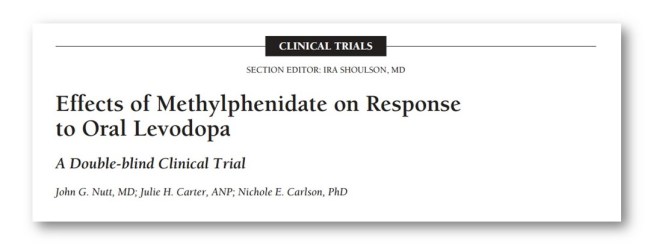
Given the association of both ADHD and Parkinson’s disease with altered dopamine processing in the brain, a clinical trial of ritalin in Parkinson’s disease was set up and run in 2006 (Click here to read more about that trial). The results of the trial were published in 2007:


Ritalin title

Title: Effects of methylphenidate on response to oral levodopa: a double-blind clinical trial.
Authors: Nutt JG, Carter JH, Carlson NE.
Journal: Arch Neurol. 2007 Mar;64(3):319-23.
PMID: 17353373       (This article is OPEN ACCESS if you would like to read it)

In this study, the researchers recruited 12 people with Parkinson’s disease and examined their response to 0.4 mg/kg of ritalin – given 3 times per day – in conjunction with their normal anti-Parkinsonian medication (L-dopa). They then tested the subjects with either ritalin or a placebo control and failed to find any clinically significant augmentation of L-dopa treatment from the co-administration of ritalin.

What does it all mean?

So summing up: both Attention deficit hyperactivity disorder (ADHD) and Parkinson’s disease are associated with changes in the processing of the brain chemical dopamine. There are loose connections between the two conditions, but nothing definitive.

It will be interesting to follow up some of the individuals affected by ADHD, to determine if they ultimately go on to develop Parkinson’s (particularly those with Parkin mutations/genetic variants). But until then, the connection between these two conditions is speculative at best.


The banner for today’s post was sourced from Youtube

Resveratrol: From the folks who brought you Nilotinib


vc_spotlightsonoma_breaker_winegrapes_stock_rf_525141953_1280x640

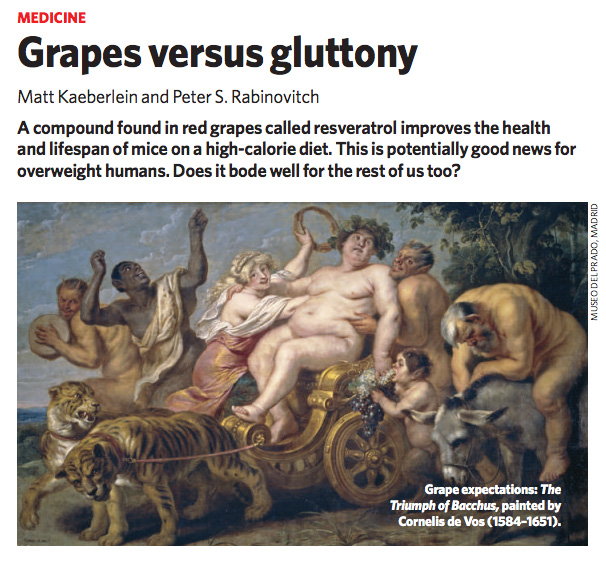
Recently the results of a small clinical study looking at Resveratrol in Alzheimer’s disease were published. Resveratrol has long been touted as a miracle ingredient in red wine, and has shown potential in animal models of Parkinson’s disease, but it has never been clinically tested.

Is it time for a clinical trial?

In today’s post we will review the new clinical results and discuss what they could mean for Parkinson’s disease.


maxresdefault

From chemical to wine – Resveratrol. Source: Youtube

In 2006, there was a research article published in the prestigious journal Nature about a chemical called resveratrol that improved the health and survival of mice on a high-calorie diet (Click here for the press release).

Wine2
Title: Resveratrol improves health and survival of mice on a high-calorie diet.
Authors: Baur JA, Pearson KJ, Price NL, Jamieson HA, Lerin C, Kalra A, Prabhu VV, Allard JS, Lopez-Lluch G, Lewis K, Pistell PJ, Poosala S, Becker KG, Boss O, Gwinn D, Wang M, Ramaswamy S, Fishbein KW, Spencer RG, Lakatta EG, Le Couteur D, Shaw RJ, Navas P, Puigserver P, Ingram DK, de Cabo R, Sinclair DA.
Journal: Nature. 2006 Nov 16;444(7117):337-42.
PMID: 17086191          (This article is OPEN ACCESS if you would like to read it)

In this study, the investigators placed middle-aged (one-year-old) mice on either a standard diet or a high-calorie diet (with 60% of calories coming from fat). The mice were maintained on this diet for the remainder of their lives. Some of the high-calorie diet mice were also placed on resveratrol (20mg/kg per day).

After 6 months of this treatment, the researchers found that resveratrol increased survival of the mice and insulin sensitivity. Resveratrol treatment also improved mitochondria activity and motor performance in the mice. They saw a clear trend towards increased survival and insulin sensitivity.

The report caused a quite a bit of excitement – suddenly there was the possibility that we could eat anything we wanted and this amazing chemical would safe us from any negative consequences.

Grape

Source: Nature

That report was proceeded by numerous studies demonstrating that resveratrol could extend the life-span of various micro-organisms, and it was achieving this by activating a family of genes called sirtuins (specifically Sir1 and Sir2) (Click herehere and here for more on this).

Subsequent to these reports, there have been numerous scientific publications suggesting that resveratrol is capable of all manner of biological miracles.

Wow! So what is resveratrol?

grapes

Do you prefer your wine in pill form? Source: Patagonia

Resveratrol is a chemical that belongs to a group of compounds called polyphenols. They are believed to act like antioxidants. Numerous plants produce polyphenols in response to injury or when the plant is under attack by pathogens (microbial infections).

Fruit are a particularly good source of resveratrol, particularly the skins of grapes, blueberries, raspberries, mulberries and lingonberries. One issue with fruit as a source of resveratrol, however, is that tests in rodents have shown that less than 5% of the oral dose was observed as free resveratrol in blood plasma (Source). This has lead to the extremely popular idea of taking resveratrol in the form of wine, in the hope that it could have higher bioavailability compared to resveratrol in pill form. Red wines have the highest levels of Resveratrol in their skins (particularly Mabec, Petite Sirah, St. Laurent, and pinot noir). This is because red wine is fermented with grape skins longer than is white wine, thus red wine contains more resveratrol.


EDITOR’S NOTE: Sorry to rain on the parade, but it is important to note here that red wine actually contains only small amounts of resveratrol – less than 3-6 mg per bottle of red wine (750ml). Thus, one would need to drink a great deal of red wine per day to get enough resveratrol (the beneficial effects observed in the mouse study described above required 20mg/kg of resveratrol per day. For a person weighting 80kg, this would equate to 1.6g per day or approximately 250 750ml bottles). 

We would like to suggest that consuming red wine would NOT be the most efficient way of absorbing resveratrol. And obviously we DO NOT recommend any readers attempt to drink 250 bottles per day (if that is even possible). 

The recommended daily dose of resveratrol should not exceed 250 mg per day over the long term (Source). Resveratrol might increase the risk of bleeding in people with bleeding disorders. And we recommend discussing any change in treatment regimes with your doctor before starting.


So what did they find in the Alzheimer’s clinical study?

Well, the report we will look at today is actually a follow-on to published results from a phase 2/safety clinical trial that were reported in 2015:

trial.jpg

Title: A randomized, double-blind, placebo-controlled trial of resveratrol for Alzheimer disease.
Authors: Turner RS, Thomas RG, Craft S, van Dyck CH, Mintzer J, Reynolds BA, Brewer JB, Rissman RA, Raman R, Aisen PS; Alzheimer’s Disease Cooperative Study.
Title: Neurology. 2015 Oct 20;85(16):1383-91.
PMID: 26362286          (This article is OPEN ACCESS if you would like to read it)

The researchers behind the study are associated with the Georgetown research group that conducted the initial Nilotinib clinical study in Parkinson’s disease (Click here for our post on this).

The investigators conducted a randomized, placebo-controlled, double-blind, multi-center phase 2 trial of resveratrol in individuals with mild to moderate Alzheimer disease. The study lasted 52 weeks and involved 119 individuals who were randomly assigned to either placebo or resveratrol 500 mg orally daily treatment.

EDITOR’S NOTE: We appreciate that is daily dose exceeds the recommended daily dose mentioned above, but it is important to remember that the participants involved in this study were being closely monitored by the study investigators.

Brain imaging and samples of cerebrospinal fluid (the liquid within which the brain sits) were collected at the start of the study and after completion of treatment.

The most important result of the study was that resveratrol was safe and well-tolerated. The most common side effect was feeling nausea and diarrhea in approximately 42% of individuals taking resveratrol (curiously 33% of the participants blindly taking the placebo reported the same thing). There was also a weight loss effect between the groups, with the placebo group gaining 0.5kg on average, while the resveratrol treated group lost 1kg on average.

The second important take home message is that resveratrol crossed the blood–brain barrier in humans. The blood brain barrier prevents many compounds from having any effect in the brain, but it does not stop resveratrol.

The investigators initially found no effects of resveratrol treatment in various Alzheimer’s markers in the cerebrospinal fluid. Not did they see any effect in brain scans, cognitive testing, or glucose/insulin metabolism. The authors were cautious about their conclusions based on these results, however, as the study was statistically underpowered (that is to say, there were not enough participants in the various groups) to detect clinical benefits. They recommended a larger study to determine whether resveratrol is actually beneficial.

While exploring the idea of a larger study, the researchers have re-analysed some of the data, and that brings us to the report we want to review today:

moussa

Title: Resveratrol regulates neuro-inflammation and induces adaptive immunity in Alzheimer’s disease.
Authors: Moussa C, Hebron M, Huang X, Ahn J, Rissman RA, Aisen PS, Turner RS.
Journal: J Neuroinflammation. 2017 Jan 3;14(1):1. doi: 10.1186/s12974-016-0779-0.
PMID: 28086917       (This article is OPEN ACCESS if you would like to read it)

In this report, the investigators conducted a retrospective study re-examining the cerebrospinal fluid and blood plasma samples from a subset of subjects involved in the clinical study described above. In this study, they only looked at the subjects who started with very low levels in the cerebrospinal fluid of a protein called Aβ42.

Amyloid beta (or Aβ) is the bad boy/trouble maker of Alzheimer’s disease; considered to be critically involved in the disease. A fragment of this protein (called Aβ42) begin clustering in the brains of people with Alzheimer’s disease and as a result, low levels of Aβ42 in cerebrospinal fluid have been associated with increased risk of Alzheimer’s disease and considered a possible biomarker of the condition (Click here to read more on this).

The resveratrol study investigators collected all of the data from subjects with cerebrospinal fluid levels of Aβ42 less than 600 ng/ml at the start of the study. This selection criteria gave them 19 resveratrol-treated and 19 placebo-treated subjects.

In this subset re-analysis study, resveratrol treatment appears to have slowed the decline in cognitive test scores (the mini-mental status examination), as well as benefiting activities of daily living scores and cerebrospinal fluid levels of Aβ42.

One of the most striking results from this study is the significant decrease observed in the cerebrospinal fluid levels of a protein called Matrix metallopeptidase 9 (or MMP9) after resveratrol treatment. MMP9 is slowly emerged as an important player in several neurodegenerative conditions, including Parkinson’s disease (Click here to read more on this). Thus the decline observed is very interesting.

This re-analysis indicates beneficial effects in some cases of Alzheimer’s as a result of taking resveratrol over 52 weeks. The researchers concluded that the findings of this re-analysis support the idea of a larger follow-up study of resveratrol in people with Alzheimer’s disease.

Ok, but what research has been done on resveratrol in Parkinson’s disease?

Yes, good question.

One of the earliest studies looking at resveratrol in Parkinson’s disease was this one:

Reserv
Title: Neuroprotective effect of resveratrol on 6-OHDA-induced Parkinson’s disease in rats.
Authors: Jin F, Wu Q, Lu YF, Gong QH, Shi JS.
Journal: Eur J Pharmacol. 2008 Dec 14;600(1-3):78-82.
PMID: 18940189

In this study, the researchers used a classical rodent model of Parkinson’s disease (using the neurotoxin 6-OHDA). One week after inducing Parkinson’s disease, the investigators gave the animals either a placebo or resveratrol (at doses of 10, 20 or 40 mg/kg). This treatment regime was given daily for 10 weeks and the animals were examined behaviourally during that time.

The researchers found that resveratrol improved motor performance in the treated animals, with them demonstrating significant results as early as 2 weeks after starting treatment. Resveratrol also reduced signs of cell death in the brain. The investigators concluded that resveratrol exerts a neuroprotective effect in this model of Parkinson’s disease.

Similar results have been seen in other rodent models of Parkinson’s disease (Click here and here to read more).

Subsequent studies have also looked at what effect resveratrol could be having on the Parkinson’s disease associated protein alpha synuclein, such as this report:

PD-title

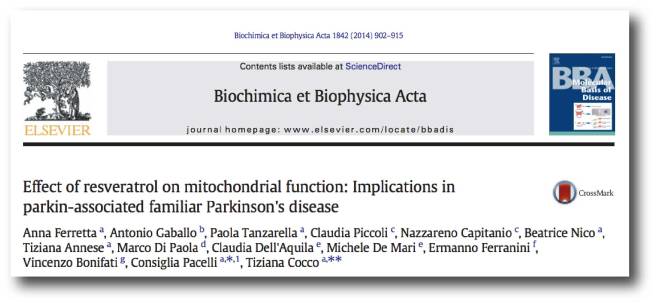
Title: Effect of resveratrol on mitochondrial function: implications in parkin-associated familiarParkinson’s disease.
Authors: Ferretta A, Gaballo A, Tanzarella P, Piccoli C, Capitanio N, Nico B, Annese T, Di Paola M, Dell’aquila C, De Mari M, Ferranini E, Bonifati V, Pacelli C, Cocco T.
Journal: Biochim Biophys Acta. 2014 Jul;1842(7):902-15.
PMID: 24582596                     (This article is OPEN ACCESS if you would like to read it)


In this study, the investigators collected skin cells from people with PARK2 associated Parkinson’s disease.

What is PARK2 associated Parkinson’s disease?

There are about 20 genes that have been associated with Parkinson’s disease, and they are referred to as the PARK genes. Approximately 10-20% of people with Parkinson’s disease have a genetic variation in one or more of these PARK genes (we have discussed these before – click here to read that post).

PARK2 is a gene called Parkin. Mutations in Parkin can result in an early-onset form of Parkinson’s disease. The Parkin gene produces a protein which plays an important role in removing old or sick mitochondria.

Hang on a second. Remind me again: what are mitochondria?

We have previously written about mitochondria (click here to read that post). Mitochondria are the power house of each cell. They keep the lights on. Without them, the lights go out and the cell dies.

Mitochondria

Mitochondria and their location in the cell. Source: NCBI

You may remember from high school biology class that mitochondria are bean-shaped objects within the cell. They convert energy from food into Adenosine Triphosphate (or ATP). ATP is the fuel which cells run on. Given their critical role in energy supply, mitochondria are plentiful and highly organised within the cell, being moved around to wherever they are needed.

Another Parkinson’s associated protein, Pink1 (which we have discussed before – click here to read that post), binds to dysfunctional mitochondria and then grabs Parkin protein which signals for the mitochondria to be disposed of. This process is an essential part of the cell’s garbage disposal system.

Park2 mutations associated with early onset Parkinson disease cause the old/sick mitochondria are not disposed of correctly and they simply pile up making the cell sick. The researchers that collected the skin cells from people with PARK2 associated Parkinson’s disease found that resveratrol treatment partially rescued the mitochondrial defects in the cells. The results obtained from these skin cells derived from people with early-onset Parkinson’s disease suggest that resveratrol may have potential clinical application.

Thus it would be interesting (and perhaps time) to design a clinical study to test resveratrol in people with PARK2 associated Parkinson’s disease.

So why don’t we have a clinical trial?

Resveratrol is a chemical that falls into the basket of un-patentable drugs. This means that big drug companies are not interested in testing it in an expensive series of clinical trials because they can not guarantee that they will make any money on their investment.

There was, however, a company set up in 2004 by the researchers behind the original resveratrol Nature journal report (discussed at the top of this post). That company was called “Sirtris Pharmaceuticals”.

e4d4a0ddab6419c9de2bd8ca4f199e0c

Source: Crunchbase

Sirtris identified compounds that could activate the sirtuins family of genes, and they began testing them. They eventually found a compound called SRT501 which they proposed was more stable and 4 times more potent than resveratrol. The company went public in 2007, and was subsequently bought by the pharmaceutical company GlaxoSmithKline in 2008 for $720 million.

Sirtris_rm

Source: Xconomy

From there, however, the story for SRT501… goes a little off track.

In 2010, GlaxoSmithKline stopped any further development of SRT501, and it is believed that this decision was due to renal problems. Earlier that year the company had suspended a Phase 2 trial of SRT501 in a type of cancer (multiple myeloma) because some participants in the trial developed kidney failure (Click here to read more).

Then in 2013, GlaxoSmithKline shut down Sirtris Pharmaceuticals completely, but indicated that they would be following up on many of Sirtris’s other sirtuins-activating compounds (Click here to read more on this).

Whether any of those compounds are going to be tested on Parkinson’s disease is yet to be determined.

What we do know is that the Michael J Fox foundation funded a study in this area in 2008 (Click here to read more on this), but we are yet to see the results of that research.

We’ll let you know when we hear of anything.

So what does it all mean?

Summing up: Resveratrol is a chemical found in the skin of grapes and berries, which has been shown to display positive properties in models of neurodegeneration. A recent double blind phase II efficacy trial suggests that resveratrol may be having positive benefits in Alzheimer’s disease.

Preclinical research suggests that resveratrol treatment could also have beneficial effects in Parkinson’s disease. It would be interesting to see what effect resveratrol would have on Parkinson’s disease in a clinical study.

Perhaps we should have a chat to the good folks at ‘CliniCrowd‘ who are investigating Mannitol for Parkinson’s disease (Click here to read more about this). Maybe they would be interested in resveratrol for Parkinson’s disease.


ONE LAST EDITOR’S NOTE: Under absolutely no circumstances should anyone reading this material consider it medical advice. The material provided here is for educational purposes only. Before considering or attempting any change in your treatment regime, PLEASE consult with your doctor or neurologist. SoPD can not be held responsible for actions taken based on the information provided here. 


The banner for today’s post was sourced from VisitCalifornia

A new theory of Parkinson’s disease

emc2

The great American baseball legend, Yogi Berra, once said: “In theory, there is no difference between theory and practice. But in practice, there is.”

Silly as it reads, there is a great deal of truth to that statement.

In science, we very quickly chase after a particular theory as soon as a little bit of evidence is produced that supports it. Gradually, these theories become our basic understanding of a situation, until someone points out the holes in the theory and we have to revise it.

A new theory of Parkinson’s disease has recently been proposed. In today’s post we will review what the theory is suggesting and what evidence there is to support it.


150119_sipress-2005-05-23

“I still say it’s only a theory”. Source: NewYorker

In the age of ‘alternative facts’, it is always important to remember that we don’t know as much as we think we do. In fact, much of our modern world still relies on a kind of faith rather than actual ‘facts’. For example, we take a particular type of medicine, because it has worked for some people in the past, not because it will definitely make us better.

And the same applies to our understanding of neurodegenerative conditions, like Parkinson’s disease. Based on all the evidence we have collected thus far, we have theories of how Parkinson’s disease may be progressing. But there are always exceptions to the rule, and these force us to refine or reconsider our theories.

Recently a refinement to our theory of Parkinson’s disease has been suggested.

Who has suggested it?

This is Prof Ole Isacson.

maxresdefault

Source: Crunchbase

He’s a dude.

He is is a Professor of Neurology at Harvard Medical School, and Chief Scientific Officer of the Neuroscience Research Unit and Senior Vice President at the pharmaceutical company Pfizer.

And this is Dr Simone Engelender.

8678381191

Source: Rappaport

She’s awesome as well.

She is Associate Professor of Molecular Pharmacology at the Rappaport Family Institute for Research in the Medical Sciences in Haifa, Israel.

Together they have proposed a new theory of Parkinson’s disease that has the research community talking:

trends
Title: The Threshold Theory for Parkinson’s Disease.
Authors: Engelender S, Isacson O.
Journal: Trends Neurosci. 2017 Jan;40(1):4-14.
PMID: 27894611

The new theory proposes that Parkinson’s disease may actually be a ‘systemic condition’ (that is, affecting cells everywhere at the same time), but the clinical features – such as motor issues – only appear as certain thresholds are passed in the affected populations of neurons in the brain.

What does that mean?

Wait a minute. Let’s start at the beginning.

Before discussing what the new theory suggests, shall we first have a look at what the old theories proposed?

Ok, what did the old theory propose?

This is Prof Heiko Braak:

heiko-braak-01

Source – Memim.com

He’s pretty cool too. Nice guy.

Many years ago, Prof Braak – a German neuroanatomist – sat down and examined hundreds of postmortem brains from people with Parkinson’s disease.

He had collected brains from people at different stages of Parkinson’s disease – from just after being diagnosed to having had the condition for decades – and he was looking for any kind of pattern that might explain where and how the disease starts. His research led to what is referred to as the “Braak stages of Parkinson’s disease” – a six step explanation of how the disease spreads up from the brain stem and into the rest of the brain (Click here to read more about this).

nrneurol.2012.80-f1

The Braak stages of PD. Source: Nature

Braak’s results also led him to propose that Parkinson’s disease may actually begin in the brain stem (which connects the brain to the spinal cord) and the disease slowly works it’s way up into the brain.

That is the ‘ascending’ theory of Parkinson’s disease.

This idea has been further adapted by Braak and others with the discovery of Parkinson’s disease features in the gut (we have discussed this in previous posts – Click here and here to read those posts).

But how does the disease actually spread?

Good question.

The spread of the condition is believed to be due to the protein alpha synclein being passed between cells in some manner. This idea stemmed from the analysis of the brains of people with Parkinson’s disease who received cell transplantation therapy in the 1980-90’s. After those people passed away (due to natural causes), their brains were analysed and it was discovered that some of the cells in the transplants (1-5%) have Lewy bodies in them (Lewy bodies are one of the hallmarks of Parkinson’s disease, dense circular clusters of proteins including alpha synuclein). This suggests that the disease is passed on to the healthy transplanted cells in some way.

gr3

Photos of neurons from the post-mortem brains of people with Parkinson’s that received transplants. White arrows in the images above indicate lewy bodies inside transplanted cells. Source: The Lancet

So the research community has been working with the idea of an ‘ascending’ theory of Parkinson’s disease, and the spreading of the condition via the passing of alpha synuclein from cell to cell. And this theory has been fine,…

Why do I feel like there’s a ‘but’ coming?

Because there is a ‘but’ coming.

And it’s a big BUT.

But as Prof Isacson and Dr Engelender point out there are some holes in this theory.

Some big holes.

For example, in a 2008 study of 71 postmortem brains from people with Parkinson’s disease, 47% of the cases did not fit the predicted ‘Braak theory’ spread of alpha synuclein, and 7% of those cases did not have any cell loss in the dorsal motor nucleus (one of the first sites of damage in the Braak theory – Click here to read more).

Ok, so the theory is not perfect…what are Prof Isacson and Dr Engelender proposing instead?

They suggest that alpha synuclein accumulation starts at about the same time in nerve cells throughout the body, but the different groups of nerve cell differ in how much toxicity they can handle.

Some of these groups of cells can handle a lot (and more than half of the cells need to be lost before clinical features begin to appear), while others have a lower ‘threshold’ (only a few cells need to die before symptoms appear).

Prof Isacson and Dr Engelender argue that the nerve cells around the gut, for example, have a lower reserve (or total number), and, therefore, symptoms related to the gut become more obvious sooner as those cells die off or become less efficient. This lower threshold is in contrast to the more well known cell loss of the dopamine producing neurons in the midbrain, where approximately 50-70 percent of the dopamine neurons disappear before the classical motor features of Parkinson’s start to appear. Their theory suggests that this part of the brain has a larger reserve, and thus higher threshold.

Hence the reason why this is being called the ‘threshold theory’.

1-s2.0-S016622361630145X-gr1

Some groups of cells may have a higher threshold in Parkinson’s disease. Source: Cell

Some cells may have a low threshold and only require a few cells to be lost before the clinical features associated with those cells begin to appear. These symptoms would obviously appear earlier than those features associated with a high threshold population of cells, which required substantial loss before symptoms appear.

This idea would explain differing results seen in research findings regarding, for example, vagotomies (the cutting of the vagus nerve to the gut – click here to read more about this). This new theory would suggest that the procedure might not have any impact at all on lowering the risk of Parkinson’s disease.

Both scientists insist that searching for treatments that slow or block the aggregation of alpha synuclein is still necessary.

“Instead of studying how proteins move from one neuron to another and searching for compounds that prevent the ‘spread’ of aggregated alpha-synuclein, we need to study why alpha-synuclein accumulates within neurons and how these neurons die in the disease, and search for compounds that prevent the general neuronal dysfunction,” – Dr Engelender

(Source: Science Daily)

So are there any problems with this new theory?

The new theory is a very interesting idea and deserves consideration. It solves some of the problems with the “ascending theory” discussed further above. But it also faces some of the same problems that the ascending theory has to deal with.

For example, in one large autopsy study which investigated 904 brains, the investigators blindly collected all of the brains that had alpha synuclein present in the groups of neurons that are affected in Parkinson’s disease (eg. the dorsal motor nucleus of vagus, substantia nigra, and/or basal forebrain nuclei.). They found that alpha synuclein was observed in 11.3% (or 106 cases). But when the researchers then looked at the clinical notes associated with those cases, only 32 (30%) had been diagnosed with a neurodegenerative disorder. The rest had demonstrated no clinical features.

Another study found that 8.3% of the aged control brains had alpha synuclein present in them. In addition, the presence of alpha synuclein is not specific to Parkinson’s disease – approximately 50% of people who die with Alzheimer’s disease have been found to have Lewy bodies. These results suggest that alpha synuclein aggregation can be present in both healthy and diseased brains. But if this is so, what role is alpha synuclein playing in Parkinson’s disease?

(You see the sort of problems we are dealing with in research when trying to come up with a theory of how something complicated is actually working?)

What does it all mean?

The central job of a scientist is to test hypotheses.

A hypothesis is a true or false statement (for example, hypothesis: the sun will come up tomorrow – easy to test as the sun either will or won’t come up; the statement is either true or false). In building one hypothesis on top of another hypothesis, we develop theories about how the world around us works.

Sometimes our hypotheses can unwittingly take us in a particular direction, depending on different variables. The danger in this process (one which must be met with discipline and control procedures) is that one can start to look for results that support a hypothesis or theory. It is a very human characteristic to become blind to any evidence to the contrary.

A new theory of Parkinson’s disease has been proposed. It suggests that rather than the condition starting in one location and progressively moving higher into the brain, Parkinson’s disease may actually start everywhere and it is the varying levels of tolerance between different types of cells that determines which cells die first.

It is certainly a new take of the available evidence and the research community is considering it. It will be interesting to see what kind of feedback results from this article, and we will post updates on that feedback as they become available.


The banner for today’s post was sourced from Sott

A yeast model of Parkinson’s disease

yeast-cell

When I say the word ‘yeast’, you might think of making bread or beer.

One does not automatically think of Parkinson’s disease.

But yeast has actually been incredibly useful in enhancing our understanding of the genetics of Parkinson’s disease, and may well now provide us with novel treatments for the condition. In today’s post we will discuss how yeast research is leading the way for Parkinson’s disease.


bn-qp674_obit_l_gr_20161103124141

Prof Susan Lindquist. Source: WallStreetJournal

It was with sadness that we heard about the passing of Prof Susan Lindquist in October last year. She was truly a pioneer in the field of molecular biology. In addition to advancing our understanding of gene functioning in degenerative diseases like Parkinson’s disease and Alzheimer’s, she also started a company, Yumanity, which is currently testing new drugs to tackle these conditions. Hopefully her legacy will have enormous impact for the millions of people around the world struggling with these conditions.

And that legacy all started with a bold (some even called it ‘crazy’) idea.

It involved yeast.

What is yeast?

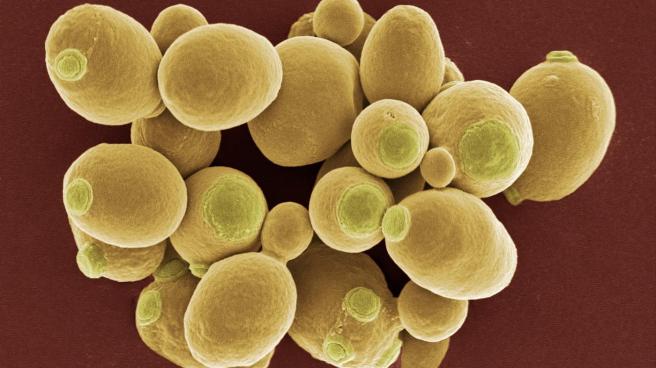
Quite possibly the earliest domesticated species, yeast is a single-celled microorganism, traditionally classified as a member of the fungus kingdom. The evolutionary lineage of yeast dates back hundreds of millions of years old and there are at least 1500 species of yeast (Source: Wikipedia).

cell

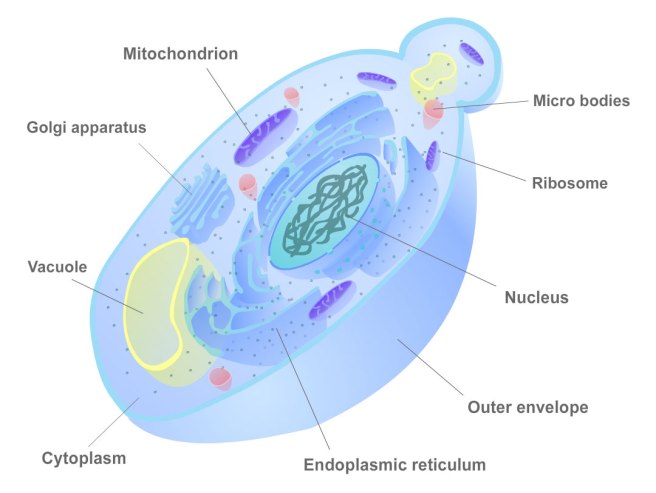
The cellular structure of yeast. Source: Biocourseware

More importantly, yeast is one of the most centrally important model organisms used in modern biological research, representing one of the most thoroughly researched organisms in the world.

We know more about the biology of yeast than we do about ourselves!

And this statement is made further evident as researchers use yeast to produce the world’s first synthetic organism (an organism for which the genome has been designed or engineered). By the end of 2017, the Synthetic Yeast 2.0 consortium plans to have produced a new form of yeast in which all 16 chromosomes will have been made in the lab (for more on this, read this STAT article).

Why do scientists like studying yeast?

The main reason is that yeast cells are very similar to human cells, but they grow a lot faster (human cells on average divide a rate of about once every 12 hours, while yeast cells divide every two hours). Yeast is similar to human cells in that it has all of the eukaryote structures, including a nucleus, cytoplasm, and mitochondria (eukaryote meaning a cell with a nucleus).

Yeast has played a fundamental role in many major scientific discoveries since the early 1900s. In 1907, German scientist Edward Buchner won the Nobel Prize in Chemistry for research involving yeast extract and fermentation. Ninety one years later (2006), Roger D. Kornberg won the same prize for his work on DNA transcription using yeast.

Yeast was the first eukaryote to have its genome (DNA) fully sequenced (in 1996). Yeast is literally leading the way in biological research.

So what has this got to do with Parkinson’s disease?

This is where Prof Susan Lindquist comes into the story.

maxresdefault

Source: Youtube

In the early 2000s, she suggested the idea of using yeast to look at neurodegenerative conditions like Parkinson’s disease. It was a wild concept. Talking to the New York Times in 2007, she said “Even people in my laboratory thought we were crazy to try to study neurodegenerative diseases with a yeast cell. It’s not a neuron”.

But they persevered and in 2003 they published this research report in the journal Science:

yeast

Title: Yeast genes that enhance the toxicity of a mutant huntingtin fragment or alpha-synuclein.
Authors: Willingham S, Outeiro TF, DeVit MJ, Lindquist SL, Muchowski PJ.
Journal: Science. 2003; 302(5651):1769-72.
PMID: 14657499

In this study, the researchers conducted a genome-wide screens of mutant genes in yeast to identify genes that enhanced the toxic effects of the mutant huntingtin gene or alpha-synuclein protein. That is to say, they randomly mutated (made un-operational) just one gene per yeast cell, and these yeast cells either had the mutant huntingtin gene (which causes the neurodegenerative condition of Huntington’s disease) or too much alpha synuclein (which causes protein clumping in the yeast cells). Using this approach, they could determine which genes were responsible for increasing the negative effects of the mutant huntington gene or the alpha synuclein protein.

Of the 4850 yeast genes that the researcher mutated (and can we just point out that that is A LOT of work!!!), 52 were identified that exaggerated the affect of the mutant huntingtin gene and 86 increased sensitivity to alpha-synuclein (curiously, only one mutant gene resulted in increased sensitivity to both).

When they looked at the known functions of 86 genes that were increasing the sensitivity to alpha synuclein, the researchers found that most of them were involved in the processes of lipid metabolism (the synthesis and degradation of lipids) and vesicle-mediated transport (this occurs at the tips of neural branches – where alpha synuclein is located). Alpha synuclein is known to be involved with lipid metabolism (Click here and here for more on this). This reenforced the belief with the researchers that yeast could be used to assess disease relevant pathways – this study gave them the ‘proof of concept’.

In addition, the majority of the genes had human ‘orthologs’ (genes in different species that evolved from a common ancestral gene), meaning that the findings of yeast studies could potentially be translated to higher order creatures, like humans. The researchers concluded that they had found cell autonomous genes that are relevant to Parkinson’s disease.

With the publication of this work, people in Prof Lindquist’s lab were probably thinking the idea wasn’t so crazy anymore.

And this first publication led to many more, such as this report which was published in the same journal in 2006:

Linds
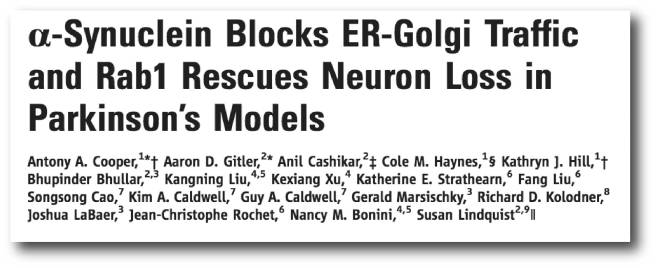
Title: Alpha-synuclein blocks ER-Golgi traffic and Rab1 rescues neuron loss in Parkinson’s models.
Authors: Cooper AA, Gitler AD, Cashikar A, Haynes CM, Hill KJ, Bhullar B, Liu K, Xu K, Strathearn KE, Liu F, Cao S, Caldwell KA, Caldwell GA, Marsischky G, Kolodner RD, Labaer J, Rochet JC, Bonini NM, Lindquist S.
Journal: Science. 2006 Jul 21;313(5785):324-8.
PMID: 16794039      (This article is OPEN ACCESS if you would like to read it)

In this study, the researchers doubled the amount of alpha synuclein that yeast cells produce and they observed that the cell stopped growing and started to die. They then looked at the earliest cellular events following theover production of alpha synuclein and they noticed that there was a blockage in the endoplasmic reticulum (ER)-to-Golgi vesicular trafficking.

Yes, I know what you are going to ask: What is ER-to-Golgi vesicular trafficking?

The endoplasmic reticulum (or ER) is a network of tubules connected to the nucleus. It is involved in the production of proteins and lipids, which are then transported to the Golgi apparatus which then modifies them, sorts them and and packs them into small bags called vesicles. These vesicles can then be taken to the cell membrane where the proteins are released to do their jobs.

ergolgi

The ER to Golgi pathway. Source: Welkescience

Now the fact that too much alpha synuclein was blocking this pathway was interesting, but the researchers wanted to go further. They conducted another genome-wide screens of genes in yeast to identify genes that could rescue this blockage – BUT this time, instead of mutating genes, the researchers randomly over produced one protein (and there was 3000 of them!!!) in each cell. Because the overproduction of alpha synuclein kills the yeast cells, all the researchers had to do was wait until the end of the experiment and determine which protein was over produced in the surviving cells.

And this led them to a protein called RAB1.

RAB1 is a protein that is critical to the transportation of proteins in cells. The researchers next tested the ability of RAB1 to rescue dopamine cells in Drosophila (flies), Caenorhabditis elegans (microscopic worms), and cell culture models of Parkinson’s disease and they found that it was able to rescue the cells in all three cases. While this result was very interesting, it also provided full validation of the approach that Prof Lindquist and her colleagues were taking using yeast cells to find new therapies for neurodegenerative conditions, like Parkinson’s disease.

But Prof Lindquist and her colleagues didn’t stop there.

Over the next decade numerous research reports were published taking advantage of this approach, including these two reports which appeared back-to-back in the journal Science:

lindq1

Title: Identification and rescue of α-synuclein toxicity in Parkinson patient-derived neurons.
Authors: Chung CY, Khurana V, Auluck PK, Tardiff DF, Mazzulli JR, Soldner F, Baru V, Lou Y, Freyzon Y, Cho S, Mungenast AE, Muffat J, Mitalipova M, Pluth MD, Jui NT, Schüle B, Lippard SJ, Tsai LH, Krainc D, Buchwald SL, Jaenisch R, Lindquist S.
Journal: Science. 2013 Nov 22;342(6161):983-7.
PMID: 24158904

And:

lindq2

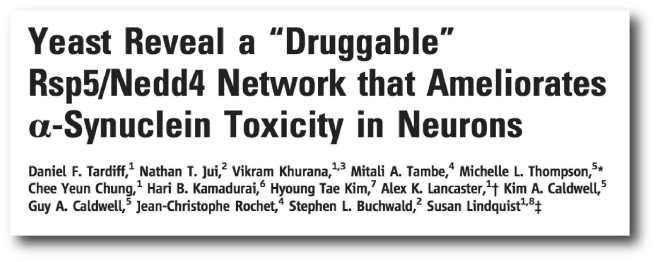
Title: Yeast reveal a “druggable” Rsp5/Nedd4 network that ameliorates α-synuclein toxicity in neurons.
Authors: Tardiff DF, Jui NT, Khurana V, Tambe MA, Thompson ML, Chung CY, Kamadurai HB, Kim HT, Lancaster AK, Caldwell KA, Caldwell GA, Rochet JC, Buchwald SL, Lindquist S.
Journal: Science. 2013 Nov 22;342(6161):979-83.
PMID: 24158909

In these reports, Prof Lindquist and colleagues tested whether some of the proteins that had come up in their various screens could actually have positive benefits in human cells, specifically induced pluripotent stem (iPS) cells (which we have discussed before – click here to read that post). The researchers grew brains cells (neurons and glial cells) from the iPS cells derived from people who suffered from Parkinson’s disease with dementia. These cells exhibited a number of features that indicated that they were not healthy. From their yeast screens, the researchers identified a protein called Nedd4 that reversed the pathologic features in these neurons.

Nedd4 is an E3 ubiquitin-protein ligase, which is a protein involved in the removal of old or damaged proteins from a cell. It is part of the garbage disposal process. Importantly, Nedd4 has been shown to label alpha synuclein for disposal (Click here to read more about this) and it is also present in Lewy Bodies – the circular clusters of proteins present in the brains of people with Parkinson’s disease. Importantly, it is a ‘druggable’ target. Nedd4 has been considered a therapeutic target for cancer (Click here to read more on this).

More recently (and following the passing of Prof Lindquist) the group has published two research reports back-to-back in the journal Cell Systems:

yeast-3

Title: Genome-Scale Networks Link Neurodegenerative Disease Genes to α-Synuclein through Specific Molecular Pathways.
Authors: Khurana V, Peng J, Chung CY, Auluck PK, Fanning S, Tardiff DF, Bartels T, Koeva M, Eichhorn SW, Benyamini H, Lou Y, Nutter-Upham A, Baru V, Freyzon Y, Tuncbag N, Costanzo M, San Luis BJ, Schöndorf DC, Barrasa MI, Ehsani S, Sanjana N, Zhong Q, Gasser T, Bartel DP, Vidal M, Deleidi M, Boone C, Fraenkel E, Berger B, Lindquist S.
Journal: Cell Syst. 2017 Jan 25. pii: S2405-4712(16)30445-8.
PMID: 28131822        (This article is OPEN ACCESS if you would like to read it)

And:

chung2

Title: In Situ Peroxidase Labeling and Mass-Spectrometry Connects Alpha-Synuclein Directly to Endocytic Trafficking and mRNA Metabolism in Neurons.
Authors: Chung CY, Khurana V, Yi S, Sahni N, Loh KH, Auluck PK, Baru V, Udeshi ND, Freyzon Y, Carr SA, Hill DE, Vidal M, Ting AY, Lindquist S.
Journal: Cell Syst. 2017 Jan 25. pii: S2405-4712(17)30002-9.
PMID: 28131823

In these reports, Prof Lindquist and colleagues systematically mapped out molecular pathways underlying the toxic effects of alpha-synuclein. They applied their yeast derived 332 genes that impact alpha-synuclein toxicity, and linked them to multiple Parkinson’s-associated genes and druggable targets, using software called TransposeNet.

1-s2.0-S2405471216304458-fx1

Source: Cell

The investigators then validated some of the connections in human iPS cells derived from people with Parkinson’s disease, confirming that some of the Parkinson’s disease-related genetic interactions observed in yeast are ‘conserved’ (that is maintained across evolution) to humans. And these findings fully vindicated Prof Lindquist’s ‘crazy’ idea of using yeast cells to investigate neurodegenerative disease.

In the second report, the researchers identified 225 proteins in close physical proximity to alpha-synuclein in neurons using a new technique (called ascorbate peroxidase (APEX) labeling – let’s just say it’s complicated, but if you’d like to read more about it, Click here). Many of those 225 proteins were well known to the researchers being involved with activities in vesicles and synaptic terminals, where alpha synuclein is often found. But the researchers also found microtubule-associated proteins (including tau) rubbing shoulders with alpha-synuclein, as well as proteins involved with mRNA binding, processing, and translation (which they were not expecting). Thus, not only has Prof Lindquist’s yeast model of Parkinson’s disease provided us with novel therapeutic targets, but also opened new avenues of research related to alpha synuclein functioning.


And there is now a ‘yeast’ biotech company?

It is called Yumanity.

yumanity-screenshot2

Yumanity. Source: ScientificAmerican

Started in December 2014, with $45 million in funding, Yumanity is focused on determining new targets for neurodegenerative conditions in yeast cells, testing those new targets in human cells, and then moving towards clinical trials with the best candidates. To date, they have not announced any clinical trial candidates, but they working on compounds that are targeting the NEDD4 pathway in Parkinson disease (discussed above). We will be watching this company with great interest.

So what does it all mean?

Back in the early 2000s, Prof Lindquist and her team asked a simple but strange question:

Can we use our knowledge of yeast genetics to study neurodegeneration?

We now know that the answer is ‘yes’. The small single cell organism that most of us associate with baking and beer, shares enough genetics with us that we can use it as an assay for investigating molecular pathways involved with diseases of the brain. And in the not so distant future, this simple little organism may be providing us with new treatments and therapies for those diseases.

As we suggested at the start of this post, Prof Lindquist has left an amazing legacy. If Yumanity can move a new drug into clinical trials for Parkinson’s disease, it will only further strengthen that legacy.

Susan Lee Lindquist – June 5, 1949 to October 27, 2016


The banner for today’s post was sourced from NewEuropeans

The Journal of Parkinson’s disease – special issue

JPD_logo_editors

Our policy at the SoPD is not to advertise or endorse commercial products or services. This is to avoid any ethical or conflict of interest situations.

Every now and then, however, we see something that we believe will be of interest and value to the Parkinson’s community…aaand we bend our policy rule book.


Today the Journal of Parkinson’s disease released a “200 years of Parkinson’s disease” OPEN ACCESS special issue of their journal which highlights some of the major discoveries in the field of Parkinson’s disease research.

Critically, the articles provide insights into how the discoveries were made, and they are written by some of the biggest names in the Parkinson’s research community (many of whom were actually there when the discoveries were made).

The issue has articles dealing with topics including:

Click here to see all of the articles in this special issue.

We fully recommend readers take advantage of this OPEN ACCESS issue and learn about how some of these great discoveries were made.

Happy reading.


Full disclosure: The Journal of Parkinson’s disease is a product of IOS Press. The SoPD has not been approached by or made any offers to IOS Press or anyone at the Journal of Parkinson’s disease. We merely thought that the material in this particular OPEN ACCESS issue would be of interest to our readers.


The banner for today’s post was sourced from the Journal of Parkinson’s disease

The red headed mice of Boston

redhair

Recently scientists have found a possible link in the curious relationship of red hair, melanoma and Parkinson’s disease.

It involves red headed mice (not a typo – you read that correctly).

In today’s post we will discuss the new research and explain what it means for Parkinson’s disease.


ginger

Red or ginger hair. Source: theLocal

We have previously discussed the curious association between red hair and Parkinson’s disease (Click here for that post).

We have also previously discussed the curious association between melanoma and Parkinson’s disease (Click here for that post).

Melanoma

Melanoma. Source: Wikipedia

Basically, people with red hair are more vulnerable to Parkinson’s disease that dark haired people, and people with a history of melanoma (skin cancer) are more likely to develop Parkinson’s disease than people with no history.

And given that people with red hair are generally more vulnerable to melanoma that dark haired people, you can understand why scientists have recently been very interested in this curious triangle of seemingly unrelated biological features.

Recently, however, scientists in Boston (USA) have provided evidence that the genetic mutation which causes red hair and increases the risk of melanoma, might also make the brain more vulnerable to Parkinson’s disease.

Red hair is caused by a genetic mutation?

Before we answer this question: the word ‘mutation’ carries a negative connotation thanks to it’s use in popular media and films. In biology, researchers prefer to use the word genetic ‘variation’. And EVERYONE has variations. They are what makes each of us unique. A father will pass on many of his own genetic variations to his son, but there will also be 50-100 spontaneous variations. And this is how, red hair can sometimes pop up in a family with little history of it.

Ok, so red hair is caused by a genetic variation?

Yes.

Red hair, which occurs naturally in 1–2% of the general population (though there are some regional/geographical variation), results from one of several genetic variations. Approximately 80% of people with red hair have a variation in a gene called melanocortin-1 receptor (or MC1R). Another gene associated with red hair is called HCL2 – ‘Hair colour 2’.

So what did the researchers find?

red

Title: The melanoma-linked “redhead” MC1R influences dopaminergic neuron survival.
Authors: Chen X, Chen H, Cai W, Maguire M, Ya B, Zuo F, Logan R, Li H, Robinson K, Vanderburg CR, Yu Y, Wang Y, Fisher DE, Schwarzschild MA.
Journal: Ann Neurol. 2016 Dec 26. doi: 10.1002/ana.24852. [Epub ahead of print]
PMID: 28019657

In their study, the researchers have investigated mice that carry a mutation of the MC1R gene (thus inactivating the gene – and yes, these mice have red/ginger fur!). They noticed that the mice displayed a progressive decline in their locomotor activity, moving around significantly less than non-red furred control mice at 8 months of age. The MC1R mutant mice also displayed a reduction in the number of dopamine producing neurons in the brain, when compared to the non-red furred controls (dopamine a chemical in the brain that helps to regulate movement).

The MC1R mutant mice were more vulnerable to toxin induced models of Parkinson’s disease (both 6OHDA and MPTP), but (most interestingly) when the researchers used a substance that binds to MC1R and initiates a response (an MC1R agonist called BMS-470539) they found that this treatment improved the survival of the dopamine producing cells in the brain.

The researchers are now seeking to further understand how the loss of MC1R renders the dopamine cells more vulnerable, and follow up the finding that MC1R agonists are neuroprotective.

Has there ever been any other evidence to suggest that MC1R is neuroprotective?

No. To our knowledge this is the first evidence that targeting MC1R could be a novel therapeutic strategy in a brain related condition (there has been some evidence of MC1R activation having beneficial effects in other parts of the body – click here for more on this).

And there are some indications as to how this positive effect could be working:

nurr1-2
Title: Melanocortin-1 receptor signaling markedly induces the expression of the NR4A nuclear receptor subgroup in melanocytic cells.
Authors: Smith AG, Luk N, Newton RA, Roberts DW, Sturm RA, Muscat GE.
Journal: J Biol Chem. 2008 May 2;283(18):12564-70.
PMID: 18292087

In this study, the researchers found that activating MC1R increases the levels of a protein called NR4A2 (or Nurr1). Nurr1 is a protein involved in the development and maintenance of dopamine producing neurons, and numerous recent studies have suggested that it is neuroprotective for these cells as well (Click here to read more on this).

So what does it all mean?

For some time there has been a curious link between people with red hair, melanoma and Parkinson’s disease. Now researchers in Boston have provided new evidence that the link exists, but they have also highlighted a new pathway via which novel therapies for Parkinson’s disease might be researched and developed.  Not a bad day at the office.


The banner for today’s post was sourced from Fancy mice

Phase II trial launched for Nilotinib

DSK_4634s

Big news today from Georgetown University with the announcement that they will be starting a phase II trial for the cancer drug Nilotinib.

Click here to read the press release.

In this post we will discuss what has happened thus far and what the new trial will involve.


gt

Georgetown University (Washington DC). Source: Wallpapercave

In October 2015, researchers from Georgetown University announced the results of a small clinical trial at the Society for Neuroscience conference in Chicago.

It is no understatement to say that the results of that study got the Parkinson’s community very excited.

The study (see the abstract here) was a small clinical trial (12 subjects; 6 month study) that was aiming to determine the safety and efficacy of a cancer drug, Nilotinib (Tasigna® by Novartis), in advanced Parkinson’s Disease and Lewy body dementia patients. In addition to checking the safety of the drug, the researchers also tested cognition, motor skills and non-motor function in these patients and found 10 of the 12 patients reported meaningful clinical improvements.

In their presentation at the conference in Chicago, the investigators reported that one individual who had been confined to a wheelchair was able to walk again; while three others who could not talk before the study began were able to hold conversations. They suggested that participants who were still in the early stages of the disease responded best, as did those who had been diagnosed with Lewy body dementia.

The study involved the cancer drug Nilotinib.

What is Nilotinib?

Nilotinib (pronounced ‘nil-ot-in-ib’ and also known by its brand name Tasigna) is a small-molecule tyrosine kinase inhibitor, that has been approved for the treatment of imatinib-resistant chronic myelogenous leukemia (CML). That is to say, it is a drug that can be used to treat a type of leukemia when the other drugs have failed. It was approved for this treating cancer by the FDA in 2007.

How does Nilotinib work?

The researchers behind the study suggest that Nilotinib works by turning on autophagy – the “garbage disposal machinery” inside each neuron. Autophagy is a process that clears waste and toxic proteins from inside cells, preventing them from accumulating and possibly causing the death of the cell.

Print

The process of autophagy. Source: Wormbook

Waste material inside a cell is collected in membranes that form sacs (called vesicles). These vesicles then bind to another sac (called a lysosome) which contains enzymes that will breakdown and degrade the waste material.

The investigators believe that nilotinib may be helping in Parkinson’s disease, by clearing away the waste building up in cells – allowing the remaining cells to function more efficiently.

This is great, so what happened in 2016?

That’s a great question.

First, the results of the study being published (Click here to read those results). Second, the U.S. Food and Drug Administration (FDA) reviewed Georgetown’s investigational new drug application (IND) for nilotinib in Parkinson’s disease, and they informed the Georgetown University investigators that a new clinical trial could proceed.

But after that, there were whispers of issues and problems behind the scenes.

Back in August we wrote a post about the Phase II trial being delayed due to disagreements about the design of the study (Read that post by clicking here). Two separate research groups emerged from those disagreements (Georgetown University researchers themselves and a consortium including the Michael J Fox Foundation). Click here for the STAT website article outlining the background of the issues, and click here for the Michael J Fox Foundation statement regarding the situation. The Georgetown University team have a lot of leverage in this situation as they control the patent side of things (Click here to see the patent).

We are not sure what has happened since August, but the Georgetown University team has now announced that they are going to go ahead with a phase II trial to look at safety and efficacy of nilotinib in Parkinson’s disease.

What do we know about the new trial?

At the moment the details are basic:

The design of the study involves two parts:

In the first part of the study, one third of the participants receiving a low dose (150mg) of nilotinib, another third receiving a higher dose (300mg) of nilotinib and the final third will receive a placebo drug (a drug that has no bioactive effect to act as a control against the other two groups). The outcomes will be assessed clinically at six and 12 months by investigators who are blind to the treatment of each subject. These results will be compared to clinical assessments made at the start of the trial. (We are not sure if brain imaging – for example, a DATscan – will be included in the assessment, but it would be useful)

In the second part of the study, there will be a one-year open-label extension trial, in which all participants will be randomized given either the low dose (150mg) or high dose (300mg) of nilotinib. This extension is planned to start upon the completion of the first part (the placebo-controlled trial) to evaluate nilotinib’s long-term effects. (We are a little confused by this study design with regards to efficacy, but determining the safety issues of using nilotinib long term is important to establish).

We are not clear on how many subjects will be involved in the study or what the criteria for eligibility will be. All we can suggest is that if you are interested in finding out more about this new study, you can sign up here to receive more information as it becomes available.

 – – – – – – – – – – – – – –

Summing up, this is welcomed news for the Parkinson’s community as we will finally be able to determine if nilotinib is having positive effects in Parkinson’s disease. There have been some concerns raised that the effects of the drug in the first clinical study may have been the result of removing additional Parkinsonian treatments during the study (Click here for more on this). This new study will hopefully help to clarify things.

And fingers crossed provide us with a useful new treatment for Parkinson’s disease.


The banner for today’s post was sourced from William-Jon

New kiwi research in Parkinson’s disease

0f6b3c3205fbdc30c9216c205d1bc039

I really didn’t expect to be writing about Parkinson’s research being conducted in New Zealand again so quickly, but yesterday a new study was published which has a few people excited.

It presents evidence of how the disease may be spreading… using cells collected from people with Parkinson’s disease.

In today’s post we will review the study and discuss what it means for Parkinson’s disease.


022217_ts_zealandia_main_free

The South Island of NZ from orbit. Source: Sciencenews

We may have mentioned the protein Alpha synuclein once or twice on this blog.

For anyone familiar with the biology of Parkinson’s disease, alpha synuclein is a major player. It is either public enermy no.1 in the underlying pathology of this condition or else it is the ultimate ‘fall guy’, left standing in the crime scene holding the bloody knife.

Remind me, what is alpha synuclein?

Alpha synuclein is an extremely abundant protein in our brains – making up about 1% of all the proteins floating around in each neuron (one of the main types of cell in the brain).

In healthy brain cells, normal alpha synuclein is typically found just inside the surface of the membrane surrounding the cell body and in the tips of the branches extending from the cell (in structures called presynaptic terminals which are critical to passing messages between neurons).

And why is alpha synuclein important in Parkinson’s disease?

Genetic mutations account for 10-20% of the cases in Parkinson’s disease.

Five mutations in the alpha-synuclein gene have been identified which are associated with increased risk of Parkinson’s disease (A53T, A30P, E46K, H50Q, and G51D – these are coordinates for locations on the alpha synuclein gene). Rare duplication or triplication of the gene have also been associated with  Parkinson’s disease.

biomolecules-05-00865-g001

The structure of alpha synuclein protein – blue squares are mutations. Source: Mdpi

So genetically, alpha synuclein is associated with Parkinson’s disease. But it is also involved at the protein level.

In brains of many people with Parkinson’s disease, there are circular clumps of alpha synuclein (and other proteins) that collect inside cells. These clumps are called Lewy bodies. They are particularly abundant in areas of the brain that have suffered cell loss.

Fig2_v1c

A lewy body (brown with a black arrow) inside a cell. Source: Cure Dementia

No one has ever seen the process of Lewy body formation, so all we can do is speculate about how these aggregates develop. Currently there is a lot of evidence supporting the idea that alpha synuclein can be passed between cells. Once inside the new cell, the alpha synuclein helps to seed the formation of new Lewy bodies, and this is how the disease is believed to progress.

Mechanism of syunuclein propagation and fibrillization

The passing of alpha synuclein between brain cells. Source: Nature

Exactly how alpha synuclein is being passed between cells is the topic of much research at the moment. There are many theories and some results implicating methods such as direct penetration, or via a particular receptor. Perhaps even by a small package called an exosome being passed between cells (see image above).

How this occurs in the Parkinson’s disease brain, however, is unknown.

And this (almost) brings us to the kiwi scientists.

Last years, a group of Swiss scientists demonstrated that alpha synuclein could be passed between cells via ‘nanotubes’ – tiny tubes connecting between cells. The outlined their observations and results in this article:

switzerland
Title: Tunneling nanotubes spread fibrillar α-synuclein by intercellular trafficking of lysosomes.
Authors: Abounit S, Bousset L, Loria F, Zhu S, de Chaumont F, Pieri L, Olivo-Marin JC, Melki R, Zurzolo C.
Journal: EMBO J. 2016 Oct 4;35(19):2120-2138.
PMID: 27550960

The researchers who conducted this study were interested in tunneling nanotubes.

Yes, I know, ‘What are tunneling nanotubes?’

Tunneling nanotubes (also known as Membrane nanotubes or cytoneme are long protrusions extending from one cell membrane to another, allowing the two cells to share their contents. They can extend for long distances, sometimes over 100 μm – 0.1mm, but that’s a long way in the world of cells!

nanotubes

Tunneling nanotubes (arrows). Source: Wikipedia (and PLOSONE)

Previous studies had demonstrated that tunneling nanotubes can pass different infectious agents (HIV for example – click here to read more on this), supporting the idea that these structures could be a general conduit by certain diseases could be spreading.

nanotubes

A tunneling nanotube between two cells. Source: Pasteur

In their study the Swiss researchers found that alpha synuclein could be transferred between brain cells (grown in culture) via tunneling nanotubes. In addition, following that process of transfer, the alpha synuclein was able to induce the aggregation (or clumping) of the alpha synuclein in recipient cells.
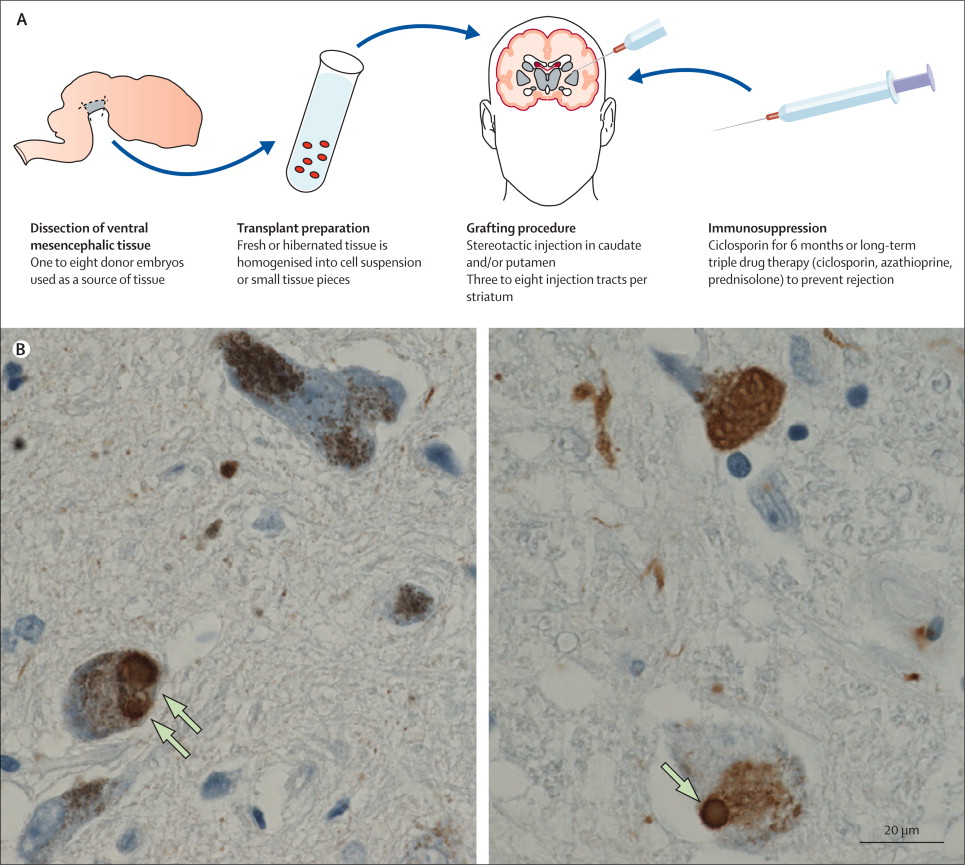
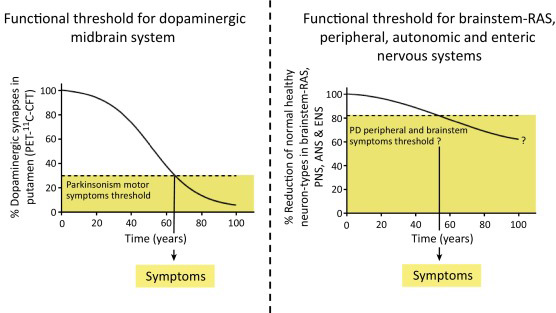
A particularly interesting finding was that alpha synuclein appeared to encourage the appearance of tunneling nanotubes (there were more tunneling nanotubes apparent when cells produced more alpha synuclein). And the alpha synuclein that was being transferred was being passed on in ‘lysosomal vesicles’ – these are the rubbish bags of the cell (lysosomal vesicles are used to take proteins away for degradation).

Paints a rather insidious picture of the ‘ultimate fall guy’ huh!

And that image was made worse by the results published by the kiwis last night:

maurice

Title: α-synuclein transfer through tunneling nanotubes occurs in SH-SY5Y cells and primary brain pericytes from Parkinson’s disease patients
Authors: Dieriks BV, Park TI, Fourie C, Faull RL, Dragunow M, Curtis MA.
Journal: Scientific Reports, 7, Article number: 42984
PMID: 28230073                    (This article is OPEN ACCESS if you would like to read it)

In their study, the New Zealand scientists extended the Swiss research by looking at cells collected from people with Parkinson’s disease. The researchers took human brain pericytes, which were derived from the postmortem brains of people who died with Parkinson’s disease.

And before you ask: pericytes are cells that wrap around the cells lining small blood vessels. They are important to the development of new blood vessels and maintaining the structural integrity of microvasculature.

aa-pericit4ub6b

A pericyte (blue) hugging a blood vessel (red). Source: Xvivo

Pericytes contain alpha synuclein precipitates like those seen in neurons, and the kiwi scientists demonstrated that pericytes too can transfer alpha synuclein via tunneling nanotubes to neighbouring cells – representing a non-neuronal method of transport.

They also found that the transfer through the tunneling nanotubes can be very rapid – within 30 seconds – and the transferred alpha synuclein can hang around for more than 72 hours, suggesting that it is difficult for the receiving cell to dispose of. The researchers did note that the transfer through tunneling nanotubes occurred only in small subset of cells, but that this could explain the slow progression of Parkinson’s disease over time.

What does it all mean?

In order for us to truly tackle Parkinson’s disease and bring it under control, we need to know how this slowly progressing neurodegenerative condition is spreading. Some researchers in New Zealand have provided evidence involving cells collected from people with Parkinson’s disease that indicates one method by which the disease could be passed from one cell to another.

Tiny tunnels between cells, allowing material to be shared, could explain how the disease slowly progresses. The scientists observed the Parkinson’s associated protein alpha synuclein being passed between cells and then hanging around for more than a few days.

This method of transfer was made more interesting because the New Zealand researchers reported that non-neuronal cells (Pericytes, collected from people with Parkinson’s disease) could also form tunneling nanotubes. This observation raises questions as to what role non-neuronal cells could be playing in Parkinson’s disease.

This line of questions will obviously be followed up in future research, as will efforts to determine if tunneling nanotubes are actually present in the human brain or simply biological oddities present only in the culture dish. Demonstrating nanotubes in the brain will be difficult, but it would provide us with solid evidence that this method of disease transfer could be a bonafide cause of disease spread.

We watch with interest for further work in this area.


FULL DISCLOSURE: The author of this blog is a kiwi… and proud of it. He is familiar with the researchers who have conducted this research, but has had no communication with them regarding the publishing of this post. He simply thought that the results of their study would be of interest to the Parkinson’s community.


The banner for today’s post was sourced from Pinterest