Monthly research review-April 2022

# # # #

At the end of each month the SoPD writes a post which provides an overview of some of the major pieces of Parkinson’s-related research that were made available during April 2022.

The post is divided into 10 parts based on the type of research:

# # # #


So, what happened during April 2022?

In world news:

April 4th – The Intergovernmental Panel on Climate Change (IPCC) released the third and final part of its Sixth Assessment Report on climate change, warning that greenhouse gas emissions must peak by 2025 at the latest and decline 43% by 2030, in order to limit global warming to 1.5 °C (2.7 °F).

 

April 14th – Ignominious stuff: The Russian Black Sea Fleet flagship Moskva became the largest warship to be sunk in action since World War II.

 

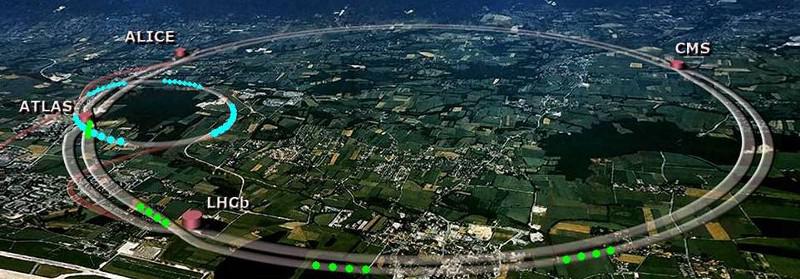
April 22nd – The Large Hadron Collider recommenced full operations, three years after being shut down for upgrades.
April 25th – The social media network Twitter accepted a buyout offer from Tesla and SpaceX CEO Elon Musk for $44 billion (that amount would fund a lot of Parkinson’s research and community nurses… just saying…)

In the world of Parkinson’s research, a great deal of new research and news was reported:

In April 2022, there were 1006 research articles added to the Pubmed website with the tag word “Parkinson’s” attached (4418 for all of 2022 so far). In addition, there was a wave to news reports regarding various other bits of Parkinson’s research activity (clinical trials, etc).
The top 5 pieces of Parkinson’s news

Continue reading “Monthly research review-April 2022”

Breathtaking research

# # # #

Breathing is one of those many aspects of life that we all take completely for granted for the vast majority of our time on planet Earth.

It represents not only a magnificent means of providing our bodies with oxygen, but also disposing of waste.

Recently researchers have attempted to see if there are any components in the waste part of our exhaled breath that could be useful in terms of diagnosing, stratifying and monitoring Parkinson’s.

In today’s post, we will discuss what breath is made up of, what this new research found, and explore what the potential implications of the findings are.

# # # #


Source: Wired

Breath is the finest gift of nature. Be grateful for this wonderful gift.
― Amit Ray

On any given day, the average person takes 17,000 breaths (the normal rate for an adult at rest is 12 to 20 breaths per minute).

When we breath in, the inhaled air – made up of approximately 16% oxygen, 4% carbon dioxide, and 79% nitrogen – is taken down to a pair of organs we know of as the lungs. Most of us have two lungs, but they are not exactly alike. The lung on the left side of your body is divided into two lobes, while the lung on your right side is divided into three. And the left lung is also slightly smaller, making room for your heart.

Combined, your lungs contain approximately 2,400 kilometres (1,500 miles) of airways and 300 to 500 million air sacs (called alveoli – Source). Through the thin walls of the alveoli, oxygen from the inhaled air passes into your blood in the surrounding capillaries. At the same time that this is occurring, carbon dioxide moves from your blood and out into the air sacs.

When you breathe out (exhale), your diaphragm and rib muscles relax, reducing the space in your chest. As the chest cavity gets smaller, your deflating lungs push the carbon dioxide-rich air up your windpipe and then out of your nose or mouth.

Exhaled air consists of 78% nitrogen, 16% oxygen, and 4% carbon dioxide. In addition to this, there are also trace amounts of “other stuff”.

And it’s that “other stuff”, where our post starts today.

Ok, I’ll bite: What do you mean by “other stuff”?

Continue reading “Breathtaking research”

A rising tide with liraglutide

# # # #

A class of diabetes drugs called GLP-1 receptor agonists have exhibited neuroprotective properties in models of Parkinson’s, and a Phase IIb clinical trial produced encouraging.

This research has led to a number of parties to start investigating new and old GLP-1 receptor agonists for their potential to slow the progression of Parkinson’s.

Recently, the results of a second Phase II clinical trial investigating a GLP-1 agonist were announced. The agonist being tested was liraglutide. 

In today’s post, we will discuss what GLP-1 receptor agonists are, what research has been conducted in PD, and look at the recent clinical trial announcement.

# # # #


static1.squarespace

The name “Golden Goose Award” doesn’t really conjure images of an inspirational kind of accomplishment. It does not suggest the same kind of gravitas that the Nobel prize carries. 

In fact, it sounds rather comical: The golden goose award? Sounds like a children’s book writers award.

 And yet…

The Award was originally established in 2012 with the goal of celebrating researchers whose seemingly odd or obscure federally funded research turned out to have a significant and positive impact on society as a whole.

And despite the name, it is a very serious award – past Nobel prize winners (such as Roger TsienDavid H. Hubeland Torsten N. Wiesel) are among the awardees.

In 2013, it was awarded to Dr John Eng, an endocrinologist from the Bronx VA Hospital.

Dr John Eng. Source: Buffalo

What did Dr Eng do to deserve the award?

Continue reading “A rising tide with liraglutide”

Be one with Vitamin B1


# # # #

BEFORE WE START: There are some topics that I am reluctant to address on this website, because there are folks within the community who have extremely vested interests in them. Thiamine (or Vitamin B1) is one of those topics. Some members of the Parkinson’s community have indicated to me that high doses of this vitamin are helping them. If you are one of those people, I say ‘Wonderful! Do what works for you”.

To stem the endless flow of emails asking for thoughts on high dose thiamine, however, I am writing this post to outline what research has been done on this topic in the Parkinson’s field. If you are looking for answers on thiamine, you may be disappointed. I am doing this to be able to point all future inquires towards it. That said, let’s begin:

In today’s post, we will delve into what thiamine (or vitamin B1) is and what it does in the body, how it relates to Parkinson’s, and we will discuss what clinical research exists for supporting its use as a treatment for PD.

# # # #


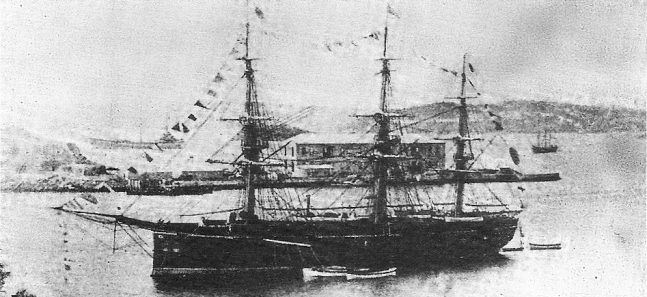
The Ryūjō. Source: Wikipedia

On December 19th 1882, the Japanese Naval training ship Ryujo (“Prancing Dragon”) set sail from Shinagawa, Japan, and over the next 10 months it called in at New Zealand (yay!), Chile, and Peru.

During this routine training voyage, however, 169 members of a crew of 376 crew became very sick.

That’s almost half (45%) of the crew.

In fact, the situation on board the boat got so bad that they had to stop in Hawaii on the homeward leg, because too many of the crew were sick to continue the voyage. Sadly by the time they returned to Japan in October 1883, there were 25 less members of the crew as a result of death due to sickness (and remember this was just a training voyage).

What was the sickness?

The men were suffering from a condition called beriberi.

What is beriberi?

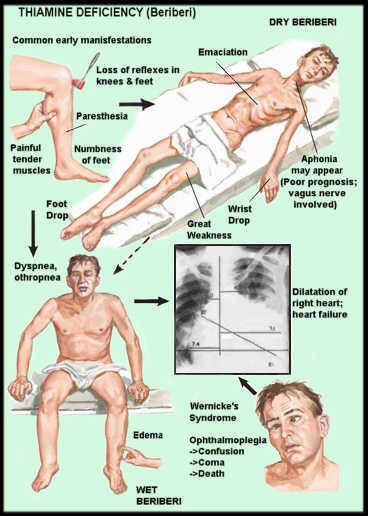
Beriberi comes from a Sinhalese phrase which translates to “weak, weak” or “I cannot, I cannot“. There are two forms of the condition: ‘wet’ beriberi and ‘dry’ beriberi. Wet beriberi involves a fast heart rate, shortness of breath, and leg swelling. Dry beriberi is characterised by numbness of the hands and feet, confusion, trouble moving the legs, and pain. It is often said that ‘Wet’ involves the heart and ‘Dry’ involves the brain.

Source: Pinterest

Both forms of the condition, however, are caused by a deficiency in vitamin B1 – also known as thiamine.

What is Vitamin B1?

Continue reading “Be one with Vitamin B1”

The Llama-nation of LRRK2

# # # #

Antibodies are tiny y-shaped markers used by the immune system to label foreign agents within the body. Once bound to something, antibodies can alert immune cells to come and remove the object. Antibodies can also inhibit the object from doing anything nasty, like infecting or damaging a cell.

Between species, different types of antibodies have been identified and over the last few decades, scientists have re-engineered this natural system for many different purposes, including medicinal therapy. 

Recently, researchers have developed a new type of antibody and used it to better understand the activity of a Parkinson’s-associated protein: LRRK2

In today’s post, we will discuss what antibodies are, explore some of the different types that exist, re-examine what LRRK2 is, and review the recent research report.

# # # #


Winter. Source: Sky

Her name is Winter.

And she is a brown coated llama who lives on a research farm near Ghent (Belgium), along with 130 other llamas. You have probably never heard of her, but she has been a critical component in the fight against COVID-19.

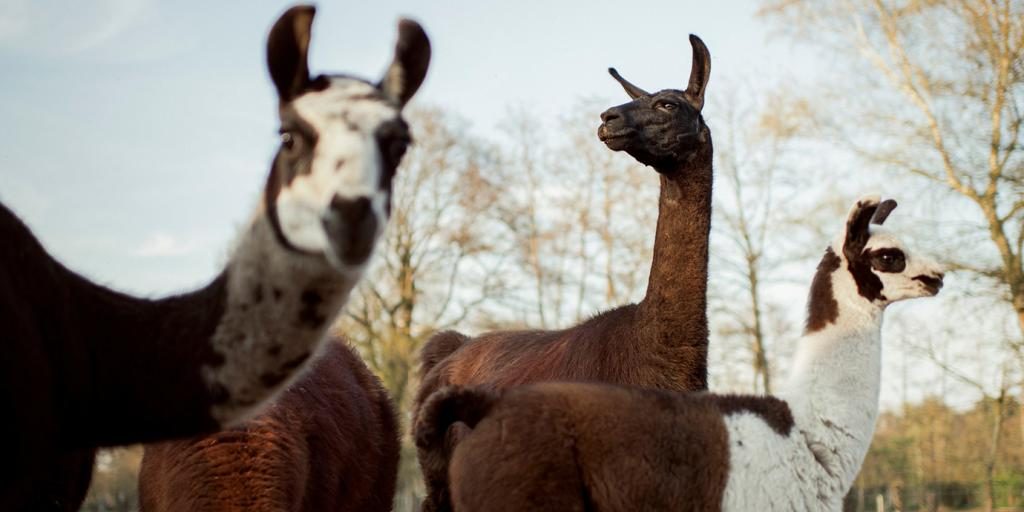
Winter (Center, looking left) and friends. Source: Uchicago

Back in 2016, scientists chose a nine-month-old “Winter” as the llama they would inject with spike proteins from SARS-CoV-1 and MERS-CoV viruses, in the hope that she would produce antibodies that could neutralize all coronaviruses.

Note the date – this is why basic research is important to fund.

Jump forward to early 2020, and some of the antibodies that Winter produced back in 2016 were tested on samples of a new coronavirus called SARS-CoV-2 (aka COVID-19). They were found to potently inhibit the virus and Winter’s antibodies appeared in a major research publication:

Title: Structural Basis for Potent Neutralization of Betacoronaviruses by Single-Domain Camelid Antibodies.
Authors: Wrapp D, De Vlieger D, Corbett KS, Torres GM, Wang N, Van Breedam W, Roose K, van Schie L; VIB-CMB COVID-19 Response Team, Hoffmann M, Pöhlmann S, Graham BS, Callewaert N, Schepens B, Saelens X, McLellan JS.
Journal: Cell. 2020 May 28;181(5):1004-1015.e15.
PMID: 32375025                     (This report is OPEN ACCESS if you would like to read it)

This is great, but what do llama antibodies have to do with Parkinson’s?

Continue reading “The Llama-nation of LRRK2”