
|
# # # # At the end of each month the SoPD writes a post which provides an overview of some of the major pieces of Parkinson’s-related research that were made available during October 2023. The post is divided into 10 parts based on the type of research:
# # # # |
So, what happened during October 2023?
In world news:
October 3rd – Katalin Karikó and Drew Weissman shared the Nobel Prize in Physiology or Medicine for their work in developing mRNA vaccines, which played a crucial role in the COVID-19 pandemic.

October 3rd – The trial of Sam Bankman-Fried, founder of the cryptocurrency exchange company FTX, began. He faces seven charges of fraud and conspiracy.

October 7th – Hamas launched an incursion into southern Israel from the Gaza Strip, prompting a military response from the Israel Defense Forces – leading to the start of the Israel–Hamas war (click here to read more about this).

October 23rd – A significant breakthrough in treating cervical cancer was reported, with participants in a Phase III trial seeing a 35% reduction in the risk of both mortality or the disease returning. The study used a combination of existing, cheap drugs ahead of usual radiotherapy treatment (Click here to read more about this).

October 31st – Researchers released an AI system, called SIDE, to improve source-quality and reliability of Wikipedia by identifying problematic citations and recommending better ones to editors. They demonstrated potential AI applications in science such as for research suggestion tools and keeping track of accelerating scientific output (Click here to read more about this).

In the world of Parkinson’s research, a great deal of new research and news was reported:
In October 2023, there were 752 research articles added to the Pubmed website with the tag word “Parkinson’s” attached (9,011 for all of 2023 so far). In addition, there was a wave to news reports regarding various other bits of Parkinson’s research activity (clinical trials, etc).
The top 5 pieces of Parkinson’s news
1. Monitoring progression in Parkinson’s:
Researchers reported that over the 26-month period, brain imaging of the activity of vesicular monoamine transporter 2 (VMAT2) is able to detect the progression of nigrostriatal degeneration (assessed across three regions) in 26 participants with Parkinson’s (Click here to read more about this and click here to read the press summary).

2. The preclinical quality, safety, & efficacy data for STEM-PD:
Generating the preclinical quality, safety, & efficacy data for a human embryonic stem cell-derived product for the treatment of Parkinson’s is a major undertaking. A new research report looks behind the curtain of the work leading up to the STEM-PD trial. The report also outlines the plan for the STEM-PD trial: An open label study involving 8 participants with moderately advanced Parkinson’s; Dyskinesias are an exclusionary due to risk of graft induced dyskinesia; Immunosuppression for 12 months post-grafting (Click here to read more about this).

3. Renin-angiotensin medication, corticosteroids, & vaccines:
A registry-based cohort study of the entire Norwegian pop. between 2004–2019 (600M prescriptions) finds renin-angiotensin medication, corticosteroids, & vaccines associated with a decreased risk of Parkinson’s. 31 drug classes associated with risk change. “Drug classes used to treat symptoms related to prodromal signs of Parkinson’s such as constipation, urological issues, & depression were associated with an increased risk of subsequent diagnosis of PD” – could monitoring of prescription history help identify folks at risk? (Click here to read more about this).

4. Loneliness matters:
A large cohort study (N=490, 000 cases from the UK biobank) found “that loneliness was associated with risk of incident Parkinson’s across demographic groups & independent of depression & other prominent risk factors & genetic risk”. The findings “add to the evidence that loneliness is a substantial psychosocial determinant of health” (Click here to read more about this).

5. Alpha synuclein imaging:
New research from AC Immune and collaborators demonstrates how the α-synuclein PET tracer [18F] ACI-12589 can distinguish multiple system atrophy from other neurodegenerative conditions (including Parkinson’s – click here to read more about this).

Articles of general interest
- The latest version of Dr Kevin McFarthing’s Parkinson’s Hope List is now available. The Hope List collates info on projects to develop new drug therapies for Parkinson’s. It has 220 projects in research stage and 149 in clinical phases, a grand total of 369 Parkinson’s. The “inactive” worksheet lists 348 projects that didn’t make it or have completed since 2017. A small number have moved to the “Approved of submitted” worksheet (Click here to read more about this).
- “In the Shoes of a Woman living with Parkinson’s:
- Interesting opinion piece on Biospace from Joanne Taylor VP of research at Gain Therapeutics on the potential of neurofilament light chain as a potential biomarker in Parkinson’s (Click here to read more about this).
- The video recording of the Edinburgh Parkinson’s Lecture 2023 is now available. The wonderful Prof Camille Carroll spoke on “Learning to Listen – a patient-centred approach to Parkinson’s care & research“:
Basic biology news
- Researchers report the lack of neuronal T1 Interferonβ/IFNAR leads to oxidization, mutation, & deletion in mtDNA, which is subsequently released outside the neurons, leading to motor, & cognitive impairments; “Parkinson’s-like pathology” (Click here to read more about this).
- New research presents high-throughput single-cell analysis that reveals progressive mitochondrial DNA mosaicism throughout life; Extreme mtDNA heteroplasmy at the single-cell level in adult mice (Click here to read more about this).
- Aberrant expression of Parkinson’s-associated DJ-1 underlies L-type calcium channel hypoactivity in dendrites in tuberous sclerosis complex & Alzheimer’s (Click here to read more about this).
- Researchers compare the in vivo biological activities of human αSyn preformed fibrils & aggregates amplified from LB-αSyn (ampLB), & find ampLB-injection, rather than PFFs or αSyn overexpression, faithfully models key aspects of Lewy body dementia (Click here to read more about this).

- New research reports that the toxicities of Parkinson’s-associated A30P & A53T α-Synuclein fibrils can be uniquely altered by the length & saturation of fatty acids in phosphatidylserine (Click here to read more about this).
- New research reports the stereospecific conversion of methylglyoxal to l-lactate by Parkinson’s-associated DJ-1 in solution with negligible or no contribution of direct protein deglycation (Click here to read more about this).
- New research involved training a machine learning model to predict Parkinson’s-associated genes from GWAS loci using genomic, transcriptomic, & epigenomic data from brain tissues & dopaminergic neurons. The inositol pathway gets highlighted (Click here to read more about this).
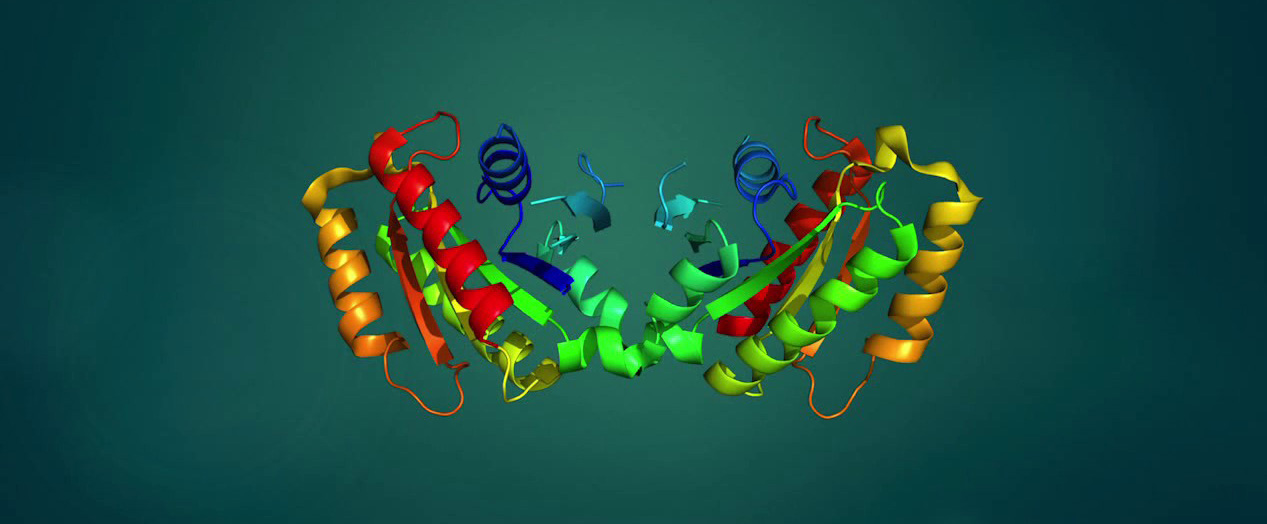
- Interesting differences between Parkinson’s-associated LRRK2 & closely related LRRK1; LRRK2 is sterically autoinhibited as a monomer, while LRRK1 is sterically autoinhibited in a dimer-dependent manner (Click here to read more about this).
- New research provides proof-of-concept in vitro targeting of the SNCA gene promoter using a CRISPR interference (CRISPRi) system to controllably repress Parkinson’s-associated alpha-synuclein (Click here to read more about this).
- Researchers outline an intrinsic mechanism by which the Parkinson’s-associated PINK1/Parkin circuit can avoid errant activation on healthy mitochondria; Parkin recruitment requires mitochondrial PINK1 concentrations to exceed an input threshold (Click here to read more about this).

- New research reports that Parkinson’s-linked missense mutations in SNCA impact reversibility of α-synuclein serine-129 phosphorylation; “Impaired pS129 reversibility is likely to be an early pathological change” (Click here to read more about this).
- New research finds CHIR99021 (laduviglusiba, a GSK 3 inhibitor) causes inactivation of Tyrosine Hydroxylase enzymatic activity & depletion of dopamine in the rodent brain (striatum – click here to read more about this).
- New paper reports Parkinson’s-associated α-synuclein interacts with the neutral phospholipid lysophosphatidylcholine; Even in the absence of anionic lipids, lysoPC facilitates α-Syn-induced vesicle clustering; A30P mutant causes reduced affinity to lysoPC (Click here to read more about this).
- New research explores the spatial & functional nature of GABAergic-like dopamine synapses; They’re clustered on the dendrites & have distinct physiological properties; Attenuation of GABA co-transmission precedes dopamine deficits in models of Parkinson’s (Click here to read more about this).
- New research reports that modulation of phosphoinositide metabolism may be a therapeutic target to slow neurodegeneration for Parkinson’s; α-Synuclein-dependent increases in PIP5K1γ drive inositol signaling to promote neurotoxicity (Click here to read more about this).
- New research reports loss of Parkinson’s-associated GCase activity does not contribute to neurodegeneration by disrupting either lysosomal transport or rupture (Click here to read more about this).

- Researchers report Adaptor protein-3 confers the axonal polarity of dopamine release by targeting VMAT2 to the axon. Acting locally at the nerve terminal AP-3 produces synaptic vesicles that respond specifically to high-frequency stimulation (Click here to read more about this).
- Researchers report LAMP2A deficiency exacerbates microglial activation, while the chaperone-mediated autophagy activator CA77.1 markedly inhibits microglial activation & protects inflammation-induced models (LPS) of Parkinson’s in vitro & in vivo (Click here to read more about this).
- New paper presents a CRISPR-based genome-wide screen to identify modifiers of cellular phosphoRab10 levels; Rab12 GTPase is a critical activator of Parkinson’s-linked LRRK2 kinase (Click here to read more about this).
- Denali researchers report a conserved mechanism by which Rab12, in response to damage or Parkinson’s-associated variants, facilitates the recruitment of LRRK2 & phosphorylation of its Rab substrate(s) at the lysosome (Click here to read more about this).
- Increased activity of Parkinson’s-associated LRRK2 kinase in adipose tissue exacerbates glucose tolerance (by suppressing Rab8- & Rab10-mediated GLUT4 membrane translocation – click here to read more about this).
- “Cell-type-specific dysfunction in experimental parkinsonism“: A new paper reports that chemogenetic manipulation of parvalbumin+ neurons in the substantia nigra pars reticulata restores motor function in models of Parkinson’s (Click here to read more about this).
- New research reports that the Parkinson’s-associated protein LRRK2 has membrane-remodeling properties; They “suggest that its ability to sense & induce membrane curvature may be key to its function in membrane dynamics” (Click here to read more about this).
- New research reports that pedunculopontine cholinergic neurons have a distinctive physiological phenotype that shares some, but not all, of the features of other neurons that are selectively vulnerable in Parkinson’s (Click here to read more about this).
- A new study explores the role of α-synuclein-induced metabolism in Parkinson’s at the subcellular level using stable isotope labeling and ultra-high-resolution NanoSIMS mass spectrometry imaging (Click here to read more about this).
Disease mechanism
- Velusetrag, a selective 5‑HT4 receptor agonist, rescues gastrointestinal dysfunction, gut inflammation & dysbiosis in a mouse model of Parkinson’s; “We are confident that Velusetrag is potentially eligible for clinical studies to treat constipation in PD” (Click here to read more about this).
- CoA Therapeutics researchers present the pharmacokinetic/ pharmacodynamic properties of BBP-671, an orally available CNS penetrant pantothenate kinase activator; Potential for Parkinson’s? (Click here to read more about this).
- Researchers from NodThera present the discovery of their clinical candidate NT-0796, a CNS-penetrant NLRP3 inflammasome inhibitor for neuroinflammatory disorders; This agent is being tested in Parkinson’s clinical trials (Click here to read more about this).

- Researchers from Merck present MK-1468: A potent, kinome-selective, brain-penetrant amidoisoquinoline LRRK2 inhibitor for the potential treatment of Parkinson’s; “A preclinical safety profile that supported advancement toward GLP toxicology studies” (Click here to read more about this).
- New research finds that PARIS/ZNF746 undergoes liquid–liquid phase separation & poly(ADP-ribose)-mediated solidification in models of Parkinson’s; PARP inhibitor, Veliparib, inhibits PARIS oligomerization in human iPSC-derived dopaminergic neurons(Click here to read more about this).
- Nuclear ERK1/2 signaling potentiation enhances neuroprotection & cognition (via Importinα1/KPNA2); A cell penetrating peptide (“RB5”) prevents synaptic dysfunction & neuronal cell death in mouse models of Huntington’s disease, Alzheimer’s & Parkinson’s (Click here to read more about this).
- Eisai researchers present discovery data on GCase pharmacological chaperones – for developing therapies that target issues associated with GBA1 gene variants in Gaucher disease & Parkinson’s (Click here to read more about this).

Clinical research
- Slowing of EEG waves correlates with striatal [18F]fluorodopa PET/CT uptake and executive dysfunction in Parkinson’s (Click here to read more about this).
- The Predistim Study Group report on motivational & cognitive predictors of apathy after subthalamic nucleus stimulation in Parkinson’s; Based on a prospective clinical cohort of 367 patients before & one year after chronic bilateral deep brain stimulation (Click here to read more about this).
- Researchers observe a change in Malassezia species incidence & diversity on the skin of Parkinson’s patients, which could be associated with lipid dysregulation (N=47 PDs & 48 controls – click here to read more about this).
- New systematic scoping review explores Parkinson’s prevalence in regional, rural & remote Australia; A “notable scarcity of prevalence studies conducted within regional, rural, & remote areas of Australia” (Click here to read more about this).

- New research reports that increased perivascular space volume in white matter & basal ganglia is associated with cognition in Parkinson’s (Click here to read more about this).
- Researchers describe a Parkinson’s patient with early cognitive decline carrying an as yet not fully characterized variant in SNCA (NM_001146055: c.44T > C, p.V15A); They provide supporting evidence for the pathogenicity of the p.V15A variant (Click here to read more about this).
- Using DATATOP & PPMI data, researchers report that NSAID exposure in established Parkinson’s does not appear to provide a protective effect (although exposure may not have occurred continuously – click here to read more about this).
- Are patients with GBA–associated Parkinson’s good candidates for deep brain stimulation? The PARKNET Study Group present results of a longitudinal multicentric study on a large Italian cohort; N=365 PD, 73 (20%) = GBA variants; Conclusion=long-term benefit (Click here to read more about this).
- New research finds an association between fine particulate matter (PM2.5) & Parkinson’s that varied in strength by region (according to US medicare beneficiary data). They “identified a region with high Parkinson’s risk in the Mississippi-Ohio River Valley, where the risk for PD was 19% greater compared to the rest of the nation. The strongest association between PM2.5 & PD was found in a region with low PD risk in the Rocky Mountains” (Click here to read more about this and click here to read an editorial about this research).
- Analysis of 104,356 deep brain stimulation (DBS) discharges in the US (1993-2017) reveals most frequent indications for DBS were Parkinson’s (67%), essential tremor (24%), & dystonia (4%); African American status was negative predictor across all cohorts (Click here to read more about this).
- A 4-year follow-up study explores response to levodopa in 64 Parkinson’s patients with motor fluctuations; The COPPADIS Study Group finds response to levodopa did not weaken over time (Click here to read more about this).
- New research finds Horvath DNA-methylation-age-acceleration could be a potential biomarker for earlier REM sleep behavior disorder onset (Click here to read more about this).
- All the eye balls in Parkinson’s research seem to be on eye balls! Researchers use liquid-biopsy proteomics combined with AI to identify cellular drivers of eye aging & disease; Results reveal that retinal degeneration occurs in Parkinson’s (Click here to read more about this).

- New study assesses 30 former athletes with MRI, neuropsychological testing, & CSF levels of p-tau, t-tau, Aβ42, α-synuclein & neurofilament light chain; 6 (or 20%) of the athletes had α-synuclein+ test (Click here to read more about this).
- Clinical severity in Parkinson’s is determined by decline in cortical compensation (Click here to read more about this).
- Parkinson’s patients show reduced neuromelanin signal intensity in the locus coeruleus (vs controls), & diminished [11C]yohimbine binding (density of α2-adrenergic receptors) in widespread cortical regions including the motor cortex, insula, thalamus & putamen (Click here to read more about this).
- Assessment of FDOPA uptake rate & fractional volume of free-water in several regions of the nigrostriatal system show microstructural alterations that mirror the spatial pattern of dopaminergic loss within the striatum & SNc in early Parkinson’s (Click here to read more about this).
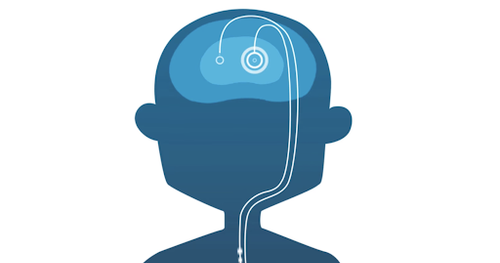
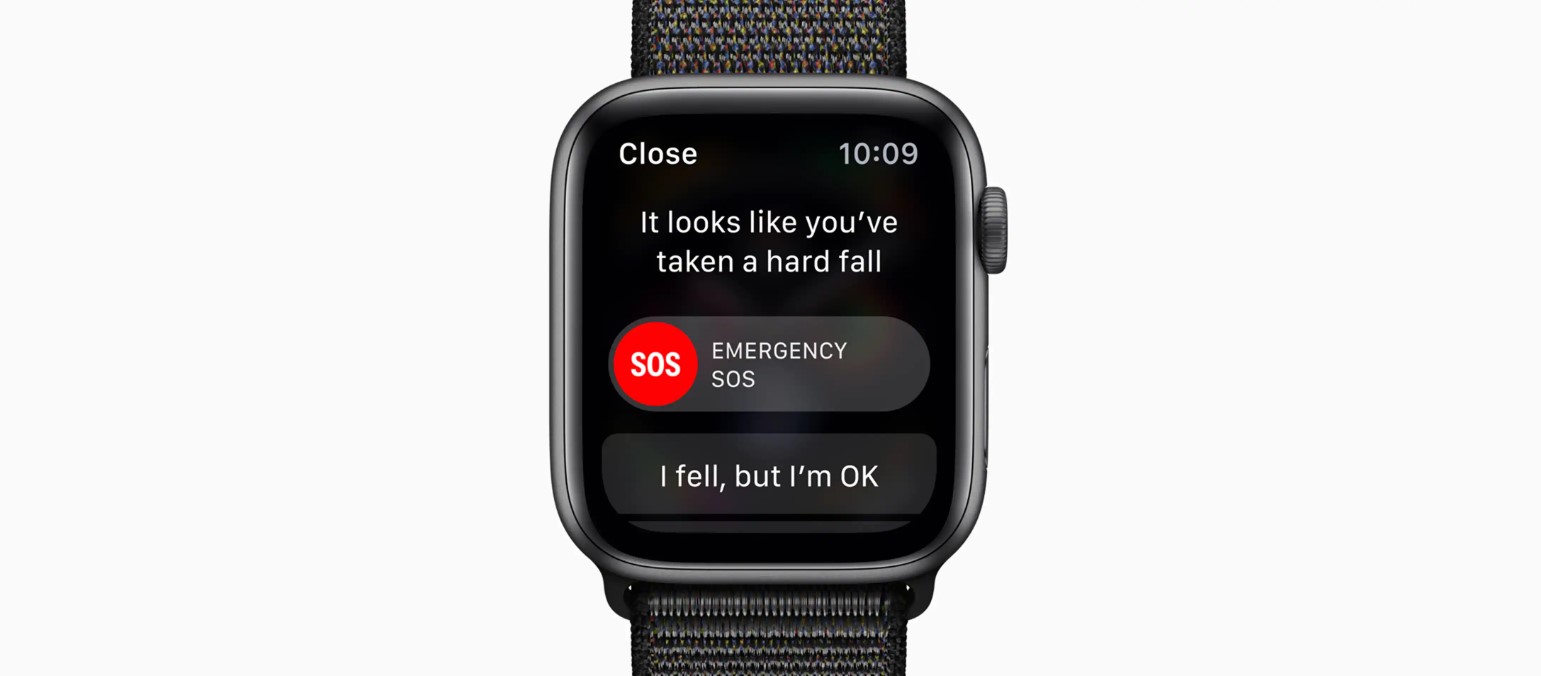
- A wearable accelerometer-based digital Parkinson’s motor diary (real-world-monitoring) captures daily times in OFF & dyskinetic state in advanced PD cases with moderate validities, while temporal agreement of adPMD & clinical observer diary data is limited (Click here to read more about this).
New clinical trials
- New clinical trial registered: Researchers in New York are investigating low-dose lithium for Parkinson’s. They are conducting a 24-weeks study of low-dose lithium in 15 people with Parkinson’s, assessing brain imaging and blood-based biomarkers (Click here to read more about this).
- New clinical trial registered: HanAll Biopharma have registered a randomized, Phase 1 study to assess the safety, tolerability, pharmacokinetics of single and multiple doses of their orally administered Nurr1 activator ATH-399A in 76 healthy individuals (Click here to read more about this).

Clinical trial news
- The protocol for the “Support for home Training using Ehealth in Parkinsons diseaSe” (STEPS) trial has been published; This is a phase II randomized controlled study evaluating eHealth-supported motor-cognitive home training for Parkinson’s; NCT05510739 (Click here to read more about this).
- A 3.5-year follow-up cohort study assessing effect of long-term Tai Chi training on Parkinson’s finds improvements in motor & non-motor symptoms, plus reduced complications; N=143 Tai chi group & 187 in no exercise control group; Single blinded study (Click here to read more about this).

- The protocol for a safety & feasibility study of faecal microbiota transplantation for patients with Parkinson’s has been published; This is a self-controlled interventional donor-FMT pilot study (N=16 participants – click here to read more about this).
- “Transforming Parkinson’s Care in Africa” (TraPCAf) is a multi-faceted, mixed-methods, multi-national study to describe & gain a better understanding of the current situation of PD in Africa (Click here to read more about this).
Conferences/lectures
- There will be a three-day meeting (8 – 11th April 2025) that will be focused on the Parkinson’s-associated alpha synuclein. If you are interested have a look at the Synuclein 2025 meeting (Click here to learn more about this).
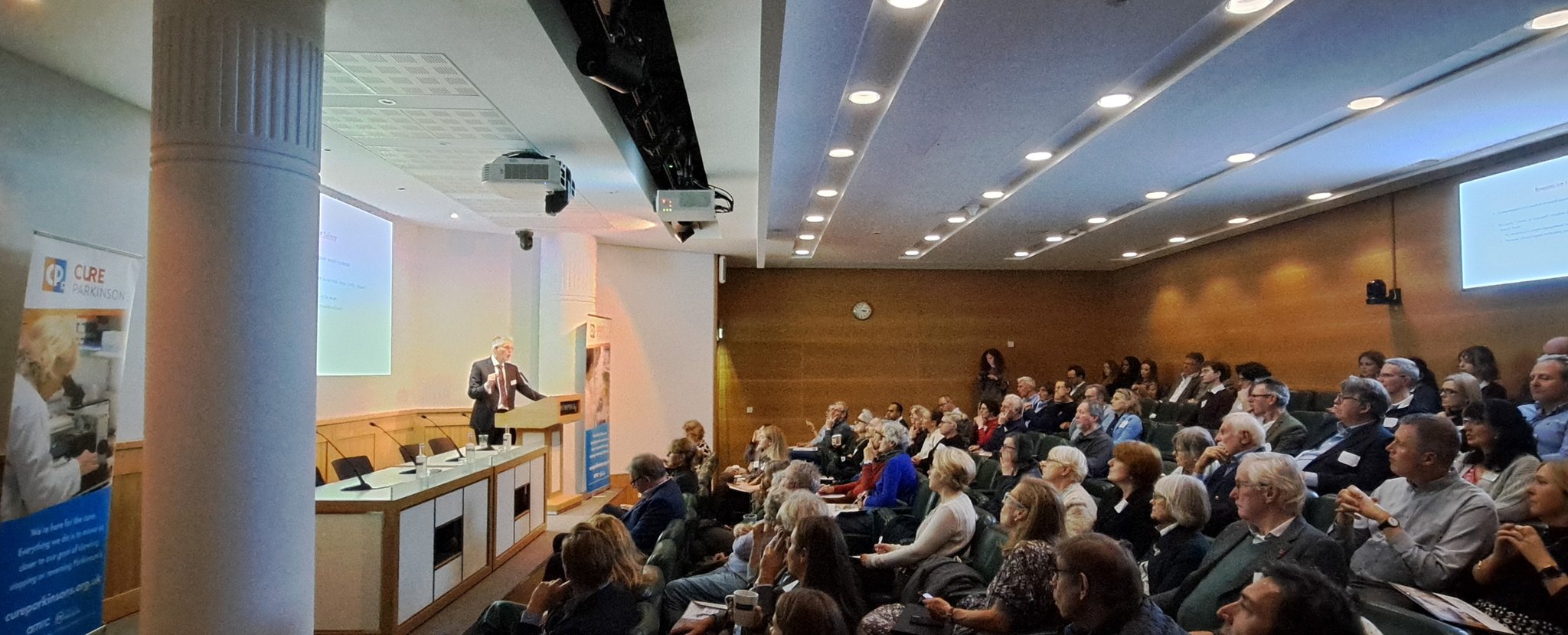
- Cure Parkinson’s is holding its Autumn Research Update Meeting on the 1st November at the Royal Society of Medicine in London (Click here to learn more about this).
Other news
- SUN Pharma Advanced Research Company (SPARC) announces completion of enrolment of 506 patients in their randomised, doubleblind, placebo-controlled Phase 2 study of Abl tyrosine kinase inhibition using K0706 in early Parkinson’s (PROSEEK – click here to read more about this).
- Abbvie exercises their exclusive right to acquire biotech firm Mitokinin & its selective PINK1 activator, which is designed to address mitochondrial dysfunction in the pathogenesis of Parkinson’s ($110M + potentially $500M for milestones – click here to read more about this).

- Inhibikase Therapeutics receives US FDA Orphan Drug Designation for their c-ABL inhibitor Risvodetinib (IkT-148009) for Multiple System Atrophy; In March, the company received IND clearance for its planned Phase 2 studies in MSA (Click here to read more about this).
- Gain Therapeutics announces dosing of 1st volunteers in the Phase 1 testing of GT-02287 – a Novel GCase-targeting small molecule therapy for GBA1-associated Parkinson’s (Click here to read more about this).

- Stem Pharm & Verge Genomics announce a collaboration to develop a disease model to validate novel targets identified for Parkinson’s (Click here to read more about this).
- HanAll Biopharma, Daewoong Pharmaceutical, & NurrOn Pharmaceuticals announce the dosing the first healthy volunteer in their Phase 1 clinical trial assessing HL192 – a NURR1 activator being developed for Parkinson’s (Click here to read more about this).
- Aspen Neuroscience announced that FDA has granted Fast Track Designation for ANPD001 – an autologous investigational cell therapy for the treatment of Parkinson’s to improve motor function (Click here to read more about this).

Review articles/videos
- I like “SWESS” (Samples Without Evidence of Synuclein Seeding), referencing the term “SWEDD” (Scans Without Evidence of Dopaminergic Degeneration). Interesting correspondence to the “α-synuclein seed amplification assay” paper (Click here to read more about this).
- Positive industry piece on how Parkinson’s research is being buoyed by Alzheimer’s advances (Click here to read more about this).
- Researchers seek to “generate more knowledge on the effects of a wide range of different exercise modalities that can be beneficial for people with Parkinson’s”; A comprehensive review of the evidence for community-based exercise (Click here to read more about this).

* * * * * * * * * * * *
And there it is, just some of the highlights from October 2023 – another very busy month of Parkinson’s research. Hopefully there will be bits and pieces of interest for everyone in the list. Much of the material used here was collected from the Science of Parkinson’s Twitter feed (and there is a lot more posted there each day).
Any thoughts/feedback would be greatly appreciated (either in the comments below, or contact me directly).
And now: on to November!!!
 All of the material on this website is licensed under a
Creative Commons Attribution 4.0 International License
You can do whatever you like with it!
EDITOR’S NOTE: The author of this post is an employee of Cure Parkinson’s, so he might be a little bit biased in his views on research and clinical trials supported by the trust. That said, the trust has not requested the production of this post, and the author is sharing it simply because it may be of interest to the Parkinson’s community.
The information provided by the SoPD website is for information and educational purposes only. Under no circumstances should it ever be considered medical or actionable advice. It is provided by research scientists, not medical practitioners. Any actions taken – based on what has been read on the website – are the sole responsibility of the reader. Any actions being contemplated by readers should firstly be discussed with a qualified healthcare professional who is aware of your medical history. While some of the information discussed in this post may cause concern, please speak with your medical physician before attempting any change in an existing treatment regime.
In addition, many of the companies mentioned in this post are publicly traded companies. That said, the material presented on this page should under no circumstances be considered financial advice. Any actions taken by the reader based on reading this material is the sole responsibility of the reader. None of the companies have requested that this material be produced, nor has the author had any contact with any of the companies or associated parties. This post has been produced for educational purposes only.

 The Science of Parkinson's
thank you so much for this valuable information.
LikeLike
Hi Lisa,
You are very welcome!
Kind regards,
Simon
LikeLike
Hi there. I may have missed it but have you done any recent articles on the GLP one agonist? It seems like it actually is healing up a bit.
LikeLike