|
# # # # In October 2018, the author of this blog left academia and joined the medical research charity “Cure Parkinson’s“. It was a tiny organisation focused on disease modification in Parkinson’s, and I was really excited by the opportunity. Cure Parkinson’s is widely seen as punching well above its weight in terms of impact (there were only 18 members of staff when I joined) and relentless in their efforts to bring novel therapies forward for the Parkinson’s community. I was flattered by the invitation to join the team. The last 5 years has been one of the busiest and most stimulating periods of my life. And I have absolutely no regrets with the decision I made. In today’s post, I will provide some observations and learnings from my experience over the last 5 years and discuss how the field of Parkinson’s research has changed. # # # # |
 Source: Danielcolombo
Doesn’t time fly.
I was surprised recently when I received an email alert from LinkedIn. I very rarely use the service, but the message informed me that I have been with my current employer for five years now.
I scratched my head and thought, ‘no, that’s not possible‘.
But actually, yes it’s very possible (that whole COVID-related period of time really warped reality didn’t it?).
In October 2018, I finished up my post-doctoral research position at the University of Cambridge and joined the medical research charity Cure Parkinson’s as their deputy director of research.
The decision began in 2017 when I met Dr Richard Wyse, the director of research at the charity.
We had communicated several times over email, but it wasn’t until the The Network for European CNS Transplantation and Restoration (NECTAR) meeting in Dublin (Ireland) in December 2017, that we actually had a good chance to speak in person.
“Freddie Mercury’s cousin’s ex”
Richard had joined Cure Parkinson’s in 2007, not long after the charity was founded. He had previously been a senior lecturer in pediatric cardiology at Great Ormond Street Hospital, London for more than 20 years, and had worked extensively at the Brompton and Hammersmith Hospitals in London. He had also been Medical Director for two biotech companies in the UK and USA, and held an MBA in addition to his Medical degree and PhD. To add to his list of many achievements, Richard has also played cricket internationally and is an extremely accomplished musician.
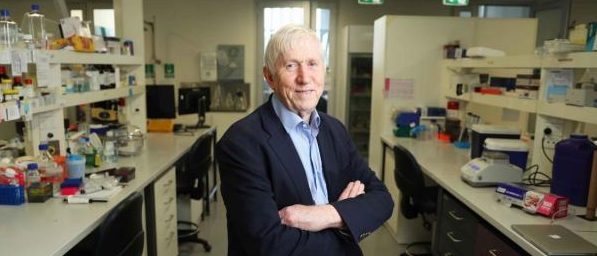 Dr Richard Wyse. Source: watfordobserver.
Needless to say, my imposter syndrome was flaring when we met – me, a humble research scientist with a silly little blog.
I didn’t realise it at the time, but Richard is the most determined person I have ever met. When he sets his mind to something, there is no stopping him (and any attempt to challenge his course is a declaration of war and becomes a fight to the death). But understand that this has been a required characteristic in the setting up of the research side of a fledgling charity.
At the NECTAR meeting, we discussed many different Parkinson’s-related topics and talked at length about the international Linked Clinical Trials initiative (which Richard had set up and been the driving force of) and how I might be able to help out with these activities.
And at the end of our conversation in Ireland, Richard slipped in a line about there being “other possible opportunities” for me at the charity…. if I was interested.
I took the bait – hook, line, and all.
Arriving home from the NECTAR meeting, I spoke with my wife about the potential career shift. She was a bit surprised: that another offer was on the table at that moment, from a university on the UK coast and while visiting that institute she had said “no pressure Simon, but they have nice beaches here“. Being ex-academia herself, however, she was extremely supportive of my decision.
And so I leapt.
“An alpaca named Golly Golly Gosh”
The next person I met from the charity was Helen Matthews:
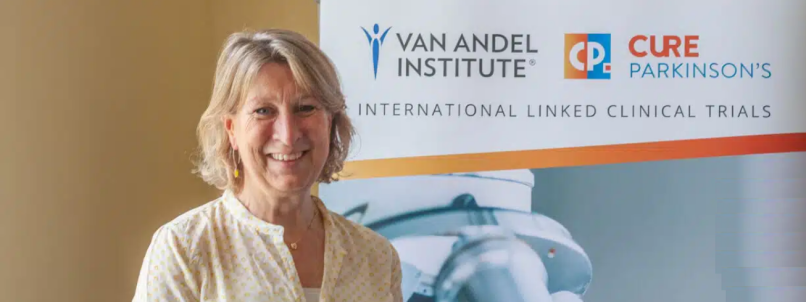 Helen Matthews. Source: CP
I feel sorry for those folks in the Parkinson’s community who have never had the opportunity to meet ‘Q’ (her nickname around CP headquarters). She is the second most determined person I have ever met. Not just with finding a cure for Parkinson’s, but with everything she sets her mind to. And like Richard, she is relentless is the pursuit for curative therapies for Parkinson’s. She is a continuous fountain of ideas and never tires.
When Cure Parkinson’s co-founder Tom Isaacs walked the entire coastline of Britain to raise funds and awareness for Parkinson’s, Helen was there – managing everything in the background.
 Tom Isaacs on his 4500 mile/12 month walk
Helen has also been the glue holding everything together at Cure Parkinson’s since is was founded in 2005. And when Tom tragically passed away in 2017 (Click here to read a SoPD post on this), Helen’s determination helped to keep the ship not just on course, but growing.
She is widely respected within the Parkinson’s community, is never afraid to ask the necessary questions, and is always (ALWAYS) championing the patient voice in research.
Helen, Richard, and all of the team at Cure Parkinson’s made me feel very welcome and I have thoroughly enjoyed my time working at the charity.
“You are all nervous, because you are being bold”
Another individual who I have greatly appreciated during my time with Cure Parkinson’s is the Chair of the Grant Evaluation committee, the great Professor Alasdair Coles:
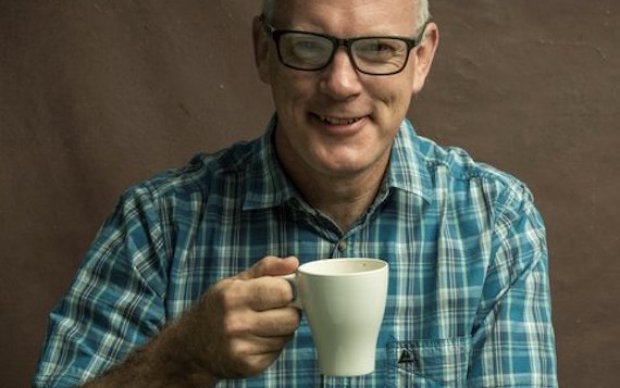 Prof Coles. Source: MSS
The Association of Medical Research Charities provides guidelines that UK medical research charities abide by, and one of those guidelines is that the Chair of a charity’s Grant Evaluation committee should come from outside of the field of interest to avoid any conflicts of interest. Alasdair is a Professor of Neuroimmunology at the University of Cambridge, where he works in the field of Multiple Sclerosis research.
The weight of responsibility regarding grant funding decisions is consideration. When clinical trials are involved, there are large sums of money being dealt with and at Cure Parkinson’s donor funds are paying for everything we do. As such a great deal of consideration is given to every decision made. And key to that decision making process has been the stewardship of Prof Coles.
It has been a privilege watching him moderate the Grant Evaluation committee and remarkable learning experience. He brings professionalism firstly, but also a fairness and balance that comes from years of experience. He prides himself on running timely meetings, but is also prepared to give extra time when an important matter requires it. And here is a key detail of all of the members of the Grant Evaluation committee: they are giving their time. Four times per year, they are volunteering to help us in the process of funding new research. They are a wonderful groups of people, guided by an absolute sage. When his term as Chair is up at the end of 2024, Alasdair will be profoundly missed.
In addition to Alasdair, Helen and Richard, there are a lot of other people at the charity that have made the last five years a very enjoyable experience – from the research team (including Leah, Rosie, & Joy), to the fundraising and comms team, as well as our wonderful Trustees who have provided amazing support. And then there have been the many folks in the Parkinson’s community who have been instrumental (names that come to mind include Kevin McFarthing, Sue Buff, Gary Rafaloff, Martin Taylor, Anthony Temple, and many others). And I would be remiss if I didn’t give a nod to many people in the research and charity sections who have been supportive (such as Patrik Brundin, David Simon, Camille Carroll, Tom Foltynie, Brian Fiske (MJFF), and so may more).
So what have I learnt over 5 years?
- The jump is scary, but there are no regrets: To all the researchers out there who are struggling to see a career path ahead of them, but are too afraid to make the leap away from the familiar world of academia into the darkness of the unknown: fear not, there is life beyond.
- Being focused is important: Cure Parkinson’s is extremely focused: All we do is support research seeking disease modification in Parkinson’s (‘curative therapies’). We fund both preclinical and clinical research investigating the slowing, stopping or reversing of Parkinson’s. Preclinically, the research must be within 5 years of clinical testing, and clinically we fund clinical trials or ‘added value projects’ associated with disease modification trials. This narrow remit has helped to keep us focused in the day-to-day job and has provided great clarity over the last five years.
- Being small is good: As a small charity, Cure Parkinson’s has the disadvantage of not having the resources that are probably required. But this forces one to think collaboratively, to leverage larger sums by bringing in other funders through co-funding opportunities. You look for the win-win scenario in the overall longer term strategy. Equally, being tiny makes one more agile and able to change course quicker.
- University contracting departments are killing academic research: Research charities have Terms and Conditions. Applicants are encouraged to read the Ts&Cs and check with their institutions before applying that everything is fine. And yet post awarding of funding, contracting departments suddenly demand a renegotiation of the terms of the contracts, and those negotiations can take well over 12 months (I kid you not! It’s absolutely nuts). And to what end?!?
One major complaint:
- Limited access to research publications: This is REALLY frustrating!!! For those of you unfamiliar with the current state of academic publishing, researchers pay the publishing houses to publish their research (and they give up the copywrite in doing so), and then the publishing houses charge the researchers to access their journals. It is the worst kind of rent seeking – tax payers money is used on both ends of the deal. So much research money gets wasted on companies that add no real value (they put make up on the manuscripts and call it ‘facilitating research’). And as a result of charging ridiculously high fees to access the journals, research charities like Cure Parkinson’s struggle to access the research we fund. I pay out of my own pocket to access some journals via the Royal Society of Medicine (and even they can’t afford idiotically high fees that companies like Relx charge for access to their journals). The research publication system is so broken and unfit for purpose, it needs to be burnt to the ground and started again. Period.
A couple of words of advice for researchers and small biotechs from inside the grant funding system:
- Never use round numbers in the research budget of the grant application (e.g. $10,000 for consumables). It looks lazy and can so easily be pointed at and questioned. And questions kill applications.
- Consider hybrid models for funding applications – Contract Research Organisations (CROs) can achieve outcomes faster than academic institutions, but they charge a hefty fee for that service (which small medical research charities struggle to justify). A different approach is to have the CRO do the hard part of the work (in vivo modelling and analysis), and then collaborate with an academic lab to do the biochemical analyses (there are usually more options available for the price here).
- Remember that medical research charities are mainly supported by funds generously donated by supporters. There is no bottomless cheque book.
- Be nice to everyone (particularly the grant administration staff!).
Final comments: I suspect a couple of my academic colleagues probably thought I was nuts when I told them that I was joining a tiny charity, but I have never regretted my decision.
Not once.
I didn’t want this post to be viewed as self-serving or advertising the charity, so it has been a little challenging to write. But in addition to sharing some learnings and advice, I wanted to acknowledge a few people and for readers to know that the last five years has been such a really rewarding experience. No, we don’t have any disease modifying therapies yet, but there is certainly a lot of interesting avenues now being explored. And we are always on the look out for new ways of speeding up the search.
I have felt blessed to be offered the opportunity to join Cure Parkinson’s. It is such a wonderful group of people and so focused on the goal. I have done my best to proactively move things forward and I look forward to re-doubling those efforts in my current role (15 months ago, I was promoted from ‘deputy’ to ‘director of research’).
And thanks for your support here on the SoPD.
 All of the material on this website is licensed under a
Creative Commons Attribution 4.0 International License
You can do whatever you like with it!
EDITOR’S NOTE: The author of this post is an employee of Cure Parkinson’s, so he might be a little bit biased in his views on research and clinical trials supported by the trust. That said, the trust has not requested the production of this post, and the author is sharing it simply because it may be of interest to the Parkinson’s community.
The information provided by the SoPD website is for information and educational purposes only. Under no circumstances should it ever be considered medical or actionable advice. It is provided by research scientists, not medical practitioners. Any actions taken – based on what has been read on the website – are the sole responsibility of the reader. Any actions being contemplated by readers should firstly be discussed with a qualified healthcare professional who is aware of your medical history. While some of the information discussed in this post may cause concern, please speak with your medical physician before attempting any change in an existing treatment regime.
The banner for today’s post was sourced from Cure Parkinson’s

 The Science of Parkinson's
Hi Simon,
Congratulations on your 5 year milestone at Cure Parkinson’s.
Do you have any insights that you could share with us regarding the status of the ambroxol trial (ASPro-PD)?
Thanks very much,
Jeff
Study Details | Ambroxol to Slow Progression in Parkinson Disease | ClinicalTrials.gov
LikeLike
Hi Jeffreyn,
Thanks for your kind comment.
Regarding ASPro-PD, my understanding is that the trial will begin recruiting early next year. There should be another quarterly update coming out very shortly discussing this.
Kind regards,
Simon
LikeLike
Are we going to wait another 5 years before CPT acknowledges the significance of age-related sporadic PD being absent in rural-dwelling Massai in Kenya ? This population is held as having our ancestral status of vitamin D prior to human migration ‘out of Africa’. D3 signalling is hugely pleitropic , promoting hundreds of genes, many in defensive pathways beleived to be important in PD pathognesis. Chronic D3-deficiency in developed societies is a highly plausible cause of sPD. The recent research implicating promotion of Nrf-2 in chronic tobacco smokers – who are known to be at lower risk of sPD- supports the role for D3. D3 is known to promote Nrf-2. I have yet to see a D3 trial for PD that respects physiological status. I have been taking 4000 IU daily for eight years, and the experiment continues.
LikeLike
Hi Peter, is it possible to add that discussion/ your D3 regime to the CPT HealthUnlocked forum please (if not already) There are some good discussions on there around these sorts of topics and I’d be interested to see the discussion on your points here. Apologies if you’re on there already and I missed it.
LikeLike
Thank you Simon and the CPT team for everything you do. I guess you’re like the A-Team for Parkinson’s. When people complain about the modern world Having a lack of leadership and ambition I think CPT and other Parkinson’s leaders (inc. Roger Barker) show how there are determined visionaries that are role models for us mortals and being able to witness this is one of the few parts of this j’ourney’ that I’m pleased to have experienced.
LikeLike