Monthly Research Review – April 2023

# # # #

At the end of each month the SoPD writes a post which provides an overview of some of the major pieces of Parkinson’s-related research that were made available during April 2023.

The post is divided into 10 parts based on the type of research:

# # # #


So, what happened during April 2023?

In world news:

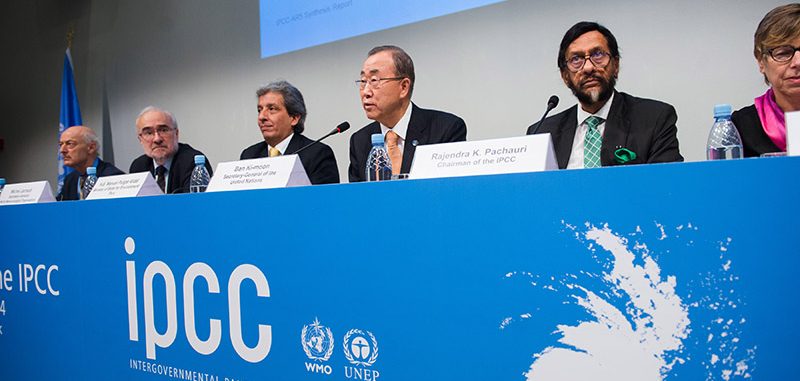
April 4th – The Intergovernmental Panel on Climate Change (IPCC) releases the third and final part of its Sixth Assessment Report on climate change, warning that greenhouse gas emissions must peak by 2025 at the latest and decline 43% by 2030, in order to limit global warming to 1.5 °C (2.7 °F – click here to read more about this).


April 13th – COVID-19 pandemic: The number of confirmed cases exceeds 500 million worldwide.


April 15th – Nuclear power in Germany ends after 50 years, with the closure of the final power plants.


April 20 – SpaceX’s Starship rocket, the largest and most powerful rocket ever built, is launched during a flight test from a base in Boca Chica, Texas. It explodes four minutes after launch:


April 26th – The Bank of England’s top economist Huw Pill (who earns  £180,000 per year, compared to a UK average of £35,000) told a podcast in the US that there was a “reluctance to accept that, yes, we’re all worse off and we all have to take our share” (I should apply for a job at the BoE if this is the kind of wisdom and leadership that is required – Click here to read more about this).


In the world of Parkinson’s research, a great deal of new research and news was reported:

In April 2023, there were 887 research articles added to the Pubmed website with the tag word “Parkinson’s” attached (3640 for all of 2023 so far). In addition, there was a wave to news reports regarding various other bits of Parkinson’s research activity (clinical trials, etc).

The top 5 pieces of Parkinson’s news

Continue reading “Monthly Research Review – April 2023”

Just a lysosomal enzyme…

# # # #

About 5% of individuals affected by Parkinson’s carry a genetic variation in a region of their DNA called the GBA1 gene.

This area of DNA provides the instructions for making an enzyme called GCase, which is known to be involved in cellular waste disposal.

Recently, however, researchers have discovered that GCase might have additional functions in cells, particularly in the mitochondria.

In today’s post, we will discuss what GCase is, how it is associated with Parkinson’s, and review the new research indicating other roles in cellular biology.

# # # #


Source: Createvalue

Isn’t it funny how things change.

And I mean, properly change.

Something will start off in life as one thing, and then a new perspective or a conflicting idea is provided and suddenly it becomes something else entirely – changing how we view that thing and its place in the world.

A truly exaggerated example of this is the wonderous story of Adam Rainer.

Born in Austria (1899), Adam was always a small child and by the time he reached 18 years of age he measured just 138 cm (or 4 foot 5 inches). Due to his height, he was technically considered a dwarf (less than 147 cm or 4 foot 10 inches). As result of this designation, he was refused entry into the Austro-Hungarian Army and thus missed out on serving in the First World War.

But then something really strange happened…

From 21 years of age to 32, while everyone else stopped growing, Adam suddenly started to grow.

And when I say grow, I mean grow!

Adam Rainer (far left). Source: Twitter

By the time Adam was 32, he had grown to the height of 218 cm (or 7 foot 2 inches). At that time, a benign tumor (a pituitary adenoma) was discovered and removed, slowing Adam’s growth. He died in 1950 at the age of 51, having reached a final height of 234 cm (7 foot 8 inches).

He is the only person in recorded history who started out in life with dwarfism and end it with gigantism (source).

Like I said, a rather exaggerated form of how something can change.

Intriguing, but what does this have to do with Parkinson’s?

Continue reading “Just a lysosomal enzyme…”

Monthly Research Review – March 2023

# # # #

At the end of each month the SoPD writes a post which provides an overview of some of the major pieces of Parkinson’s-related research that were made available during March 2023.

The post is divided into 10 parts based on the type of research:

# # # #


So, what happened during March 2023?

In world news:

March 10th – 2023 People’s Republic of China presidential election: The National People’s Congress unanimously re-elects Xi Jinping as the President of the People’s Republic of China to an unprecedented third term.


March 10th – Silicon Valley Bank, the 16th largest bank in the United States, failed, creating then the largest bank failure since the 2008 financial crisis, affecting tech companies around the world.


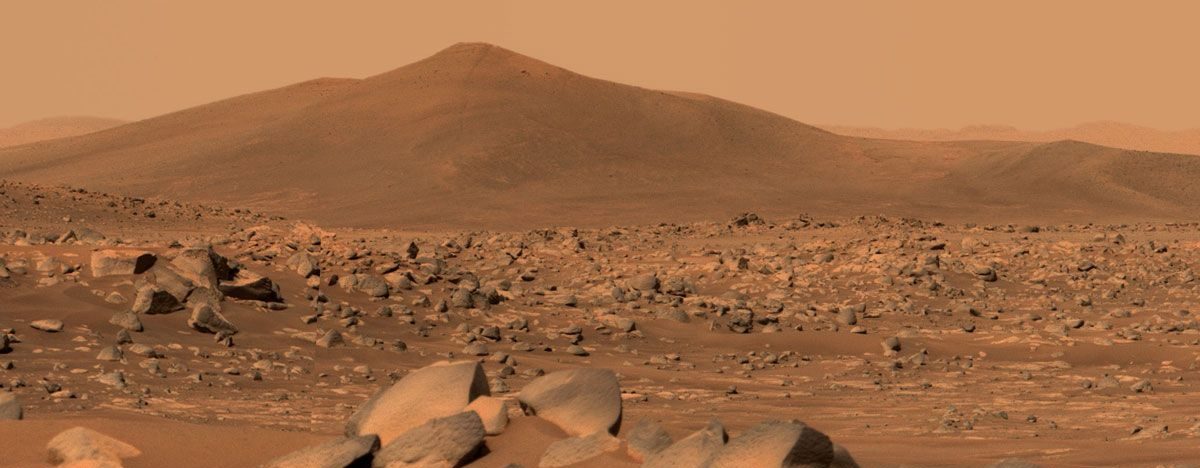
March 13th – Researchers reported at the Lunar and Planetary Science Conference that Martian dirt may have all the necessary nutrients for growing rice (Click here to read more about this).


March 19 – In a deal brokered by the Swiss government, the investment bank UBS agreed to buy perennial financial disaster site Credit Suisse for CHF 3 billion (US$3.2 billion) in an all-stock deal.


March 28th – Researchers at the Pan-STARRS telescope at Hawaii discovered that Earth has a “new moon”, and the strangest part of this story is that it has been with us since 100 B.C… and nobody noticed it until now! But before you get too excited, this quasi-moon “2023 FW13” as it has been named, is only a small asteroid (about 20 meter in diameter) and it will leave us around the year 3700 (Click here to read more about this).


In the world of Parkinson’s research, a great deal of new research and news was reported:

In March 2023, there were 903 research articles added to the Pubmed website with the tag word “Parkinson’s” attached (2753 for all of 2023 so far). In addition, there was a wave to news reports regarding various other bits of Parkinson’s research activity (clinical trials, etc).

The top 5 pieces of Parkinson’s news

Continue reading “Monthly Research Review – March 2023”

Is Parkinson’s research going viral?

# # # #

With the world emerging from the recent/ongoing COVID pandemic, there has been a resurgence of interest in the role of viruses in the pathogenesis of chronic diseases like Parkinson’s.

With scientists around the world watching to see if there is an increase in Parkinsonism following the recent pandemic, other researchers have taken a look at large datasets to assess if there are any associations between previous viral infections and subsequent diagnosis of a neurodegenerative condition.

In today’s post, we will review two recent research publications that provide evidence supporting such associations.

# # # #


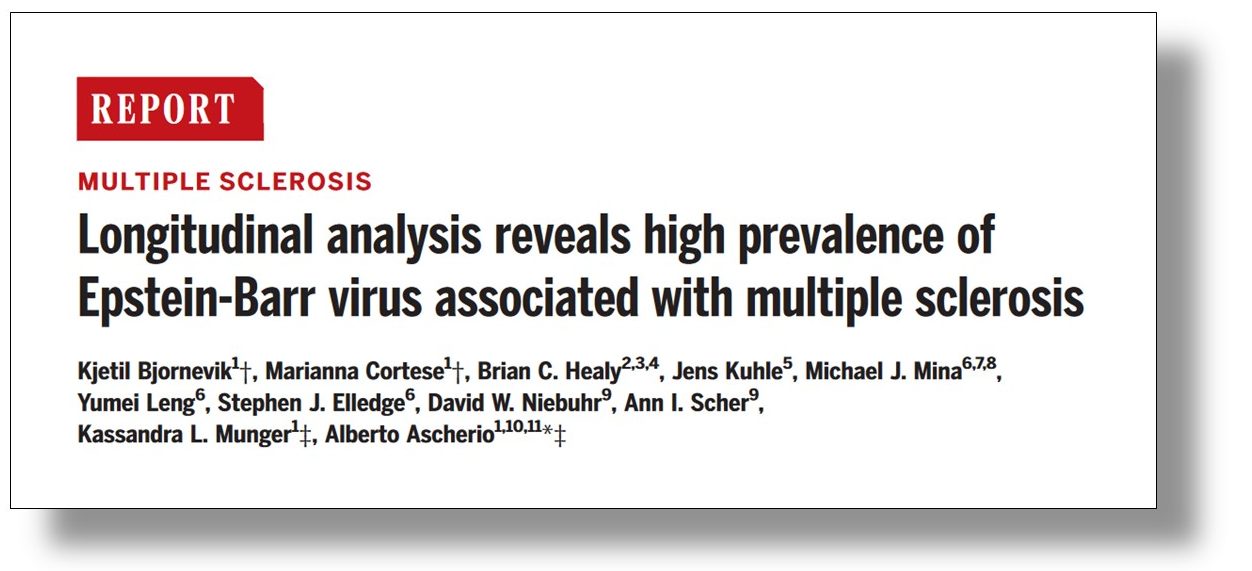
In January of this year, there was an interesting report published in the journal Science.

This is the report in question:

Title: Longitudinal analysis reveals high prevalence of Epstein-Barr virus associated with multiple sclerosis.
Authors: Bjornevik K, Cortese M, Healy BC, Kuhle J, Mina MJ, Leng Y, Elledge SJ, Niebuhr DW, Scher AI, Munger KL, Ascherio A.
Journal: Science. 2022 Jan 21;375(6578):296-301.
PMID: 35025605                (this report is OPEN ACCESS if you would like to read it)

In this paper, the researchers used data from more than 10 million US military recruits who had medical evaluations every two years over a 20-year period. Of these individuals, 955 were diagnosed with multiple sclerosis.

Interesting… Remind me: What is multiple sclerosis?

Multiple sclerosis (or MS) is a chronic neuroimmunologic condition in which the immune system starts to attack the insulating protective covering (or myelin) on the branches (or axons) of neurons.

Source: Medlineplus

As that myelin is lost, signaling between neurons becomes weaker and disrupted, and a range of symptoms start to show themselves. Symptoms can include double vision, blindness in one eye, muscle weakness and trouble with sensation or coordination.

Got it. So what did the researchers find about these soldiers diagnosed with multiple sclerosis?

Continue reading “Is Parkinson’s research going viral?”

Monthly Research Review – February 2023

# # # #

At the end of each month the SoPD writes a post which provides an overview of some of the major pieces of Parkinson’s-related research that were made available during February 2023.

The post is divided into 10 parts based on the type of research:

# # # #


So, what happened during February 2023?

In world news:

February 2nd – The European Central Bank and Bank of England raise their interest rates by 0.5 percentage points to combat inflation, one day after the US Federal Reserve raised its federal funds rate by 0.25 percentage points.


February 5th – Cyclone Freddy formed in the Indian Ocean. It would become the longest lasting tropical cyclone in history and cause over 1,400 deaths and countless injuries and property damage across southeastern Africa (Click here to read more about this).


February 14 – The European Parliament approves a ban on the sale of new petrol and diesel vehicles in the European Union from 2035, citing the need to combat climate change in Europe and promote electric vehicles.


February 16th – Blockbuster action movie star Bruce Willis announced that he has received a new diagnosis of frontotemporal dementia (Click here to read more about this)


February 25th – A rare supermassive black hole – 1 billion times the mass of our sun – was discovered at the center of the galaxy COS-87259. This ancient galaxy formed just 750 million years after the Big Bang, and the black hole was spotted by the Atacama Large Millimeter Array (ALMA) in Chile (Click here to read more about this).


In the world of Parkinson’s research, a great deal of new research and news was reported:

In February 2023, there were 853 research articles added to the Pubmed website with the tag word “Parkinson’s” attached (1850 for all of 2023 so far). In addition, there was a wave to news reports regarding various other bits of Parkinson’s research activity (clinical trials, etc).

The top 4 pieces of Parkinson’s news

Continue reading “Monthly Research Review – February 2023”

Monthly Research Review-January 2023

# # # #

At the end of each month the SoPD writes a post which provides an overview of some of the major pieces of Parkinson’s-related research that were made available during January 2023.

The post is divided into 10 parts based on the type of research:

# # # #


So, what happened during January 2023?

In world news:

January 1st – Croatia adopts the euro and joins the Schengen Area, becoming the 20th member state of the Eurozone and the 27th member of the Schengen Area.


January 10th – Researchers reported the discovery of a second potentially Earth-like planet in the TOI 700 system is reported using data from NASA’s Transiting Exoplanet Survey Satellite (TESS – click here to read more about this).


January 12th – Two groups of researchers present data in mice demonstrating the manipulation of the aging process (Click here to read more about this).


13 January – A study of ancient DNA supports or confirms that recent human evolution which led to increased resistance to infection of pathogens also resulted in increased risk of inflammatory disease in post-Neolithic Europeans over the last 10,000 years (Click here to read more about this and click here to read a press summary).


January 27th – This day was declared the wettest day on record for Auckland (New Zealand) with 258 mm (10.2 in) of rain exceeding the previous record of 161.8 mm (6.37 in). A “tropical atmospheric river” parked itself over the city and caused widespread catastrophic flooding:

In the world of Parkinson’s research, a great deal of new research and news was reported:

In January 2023, there were 997 research articles added to the Pubmed website with the tag word “Parkinson’s” attached. In addition, there was a wave to news reports regarding various other bits of Parkinson’s research activity (clinical trials, etc).

The top 5 pieces of Parkinson’s news

Continue reading “Monthly Research Review-January 2023”

Being ABL to make a strong case for Inhibikase

# # # #

At the Society for Neuroscience annual meeting in October 2015, the results of a small phase 1 clinical study were presented and the Parkinson’s community got rather excited by what they saw.

The study had investigated a cancer drug called ‘nilotinib’ (also known as Tasigna) on 12 people with advanced Parkinson’s or Dementia with Lewy bodies. After 6 months of treatment, the participants reported that they were functioning better on nilotinib.

Two larger, more carefully controlled phase 2 clinical trials of nilotinib in people with Parkinson’s were conducted, and both studies could not replicate the original findings (worse: the drug was barely detected in the brain). But now a biotech company called Inhibikase has developed a nilotinib-like agent that can access the brain and they are clinically testing it. This week they published preclinical data on their lead agent, IkT-148009.

In today’s post, we will look at the history of this story, review the recently published preclinical research from Inhibikase, and discuss the current clinical trial.

# # # #


Source: Wiki

Cancer.

There’s a happy topic to start a post with.

Cancer is a condition where cells in a specific part of the body start to grow and reproduce uncontrollably. There are lots of different types of cancers, but I would like to draw your attention to one in particular: Leukemia 

Leukemia is a particular branch of cancer. It is a broad term used for cancers of the body’s blood-forming tissues (these include the bone marrow and the lymphatic system).

The type of leukemia diagnosed depends entirely on the type of blood cell that becomes cancerous and on whether it grows quickly or slowly. Leukemia occurs most often in adults older than 55, but it is also the most common cancer in children younger than 15.

There are approximately 10,000 new cases of leukemia (that’s 27 every day), and ~5000 deaths associated with the condition in the UK (Click here for the source of these figures).

Interesting, but why are you starting this post by talking about leukemia? 

Continue reading “Being ABL to make a strong case for Inhibikase”

The “What would I do” post? Part 3

# # # #

Given the broad range of topics covered on the SoPD, I am very regularly asked “what would you do if you were diagnosed with Parkinson’s tomorrow?”

As a research scientist I am not comfortable answering this question, but I can see how it is a fair one to ask. I have previously attempted to address it (Click here and here to read those posts), and I point folks who do ask in the direction of those posts.

And as new research and more tools become available, I can see some value in revisiting this question.

So in today’s post, we will do the 2023 version of “what would I do if I were diagnosed with Parkinson’s tomorrow?”. 

# # # #


Source: BBC

Before starting, I would just like to thank readers for their kind words of support regarding my personal situation (see this previous post to understand what I am talking about).

My ward is now in full time care. But the guardianship order is still not in place which makes things rather problematic.

Source: EducationLawyers

The UK deputyship system seems to have become glacial in its process. I was advised that it would take 4-6 months, but we are now almost 12 months into the wait… and the care home bills are piling up very quickly. The resources to pay the bills are available, but without the deputyship being in place I am powerless to do anything about it.

Very frustrating. And certainly preventable.

And this is probably a good place to start this particular post.

What do you mean?

Continue reading “The “What would I do” post? Part 3”

Year in review: 2022

# # # #

At the end of each year, it is a useful process to take stock and review what we have learnt over the last 12 months.

2022 has been an extremely busy year for Parkinson’s research, with a lot of clinical trial results and new insights. As the world continues to re-open from the COVID-19 pandemic, there has been a continually rising tide of new research results and interesting new developments.

In today’s post, we will consider three big Parkinson’s-related research takeaways of 2022 (based on our humble opinions here at the SoPD), and then we will provide an extended overview of some of the important pieces of news from the last 12 months (Be warned: this will be a rather long post).

# # # #


Knatchbull-Hugesse. Source: Getty

Hughe Knatchbull-Hugessen, the British Ambassador to China between 1936-1937 wrote in his memoir that before he left England for China, a friend told him of a Chinese curse, “May you live in interesting times” (Source).

I never really understood why this quote was considered “a curse”. Surely living in boring times would be more tortuous.

But the noise and chaos of recent years have really hammered home the nature of this curse. There were many days this year where I was wishing for less interesting times.

2022. Source: Wikipedia

That said, 2022 has been a fascinating experience. The full spectrum of human emotions has been elicited: From the highs of the football world cup to the horrors and catastrophic consequences of Russia’s ignominious invasion of Ukraine.

From the glorious achievements (such as the James Webb space telescope and a net energy gain from a fusion reaction), to the unfathomable idiocies of the UK and US political class (seriously, in the UK we had 3 prime ministers, 4 chancellors, and one gut wrenching “mini budget” disaster that showed the true fragility of our underfunded pension schemes) – 2022 had it all.

There were also an amazing array of new discoveries and insights in Parkinson’s research. And while such a statement may not bring much solace to those living with condition, it is tremendously encouraging to see the furious rate at which these findings are announced.

In this, the last SoPD post of 2022, we will look back and review the last 12 months by providing an overview of those pieces of research news that we here at SoPD HQ thought were most interesting. We apologise to any researchers who do not get a mention here (by all means feel free to berate us in the comments section below if you think we missed something key), but these were the announcements that really grabbed our attention.

#

EDITOR’S NOTE: The author of this blog is the director of research at the medical research charity Cure Parkinson’s. For the purpose of transparency and to eliminate any sense of bias, where Cure Parkinson’s is a funder of the research it shall be noted.

#

The 3 main SOPD highlights in Parkinson’s-related research for 2022

(in no particular order)

Continue reading “Year in review: 2022”

Monthly Research Review – December 2022

# # # #

At the end of each month the SoPD writes a post which provides an overview of some of the major pieces of Parkinson’s-related research that were made available during December 2022.

The post is divided into 10 parts based on the type of research:

# # # #


So, what happened during December 2022?

In world news:

December 5th – The US National Ignition Facility achieved fusion ignition, a major milestone in the development of nuclear fusion power


December 7th – After substantial protests against China’s Zero-COVID policies, the Chinese government finally eased its COVID19 restrictions.


December 15th – Astronomers find that a pair of exoplanets orbiting the red dwarf star Kepler-138 are likely to be water worlds.


December 19th – At the UN Biodiversity Conference (COP15), nearly 200 countries agree a “new” landmark deal to protect a third of the planet for nature by 2030 (more blah-blah as Greta would say)

December 19th – A new world record solar cell efficiency for a silicon-perovskite tandem solar cell was achieved, with scientists in Germany converting 32.5% of sunlight into electrical energy.


In the world of Parkinson’s research, a great deal of new research and news was reported:

In December 2022, there were 964 research articles added to the Pubmed website with the tag word “Parkinson’s” attached (10749 for all of 2022 so far). In addition, there was a wave to news reports regarding various other bits of Parkinson’s research activity (clinical trials, etc).

The top 5 pieces of Parkinson’s news

Continue reading “Monthly Research Review – December 2022”