The road ahead: 2025 (part 1)

# # # #

The first post at the start of each year on the SoPD website has traditionally tried to provide an overview or some context on where things are in the search for ‘disease modifying’ therapies for Parkinson’s. 

Previous editions of the “Road Ahead” posts have become dangerously overloaded, unwieldy, chaotic one-page beasts, so this year we are shifting to a multi-post format, which will hopefully provide the reader with less of a burdensome shopping list of novel therapies and more of a digestible piece of information (famous last words – be warned, this is still a very long post!).  

In this first post, we will look at the latest developments that have resulted from the biology associated with Parkinson’s-related genetic risk factors (this is a long post – click here if you would like to skip the introduction and go straight to the table of contents)

# # # #


A future historian? Source: Inc

When future academics sit down to write the history of the condition that we currently know of as “Parkinson’s”, they may well look upon 1997 as a key turning point for what came next.

Why 1997? What happened then? And what came next?

On the morning of 27th June, 1997, the prestigious scientific journal ‘Science’ went to press, highlighting a research report that would change the world of Parkinson’s forever.

And I am not exaggerating here – the impact of the study was (and still is) truly profound.

The paper reported the discovery of tiny variations in a region of human DNA that scientists refer to as the “alpha synuclein” gene, and it explained that these genetic errors could significantly increase one’s risk of developing Parkinson’s. The scientists had made this finding across large Italian and Greek families that exhibited very high incidences of Parkinson’s (Click here to read a previous SoPD post on this discovery):

Science

Title: Mutation in the alpha-synuclein gene identified in families with Parkinson’s disease.
Authors: Polymeropoulos MH, Lavedan C, Leroy E, Ide SE, Dehejia A, Dutra A, Pike B, Root H, Rubenstein J, Boyer R, Stenroos ES, Chandrasekharappa S, Athanassiadou A, Papapetropoulos T, Johnson WG, Lazzarini AM, Duvoisin RC, Di Iorio G, Golbe LI, Nussbaum RL.
Journal: Science. 1997 Jun 27;276(5321):2045-7.
PMID: 9197268

And then – remarkably just two months later – the results of another study were published in the scientific journal ‘Nature’ that would further cement alpha synuclein’s place in Parkinson’s research.

In this second research paper, the investigators showed that a particular protein was highly enriched in “Lewy bodies” – dense spheres of protein inside of cells that are one of the characteristic features of the Parkinsonian brain. That protein was the very same one that is produced by the instructions provided by the alpha synuclein gene:

Title: Alpha-synuclein in Lewy bodies.
Authors: Spillantini MG, Schmidt ML, Lee VM, Trojanowski JQ, Jakes R, Goedert M.
Journal: Nature. 1997 Aug 28;388(6645):839-40.
PMID: 9278044

And so it was that alpha synuclein became ‘public enemy #1’ in the world of Parkinson’s research. After decades of research, scientist finally had their ‘foot in the door’ in terms of the biology that could potentially be underlying the condition.

What came next can only be described as a ‘gold rush’ in Parkinson’s research, with genetic risk factors in other regions of DNA suddenly being associated with Parkinson’s. In 1998, genetic variations in one called the “PARKIN” gene were discovered, then in 2003 it was the turn of “DJ-1″, followed the year after by the “LRRK2″ and “PINK1″ genes.

Today we know of approximately 80 genetic regions believed to be influencing the risk of developing Parkinson’s:

Nalls et al (2019). Source: PMC

While all of this research focused on variation in our DNA does not mean that Parkinson’s is a genetic condition (please note that these variations are only found in about 15-20% of the PD affected community and infer vulnerability rather than certainty), the truly crucial aspect of these discoveries has been learning about the associated biology.

What do you mean by “associated biology”?

Continue reading “The road ahead: 2025 (part 1)”

Exploring the damage of mtDNA

# # # #

Mitochondria are curious little structures that live symbiotically within cells. They are believed to derive from an ancient bacterial past, and they still retain elements of that forgotten occupation: They have their own DNA.

Given that mitochondria are very metabolically active, that mitochondrial DNA can be vulnerable to damage.

Recently, researchers have proposed that damage to mitochondrial DNA might be a useful biomarker for Parkinson’s.

In today’s post, we will look at what mitochondria do, what damage to their DNA means, and how this could be very useful for our understanding of Parkinson’s.

# # # #


Source: Szegedify

In Chinese culture, 2023 has been in the Year of the Rabbit.

The Rabbit is a symbol of longevity, peace and prosperity. As such, 2023 is predicted to be a year of hope.

Here at SoPD HQ, we think 2023 has been the Year of the Biomarker.

Think about it. Over the course of this year, we have covered a couple of new reports proposing the alpha synuclein seeding assay (Click here to read more about this) and DOPA decarboxylase levels in cerebrospinal fluid as potentially useful markers for Parkinson’s (Click here to read more about this).

And recently, researchers have proposed another biomarker which involves an important aspect of Parkinson’s associated biology: Mitochondria.

Remind me: What are mitochondria?

Continue reading “Exploring the damage of mtDNA”

The Llama-nation of LRRK2

# # # #

Antibodies are tiny y-shaped markers used by the immune system to label foreign agents within the body. Once bound to something, antibodies can alert immune cells to come and remove the object. Antibodies can also inhibit the object from doing anything nasty, like infecting or damaging a cell.

Between species, different types of antibodies have been identified and over the last few decades, scientists have re-engineered this natural system for many different purposes, including medicinal therapy. 

Recently, researchers have developed a new type of antibody and used it to better understand the activity of a Parkinson’s-associated protein: LRRK2

In today’s post, we will discuss what antibodies are, explore some of the different types that exist, re-examine what LRRK2 is, and review the recent research report.

# # # #


Winter. Source: Sky

Her name is Winter.

And she is a brown coated llama who lives on a research farm near Ghent (Belgium), along with 130 other llamas. You have probably never heard of her, but she has been a critical component in the fight against COVID-19.

Winter (Center, looking left) and friends. Source: Uchicago

Back in 2016, scientists chose a nine-month-old “Winter” as the llama they would inject with spike proteins from SARS-CoV-1 and MERS-CoV viruses, in the hope that she would produce antibodies that could neutralize all coronaviruses.

Note the date – this is why basic research is important to fund.

Jump forward to early 2020, and some of the antibodies that Winter produced back in 2016 were tested on samples of a new coronavirus called SARS-CoV-2 (aka COVID-19). They were found to potently inhibit the virus and Winter’s antibodies appeared in a major research publication:

Title: Structural Basis for Potent Neutralization of Betacoronaviruses by Single-Domain Camelid Antibodies.
Authors: Wrapp D, De Vlieger D, Corbett KS, Torres GM, Wang N, Van Breedam W, Roose K, van Schie L; VIB-CMB COVID-19 Response Team, Hoffmann M, Pöhlmann S, Graham BS, Callewaert N, Schepens B, Saelens X, McLellan JS.
Journal: Cell. 2020 May 28;181(5):1004-1015.e15.
PMID: 32375025                     (This report is OPEN ACCESS if you would like to read it)

This is great, but what do llama antibodies have to do with Parkinson’s?

Continue reading “The Llama-nation of LRRK2”

The luminance of a lighthouse

# # # #

LRRK2 inhibition represents one of several biological approaches to slowing the progression of Parkinson’s that is currently being clinically tested.

Leading the charge in the development of LRRK2 inhibitors is a biotech company called Denali Therapeutics (in partnership with Biogen).

Recently, the company provided news on the immediate future clinical development plans for their lead molecule BIIB122.

In today’s post, we will look at what is going to happen next for LRRK2 inhibition.

# # # #


Source: Denali

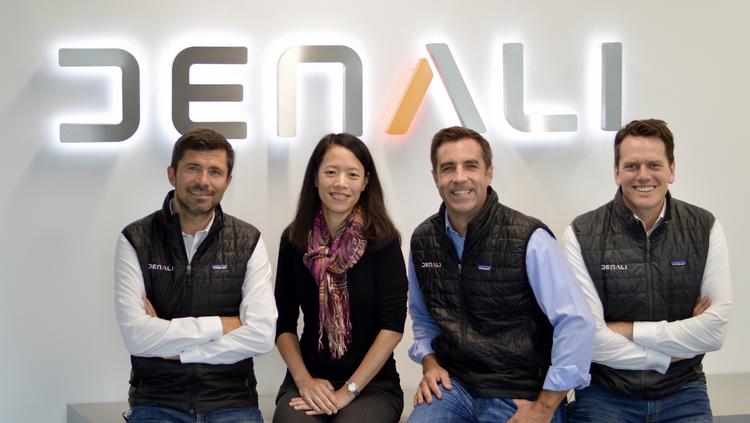
Founded in 2013 by a group of former Genentech executives, San Francisco-based Denali Therapeutics is a biotech company which is focused on developing novel therapies for people suffering from neurodegenerative diseases.

In particular, they have been leading the charge on a new class of drugs for Parkinson’s called LRRK2 inhibitors.

What are LRRK2 inhibitors?

Continue reading “The luminance of a lighthouse”

Getting a handle on Miro1

# # # #

Novel therapeutic interventions are being proposed for Parkinson’s on a regular basis, with compelling data supporting their future development.

The case is strengthened when a measure of target engagement is also involved – providing not only a potential therapy but also a biomarker as well.

Recently, a biotech company called AcureX Therapeutics has been presenting just such a case, based on a biological mechanism involving the protein Miro1.

In today’s post, we will discuss what Miro1 is and how it might be useful for future clinical trials.

# # # #


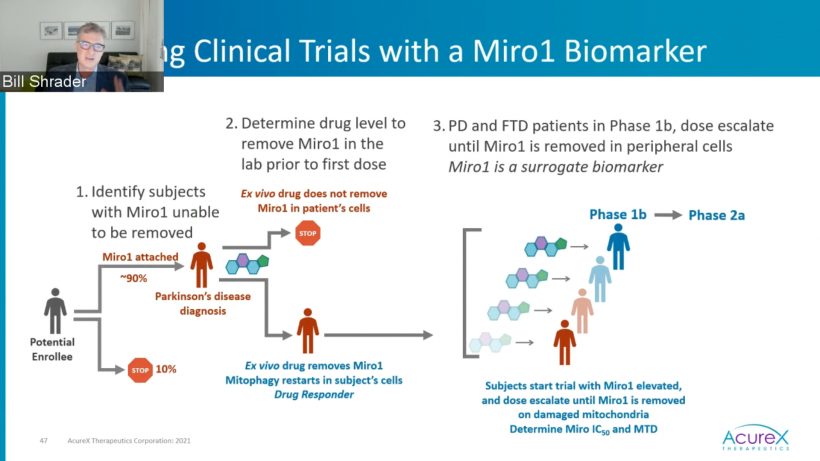
Watching the recent Michael J Fox Foundation‘s Progress in the PD Pipeline webinar (Wednesday 10th November, 2021), I was really impressed by the presentation by Dr Bill Shrader (co-founder and CEO/CSO of AcureX Therapeutics)


In particular, I really liked their approach to potential patient selection for future clinical trials of their lead drug candidate. It all revolves around the analysis of Miro1 as a biomarker.

What is Miro1?

Continue reading “Getting a handle on Miro1”

Denali’s Phase I results

# # # #

Leucine-rich repeat kinase 2 (or LRRK2) is a large, multi function protein that is associated with Parkinson’s. People with genetic variations in the region of DNA that provides the instructions for making LRRK2 protein have a higher risk of developing the condition.

In many cases of Parkinson’s, LRRK2 can become hyperactive. Researchers and biotech companies have been striving to identify drug-like molecules that can dampen down this hyperactivity in the hope of slowing down the progression of Parkinson’s.

One of the leading biotech firms in this area of research is Denali Therapeutics, and recently the company has provided some updates on their progress.

In today’s post, we will discuss what LRRK2 is, we will look at what Denali have achieved thus far, and we will review what the company has recently announced.

# # # #


Source: Denali

A presentation was given at the UBS 2021 Global Healthcare Virtual Conference this week by representatives from Denali Therapeutics.

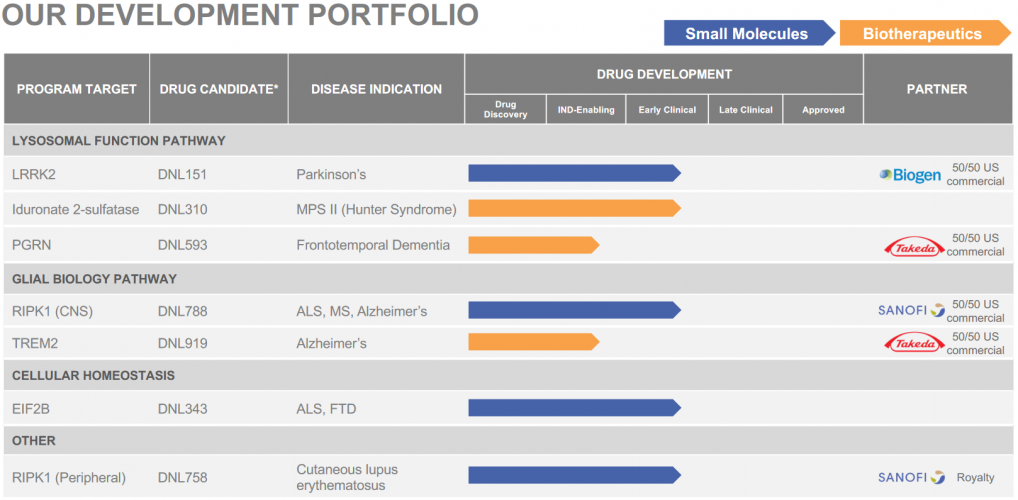
The slide deck (which can be found here on the company’s website) touched on multiple lines of active research for the company, including their active clinical trial programs:

  • DNL310 (ETV:iduronate-2-sulfatase (IDS) for Hunter syndrome), which has expanded testing in Phase 1/2 based on positive interim data
  • DNL343 (EIF2B activator indicated for ALS), which has had positive interim Phase 1 data, and the company is planning a Phase 1b study in ALS (Click here to read a recent SoPD post on EIF2B activation)
  • DNL788 (RIPK1 inhibitor targeted at ALS, Alzheimer’s, & Multiple Sclerosis … I’m really curious, why not PD?!?), which is in ongoing Phase 1 studies in healthy volunteers (in collaboration with Sanofi)
  • DNL758 (aka SAR443122; another RIPK1 inhibitor targeted at inflammation), currently recruiting participants for a Phase 2 study of lupus & in Phase 1 for COVID-19 lung disease (again in collaboration with Sanofi)

Source: Denali

But of particular interest to us here at SoPD HQ were the slides on their LRRK2 inhibitor clinical trial data.

Founded in 2013 by a group of former Genentech executives, San Francisco-based Denali Therapeutics is a biotech company which is focused on developing novel therapies for people suffering from neurodegenerative diseases.

Ex-Genentechers. Source: Medicalstartups

Although they have product development programs for other condition (such as Amyotrophic Lateral Sclerosis and Alzheimer’s disease), Parkinson’s is definitely one of their primary indications of interest.

The company has been leading the charge in the development of LRRK2 inhibitors as a potential therapeutic class for Parkinson’s and they have recently made some big announcements.

What are LRRK2 inhibitors?

Continue reading “Denali’s Phase I results”

The world according to GARP

# # # #

Transportation of material inside of cells is a critical aspect of normal cellular functioning. Any disruption to this activity can cause significant problems.

An interesting aspect of recent genetic analysis work in Parkinson’s has been the number of genetic risk factors for the condition that are associated with cellular transportation activity.

Recently, researchers have discovered that one particular Parkinson’s-associated protein – LRRK2 – interacts with a cellular transport protein complex called GARP.

In today’s post, we will discuss what LRRK2 and GARP do and why their interaction is important.

# # # #


John Irving. Source: Achievement

John Irving is not everyone’s cup of tea, but I quite like his books (A Prayer for Owen Meany being my favourite).

In his fourth book (The World According to Garp), Irving wrote about about the life of T. S. Garp. Born out of wedlock to a feminist leader, Garp grows up to be a struggling writer and freestyle wrestler. But it is his interactions with his wife and his mother’s friends & acquaintances that really make Garp’s unusual life a good read.

A young Robin Williams played Garp in the 1982 film adaptation of the book:

But what does this have to do with Parkinson’s?

Well, recently in the field of Parkinson’s research, the interactions of different kind of GARP have made for good reading.

What do you mean?

Continue reading “The world according to GARP”

$161 million over three years


# # # #

The Aligning Science Across Parkinson’s (or ASAP) initiative is a major new source of funding for Parkinson’s research. And I mean MAJOR!

It is a global basic research initiative focused on fostering collaboration and resources to better understand the underlying causes of Parkinson’s. A return to basics in order to get a better grip on the biology of the disease.

Recently, the initiative announced their first round of grant awardees – handing out US$161 million for 3 year projects. This is one of the largest single rounds of research funding for Parkinson’s research ever!

In today’s post, we will look at what ASAP is, what the awarded projects will be investigating, and what this means for Parkinson’s research.

# # # #


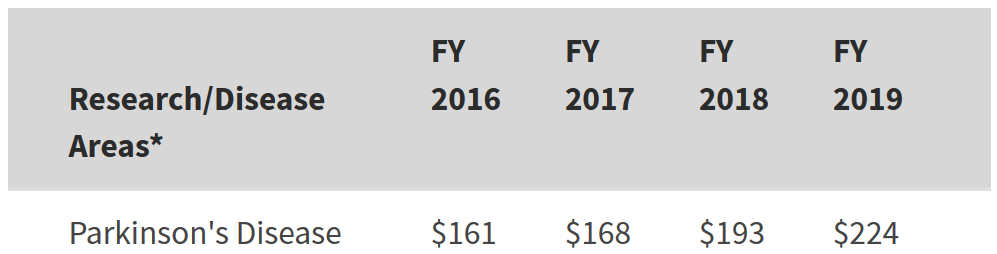
NIH Parkinson’s research funding. Source: NIH

In 2016, the US National Institutes of Health (NIH – the world’s largest funder of medical research) allocated $161 million to Parkinson’s research.

It was a small fraction of the $30+ billion spent by the NIH on medical research that year, but it was still a much needed amount of money invested into research on this neurodegenerative condition.

This week, a major new Parkinson’s research program – called Aligning Science Across Parkinson’s (or ASAP – click here to read a previous SoPD post on this initiative) – announced the rewarding of $161 million in research funding to 21 projects involving 96 research leaders from 60 institutions across 11 countries (and 31 of the research leaders are female). Importantly, all of them are seeking to “accelerate targeted basic research and move us toward more meaningful advancements for Parkinson’s” (Click here to read the annoucement).

Think about that for a second:

ASAP has basically just allocated the same amount of funding to Parkinson’s research as the entire US Government did in 2016.

Wow!

Continue reading “$161 million over three years”

The ibuprofen post

# # # #

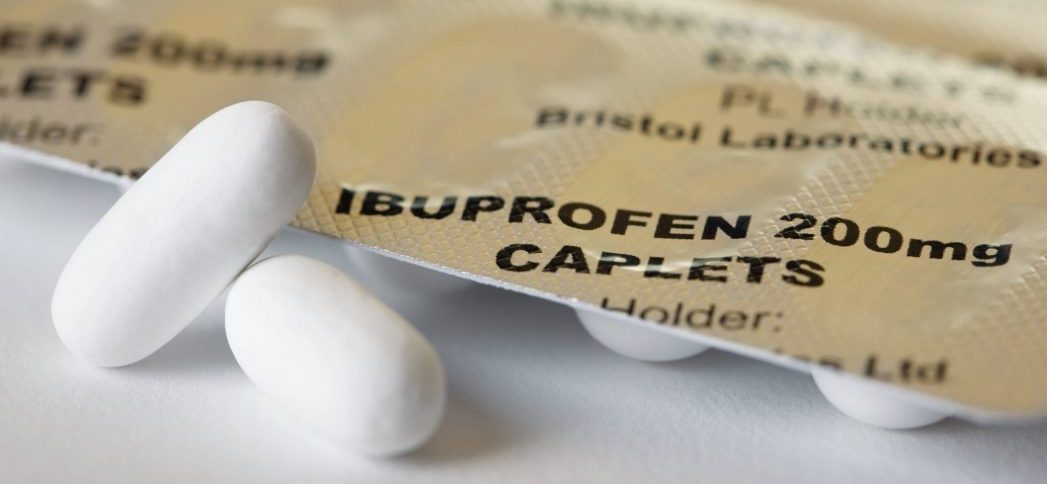
Ibuprofen is a nonsteroidal anti-inflammatory drug that is used for treating pain, fever, and inflammation.

Previous preclinical research has demonstrated that ibruproen has the ability to reduce the loss of neurons in models of Parkinson’s, and epidemiological data suggests that it may lower the risk of actually developing the condition.

Recently published research points towards a specific sub-set of individuals vulnerable to Parkinson’s that ibuprofen may be particularly useful for: LRRK2-genetic variant carriers.

In today’s post, we will discuss the origins of ibruprofen, review some of the previous research indicating neuroprotective properties, and do a deep dive into the new LRRK2 data.

# # # #


Source: BBC

This story starts in 1953.

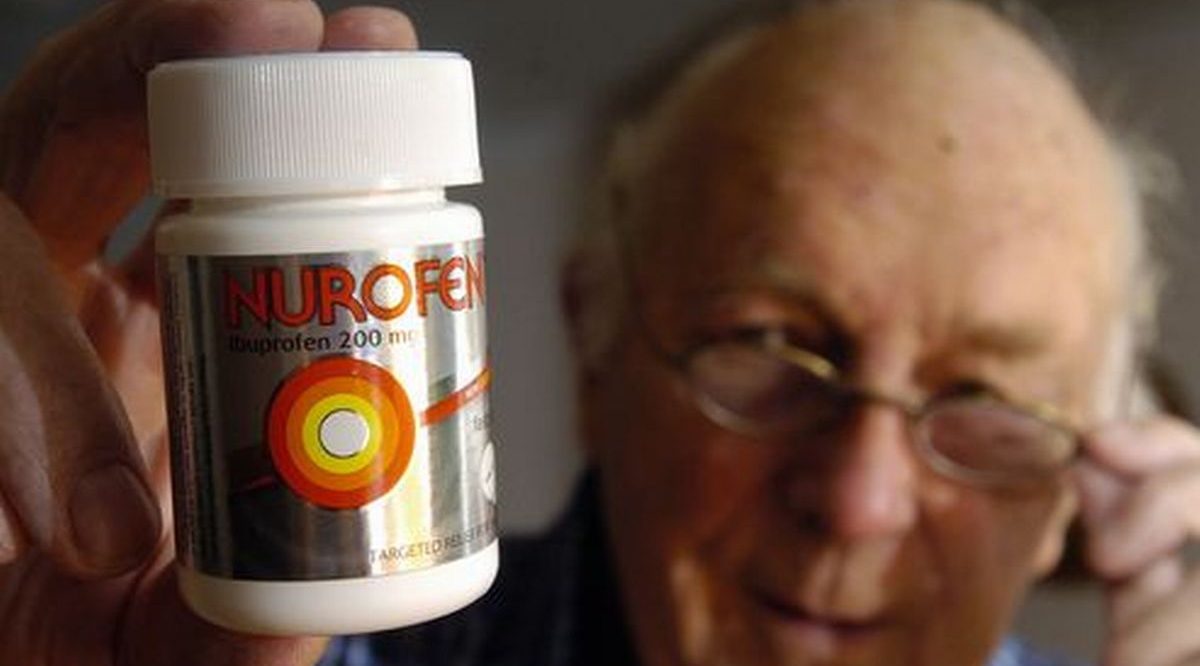
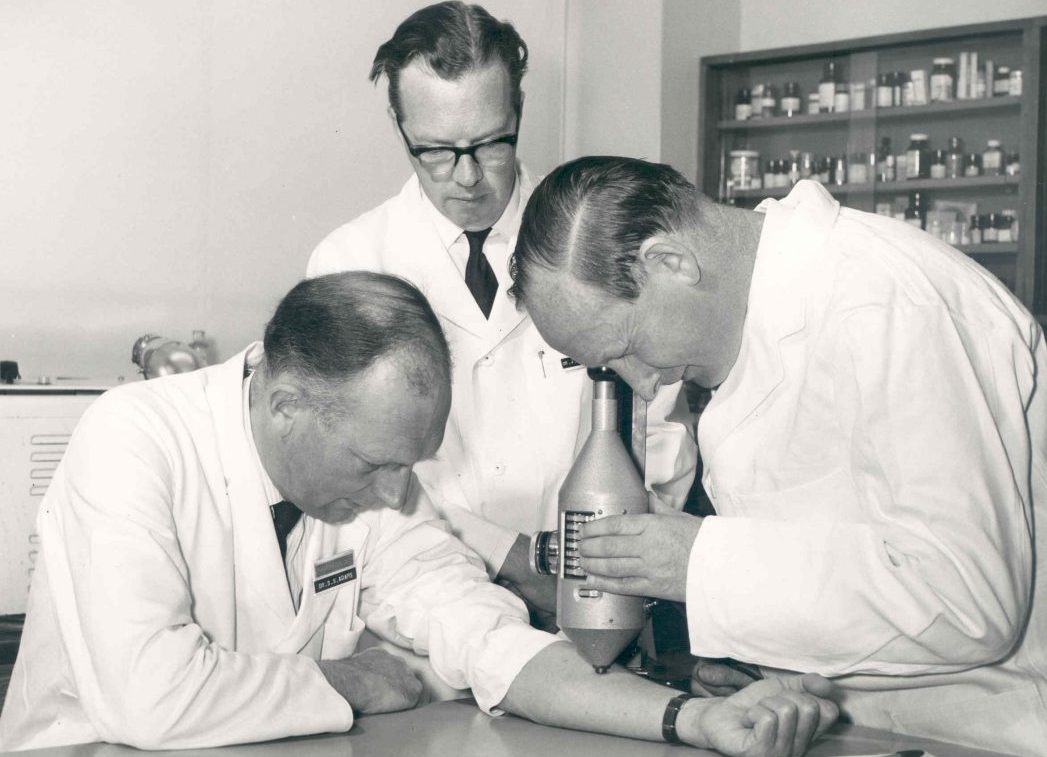
And it begins with two chemists – Stewart Adams and John Nicholson (Stewart is the chap in the banner photo at the top of this post holding the container of pills) – who were both working for Boots, a health/beauty retailer and pharmacy chain in the UK.

Source: Boots

Stewart and John were on a mission: To produce a new drug for rheumatoid arthritis.

You see, in 1953 there were only two drugs available for treating inflammatory pain: a corticosteroid drug and high dose aspirin. And neither of them was ideal. The chemists started their quest by looking for the activity of variations of aspirin, hoping to find a powerful alternative.

Adams (left) & Nicholson (middle). Source: Boots

Their search was not easy – it took 16 years and they screened over 20,000 molecules – but output of that effort was a drug called ibuprofen (sold under ‘Brufen’).

Legend has it that Adams initially tested the drug on himself as treatment for a particularly bad hangover (Source).

Ibuprofen was launched on the 3rd February 1969 as a treatment for rheumatoid arthritis in the United Kingdom, and it was introduced in the United States in 1974. It went on to become one of the most prescribed drugs in history and it is still widely used. In fact in 2015, Boots UK sold an average of one pack of ibuprofen every 2.92 seconds and, across all UK retailers, the sales figures for the medicine reached over £150 million.

This is all very interesting, but what does it have to do with Parkinson’s?

Continue reading “The ibuprofen post”

Billion dollar bets: Denali+Biogen


# # # #

This week the biotech firm Denali Therapeutics made two major announcements regarding the development of their LRRK2 inhibitor program for Parkinson’s.

First, the company revealed that they have signed an agreement with the pharmaceutical company Biogen to co-develop and co-commercialise small molecule inhibitors of LRRK2 for Parkinson’s.

Second, Denali also announced that they have a green light from the US FDA to start the next phase of clinical testing of their LRRK2 inhibitor DNL151.

In today’s post, we will discuss what is meant by LRRK2 inhibitor, what the details of the announcements are, and what all of this means for the Parkinson’s community.

# # # #


Denali. Source: Wikipedia

Peaking at 20,310 feet (or 6,190 m) above sea level, Denali (Koyukon for “the high one”; also known as Mount McKinley) is the highest mountain in North America. The first verified ascent of this Alaskan mountain occurred on June 7, 1913, when four climbers (Hudson Stuck, Harry Karstens, Walter Harper, and Robert Tatum) conquered it.

Tatum (left), Karstens (middle), and Harper (right). Source: Gutenberg

Robert Tatum later commented, “The view from the top of Mount McKinley is like looking out the windows of Heaven!

More recently another adventurous group associated with ‘Denali’ have been trying to scale lofty heights, but of a completely different sort to the mountaineering kind.

Founded in 2013 by a group of former Genentech executives, San Francisco-based Denali Therapeutics is a biotech company which is focused on developing novel therapies for people suffering from neurodegenerative diseases. Although they have product development programs for other condition (such as Amyotrophic Lateral Sclerosis and Alzheimer’s disease), Parkinson’s is definitely their primary indication of interest.

And this week, the company made two major announcements with regards to their Parkinson’s research program.

The first announcement was that Denali have signed an agreement with the pharmaceutical company Biogen to co-develop and co-commercialise small molecule inhibitors of LRRK2 for Parkinson’s (Click here to read the press release).

What is LRRK2?

Continue reading “Billion dollar bets: Denali+Biogen”