Mo better for TEVA with Modag?


# # # #

This week the pharmaceutical company TEVA Pharmaceuticals Industries Ltd has announced a deal with a small German biotech firm called MODAG.

The two companies are forming a strategic collaboration on the exclusive worldwide licensing and development of MODAG’s lead compound anle138b.

Anle138b is a small molecule inhibitor of the believed to be toxic forms of the Parkinson’s-associated protein alpha synuclein.

In today’s post, we will discuss what is known about anle138b and the implications of this new partnership.

# # # #


Source: SLE

In 1901, Haim Salomon and his brother-in-law Moshe Levin established a small wholesale drug business, near the Nablus Gate in Jerusalem. They called it “Salomon and Levin”. A few years later, Yitzhak Elstein, another of Haim Salomon’s brothers-in-law, joined the firm and they changed the name of the company to SLE – Salomon Levin and Elstein.

Source: SLE

From these humble beginning, grew a pharmaceutical juggernaut that we know today as TEVA Pharmaceuticals.

TEVA – meaning “Nature” in Hebrew – is now an international producer of pharmaceutical agents, with 40,000 employees working across 65 manufacturing facilities in more than 30 countries. The company has a portfolio of more than 3,500 medicines, and they produce approximately 85 billion tablets and capsules per year (Source).

Does TEVA produce any drugs for Parkinson’s?

Yes, Azilect (rasagiline) – an approved monoamine-oxidase B inhibitor for the treatment of Parkinson’s – was developed by Teva Pharmaceuticals.

In addition, they are actively developing novel therapies. And this week they signed a really interesting deal to collaborate with a small German biotech company called MODAG.

What does MODAG do?

Continue reading “Mo better for TEVA with Modag?”

Repurposing bumetanide for Alzheimer’s

# # # #

Bumetanide (Bumex) is a diuretic drug (a medication that removes water, by increasing the production of urine). It is used to treat swelling caused by heart failure or liver or kidney disease. It is a widely used drug that has been well characterised in clinical use.

Recently researchers conducted a screening study to identify clinically available agents that might be useful in the treatment of the cognitive decline associated with a genetic risk factor for Alzheimer’s: APOE4 

The top drug identified in their study was bumetanide.

In today’s post we will discuss what APOE4 is, we will review the results of the new study, and we will look at why these findings could be interesting for Parkinson’s.

# # # #


Source: Pharmacysafety

Many years ago, I was at a patient-research interaction event and a world-leading genetics researcher was asked by someone in the audience if they had had their DNA sequenced.

They said ‘no‘.

The person asking the question frowned and asked ‘why not? You have all the technology and knowledge – don’t you want to know more about yourself?

The researcher replied “No. Having your DNA sequenced should not be taken lightly. You might learn stuff about yourself that you don’t want to know

They used the example of possibly being an APOE4 carrier (who have a higher risk of cognitive decline during aging). The geneticist declared that they would rather not know that kind of information for fear of the impact that it could have on their life.

The questioner respected the honest answer and the conversation that followed was really interesting. More recently, however, as we have learned more about APOE4 and new drugs are being targeted at this risk factor, I have often wondered if their decision would still stand. Are we approaching an age when we might want to know if we are APOE4 carriers?

Hang on a moment. What is this APOE4 thing?

Continue reading “Repurposing bumetanide for Alzheimer’s”

Monthly Research Review – September 2021

# # # #

At the end of each month the SoPD writes a post which provides an overview of some of the major pieces of Parkinson’s-related research that were made available during September 2021.

The post is divided into 10 parts based on the type of research:

# # # #


So, what happened during September 2021?

In world news:

7th September – El Salvador becomes the first country in the world to accept Bitcoin as an official currency.
16th September – Inspiration4 launched by SpaceX becomes the first all-civilian spaceflight, carrying a four-person crew on a three-day orbit of the Earth.

21st September – A 10-foot wide house in Boston (known as “Skinny House”) sold for US$1.25 Million:

23rd September – Scientists report the discovery of human footprints in the state of New Mexico that are understood to be 23,000 years old, around the time of the last Ice Age – putting humans in North American significantly earlier than previously believed.

27th September – UK traffic was at its lowest for a Monday since England’s pandemic restrictions were lifted in mid-July, according to the data from the Office for National Statistics. Why? Because we do not have enough truck drivers to deliver the petrol. Nothing to do with BREXIT, the Government insisted, but the English were too busy making fun of themselves as they dealt with the crisis:

I particularly liked the way the BBC sent their journalist “Phil McCann” to report on the situation. I also rather liked:

In the world of Parkinson’s research, a great deal of new research and news was reported:

In September 2021, there were 1,077 research articles added to the Pubmed website with the tag word “Parkinson’s” attached (9,178for all of 2021 so far). In addition, there was a wave to news reports regarding various other bits of Parkinson’s research activity (clinical trials, etc).

The top 4 pieces of Parkinson’s news

Continue reading “Monthly Research Review – September 2021”

When sonic hedgehog goes dyskinetic

# # # #

Dyskinesias are involuntary muscle movements associated with long-term use of levodopa therapy (use of levodopa is not a certainty for developing dyskinesias, but there is an association). A better understanding of the underlying biology of dyskinesias is required in order to alleviate this condition for those affected by it.

Recently researchers have reported that an imbalance between dopamine levels (associated with levodopa treatment) and a protein called sonic hedgehog could be partly underlying the development of dyskinesias.

In today’s post, we will explore what sonic hedgehog does in the body, provide an overview of dyskinesias, review the new research, and discuss the implications of the research.

# # # #


The humble fly (Drosophila). Source: Ecolab

No one should ever be allowed to say that fly geneticists don’t have a sense of humour.

When it comes to the naming of genes, these guys are the best!

A gene is a section of DNA that provides the instructions for making a particular protein, and each gene has been given a name. Some names are just boring – such as leucine-rich repeat kinase 2 (or LRRK2) – while other names are rather amusing. Especially the fly genes.

For example, there is one fly gene called “indy”, which stands for I‘m Not Dead Yet. Flies with genetic variation in this gene have longer than average lifespans (Click here to read more about this):

Source: Sciencemag

Another amusingly named gene is “Cheap Date”. Flies with a genetic mutation in this gene are very susceptible to alcohol (Click here to read more about this):

Source: Lordsofthedrinks

There is also “Ken and Barbie” – genetic variations in this gene result in a lack of external genitalia (Click here to read more about this).

The fly research community have a lot of really great names for genes: lunatic fringe”, “headcase” and “mothers against decapentaplegia (MAD)”

But one of the most popular gene names in all of biology is a gene called “Sonic Hedgehog”

What is Sonic Hedghog?

Continue reading “When sonic hedgehog goes dyskinetic”

Monthly Research Review – August 2021

# # # #

At the end of each month the SoPD writes a post which provides an overview of some of the major pieces of Parkinson’s-related research that were made available during August 2021.

The post is divided into 10 parts based on the type of research:

# # # #


So, what happened during August 2021?

In world news:

August 6th – SpaceX stacked the Super Heavy Booster 4 and Star Ship 20 (Click here to read more about this)


August 9th – The Intergovernmental Panel on Climate Change releases the first part of its Sixth Assessment Report, which concludes that the effects of human-caused climate change are now “widespread, rapid, and intensifying“.


August 13th – Gino Strada passed away – and shame on you if you don’t know who he is


August 15th – The 50th anniversary of Nixon closing the “gold window” to foreign countries and ‘temporarily‘ abandoning the Bretton Woods Agreement, removing the gold standard and starting a new age of fiat currencies.


August 28th – The world’s northernmost island – a small patch of land measuring 60 x 30 metres – was announced by scientists off the coast of Greenland. The name Qeqertaq Avannarleq is proposed, which means “the northernmost island” (original!).

In the world of Parkinson’s research, a great deal of new research and news was reported:

In August 2021, there were 765 research articles added to the Pubmed website with the tag word “Parkinson’s” attached (8,101 for all of 2021 so far). In addition, there was a wave to news reports regarding various other bits of Parkinson’s research activity (clinical trials, etc).

The top 4 pieces of Parkinson’s news

Continue reading “Monthly Research Review – August 2021”

Monthly Research Review – July 2021

# # # #

At the end of each month the SoPD writes a post which provides an overview of some of the major pieces of Parkinson’s-related research that were made available during July 2021.

The post is divided into 10 parts based on the type of research:

# # # #


So, what happened during July 2021?

In world news:

July 8th – The global death toll from COVID-19 surpassed 4 million lives (Click here to read more about this).

July 11th — Billionaire Sir Richard Branson flew really high. A new age of “space” tourism… blah, blah, blah.

July 20th Billionaire Jeff Bezos flew really high (yawn)… Seriously, these folks have accumulated vast fortunes and this is how they chose to spend their money?!?!?

July 22nd – Dawn Butler was forced to leave the UK House of Commons by order of the acting Deputy Speaker, after she made comments referring to the Prime Minister Boris Johnson as a liar. Two questions: 1.) Why did her peers not walk out in solidarity with her?  2.) Why did the deputy speaker not point out the obvious (“All politicians are by nature“). Yes, I am a cynic.

July 23rd  – the Tokyo Olympic games began.

July 29th – New Zealand-based Rocket Lab successfully reached orbit (actual space) – the 18th electron rocket to do so.

In the world of Parkinson’s research, a great deal of new research and news was reported:

In July 2021, there were 819 research articles added to the Pubmed website with the tag word “Parkinson’s” attached (7,336 for all of 2021 so far). In addition, there was a wave to news reports regarding various other bits of Parkinson’s research activity (clinical trials, etc).

The top 5 pieces of Parkinson’s news

Continue reading “Monthly Research Review – July 2021”

AC Immune acquires assets of AFFiRiS

# # # #

Alpha synuclein is considered to be an influential factor in Parkinson’s. It is a protein that accumulates and clumps together inside certain nerve cells in many cases of Parkinson’s.

Recently, clinical trials have attempted to target alpha synuclein that is floating around outside of cells. Some of the strategies focus on an approach called ‘immunotherapy’, which involves boosting the immune system to help remove the toxic form of this protein from the body.

This week, one biotech company – AC Immune – bought the Parkinson’s-associated immunotherapy assets off another biotech company – AFFiRiS – which has been developing a potential vaccine for Parkinson’s.

In today’s post, we will discuss what immunotherapy is, look at how AFFiRiS has been trying to apply it to Parkinson’s, and review what AC-Immune plans to do next.

# # # #


AC Immune is a a Switzerland-based biotech company that was foundered in 2003.

They are focused on “improving the lives of patients suffering from Alzheimer’s and other neurodegenerative diseases” (Source).

Their approach has primarily centered around the development of immunotherapy approaches. And this week they made a very interesting announcement.

What is immunotherapy?

Continue reading “AC Immune acquires assets of AFFiRiS”

Farnesol: The farnesylator of PARIS

# # # #

A build up of “PARkin Interacting Substrate” (or PARIS) protein has been proposed as one potential mediator of the pathology observed in some cases of Parkinson’s. The accumulation of this protein leads to the inhibition of a key protein called PGC-1α, which is a neuroprotective protein that helps to keep cells alive.

For sometime, researchers have been searching for molecules that can act as inhibitors of PARIS, in the hope that blocking PARIS would allow PGC-1α to act freely. Such an agent could have potential as novel treatment for Parkinson’s.

This week a research report was published that describes one possible PARIS inhibitor. It is called farnesol.

In today’s post, we will look at the biology behind PARIS, review the new report, and discuss what exactly is known about farnesol.

# # # #


Pont Royal et Musée d’Orsay. Source: Wikipedia

Paris has a special place in my heart for several reasons.

The main one: I proposed to my wife there on the Pont Royal.

We had planned a day out in London, but once we got down to Waterloo “for lunch at a special restaurant“, I surprised her with two Euro Star tickets and we were off on the train for Paris – just like that (I might look the hardened tough guy on the outside, but deep down I am really just a tragic romantic).

And that night, after “dinner at a special restaurant” shortly before 10pm as we were crossing the middle of the Pont Royal, and a small miracle occurred: the traffic lights stopped traffic in both directions.

Source: Pixels

Seizing our chance moment alone, I dropped to one knee and asked (read: begged).

Now, if she had said ‘no thanks‘, I had a back up plan: Jump over the side of the bridge, float down the Seine some ways, climb out and then join the Foreign Legions the next day as a mute (je suis muet”).

But she didn’t say no (let’s call that the second small miracle) and thankfully for my fragile ego’s sake there wasn’t a lengthy deliberation.

When the traffic lights changed and traffic started to flow again, we received some enthusiastic honks of the klaxons (horns) as I got up and we headed off to alert our parents. It was a really nice moment.

I was recalling this moment, this week when a different type of Paris was being discussed in the news.

What do you mean “a different type of Paris”?

Continue reading “Farnesol: The farnesylator of PARIS”

Monthly Research Review – June 2021

# # # #

At the end of each month the SoPD writes a post which provides an overview of some of the major pieces of Parkinson’s-related research that were made available during June 2021.

The post is divided into 10 parts based on the type of research:

# # # #


So, what happened during June 2021?

In world news:

June 3rd – The Juno spacecraft performed its only flyby of Jupiter’s moon Ganymede – the first flyby of the moon by any spacecraft in over 20 years (Click here to read more about this).

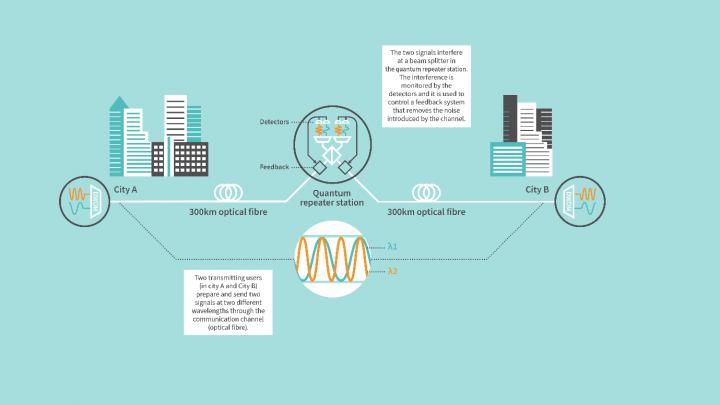
June 10th – Researchers from Toshiba’s UK laboratory in Cambridge successfully sent quantum information over 600-kilometer-long optical fibers, creating a new distance record and paving the way for large-scale quantum networks that could be used to exchange information securely between cities and even countries (Click here to read more about this).

June 11th – ‘My God, I’m in a whale’s mouth’: A New England lobsterman named Michael Packard found himself in the mouth of a humpback whale off the coast of Cape Cod. He was spat out half a minute later (Click here to read more about this).

June 23 – The New Zealand Black caps cricket team won the 2019–2021 ICC World Test Championship (Click here to read more about this).

June 29 – The number of vaccinations administered worldwide against the COVID-19 pandemic exceeded 3 billion (a truly remarkable achievement)

In the world of Parkinson’s research, a great deal of new research and news was reported:

In June 2021, there were 1,058 research articles added to the Pubmed website with the tag word “Parkinson’s” attached (6,517 for all of 2021 so far). In addition, there was a wave to news reports regarding various other bits of Parkinson’s research activity (clinical trials, etc).

The top 4 pieces of Parkinson’s news

Continue reading “Monthly Research Review – June 2021”

The Anavex results

# # # #

This week some encouraging clinical trial results were announced by a biotech firm called Anavex Life Sciences.

The company had been testing their lead experimental therapy – a Sigma-1 receptor agonist called ANAVEX2-73 (also known as blarcamesine) – in 132 people with Parkinson’s disease dementia over a 14 week period.

The results are rather encouraging: significantly positive outcomes in both cognitive and motor symptoms.

In today’s post, we will explain what exactly “Sigma-1 receptor agonist” means, discuss what Parkinson’s disease dementia is, and review what we currently know about the results of the trial.

# # # #


Source: Pumpingmarvellous

A lot of clinical trials for disease modification in Parkinson’s are focused on targeting well known proteins that are believed to be associated with underlying biology of the condition, such as alpha synuclein, LRRK2, and GBA. We discuss these on a regular basis here on the SoPD.

There are, however, a large number of trials investigating less well known targets.

And this week we received news that one of these clinical trials had some positive results.

Source: Thestreet

The study was conducted by the biotech company Anavex Life Sciences and it involved their lead experimental therapy ANAVEX2-73 (also known as blarcamesine).

ANAVEX2-73 is a Sigma-1 receptor agonist.

What does that mean?

Continue reading “The Anavex results”