
|
# # # # Connecting genetics and biology is complicated. Researchers around the world have struggled to determine what each functional region of DNA is doing individually, let alone in combination with other regions. And sometimes when the output of combinations is examined, the results can be unexpected. Recently, researchers looked at the consequences of having a particular combination of Parkinson’s-associated risk factors… and they were rather surprised by the results In today’s post, we will review the report presenting their results and consider the potential implications of the findings. # # # # |
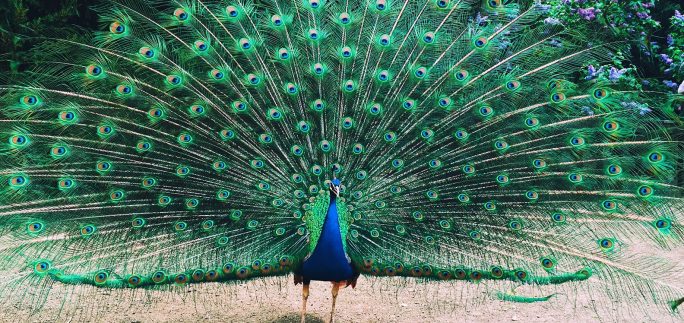 Bragging rights. Source: Howstuffworks
A while back, I became a little obsessed with peacock feathers.
I didn’t start collecting them and wearing them on Saturday night or anything like that. Rather, I just got really fascinated with how they develop. Each individual feather, that is.
I mean, look at them:
 Source: Dreamingandsleeping
Like all organisms, they are wondrous feats of nature and biology – particularly the jewel-toned ocelli (plural) or eyespots (the vivid circular patterns that seem evenly spread along each feather).
Each ocellus (singular) is created via a combination of individual strands of the larger feather. And each strand is further made up of tiny individually coloured segments. When you get really up close and personal with those eyespots, they look like this:
 Source: Wired
My obsession centered around “the how”.
How does each strand of the feather know when to start some blue or gold colouration (and when to stop) along those strands? And how do the individual strands coordinate and match up so perfectly to create the marvelous image of the ocellus?
This type of question applies to many areas of biology (for example, how does a regenerating tail of a gecko know when to stop growing?), but remember that at the end of each mating season, the peacock sheds (or molts) its feathers. So these carefully coordinated feathers have to re-grow each year!
Tell me that that is not remarkable.
Remarkable, but what does this have to do with Parkinson’s?














 The Science of Parkinson's