Improving the SoPD blog 2017 – any thoughts/suggestions?

improve-yourself1

Every six months or so, I put up a post asking for feedback/thoughts/suggestions on the style/content of the site. Or requests for any special topics readers would like to read.

In this post, I also try to provide some insight as to how the website is going and what is happening behind the scenes. 

The whole point of this particular post is to provide an opportunity to you the reader to help improve the site – any and all suggestions are welcomed.


sotu201211

The State of the Blog address. Source: Tngop

So lets begin with where things are at present.

The state of the blog:

The blog has been running since the 9th September, 2015. There are currently 155 individual posts (64 this year) dealing with all manner of Parkinson’s disease research-related content (for the full list, please see the site map page).

I have had some readers ask about how much traffic is visiting the site on a regular basis and in the interest of full transparency blah-blah-blah: the site is currently receiving about 3,000 visitors per week. Curiously, Mondays receive the most views (approximately 21% of visitors), and 8pm is the busiest time of each day for the site (approximately 12% of views – is nothing on TV on Mondays nights?).

Continue reading “Improving the SoPD blog 2017 – any thoughts/suggestions?”

The Llama-nation of Parkinson’s disease

f2a0e62f374278fe14db1ca1249204c4

The clustering of a protein called alpha synuclein is one of the cardinal features of the brain of a person with Parkinson’s disease.

Recently published research has demonstrated that tiny antibodies (called nanobodies) derived from llamas (yes, llamas) are very effective at reducing this clustering of alpha synuclein in cell culture models of Parkinson’s disease. 

In today’s post, we will discuss the science, review the research and consider what it could all mean for Parkinson’s disease.


other-spit-long-farm-llama-animals-alpacas-alpaca-neck-animal-soft-furry-llamas-happy-picture-water-1366x768

Llama. Source: Imagesanimals

Ok, I confess: This post has been partly written purely because I really like llamas. And I’m not ashamed to admit it either.

I mean, look at them! They are fantastic:

llamas-and-haircuts-prince-harry1

Source: Vogue

Very cute. But what does this have to do with Parkinson’s disease?

Indeed. Let’s get down to business.

This post has also been written because llamas have a very interesting biological characteristic that is now being exploited in many areas of medical research, including for Parkinson’s disease.

Continue reading “The Llama-nation of Parkinson’s disease”

Future of gene therapy: hAAVing amazing new tools

image-20151106-16253-1rzjd0s

In this post I review recently published research describing interesting new gene therapy tools.

“Gene therapy” involved using genetics, rather than medication to treat conditions like Parkinson’s disease. By replacing faulty sections of DNA (or genes) or providing supportive genes, doctors hope to better treat certain diseases.

While we have ample knowledge regarding how to correct or insert genes effectively, the problem has always been delivery: getting the new DNA into the right types of cells while avoiding all of the other cells.

Now, researchers at the California Institute of Technology may be on the verge of solving this issue with specially engineered viruses.


gene_therapy_augmentation_yourgenome

Gene therapy. Source: yourgenome

When you get sick, the usual solution is to visit your doctor. They will prescribe a medication for you to take, and then all things going well (fingers crossed/knock on wood) you will start to feel better. It is a rather simple and straight forward process, and it has largely worked well for most of us for quite some time.

As the overall population has started to live longer, however, we have become more and more exposed to chronic conditions which require long-term treatment regimes. The “long-term” aspect of this means that some people are regularly taking medication as part of their daily lives. In many cases, these medications are taken multiple times per day.

An example of this is Levodopa (also known as Sinemet or Madopar) which is the most common treatment for the chronic condition of Parkinson’s disease. When you swallow your Levodopa pill, it is broken down in the gut, absorbed through the wall of the intestines, transported to the brain via our blood system, where it is converted into the chemical dopamine – the chemical that is lost in Parkinson’s disease. This conversion of Levodopa increases the levels of dopamine in your brain, which helps to alleviate the motor issues associated with Parkinson’s disease.

7001127301-6010801

Levodopa. Source: Drugs

This pill form of treating a disease is only a temporary solution though. People with Parkinson’s disease – like other chronic conditions – need to take multiple tablets of Levodopa every day to keep their motor features under control. And long term this approach can result in other complications, such as Levodopa-induced dyskinesias in the case of Parkinson’s.

Yeah, but is there a better approach?

Some researchers believe there is. But we are not quite there yet with the application of that approach. Let me explain:

Continue reading “Future of gene therapy: hAAVing amazing new tools”

Tetrabenazine: A strategy for Levodopa-induced dyskinesia?

Dyk

For many people diagnosed with Parkinson’s disease, one of the scariest prospects of the condition that they face is the possibility of developing dyskinesias.

Dyskinesias are involuntary movements that can develop after long term use of the primary treatment of Parkinson’s disease: Levodopa

In todays post I discuss one experimental strategy for dealing with this debilitating aspect of Parkinson’s disease.


Dysco

Dyskinesia. Source: JAMA Neurology

There is a normal course of events with Parkinson’s disease (and yes, I am grossly generalising here).

First comes the shock of the diagnosis.

This is generally followed by the roller coaster of various emotions (including disbelief, sadness, anger, denial).

Then comes the period during which one will try to familiarise oneself with the condition (reading books, searching online, joining Facebook groups), and this usually leads to awareness of some of the realities of the condition.

One of those realities (especially for people with early onset Parkinson’s disease) are dyskinesias.

What are dyskinesias?

Dyskinesias (from Greek: dys – abnormal; and kinēsis – motion, movement) are simply a category of movement disorders that are characterised by involuntary muscle movements. And they are certainly not specific to Parkinson’s disease.

As I have suggested in the summary at the top, they are associated in Parkinson’s disease with long-term use of Levodopa (also known as Sinemet or Madopar).

7001127301-6010801

Sinemet is Levodopa. Source: Drugs

Continue reading “Tetrabenazine: A strategy for Levodopa-induced dyskinesia?”

Glutathione – Getting the k’NAC’k of Parkinson’s disease

NAC

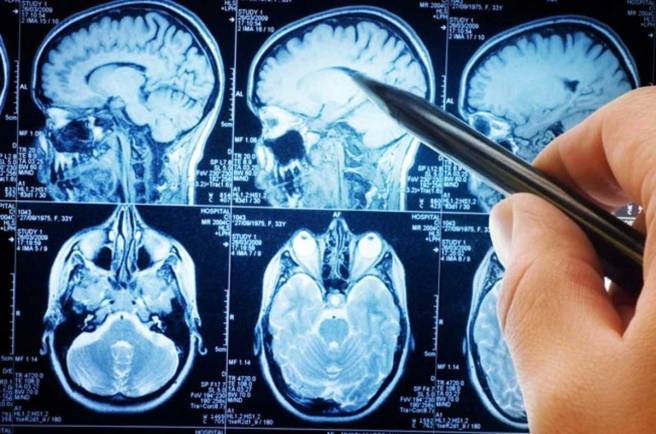
The image above presents a ‘before treatment’ (left) and ‘after treatment’ (right) brain scan image from a recent research report of a clinical study that looked at the use of Acetylcysteine (also known as N-acetylcysteine or simply NAC) in Parkinson’s disease.

DaTscan brain imaging technique allows us to look at the level of dopamine processing in an individual’s brain. Red areas representing a lot; blue areas – not so much. The image above represents a rather remarkable result and it certainly grabbed our attention here at the SoPD HQ (I have never seen anything like it!).

In today’s post, we will review the science behind this NAC and discuss what is happening with ongoing clinical trials.


shutterstock_brains

Source: The Register

Let me ask you a personal question:

Have you ever overdosed on Paracetamol?

Regardless of your answer to that question, one of the main treatments for Paracetamol overdose is administration of a drug called ‘Acetylcysteine’.

Why are you telling me this?

Because acetylcysteine is currently being assessed as a potential treatment for Parkinson’s disease.

Oh I see. Tell me more. What is acetylcysteine?

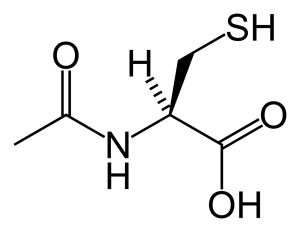
Acetylcysteine-2D-skeletalAcetylcysteine. Source: Wikimedia

Acetylcysteine (N-acetylcysteine or NAC – commercially named Mucomyst) is a prodrug – that is a compound that undergoes a transformation when ingested by the body and then begins exhibiting pharmacological effects. Acetylcysteine serves as a prodrug to a protein called L-cysteine, and – just as L-dopa is an intermediate in the production of dopamine – L-cysteine is an intermediate in the production of another protein called glutathione.

Take home message: Acetylcysteine allows for increased production of Glutathione.

What is glutathione?

Glutathione-from-xtal-3D-balls

Glutathione. Source: Wikipedia

Glutathione (pronounced “gloota-thigh-own”) is a tripeptide (a string of three amino acids connected by peptide bonds) containing the amino acids glycine, glutamic acid, and cysteine. It is produced naturally in nearly all cells. In the brain, glutathione is concentrated in the helper cells (called astrocytes) and also in the branches of neurons, but not in the actual cell body of the neuron.

It functions as a potent antioxidant.

Continue reading “Glutathione – Getting the k’NAC’k of Parkinson’s disease”

The omnigenics of Parkinson’s disease?

agarose-gel-electrophoresis-dna

One of the most common observations that people make when they attend a Parkinson’s disease support group meeting is the huge variety of symptoms between sufferers.

Some people affected by this condition are more tremor dominant, while others have more pronounced gait (or walking) issues. In addition, some people have an early onset version, while others has a very later onset. What could explain this wide range of features?

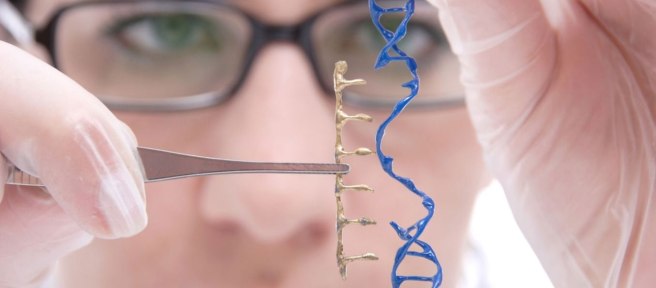
A group of Stanford researchers have recently proposed an interesting new idea regarding our understanding of genetics that could partly explain some of this variability. In todays post I speculate on whether their idea could be applied to Parkinson’s disease.


shutterstock_225119212

Source: Discover

Earlier this year an interesting study was published in the prestigious journal Nature on the topic of the genetics of height (yes height. Trust me, I’m going somewhere with this):

Nature
Title: Rare and low-frequency coding variants alter human adult height
Authors: Marouli E, Graff M, Medina-Gomez C, Lo KS, Wood AR, Kjaer TR, Fine RS, Lu Y, Schurmann C,………at least 200 additional authors have been deleted here in order to save some space…….EPIC-InterAct Consortium; CHD Exome+ Consortium; ExomeBP Consortium; T2D-Genes Consortium; GoT2D Genes Consortium; Global Lipids Genetics Consortium; ReproGen Consortium; MAGIC Investigators, Rotter JI, Boehnke M, Kathiresan S, McCarthy MI, Willer CJ, Stefansson K, Borecki IB, Liu DJ, North KE, Heard-Costa NL, Pers TH, Lindgren CM, Oxvig C, Kutalik Z, Rivadeneira F, Loos RJ, Frayling TM, Hirschhorn JN, Deloukas P, Lettre G.
Journal: Nature. 2017 Feb 9;542(7640):186-190.
PMID: 28146470

In this study, the researchers – who are part of the GIANT consortium – were analysing DNA collected from over 700,000 people and trying to determine what genetic differences could influence height.

euPZ0hG

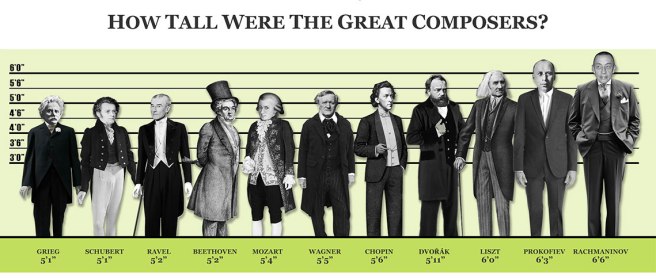
Height is not important for music. Source: Imgur

Why study height?

Good question. There are several reasons:

Firstly, it is easy to accurately measure. Second, the researchers believed that if we can master the complex genetics of something simple like height maybe what we learn will give us a blueprint for how we should study more complex medical disorders that have thus far eluded our complete understanding.

Continue reading “The omnigenics of Parkinson’s disease?”

The other anniversary: 20 years of Alpha Synuclein

20_years1

On the 27th June, 1997, a research report was published in the prestigious scientific journal ‘Science’ that would change the world of Parkinson’s disease research forever.

And I am not exaggerating here.

The discovery that genetic variations in a gene called alpha synuclein could increase the risk of developing Parkinson’s disease opened up whole new areas of research and eventually led to ongoing clinical trials of potential therapeutic applications.

Todays post recounts the events surrounding the discovery, what has happened since, and we will discuss where things are heading in the future.


original-26772-1364707371-8

Source: listchallenge

It is fair to say that 1997 was an eventful year.

In world events, President Bill Clinton was entering his second term, Madeleine Albright became the first female Secretary of State for the USA, Tony Blair became the prime minister of the UK, and Great Britain handed back Hong Kong to China.

1997_Clinton_Inauguration_-_Swearing-in_Ceremony

#42 – Bill Clinton. Source: Wikipedia

In the world of entertainment, author J. K. Rowling’s debut novel “Harry Potter and the Philosopher’s Stone” was published by Bloomsbury, and Teletubbies, South Park, Ally McBeal, and Cold Feet (it’s a British thing) all appeared on TV for the first time, amusing and entertaining the various age groups associated with them.

south_park_still_h_2016

South Park. Source: Hollywoodreporter

Musically, rock band Blur released their popular hit song ‘Song 2‘ (released 7th April), “Bitter Sweet Symphony” by the Verve entered the UK charts at number 2 in June, and rapper Notorious B.I.G. was killed in a drive by shooting. Oh, and let’s not forget that “Tubthumping” (also known as “I Get Knocked Down”) by Chumbawamba was driving everybody nuts for its ubiquitous presence.

And at the cinemas, no one seemed to care about anything except a silly movie called Titanic.

PCTV-1770001166-hd

Titanic. Source: Hotspot

Feeling old yet?

Continue reading “The other anniversary: 20 years of Alpha Synuclein”

The autoimmunity of Parkinson’s disease?

Auto

In this post we discuss several recently published research reports suggesting that Parkinson’s disease may be an autoimmune condition. “Autoimmunity” occurs when the defence system of the body starts attacks the body itself.

This new research does not explain what causes of Parkinson’s disease, but it could explain why certain brain cells are being lost in some people with Parkinson’s disease. And such information could point us towards novel therapeutic strategies.


Nature_cover,_November_4,_1869

The first issue of Nature. Source: SimpleWikipedia

The journal Nature was first published on 4th November 1869, by Alexander MacMillan. It hoped to “provide cultivated readers with an accessible forum for reading about advances in scientific knowledge.” It has subsequently become one of the most prestigious scientific journals in the world, with an online readership of approximately 3 million unique readers per month (almost as much as we have here at the SoPD).

Each Wednesday afternoon, researchers around the world await the weekly outpouring of new research from Nature. And this week a research report was published in Nature that could be big for the world of Parkinson’s disease. Really big!

On the 21st June, this report was published:

Nature
Title: T cells from patients with Parkinson’s disease recognize α-synuclein peptides
Authors: Sulzer D, Alcalay RN, Garretti F, Cote L, Kanter E, Agin-Liebes J, Liong C, McMurtrey C, Hildebrand WH, Mao X, Dawson VL, Dawson TM, Oseroff C, Pham J, Sidney J, Dillon MB, Carpenter C, Weiskopf D, Phillips E, Mallal S, Peters B, Frazier A, Lindestam Arlehamn CS, Sette A
Journal: Nature. 2017 Jun 21. doi: 10.1038/nature22815.
PMID: 28636593

In their study, the investigators collected blood samples from 67 people with Parkinson’s disease and from 36 healthy patients (which were used as control samples). They then exposed the blood samples to fragments of proteins found in brain cells, including fragments of alpha synuclein – this is the protein that is so closely associated with Parkinson’s disease (it makes regular appearances on this blog).

What happened next was rather startling: the blood from the Parkinson’s patients had a strong reaction to two specific fragments of alpha synuclein, while the blood from the control subjects hardly reacted at all to these fragments.

In the image below, you will see the fragments listed along the bottom of the graph (protein fragments are labelled with combinations of alphabetical letters). The grey band on the plot indicates the two fragments that elicited a strong reaction from the blood cells – note the number of black dots (indicating PD samples) within the band, compared to the number of white dots (control samples). The numbers on the left side of the graph indicate the number of reacting cells per 100,000 blood cells.

Table1

Source: Nature

The investigators concluded from this experiment that these alpha synuclein fragments may be acting as antigenic epitopes, which would drive immune responses in people with Parkinson’s disease and they decided to investigate this further.

Continue reading “The autoimmunity of Parkinson’s disease?”

On the hunt: Parkure

Lysimachos-zografos-naturejobs-blog

This is Lysimachos.

Pronounced: “Leasing ma horse (without the R)” – his words not mine.

He is one of the founders of an Edinburgh-based biotech company called “Parkure“.

In today’s post, we’ll have a look at what the company is doing and what it could mean for Parkinson’s disease.


parkure7

Source: Parkure

The first thing I asked Dr Lysimachos Zografos when we met was: “Are you crazy?”

Understand that I did not mean the question in a negative or offensive manner. I asked it in the same way people ask if Elon Musk is crazy for starting a company with the goal of ‘colonising Mars’.

In 2014, Lysimachos left a nice job in academic research to start a small biotech firm that would use flies to screen for drugs that could be used to treat Parkinson’s disease. An interesting idea, right? But a rather incredible undertaking when you consider the enormous resources of the competition: big pharmaceutical companies. No matter which way you look at this, it has the makings of a real David versus Goliath story.

But also understand this: when I asked him that question, there was a strong element of jealousy in my voice.

Logo_without_strapline_WP

Incorporated in October 2014, this University of Edinburgh spin-out company has already had an interesting story. Here at the SoPD, we have been following their activities with interest for some time, and decided to write this post to make readers aware of them.

Continue reading “On the hunt: Parkure”

Who am I but my BMI

body-mass-index-feature

New research was published last week that suggests people with a high body mass index (or BMI) have a reduced risk of developing Parkinson’s disease.

Really? How does that work?

In todays post we will discuss what body mass index is, review the results of the study and consider what this means for our understanding of Parkinson’s disease.


Human Skin Color Variation

Lots of variety. Source: Pinsdaddy

Humans being come in all sorts of different shapes and sizes.

Tall, short, skinny, obese….

The interesting aspect about some of these differences is the way they can make us vulnerable to certain diseases. For example, we have previously discussed how people with red hair have are 4 times more likely to develop Parkinson’s disease than dark haired people (Click here to read that post, and here for a follow up post).

And now we have new research suggesting that your body mass may also influence your risk of developing Parkinson’s disease.

What do you mean by body mass?

Your body mass is simply your weight.

It can be used to determine your approximate level of health by applying it to the body mass index.

And what is the body mass index?

bmi-categories_med

The Body Mass Index. Source: Bioninja

The body mass index (or BMI) – also known as the Quetelet index – is a measure that is derived from the weight and height of an individual. Body mass index can be calculated according to the following formula:

screen-shot-2015-01-05-at_med

That is simply your weight in kilograms divided by your height in metres squared.

For example, if you were a ridiculously tall (2.08 metres – 6 foot 8) Parkinson’s research scientist with bad hair and an approximate weight of 105kg (230 pounds), your BMI score would be 24.2 (time to put the laptop down and go for some walks). This was calculated by dividing 105 by 4.3 (2.08 x 2.08meters).

BMI-Simon

The authors BMI score. Source: NHS BMI Calculator

So what is the new research about BMI and Parkinson’s disease?

This is Dr Alastair Noyce:

maxresdefault

He leads the PredictPD study (a really interesting longitudinal study to identify people at risk of Parkinson’s disease), which is based out of University College London. He is the lead author of the study.

And this is Prof Nick Wood:

nick-wood-new

He is the Galton Professor of Genetics, and the neuroscience programme director for Biomedical Research Centre at University College London. He has been at the forefront of many of the discoveries associated with the genetics of Parkinson’s disease, and he is the senior author of the study.

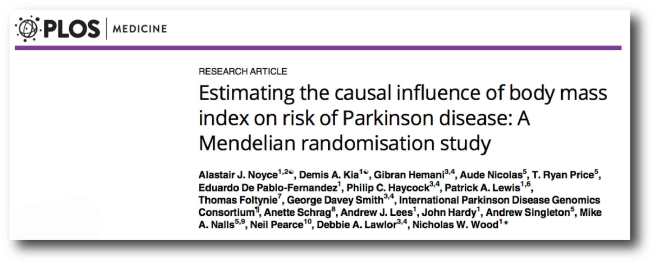
And this is the study:
plos

Title: Estimating the causal influence of body mass index on risk of Parkinson disease: A Mendelian randomisation study.
Authors: Noyce AJ, Kia DA, Hemani G, Nicolas A, Price TR, De Pablo-Fernandez E, Haycock PC, Lewis PA, Foltynie T, Davey Smith G; International Parkinson Disease Genomics Consortium, Schrag A, Lees AJ, Hardy J, Singleton A, Nalls MA, Pearce N, Lawlor DA, Wood NW.
Journal: PLoS Med. 2017 Jun 13;14(6):e1002314.
PMID: 28609445                 (This article is OPEN ACCESS if you would like to read it)

The researchers who published this study were interested in determining whether BMI and the future risk of Parkinson’s disease had any association (as you will see below there has previously been some disagreement about this). They began by collected data from the GIANT (Genetic Investigation of Anthropometric Traits) study. The GIANT study was a huge consortium that was set up identify regions or variations within DNA that could impact body size and shape (such as height and measures of obesity). They didn’t find very many, but the dataset represents an enormous resource for researchers to use (information about 2,554,637 genetic variants from 339,224 individuals of European descent).

They next collected all of the most recent data about genetic variations associated with Parkinson’s disease (7,782,514 genetic variants from 13,708 cases of Parkinson’s disease and 95,282 individuals acting as controls, pooled from 15 independent datasets of individuals of European descent).

Using these two sets of data, the researchers were able to determine any relationship between genetic variants and BMI, and any relationship between those same genetic variants and Parkinson’s disease. Using this approach, they could then determine an estimated change in the risk of Parkinson’s disease per unit change in BMI score.

And when they conducted that analysis, the researchers found genetic variants expected to increase ones BMI score higher by 5 were actually associated with an 18 percent lower risk of Parkinson’s disease. That is to say, higher BMI scores were associated with a lower risk of developing Parkinson’s disease – the odds ratio was 0.82 (1 being no difference) and the range of the odds was 0.69–0.98.

So does this mean I’m allowed to get fat? You know, to prevent Parkinson’s?

No. This would not be advisable.

One of the major limitations of this study (and many studies like it) is that individuals who have a higher BMI score have an increased risk of other diseases (heart disease, etc) which could result in an earlier death. They may die before they were eventually going to develop Parkinson’s disease. This ‘early death’ effect could result in individuals with a lower BMI being over-represented in the group of people diagnosed with Parkinson disease. This is called a “frailty effect”. In an attempt to reduce the possibility of a frailty effect in this study, the researchers conducted a further analysis (called ‘Frailty simulations’) to assess whether any associations they found were affected by mortality selection. This analysis suggested that the frailty effect could at least partially account for the association. That is to say, high BMI people dying earlier could partly explain the reduced frequency of Parkinson’s disease in that group.

In addition, there could also be subgroups within the low or high BMI population that could be affecting the data. The datasets used in the study lack of information about additional possible confounding variables. Confounding variables are factors that could influence the outcome of a study that haven’t been controlled for. In this study, for example, there was no information about smoking or coffee drinking, which have both been found to reduce risk of developing Parkinson’s disease. Perhaps a subset of cases in the high BMI group were serious smokers and coffee drinkers?

So, don’t go changing to a high cholesterol diet just yet.

How does this result compare to previous research on BMI and Parkinson’s disease?

It is fair to say that there has been a lack of consensus in this field of research.

There is certainly evidence to support the results of this new research report. Earlier this year, for example, researchers in Korea reported that brain imaging of 400 people recently diagnosed with Parkinson’s disease suggested a lower BMI might be closely associated with low density of dopaminergic neurons in the midbrain, a region badly affected in Parkinson’s disease (Click here to read more about that study).

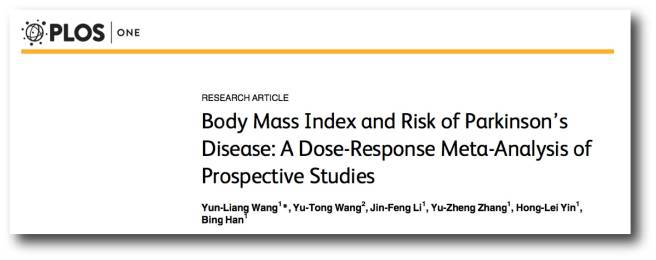
But there is also some research that suggests that there no association between BMI and Parkinson’s disease, including this study which analysed data from multiple studies:
PLosone
Title: Body Mass Index and Risk of Parkinson’s Disease: A Dose-Response Meta-Analysis of Prospective Studies.
Authors: Wang YL, Wang YT, Li JF, Zhang YZ, Yin HL, Han B.
Journal: PLoS One. 2015 Jun 29;10(6):e0131778.
PMID: 26121579              (This article is OPEN ACCESS if you would like to read it)

This study analysed data from 10 different studies and found no association between BMI and risk of developing Parkinson’s disease.

And then there have been studies which have found the opposite effect of the new study – that is lower BMI scores are associated with a lower risk of developing Parkinson’s disease (Click here and here to read more about those studies).

These previous studies, however, have all been observational studies. The beauty of this new research report is that they applied genetic analysis to the question, which has helped them to better define and characterise their population of interest. It will be interesting to see if future studies taking a similar approach can provide some kind of consensus here.

What about BMI after someone is diagnosed with Parkinson’s disease?

Here the picture becomes a little bit clearer.

Weight loss can be a common feature of Parkinson’s disease:

JAMA
Title: Association Between Change in Body Mass Index, Unified Parkinson’s Disease Rating Scale Scores, and Survival Among Persons With Parkinson Disease: Secondary Analysis of Longitudinal Data From NINDS Exploratory Trials in Parkinson Disease Long-term Study 1.
Authors: Wills AM, Pérez A, Wang J, Su X, Morgan J, Rajan SS, Leehey MA, Pontone GM, Chou KL, Umeh C, Mari Z, Boyd J; NINDS Exploratory Trials in Parkinson Disease (NET-PD) Investigators.
Journal: JAMA Neurol. 2016 Mar;73(3):321-8.
PMID: 26751506             (This article is OPEN ACCESS if you would like to read it)

In this study, 1673 people with Parkinson’s disease were recruited and followed over 3-6 years. Of these participants, 158 (9.4%) experienced weight loss (or a decrease in BMI), while 233 (13.9%) experienced weight gain (an increase in BMI). The weight loss group demonstrated an increase in the Unified Parkinson’s Disease Rating Scale (UPDRS) motor score (which indicates a worsening of Parkinsonian features), while the weight gain group actually exhibited a subtle decrease in their motor scores (an improvement in Parkinson’s features).

And this association between wait loss and worsening disease state is supported in a second study:

Plos
Title: Weight loss and impact on quality of life in Parkinson’s disease.
Authors: Akbar U, He Y, Dai Y, Hack N, Malaty I, McFarland NR, Hess C, Schmidt P, Wu S, Okun MS.
Journal: PLoS One. 2015 May 4;10(5):e0124541.
PMID: 25938478              (This article is OPEN ACCESS if you would like to read it)

In this study of 1718 people with Parkinson’s disease, the researchers found that more rapid weight loss was associated with higher number of co-morbidities (other medical complications), older age, higher L-dopa usage, and decreased health-related quality of life.

Thus weight loss is something for everyone to keep an eye on.

IMPORTANT NOTE: Weight loss can become apparent with an increase in dykinesias, but this is generally due to increased activity levels increasing levels of metabolism.

What does it all mean?

Using very large datasets, researchers in London have recently found that higher BMI scores are associated with a lower risk of developing Parkinson’s disease. This result is very interesting, even if much of the effect could be accounted for by the early mortality problem in the high BMI group.

Exactly how high BMI could infer neuroprotection or reduced chance of incurring the condition is still to be determined, and understanding the mechanisms of this effect could provide new understanding about the disease. It is ill advised, however, to consider that increasing ones BMI as a practical strategy for reducing the risk of developing Parkinson’s disease.


The banner for todays post was sourced from themoderngladiator