Blood transfusions and Parkinson’s disease

blood_646x300

Donating blood helps to save lives. And an awful lot of blood is needed on a daily basis: In the England alone, over 6,000 blood donations are required every day to treat patients.

There has been concerns over the years about what can be transmitted via blood donation (from donor to recipient). The good news is that we now know that Parkinson’s disease is not.

Today’s post looks at recent research investigating this issue and discusses the implications of the findings.

transfusion-superjumbo

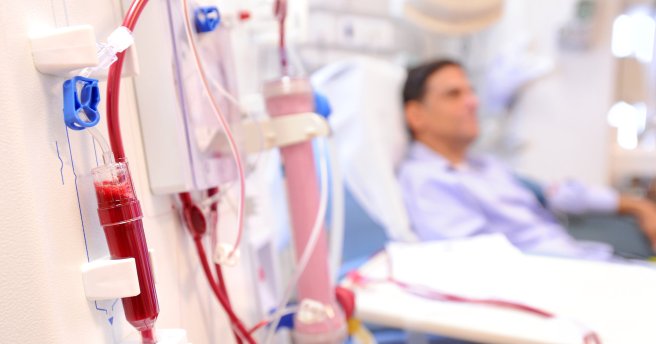
Blood transfusions save lifes. Source: New York Times

The average adult human carries approx. 10 pints (about 6 litres) of blood in his body. So much blood, that we actually have an excess – we can survive with a little less. And this allows us to donate blood to blood banks on a regular basis (approx. every 8 weeks). Roughly 1 pint can be given during each blood donation and our bodies will have no trouble replacing it all.

These donations can be used in blood transfusions, replacing blood that has been lost via accident or during surgical procedures. It may surprise you that blood transfusion (from human to human) has been practised for some time. The very first blood transfusion was performed by an obstetrician named Dr. James Blundell in the late 1820’s.

dr

Dr. James Blundell. Source: Wikpedia

The exact date of that first procedure is the subject of debate, but Blundell wrote up his experience in the journal Lancet in 1829:
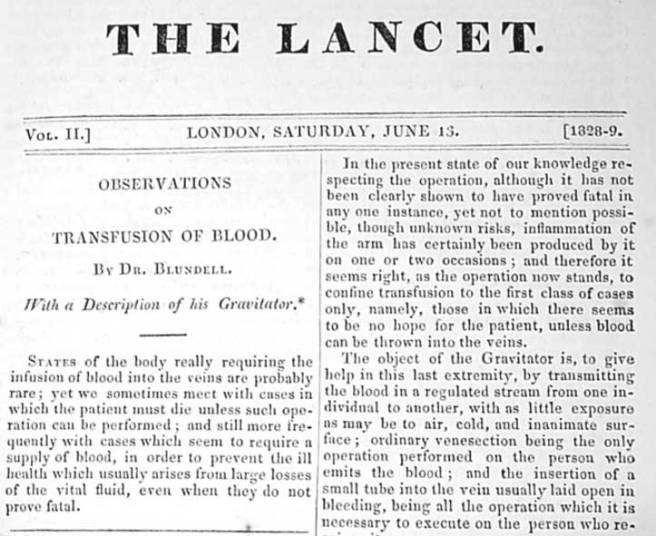
lancet

Blundell’s article in the journal Lancet. Source: Wikipedia

Since that time, blood transfusions have gradually become an everyday occurrence at hospitals all over the world. And as we suggested above a lot of blood is used on a daily basis, keeping people alive. Determining whether each donation of blood is safe to use is obviously a critical step in this process, and all donated blood is tested for HIV, hepatitis B and C, syphilis and other infectious diseases before it is released to hospitals. But for a long time there has been a lingering concern that not everything is being detected and filtered out.

In fact there has been a serious concern that some neurodegenerative conditions like Alzheimer’s and Parkinson’s disease may be transmissible. If these diseases are being caused by ‘prion-like behaviour’ from the particular proteins involved with these conditions (eg. beta amyloid and alpha synuclein, respectively), then there is a very real possibility that such rogue proteins could be transferred via blood transfusions.

This was a concern (note the past tense) until July of this year when this research report was published (with a rather mis-leading title):

transmissiontitle

Title: Transmission of neurodegenerative disorders through blood transfusion. A cohort study
Authors: Edgren G, Hjalgrim H, Rostgaard K, Lambert P, Wikman A, Norda R, Titlestad KE, Erikstrup C, Ullum H, Melbye M, Busch MP, Nyrén O.
Journal: Ann Intern Med. 2016 Sep 6;165(5):316-24.
PMID: 27368068

The researchers in this study took all of the data from the enormous nationwide registers of blood transfusions in Sweden and Denmark – collectively almost 1.5 million people have received transfusions in these two countries between 1968 and 2012 – and compared the medical records of the recipients to those of the donors (you have to love the Scandinavians for the medical databases!). Approximately 3% of the recipients received a blood transfusion from a donor who was diagnosed with one of the neurodegenerative diseases included in this study (Alzheimer’s, Parkinson’s and Motor neurone disease (or Amyotrophic lateral sclerosis – ALS). There was absolutely no evidence of transmission of any of these diseases.

For the statistic lovers amongst you, the hazard ratio for dementia in recipients of blood from donors with dementia versus recipients of blood from healthy donors was 1.04 (95% CI, 0.99 to 1.09). Estimates for individual diseases, Alzheimer disease and Parkinson disease were 0.99 (CI, 0.85 to 1.15) and 0.94 (CI, 0.78 to 1.14), respectively.

These statistics mean that if Parkinson’s disease is being transmitted via a blood transfusion, it is an extremely rare event.

So what does this mean for our understanding of Parkinson’s disease?

Well, we already know that you can’t catch Parkinson’s disease from your spouse (Click here to read more on this) and there is a lot of other evidence to suggest that Parkinson’s disease is not contagious (Click here to read more on this). So this is one less thing for carers, family members and friends to worry about.

But if Parkinson’s disease is not caused by some contagious agent, this knowledge has major implications for our understanding of the disease. Previous lab-based research has pointed toward a ‘Prion’-like nature to alpha synuclein (the protein most associated with Parkinson’s disease. Prions being small infectious agents made up entirely of protein material, that can lead to disease that is similar to viral infection. And researchers actually found that if you inject specific types of alpha synuclein into the muscles of mice, those animals would start to develop cell loss in the brain (Click here to read more about this).

If Parkinson’s disease is a ‘prion’ condition, then we have to ask one important question: why isn’t it being transmitted via blood transfusion? Alpha synuclein is certainly found in the blood of people with Parkinson’s disease.

It could be that an infectious agent initiated the condition many years ago and it has very slowly been developing (similar to chronic infections resulting from Hepatitis – click here to read more on this).

Research like we have reviewed today may result in a serious re-think of our theory of Parkinson’s disease.


The banner for today’s post was sourced from CampusCluj

The biology of immortality and Parkinson’s disease


live-forever

A research paper was published in the prestigious journal Cell this week that has some people excitedly suggesting that we are one step closer to living longer.

Age is the no. 1 correlate with neurodegenerative conditions like Parkinson’s disease. A better understanding of the ageing process would greatly aid us in understanding these conditions.

In today’s post we will review the research paper in question and discuss what it will mean for Parkinson’s disease.


o-hela-cells-facebook

Henrietta Lacks with her husband David. Source: HuffingtonPost

The lady in this photo is basically immortal.

Henrietta Lacks was an African American woman who died in October, 1951, but (it could be argued) lives in almost every research institute in the world. Henrietta died with cervical cancer, and during her treatment, she had a (unethical) biopsy conducted on her tumor which give rise to the first human immortalised cell line that is named after her: Hela cells (Henrietta Lacks).

And I kid you not when I say that there are samples of Hela cells in a freezer in almost every research institute in the world. Since the 1950s, scientists have grown 20 tons (and counting) of her cells (Source). And some of our greatest advances have been made with Hela cells, for example in 1954, Jonas Salk used HeLa cells in his research to develop the polio vaccine.

Unwittingly, Henrietta achieved immortality.

tumblr_lyubehxk1h1qfcyz0o1_1280

Hercules fighting off death. Source: ProactionaryTranshumanist

We humans have a strange fascination with immortality. It could be argued that it underlies our religions, and also drives us to achieve great things during our live times.

During the last three decades, science has begun probing the biology of ageing with the goal of helping us to understand how and why our bodies degrade over time in the hope that it will lead to better treatments for disease that predominantly affect the elderly.

Last week research groups from Spain and the Salk institute in California published the results of a study that may be considered the first tentative steps towards actually extending life and perhaps reversing the ageing process.

This is the article:

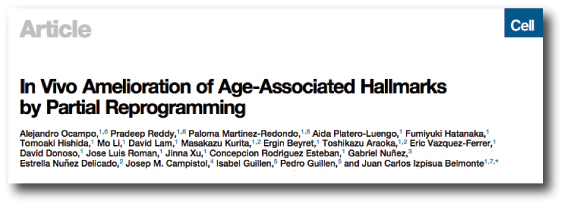
cell-title-5

Title: In Vivo Amelioration of Age-Associated Hallmarks by Partial Reprogramming.
Authors: Ocampo A, Reddy P, Martinez-Redondo P, Platero-Luengo A, Hatanaka F, Hishida T, Li M, Lam D, Kurita M, Beyret E, Araoka T, Vazquez-Ferrer E, Donoso D, Roman JL, Xu J, Rodriguez Esteban C, Nuñez G, Nuñez Delicado E, Campistol JM, Guillen I, Guillen P, Izpisua Belmonte JC.
Journal: Cell. 2016 Dec 15;167(7):1719-1733.
PMID: 27984723

In their study, the researchers used something called the ‘Yamanaka factors’ to try and reverse the ageing process in mice.

What are the Yamanaka factors?

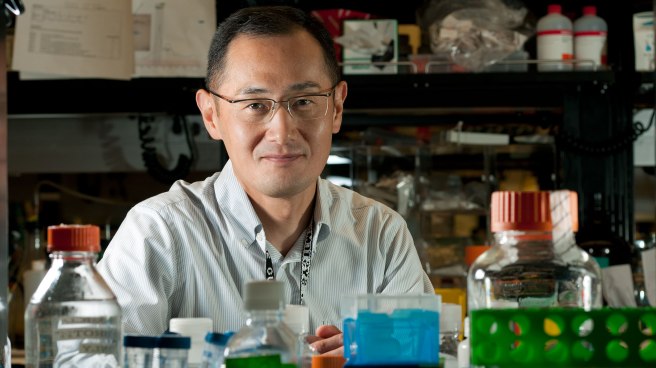
This is Prof Shinya Yamanaka:

yamanaka-s

Source: Glastone Institute

He’s a dude.

In 2012 he and Prof John Gurdon (University of Cambridge) were awarded the Nobel prize for Physiology and Medicine for the discovery that mature cells can be converted back to stem cells. Prof Gurdon achieved this feat by transplanting a young nucleus into an old cell, while Prof Yamanaka did the same thing with the ‘Yamanaka factors’.

The Yamanaka factors are a set of 4 genes (named Myc, Oct3/4, Sox2 and Klf4) that when turned on in a mature cells (like a skin cell) can force the cell to ‘de-differentiate’ back into an immature cell that is capable of becoming any kind of cell. This induced un-programmed state means that the once adult cell has changed into something similar to an embryonic stem cell.

This new cell is called an induced pluripotent stem (IPS) cell – ‘pluripotent’ meaning capable of any fate.

So what did the researchers in the Cell paper do with the Yamanaka factors?

150206-mouseresearch-stock

A lab mouse. Source: USNews

They genetically engineered mice that produced the Yamanaka factors in every cell in the body. They could turn on the Yamanaka factors by adding a special chemical to the drinking water of the mice for 2 out of every 7 days.

By turning on the 4 genes in this manner, the researchers found that they could extend the life span of the mice by 30%. In human terms, this would increase the average age of death from the current 80 years to 105 years!

Not only did they not the increase in the life span of the mice, but the researchers also found that the reprogramming of cells improved the regenerative ability of the cells in the aged mice. They even demonstrated this in human cells carrying the Yamanaka factors.

The study is very artificial – the mice and the human cell lines were engineered to produce the Yamanaka factors, which does not happen in normal nature – and we won’t be seeing any clinical trial for this kind of approach anytime soon. But the results will have big implications for the field of neurodegeneration.

Ok, but what has all this got to do with Parkinson’s disease?

Remember that the no. 1 correlate (association) with Parkinson’s disease is age. That is to say, your risk of developing Parkinson’s disease increases with age.

So this begs the question: if we had a better understanding of the ageing process (or even just a concept of what ageing is), could we beat off Parkinson’s disease?

Until the research paper reviewed above was published last week, this was all just silly hypothetical stuff. Now that we can extend the lives of mice by 30%, however, do we need to start actually considering the hypothetical as possible?

Science has brought us along way and provided us with many wonderful things (I would be lost without my Apple ipod). But we are now interesting a strange new world where science is going beyond normal basic biology and this may allow us to reverse what was previously un-negotiable facts. We can argue till the cows come home over the ethics of letting people live longer, but there is tremendous potential to use this technology to deal with the neurodegenerative conditions currently affecting us.

This is all very speculative, but it will be interesting to see where this leads. Stay tuned.


The banner for today’s post was sourced from TechieKids

A brave new world: 21st Century Cures Act

barack-obama-wallpaper-photo-president-images-and-picture-download-black-and-white-232580494

In one of his last acts as President, this week Barrack Obama signed into law the 21st Century Cures Act. Enacted by the 114th United States Congress, the new law will have enormous implications for the American health system and for the Parkinson’s community.

In today’s post we’ll review the new law and what it will mean for Parkinson’s disease.


papyrus_text_fragment_of_hippocratic_oath-_wellcome_l0034090

An early version of the hypocratic oath. Source: Wikipedia

It may surprise you, but contrary to popular belief the phrase “First do no harm” (Latin: Primum non nocere) does not appear in the Hippocratic oath that medical practitioners are suppose to abide to.

Not now, nor in the original form.

The closest we get to it is (Greek) noxamvero et maleficium propulsabo (“I will utterly reject harm and mischief”). Despite this, the basic idea of ‘not doing harm’ has been part of the foundation of medical practise since the oath was first written around the 3rd century BCE.

The idea of ‘doing no harm’, however, presents a double-edge sword for practitioners when they are faced with patients prepared to try anything to cure themselves of a crippling condition. Does the practitioner knowingly consent to allowing a subject to take a treatment that could have negative side-effects or no effect at all?

The example above is provided simply to set the stage for the discussion below. For we are about to embark on a new age when practitioners will potentially be faced with this dilemma on an ever more frequent basis.

capitol-hill-parking

The United States Capitol. Source: SpotHeroBlog

The ‘Science of Parkinson’s’ is politically neutral.

We do, however, investigate proposals and new legislations that will affect the Parkinson’s community, particularly those affecting the research world.

With that said, on the 13th December 2017, President Barrack Obama signed into law one of the most sweeping efforts to provide additional support and funding for health conditions that we have seen for some time. The 21st Century Cures Act (catchy name huh?) is going to have a big impact.

What is in the new law?

The law focuses on cancer, Alzheimer’s disease, opioid addiction, medical devices, access to new drugs, and mental health.

The new law provides $4.8 billion for three of the Obama administration’s key research programs over the next 10 years: Vice President Joe Biden’s cancer moonshot, the BRAIN Initiative, and the Precision Medicine Initiative. It will also give states $1 billion to fight the opioid crisis currently affecting certain areas of the country, and deliver an additional $500 million to the Food and Drug Administration (FDA).

In addition, the ‘Cures’ law will create new databases that will access health records and allow for a greater collection of information focused on certain diseases. Of particular interest to us is the creation of the ‘National Neurological Conditions Surveillance System’ at the Centers for Disease Control and Prevention (CDC), which will collect demographic information on people living with neurological diseases, like Parkinson’s disease.

Critically, the ‘Cures’ law will speed up the regulatory process for getting new treatments and devices approved for the clinic. Currently it can take up to a decade and a billion dollars to get new drugs from the lab bench to the clinic. Patient groups have been lobbying hard for this and they will be very happy with the Act being passed into law.

Who benefits from this new law?

With every new law there are winners and losers:

Winners:

1. Pharmaceutical and Medical Device Companies. The law will give the FDA new authority to request fewer studies from those companies trying to bring new products to the clinic. In theory this should speed up the approval process. Critics worry that this will result in a lowering of standards and bring products to the clinic that haven’t been properly tested (According to disclosures, 58 pharmaceutical companies, 24 device companies and 26 “biotech products and research” companies have spent more than $192 million on lobbying for this new law).

2. Patient groups. As we mentioned above, patient advocacy groups have lobbied very hard for this new law (spending $4.6 million according to disclosures). The law also includes the allowance for more patient input in the drug development and approval process. This aspect alone will be a boost to the clout of such groups.

3.  Health information technology companies. The law urges federal agencies and health providers nationwide to use electronic health records systems and to collect data to enhance research and treatment (the only caveat here is that this section is unfunded by the new law). Computer companies were apparently very keen on this aspect of the new law, however, as they too have been lobbying hard.

We wanted to write that Medical schools and research hospitals may benefit since the law provides $4.8 billion over 10 years in additional funding to the federal government’s main biomedical research organisation, National Institutes of Health (NIH). It should be noted, however, that these funds are not guaranteed and will be subject to annual appropriations. So we’ll hold off stating that research is a winner until this is resolved.

3060032-poster-p-1-overtime

President Obama hard at work. Source: Fastcompany

Losers:

1.  Preventive medicine groups. $3.5 billion — about 30 percent — of the Prevention and Public Health Fund will be cut. This fund was established under ‘Obamacare’ to promote prevention of Alzheimer’s disease, hospital acquired infections, chronic illnesses and other ailments. Obviously certainly things have to be cut in order to fund other aspects of this new law, but this particular cut is going to hurt some affected groups.

2.  The FDA. While the FDA will be given an additional $500 million (through to 2026), this amount is not enough to cover the additional workload resulting from the law. In addition, the agency has been pushing hard for extra funding to deal with deteriorating facilities, but there was nothing to cover this in the new law.

In addition, the FDA has to deal with the renewal of a controversial voucher system which rewards companies that receive approval for new treatments dealing with ‘rare pediatric diseases‘. Upon approval the company will receive a voucher that can be redeemed later and allows the company to receive a priority review of a marketing application for a different product.

3.  Randomised clinical trials. The gold standard for testing the safety and efficacy of new drugs and devices is the randomised clinical trial. The new law, however, directs the FDA to evaluate the use of “real world evidence” for approval of new indications for FDA-approved drugs. This may result in randomised clinical trials will become less important for drug and device approval.

Currently getting a drug or a medical device approved by the FDA and into the clinic, companies have to go through a rigorous screening process, included randomized double-blind clinical trials. With the 21st Century Cures Act, that process will be sped up by allowing the use of anecdotal evidence and observational data to clear a drug for approval. That is to say, patient feedback might be used to help get drugs into the clinic more quickly.

loyalty-drivers-in-the-consumer-healthcare-market

Source: DunnHumby

Getting treatments to the clinic sooner is a good though, right?

Critics of the new law, such as Public Citizen’s Health Research Group, are worried that the new law is relaxing the standards too much. For example they believe the designation of  “breakthrough” devices is too broad, and could lead to clearance of devices that aren’t ready for the market.

Neutral as we are here at the SoPD, we have to agree that there is the potential for real problems here. While we are as desperate as everyone else in the Parkinson’s community for new treatment, we have to be sure that those novel therapies are safe. Any lowering of standards will increase the likelihood of ineffective treatments coming to market.

What does it all mean for Parkinson’s disease?

There are a lot of positives for the Parkinson’s community resulting from this new law:

1.  The development of infrastructure to collect data on neurological diseases to better understand Parkinson’s is a good thing.

As the Micheal J Fox Foundation (MJFF) points out, we currently do not have really accurate information about how many people are living with Parkinson’s disease, let alone where they are located or who they are based on gender, ethnicity, etc. Critical pieces of information might be missing from our understanding of the disease based on the absence of such information.

2.  Extra funding for the Obama administration research initiatives to further our knowledge of the brain and developing individualized treatments is a good thing.

The ‘Cures law’ has allocated $1.5 billion over the next ten years to the NIH for the BRAIN Initiative. This will have benefits for Parkinson’s research. In addition, $30 million has been allocated for clinical research to further the field of regenerative medicine using stem cells.

3.  Speeding up the regulatory process and accounting for ‘real world observations’

The new law will make it easier for companies to bring new treatments to the clinic. Reducing the number of tests, and thus reducing the regulatory cost, may result in pharmaceutical companies being prepared to take more treatments to the FDA for approval.

In addition, the FDA will now be required to take patient perspectives into account in the drug approval process and the new law tasks the agency with creating a framework for collecting patient experience data.

This data will be collected from various sources (patients, family members and caregivers, patient advocacy organizations, disease research foundations, researchers and drug manufacturers), and it will detail a patient’s experience with a disease or therapy, taking into account the impact it has on their lives.

By involving patients/carers/families in this manner, it is hoped that government regulators will be more in touch with the community’s experiences and priorities as new drugs and devices enter late-stage clinical testing and move toward FDA approval.

What does it all mean?

It will be interesting to see how this new law impacts medical regulators globally. The US FDA is already considered to be a ‘fast mover’ when compared with other regulatory bodies. Whether these international counterpart will follow suit will be interesting to watch.

Bring treatments to market quicker, having more information regarding disease, and having a more patient-centric approach are all good aspects to this new law. As we have suggested above, however, there will be new potential for the system to be abused. Profit motivated companies will naturally look to game this new law to get their products to market.

And this may well result in medical practitioners being confronted by that double-edged sword dilemma we discussed at the start of this post. For now, all we can really so is sit back and see what happens.

If we thought 2016 was full of surprises, we can only imagine what 2017 will bring!


The banner for today’s post was sourced from Fanshare

Get more EGCG. Drink green tea.

green-tea-leaves

We have previously written about the benefits of drinking coffee in reducing one’s chances of developing Parkinson’s disease (Click here for that post). Today, however, we shift our attention to another popular beverage: Tea.

Green tea in particular. Why? Because of a secret ingredient called  Epigallocatechin Gallate (or EGCG).

Today’s post will discuss why EGCG may be of great importance to Parkinson’s disease.


cup and teapot of linden tea and flowers isolated on white

Anyone fancy a cuppa? Source: Expertrain

INTERESTING FACT: after water, tea is the most widely consumed drink in the world.

In the United Kingdom only, over 165 million cups of tea were drunk per day in 2014 – that’s a staggering 62 billion cups per year. Globally 70 per cent of the world’s population (over the age of 10) drank a cup of tea yesterday.

Tea is derived from cured leaves of the Camellia sinensis, an evergreen shrub native to Asia.

800px-csinensis

The leaves of  Camellia sinensis. Source: Wikipedia

There are two major varieties of Camellia sinensis: sinensis (which is used for Chinese teas) and assamica (used in Indian Assam teas). All versions of tea (White tea, yellow tea, green tea, etc) can be made from either variety, the difference is in the processing of the leaves.

800px-teaprocessing-svg

The processing of different teas. Source: Wikipedia

There are at least six different types of tea based on the way the leaves are processed:

  • White: wilted and unoxidized;
  • Yellow: unwilted and unoxidized but allowed to yellow;
  • Green: unwilted and unoxidized;
  • Oolong: wilted, bruised, and partially oxidized;
  • Black: wilted, sometimes crushed, and fully oxidized; (called “red tea” in Chinese culture);
  • Post-fermented: green tea that has been allowed to ferment/compost (“black tea” in Chinese culture).

(Source: Wikipedia)

More than 75% of all tea produced in this world is considered black tea, 20% is green tea, and the rest is made up of white, Oolong and yellow tea.

What is the difference between Green tea and Black tea?

Green tea is made from Camellia sinensis leaves that are largely unwilted and heated through steaming (Japanese style) or pan-firing (Chinese style), which halts oxidation so the leaves retain their color and fresh flavor. Black tea leaves, on the other hand, are harvested, wilted and allowed to oxidize before being dried. The oxidation process causes the leaves to turn progressively darker.

So what does green tea have to do with Parkinson’s disease?

In 2006,this research paper was published:

egcg-1-title

Title: Small molecule inhibitors of alpha-synuclein filament assembly
Authors: Masuda M, Suzuki N, Taniguchi S, Oikawa T, Nonaka T, Iwatsubo T, Hisanaga S, Goedert M, Hasegawa M.
Journal: Biochemistry. 2006 May 16;45(19):6085-94.
PMID:16681381

In this study, the researchers tested 79 different chemical compounds for their ability to inhibit the assembly of alpha-synuclein into fibrils. They found several compounds of interest, but one of them in particular stood out: Epigallocatechin Gallate or EGCG

imgf000007_0001

The chemical structure of EGCG. Source: GooglePatents

Now, before we delve into what exactly EGCG is, let’s take a step back and look at what is meant by the “assembly of alpha-synuclein into fibrils” (???).

Alpha Synuclein

We have previously written a lot about alpha synuclein (click here for our primer page). It is a protein that has been closely associated with Parkinson’s disease for some time now. People with mutations in the alpha synuclein gene are more vulnerable to developing Parkinson’s disease, and the alpha synuclein protein is found in the dense circular clumps called Lewy bodies that are found in the brains of people with Parkinson’s disease.

Fig2_v1c

A lewy body (brown with a black arrow) inside a cell. Source: Cure Dementia

What role alpha synuclein plays in Parkinson’s disease and how it ends up in Lewy bodies is the subject of much research and debate. Many researchers, however, believe that it all depends on how alpha synuclein ‘folds’.

The misfolding of alpha synuclein

When a protein is produced (by stringing together amino acids in a specific order set out by RNA), it will then be folded into a functional shape that do a particular job.

Alpha synuclein is slightly different in this respect. It is normally referred as a ‘natively unfolded protein’, in that is does not have a defined structure. Alone, it will look like this:

PBB_Protein_SNCA_image

Alpha synuclein. Source: Wikipedia

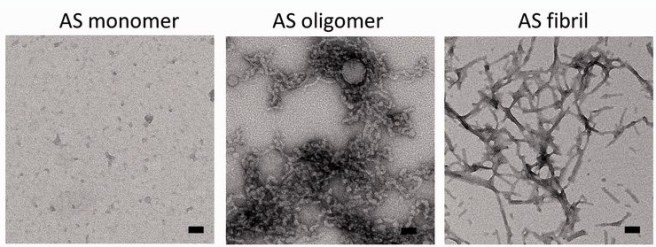
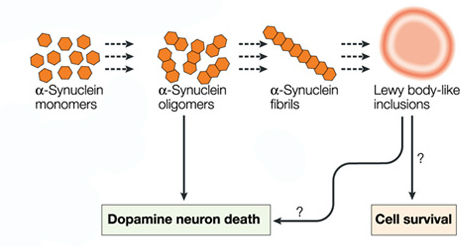
By itself, alpha synuclein is considered a monomer, or a single molecule that will bind to other molecules to form an oligomer (a collection of a certain number of monomers in a specific structure). In Parkinson’s disease, alpha-synuclein also aggregates to form what are called ‘fibrils’.

as-oligos

Microscopic images of Monomers, oligomers and fibrils. Source: Brain

Oligomer versions of alpha-synuclein are emerging as having a key role in Parkinson’s disease. They lead to the generation of fibrils and may cause damage by themselves.

oligomers

Source: Nature

It is believed that the oligomer versions of alpha-synuclein is being passed between cells – and this is how the disease may be progressing – and forming Lewy bodies in each cells as the condition spreads.

For this reason, researchers have been looking for agents that can block the production of alpha synuclein fibrils and stabilize monomers of alpha synuclein.

And now we can return to EGCG.

What is EGCG?

Epigallocatechin Gallate is a powerful antioxidant. It has been associated with positive effects in the treatment of cancers (Click here for more on that).

And as the study mentioned near the top of this blog suggested, EGCG is also remarkably good at blocking the production of alpha synuclein fibrils and stabilizing monomers of alpha synuclein. If the alpha synuclein theory of Parkinson’s disease is correct, then EGCG could be the perfect treatment.

f6-large

EGCG blocks the formation of oligomers. Source: Essays in Biochemistry

And there have been many studies replicating this effect:

n

Title: EGCG remodels mature alpha-synuclein and amyloid-beta fibrils and reduces cellular toxicity
Authors: Bieschke J, Russ J, Friedrich RP, Ehrnhoefer DE, Wobst H, Neugebauer K, Wanker EE.
Journal: Proc Natl Acad Sci U S A. 2010 Apr 27;107(17):7710-5. doi: 10.1073/pnas.0910723107.
PMID: 20385841            (This article is OPEN ACCESS if you would like to read it)

In this particular study, the researchers found that EGCG has the ability to not only block the formation of of alpha synuclein fibrils and stabilize monomers of alpha synuclein, but it can also bind to alpha synuclein fibrils and restructure them into the safe form of aggregated monomers.

And again, what has Green tea got to do with Parkinson’s disease?

Green tea is FULL of EGCG.

In the production of Green tea, the picked leaves are not fermented, and as a result they do not go through the process of oxidation that black tea undergoes. This leaves green tea extremely rich in the EGCG, and black tea almost completely void of EGCG. Green tea is also superior to black tea in the quality and quantity of other antioxidants.

What clinical studies have been done on EGCG and Parkinson’s disease?

Two large studies have looked at whether tea drinking can lower the risk of Parkinson’s disease. Both studies found that black tea is associated with a reduced risk of Parkinson’s disease, but one of the studies found that drinking green tea had no effect (Click here and here for more on this). Now the positive effect of black tea is believed to be associated with the high level of caffeine, which is a confounding variable in these studies. Even Green tea has some caffeine in it – approximately half the levels of caffeine compared to black tea.

The levels of EGCG in these studies were not determined and we are yet to see a proper clinical trial of EGCG in Parkinson’s disease. EGCG has been clinically tested in humans (Click here for more on that), so it seems to be safe. And there is an uncompleted clinical trial of EGCG in Huntington’s disease (Click here for more) which we will be curious to see the results of.

So what does it all mean?

Number 1.

It means that if the alpha-synuclein theory of Parkinson’s disease is correct, then more research should be done on EGCG. Specifically a double-blind clinical trial looking at the efficacy of this antioxidant in slowing down the condition.

Number 2.

It means that I now drink a lot of green tea.

Usually mint flavoured (either Teapigs or Twinnings – please note: SoPD is not a paid sponsor of these products, though some free samples would be appreciated!).

It’s very nice. Have a try.


The banner for today’s post was sourced from WeightLossExperts

Something different – Government funding for Parkinson’s research

160518-trump-portrait-jsw-145p_1c226e6636be4572928409c157f0d50a-nbcnews-ux-2880-1000

Here at SoPD we try to remain politically neutral.

That said, we do have a vested interest when it comes to political events and their impact on government research funding for Parkinson’s disease (or simply medical research in general).

In the wake of the recent BREXIT vote in the UK and the poll-defining victory of Mr Donald Trump in the US presidential elections, there have been many in the research community who are expressing concerns about the future of research funding.

In this post we thought it would be interesting to have a look at US and UK Government research funding and where things may be heading after the election of Mr Trump and the BREXIT vote.


screen-shot-2015-07-06-at-3-55-51-pm

US Federal R&D spending over time. Source: Business insider

What is the current situation for federal research funding in the USA?

According to the American Association for the Advancement of Science (AAAS), the US federal government appropriates almost $140 billion per year to research and development. That is a remarkably big number (it is more than the entire GDP of Hungary!).

The grandeur of this number, however, hides a disturbing fact. That $140 billion is down from a 2010 peak of about $160 billion (in constant dollars – inflation adjusted). And this reduction in funding has had trickle down effects.

nih-ebola-care

The NIH headquarters in Maryland, USA. Source: NPR

The National Institute for Health (NIH) is one of the largest funders of medical research in the world. In 2015 it had a budget of $31,381 million. More than 83 percent of their budget goes to more than 300,000 research personnel at over 3,000 universities, medical schools, and other research institutions in the USA and around the world (Source: NIH). Few other research funding institutions wield the kind of power that the NIH has.

Again, however, the impressive numbers hides a secret.

factsheet_restore-nih-funding-graph1

NIH funding from 2003 – 2015. Source: FASEB

As displayed in the graph above, from 2003 to 2015, NIH funding from the US government dropped by 22% of its capacity to fund research due to budget cuts, sequestration, and inflationary losses.

In very real terms, medical research funding from the US federal Government has been falling – and this started long before the global financial crisis.

What is the current situation for Government research funding in the UK?

uk-funding-1


Research funding in the UK. Source: Keith’s Blog

The UK spends approximately £25bn per year on research.While not as impressive as our cousins across the pond, that number is still a large chunk of change. Approximately 1/3 (£7.98bn) comes from the UK Government. And again that sounds like a lot of money, but here is the terrible truth of the matter:

gerd-gdp-g8-uk-time-series-1-0

Science research funding as a % of GDP. Source: Scienceogram

At a time where the population is ageing and requiring more assistance due to conditions like Parkinson’s disease, we are spending less (based on GDP) on research than most of our neighbours. Yes, we are still recovering for the global economic crisis (9 years and counting, dear bankers), but the trend for the UK in the graph above is of some concern. Especially when you consider that back in the 1980s the UK was spending over 2% of GDP on research:

uk-funding2

The difference in % of GDP spent on research between 1985 and 2007. Source: Keith’s Blog

For academic research, there are seven Research Councils that receive funding from the Government’s Science Budget. Each year, they invest around £3 billion in research, covering the full spectrum of academic disciplines. This arrangement may change shortly, with all of the seven councils coming together under one umbrella: Research UK (but that is an entirely different controversy – click here for more on this).

A total investment of £26.3 billion has been planned by the Government between 2016/17 to 2020/21 (Source: Gov.uk), but this may well change in the wake of BREXIT. All eyes in the UK are focused on the Autumn budget statement on Wednesday 23 November. This will be the first confirmation from Theresa May’s government as to their stance on research funding.

In addition to Government funding of research, the UK research community has benefitted considerably from belonging to the EU. Between 2007 to 2013, the UK contributed nearly £4.3bn towards EU research projects, BUT it received nearly £7bn back over the same period. That £2.7bn excess was equivalent to more than £400m in research funds a year. By leaving the EU, this enormous stream of funding is now in jeopardy.

screen-shot-2015-12-04-at-23-48-31

The UK is the leading country in terms of number of projects won from Horizon 2020. Source: LSE

We remain fully paid-up members of Horizon 2020, the EU’s eighth Framework Programme for funding research and innovation, and as the graph above shows we are one of the most successful countries in the EU with regards to projects being awarded funding. The Horizon 2020 scheme has a total budget of just over €70 billion for funding research until 2020. But beyond that…

Critically for researchers, the lack of clarity in the UK position with the EU leaves the potential for international collaborations up in the air.

So what is the outlook for the US?

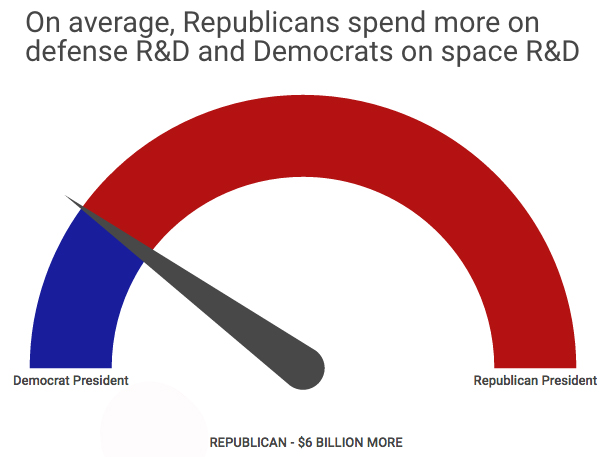
The good news is that historically new Republicans presidents generally spend more on research than democrats:

spending

New president spending on research. Source: ChicagoPolicyReview

The bad news is that much of that increase is predominantly on the defence research side of things (Click here to read more on this – the original study).

Mr Trump has given little indication regarding his thoughts on research funding. And it is difficult to get any real sense of where things may be going based on the mass media news outlets, which seem to be more interested in scandal rather than in depth investigative journalism.

Mr Trump has been quoted as saying:

“Though there are increasing demands to curtail spending and to balance the federal budget, we must make the commitment to invest in science, engineering, healthcare, and other areas that will make the lives of Americans better, safer and more prosperous. We must have programs such as a viable space program and institutional research that serve as incubators to innovation and the advancement of science and engineering in a number of fields.”

Adding, however:

“In a time of limited resources, one must ensure that the nation is getting the greatest bang for the buck. We cannot simply throw money at these institutions and assume that the nation will be well served.”

Source: Science Debate

Mr Trump appears to be intent on bringing the US federal deficit under control. But he has also indicated plans for cutting taxes (for all incomes), eliminating the estate tax, and providing a significant child care credit. He believes that the increased economic activity resulting from these cuts would counteract that drop in tax income. Such policies do not bode well for research funding (an easy section of the budget to reduce).

With regards to neurodegeneration research, during the election campaign Mr Trump told a New Hampshire audience that Alzheimer’s was a “total top priority” for him. So there may be some hope there for closely associated Parkinson’s disease (we can hope).

We will simply have to wait and see.

And what is the outlook for the UK?

102062659-michael-gove-boris-johnson-news-large_trans8ggg0gzk0f59bimaaxphm1qww6y2ttza-x-lcnios7a

The winning team in the BREXIT vote. Source: Telegraph

The UK’s public finances have worsened by approximately £25 billion since the March Budget (source: Independent), with the impact of the BREXIT vote apparently being a major contributing factor. This hole in the finances is going to require the Government to borrow more and spend less, which may well impact research funding in the up coming Autumn budget statement. And the Autumn statement is causing very real concerns for many in the research community (Click here for a recent editorial in the journal Nature).

To counter any reduction in the levels of Government research funding, incentives could be put in place for commercial/industrial resources to step in. The pharmaceuticals industry accounts for 48% of all corporate research funding in the UK, and much of this funding is at the University research institute level.

With regards to the huge pot of EU funding that could be lost, the UK could ‘buy-back’ into the EU research programmes as an ‘Associated Member’. But this approach would have several major drawbacks:

  • No political say into the formation and direction of future research funding programmes.
  • A 12% contribution of funds requirement for just a 16% gain of competitive funds.
  • Any changes to UK immigration policies at any stage would cause major disruption to future programmes.

Obviously clarity is required. We will wait to see what the Autumn statement brings.


EDITORIAL NOTE: I have tried to remain unbiased here, ignoring much of the negative comments in the media regarding Mr Trump’s proposed policies and the BREXIT related scaremongering in the UK. It is however difficult to sort through the mess and differentiate fact from opinion. This post was never intended to be a post, just a personal investigation of the state of play in research funding for Parkinson’s disease. But I decided to share it here for general interest (and I hope it was of interest). It is a very serious matter.


The banner for today’s post was sourced from Lucas Jackson/Reuters

Inhaling L-dopa

inhaled1

For more than 50 years, L-dopa (a critical ingredient used by the brain to produce the chemical dopamine) has been one of the primary therapies used in the treatment of Parkinson’s disease. Over those years, there have been several different versions of L-dopa, providing advantages over previous forms. Last week, the results of clinical trials involving a new inhalable version of L-dopa were published.

In this post we will review the results of those studies.


inhalers-56a1c9d85f9b58b7d0c2a735

Inhalers. Source: Verywell

The motor features (a resting tremor in one of the limbs, slowness of movement, and rigidity in the limbs) of Parkinson’s disease begin to appear when most of the dopamine producing neurons in the brain have been lost (specifically, >60% of the midbrain dopamine neurons). Thus for the last 50 years the primary means of treating Parkinson’s disease has been via dopamine replacement therapies.

Why don’t we just inject people with dopamine?

The chemical dopamine has a very difficult time crossing the blood-brain barrier, which is a thick membrane surrounding the brain. This barrier protects the brain from unwanted undesirables (think toxic chemicals), but it also blocks the transfer of some chemicals that exert a positive impact (such as dopamine).

When dopamine is blocked from entering the brain, other enzymes can convert it into another chemical called ‘norepinephrine’ (or epinephrine) and this conversion can cause serious side effects in blood pressure and glucose metabolism.

In addition, any dopamine that does find its way into the brain is very quickly broken down by enzymes. Thus, the amount of time that dopamine has to act is reduced, resulting in a very limited outcome. And these reasons are why doctors turned to L-dopa instead of dopamine in the treatment of Parkinson’s disease.

What is L-dopa?

Basically, Levodopa (L-dopa) is a chemical intermediary in the production of dopamine. That is to say, you need L-dopa to make dopamine. L-dopa is very stable inside the body and crosses the blood-brain-barrier very easily.

In the UK, a commonly used version is known as  ‘Sinemet®‘(produced by Merck).

l-dopa_vzorec-svg

The chemical structure of L-dopa. Source: Wikipedia

The best way to understand what L-dopa is probably be to explain the history of this remarkable chemical.

The history of L-dopa

Until the 1950s there were few treatment options for Parkinson’s disease, but a young scientist in Sweden was about to change that.

This is Arvid Carlsson.

Win 1113

Prof Arvid Carlsson. Source: Alchetron

He’s a dude.

In 1957, he discovered that when he injected the brains of rabbits with a neurotoxin (reserpine) it killed the dopamine neurons (and the animals exhibited reduced movement). He also discovered that by injecting the dopamine precursor –L-dopa – into those same animals, he was able to rescue their motor ability. Importantly, he found that the serotonin precursor (called 5-hydroxytryptophan) was not capable of reversing the reduction in motor ability, indicating that the effect was specific to L-dopa.

Here is the 1957 report:

avid

Title: 3,4-Dihydroxyphenylalanine and 5-hydroxytryptophan as reserpine antagonists.
Authors: Carlsson A, Lindqvist M, Magnusson T.
Journal: Nature. 1957 Nov 30;180(4596):1200. No abstract available.
PMID: 13483658       (the article on the Nature website – access required)

This was a fantastic discovery. A Nobel prize winning discovery in fact.

But what to do with it?

At the time, we did not know that dopamine was depleted in Parkinson’s disease. And people with Parkinson’s continued to suffer.

It was not until 1960 that the critical discovery of Parkinson’s disease was made by another young European scientist. Carlsson’s research (and that of others) inspired the Austrian researcher, Oleh Hornykiewicz to look at dopamine levels in people with Parkinson’s disease.

And what he found changed everything.

wi_17_olehhornykiewicz_01

Prof Oleh Hornykiewicz. Source: Kurienwissenschaftundkunst

In his study, Hornykiewicz found very high levels of dopamine in the basal ganglia of normal postmortem adult brains, but a marked and consistent reduction (approx. 10-fold) in six postmortem cases of Parkinsonisms. The basal ganglia is one of the main regions of the brain that dopamine neurons communicate with (releasing dopamine there).


oleh

Title: Distribution of noradrenaline and dopamine (3-hydroxytyramine) in the human brain and their behavior in diseases of the extrapyramidal system
Authors: Ehringer H, Hornykiewicz O.
Journal: Parkinsonism Relat Disord. 1998 Aug;4(2):53-7. No abstract available.
PMID: 18591088

Importantly, Hornykiewicz did not stop there.

In November 1960, Hornykiewicz approached Walther Birkmayer, a doctor at a home for the aged in Vienna, and together they began some clinical trials of L-dopa in July 1961. Birkmayer injected 50 to 150 mg intravenously in saline into 20 volunteers with Parkinsonism. In their report, Birkmayer and Hornykiewicz wrote this regarding the results:

“The effect of a single intravenous injection of l-dopa was, in short, a complete abolition or substantial relief of akinesia. Bedridden patients who were unable to sit up, patients who could not stand up when seated, and patients who when standing could not start walking performed after l-dopa all of these activities with ease. They walked around with normal associated movements, and they could even run and jump. The voiceless, aphonic speech, blurred by palilalia and unclear articulation, became forceful and clear as in a normal person. For short periods of time the people were able to perform motor activities, which could not be prompted to any comparable degree by any other known drug”

Despite their initial excitement, Birkmayer and Hornykiewicz found that the response to L-dopa was very limited in its duration. In addition, subsequent trials by others were not able to achieve similar results, with many failing to see any benefit at all.

And that was when George stepped into the picture.

50396550-1200x800

Dr George Cotzias…and yes, he is holding a brain. Source: New Scientist

Dr George Cotzias was a physician working in New York who became very interested in the use of L-dopa for Parkinson’s disease. And he discovered that by starting with very small doses of L-dopa, given orally every two hours and gradually increasing the dose gradually he was able to stabilize patients on large enough doses to cause a dramatic changes in their symptoms. His studies led ultimately to the Food and Drug Administration (FDA) approving the use of L-dopa for use in PD in 1970. Cotzias and his colleagues were also the first to describe L-dopa–induced dyskinesias.

How does L-dopa work?

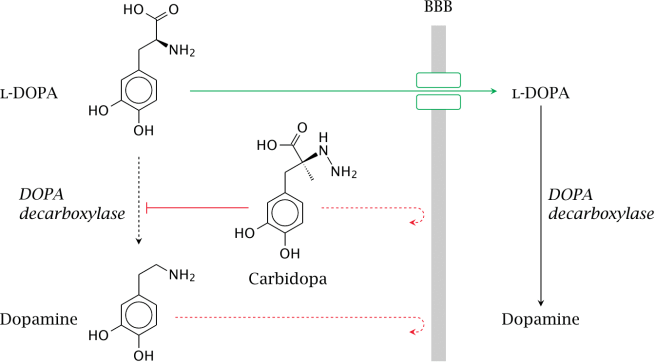
When you take an L-dopa tablet, the chemical will enter your blood. Via your bloodstream, it arrives in the brain where it will be absorbed by cells. Inside the cells, another chemical (called DOPA decarboxylase) then changes it into dopamine. And that dopamine is released, and that helps to alleviate the motor features of Parkinson’s disease.

dopa3pic-668d0

The production of dopamine, using L-dopa. Source: Watcut

Outside the brain, there is a lot of DOPA decarboxylase in other organs of the body, and if this is not blocked then the effect of L-dopa is reduced in the brain, as less L-dopa reaches the brain. To this end, people with Parkinson’s disease are also given Carbidopa (Lodosyn) which inhibits DOPA decarboxylase outside of the brain (Carbidopa does not cross the blood-brain-barrier).

How does the L-dopa inhaler work?

The company behind this new product, Acorda Therapeutics, spent many years developing a powdered version of levodopa that could be delivered to the lungs. Early on in this developmental process the scientists realised a problem: while normal asthma inhalers only need to release micrograms of their medicine to the lungs, a L-dopa inhaler would need to deliver 1,000 times more than that to have any effect. The huge amounts were needed to ensure that enough L-dopa would get from the lungs into the brain to be effective. Thus, the ARCUS inhaler delivers 25 to 50 milligrams in two breaths.

The inhaler contains capsules of L-dopa, which are designed to break open so that the powder can escape. By sucking on the inhaler (see image below), the open capsule starts spinning, releasing the levodopa into the air and subsequently into the lungs.

levodopa-inhaler-lead-658x394

The ARCUS inhalation technology. Source: ParkinsonsLife

Pretty straightforward, right? Nice idea, cool design, easy to use.

But does it work?

What were the results of the clinical trials?

inhaler

Title: Preclinical and clinical assessment of inhaled levodopa for OFF episodes in Parkinson’s disease.
Authors: Lipp MM, Batycky R, Moore J, Leinonen M, Freed MI.
Journal: Sci Transl Med. 2016 Oct 12;8(360):360ra136.
PMID: 27733560     (This article is OPEN ACCESS if you would like to read it)

In their research report, the scientists provided data from three studies: preclinical, phase one clinical, and phase two clinical. In the preclinical work, they measured the levels of L-dopa in dogs who had inhaled levodopa powder. When they looked at blood samples, they found that levodopa levels peaked in all of the animals 2.5 min after administration. This represented a very quick route to the blood system, as dogs that were given levodopa plus carbidopa orally did not exhibit peak blood levodopa levels until 30 min after administration.

In the phase one (safety) clinical trial, 18 healthy persons were enrolled, and again comparisons were made between inhaled CVT-301 and orally administered carbidopa/levodopa. This study demonstrated that CVT-301 was safe and had a similar rapidity of action as in the preclinical dog study.

Next, the researchers conducted a phase two (efficacy) clinical study. This involve 24 people with Parkinson’s disease inhaling CVT-301 as a single 50mg dose during an OFF episode (periods of no prescribed medication). 77% of the CVT-301 treated subjects showed an increase in plasma levodopa within 10 min. By comparison, only 27% of a group of subjects taking oral doses of carbidopa/levodopa at a 25-mg/100-mg dose achieved the same levels within that time. Improvements in timed finger tapping and overall motor function (as measured by the Unified Parkinson’s Disease Rating Scale) were observed between 5 and 15 minutes after administration.

The most common adverse event was cough, but all of the coughing events were considered mild to moderate, generally occurring at the time of inhalation. In most cases, they were resolved rapidly and became less frequent after initial dosing.

So what does it all mean?

Inhalation of L-dopa may represent a novel means of treating people with Parkinson’s disease, especially those who struggle with swallowing pills. The most obvious benefit is the speed with which the subjects see results.

The amount of L-dopa being used is very high, however, and we will be interested to see the results of more long term studies before passing judgement on the inhaler approach. We’ll keep you informed as more information comes to hand.


The banner for today’s post is sourced from the BBC

One year in

happy_birthday

On the 8th September 2015, we kicked this blog off with the goals of:

  • Trying to answer any questions you may have about Parkinson’s disease.
  • Report each week on interesting/exciting research in the world of Parkinson’s disease.
  • Interview Parkinson’s disease researchers, providing a face to the people doing the work.
  • Help you to understand this disease better.

On the first goal, we have fielded many questions and hope that we have provided satisfactory answers (thus far, no complaints). On the second, we are pleased to have published 63 posts over the past year – more than once per week (rather miraculous considering the requirements of work and family). As for interviewing researchers, we have held back on this, but will be looking to initiate something in this next 12 months – it is a question of format rather than availability of interviewees. We are thinking about posting some videos and this may be a better format for readers to meet the researchers behind the science.

On the final goal, well… only you the reader can judge how we are doing in that regard. We hope that we are providing useful information.

Looking forward to another year of Parkinson’s Science!

The team@SoPD


The banner for today’s post was sourced from PlusQuotes


Nilotinib update – new trial delayed

DSK_4634s

It is with great frustration that we read today of the delayed start to the phase 2 clinical trial of the re-purposed cancer drug Nilotinib for Parkinson’s disease (click here for a story outlining the background, and click here for the Michael J Fox Foundation statement).

We have previously  discussed both the preclinical and clinical research regarding Nilotinib and its use in Parkinson’s disease (click here and here for those posts). And the Parkinson’s community certainly got very excited about the findings of the small phase 1 unblinded clinical trial conducted by researchers at Georgetown University in 2015.

With the recent failure of the GDNF trial in Bristol, what the Parkinson’s community (both suffers and researchers alike) needs to do is refocus on moving ahead with exciting new projects, like Nilotinib. To hear that the follow-up trials for Nilotinib, however, will be delayed until 2017 (TWO YEARS after the initial results were announced) due to disagreements regarding the design of the study and who is seemingly in charge of the project, is both baffling and deeply disappointing.

Currently it appears that parties involved in the follow-up clinical trial have decided to go their separate ways, with the researchers at Georgetown University looking to conduct a single site phase 2 study of 75 subjects (if they can access the drug from supplier Novartis), while the Michael J Fox backed consortium will set up a multi-site phase 2 study.

We will continue to follow this situation as it develops and will report events as they happen.

Nilotinib and Parkinson’s disease – an update

2000px-Nilotinib.svg

We have previously discussed news briefings regarding a cancer drug that displayed interesting results in a pilot clinical study of Parkinson’s disease (click here to read that post). Today we will delve more deeply into the results of that particular study and consider what they mean.


DSK_4634s

Nilotinib (Tasigna) from Novartis. Source: William-Jon

In October of last year, at the Society for Neuroscience meeting in Chicago, a presentation of data from a clinical trial got the Parkinson’s community really excited. The study was investigating the effects of a cancer drug called ‘Nilotinib’ (also known as Tasigna) on Parkinson’s disease and the initial results were rather interesting.

The results of the pilot clinical study for Nilotinib were published today in the Journal of Parkinson’s disease:

Nilo-title

Title: Nilotinib Effects in Parkinson’s disease and Dementia with Lewy bodies
Authors: Pagan F, Hebron M, Valadez E, Tores-Yaghi Y,Huang X, Mills R, Wilmarth B, Howard H, Dunn C, Carlson A, Lawler A, Rogers S, Falconer R, Ahn J, Li Z, & Moussa C.
Journal: Journal of Parkinson’s Disease, vol. Preprint
PMID: Yet to be allocated              (This article is OPEN ACCESS if you would like to read it).

The study was setup to determine safety of using Nilotinib in Parkinson’s disease dementia or dementia with Lewy bodies.

What is Nilotinib?

Nilotinib is a drug that can be used to treat a type of leukemia when the other cancer drugs have failed. It was approved for this treating cancer by the FDA in 2007.

The researchers behind the current study believe that Nilotinib works by turning on autophagy – the “garbage disposal machinery” inside brain cells. Autophagy is a process that clears waste and toxic proteins from inside cells, preventing them from accumulating and possibly causing the death of the cell.

Print

The process of autophagy – Source: Wormbook

Waste material inside a cell is collected in membranes that form sacs (called vesicles). These vesicles then bind to another sac (called a lysosome) which contains enzymes that will breakdown and degrade the waste material.

The researchers suggest that Nilotinib may be working in Parkinson’s disease by helping affected cells to better clear away the build up of unnecessary proteins, which helps cells to function more efficiently.

What happened in the clinical study?

Twelve people with either Parkinson’s disease dementia or dementia with Lewy bodies were randomized given either 150 mg (n = 5) or 300 mg (n = 7) daily doses of Nilotinib for 24 weeks. After the treatment period the subjects were followed up for 12 weeks. All of the subjects were considered to have mid to late stage Parkinson’s features (Hoehn and Yahr stage 3–5). One subject was withdrawn from the study at week 4 due to a heart attack and another discontinued at 5 months due to unrelated circumstances.

An important question in the study was whether Nilotinib could actually enter the brain. Various tests conducted on the subjects suggesting that the drug had no problem crossing the ‘blood brain barrier‘ and having an effect in the brain. The levels of Nilotinib in the brain peaked at 2 hrs after taking the drug and the levels of the target protein (called p-Abl) were reduced by 30% at 1 hr. This level of activity remained stable for several hours.

The motor features of Parkinson’s disease were assessed using the Unified Parkinson’s Disease Rating Scale (UPDRS) and the investigators observed an average decrease of 3.4 points and 3.6 points at six months (week 24) compared to the baseline measures (scores from the start of the study) with 150 mg and 300 mg Nilotinib, respectively. A decrease in motor scores represent a reduction in Parkinson’s motor features.

The really remarkable result, however, comes from the testing of cognitive performance, which was monitored with Mini Mental Status Examination (MMSE). The researchers report an average increase of 3.85 and 3.5 points in MMSE at six months (24-week) compared to baseline, for 150 mg and 300 mg of Nilotinib, respectively. This means that the mental processing of the subjects improved across the study.

The motor and cognitive results were complemented by measures of proteins in blood and cerebrospinal fluid samples taken from the subjects. The researchers saw increases in dopamine related proteins (suggesting that more dopamine was present in the brain) and stabilization of alpha synuclein levels.

The researchers concluded that these observations warrant a larger randomized, double-blind, placebo-controlled trial to truly evaluate the safety and efficacy of Nilotinib.

Here at the SoPD, we are inclined to agree.

So what does all this mean?

The results of the study are very interesting, and the researchers should be congratulated on the outcome (and presentation of all the data in the report). As they themselves acknowledge, the study was open labelled – meaning that everyone in the study knew that they were getting the treatment – so the placebo effect could be at play here.

One intriguing note in the report was that most of the participants in the study ‘experienced increased psychotic symptoms (hallucination, paranoia, agitation) and some dyskinesia whilst on Nilotinib’ suggesting an increase in dopamine levels in the brain.

Obviously a larger, double-blind study is required to determine whether the effect of the drug in Parkinson’s disease is real. The Michael J. Fox Foundation, the Van Andel Research Institute (Michigan, USA) and the Cure Parkinson’s Trust are collaborating on the development program for a double-blind, placebo-controlled clinical trial of nilotinib, which it is hoped will begin in 2017.


The banner for today’s banner was sourced from Wikimedia 

Muhammad Ali (1942-2016)

wOIYJTo

The world today is mourning the passing of the boxing great, Cassius Clay jr (aka Muhammad Ali). He was many different things to many different people – a boxer, an entertainer, a civil rights activist, an anti-war protestor, a philanthropist, a legend – but he was definitely one of the defining figures of the late 20th century.

During the last third of his life, however, he lived with Parkinson’s disease. You will find a great deal written about Ali and his sporting achievements elsewhere on the web, but today’s post here at SoPD will explore his battle with Parkinson’s.


Many famous figures throughout history have been affected by Parkinson’s disease ( Pope John Paul II, Adolf Hitler, Mao Zedong,…), but very few of them have dealt with their condition in the public eye as much as Muhammad Ali.

Ali was first diagnosed with Parkinson’s disease in 1984.

It was in September of that year – just three years into retirement from boxing – that Ali became concerned about tremors, slowness of movement, slurred speech and unexplained fatigue. He travelled with his entourage to New York, and he was evaluated for a week by Dr Stanley Fahn, M.D., a neurologist at Columbia-Presbyterian Medical Center (New York), before Fahn finally gave Ali his diagnosis.

maxresdefault

Dr Stanley Fahn. Source: Youtube

Given his long boxing career, Dr. Fahn suspected that the head trauma inflicted on Ali could be the cause of his condition. In fact, one of the early complaints from Ali was of numbness in his lips and face, which Dr Fahn assumed meant damage to the brain stem – most likely resulting from the boxing.

Neurodegeneration is a serious issue for boxing. Many retired boxers suffer from what is called Dementia pugilistica – a neurodegenerative condition with Alzheimer’s-like dementia. Some estimates suggest that 15-20% of boxers may be affected, with symptoms usually starting 12-16 years after the start of a career in boxing. Some very famous boxers have been diagnosed with this condition, including world champions Floyd Patterson, Joe Louis, Sugar Ray Robinson and boxer/coach Freddie Roach.

In the case of Ali, however, subsequent follow up assessments over many years highlighted the steady progression of his condition, a disease course more indicative of classic Parkinson’s disease. Dr. Fahn admits, however, that – as with all cases of Parkinson’s disease – “the proof is only going to come at his autopsy”.

image-3-for-muhammad-ali-70-pictures-at-70-gallery-443788110

Ali and a young fan. Source: Pinterest

Being diagnosed at 42 years of age basically placed Ali in the ‘young onset’ group of people with Parkinson’s disease. The average age of diagnosis for Parkinson’s disease is 65 years, but 5-10% of the Parkinson’s community is diagnosed at or below the age of 40. And there are many anecdotal bits of evidence to suggest that Ali was possibly affected by the disease before the age of 40. Ali’s trainer, Angelo Dundee, suspected that Ali’s condition was present during the last few years of his boxing. He remembers Ali gradually slowing down and the newspaper reporters having to lean in to hear what Ali was saying during some of the later interviews. Sports Illustrated senior writer William Nack also noted that “You could see back then that he was just not right”. So although Ali was diagnosed at 42 years of age, the condition may have been affecting him much earlier.

Following the diagnosis, Ali stepped away from the public eye. Parkinson’s affected both of Ali’s most defining characteristics: his moves and his voice. It would have been very understandable for a man as proud as Ali to decide to disappear completely while dealing with his condition. A decade later, however, Ali lit the Olympic caldron at the opening ceremonies of the Atlanta Games (1996), and he was rarely out of the public eye. Attending regular events not only in support of Parkinson’s disease, but also in his role of globetrotting ambassador for peace. Within the Parkinson’s community, Ali lent his name to the ‘Muhammad Ali Parkinson Research Center‘ (Phoenix) and also served as an ambassador for Parkinson’s causes.


In writing this post I have learned a great deal about Ali that I did not know. I have also enjoyed watching and re-watching many of the video interviews of Ali on the internet (Michael Parkinson’s ones are particularly good). Beyond everything the man did and the disease that later came to define him, Ali was an amazing character. It is difficult to think of his equal in the modern world of sports (or beyond).

Truly a sad day.

scKebXi

Inspirational words from the man. Source: Wallpapercave


Today’s banner was sourced from Pinterest. And much of the information for this post was sourced from an article written about Ali by the American Academy of Neurology.