Year in review: 2021

# # # #

As with the preceding year, 2021 proved to be challenging due to the continuing COVID-19 pandemic (and it is not over yet). Vaccines were rolled out with remarkable speed, but equally new variants of the virus popped up and have kept Governments and health regulatory bodies on their toes.

An amazing feature of the last two years has been the response to the pandemic from the research community – not only in sequencing novel variants and testing new vaccines – but also in terms of keeping research projects ongoing in other fields of science. Despite everything pandemic-related, there has been significant progress in areas like Parkinson’s research.

In today’s post, we will consider three big Parkinson’s-related research takeaways of 2021 (based on our humble opinions here at the SoPD), and then we will provide an extended overview of some of the important discoveries and pieces of news from the last 12 months (Be warned: this will be a long post).

# # # #


Source: Thecalculatorsite

There are 52.143 weeks in a year, which equates to:

  • 365 sun rises and sunsets
  • Approximately 13.3 lunar orbits (Source)
  • 8 760 hours
  • US$93.86 trillion in global gross domestic production (nominal terms; 194 economies in 2021 – Source)
  • 525 600 minutes
  • 29.2 tons of adenosine triphosphate (ATP) production and recycling (per person – based on an average 80kg individual)
  • 31 622 400 seconds (Source)
  • Approximately 35 million heart beats and  8.4 million breaths

Basically, ample time and resources to do some useful stuff (beyond simply binging “Squid games” on Netflix or playing “candy crunch”).

The face of 2021? Source: Tasteofcinema

The last 52.143 weeks have been particularly challenging in many countries due to the ongoing COVID-19 situation. Despite these ongoing challenges, significant progress has been made in the research surrounding Parkinson’s and other neurodegenerative conditions in 2021.

Below we will discuss three of the main research-related pieces of news for Parkinson’s (as determined by the team here at SoPD HQ), before providing a month-by-month overview of the note worthy events.

The main events in Parkinson’s-related research for 2021

(in no particular order)

Continue reading “Year in review: 2021”

Monthly Research Review – December 2021

# # # #

At the end of each month the SoPD writes a post which provides an overview of some of the major pieces of Parkinson’s-related research that were made available during December 2021.

The post is divided into 10 parts based on the type of research:

# # # #


So, what happened during December 2021?

In world news:

8th December – The Belgian death metal rock band “Omicron” announced that they would not be changing their name despite sharing it with the recent COVID variant. Apparently “all publicity is good publicity” (Source).

14th December – Two Maryland zebras that escaped from a farm in mid-August were finally returned to their herd after almost four months on the run:

14th December – On April 28th, 2021, a small NASA probe the size of a small car called the Parker Solar Probe entered extended the atmosphere of the Sun – known as the corona – and spent 5 hours there – travelling at approximately 100 miles (163 kilometers) per second. On the 14th December, NASA researchers published the first results of that fly-by (Click here to read more about this).

17th December – UK Cabinet Secretary Simon Case recused himself from his one week old role of leading an inquiry into alleged government staff parties during the 2020 lockdown, after it is reported that a similar event was also held in his own office (it would all be comical if not for the fact that these people are actually in charge).

25th December – NASA, ESA, the Canadian Space Agency and the Space Telescope Science Institute successfully launched the $10 billion James Webb Space Telescope.

31st December – the UK finished the year on a new high (remember: every time a virus infects a cell there is the opportunity for variants)

And meanwhile in the more densely populated island of Taiwan:

In the world of Parkinson’s research, a great deal of new research and news was reported:

In December 2021, there were 703 research articles added to the Pubmed website with the tag word “Parkinson’s” attached (11,668 for all of 2021). In addition, there was a wave to news reports regarding various other bits of Parkinson’s research activity (clinical trials, etc).


The top 5 pieces of Parkinson’s news

Continue reading “Monthly Research Review – December 2021”

The terazosin pilot study results

# # # #

Drug repurposing represents a means of rapidly testing and bring novel therapies to the patient. By testing clinically available drugs – that have well characterised safety records in a particular medical condition – one can determine if a certain biological pathway is playing an influential role in another disease.

A good example of this is work currently being done by researchers at the University of Iowa with a drug called terazosin. Terazosin is a treatment used for enlarged prostate issues and high blood pressure, but recent epidemiological data and preclinical work indicates that it may also be useful for Parkinson’s.

Recently the team in Iowa published a report on a small pilot clinical study evaluating the agent in a group of people with Parkinson’s.

In today’s post, we will look at what terazosin does, discuss what the preclinical and epidemiological research suggests, review the results of the pilot study, and discuss what could happen next.

# # # #


Source: Worldtravelguide

There has been a lot of important Parkinson’s research conducted in the state of Iowa.

For example, in addition to producing a quarter of the USA’s corn and 1/3 of America’s pork, Iowa is also the home to a large family known to researchers as the ‘Iowa kindred‘ or ‘Spellman-Muenter kindred‘.

First described by Spellman in 1962, the Iowa kindred has a long history in which generations of the family have been inflicted with severe parkinsonisms (the symptoms/features of PD). In the family tree below, the black diamonds represent individuals with Parkinsonisms:

Source: Researchgate

In 2003, researchers discovered that this family was carrying a multiplication of their alpha synuclein gene:

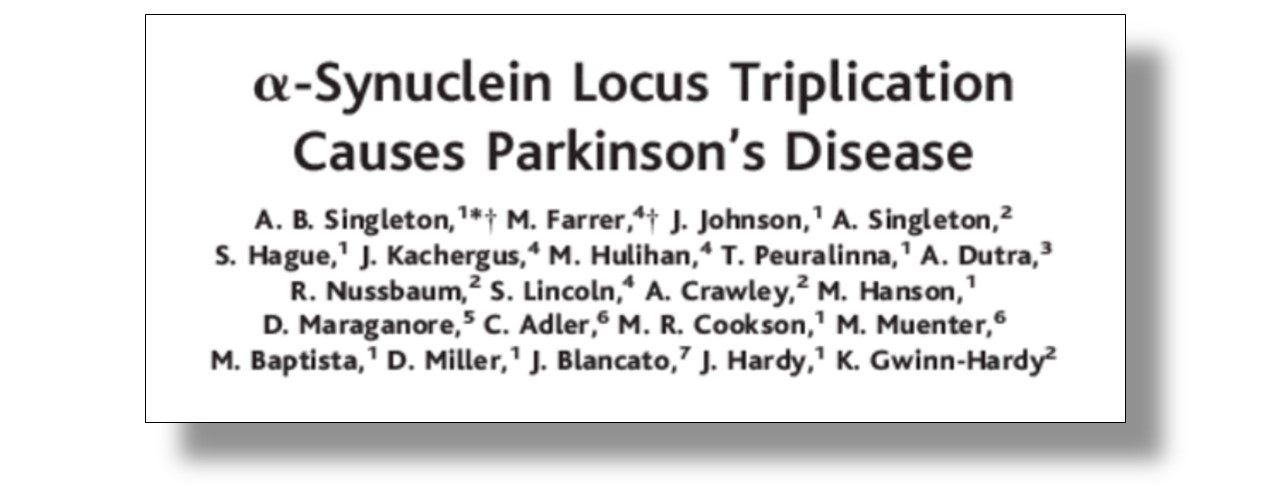
Title: alpha-Synuclein locus triplication causes Parkinson’s disease.
Authors: Singleton AB, Farrer M, Johnson J, Singleton A, Hague S, Kachergus J, Hulihan M, Peuralinna T, Dutra A, Nussbaum R, Lincoln S, Crawley A, Hanson M, Maraganore D, Adler C, Cookson MR, Muenter M, Baptista M, Miller D, Blancato J, Hardy J, Gwinn-Hardy K.
Journal: Science. 2003 Oct 31;302(5646):841.
PMID: 14593171

The publication of this report was an important moment in Parkinson’s research history (Click here to read a SoPD post about the early history of alpha synuclein).

More recently, some researchers at the University of Iowa are hoping to continue this legacy of important Parkinson’s research by investigating the potential of a clinically available drug to slow the progression of Parkinson’s.

Source: Youtube

Which drug are they investigating?

Continue reading “The terazosin pilot study results”

Slow-wave sleep saves synucleinopathy?


# # # #

Good sleep patterns have important implications for all of us in terms of health and well being, but sleep is often disrupted for people with Parkinson’s.

Research suggests that people with Parkinson’s have reduced amounts of slow wave and REM sleep, and increased periods of wakefulness.

A new report has found that increasing levels of slow wave sleep could have beneficial effects in reducing the accumulation of alpha synuclein protein in the brain.

In today’s post, we will discuss what sleep is, how it is affected in Parkinson’s, and what the new research indicates about slow wave sleep.

# # # #


Source: Dlanham

I am a night owl.

One that is extremely reluctant to give up each day to [the waste of precious time that is] sleep. There is always something else that can be done before going to bed. And I can often be found pottering around at 1 or 2am on a week night.

Heck, most of the SoPD posts are written in the wee small hours (hence all of the typos).


Source: Iristech

As a result of this foolish attitude, I am probably one of the many who live in a state of sleep deprivation – I am a little bit nervous about doing the spoon test:

And the true stupidity of my reluctance to adopt a healthy sleep pattern is that I fully understand that sleep is extremely important for our general level of health and well being.

In addition, I am also well aware of an accumulating pool of research that suggests sleep could be influential in the initiation and progression of neurodegenerative conditions, like Parkinson’s.

Wait, how is sleep associated with Parkinson’s?

Continue reading “Slow-wave sleep saves synucleinopathy?”

From wearables to invisibles

# # # #

New technologies that can help us to better understand and track Parkinson’s over time has been a theme here on the SoPD. Such tools could create fantastic opportunities, particularly in the context of clinical trials evaluating new therapies, by providing comparable quantitative measures.

Many of these efforts have focused on wearable technologies that require user input – mostly in the form of actually remembering to put the device on or to manually input data on a regular basis.

More recently, however, some researchers have been investigating ‘invisibles’ rather than ‘wearables’, and the results have been rather remarkable.

In today’s post, we will discuss how WI-FI technology is helping to better assess and measure Parkinson’s, and other medical conditions.

# # # #


Source: Pandasecurity

During the COVID19 pandemic, working from home has largely depended on availability of this strange thing called WI-FI. And as a result this strange thing called WI-FI has become a critical aspect of our daily lives.

The necessity of this strange thing called WI-FI becomes apparent when Zoom or Teams sessions are interrupted by a weak signal from this strange thing called WI-FI.

Source: Highspeedinternet

But what exactly is this strange thing called WI-FI?

It is often said to be short for “Wireless Fidelity“, but it is not.

The generic term “WI-FI” was actually created by the marketing firm Interbrand (Source) because the wireless industry was looking for a more user-friendly name to refer to the not so user-friendly technology known as “IEEE 802.11b Direct Sequence” (Source).

WLAN (or Wireless Local Area Network) was an option, but it didn’t really have a catchy ring to it. In the end, WI-FI – a pun upon the word HI-FI – was selected and the rest is history.

WI-FI refers to the communication standard for the wireless network that has been around since the 1990s. It works as a Local Area Network for electronic devices to operate without using any types of cable or wiring.

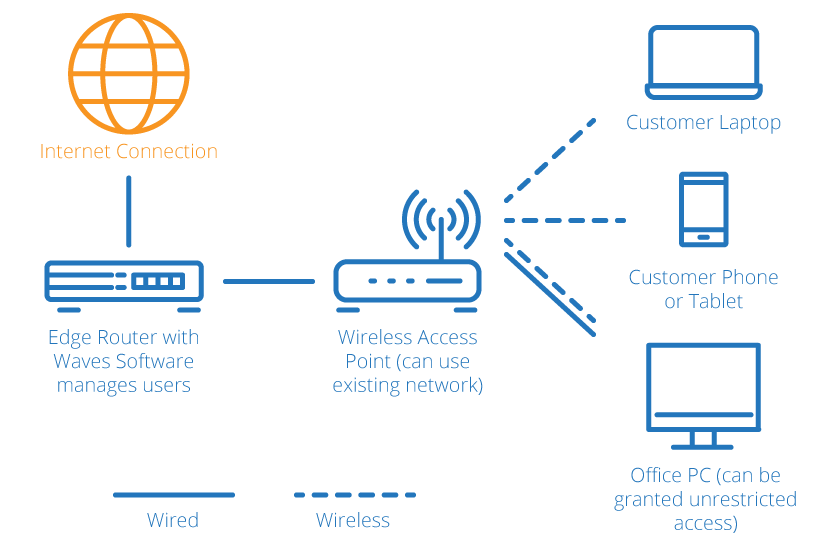
Source: Waveswifi

Most people use it for important tasks, like binge streaming ‘Squid Games’. But recently researchers have found other uses for this strange thing called WI-FI.

Like what?

Continue reading “From wearables to invisibles”

ADepTing to the UCB-Novartis deal

# # # #

Alpha synuclein has long been viewed at “Public enemy #1” by the Parkinson’s research community. This sticky, abundant protein starts to cluster (or aggregate) in Parkinson’s.

There have been several attempts to reduce levels of the protein floating around outside of cells (using “immunotherapy” approaches)

But now clinical research is ramping up to determine if reducing aggregated alpha synuclein levels in the brain could help to slow/stop the progression of the condition.

In today’s post, we will look at three different lines of clinical research focused on small molecule inhibitors of alpha synuclein aggregation. 

# # # #


When someone mentions the pharmaceutical firm Novartis, it feels like the company has been around forever, but it is actually not that old.

It was created in March 1996 via the merger of two Swiss companies: Ciba-Geigy and Sandoz. The roots of those companies can be traced back more than 250 years, but the combined entity is still a spring chicken compared to many of its major competitors.

The name Novartis results from the combination of two words “Nova Artes”, which means new art and innovation in simple forms, but there is little in what the company does that is ‘simple’. A good example of this was their block buster cancer drug Gleevec/Glivec (imatinib) which was developed by careful “rational drug design” for very specific types of cancer.

Source: NCBI

The reputation for Swiss precision seems to flow through this company and they are always making very carefully placed bets.

Which makes their news this week rather interesting.

What news did they have?

Continue reading “ADepTing to the UCB-Novartis deal”

Getting a handle on Miro1

# # # #

Novel therapeutic interventions are being proposed for Parkinson’s on a regular basis, with compelling data supporting their future development.

The case is strengthened when a measure of target engagement is also involved – providing not only a potential therapy but also a biomarker as well.

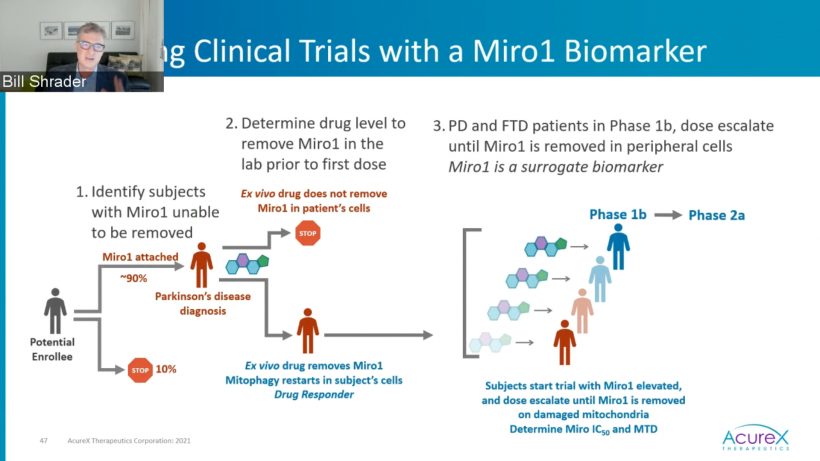
Recently, a biotech company called AcureX Therapeutics has been presenting just such a case, based on a biological mechanism involving the protein Miro1.

In today’s post, we will discuss what Miro1 is and how it might be useful for future clinical trials.

# # # #


Watching the recent Michael J Fox Foundation‘s Progress in the PD Pipeline webinar (Wednesday 10th November, 2021), I was really impressed by the presentation by Dr Bill Shrader (co-founder and CEO/CSO of AcureX Therapeutics)


In particular, I really liked their approach to potential patient selection for future clinical trials of their lead drug candidate. It all revolves around the analysis of Miro1 as a biomarker.

What is Miro1?

Continue reading “Getting a handle on Miro1”