Cholesterol, statins, and Parkinson’s disease

Eraser deleting the word Cholesterol

A new research report looking at the use of cholesterol-reducing drugs and the risk of developing Parkinson’s disease has just been published in the scientific journal Movement disorders.

The results of that study have led to some pretty startling headlines in the media, which have subsequently led to some pretty startled people who are currently taking the medication called statins.

In todays post, we will look at what statins are, what the study found, and discuss what it means for our understanding of Parkinson’s disease.
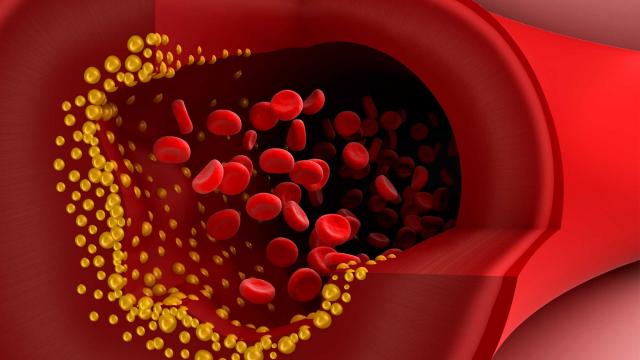

hg475_blood-vessel-cholesterol_fs

Cholesterol forming plaques (yellow) in the lining of arteries. Source: Healthguru

Cholesterol gets a lot of bad press.

Whether it’s high and low, the perfect balance of cholesterol in our blood seems to be critical to our overall health and sense of wellbeing. At least that is what we are constantly being told this by media and medical professionals alike.

But ask yourself this: Why? What exactly is cholesterol?

Good question. What is cholesterol?

Cholesterol (from the Greek ‘chole‘- bile and ‘stereos‘ – solid) is a waxy substance that is circulating our bodies. It is generated by the liver, but it is also found in many foods that we eat (for example, meats and egg yolks).

cholesterol-svg

The chemical structure of Cholesterol. Source: Wikipedia

Cholesterol falls into one of three major classes of lipids – those three classes of lipids being TriglyceridesPhospholipids and Steroids (cholesterol is a steroid). Lipids are major components of the cell membranes and thus very important. Given that the name ‘lipids’ comes from the Greek lipos meaning fat, people often think of lipids simply as fats, but fats more accurately fall into just one class of lipids (Triglycerides).

Like many fats though, cholesterol dose not dissolve in water. As a result, it is transported within the blood system encased in a protein structure called a lipoprotein.
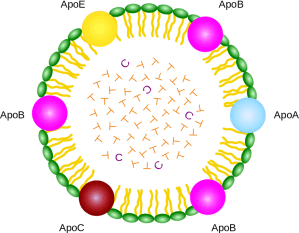
Chylomicron.svg

The structure of a lipoprotein; the purple C inside represents cholesterol. Source: Wikipedia

Lipoproteins have a very simple classification system based on their density:

  • very low density lipoprotein (VLDL)
  • low density lipoprotein (LDL)
  • intermediate density lipoprotein (IDL)
  • high density lipoprotein (HDL).

Now understand that all of these different types of lipoproteins contain cholesterol, but they are carrying it to different locations and this is why some of these are referred to as good and bad.

The first three types of lipoproteins carry newly synthesised cholesterol from the liver to various parts of the body, and thus too much of this activity would be bad as it results in an over supply of cholesterol clogging up different areas, such as the arteries.

LDLs, in particular, carry a lot of cholesterol (with approximately 50% of their contents being cholesterol, compared to only 20-30% in the other lipoproteins), and this is why LDLs are often referred to as ‘bad cholesterol’. High levels of LDLs can result in atherosclerosis (or the build-up of fatty material inside your arteries).

Progressive and painless, atherosclerosis develops as cholesterol silently and slowly accumulates in the wall of the artery, in clumps that are called plaques. White blood cells stream in to digest the LDL cholesterol, but over many years the toxic mess of cholesterol and cells becomes an ever enlarging plaque. If the plaque ever ruptures, it could cause clotting which would lead to a heart attack or stroke.
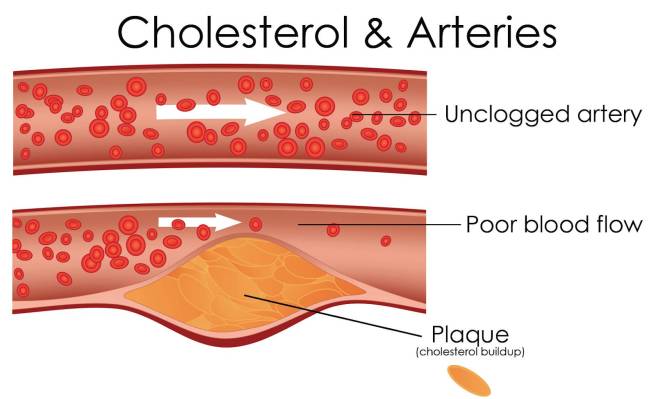
ni2

Source: MichelsonMedical

So yeah, some lipoproteins can be considered bad.

HDLs, on the other hand, collects cholesterol and other lipids from cells around the body and take them back to the liver. And this is why HDLs are sometimes referred to as “good cholesterol” because higher concentrations of HDLs are associated with lower rates of atherosclerosis progression (and hopefully regression).

But why is cholesterol important?

While cholesterol is usually associated with what is floating around in your bloodstream, it is also present (and very necessary) in every cell in your body. It helps to produce cell membranes, hormones, vitamin D, and the bile acids that help you digest fat.

It is particularly important for your brain, which contains approximately 25 percent of the cholesterol in your body. Numerous neurodegenerative conditions are associated with cholesterol disfunction (such as Alzheimer’s disease and Huntington’s disease – Click here for more on this). In addition, low levels of cholesterol is associated with violent behaviour (Click here to read more about this).

Are there any associations between cholesterol and Parkinson’s disease?

The associations between cholesterol and Parkinson’s disease is a topic of much debate. While there have been numerous studies investigating cholesterol levels in blood in people with Parkinson’s disease, the results have not been consistent (Click here for a good review on this topic).

Rather than looking at cholesterol directly, a lot of researchers have chosen to focus on the medication that is used to treat high levels of cholesterol – a class of drugs called statins.

Gao

Title: Prospective study of statin use and risk of Parkinson disease.
Authors: Gao X, Simon KC, Schwarzschild MA, Ascherio A.
Journal: Arch Neurol. 2012 Mar;69(3):380-4.
PMID: 22410446              (This article is OPEN ACCESS if you would like to read it)

In this study the researchers conduced a prospective study involving the medical details of 38 192 men and 90 874 women from two huge US databases: the Nurses’ Health Study (NHS) and the Health Professionals Follow-Up Study (HPFS).

NHS study was started in 1976 when 121,700 female registered nurses (aged 30 to 55 years) completed a mailed questionnaire. They provided an overview of their medical histories and health-related behaviours. The HPFS study was established in 1986, when 51,529 male health professionals (40 to 75 years) responded to a similar questionnaire. Both the NHS and the HPFS send out follow-up questionnaires every 2 years.

By analysing all of that data, the investigators found 644 cases of Parkinson’s disease (338 women and 306 men). They noticed that the risk of Parkinson’s disease was approximately 25% lower among people currently taking statins when compared to people not using statins. And this association was significant in statin users younger than 60 years of age (P = 0.02).

What are statins?

Also known as HMG-CoA reductase inhibitors, statins are a class of drug that inhibits/blocks an enzyme called 3-hydroxy-3-methylglutaryl coenzyme A (HMG-CoA) reductase.

HMG-CoA reductase is the key enzyme regulating the production of cholesterol from mevalonic acid in the liver. By blocking this process statins help lower the total amount of cholesterol available in your bloodstream.

photodune-13199316-generic-pack-of-statins-l

Source: Myelomacrowd

Statins are used to treat hypercholesterolemia (also called dyslipidemia) which is high levels of cholesterol in the blood. And they are one of the most widely prescribed classes of drugs currently available, with approximately 23 percent of adults in the US report using statin medications (Source).

Now, while the study above found an interesting association between statin use and a lower risk of Parkinson’s disease, the other research published on this topic has not been very consistent. In fact, a review in 2009 found a significant associations between statin use and lower risk of Parkinson’s disease was observed in only two out of five prospective studies (Click here to see that review).

New research published this week has attempted to clear up some of that inconsistency, by starting with a huge dataset and digging deep into the numbers.

So what new research has been published?

Statins

Title: Statins may facilitate Parkinson’s disease: Insight gained from a large, national claims database
Authors: Liu GD, Sterling NW, Kong L, Lewis MM, Mailman RB, Chen H, Leslie D, Huang X
Journal: Movement Disorder, 2017 Jun;32(6):913-917.
PMID: 28370314

Using the MarketScan Commercial Claims and Encounters database which catalogues the healthcare use and medical expenditures of more than 50 million employees and their family members each year, the researcher behind that study identified 30,343,035 individuals that fit their initial criteria (that being “all individuals in the database who had 1 year or more of continuous enrolment during January 1, 2008, to December 31, 2012, and were 40 years of age or older at any time during their enrolment”). From this group, the researcher found a total of 21,599 individuals who had been diagnosed with Parkinson’s disease.

In their initial analysis, the researchers found that Parkinson’s disease was positively associated with age, male gender, hypertension, coronary artery disease, and usage of cholesterol-lowering drugs (both statins and non-statins). The condition was negatively associated with hyperlipidemia (or high levels of cholesterol). This result suggests not only that people with higher levels of cholesterol have a reduced chance of developing Parkinson’s disease, but taking medication to lower cholesterol levels may actually increase ones risk of developing the condition.

One interesting finding in the data was the effect that different types of statins had on the association.

Statins can be classified into two basic groups: water soluble (or hydrophilic) and lipid soluble (or lipophilic) statins. Hydrophilic molecule have more favourable interactions with water than with oil, and vice versa for lipophilic molecules.
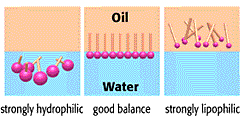
wataer_oil

Hydrophilic vs lipophilic molecules. Source: Riken

Water soluble (Hydrophilic) statins include statins such as pravastatin and rosuvastatin; while all other available statins (eg. atorvastatin, cerivastatin, fluvastatin, lovastatin and simvastatin) are lipophilic.

In this new study, the researchers found that the association between statin use and increased risk of developing Parkinson’s disease was more pronounced for lipophilic statins (a statistically significant 58% increase – P < 0.0001), compared to hydrophilic statins (a non-significant 19% increase – P = 0.25). One possible explanation for this difference is that lipophilic statins (like simvastatin and atorvastatin) cross the blood-brain barrier more easily and may have more effect on the brain than hydrophilic ones.

The investigators also found that this association was most robust during the initial phase of statin treatment. That is to say, the researchers observed a 82% in risk of PD within 1 year of having started statin treatment, and only a 37% increase five years after starting statin treatment.; P < 0.0001). Given this finding, the investigators questioned whether statins may be playing a facilitatory role in the development of Parkinson’s disease – for example, statins may be “unmasking” the condition during its earliest stages.

So statins are bad then?

Can I answer this question with a diplomatic “I don’t know”?

It is difficult to really answer that question based on the results of just this one study. This is mostly because this new finding is in complete contrast to a lot of experimental research over the last few years which has shown statins to be neuroprotective in many models of Parkinson’s disease. Studies such as this one:
statins
Title: Simvastatin inhibits the activation of p21ras and prevents the loss of dopaminergic neurons in a mouse model of Parkinson’s disease.
Authors: Ghosh A, Roy A, Matras J, Brahmachari S, Gendelman HE, Pahan K.
Journal: J Neurosci. 2009 Oct 28;29(43):13543-56.
PMID: 19864567              (This study is OPEN ACCESS if you would like to read it)

In this study, the researchers found that two statins (pravastatin and simvastatin – one hydrophilic and one lipophilic, respectively) both exhibited the ability to suppress the response of helper cells in the brain (called microglial) in a neurotoxin model of Parkinson’s disease. This microglial suppression resulted in a significant neuroprotective effect on the dopamine neurons in these animals.

Another study found more Parkinson’s disease relevant effects from statin treatment:
Synau

TItle: Lovastatin ameliorates alpha-synuclein accumulation and oxidation in transgenic mouse models of alpha-synucleinopathies.
Authors: Koob AO, Ubhi K, Paulsson JF, Kelly J, Rockenstein E, Mante M, Adame A, Masliah E.
Journal: Exp Neurol. 2010 Feb;221(2):267-74.
PMID: 19944097            (This study is OPEN ACCESS if you would like to read it)

In this study, the researchers treated two different types of genetically engineered mice (both sets of mice produce very high levels of alpha synuclein – the protein closely associated with Parkinson’s disease) with a statin called lovastatin. In both groups of alpha synuclein producing mice, lovastatin treatment resulted in significant reductions in the levels of cholesterol in their blood when compared to the saline-treated control mice. The treated mice also demonstrated a significant reduction in levels of alpha synuclein clustering (or aggregation) in the brain than untreated mice, and this reduction in alpha synuclein accumulation was associated with a lessening of pathological damage in the brain.

So statins may not be all bad?

One thing many of these studies fail to do is differentiate between whether statins are causing the trouble (or benefit) directly or whether simply lowering cholesterol levels is having a negative impact. That is to say, do statins actually do something else? Other than lowering cholesterol levels, are statins having additional activities that could cause good or bad things to happen?


url

Source: Liverissues

The recently published study we are reviewing in this post suggested that non-statin cholesterol medication is also positively associated with developing Parkinson’s disease. Thus it may be that statins are not bad, but rather the lowering of cholesterol levels that is. This raises the question of whether high levels of cholesterol are delaying the onset of Parkinson’s disease, and one can only wonder what a cholesterol-based process might be able to tell us about the development of Parkinson’s disease.

If the findings of this latest study are convincingly replicated by other groups, however, we may need to reconsider the use of statins not in our day-to-day clinical practice. At the very least, we will need to predetermine which individuals may be more susceptible to developing Parkinson’s disease following the initiation of statin treatment. It would actually be very interesting to go back to the original data set of this new study and investigate what addition medical features were shared between the people that developed Parkinson’s disease after starting statin treatment. For example, were they all glucose intolerant? One would hope that the investigators are currently doing this.

Are Statins currently being tested in the clinic for Parkinson’s disease?

(Oh boy! Tough question) Yes, they are.

There is currently a nation wide study being conducted in the UK called PD STAT.

PDSTATLogo_Large

The study is being co-ordinated by the Plymouth Hospitals NHS Trust (Devon). For more information, please see their website or click here for the NHS Clinical trials gateway website.

Is this dangerous given the results of the new research study?

(Oh boy! Even tougher question!)

Again, we are asking this question based on the results of one recent study. Replication with independent databases is required before definitive conclusions can be made.

There have, however, been previous clinical studies of statins in neurodegenerative conditions and these drugs have not exhibited any negative effects (that I am aware of). In fact, a clinical trial for multiple sclerosis published in 2014 indicated some positive results for sufferers taking simvastatin:

MS-STAT
Title: Effect of high-dose simvastatin on brain atrophy and disability in secondary progressive multiple sclerosis (MS-STAT): a randomised, placebo-controlled, phase 2 trial.
Authors: Chataway J, Schuerer N, Alsanousi A, Chan D, MacManus D, Hunter K, Anderson V, Bangham CR, Clegg S, Nielsen C, Fox NC, Wilkie D, Nicholas JM, Calder VL, Greenwood J, Frost C, Nicholas R.
Journal: Lancet. 2014 Jun 28;383(9936):2213-21.
PMID: 24655729             (This article is OPEN ACCESS if you would like to read it)

In this double-blind clinical study (meaning that both the investigators and the subjects in the study were unaware of which treatment was being administered), 140 people with multiple sclerosis were randomly assigned to receive either the statin drug simvastatin (70 people; 40 mg per day for the first month and then 80 mg per day for the remainder of 18 months) or a placebo treatment (70 people).

Patients were seen at 1, 6, 12, and 24 months into the study, with telephone follow-up at months 3 and 18. MRI brain scans were also made at the start of the trial, and then again at 12 months and 25 months for comparative sake.

The results of the study indicate that high-dose simvastatin was well tolerated and reduced the rate of whole-brain shrinkage compared with the placebo treatment. The mean annualised shrinkage rate was significantly lower in patients in the simvastatin group. The researchers were very pleased with this result and are looking to conduct a larger phase III clinical trial.

Other studies have not demonstrated beneficial results from statin treatment, but they have also not observed a worsening of the disease conditions:

Alzh
Title: A randomized, double-blind, placebo-controlled trial of simvastatin to treat Alzheimer disease.
Authors:Sano M, Bell KL, Galasko D, Galvin JE, Thomas RG, van Dyck CH, Aisen PS.
Journal: Neurology. 2011 Aug 9;77(6):556-63.
PMID: 21795660            (This article is OPEN ACCESS if you would like to read it)

In this study, the investigators recruited a total of 406 individuals were mild to moderate Alzheimer’s disease, and they were randomly assigned to two groups: 204 to simvastatin (20 mg/day, for 6 weeks then 40 mg per day for the remainder of 18 months) and 202 to placebo control treatment. While Simvastatin displayed no beneficial effects on the progression of symptoms in treated individuals with mild to moderate Alzheimer’s disease (other than significantly lowering of cholesterol levels), the treatment also exhibited no effect on worsening the disease.


So what does it all mean?

Research investigating cholesterol and its association with Parkinson’s disease has been going on for a long time. This week a research report involving a huge database was published which indicated that using cholesterol reducing medication could significantly increase one’s risk of developing Parkinson’s disease.

These results do not mean that someone being administered statins is automatically going to develop Parkinson’s disease, but – if the results are replicated – it may need to be something that physicians should consider before prescribing this class of drug.

Whether ongoing clinical trials of statins and Parkinson’s disease should be reconsidered is a subject for debate well above my pay grade (and only if the current results are replicated independently). It could be that statin treatment (or lowering of cholesterol) may have an ‘unmasking’ effect in some individuals, but does this mean that any beneficial effects in other individuals should be discounted? If preclinical data is correct, for example, statins may reduce alpha synuclein clustering in some people which could be beneficial in Parkinson’s.

As we have said above, further research is required in this area before definitive conclusions can be made. This is particularly important given the inconsistencies of the previous research results in the statin and Parkinson’s disease field of investigation.


EDITORIAL NOTE: The information provided by the SoPD website is for information and educational purposes only. Under no circumstances should it ever be considered medical or actionable advice. It is provided by research scientists, not medical practitioners. Any actions taken – based on what has been read on the website – are the sole responsibility of the reader. Any actions being contemplated by readers should firstly be discussed with a qualified healthcare professional who is aware of your medical history. While some of the information discussed in this post may cause concern, please speak with your medical physician before attempting any change in an existing treatment regime.


The banner for today’s post was sourced from HarvardHealth

A connection between ALS & Parkinson’s disease? Oh’ll, SOD it!

604ee0d6431dbd15f686133f6fa7205c

Please excuse our use of UK slang in the title of this post, but a group of Australian researchers have recently discovered something really interesting about Parkinson’s disease.

And being a patriotic kiwi, it takes something REALLY interesting for me to even acknowledge that other South Pacific nation. This new finding, however, could be big.

In today’s post, we will review new research dealing with a protein called SOD1, and discuss what it could mean for the Parkinson’s community.


d1ea3d21c36935b85043b3b53f2edb1f87ab7fa6

The number of dark pigmented dopamine cells in the substantia nigra are reduced in the Parkinson’s disease brain (right). Source: Adaptd from Memorangapp

Every Parkinson’s-associated website and every Parkinson’s disease researchers will tell you exactly the same thing when describing the two cardinal features in the brain of a person who died with Parkinson’s disease:

  1. The loss of certain types of cells (such as the dopamine producing cells of the substantia nigra region of the brain – see the image above)
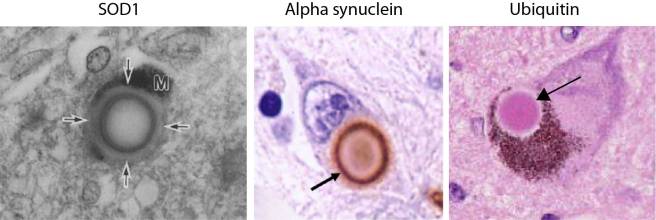
  2. The clustering (or aggregation) of a protein called Alpha synuclein in tightly packed, circular deposits, called Lewy bodies (see image below).

9-lb2

A Lewy body inside a cell. Source: Adapted from Neuropathology-web

The clustered alpha synuclein protein, however, is not limited to just the Lewy bodies. In the affected areas of the brain, aggregated alpha synuclein can be seen in the branches of cells – see the image below where alpha synuclein has been stained brown on a section of brain from a person with Parkinson’s disease.

Lewy_neurites_alpha_synuclein

Examples of Lewy neurites (indicated by arrows). Source: Wikimedia

Now, one of the problems with our understanding of Parkinson’s disease is disparity between the widespread presence of clustered alpha synuclein and very selective pattern of cell loss. Alpha synuclein aggregation can be seen distributed widely around the affected areas of the brain, but the cell loss will be limited to specific populations of cells.

If the disease is killing a particular population of cells, why is alpha synuclein clustering so wide spread?

So why is there a difference?

We don’t know.

It could be that the cells that die have a lower threshold for alpha synuclein toxicity (we discussed this is a previous post – click here?).

But this question regarding the difference between these two features has left many researchers wondering if there may be some other protein or agent that is actually killing off the cells and then disappearing quickly, leaving poor old alpha synuclein looking rather guilty.

maxresdefault

Poor little Mr “A Synuclein” got the blame, but his older brother actually did it! Source: Youtube

And this is a very serious discussion point.

This year of 2017 represents the 200th anniversary of James Parkinson’s first description of Parkinson’s disease, but it also represents the 20th anniversary since the association between alpha synuclein and PD was first established. We have produced almost 7,000 research reports on the topic of alpha synuclein and PD during that time, and we currently have ongoing clinical trials targetting alpha synuclein.

But what if our basic premise – that alpha synuclein is the bad guy – is actually wrong?

Is there any evidence to suggest this?

We are just speculating here, but yes there is.

For example, in a study of 904 brains, alpha synuclein deposits were observed in 11.3% of the brains (or 106 cases), but of those cases only 32 had been diagnosed with a neurodegenerative disorder (Click here to read more on this). The remaining 74 cases had demonstrated none of the clinical features of Parkinson’s disease.

So what else could be causing the cell death?

Well, this week some scientists from sunny Sydney (Australia) reported a protein that could fit the bill.

sydney_cruises

Sydney. Source: Vagabond

The interesting part of their finding is that the protein is also associated with another neurodegenerative condition: Amyotrophic lateral sclerosis.

Remind me again, what is Amyotrophic lateral sclerosis?

Parkinson’s disease and Amyotrophic lateral sclerosis (ALS) are the second and third most common adult-onset neurodegenerative conditions (respectively) after Alzheimer’s disease. We recently discussed ALS in a previous post (Click here to read that post).

ALS, also known as Lou Gehrig’s disease and motor neuron disease, is a neurodegenerative condition in which the neurons that control voluntary muscle movement die. The condition affects 2 people in every 100,000 each year, and those individuals have an average survival time of two to four years.

You may have heard of ALS due to it’s association with the internet ‘Ice bucket challenge‘ craze that went viral in 2014-15.

ice-bucket-challenge

The Ice bucket challenge. Source: Forbes

What is the protein associated with ALS?

In 1993, scientists discovered that mutations in the gene called SOD1 were associated with familial forms of ALS (Click here to read more about this). We now know that mutations in the SOD1 gene are associated with around 20% of familial cases of ALS and 5% of sporadic ALS.

The SOD1 gene produces an enzyme called Cu-Zn superoxide dismutase.

This enzyme is a very powerful antioxidant that protects the body from damage caused by toxic free radical generated in the mitochondria.

Protein_SOD1_PDB_1azv

SOD1 protein structure. Source: Wikipedia

One important note here regarding ALS: the genetic mutations in the SOD1 gene do not cause ALS by affecting SOD1’s antioxidant properties (Click here to read more about this). Rather, researchers believe that the cell death seen in SOD1-associated forms of ALS is the consequences of some kind of toxic effect caused by the mutant protein.

So what did the Aussie researchers find about SOD1 in Parkinson’s disease?

This week, the Aussie researchers published this research report:

SOD
Title: Amyotrophic lateral sclerosis-like superoxide dismutase 1 proteinopathy is associated withneuronal loss in Parkinson’s disease brain.
Authors: Trist BG, Davies KM, Cottam V, Genoud S, Ortega R, Roudeau S, Carmona A, De Silva K, Wasinger V, Lewis SJG, Sachdev P, Smith B, Troakes C, Vance C, Shaw C, Al-Sarraj S, Ball HJ, Halliday GM, Hare DJ, Double KL.
Journal: Acta Neuropathol. 2017 May 19. doi: 10.1007/s00401-017-1726-6.
PMID: 28527045

Given that oxidative stress is a major feature of Parkinson’s disease, the Aussie researchers wanted to investigate the role of the anti-oxidant enzyme, SOD1 in this condition. And what they found surprised them.

Heck, it surprised us!

Two areas affected by Parkinson’s disease – the substantia nigra (where the dopamine neurons reside; SNc in the image below) and the locus coeruleus (an area in the brain stem that is involved with physiological responses to stress; LC in the image below) – exhibited little or no SOD1 protein in the control brains.

But in the Parkinsonian brains, there was a great deal of SOD1 protein (see image below).

401_2017_1726_Fig1_HTML

SO1 staining in PD brain and Control brains. Source: Springer

In the image above, you can see yellowish-brown stained patches in both the PD and control images. This a chemical called neuromelanin and it can be used to identify the dopamine-producing cells in the SNc and LC. The grey staining in the PD images (top) are cells that contain SOD1. Note the lack of SOD1 (grey staining) in the control images (bottom).

Approximately 90% of Lewy bodies in the Parkinson’s affected brains contained SOD1 protein. The investigators did report that the levels of SOD1 protein varied between Lewy bodies. But the clustered (or ‘aggregated’) SOD1 protein was not just present with alpha synuclein, often it was found by itself in the degenerating regions.

The researchers occasional saw SOD1 aggregation in regions of age-matched control brains, and they concluded that a very low level of SOD1 must be inherent to the normal ageing process.

But the density of SOD1 clustering was (on average) 8x higher in the SNc and 4x higher in the LC in the Parkinsonian brain compared to age-matched controls. In addition, the SOD1 clustering was significantly greater in these regions than all of the non-degenerating regions of the same Parkinson’s disease brains.

The investigators concluded that these data suggest an association between SOD1 aggregation and neuronal loss in Parkinson’s disease. Importantly, the presence of SOD1 aggregations “closely reflected the regional pattern of neuronal loss”.

They also demonstrated that the SOD1 protein in the Parkinsonian brain was not folded correctly, a similar characteristic to alpha synuclein. A protein must fold properly to be able to do it’s assigned jobs. By not folding into the correct configuration, the SOD1 protein could not do it’s various functions – and the investigators observed a 66% reduction in SOD1 specific activity in the SNc of the Parkinson’s disease brains.

Interestingly, when the researchers looked at the SNc and LC of brains from people with ALS, they identified SOD1 aggregates matching the SOD1 clusters they had seen in these regions of the Parkinson’s disease brain.

Is this the first time SOD1 has been associated with Parkinson’s disease?

No, but it is the first major analysis of postmortem Parkinsonian brains. SOD1 protein in Lewy bodies has been reported before:

1995

Title: Cu/Zn superoxide dismutase-like immunoreactivity is present in Lewy bodies from Parkinson disease: a light and electron microscopic immunocytochemical study
Authors: Nishiyama K, Murayama S, Shimizu J, Ohya Y, Kwak S, Asayama K, Kanazawa I.
Journal: Acta Neuropathol. 1995;89(6):471-4.
PMID: 7676802

The investigators behind this study reported SOD1 protein was present in Lewy bodies, in the substantia nigra and locus coeruleus of brains from five people with Parkinson’s disease. Interestingly, they showed that SOD1 is present in the periphery of the Lewy body, similar to alpha synuclein. Both of these protein are present on the outside of the Lewy body, as opposed to another Parkinson’s associated protein, Ubiquitin, which is mainly present in the centre (or the core) of Lewy bodies (see image below).

Lewy-bodies

A more recent study also demonstrated SOD1 protein in the Parkinsonian brain, including direct interaction between SOD1 and alpha synuclein:

Alspha

Title: α-synuclein interacts with SOD1 and promotes its oligomerization
Authors: Helferich AM, Ruf WP, Grozdanov V, Freischmidt A, Feiler MS, Zondler L, Ludolph AC, McLean PJ, Weishaupt JH, Danzer KM.
Journal: Mol Neurodegener. 2015 Dec 8;10:66.
PMID: 26643113              (This article is OPEN ACCESS if you would like to read it)

These researchers found that alpha synuclein and SOD1 interact directly, and they noted that Parkinson’s disease related mutations in alpha synuclein (A30P, A53T) and ALS associated mutation in SOD1 (G85R, G93A) modify the binding of the two proteins to each other. They also reported that alpha synuclein accelerates SOD1 aggregation in cell culture. This same group of researchers published another research report last year in which they noted that aggregated alpha synuclein increases SOD1 clustering in a mouse model of ALS (Click here for more on this).

We should add that alpha synuclein aggregations in ALS are actually quite common (click here and here to read more on this).

Are there any genetic mutations in the SOD1 gene that are associated with Parkinson’s disease?

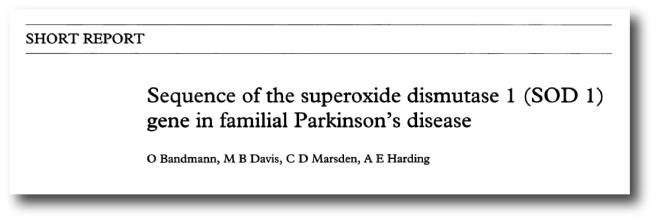
Two studies have addressed this question:

genes

Title: Sequence of the superoxide dismutase 1 (SOD 1) gene in familial Parkinson’s disease.
Authors: Bandmann O, Davis MB, Marsden CD, Harding AE.
Journal: J Neurol Neurosurg Psychiatry. 1995 Jul;59(1):90-1.
PMID: 7608718                   (This article is OPEN ACCESS if you would like to read it)

And then in 2001, a second analysis:

Genes2

Title: Genetic polymorphisms of superoxide dismutase in Parkinson’s disease.
Authors: Farin FM, Hitosis Y, Hallagan SE, Kushleika J, Woods JS, Janssen PS, Smith-Weller T, Franklin GM, Swanson PD, Checkoway H.
Journal: Mov Disord. 2001 Jul;16(4):705-7.
PMID: 11481695

Both studies found no genetic variations in the SOD1 gene that were more frequent in the Parkinson’s affected community than the general population. So, no, there are no SOD1 genetic mutations that are associated with Parkinson’s disease.

Are there any treatments targeting SOD1 that could be tested in Parkinson’s disease?

Great question. Yes there are. And they have already been tested in models of PD:

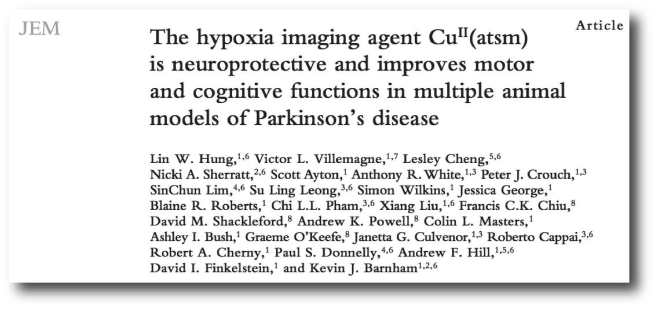
als

Title: The hypoxia imaging agent CuII(atsm) is neuroprotective and improves motor and cognitive functions in multiple animal models of Parkinson’s disease.
Authors: Hung LW, Villemagne VL, Cheng L, Sherratt NA, Ayton S, White AR, Crouch PJ, Lim S, Leong SL, Wilkins S, George J, Roberts BR, Pham CL, Liu X, Chiu FC, Shackleford DM, Powell AK, Masters CL, Bush AI, O’Keefe G, Culvenor JG, Cappai R, Cherny RA, Donnelly PS, Hill AF, Finkelstein DI, Barnham KJ.
Title: J Exp Med. 2012 Apr 9;209(4):837-54.
PMID: 22473957               (This article is OPEN ACCESS if you would like to read it)

CuII(atsm) is a drug that is currently under clinical investigation as a brain imaging agent for detecting hypoxia (damage caused by lack of oxygen – Click here to read more about this).

The researchers conducting this study, however, were interested in this compound for other reasons: CuII(atsm) is also a highly effective scavenger of a chemical called ONOO, which can be very toxic. CuII(atsm) not only inhibits this toxicity, but it also blocks the clustering of alpha synuclein. And given that CuII(atsm) is capable of crossing the blood–brain barrier, these investigators wanted to assess the drug for its ability to rescue model of Parkinson’s disease.

And guess what? It did!

And not just in one model of Parkinson’s disease, but FOUR!

The investigators even waited three days after giving the neurotoxins to the mice before giving the CuII(atsm) drug, and it still demonstrated neuroprotection. It also improved the behavioural features of these models of Parkinson’s disease.

Is CuII(atsm) being tested for anything else in Clinical trials?

Yes, there is a clinical trial ongoing for ALS in Australia.

The Phase I study, being run by Collaborative Medicinal Development Pty Limited, is a dose escalating study of Cu(II)ATSM to determine if this drug is safe for use in ALS (Click here for more on this study).

static1.squarespace

Cu(II)ATSM is an orally administered drug that inhibits the activity of misfolded SOD1 protein. It has been shown to paradoxically increase mutant SOD1 protein in a mouse model of ALS, but it also provides neuroprotection and improves the outcome for these mice (Click here to read more on this).

If this trial is successful, it would be interesting to test this drug on a cohort of people with Parkinson’s disease. Determining which subgroup of the Parkinson’s affected community would most benefit from this treatment is still to be determined. There is some evidence published last year that suggests people with genetic mutations in the Parkinson’s associated gene PARK2 could benefit from the approach (Click here to read more on this). More research, however, is needed in this area.

So what does it all mean?

Right, so summing up, a group of Australian researchers have reported that the ALS associated protein SOD1 is closely associated with the cell death that we observe in the brains of people with Parkinson’s disease.

They suggest that this could highlight a common mechanisms of toxic SOD1 aggregation in both Parkinson’s disease and ALS. Individuals within the Parkinson’s affected community do not appear to have any genetic mutations in the SOD1 gene, which makes this finding is very interesting.

What remains to be determined is whether SOD1 aggregation is a “primary pathological event”, or if it is secondary to some other disease causing agent. We are also waiting to see if a clinical trial targeting SOD1 in ALS is successful. If it is, there may be good reasons for targeting SOD1 as a novel treatment for Parkinson’s disease.


The banner for today’s post was sourced from Pinterest

Iron, life force, and Parkinson’s disease

pranaLogo

‘Prana’ is a Hindu Sanskrit word meaning “life force”.

An Australian biotech company has chosen this word for their name.

Recently Prana Biotechnology Ltd announced some exciting results from their Parkinson’s disease research programme.

In today’s post we will look at what the company is doing, the science underlying the business plan, and review the results they have so far.


adpd2017

Source: ADPD2017

At the end of March, over 3000 researchers in the field of neurodegeneration gathered in the Austrian capital of Vienna for the 13th International Conference on Alzheimer’s and Parkinson’s Diseases and Related Neurological Disorders (also known as ADPD2017).

crop

The Vienna city hall. Source: EUtourists

A lot of interesting new research in the field of Parkinson’s disease was presented at the conference (we will look at some other presentation in future posts), but one was of particular interest to us here at SoPD HQ.

The poster entitled: Abstract: 104 – PBT434 prevents neuronal loss, motor function and cognitive impairment in preclinical models of movement disorders by modulation of intracellular iron’, was presented by Associate Professor David Finkelstein, of the Florey Institute of Neuroscience and Mental Health (Melbourne, Australia).

Unfortunately the ADPD2017 conference’s scientific programme search engine does not allow for individual abstracts to be linked to on the web so if you would like to read the abstract, you will need to click here for the search engine page and search for ‘PBT434’ or ‘Finkelstein’ in the appropriate boxes.

Prof Finkelstein was presenting preclinical research that had been conducted by an Australian biotech company called Prana Biotechnology Ltd.

promo1

Source: Prana Biotechnology Ltd

What does the company do?

Prana Biotechnology Ltd has a large portfolio of over 1000 small chemical agents that they have termed ‘MPACs’ (or Metal Protein Attenuating Compounds). These compounds are designed to interrupt the interactions between particular metals and target proteins in the brain. The goal of this interruption is to prevent deterioration of brain cells in neurodegenerative conditions.

For Parkinson’s disease, the company is proposing a particular iron chelator they have called PBT434.

What is an iron chelator?

Iron chelator therapy involves the removal of excess iron from the body with special drugs. Chelate is from the Greek word ‘chela’ meaning “claw”.

chelationtherapy_edited-01

Chelator therapy. Source: Stanford

Iron overload in the body is a common medical problem, sometimes arising from disorders of increased iron absorption such as hereditary haemochromatosis. Iron chelator therapy represents one method of reducing the levels of iron in the body.

But why is iron overload a problem?

iron

Iron. Source: GlobalSpec

Good question. It involves the basic properties of iron.

Iron is a chemical element (symbol Fe). It has the atomic number 26 and by mass it is the most common element on Earth (it makes up much of Earth’s outer and inner core). It is absolutely essential for cellular life on this planet as it is involved with the interactions between proteins and enzymes, critical in the transport of oxygen, and required for the regulation of cell growth and differentiation.

So why then – as Rosalind asked in Shakespeare’s As You Like It – “can one desire too much of a good thing?”

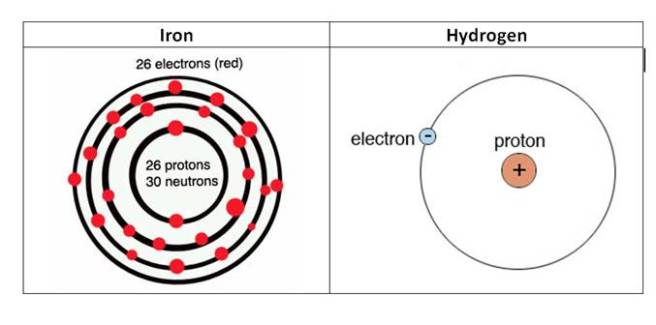
Well, if you think back to high school chemistry class you may recall that there are these things called electrons. And if you have a really good memory, you will recall that the chemical hydrogen has one electron, while iron has 26 (hence the atomic number 26).

atoms

The electrons of iron and hydrogen. Source: Hypertonicblog

Iron has a really interesting property: it has the ability to either donate or take electrons. And this ability to mediate electron transfer is one of the reasons why iron is so important in the body.

Iron’s ability to donate and accept electrons means that when there is a lot of iron present it can inadvertently cause the production of free radicals. We have previously discussed free radicals (Click here for that post), but basically a free radical is an unstable molecule – unstable because they are missing electrons.

imgres

How free radicals and antioxidants work. Source: h2miraclewater

In an unstable format, free radicals bounce all over the place, reacting quickly with other molecules, trying to capture the much needed electron to re-gain stability. Free radicals will literally attack the nearest stable molecule, to steal an electron. This leads to the “attacked” molecule becoming a free radical itself, and thus a chain reaction is started. Inside a living cell this can cause terrible damage, ultimately killing the cell.

Antioxidants can help try and restore the balance, but in the case of iron overload iron doctors will prescribe chelator treatment to deal with the situation more efficiently. By soaking up excess iron, we can limit the amount of damage caused by the surplus of iron.

So what research has been done regarding iron content and the Parkinsonian brain?

Actually, quite a lot.

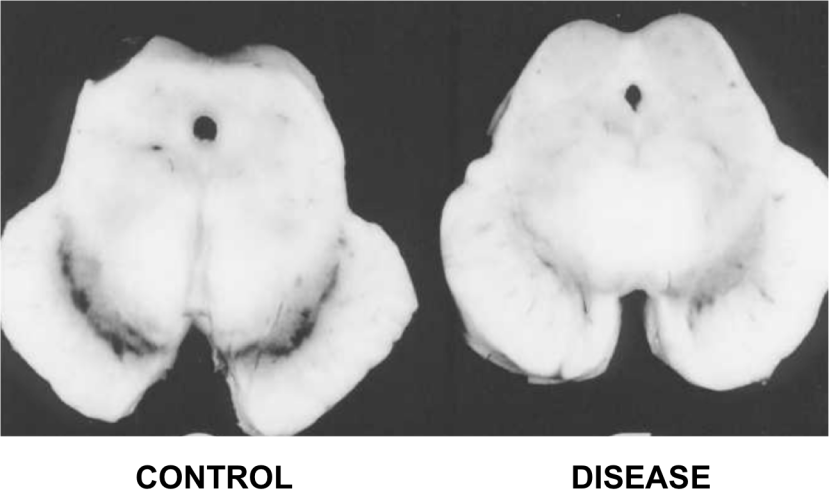
In 1968, Dr Kenneth Earle used an X-ray based technique to examine the amount of iron in the substantia nigra of people with Parkinson’s disease (Source). The substantial nigra is one of the regions in the brain most badly damaged by the condition – it is where most of the brain’s dopamine neurones resided.

d1ea3d21c36935b85043b3b53f2edb1f87ab7fa6

The dark pigmented dopamine neurons in the substantia nigra are reduced in the Parkinson’s disease brain (right). Source:Memorangapp

Earle examined 11 samples and compared them to unknown number of control samples and his results were a little startling:

The concentration of iron in Parkinsonian samples was two times higher than that of the control samples.

Since that first study, approximately 30 investigations have been made into levels of iron in the Parkinsonian brain. Eleven of those studies have replicated the Earle study by looking at postmortem tissue. They have used different techniques and the results have varied somewhat:

  • Sofic et al. (1988)                             1.8x increase in iron levels
  • Dexter et al. (1989)                         1.3x increase in iron levels
  • Uitti et al. (1989)                              1.1x increase in iron levels
  • Riederer et al 1989                         1.3x increase in iron levels
  • Griffiths and Crossman (1993)     2.0x increase in iron levels
  • Mann et al. (1994)                           1.6x increase in iron levels
  • Loeffler et al. (1995)                       0.9   (lower)
  • Galazka-Friedman et al., 1996     1.0   (no difference)
  • Wypijewska et al. (2010)               1.0   (no difference)
  • Visanji et al, 2013                            1.7x increase in iron levels

Overall, however, there does appear to be a trend in the direction of higher levels of iron in the Parkinsonian brains. A recent meta-analysis of all this data confirmed this assessment as well as noting an increase in the caudate putamen (the region of the brain where the dopamine neuron branches release their dopamine – Click here for that study).

Brain imaging of iron (using transcranial sonography and magnetic resonance imaging (MRI)) has also demonstrated a strong correlation between iron levels in the substantia nigra region and Parkinson’s disease severity/duration (Click here and here to read more on this).

Thus, there appears to be an increase of iron in the regions most affected by Parkinson’s disease and this finding has lead researchers to ask whether reducing this increase in iron may help in the treatment of Parkinson’s disease.

How could iron overload be bad in Parkinson’s disease?

Well in addition to causing the production of free radicals, there are many possible ways in which iron accumulation could be aggravating cell loss in Parkinson’s disease.

983245.fig.001

Possible causes and consequences of iron overload in Parkinson’s disease. Source: Hindawi

High levels of iron can cause the oxidation of dopamine, which results in the production of hydrogen peroxide (H2O– a reactive oxygen species – the stuff that is used to bleach hair and is also used as a propellant in rocketry!). This reaction can cause further oxidative stress that can then lead to a range of consequences including protein misfolding, lipid peroxidation (which can cause the accumulation of the Parkinson’s associated protein alpha synuclein), mitochondrial dysfunction, and activation of immune cells in the brain.

And this is just a taster of the consequences.

For further reading on this topic we recommend two very good reviews – click here and here.

Ok, so iron overload is bad, but what was the research presented in Austria?

The abstract:

Title: PBT434 prevents neuronal loss, motor function and cognitive impairment in preclinical models of movement disorders by modulation of intracellular iron
Authors: D. Finkelstein, P. Adlard, E. Gautier, J. Parsons, P. Huggins, K. Barnham, R. Cherny
Location: C01.a Posters – Theme C – Alpha-Synucleinopathies

The researchers at Prana Biotechnology Ltd assessed the potential of one of their candidate drugs, PBT434, in both cell culture and animal models of Parkinson’s disease. The PBT434 drug was selected for further investigation based on its performance in cell culture assays designed to test the inhibition of oxidative stress and iron-mediated aggregation of Parkinson’s associated proteins like alpha synuclein.

PBT434 significantly reduced the accumulation of alpha synuclein and markers of oxidative stress, and prevented neuronal loss.

The investigators also demonstrated that orally administered PBT434 readily crossed the blood brain barrier and entered the brain. In addition the drug was well-tolerated in the experimental animals and improved motor function in toxin-induced (MPTP and 6-hydroxydopamine) and transgenic mouse models of Parkinson’s disease (alpha synuclein -A53T and tau – rTg4510).

These results are in agreement with previous studies that have looked at iron chelator therapy in models of Parkinson’s disease (Click here, here and here for some examples)

Interestingly, PBT434 also demonstrated neuroprotective properties in animal models of multiple systems atrophy (or MSA). Suggesting that perhaps iron chelation could be a broad neuroprotective approach.

The researchers concluded that this preclinical data demonstrates the efficacy of PBT434 as a clinical candidate for Parkinson’s disease. PBT434 shows a strong toxicology profile and favourable therapeutic activity.  Prana is preparing its pre-clinical development package for PBT434 to initiate human clinical trials.

Does Prana have any other drugs in clinical trials?

Yes, they do.

pipeline-assets07-1024x571

Source: Prana

Prana Biotechnology has another product called PBT2.

The company currently has two clinical trial programs for PBT2 focused on two other neurodegenerative diseases: Alzheimer’s disease and Huntington’s disease.

The Alzheimer’s study was called the IMAGINE Trial, but (there is always a ‘but’) recently PBT2 failed to meet its primary endpoint (significantly reducing levels of beta-amyloid  – the perceived bad guy in Alzheimer’s disease) in a phase III trial of mild Alzheimer’s disease. PBT2 was, however, shown to be safe and very well tolerated over the 52 week trial, with no difference in the occurrence of adverse events between the placebo and treated groups.

In addition, there was less atrophy (shrinkage) in the brains of those patients treated with PBT2 when compared to control brains, 2.6% and 4.0%, respectively (based on brain imaging).  The company is tracking measures of brain volume and cognition in a 12 month extension study. It could be interesting to continue that follow up long term to evaluate the consequences of long term use of this drug on Alzheimer’s disease – even if the effect is minimal, any drug that can slow the disease down is useful and could be used in conjunction with other neuroprotective medications.

For Huntington’s disease, the company is also using the PBT2 drug and this study has had a bit more success. The study, called Reach2HD, was a six month phase II clinical trial in 109 patients with early to mid-stage Huntington’s disease, across 20 sites in the US and Australia. The company was aiming to assess the safety profile of this drug in this particular condition, as well as determining the motor and behavioural benefits.

In the ReachHD study, PBT2 showed signs of improving some aspects of cognitive function in the study, which potentially represents a major event for a disease for which there is very little in the way of medical treatments.

For a full description of the PBT2 trials, see this wikipedia page on the topic.

Is Prana the only research group working on iron chelators technology for Parkinson’s disease?

No.

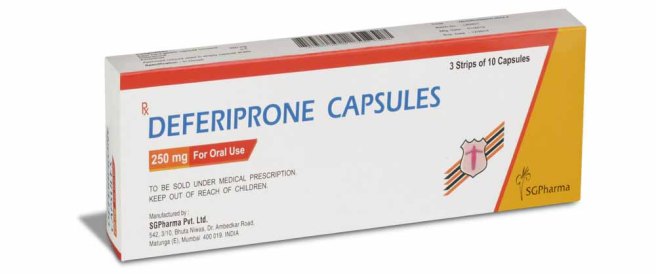
There is a large EU-based consortium called FAIR PARK II, which is running a five year trial (2015 – 2020) of the iron chelator deferiprone (also known as Ferriprox). The study is a multi-centre, placebo-controlled, randomised clinical trial involving 338 people with recently diagnosed Parkinson’s disease.

LOGO_FAIR_PARK_TIME1

The population will be divided into two group (169 subjects each). They will then be assigned either deferiprone (15 mg/kg twice a day) or a placebo. Each subject will be given 9-months of treatment followed by a 1-month post-treatment monitoring period, in order to assess the disease-modifying effect of deferiprone (versus placebo).

Product-14303066240

Deferiprone. Source: SGPharma

As far as we are aware, this FAIR PARK II clinical trial is still recruiting participants – please click here to read more about this – thus it will most likely be some time before we hear the results of this study.

Are there natural sources of chelators?

Yes there are. In fact, many natural antioxidants exert some chelating activities.

Prominent among the natural sources of chelators: Green tea has components of plant extracts, such as epigallocatechin gallate (EGCG – which we have previously discussed in regards to Parkinson’s disease, click here to read that post) which possess structures which infer metal chelating properties.

As we have said before people, drink more green tea!

cup and teapot of linden tea and flowers isolated on white

Anyone fancy a cuppa? Source: Expertrain

So what does it all mean?

Summing up: We do not know what causes Parkinson’s disease. Most of our experimental treatments are focused on the biological events that occur in the brain around and after the time of diagnosis. These include an apparent accumulation of iron in affected brain regions.

Research groups are currently experimenting with drugs that reduce the levels of iron in the brain as a potential treatment for Parkinson’s disease. Preclinical data certainly look positive. We will now have to wait and see if those results translate into the human.

Previous clinical trials of metal chelators in neurodegeneration have had mixed success in demonstrating positive benefits. It may well be, however, that this treatment approach should be used in conjunction with other neuroprotective approaches – as a supplement. It will be interesting to see how Prana Biotechnology’s drug PBT434 fares in human clinical trials for Parkinson’s disease.

Stay tuned for more on this.


UPDATE – 3rd May 2017

Today the results of a double-blind, phase II clinical trial of iron chelator deferiprone in Parkinson’s disease were published. The results of the study indicate a mildly positive effect (though not statistically significant) after 6 months of daily treatment.

Iron1
Title: Brain iron chelation by deferiprone in a phase 2 randomised double-blinded placebo controlled clinical trial in Parkinson’s disease
Authors: Martin-Bastida A, Ward RJ, Newbould R, Piccini P, Sharp D, Kabba C, Patel MC, Spino M, Connelly J, Tricta F, Crichton RR & Dexter DT
Journal: Scientific Reports (2017), 7, 1398.
PMID: 28469157        (This article is OPEN ACCESS if you would like to read it)

In this Phase 2 randomised, double-blinded, placebo controlled clinical trial, the researchers recruited 22 people with early stage Parkinson’s disease (disease duration of less than 5 years; 12 males and 10 females; aged 50–75 years). They were randomly assigned to either a placebo group (8 participants), or one of two deferiprone treated groups: 20mg/kg per day (7 participants) or 30mg/kg per day (7 participants). The treatment was two daily oral doses (taken morning and evening), and administered for 6 months with neurological examinations, brain imaging and blood sample collections being conducted at 0, 3 and 6 months.

Deferiprone therapy was well tolerated and brain imaging indicated clearance of iron from various parts of the brain in the treatment group compared to the placebo group. Interestingly, the 30mg/kg deferiprone treated group demonstrated a trend for improvement in motor-UPDRS scores and quality of life (although this was not statistically significance). The researchers concluded that “more extensive clinical trials into the potential benefits of iron chelation in PD”.

Given the size of the groups (7 people) and the length of the treatment period (only 6 months) in this study it is not really a surprise that the researchers did not see a major effect. That said, it is very intriguing that they did see a trend towards motor score benefits in the  30mg/kg deferiprone group – remembering that this is a double blind study (so even the investigators were blind as to which group the subjects were in).

We will now wait to see what the FAIR PARK II clinical trial finds.


UPDATE: 28th June 2017

Today, the research that Prana biotechnology Ltd was presenting in Vienna earlier this year was published:

Prana

Title: The novel compound PBT434 prevents iron mediated neurodegeneration and alpha-synuclein toxicity in multiple models of Parkinson’s disease.
Authors: Finkelstein DI, Billings JL, Adlard PA, Ayton S, Sedjahtera A, Masters CL, Wilkins S, Shackleford DM, Charman SA, Bal W, Zawisza IA, Kurowska E, Gundlach AL, Ma S, Bush AI, Hare DJ, Doble PA, Crawford S, Gautier EC, Parsons J, Huggins P, Barnham KJ, Cherny RA.
Journal: Acta Neuropathol Commun. 2017 Jun 28;5(1):53.
PMID: 28659169             (This article is OPEN ACCESS if you would like to read it)

The results suggest that PBT434 is far less potent than deferiprone or deferoxamine at lowering cellular iron levels, but this weakness is compensated by the reduced levels of alpha synuclein accumulation in models of Parkinson’s disease. PBT434 certainly appears to be neuroprotective demonstrating improvements in motor function, neuropathology and biochemical markers of disease state in three different animal models of Parkinson’s disease.

The researchers provide little information as to when the company will be exploring clinical trials for this drug, but in the press release associated with the publication, Dr David Stamler (Prana’s Chief Medical Officer and Senior Vice President, Clinical Development) was quoted saying that they “are eager to begin clinical testing of PBT434”. We’ll keep an eye to the ground for any further news.


FULL DISCLOSURE: Prana Biotechnology Ltd is an Australasian biotechnology company that is publicly listed on the ASX. The information presented here is for educational purposes. Under no circumstances should investment decisions be made based on the information provided here. The SoPD website has no financial or beneficial connection to either company. We have not been approached/contacted by the company to produce this post, nor have we alerted them to its production. We are simply presenting this information here as we thought the science of what the company is doing might be of interest to other readers. 

In addition, under absolutely no circumstances should anyone reading this material consider it medical advice. The material provided here is for educational purposes only. Before considering or attempting any change in your treatment regime, PLEASE consult with your doctor or neurologist. Metal chelators are clinically available medications, but it is not without side effects (for more on this, see this website). We urge caution and professional consultation before altering a treatment regime. SoPD can not be held responsible for any actions taken based on the information provided here. 


The banner for today’s post was sourced from Prana

An Ambroxol update – active in the brain

Ambroxol-800x400

This week pre-clinical data was published demonstrating that the Ambroxol is active in the brain.

This is important data given that there is currently a clinical trial being conducted for Ambroxol in Parkinson’s disease.

Today’s post will review the new data and discuss what is happening regarding the clinical trial.


1082760

Ambroxol. Source: Skinflint

We have previously discussed the potential use of Ambroxol in the treatment of Parkinson’s disease (Click here to read that post). Today we follow up that post with new data that provides further support for an on-going clinical trial.

Firstly, what is Ambroxol?

Ambroxol is a commonly used treatment for respiratory diseases (the respiratory system being the lungs and related components required for breathing). Ambroxol promotes the clearance of mucus and eases coughing. It also has anti-inflammatory properties, reducing redness in a sore throat. It is the active ingredient of products like Mucosolvan, Mucobrox, and Mucol.


What is the connection between Ambroxol and Parkinson’s disease?

So this is where a gene called GBA comes into the picture.

Genetic mutations in the GBA (full name: Glucosylceramidase Beta) gene are the most common genetic anomaly associated with Parkinson’s disease. People with a mutation in their GBA gene have a higher risk of developing Parkinson’s disease than the general population. And interestingly, people with Parkinson’s disease are approximately five times more likely to carry a GBA mutation than healthy control subjects.

What does GBA do?

The GBA gene provides the instructions for making an enzyme (called glucocerebrosidase) that helps with the digestion and recycling of waste inside cells. The enzyme is located and active inside ‘lysosomes‘.

What are Lysosomes?

Lysosomes are small bags of digestive enzymes that can be found inside cells. They help to break down proteins that have either been brought into the cell or that have served their function and need to be digested and disposed of (or recycled).

Lysosomes

How lysosomes work. Source: Prezi

Inside the lysosomes are enzymes like glucocerebrosidase which help to break material down into useful parts. The lysosome will fuse with other small bags (called vacuole) that act as storage vessels of material inside a cell. The enzymes from the lysosome will mix with the material in the vacuole and digest it (or it break down into more manageable components).

Now people with a genetic mutation in their GBA gene will often have an abnormally short, non-functioning version of the glucocerebrosidase enzyme. In those cases the breaking down of waste inside the lysosome becomes inhibited. And if waste can’t be disposed of or recycled properly, things start to go wrong in the cell.

How does Ambroxol correct this?

It was recently shown that Ambroxol triggers exocytosis of lysosomes (Source). Exocytosis is the process by which waste is exported out of the cell.

exocytosis

Exocytosis. Source: Socratic

Thus by encouraging lysosomes to undergo exocytosis and spit their contents out of the cell – digested or not – Ambroxol allows the cell to remove waste effectively and therefore function in a more normal fashion. This mechanism of treatment seemingly bi-passes the faulty glucocerebrosidase digestion enzyme entirely.

Until recently, two important questions, however, have remained unanswered:

  1. Does Ambroxol enter the brain and have this function there?
  2. What are the consequences of long term Ambroxol use?

We now have an answer for question no. 1:

Amb2

Title: Ambroxol effects in glucocerebrosidase and α-synuclein transgenic mice.
Authors: Migdalska-Richards A, Daly L, Bezard E, Schapira AH.
Journal: Ann Neurol. 2016 Nov;80(5):766-775.
PMID: 27859541            (This article is OPEN ACCESS if you would like to read it)

In this study, the researchers treated mice with Ambroxol for 12 days and then measured the level of glucocerebrosidase activity in the brain. They gave Ambroxol to three different groups of mice:

  • a group of normal mice,
  • a group of mice which had been genetically engineered with a specific mutation in their GBA gene (the heterozygous L444P mutation)
  • a group of mice that produced human alpha synuclein (the protein closely associated with Parkinson’s disease).

When they looked at the level of glucocerebrosidase enzyme activity in normal mice, they found an increase of approximately 20% (in mice treated with 4mM Ambroxol). One curious finding was that this dose was the only dose that increase glucocerebrosidase activity (1, 3, and 5mM of Ambroxol had no effect). The investigators noted, however, a reduction in water drinking of mice receiving 5mM in their drinking water (maybe they didn’t like the taste of it!), suggesting that they were not getting as much Ambroxol as the 4mM group.

The 4mM level of of Ambroxol also increased glucocerebrosidase activity in the L444P mutation mice and the alpha-synuclein mice (which interestingly also has reduced levels of glucocerebrosidase activity). One important observation in the alpha synuclein mice was the finding that Ambroxol was able to reduce the levels of alpha synuclein in the cells, indicating better clearance of un-wanted excess of proteins.

These combined results suggested to the investigators that Ambroxol is entering the brain of mice (passing through the protective blood brain barrier) and able to be effective there. In addition, they did not witness any serious adverse effects of ambroxol administration in the mice – an observation made in other studies of Ambroxol in normal mice (Click here to read more about this).

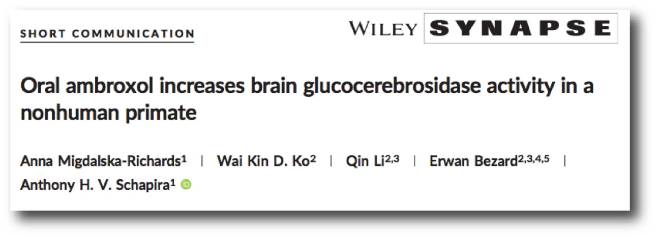
These studies have been followed up by a dosing study in primates which was just published:

Ambrox

Title: Oral ambroxol increases brain glucocerebrosidase activity in a nonhuman primate.
Authors: Migdalska-Richards A, Ko WK, Li Q, Bezard E, Schapira AH.
Journal: Synapse. 2017 Mar 12. doi: 10.1002/syn.21967.
PMID: 28295625            (This article is OPEN ACCESS if you would like to read it)

In this study, the investigators analysed the effect of Ambroxol treatment on glucocerebrosidase activity in three healthy non-human primates. One subject was given an ineffective control solution vehicle, another subject received 22.5 mg/day of Ambroxol and the third subject received 100 mg/day of Ambroxol. They showed that daily administration 100 mg/day of Ambroxol results in increased levels of glucocerebrosidase activity in the brain (approximately 20% increase on average across different areas of the brain). Importantly, the 22.5 mg treatment did not result in any increase.

The investigators wanted to determine if the effect of Ambroxol was specific to glucocerebrosidase, and so they analysed the activity of another lysosome enzyme called beta-hexosaminidase (HEXB). They found that 100 mg/day of Ambroxol also increased HEXB activity (again by approximately 20%), suggesting that Ambroxol may be having an effect on other lysosome enzymes and not just glucocerebrosidase.

The researches concluded that these results provide the first data of the effect of Ambroxol treatment on glucocerebrosidase activity in the brain of non-human primates. In addition, the results indicate that Ambroxol is active and as the researchers wrote “should be further investigated in the context of clinical trials as a potential treatment for Parkinson’s disease”.

And there is a clinical trial currently underway?

Yes indeed.

Funded by the Cure Parkinson’s Trust and the Van Andel Research Institute (USA), there is currently a phase I clinical trial with 20 people with Parkinson’s disease receiving Ambroxol over 24 months. Importantly, the participants being enrolled in the study have both Parkinson’s disease and a mutation in their GBA gene. The study is being led by Professor Anthony Schapira at the Royal Free Hospital (London).

EDITORS NOTE HERE: Readers may be interested to know that Prof Schapira is also involved with another clinical trial for GBA-associated Parkinson’s disease. The work is being conducted in collaboration with the biotech company Sanofi Genzyme, and involves a phase II trial, called MOVE-PD, which is testing the efficacy, and safety of a drug called GZ/SAR402671 (Click here to read more about this clinical trial). GZ/SAR402671 is a glucosylceramide synthase inhibitor, which will hopefully reduce the production and consequent accumulation of glycosphingolipids in people with a mutation in the GBA gene. This approach is trying to reduce the amount of protein that can not be broken down by the faulty glucocerebrosidase enzyme. The MOVE-PD study will enroll more than 200 patients worldwide (Click here and here to read more on this).

The current Phase 1 trial at the Royal Free Hospital will be primarily testing the safety of Ambroxol in GBA-associated Parkinson’s disease. The researchers will, however, be looking to see if Ambroxol can increase levels of glucocerebrosidase and also assess whether this has any beneficial effects on the Parkinson’s features.

So what does it all mean?

There is a major effort from many of the Parkinson’s disease related charitable groups to clinically test available medications for their ability to slow this condition. Big drug companies are not interested in this ‘re-purposing effort’ as many of these drugs are no longer patent protected and thus providing limited profit opportunities for them. This is one of the unfortunate realities of the pharmaceutical industry business model.

One of the most interesting drugs being tested in this re-purposing effort is the respiratory disease-associated treatment, Ambroxol. Recently new research has been published that indicates Ambroxol is able to enter the brain and have an impact by increasing the level of protein disposal activity.

A clinical trial testing Ambroxol in Parkinson’s disease is underway and we will be watching for the results when they are released (most likely late 2019/early 2020, though preliminary results may be released earlier).

This trial is worth watching.

Stay tuned.


EDITOR’S NOTE: Under absolutely no circumstances should anyone reading this material consider it medical advice. The material provided here is for educational purposes only. Before considering or attempting any change in your treatment regime, PLEASE consult with your doctor or neurologist. Amboxol is a commercially available medication, but it is not without side effects (for more on this, see this website). We urge caution and professional consultation before altering a treatment regime. SoPD can not be held responsible for any actions taken based on the information provided here. 


The banner for today’s post was sourced from Pharmacybook

Resveratrol: From the folks who brought you Nilotinib


vc_spotlightsonoma_breaker_winegrapes_stock_rf_525141953_1280x640

Recently the results of a small clinical study looking at Resveratrol in Alzheimer’s disease were published. Resveratrol has long been touted as a miracle ingredient in red wine, and has shown potential in animal models of Parkinson’s disease, but it has never been clinically tested.

Is it time for a clinical trial?

In today’s post we will review the new clinical results and discuss what they could mean for Parkinson’s disease.


maxresdefault

From chemical to wine – Resveratrol. Source: Youtube

In 2006, there was a research article published in the prestigious journal Nature about a chemical called resveratrol that improved the health and survival of mice on a high-calorie diet (Click here for the press release).
Wine2
Title: Resveratrol improves health and survival of mice on a high-calorie diet.
Authors: Baur JA, Pearson KJ, Price NL, Jamieson HA, Lerin C, Kalra A, Prabhu VV, Allard JS, Lopez-Lluch G, Lewis K, Pistell PJ, Poosala S, Becker KG, Boss O, Gwinn D, Wang M, Ramaswamy S, Fishbein KW, Spencer RG, Lakatta EG, Le Couteur D, Shaw RJ, Navas P, Puigserver P, Ingram DK, de Cabo R, Sinclair DA.
Journal: Nature. 2006 Nov 16;444(7117):337-42.
PMID: 17086191          (This article is OPEN ACCESS if you would like to read it)

In this study, the investigators placed middle-aged (one-year-old) mice on either a standard diet or a high-calorie diet (with 60% of calories coming from fat). The mice were maintained on this diet for the remainder of their lives. Some of the high-calorie diet mice were also placed on resveratrol (20mg/kg per day).

After 6 months of this treatment, the researchers found that resveratrol increased survival of the mice and insulin sensitivity. Resveratrol treatment also improved mitochondria activity and motor performance in the mice. They saw a clear trend towards increased survival and insulin sensitivity.

The report caused a quite a bit of excitement – suddenly there was the possibility that we could eat anything we wanted and this amazing chemical would safe us from any negative consequences.

Grape

Source: Nature

That report was proceeded by numerous studies demonstrating that resveratrol could extend the life-span of various micro-organisms, and it was achieving this by activating a family of genes called sirtuins (specifically Sir1 and Sir2) (Click herehere and here for more on this).

Subsequent to these reports, there have been numerous scientific publications suggesting that resveratrol is capable of all manner of biological miracles.

Wow! So what is resveratrol?

grapes

Do you prefer your wine in pill form? Source: Patagonia

Resveratrol is a chemical that belongs to a group of compounds called polyphenols. They are believed to act like antioxidants. Numerous plants produce polyphenols in response to injury or when the plant is under attack by pathogens (microbial infections).

Fruit are a particularly good source of resveratrol, particularly the skins of grapes, blueberries, raspberries, mulberries and lingonberries. One issue with fruit as a source of resveratrol, however, is that tests in rodents have shown that less than 5% of the oral dose was observed as free resveratrol in blood plasma (Source). This has lead to the extremely popular idea of taking resveratrol in the form of wine, in the hope that it could have higher bioavailability compared to resveratrol in pill form. Red wines have the highest levels of Resveratrol in their skins (particularly Mabec, Petite Sirah, St. Laurent, and pinot noir). This is because red wine is fermented with grape skins longer than is white wine, thus red wine contains more resveratrol.

EDITOR’S NOTE: Sorry to rain on the parade, but it is important to note here that red wine actually contains only small amounts of resveratrol – less than 3-6 mg per bottle of red wine (750ml). Thus, one would need to drink a great deal of red wine per day to get enough resveratrol (the beneficial effects observed in the mouse study described above required 20mg/kg of resveratrol per day. For a person weighting 80kg, this would equate to 1.6g per day or approximately 250 750ml bottles). 

We would like to suggest that consuming red wine would NOT be the most efficient way of absorbing resveratrol. And obviously we DO NOT recommend any readers attempt to drink 250 bottles per day (if that is even possible). 

The recommended daily dose of resveratrol should not exceed 250 mg per day over the long term (Source). Resveratrol might increase the risk of bleeding in people with bleeding disorders. And we recommend discussing any change in treatment regimes with your doctor before starting.


So what did they find in the Alzheimer’s clinical study?

Well, the report we will look at today is actually a follow-on to published results from a phase 2/safety clinical trial that were reported in 2015:

trial.jpg

Title: A randomized, double-blind, placebo-controlled trial of resveratrol for Alzheimer disease.
Authors: Turner RS, Thomas RG, Craft S, van Dyck CH, Mintzer J, Reynolds BA, Brewer JB, Rissman RA, Raman R, Aisen PS; Alzheimer’s Disease Cooperative Study.
Title: Neurology. 2015 Oct 20;85(16):1383-91.
PMID: 26362286          (This article is OPEN ACCESS if you would like to read it)

The researchers behind the study are associated with the Georgetown research group that conducted the initial Nilotinib clinical study in Parkinson’s disease (Click here for our post on this).

The investigators conducted a randomized, placebo-controlled, double-blind, multi-center phase 2 trial of resveratrol in individuals with mild to moderate Alzheimer disease. The study lasted 52 weeks and involved 119 individuals who were randomly assigned to either placebo or resveratrol 500 mg orally daily treatment.

EDITOR’S NOTE: We appreciate that is daily dose exceeds the recommended daily dose mentioned above, but it is important to remember that the participants involved in this study were being closely monitored by the study investigators.

Brain imaging and samples of cerebrospinal fluid (the liquid within which the brain sits) were collected at the start of the study and after completion of treatment.

The most important result of the study was that resveratrol was safe and well-tolerated. The most common side effect was feeling nausea and diarrhea in approximately 42% of individuals taking resveratrol (curiously 33% of the participants blindly taking the placebo reported the same thing). There was also a weight loss effect between the groups, with the placebo group gaining 0.5kg on average, while the resveratrol treated group lost 1kg on average.

The second important take home message is that resveratrol crossed the blood–brain barrier in humans. The blood brain barrier prevents many compounds from having any effect in the brain, but it does not stop resveratrol.

The investigators initially found no effects of resveratrol treatment in various Alzheimer’s markers in the cerebrospinal fluid. Not did they see any effect in brain scans, cognitive testing, or glucose/insulin metabolism. The authors were cautious about their conclusions based on these results, however, as the study was statistically underpowered (that is to say, there were not enough participants in the various groups) to detect clinical benefits. They recommended a larger study to determine whether resveratrol is actually beneficial.

While exploring the idea of a larger study, the researchers have re-analysed some of the data, and that brings us to the report we want to review today:

moussa

Title: Resveratrol regulates neuro-inflammation and induces adaptive immunity in Alzheimer’s disease.
Authors: Moussa C, Hebron M, Huang X, Ahn J, Rissman RA, Aisen PS, Turner RS.
Journal: J Neuroinflammation. 2017 Jan 3;14(1):1. doi: 10.1186/s12974-016-0779-0.
PMID: 28086917       (This article is OPEN ACCESS if you would like to read it)

In this report, the investigators conducted a retrospective study re-examining the cerebrospinal fluid and blood plasma samples from a subset of subjects involved in the clinical study described above. In this study, they only looked at the subjects who started with very low levels in the cerebrospinal fluid of a protein called Aβ42.

Amyloid beta (or Aβ) is the bad boy/trouble maker of Alzheimer’s disease; considered to be critically involved in the disease. A fragment of this protein (called Aβ42) begin clustering in the brains of people with Alzheimer’s disease and as a result, low levels of Aβ42 in cerebrospinal fluid have been associated with increased risk of Alzheimer’s disease and considered a possible biomarker of the condition (Click here to read more on this).

The resveratrol study investigators collected all of the data from subjects with cerebrospinal fluid levels of Aβ42 less than 600 ng/ml at the start of the study. This selection criteria gave them 19 resveratrol-treated and 19 placebo-treated subjects.

In this subset re-analysis study, resveratrol treatment appears to have slowed the decline in cognitive test scores (the mini-mental status examination), as well as benefiting activities of daily living scores and cerebrospinal fluid levels of Aβ42.

One of the most striking results from this study is the significant decrease observed in the cerebrospinal fluid levels of a protein called Matrix metallopeptidase 9 (or MMP9) after resveratrol treatment. MMP9 is slowly emerged as an important player in several neurodegenerative conditions, including Parkinson’s disease (Click here to read more on this). Thus the decline observed is very interesting.

This re-analysis indicates beneficial effects in some cases of Alzheimer’s as a result of taking resveratrol over 52 weeks. The researchers concluded that the findings of this re-analysis support the idea of a larger follow-up study of resveratrol in people with Alzheimer’s disease.

Ok, but what research has been done on resveratrol in Parkinson’s disease?

Yes, good question.

One of the earliest studies looking at resveratrol in Parkinson’s disease was this one:

Reserv
Title: Neuroprotective effect of resveratrol on 6-OHDA-induced Parkinson’s disease in rats.
Authors: Jin F, Wu Q, Lu YF, Gong QH, Shi JS.
Journal: Eur J Pharmacol. 2008 Dec 14;600(1-3):78-82.
PMID: 18940189

In this study, the researchers used a classical rodent model of Parkinson’s disease (using the neurotoxin 6-OHDA). One week after inducing Parkinson’s disease, the investigators gave the animals either a placebo or resveratrol (at doses of 10, 20 or 40 mg/kg). This treatment regime was given daily for 10 weeks and the animals were examined behaviourally during that time.

The researchers found that resveratrol improved motor performance in the treated animals, with them demonstrating significant results as early as 2 weeks after starting treatment. Resveratrol also reduced signs of cell death in the brain. The investigators concluded that resveratrol exerts a neuroprotective effect in this model of Parkinson’s disease.

Similar results have been seen in other rodent models of Parkinson’s disease (Click here and here to read more).

Subsequent studies have also looked at what effect resveratrol could be having on the Parkinson’s disease associated protein alpha synuclein, such as this report:

PD-title

Title: Effect of resveratrol on mitochondrial function: implications in parkin-associated familiarParkinson’s disease.
Authors: Ferretta A, Gaballo A, Tanzarella P, Piccoli C, Capitanio N, Nico B, Annese T, Di Paola M, Dell’aquila C, De Mari M, Ferranini E, Bonifati V, Pacelli C, Cocco T.
Journal: Biochim Biophys Acta. 2014 Jul;1842(7):902-15.
PMID: 24582596                     (This article is OPEN ACCESS if you would like to read it)


In this study, the investigators collected skin cells from people with PARK2 associated Parkinson’s disease.

What is PARK2 associated Parkinson’s disease?

There are about 20 genes that have been associated with Parkinson’s disease, and they are referred to as the PARK genes. Approximately 10-20% of people with Parkinson’s disease have a genetic variation in one or more of these PARK genes (we have discussed these before – click here to read that post).

PARK2 is a gene called Parkin. Mutations in Parkin can result in an early-onset form of Parkinson’s disease. The Parkin gene produces a protein which plays an important role in removing old or sick mitochondria.

Hang on a second. Remind me again: what are mitochondria?

We have previously written about mitochondria (click here to read that post). Mitochondria are the power house of each cell. They keep the lights on. Without them, the lights go out and the cell dies.

Mitochondria

Mitochondria and their location in the cell. Source: NCBI

You may remember from high school biology class that mitochondria are bean-shaped objects within the cell. They convert energy from food into Adenosine Triphosphate (or ATP). ATP is the fuel which cells run on. Given their critical role in energy supply, mitochondria are plentiful and highly organised within the cell, being moved around to wherever they are needed.

Another Parkinson’s associated protein, Pink1 (which we have discussed before – click here to read that post), binds to dysfunctional mitochondria and then grabs Parkin protein which signals for the mitochondria to be disposed of. This process is an essential part of the cell’s garbage disposal system.

Park2 mutations associated with early onset Parkinson disease cause the old/sick mitochondria are not disposed of correctly and they simply pile up making the cell sick. The researchers that collected the skin cells from people with PARK2 associated Parkinson’s disease found that resveratrol treatment partially rescued the mitochondrial defects in the cells. The results obtained from these skin cells derived from people with early-onset Parkinson’s disease suggest that resveratrol may have potential clinical application.

Thus it would be interesting (and perhaps time) to design a clinical study to test resveratrol in people with PARK2 associated Parkinson’s disease.

So why don’t we have a clinical trial?

Resveratrol is a chemical that falls into the basket of un-patentable drugs. This means that big drug companies are not interested in testing it in an expensive series of clinical trials because they can not guarantee that they will make any money on their investment.

There was, however, a company set up in 2004 by the researchers behind the original resveratrol Nature journal report (discussed at the top of this post). That company was called “Sirtris Pharmaceuticals”.

e4d4a0ddab6419c9de2bd8ca4f199e0c

Source: Crunchbase

Sirtris identified compounds that could activate the sirtuins family of genes, and they began testing them. They eventually found a compound called SRT501 which they proposed was more stable and 4 times more potent than resveratrol. The company went public in 2007, and was subsequently bought by the pharmaceutical company GlaxoSmithKline in 2008 for $720 million.

Sirtris_rm

Source: Xconomy

From there, however, the story for SRT501… goes a little off track.

In 2010, GlaxoSmithKline stopped any further development of SRT501, and it is believed that this decision was due to renal problems. Earlier that year the company had suspended a Phase 2 trial of SRT501 in a type of cancer (multiple myeloma) because some participants in the trial developed kidney failure (Click here to read more).

Then in 2013, GlaxoSmithKline shut down Sirtris Pharmaceuticals completely, but indicated that they would be following up on many of Sirtris’s other sirtuins-activating compounds (Click here to read more on this).

Whether any of those compounds are going to be tested on Parkinson’s disease is yet to be determined.

What we do know is that the Michael J Fox foundation funded a study in this area in 2008 (Click here to read more on this), but we are yet to see the results of that research.

We’ll let you know when we hear of anything.

So what does it all mean?

Summing up: Resveratrol is a chemical found in the skin of grapes and berries, which has been shown to display positive properties in models of neurodegeneration. A recent double blind phase II efficacy trial suggests that resveratrol may be having positive benefits in Alzheimer’s disease.

Preclinical research suggests that resveratrol treatment could also have beneficial effects in Parkinson’s disease. It would be interesting to see what effect resveratrol would have on Parkinson’s disease in a clinical study.

Perhaps we should have a chat to the good folks at ‘CliniCrowd‘ who are investigating Mannitol for Parkinson’s disease (Click here to read more about this). Maybe they would be interested in resveratrol for Parkinson’s disease.


ONE LAST EDITOR’S NOTE: Under absolutely no circumstances should anyone reading this material consider it medical advice. The material provided here is for educational purposes only. Before considering or attempting any change in your treatment regime, PLEASE consult with your doctor or neurologist. SoPD can not be held responsible for actions taken based on the information provided here. 


The banner for today’s post was sourced from VisitCalifornia

Phase II trial launched for Nilotinib

DSK_4634s

Big news today from Georgetown University with the announcement that they will be starting a phase II trial for the cancer drug Nilotinib.

Click here to read the press release.

In this post we will discuss what has happened thus far and what the new trial will involve.


gt

Georgetown University (Washington DC). Source: Wallpapercave

In October 2015, researchers from Georgetown University announced the results of a small clinical trial at the Society for Neuroscience conference in Chicago.

It is no understatement to say that the results of that study got the Parkinson’s community very excited.

The study (see the abstract here) was a small clinical trial (12 subjects; 6 month study) that was aiming to determine the safety and efficacy of a cancer drug, Nilotinib (Tasigna® by Novartis), in advanced Parkinson’s Disease and Lewy body dementia patients. In addition to checking the safety of the drug, the researchers also tested cognition, motor skills and non-motor function in these patients and found 10 of the 12 patients reported meaningful clinical improvements.

In their presentation at the conference in Chicago, the investigators reported that one individual who had been confined to a wheelchair was able to walk again; while three others who could not talk before the study began were able to hold conversations. They suggested that participants who were still in the early stages of the disease responded best, as did those who had been diagnosed with Lewy body dementia.

The study involved the cancer drug Nilotinib.

What is Nilotinib?

Nilotinib (pronounced ‘nil-ot-in-ib’ and also known by its brand name Tasigna) is a small-molecule tyrosine kinase inhibitor, that has been approved for the treatment of imatinib-resistant chronic myelogenous leukemia (CML). That is to say, it is a drug that can be used to treat a type of leukemia when the other drugs have failed. It was approved for this treating cancer by the FDA in 2007.

How does Nilotinib work?

The researchers behind the study suggest that Nilotinib works by turning on autophagy – the “garbage disposal machinery” inside each neuron. Autophagy is a process that clears waste and toxic proteins from inside cells, preventing them from accumulating and possibly causing the death of the cell.

Print

The process of autophagy. Source: Wormbook

Waste material inside a cell is collected in membranes that form sacs (called vesicles). These vesicles then bind to another sac (called a lysosome) which contains enzymes that will breakdown and degrade the waste material.

The investigators believe that nilotinib may be helping in Parkinson’s disease, by clearing away the waste building up in cells – allowing the remaining cells to function more efficiently.

This is great, so what happened in 2016?

That’s a great question.

First, the results of the study being published (Click here to read those results). Second, the U.S. Food and Drug Administration (FDA) reviewed Georgetown’s investigational new drug application (IND) for nilotinib in Parkinson’s disease, and they informed the Georgetown University investigators that a new clinical trial could proceed.

But after that, there were whispers of issues and problems behind the scenes.

Back in August we wrote a post about the Phase II trial being delayed due to disagreements about the design of the study (Read that post by clicking here). Two separate research groups emerged from those disagreements (Georgetown University researchers themselves and a consortium including the Michael J Fox Foundation). Click here for the STAT website article outlining the background of the issues, and click here for the Michael J Fox Foundation statement regarding the situation. The Georgetown University team have a lot of leverage in this situation as they control the patent side of things (Click here to see the patent).

We are not sure what has happened since August, but the Georgetown University team has now announced that they are going to go ahead with a phase II trial to look at safety and efficacy of nilotinib in Parkinson’s disease.

What do we know about the new trial?

At the moment the details are basic:

The design of the study involves two parts:

In the first part of the study, one third of the participants receiving a low dose (150mg) of nilotinib, another third receiving a higher dose (300mg) of nilotinib and the final third will receive a placebo drug (a drug that has no bioactive effect to act as a control against the other two groups). The outcomes will be assessed clinically at six and 12 months by investigators who are blind to the treatment of each subject. These results will be compared to clinical assessments made at the start of the trial. (We are not sure if brain imaging – for example, a DATscan – will be included in the assessment, but it would be useful)

In the second part of the study, there will be a one-year open-label extension trial, in which all participants will be randomized given either the low dose (150mg) or high dose (300mg) of nilotinib. This extension is planned to start upon the completion of the first part (the placebo-controlled trial) to evaluate nilotinib’s long-term effects. (We are a little confused by this study design with regards to efficacy, but determining the safety issues of using nilotinib long term is important to establish).

We are not clear on how many subjects will be involved in the study or what the criteria for eligibility will be. All we can suggest is that if you are interested in finding out more about this new study, you can sign up here to receive more information as it becomes available.

 – – – – – – – – – – – – – –

Summing up, this is welcomed news for the Parkinson’s community as we will finally be able to determine if nilotinib is having positive effects in Parkinson’s disease. There have been some concerns raised that the effects of the drug in the first clinical study may have been the result of removing additional Parkinsonian treatments during the study (Click here for more on this). This new study will hopefully help to clarify things.

And fingers crossed provide us with a useful new treatment for Parkinson’s disease.


The banner for today’s post was sourced from William-Jon

How pigs are helping with Parkinson’s disease

web_pigs_istock_000016714387_large

A biotech company in Australasia got the green light for the next round in a clinical trial two weeks ago.

Their product: tiny cylinders filled with pig cells.

Their mission: to treat Parkinson’s disease with the regenerative healing properties of naturally occurring cells.

In today’s post we will look at what the company is doing and what will happen next.


757z468_1-sg02055

Source: ProactiveInvestors

We have been contacted by several readers asking for a post on the press release last week regarding the clinical trial being conducted by Living Cell Technologies Limited (LCT).

Two weeks ago LCT received approval to commence the treatment of 6 patients in their third group of subjects in a Phase IIb clinical trial of NTCELL® for Parkinson’s disease, at Auckland City Hospital in New Zealand (Click here for the press release).

The company completed treatment of all six patients in ‘group 2’ of the Phase IIb clinical trial of NTCELL for Parkinson’s disease at the end of 2016. Four patients in the trial had 40 NTCELL microcapsules implanted into the putamen on each side of their brain, and two patients had sham surgery with no NTCELL implanted. They now have approval to repeat this in a third group of subjects.

What do we know about the company?

Founded in 1999, the initial goal of the company was to develop regenerative cell therapies. This goal was to be achieved by transplanting cells from Auckland Island pigs into humans.

The first disease considered for this approach was type 1 diabetes, which is now being pursued by a joint venture company in the US while LCT focuses its attention on Parkinson’s disease.

What are NTCELL microcapsules?

NTCELL is an a tiny capsule, that contains choroid plexus cells (taken from pigs). The capsule is made of a semi permeable membrane that allows all of the good chemicals and nutrients (that the cells are producing) to escape into the surrounding environment. At the same time it doesn’t let the cells escape, nor does it allow negative elements into the capsule. In addition, the bodies immune system can’t get at the foreign cells and remove them due to the membrane surrounding the capsule.

caps2

An example of encapsulated cells. Source: LEN

These capsules can be transplanted into the brain of people with neurodegenerative conditions, providing the brains of those individuals with the benefits of supportive chemicals and nutrients.

lct1

A brain scan of NTCELL capsules transplanted in the human brain. Source: LCT

Interesting, but what are choroid plexus cells?

Believe it or not, there are some empty spaces inside your brain. Spaces where there are no brain cells (neurons).

These spaces are called the ‘ventricles‘.

In the human brain there are 4 basic divisions of the ventricles as you can see in the image below (the ventricles are the yellow space):

f1-large

The ventricles and choroid Plexus in the human brain (red coloured regions). Source: PhysRev

The ventricles are filled up with a solution called cerebrospinal fluid. Cerebrospinal fluid is very similar to the liquid portion of blood (or plasma – if you remove the cells from blood, it’s called plasma), except that cerebrospinal fluid is nearly devoid of protein. It is actually made from plasma, but it only contains 0.3% of plasma proteins and about 2/3 of the glucose of blood.

The choroid plexus cells are one of the primary sources of production for the cerebrospinal fluid. That production is actually great – total volume of cerebrospinal fluid in the the average human being turns over almost 4 times per day. Choroid plexus cells can be found in all 4 divisions of the ventricular system (the choroid plexus cells are indicated with red/brown colouring in the image above).

And, um… why pigs?

The choroid plexus cells are sourced from a unique herd of pigs that have been designated pathogen-free. They were originally sourced from the remote sub-Antarctic Auckland Islands, where they have been running around in isolation since 1807.

nz_southern_islands_map

The not-so-tropical Auckland Islands, south of NZ. Source: Sciblogs

That isolation has made them ‘pathogen free’ – basically there is a reduced likelihood of endogenous infectious agents (eg. porine (pig) retrovirus (or PERVs)) in the cells – which is a good thing when you are planning to stick something in the brain.

What research has been done on NTCELL?

Firstly, regarding the capsules, the company published this report in 2009:

capsules

Title: Encapsulated living choroid plexus cells: potential long-term treatments for central nervous system disease and trauma.
Authors: Skinner SJ, Geaney MS, Lin H, Muzina M, Anal AK, Elliott RB, Tan PL.
Journal: J Neural Eng. 2009 Dec;6(6):065001.
PMID: 19850973

In this study, the company looked at the utility of the capsules in rodent brains. One important aspect that they wanted to address was how well the cells survive inside the capsules when placed in the brain. They found that the capsules effectively protected the cells from the host immune system, and they survived for the length of the 6 months study without causing any adverse effects.

The capsules were retrieved from the brains of the rats at the end of the study and the viability of cells was analysed. The researchers found that there was no difference in the production of nutrients from the cells in the capsules at 4 months post implantation, but they did see a decrease of 33% at 6 months. In addition, the number of cells decreased to approximately 40% of the pre-implantation values at 6 months.

We are unsure whether the capsules have been altered for the clinical trial.

The researchers followed this research up in 2013 by publishing this paper:

lct3

Title: Recovery of neurological functions in non-human primate model of Parkinson’s disease bytransplantation of encapsulated neonatal porcine choroid plexus cells.
Authors: Luo XM, Lin H, Wang W, Geaney MS, Law L, Wynyard S, Shaikh SB, Waldvogel H, Faull RL, Elliott RB, Skinner SJ, Lee JE, Tan PL.
Journal: J Parkinsons Dis. 2013 Jan 1;3(3):275-91. doi: 10.3233/JPD-130214.
PMID: 24002224       (This article is OPEN ACCESS if you would like to read it)

The researchers wanted to test the capsules in non-human pre-clinical trials. For this purpose they induced Parkinson’s disease in 15 monkeys using the neurotoxin MPTP, waited 10 weeks and then implanted their capsules. Six monkeys were implanted with the NTCELL capsules, 6 were implanted with empty capsules, and 3 received no capsules. The animals were then tested out to 24 weeks post implantation.

The behavioural response was dramatic. Most of the primates with the NTCELL capsules demonstrated positive behavioural benefits by 2 weeks post implantation (becoming statistically significant by 4 weeks), while the controls and empty capsule groups exhibited no behavioural recovery at all across the entire 24 weeks.

In addition to behavioural benefits, the investigators found significantly more dopamine neurons in the brains of the monkeys implanted with the NTCELL capsules when compared to the controls.

These findings were used by the company to justify moving towards clinical trials in humans.

080316_clinicaltrials_thumb_large

Source: Healthline

And what do we know about the clinical trial for Parkinson’s disease?

A Phase I/IIa NTCELL clinical trial for the treatment of Parkinson’s disease was completed in June 2015. It was an open label investigation of the safety and clinical effect of NTCELL in 4 people who had been diagnosed with Parkinson’s disease for at least five years.

The trial “met the primary endpoint of safety” and “reversed progression of the disease two years after implant” (as measured by the Unified Parkinson’s Disease Rating Scale (UPDRS)). The NTCELL implantation was well tolerated, with “no adverse events considered to be related to NTCELL”. The results of the trial have not been published, but the press release can be found here.

The results from that trial were used to justify and design a larger Phase IIb trial.

What does Phase IIb mean?

Phase II studies, which are designed to address clinical efficacy and biological activity, can be divided into IIA or IIB, and while there is no stated definition for these labels it is generally agreed that:

  • Phase IIA studies are usually pilot studies designed to demonstrate clinical efficacy or biological activity (‘proof of concept’ studies);
  • Phase IIB studies look to find the optimum dose at which the drug shows biological activity with minimal side-effects (‘definite dose-finding’ studies) – (Source: Wikipedia).

The goal of this Phase IIb LCT clinical study is to “confirm the most effective dose of NTCELL, define any placebo component of the response and further identify the initial target Parkinson’s disease patient sub group”.

A total of 18 patients under 65 years old are taking part in the trial being conducted at Auckland Hospital and Mercy Ascot Hospital in New Zealand. The company will have to wait 26 weeks until after the last patient is implanted to know whether it has been successful in meeting regulator’s conditions on quality, safety, and efficacy. At the 26 weeks mark, the subjects that received the placebo (empty capsules) will be given the NTCELL capsules.

If the current Phase IIb trial is successful, Living Cell Technologies Limited will be looking to “apply for provisional consent to treat paying patients in New Zealand and launch NTCELL® as the first disease modifying treatment for Parkinson’s disease, in 2017” (Source: Ltcglobal). We will wait to see the results of the current study before passing judgement on whether this situation is likely, though it does seem premature given that by the end of the phase IIb trial only 20 people with Parkinson’s disease will have received the NTCELL treatment. A larger phase III trial may be required. Alternatively, if the results of the current trial are truly spectacular, the company may be able to propose a Phase IV style of trial (also called a ‘post-marketing surveillance’ trial) which would allow them to market their product, but they would be required to maintain a strict program of safety surveillance and ongoing technical analysis of the treatment.

Are other companies trying to do something similar?

nsgene

Source: NSgene

Another company, NSgene (in Denmark) has a similar sort of experimental product called NsG0301 which is encapsulated human cells that express the neuroprotective protein, GDNF. NsG0301 is still in preclinical testing however, with the Michael J Fox Foundation helping the company to get the clinical trials started.

Sounds very interesting, but what does it all mean?

So in summary, the biotech company LCT have been given permission to continue with their phase II clinical trial which involves placing tiny capsules which contain cells that release beneficial nutrients into the brains of people with Parkinson’s disease. The company will be blind to which individuals are receiving the capsules with cells in them or empty capsules. They should know later in the year if the trials is successful.

One positive feature of this idea is that immune-suppressant treatments are not required as they are with other forms of transplantation therapies. This means that the patient doesn’t need to take medication which stops the immune system from attacking the foreign cells, because the cells are protected by the capsule membrane. Such medication can leave subjects with reduced immune system responses to illness and thus vulnerable.

Having said that, we are a little concerned that the NTCELL product has not been tested thoroughly enough in Parkinson’s disease for the company to be proposing it for commercial use later this year. For example, the phase I open label results could easily be the result of the placebo effect in practise (as all 4 participants knew they were receiving the capsules. This issue could be resolved with DATscan brain imaging of the first 4 subjects (in the phase I trial).

In addition, we would be interested to know how long the cells inside the capsules keep producing cerebrospinal fluid and other beneficial nutrients once inside the human brain. The rodent study (reviewed above) suggested reductions in production from the cells after just 6 months.

While the NTCELL capsules have been tested in many different models of neurological conditions (see the LCT’s publication page for more on this), the company suffered a set back in 2014 when they retracted one of their key pieces of research which demonstrated the use of NTCELL in a rodent model of Parkinson’s disease (Click here for more on this). The study in question was conducted by LCT between 2007 – 2009, and the results were published in The Journal of Regenerative Medicine in 2011. The study was retracted, however, because “the efficacy conclusions in the publication cannot be confirmed”.

To be fair, the company requested the retraction themselves – which is to their credit – and as a precautionary measure LCT placed a hold on any further patient recruitment in their Phase I/IIa clinical study that was underway at the time. But with this study retracted, the published preclinical research for NTCELL in Parkinson’s disease is largely limited to the primate study reviewed above (we are happy to be corrected on this).

We will be intrigued to see the results of the phase II trial, and (if all goes well) whether the New Zealand regulators will be happy for the product to be made commercially available. Depending on the results, they may request further studies. It will definitely be interesting to follow up long-term the 20 subjects who will have received the NTCELL product by that time.

We watch and wait.


UPDATE FROM 1st MAY 2017:

Today Living Cell Technologies Limited posted the following press release:

Treatment completed for all patients in Parkinson’s trial

Living Cell Technologies Limited has completed treatment of all six patients in the third and final group of patients in the Phase IIb clinical trial of NTCELL® for Parkinson’s disease, at Auckland City Hospital.

Four patients had 120 NTCELL microcapsules implanted into the putamen on each side of their brain, and two patients had sham surgery with no NTCELL implanted. To date there are no safety issues in any of the six patients.

The company is blind to the results until 26 weeks after the completion of group 3 of the trial. The results will then be analysed in accordance with the statistical plan and the conclusions announced. This is anticipated to occur in November 2017. Thereafter the patients who received the placebo will receive the optimal treatment.

The Phase IIb trial aims to confirm the most effective dose of NTCELL, define any placebo component of the response and further identify the initial target Parkinson’s disease patient sub group. Providing the trial is successful, the company will apply for provisional consent in Q4 2017 with a view to treating paying patients in New Zealand in 2018.

“The completion of treatment for the patients in group 3 brings us a step closer to our goals of obtaining provisional consent and launching NTCELL as the first disease modifying treatment for Parkinson’s disease,” says Dr Ken Taylor, CEO of Living Cell Technologies.


FULL DISCLOSURE: Living Cell Technologies Limited (LCT) is an Australasian biotechnology company that is publicly listed on the ASX and NSgene is a privately owned company. Under no circumstances should investment decisions be made based on the information provided here. In addition, SoPD has no financial or beneficial connection to either company. We have not been approached/contacted by either company to produce this post. We are simply presenting this information here following requests from our readers and because we thought the science of what the company is doing might be of interest to other readers. The author of this blog is associated with an individual contracted by LCT, but that individual did not request nor was not made aware of this post before publication. 


The banner for today’s post was sourced from the Planner

Busy day for Parkinson’s – 9/2/2017


o-busy-facebook

Today there was a lot of Parkinson’s related activity in the news… well, more than usual at least.

Overnight there was the publication of a blood test for Parkinson’s disease, which looks very sensitive. And this afternoon, Acorda Therapeutics announced positive data for their phase three trial.

In this post, we’ll look at what it all means.


happens-many-red-blood-cells_891c9a08c6bfe4aa

Blood cells. Source: Reference.com

Today we found out about an interesting new study from scientists at Lund University (Sweden), where they are developing a test that can differentiate between different types of Parkinsonisms (See our last post about this) using a simple blood test.

We have previously reported about an Australian research group working on a blood test for Parkinson’s disease, but they had not determined whether their test could differentiate between different kinds of neurodegenerative conditions (such as Alzheimer’s disease). And this is where the Swedish study has gone one step further…

blood
Title: Blood-based NfL: A biomarker for differential diagnosis of parkinsonian disorder
Authors: Hansson O, Janelidze S, Hall S, Magdalinou N,  Lees AJ, Andreasson U, Norgren N, Linder J, Forsgren L, Constantinescu R, Zetterberg H, Blennow K, & For the Swedish BioFINDER study
Journal: Neurology, Published online before print February 8, 2017
PMID: N/A       (This article is OPEN ACCESS if you would like to read it)

The research group in Lund had previously demonstrated that they could differentiate between people with Parkinson’s disease and other types of Parkinsonism to an accuracy of 93% (Click here to read more on this). That is a pretty impressive success rate – equal to basic clinical diagnostic success rates (click here for more on this).

The difference was demonstrated in the levels of a particular protein, neurofilament light chain (or Nfl). NfL is a scaffolding protein, important to the cytoskeleton of neurons. Thus when cells die and break up, Nfl could be released. This would explain the rise in Nfl following injury to the brain. Other groups (in Germany and Switzerland) have  also recently published data suggesting that Nfl could be a good biomarker of disease progression (Click here to read more on this).

There was just one problem: that success rate we were talking about above, it required cerebrospinal fluid. That’s the liquid surrounding your brain and spinal cord, which can only be accessed via a lumbar puncture – a painful and difficult to perform procedure.

lumbar-puncture-cropped

Lumbar puncture. Source: Lymphomas Assoc.

Not a popular idea.

This led the Swedish researchers to test a more user friendly approach: blood.

In the current study, the researchers took blood samples from three sets of subjects:

  • A Lund set (278 people, including 171 people with Parkinson’s disease (PD), 30 people with Multiple system atrophy (MSA), 19 people with Progressive Supranuclear Palsy (PSP), 5 people with corticobasal syndrome (CBS), and 53 people who were neurologically healthy (controls).
  • A London set (117 people, including 20 people with PD, 30 people with MSA, 29 people with PSP, 12 people with CBS, and 26 neurologically healthy controls
  • An early disease set (109 people, including 53 people with PD, 28 people with MSA, 22 people with PSP, 6 people with CBS). All of the early disease set had a disease duration less than 3 years.

When the researchers looked at the levels of NfL in blood, they found that they could distinguish between people with PD and people with PSP, MSA, and CBS with an accuracy of 80-90% – again a very impressive number!

One curious aspect of this finding, however, is that the levels of Nfl in people with PD are very similar to controls. So while this protein could be used to differentiate between PD and other Parkinsonisms, it may not be a great diagnostic aid for determining PD verses non-PD/healthy control.

In addition, what could the difference in levels of Nfl between PD and other Parkinsonisms tell us about the diseases themselves? Does PD have less cell death, or a more controlled and orderly cell death (such as apoptosis) than the other Parkinsonisms? These are questions that can be examined in follow up work.


but-wait

Source: 3rd-Solutions

Like we said at the top, it’s been a busy day for Parkinson’s disease: Good news today for Acorda Therapeutics, Inc.

acordatherapeuticslogo_calogo2306

Source: Acorda

They announced positive Phase 3 clinical trial results for their inhalable L-dopa treatment, called CVT-301, which demonstrated a statistically significant improvement in motor function in people with Parkinson’s disease experiencing OFF periods.

We have previously discussed the technology and the idea behind this approach to treating Parkinson’s disease (Click here for that post).

levodopa-inhaler-lead-658x394

The ARCUS inhalation technology. Source: ParkinsonsLife

Basically, the inhaler contains capsules of L-dopa, which are designed to break open so that the powder can escape. By sucking on the inhaler (see image below), the open capsule starts spinning, releasing the levodopa into the air and subsequently into the lungs. The lungs allow for quicker access to the blood system and thus, the L-dopa can get to the brain faster. This approach will be particularly useful for people with Parkinson’s disease who have trouble swallowing pills/tablets – a common issue.

The Phase 3, double-blind, placebo-controlled clinical trial evaluated the efficacy and safety of CVT-301 when compared with a placebo in people with Parkinson’s disease who experience motor fluctuations (OFF periods). There were a total of 339 study participants, who were randomised and received either CVT-301 or placebo. Participants self-administered the treatment (up to five times daily) for 12 weeks.

The results were determined by assessment of motor score, as measured by the unified Parkinson’s disease rating scale III (UPDRS III) which measures Parkinson’s motor impairment. The primary endpoint of the study was the amount of change in UPDRS motor score at Week 12 at 30 minutes post-treatment. The change in score for CVT-301 was -9.83 compared to -5.91 for placebo (p=0.009). A negative score indicates an improvement in overall motor ability, suggesting that CVT-301 significantly improved motor score.

The company will next release 12-month data from these studies in the next few months, and then plans to file a New Drug Application (NDA) with the Food and Drug Administration (FDA) in the United States by the middle of the year and file a Marketing Authorization Application (MAA) in Europe by the end of 2017. This timeline will depend on some long-term safety studies – the amount of L-dopa used in these inhalers is very high and the company needs to be sure that this is not having any adverse effects.

All going well we will see the L-dopa inhaler reaching the clinic soon.


The banner for today’s post was sourced from the Huffington Post

Something ‘new and fresh’ from Korea

42734181_l-1024x682

The word ‘Kainos‘ comes from ancient Greek, meaning ‘new’ or ‘fresh’.

A company in South Korea has chosen to use this word as their name.

Why?

In today’s post we will discuss a clinical trial that started this week that is taking a ‘new and fresh’ approach to treating Parkinson’s disease.


south_korea

Enchanting country. Source: Eoasia

South Korea is an amazing place, with a long and proud history of innovation and technological development. This week a biotech company there called Kainos Medicine has added itself to that history by initiating a clinical trial that takes a new approach to treating Parkinson’s disease.

As Kainos Medicine points out on their website, the current treatment options for Parkinson’s disease function by alleviating symptoms, for example L-dopa simply replaces the lost dopamine rather than treating the underlying disease. Kainos’s new experimental treatment, called KM-819, is trying to help in a different way: it is trying to slow down the cell death that is associated with Parkinson’s.

How does it do that?

KM-819 is an inhibitor of Fas Associated Factor 1 (or FAF1).

And what is FAF1?

Fas Associated Factor 1 is a protein that interacts with and enhances the activity of a protein on the surface of cells with the ominous name: Fas Cell Surface Death Receptor…and yes, the use of the word ‘death’ in that name should give you some indication as to the function of this protein. When Fas Cell Surface Death Receptor gets activated on any given cell, things have definitely taken a turn for the worse for that particular cell.

Fas Cell Surface Death Receptor (also called CD95) is an initiator of apoptosis.

3-s2-0-b9780323069472100203-f20-05-9780323069472

FasSource: Sciencedirect

What is apoptosis?

Apoptosis (from Ancient Greek for “falling off”) is the process of programmed cell death – a cell initiates a sequence of events that result in the cell shutting down and dying.

apoptosis_b

The process of apoptosis. Source: Abnova

Apoptosis is a very clean and organise process of a cell being removed from the body, with it eventually being broken down into small units (called apoptotic bodies) which are consumed by other cells.

Sounds interesting, but what research has been done on FAF1 and Parkinson’s disease?

Back in 2008, this research report was published:

faf1

Title: Fas-associated factor 1 and Parkinson’s disease.
Authors: Betarbet R, Anderson LR, Gearing M, Hodges TR, Fritz JJ, Lah JJ, Levey AI.
Journal: Neurobiol Dis. 2008 Sep;31(3):309-15.
PMID: 18573343   (This article is OPEN ACCESS if you would like to read it)

The researcher who conducted this study noticed that the FAF1 gene was located in the ‘PARK 10’ region of chromosome 1. PARK regions are areas of our DNA where mutations (or disruptions to the sequence of DNA) can result in increased vulnerability to Parkinson’s disease (there are currently at least 20 PARK regions). PARK 10 is a region of DNA in which mutations have been associated with late-onset Parkinson’s disease. The scientists thought this was interesting and investigated FAF1 in the context of Parkinson’s disease.

When they looked at postmortem brains, the researchers found that FAF1 levels were significantly increased in brains from people with Parkinson’s disease when compared to brains from healthy control cases. In addition, increased levels of FAF1 exaggerated the cell death observed in different cell culture models of Parkinson’s disease, suggesting an important role for FAF1 in sporadic Parkinson’s disease.

NOTE: More recently, a closer analysis of the PARK10 region resulted in a shrinking of the area which resulted in FAF1 falling outside the PARK10 domain (click here and here to see that research). We are currently not sure if genetic variations in the FAF1 gene infer vulnerability to PD.

This initial work led others to researching FAF1 in the context of Parkinson’s disease and in 2013 this research report was published:

faf2

Title: Accumulation of the parkin substrate, FAF1, plays a key role in the dopaminergic neurodegeneration.
Authors: Sul JW, Park MY, Shin J, Kim YR, Yoo SE, Kong YY, Kwon KS, Lee YH, Kim E.
Journal: Hum Mol Genet. 2013 Apr 15;22(8):1558-73.
PMID: 23307929

These researchers found that Parkinson’s associated protein, Parkin (which we have briefly discussed in a previous post) labels FAF1 for disposal. And they found in the absence of Parkin there was a build up of FAF1, making the cells more vulnerable to apoptosis. They followed this finding up by demonstrating that FAF1-mediated cell death was rescued by re-introducing the normal parkin protein. Interestingly, there was no rescue when the mutant parkin protein was re-introduced. These results suggest that normal Parkin acts as an inhibitor FAF1.

To further investigate this finding, the researchers next modelled Parkinson’s disease in genetically engineered mice which had the FAF1 gene removed. They found that the behaviour motor problems and loss of dopamine cells in the brain was significantly reduced in the FAF1 mutant mice, indicating that the FAF1 pathway could be a worthy target for future Parkinson’s disease treatment.

And this and other research has led those same researchers to the clinical trial started in Korea by Kainos Medicine.

So what is the clinical trial all about?

The company will be conducting a phase 1 dose-escalation clinical trial in South Korea, which will evaluate the safety, tolerability, and biochemical properties of their drug KM-819 in 48 healthy adults (click here to read more about the trial).

This is the very first step in the clinical trial process.

The study is split in two parts: Part A is a single dose of KM-819 or a placebo given in ascending doses to participants. And Part B is the same except that multiple ascending doses of the compound will be given to the participants.

The trial will last around six weeks, and – according to the press release – the first subject has just been dosed.

What does it all mean?

Parkinson’s disease is a neurodegenerative condition, which means that certain cells in the brain are dying. Medication that could block that cell death from occurring represents an interesting way of treating the disease and this is what Kainos are attempting to do.

Blocking or slowing cell death is a tricky business, however, because in other parts of the body, cell death is a very necessary biological process. In some areas of our body, cells are born, conduct a particular function and die off relatively quickly. By slowing that cell death in the brain which may be a good thing, we may be causing issues elsewhere in the body, which would be bad.

In addition there has recently been concerns raised about the clinical use of apoptosis inhibitors, such as this study:

liver

Title: Caspase Inhibition Prevents Tumor Necrosis Factor-α-Induced Apoptosis and Promotes Necrotic CellDeath in Mouse Hepatocytes in Vivo and in Vitro.
Authors: Ni HM, McGill MR, Chao X, Woolbright BL, Jaeschke H, Ding WX.
Journal: Am J Pathol. 2016 Oct;186(10):2623-36.
PMID: 27616656

The researchers who conducted this study found that using apoptosis inhibitors on a mouse model of liver disease did stop apoptosis from occurring, but this didn’t save the cells which eventually died via another cell death mechanism called necrosis (from the Greek meaning “death, the act of killing” – lots of Greek in this post!). In necrosis, rather than breaking down in a systematic and organised fashion (apoptosis), a cell will simply rupture and fall apart. Very messy.

Thus there is the possibility with the Kainos drug, KM-819, will protect cells in the Parkinsonian brain from dying via apoptosis, but as the disease continues to progress those cells may become more ill and eventually disappear as a result of necrosis. That said, if the drug can slow down Parkinson’s disease, it would still represent a major step forward in our treatment of the condition!

The connection with Parkin is also very interesting.

It would be wise for future phase 2 and 3 trials – which will test efficacy – to include (or specifically recruit) people with Parkinson’s disease who have mutations in the Parkin gene. This is a very small proportion of the overall Parkinson’s community (approx. 20% of people with early onset PD have a Parkin mutation – click here to read more on this), but if the drug is going to be effective, these would be the best people to initially test it in.

This will be a very interesting set of clinical trials to watch. The phase 1 safety trial will be very quick (6 weeks), and hopefully Kainos Medicine will be able to progress rapidly to a phase 2 efficacy trial. Fingers crossed for positive results.


The banner for today’s post was sourced from Koreabizwire

An Update from Voyager Therapeutics trials for Parkinson’s

2139

In December, we highlighted the results of a phase 1 clinical trial for Parkinson’s disease being run by a company called Voyager Therapeutics (Click here for that post). In that post we also explained that the company is attempting to take a gene therapy product (VY-AADC01) to the clinic.

VY-AADC01 is a virus that is injected into a particular part of the brain (called the putamen), where it infects cells in that area and causes them to produce a lot of a particular protein, called Aromatic L-amino acid decarboxylase (or AADC). AADC is required for turning L-dopa (one of the primary treatments for Parkinson’s disease) into dopamine – which helps to ease the motor features of the condition.

Today, while most people were focused on President Trump’s inauguration, Voyager Therapeutics provided an update on their ongoing trials. Specifically, the company reported an increase in viral infection coverage of the putamen was achieved by VY-AADC01 in their third group (‘cohort’) of subjects. They infected 42% of the putamen compared to 34% in group 2 and 21% in group 1.

In the press release, the company stated:

The five patients enrolled in Cohort 3 received similar infusion volumes of VY-AADC01 compared to Cohort 2 (up to 900 µL per putamen), but three-fold higher vector genome concentrations, representing up to a three-fold higher total dose of up to 4.5×10¹² vector genomes (vg) of VY-AADC01 compared to patients in Cohort 2 (1.5 × 10¹² vg).  Patients enrolled in Cohort 3 were similar in baseline characteristics to Cohort 1 and 2.  The use of real-time, intra-operative MRI-guided delivery allowed the surgical teams to visualize the delivery of VY-AADC01 and continue to achieve greater average coverage of the putamen in Cohort 3 (42%) compared to Cohort 2 (34%) with similar infusion volumes and Cohort 1 (21%) with a lower infusion volume (Figure 1).  The surgical procedure was successfully completed in all five patients.  Infusions of VY-AADC01 have been well-tolerated with no vector-related serious adverse events (SAEs) or surgical complications in Cohort 3, and all five patients were discharged from the hospital within two days following surgery.  The Phase 1b trial remains on track to deliver six-month safety, motor function, and biomarker data from Cohort 3, as well as longer-term safety and motor function data from Cohorts 1 and 2, in mid-2017.”

This update demonstrates that the company is proceeding with increased concentrations of their virus, resulting in a wider area of the putamen being infected and producing AADC. Whether this increased area of AADC producing cells results in significant improvements to motor features of Parkinson’s disease, we shall hopefully begin to find out later this year.

As always, watch this space.