An idea whose time has come


The year 2018 was the 20th anniversary of the discovery of the second genetic risk factor to be associated with Parkinson’s. In 1998, researchers reported that variations in a region of DNA called PARKIN were associated with an early onset form of the condition.

Early onset PARKIN-associated Parkinson’s, however, is rather different to other forms of the condition. For example, the PARKIN version appears to be largely isolated to the loss of dopamine neurons. In addition, it has limited involvement of the Parkinson’s-associated protein alpha synclein.

Recently, researcher and advocates have written a very thought provoking report pointing out these differences and and given the nature of this form of Parkinson’s, they have asked the question, why not conduct a cell transplantation clinical trial in people with early onset PARKIN-associated Parkinson’s?

It’s a really good question.

In today’s post, we will discuss what PARKIN is, what early onset PARKIN-associated Parkinson’s looks like, and why these researchers and advocates are on to a good idea.


Source: tmrwedition

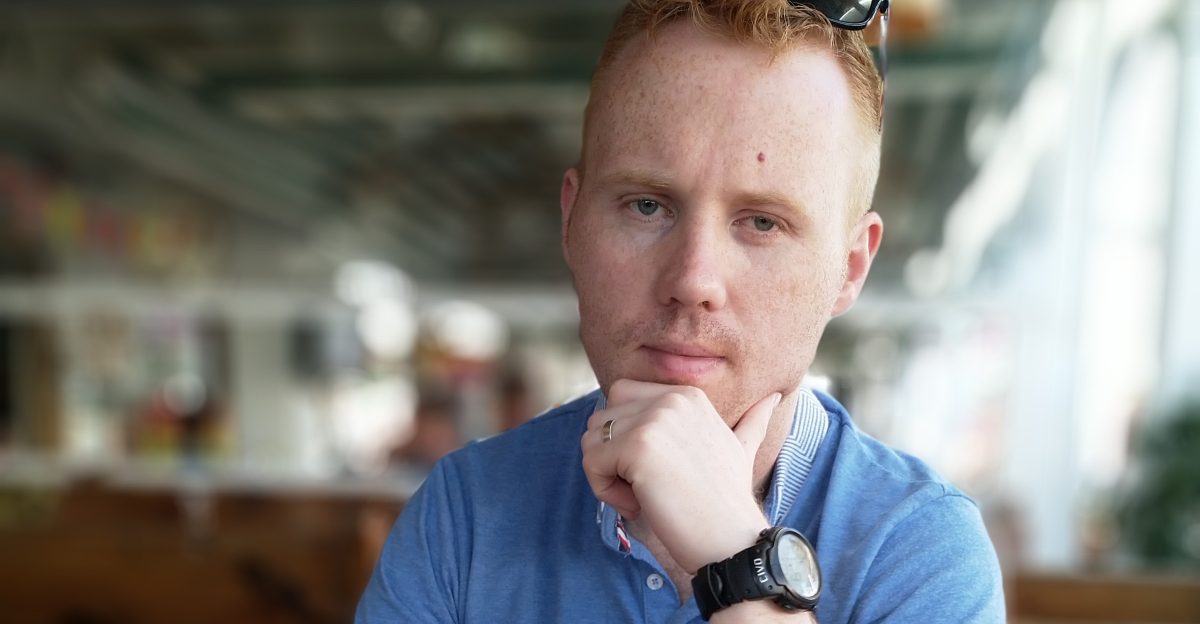
This is Martin Taylor.

Husband, father, patriotic Scotsman, and die-hard Hearts supporter (the crazy fool).

In addition, Martin is a prominent Parkinson’s advocate.

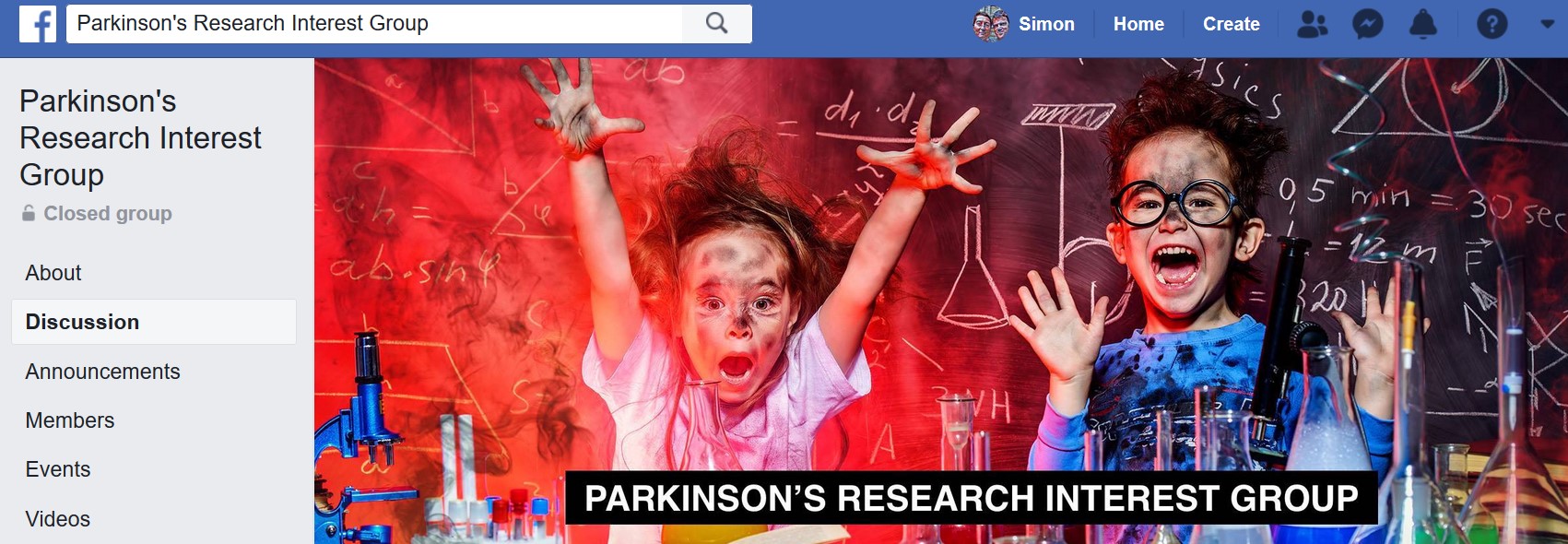
Diagnosed in December 2014 with young onset Parkinson’s at age 32, Martin has chosen not to rest on his laurels, and has become a very active member of the Parkinson’s community, being involved with the very dynamic Edinburgh Parkinson’s Research Interest Group, and in 2017 he started the Facebook Parkinson’s Research Interest Group (or PRIG) which now has 2100+ members (including yours truly).

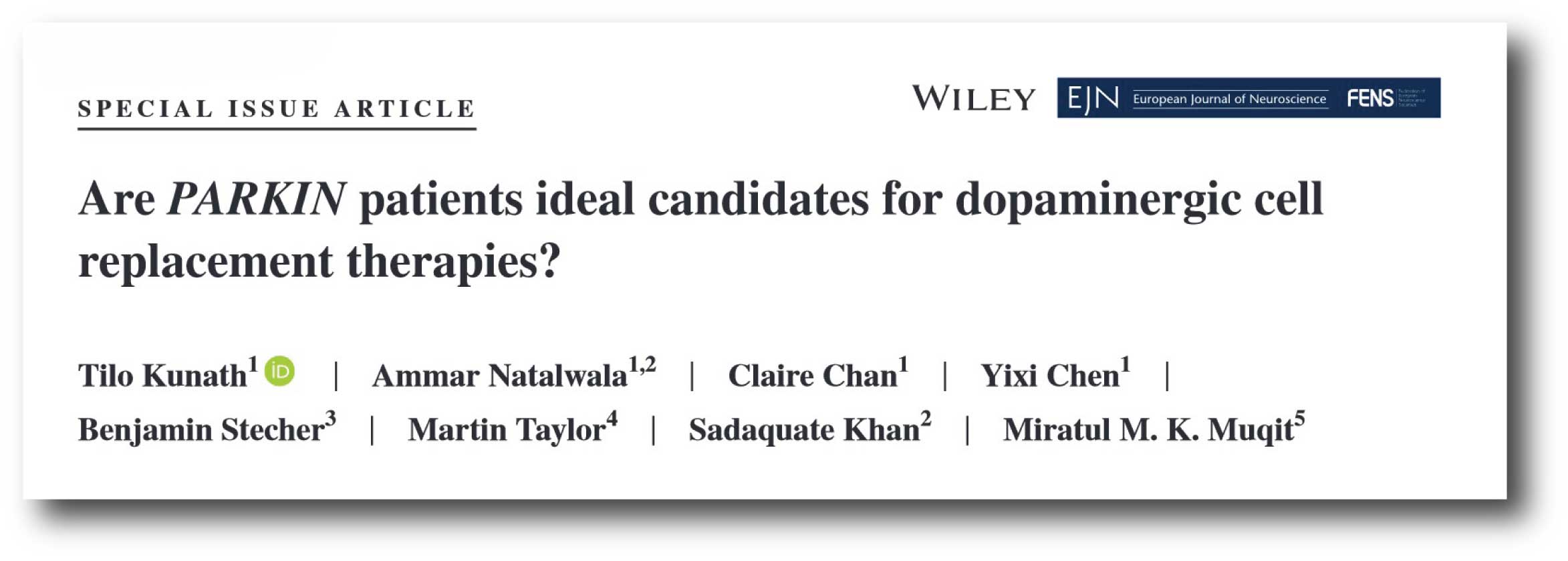
Martin is also a co-author of a very interesting article recently published in the European Journal of Neuroscience:

Title: Are PARKIN patients ideal candidates for dopaminergic cell replacement therapies?
Authors: Kunath T, Natalwala A, Chan C, Chen Y, Stecher B, Taylor M, Khan S, Muqit MMK.
Journal: Eur J Neurosci. 2018 Dec 26.
PMID: 30586214                (This report is OPEN ACCESS if you would like to read it)

Note: This article is part of a special edition tribute to Tom Isaacs (co-founder of the Cure Parkinson’s Trust), and there are a number of very interesting OPEN ACCESS articles in that issue.

In their article, the authors propose that individuals with early onset Parkinson’s that is associated a PARKIN genetic variant are the ideal candidates for cell transplantation therapy.

Interesting. Tell me more. But what is a PARKIN genetic variant?

Continue reading “An idea whose time has come”

Exciting Exenatide Exosomes


Recent analysis of blood samples collected during the Phase II clinical trial of Exenatide in Parkinson’s has uncovered a very interesting finding that could have major implications for not only Parkinson’s, but for many different neurological conditions.

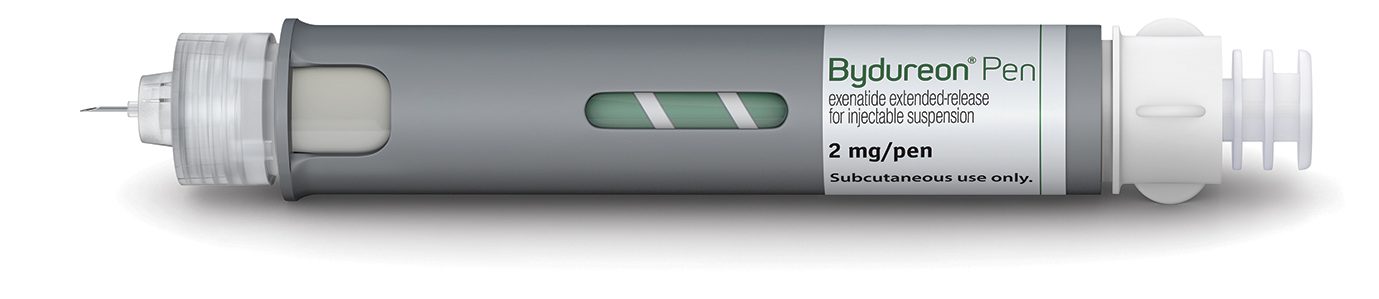
Exenatide is a treatment that helps to control glucose levels in people with diabetes. More recently, however, it has been suggested that this drug may also have beneficial effects in Parkinson’s. A collection of clinical trials in Parkinson’s are currently unway to test this idea.

The researchers who conducted a Phase II clinical trial of Exenatide in Parkinson’s have analysed ‘exosomes‘ collected from the blood of participants, and they found something rather remarkable.

In today’s post we will discuss what exosomes are, what the researchers found, and why their discovery could have major implications for all of neurological research.


Here on the SoPD website we have discussed at length the Phase II clinical trial of Exenatide in Parkinson’s (Click here, here and here to read more about this).

This week, however, researchers involved in the study reported yet another really interesting finding from the trial. And this one could have profound consequences for how we study not only Parkinson’s, but many other neurological conditions.

What did they find?

Last week this report was published:

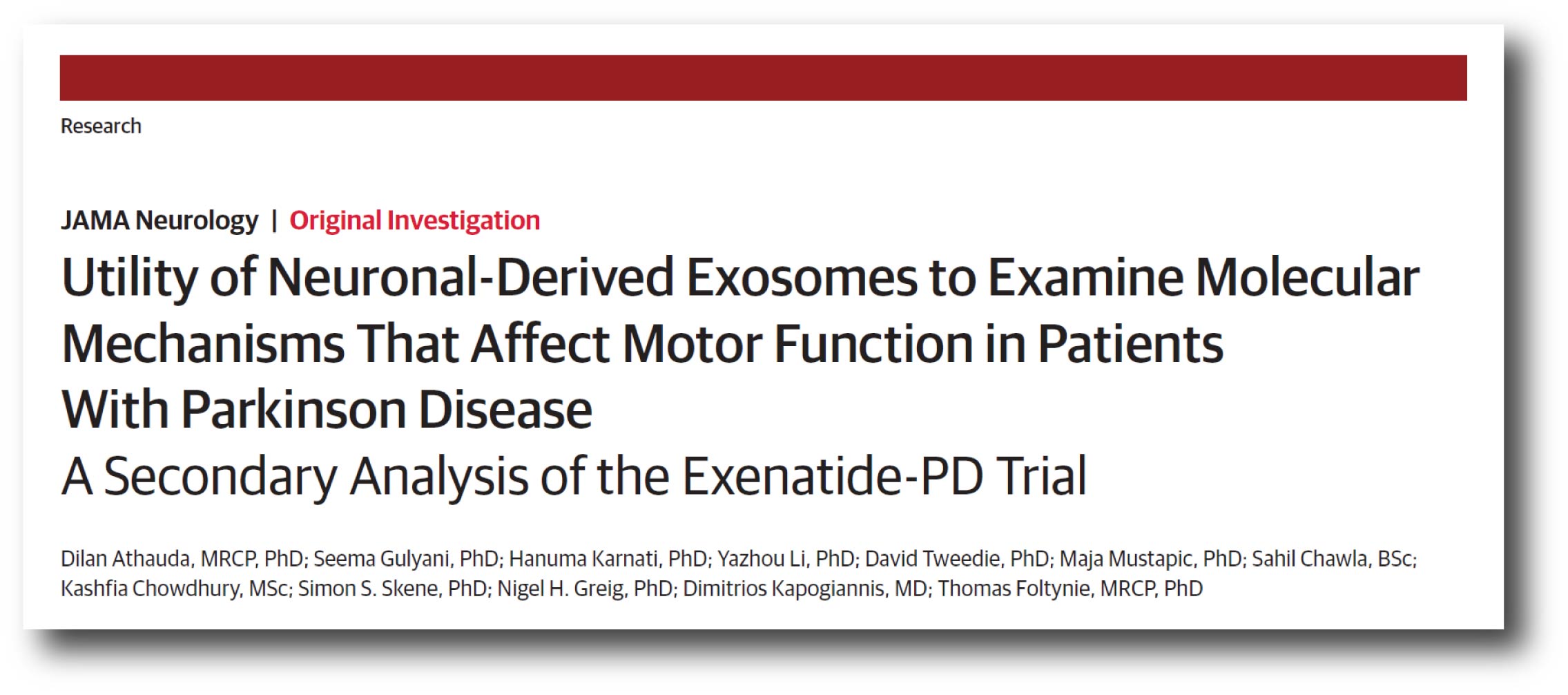
Title: Utility of Neuronal-Derived Exosomes to Examine Molecular Mechanisms That Affect Motor Function in Patients With Parkinson Disease: A Secondary Analysis of the Exenatide-PD Trial.
Authors: Athauda D, Gulyani S, Karnati H, Li Y, Tweedie D, Mustapic M, Chawla S, Chowdhury K, Skene SS, Greig NH, Kapogiannis D, Foltynie T.
Journal: JAMA Neurol. 2019 Jan 14. doi: 10.1001/jamaneurol.2018.4304. [Epub ahead of print]
PMID: 30640362

In the Exenatide Phase II clinical trial, 60 people with moderate Parkinson’s were randomly assigned to receive either 2mg of Exenatide or placebo once weekly for 48 weeks followed by a 12-week washout (no treatment) period. The results suggested a stablisation of motor features over the 48 weeks of the study in the treated group (while the condition in the placebo group continued to progress).

During the study (which was conducted between June 2014 – June 2016), blood samples were collected at each assessement.

From those blood samples, serum was collected and analysed.

Remind me again, what is serum?

Continue reading “Exciting Exenatide Exosomes”

Placebo. Nocebo. Gene-cebo?


In previous posts, we have discussed some of the potential benefits of knowing your genetic status with regards to Parkinson’s. For example, knowing if you have a certain genetic risk factor could make eligible for taking part in a particular clinical trial.

There may, however, also be some benefits in NOT knowing your genetic status.

New research suggests that simply learning of a genetic risk can alter one’s physiology.

In today’s post, we will review the results of this new research and discuss what it could mean for the Parkinson’s community.


Source: LongRoom

When I was a kid, I thought I was superman.

Then one of the adult figures in my life told me that I wasn’t.

And all of a sudden I lost my ability to fly.

Many years have gone by now, and its only recently that I’ve discovered that that person was actually wrong: I am Superman.

Source: Scarymommy

But curiously my powers of levitation have not (yet) returned…

The power of suggestion has always amazed me. Whether it is based on what others tell us, or on what we tell ourselves, it is truly wonderous the enormous impact some of the information we are given has on our lives. We seemingly get told something and quite often it is just accepted as gospel.

Source: izquotes

But as we take in that information, there can also be consequences (perceived or otherwise) resulting from that knowledge. And this can have important implications for us and how we interact with the world. In fact, some information that we absorb can affect our very physiology.

Can you give me an example?

Continue reading “Placebo. Nocebo. Gene-cebo?”

The “What would you do?” post


In this post, I will address a question that I get asked a lot: What would you do if you were diagnosed with Parkinson’s today?

Before we start, please understand that there is no secret magical silver bullet to be discussed in the following text. Such a thing does not exist, and anyone offering such should be treated with caution.

Rather, in this post I will spell out some ideas (or a plan of attack) of what I would consider doing if I was confronted with a diagnosis today and how I would approach the situation.


Source: Fifteendesign

An email I received this week:

Hi Simon,
Love the website. I think you are amazing and I love your dreamy eyes and perfect hair.
[ok, I may be exaggerating just a little bit here]
Given everything that you have read about Parkinson’s, what would you do if you were diagnosed with Parkinson’s today?
Kind regards,
John/Jane Doe

I get this kind of correspondence a lot, and you will hopefully understand that I am very reluctant to give advice on this matter, primarily for two important reasons:

  1. I am not a clinician. I am a former research scientist who worked on Parkinson’s for 15 years (and now help co-ordinate the research at the Cure Parkinson’s Trust). But I am not in a position to be giving medical/life advice.
  2. Even if I was a clinician, it would be rather unethical for me to offer any advice over the internet, not being unaware of the personal medical history/circumstances in each case.

While I understand that the question being asked in the email is a very human question to ask – particularly when one is initially faced with the daunting diagnosis of a condition like Parkinson’s – this is not an email that I like to receive.

I am by nature a person who is keen to help others, but in this particular situation I simply can’t.

Why not?

Continue reading “The “What would you do?” post”

The road ahead: Parkinson’s research in 2019


“In preparing for battle I have always found that plans are useless, but planning is indispensable”

This quote has been attributed to General Dwight D. Eisenhower (Click here for the full story of this quote), and while the sentence does not immediately make a whole lot of sense, it does apply to our discussion here regarding research in Parkinson’s.

At the start of each year, it is a useful practise to layout what we are expecting and hoping to see in the world of Parkinson’s research over the next 12 months. This can help us better anticipate where ‘the battle’ may go, and allow us to prepare for things further ahead. Where it actually finishes is unpredictable, but where we currently stand will hopefully provide us with a useful measure.

In this post, I will lay out what we believe the next 12 months holds for us with regards to the Parkinson’s-related research.

And be warned: This is usually the longest post of the year.


Source: Protradeunited

In the introduction to last year’s outlook I wrote of the dangers of having expectations (Click here to read that post). A wise man (the great Charlie Munger) once said: If you want to lead a happy life, lower your expectations.

It is good advice, and as a rule, I try to follow it in life – I am a cup is completely empty kind of guy. I have no expectations, and so when anything happens – it is magic. I do have ambitions, but no expectations.

And others wrote about managing expectations in 2018 (Click here for a great example).

To put it plainly: Expectations are the primary cause of all disappointment.

Sage wisdom. Source: Unitystone

And it is important, as we look ahead at the next 12 months of Parkinson’s research, we need to be very careful not to have too many (or to build up too many) expectations.


Right, now, with all of that said, it may now befuddle some readers that the theme of the 2019 SoPD outlook is ‘great expectations‘.

Let me explain:

Continue reading “The road ahead: Parkinson’s research in 2019”

2018: Year in review


In this end-of-year post we review the year that was 2018.

Month-by-month we will briefly discuss some of the major pieces of research/announcement that have define the year and advanced our understanding of Parkinson’s.

The list is based on nothing more than the author’s personal opinion – apologies to any researchers who feel left out.

And in the next post we will consider what the year ahead (2019) has in store for us.


Source: a-star

In the 525600 minutes that made up 2018, a lot happened in the world of Parkinson’s research.

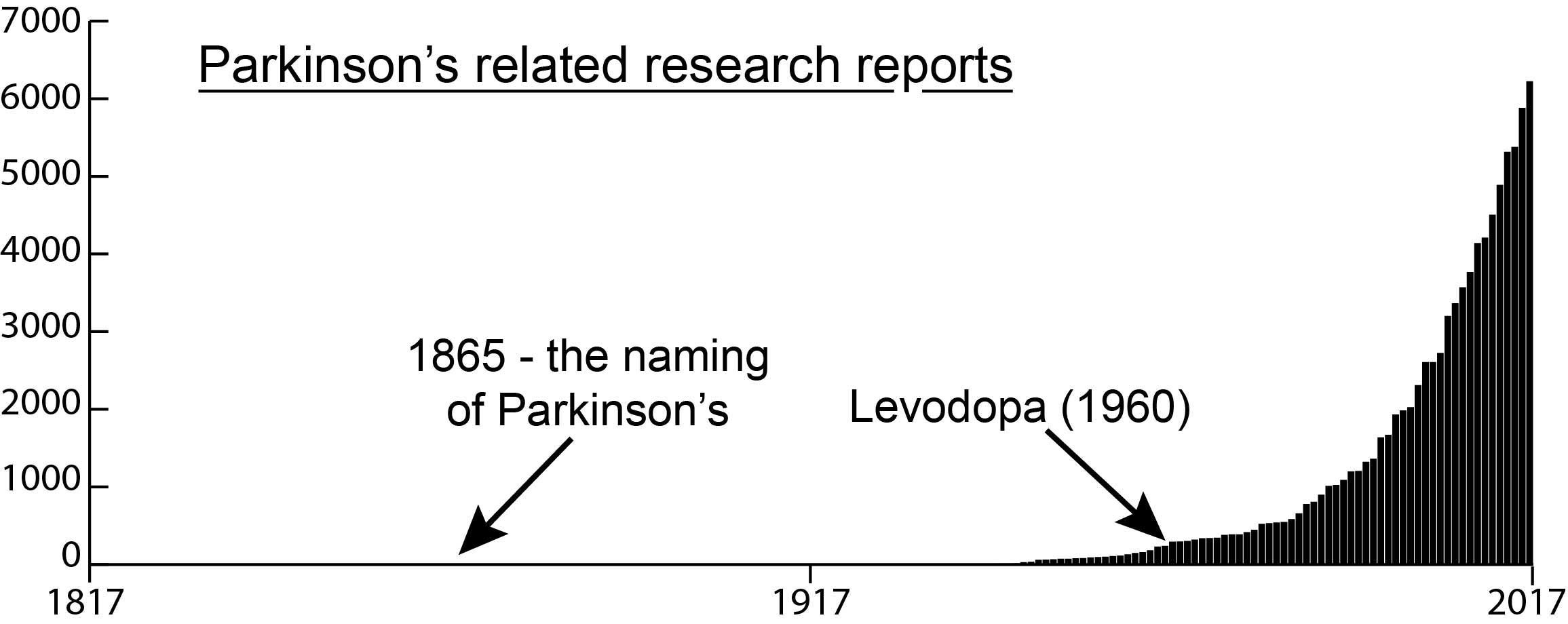
A total of 7672 research papers were published with the keyword ‘Parkinson’s’ according to the Pubmed website (this compared to 7675 for all of 2017 – this obviously represents a dismal failure for the Parkinson’s research community: the first time in quite a while that we haven’t beaten the number of research reports from the previous year!

I am of course kidding. The quantity of research reports is irrelevant. But it does make me smile that we missed the mile stone by just 3 papers!

2018 has been another amazing year for Parkinson’s research. And while I appreciate that a comment like this means little to someone living with the condition on a day-to-day, remarkable progress has been made not only in our understanding of the condition, but also in the various ways in which the research is being done and potential therapies are approaching the condition.

In this post, we will review the year that was by briefly summarising some of the major research-related events of each month in 2018.

And that journey begins with:

Continue reading “2018: Year in review”

Monthly Research Review – December 2018


At the end of each month the SoPD writes a post which provides an overview of some of the major pieces of Parkinson’s-related research that were made available during December2018.

The post is divided into five parts based on the type of research (Basic biology, disease mechanism, clinical research, other news, and Review articles/videos). 


So, what happened during December 2018?

In world news:

7th December  – The U.N.’s International Telecommunication Union reported that, by the end of 2018, more than half – a full 51.2 percent – of the world’s population will be using the Internet (Click here to read more about this).


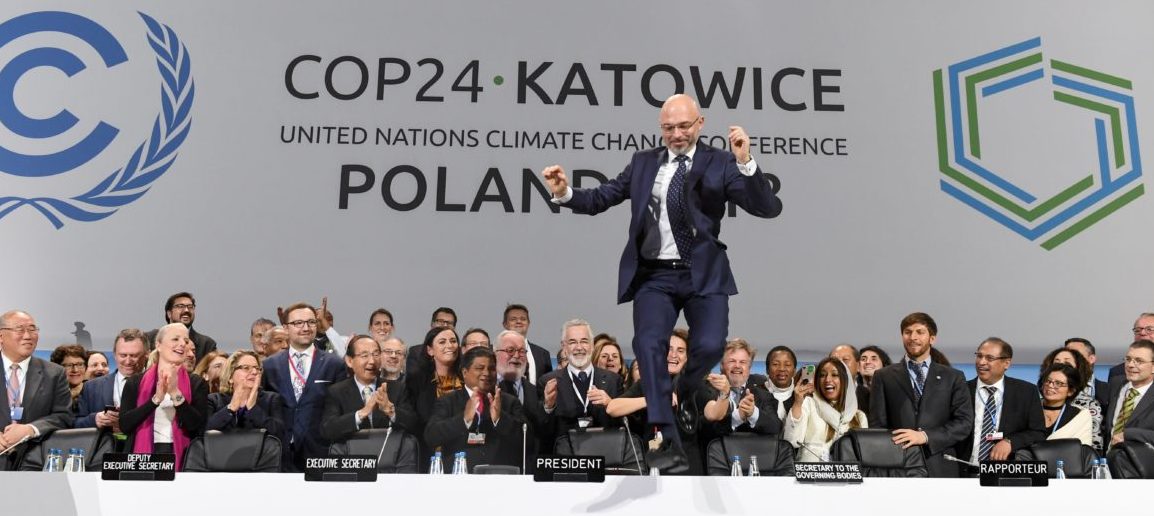
8th December – Drama at the 24th Conference of the Parties to the United Nations Framework Convention on Climate Change (COP24) meeting in Katowice, Poland. The US, Saudi Arabia, Russia and Kuwait object to adopting the scientific report – which was commissioned at the 2015 meeting. The study suggests that the world is now “completely off track” on climate change, heading towards a 3 degree C. rise by the end of this century rather than a mere 1.5 degree C. rise (Click here to read more about this).

12th December – Negotiators at COP24 in Katowice finally secured an agreement on a range of measures that will make the Paris climate pact operational in 2020 (Click here to read more about this).


17th December – Astronomers announced that they have identified the most distant object ever observed within our solar system. Currently named “2018 VG18” (but nicknamed ‘Farout’), the 500km (310 miles) wide body is approximately is 120 times further away from the sun than Earth is (to put that in perspective, Pluto is only 34 times – Click here to read more about this).


In the world of Parkinson’s research, a great deal of new research and news was reported:

In December 2018, there were 597 research articles added to the Pubmed website with the tag word “Parkinson’s” attached (7672 for all of 2018 – compared to 7675 for all of 2017….seriously?!? Just 3 papers difference?!?). In addition, there was a wave to news reports regarding various other bits of Parkinson’s research activity (clinical trials, etc).

The top 5 pieces of Parkinson’s news

Continue reading “Monthly Research Review – December 2018”

From Alchemy to Alkahest


Numerous readers have asked about a curious new clinical trial being conducted by a biotech firm called ‘Alkahest’. The company has recently initiated a large (90 participants) Phase II study of their Parkinson’s-focused treatment called GRF6021.

This is an experimental, intravenously-administered treatment, which is derived from a components of blood.

In today’s post, we will discuss some of the research behind GRF6021, what this new clinical trial involves, and have a look at some other interesting Parkinson’s-related activities that Alkahest has ongoing.


Source: SFN

The Society of Neuroscience meeting is the largest annual research conference on brain relelated research, bringing approximately 40,000 neuroscientists together in October. At the Society of Neuroscience meeting in San Diego this year, however, there was considerable interest focused on several presentations dealing with blood.

The first presentation was from a group of researchers at the University of California, San Francisco.

The research team – led by group leader Dr Saul Villeda – were presenting new data suggesting that circulating immune cells were most likely responsible for the age-related reduction in neurogenesis (formation of new neurons) that occurs in certain areas of the brain (Click here to read the abstract for this presentation). They reported that the aged hematopoietic (blood) system led to impaired neurogenesis. Their take-home-message: the older the blood system, the less new cells being produced by the brain.

Sounds interesting right?

Well, at the same time in another part of the conference a second group of researchers were presenting equally impressive data: They have zeroed in of a small fraction of normal, young blood that they believe has interesting properties, particularly in reversing the cognitive deficits associated with aging mice (Click here to read the abstract of this presentation).

Their research has even narrowed down to a specific protein, called C-C chemokine receptor type 3 (or CCR3), which when inhibited was found to improve cognitive function and decreased neuroinflammation in aged mice (Click here to read the abstract of the presentation).

The humble lab mouse. Source: Pinterest

But specifically for our interests here at the SoPD, these same researchers displayed data which demonstrated that treatment with a novel fraction of human plasma resulted in significant improvements in motor function, cell survival and neuroinflammation three weeks after treatment in multiple mouse models of Parkinson’s (Click here to read the abstract of the poster).

(PLEASE NOTE: The author of this blog was not present at the SFN meeting and is working solely with the abstracts provided)

This second group of scientists were from a company called Alkahest, and they have recently started a clinical trial for people with Parkinson’s based on these results. That trial has garnered quite a bit of interest in the Parkinson’s community.What do Alkahest do?

Continue reading “From Alchemy to Alkahest”

The Parkinson’s Nebula?


There is a great deal of interest in genetic risk factors in Parkinson’s at the moment. A number of companies are providing direct-to-consumer services which provide individuals with some information about their family history and whether they have any of the more common genetic variations that are associated with medical conditions, like Parkinson’s.

Recently a new genetic data company has started – called Nebula Genomics – and they are offering a slightly different kind of service.

While many of the direct-to-consumer genetic companies have a business model that involves selling on genetic information to third parties, Nebula is offering a more patient-empowering option.

In today’s post, we will discuss the genetics of Parkinson’s, what Nebula Genomics is offering, and how this new service could be useful for the Parkinson’s community.


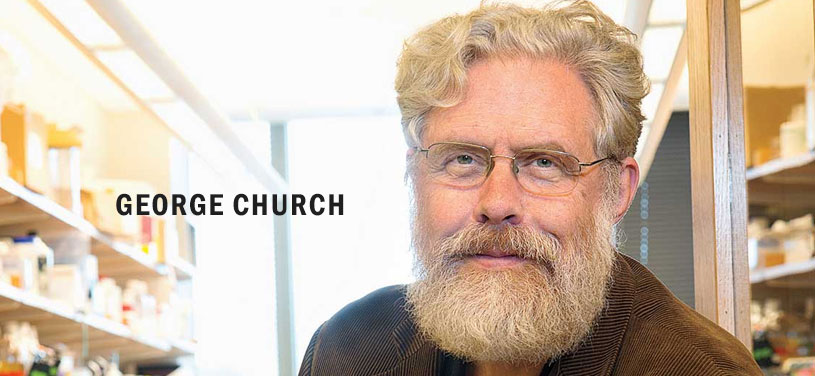
Prof George Church. Source: Biospace

Professor George Church is a person most readers will have never heard of.

He is the Robert Winthrop Professor of Genetics at Harvard Medical School and Professor of Health Sciences and Technology at Harvard and MIT, and was a founding member of the Wyss Institute for Biologically Inspired Engineering at Harvard.

He has co-author of over 500 academic papers, 143 patents and co-founded 22 biotech companies. In addition, he has participated in technology development, advising most of the major Genetic Sequencing companies, and he has been at the forefront of genetic research since the 1980s when he was involved with setting up the Human Genome Project.

His impact in the world of genetics has been tremendous.

But Prof Church is also something of a maverick. A left-field thinker. A disrupter.

He is a great supporter of open access genome sequencing and shareable human medical data. He is also keen to bring back extinct species, such as the Woolly Mammoth (Click here for more on this idea).

The return of the woolly mammoth. Source: Phys

Most recently, however, his name has been associated with a new company called Nebula Genomics.

What does Nebula Genomics do?

Continue reading “The Parkinson’s Nebula?”

EuPaTh: The Italian connection


The SoPD has a policy of not advertising or endorsing products/services.

This rule is in place to avoid any ethical/conflict of interest situations. It does little, however, to stop folks from bombarding the comments sections with links for wondrous magical cures which probably involve more ‘magical’ than actual cure.

Having said all that, every now and then I find or read about something that I think may be of interest to readers. In many of those cases, I can not vouch for the information being provided, but where I think there is the potential for readers to benefit, I am happy to take a chance and share it.

Today’s post is all about one such case: The European Parkinson Therapy Centre


Until very recently, I was working in Parkinson’s research centre in Cambridge (UK).

I conducted both lab- and clinic-based research on Parkinson’s in the lab of Prof Roger Barker. And it was in the clinic – several years ago – that I started hearing about a mysterious place that was not offering ‘to cure’ people of Parkinson’s, but rather helping them to live a better life with the condition.

Initially it was just a trickle of questions:

“Have you ever heard of this therapy place in Europe for people with Parkinson’s?” (“Nope, sorry” was my response).

But then an individual came in for their assessment, and spoke with tremendous enthusiasm about their own personal experience of visiting “this wonderful place in Italy” (“Sounds very interesting,” was my response, “Tell me more“).

Gradually, more and more people started sharing their own stories with me (both in the clinic, at support group meetings, and via correspondence to the SoPD website) about the place in Italy. And eventually it all led to me making some inquiries about the European Parkinson Therapy Centre.

What is the European Parkinson Therapy Centre?

Continue reading “EuPaTh: The Italian connection”