When SERCA goes berserker

In a recent SoPD post, we discussed the importance of calcium and looked at how it interacts with the Parkinson’s-associated protein alpha synuclein, affecting the function and clustering of that protein.

During the writing of that post, another interesting research report was published on the same topic of calcium and alpha synuclein. It involved a different aspect of biology in the cell – a structure called the endoplasmic reticulum – but the findings of that study could also explain some aspects of Parkinson’s.

In today’s post, we will review the new research report, consider the biology behind the findings and how it could relate to Parkinson’s, and discuss how this new information could be used.


The original berserker. Source: Wikipedia

I can remember my father often saying “If you kids don’t be quiet, I’ll go berserk!”

Growing up, I never questioned the meaning of the word ‘berserk‘.

I simply took it as defining the state of mindless madness that my dad could potentially enter if we – his off-spring – pushed him a wee bit too far (and for the record, Dad actually ‘going berserk’ was a very rare event).

My father. But only on the odd occasion. Source: Screenrant

But now as I find myself repeating these same words to my own off-spring, I am left wondering what on Earth it actually means?

What is ‘berserk‘?

Continue reading “When SERCA goes berserker”

Monthly Research Review – April 2018

At the end of each month the SoPD writes a post which provides an overview of some of the major pieces of Parkinson’s-related research that were made available during April 2018.

The post is divided into five parts based on the type of research (Basic biology, disease mechanism, clinical research, other news, and a new feature: Review articles/videos). 


So, what happened during April 2018?

In world news:

  • April 4–15th – The 2018 Commonwealth Games were held in Gold Coast, Queensland, Australia (New Zealand came 5th in the medals tally… not bragging, just saying).

Source: Vimeo

  • April 27th – Kim Jong-un crosses into South Korea to meet with President Moon Jae-in, becoming the first North Korean leader to cross the Demilitarised Zone since its creation in 1953. In initial small steps towards reconciliation, South Korea said it would remove loudspeakers that blare propaganda across the border, while North Korea said it would shift its clocks to align with its southern neighbour.

BFFs? Source: QZ

Source: Plus

  • And finally the city of Trier in Germany is already struggling to keep up with demand for ‘0-euro’ notes, bearing the face of its most famous son and communism’s creator Karl Marx. Sold for 3 euros each, the notes are part of celebrations for his 200th birthday (5th May 1818).

You get what you pay for. Source: DDR

In the world of Parkinson’s research, a great deal of new research and news was reported:

Continue reading “Monthly Research Review – April 2018”

IBD+TNF AB ≠ PD?

The cryptic title of this post will hopefully make sense by the time you have finished reading the material present here.

This week, new research from the USA points towards an increased risk of Parkinson’s (PD) for people that suffer from inflammatory bowel disease (IBD). 

That same research, however, also points towards a clinically available treatment that appears to reduce the risk of Parkinson’s in individuals affected by inflammatory bowel disease. That treatment being: anti–tumor necrosis factor antibodies (TNF AB). Is that title making sense yet? If not, read on.

In today’s post, we will outline what inflammatory bowel disease is, review what the new research found, and discuss what is known about TNF in Parkinson’s. 


Inflammatory bowel disease. Source: Symprove

Inflammatory bowel disease (or IBD) is one of these umbrella terms that is used to refer to a group of inflammatory conditions of the large and small intestine:

The large and small intestine. Source: Adam

The symptoms of IBD can include abdominal pain, diarrhoea, vomiting, rectal bleeding, severe internal cramps/muscle spasms in the region of the pelvis, and weight loss.

The most common forms of IBD are Crohn’s disease and ulcerative colitis.

There has been an increased incidence of IBD since World War II, which could be associated with increased awareness and reporting of the condition, but it could also be linked with increases in meat consumption (Click here to read more about this). For example, in 2015, an estimated 1.3% of U.S. adults (3 million) were diagnosed with IBD, which was a large increase on the levels in 1999 (0.9% or 2 million adults – Source: CDC).

This is delightful, but what does it have to do with Parkinson’s?

So this week, an interesting study was published on the Journal of the American Medical Association – Neurology edition website:

Continue reading “IBD+TNF AB ≠ PD?”

Could heart failure medication be good for Parkinson’s?

Bumetanide (Bumex) is a diuretic drug (a medication that removes water, by increasing the production of urine). It is used to treat swelling caused by heart failure or liver or kidney disease. 

Recently, researchers in France have been exploring its use in Parkinson’s, and their results are really interesting.

‘Interesting’ because they not only point towards a clinically available drug that could (potentially) be repurposed for the treatments of Parkinson’s, but they also help to explain how our brains control movement.

In today’s post we will review the new results, discuss what they suggest about our ability to move, and we will look at efforts to take this drug to the clinic for Parkinson’s.


Source: Timemail

Heart failure (sometimes referred to as congestive heart failure) occurs when the heart is unable to pump sufficiently enough to maintain the required blood flow to meet the body’s needs. The most common causes of heart failure include coronary artery disease, high blood pressure, atrial fibrillation,valvular heart disease, and lifestyle issues (such as excess alcohol use). Overall around 2% of adults have heart failure; in those over the age of 65, this percentage increases to 6–10%. In 2015, it was estimated to affected approximately 40 million people worldwide (Source).

Common symptoms include:

  • shortness of breath
  • excessive tiredness
  • leg swelling.

A common treatment option for heart failure are diuretics.

What are diuretics?

Diuretics (sometimes called water pills) are medications that have been designed to increase the amount of water and salt expelled from the body as urine.

There are three types of diuretic medications. They are:

  • Thiazide
  • Loop
  • Potassium-sparing

Thiazide diuretics are the most commonly prescribed, generally for the treatment of high blood pressure. This class of drugs not only decreases the level of fluids in your body, they also cause your blood vessels to relax. Potassium-sparing diuretics reduce fluid levels in your body without – as the label suggests – causing you to lose potassium. The other types of diuretics can cause you to lose potassium, which can result in other health complications such as arrhythmia.

And then there are loop diuretics, which also decrease the level of fluid in the body.

But some loop diuretics have additional properties. And today we are going to have a look at one of them in the context of Parkinson’s.

It is called Bumetanide.

Why is Bumetanide interesting for Parkinson’s?

Continue reading “Could heart failure medication be good for Parkinson’s?”

Ibudilast: A Phosphodiesterase inhibitor

A reader recently asked me about an experimental drug called Ibudilast.

It is a ‘Phosphodiesterase 4 inhibitor’.

Recently there was a very interesting result in a clinical trial looking at Ibudilast in a specific neurodegenerative condition. Sadly for the reader that condition was not Parkinson’s, in fact very little research has been done on Ibudilast in Parkinson’s

In today’s post we will look at what Phosphodiesterase inhibitors are, how they work, and discuss why Ibudilast may not be such a good experimental treatment for Parkinson’s.


On April 21-27th, 2018, the American Academy of Neurology (AAN) will hold their 70th Annual Meeting in Los Angeles (California).

I will not be at the meeting, but I will definitely be keeping an eye out for any news regarding the results of one particular clinical trial. At the meeting, a biopharmaceutical company called MediciNova Inc. will be presenting data regarding one of their clinical trials.

The presentation, entitled Ibudilast – Phosphodiesterase Type 4 Inhibitor – Bi-Modal Therapy with Riluzole in Early Cohort and Advanced Amyotrophic Lateral Sclerosis (ALS) Patients – Final Report and Future Directions (Source) will be presented by principal investigator of the clinical study, Dr. Benjamin Rix Brooks, of the Carolinas HealthCare System’s Neuromuscular/ALS-MDA Center at Carolinas HealthCare System Neurosciences Institute.

Dr Brooks will be presenting the results of a single-center, randomized, double-blind, placebo-controlled clnical trial which was conducted to evaluate the safety, tolerability and clinical endpoint responsiveness of a drug called Ibudilast (or MN-166) in subjects with the neurodegenerative condition, Amyotrophic Lateral Sclerosis (or ALS – also known as motor neuron disease; Click here to read a previous SoPD post about ALS and Click here to learn more about this clinical trial).

What is Ibudilast?

Ibudilast is a phosphodiesterase inhibitor.

What is a phosphodiesterase inhibitor?

Continue reading “Ibudilast: A Phosphodiesterase inhibitor”

Objective measures: Getting smart about pills

There has been a lot of discussion on this site (and elsewhere on the web) regarding the need for more objective systems of measuring Parkinson’s – particularly in the setting of clinical trials.

Yes, subjective reports of patient experience are important, but they can easily be biased by ‘placebo responses’.

Thus, measures that are beyond the clinical trial participants conscious control – and focused on biological outcomes – are needed. 

In today’s post, we will consider one possible approach: Smart pills. We will discuss what they are, how they work, and how they could be applied to Parkinson’s research.


Source: Chicagotribune

In order to encourage a growing discussion regarding objective measures of Parkinson’s (and to follow up on previous rants – Click here and here for examples), I have decided to regularly (once a month) highlight new technologies that could provide the sort of unbiased methods of data collection that are required for assessing whether a treatment is having an impact on Parkinson’s.

Today, we will look at smart pills.

What is a smart pill?

Continue reading “Objective measures: Getting smart about pills”

Making. It. Personal.

This is one of those posts (read: rants) where I want to put an idea out into the ether for someone to chew on. It starts with a very simple question:

Why is ‘the drug’ the focus of a clinical trial?

If our goal is to find beneficial therapies for people with Parkinson’s, then the way we currently clinically test drugs is utterly nonsensical.

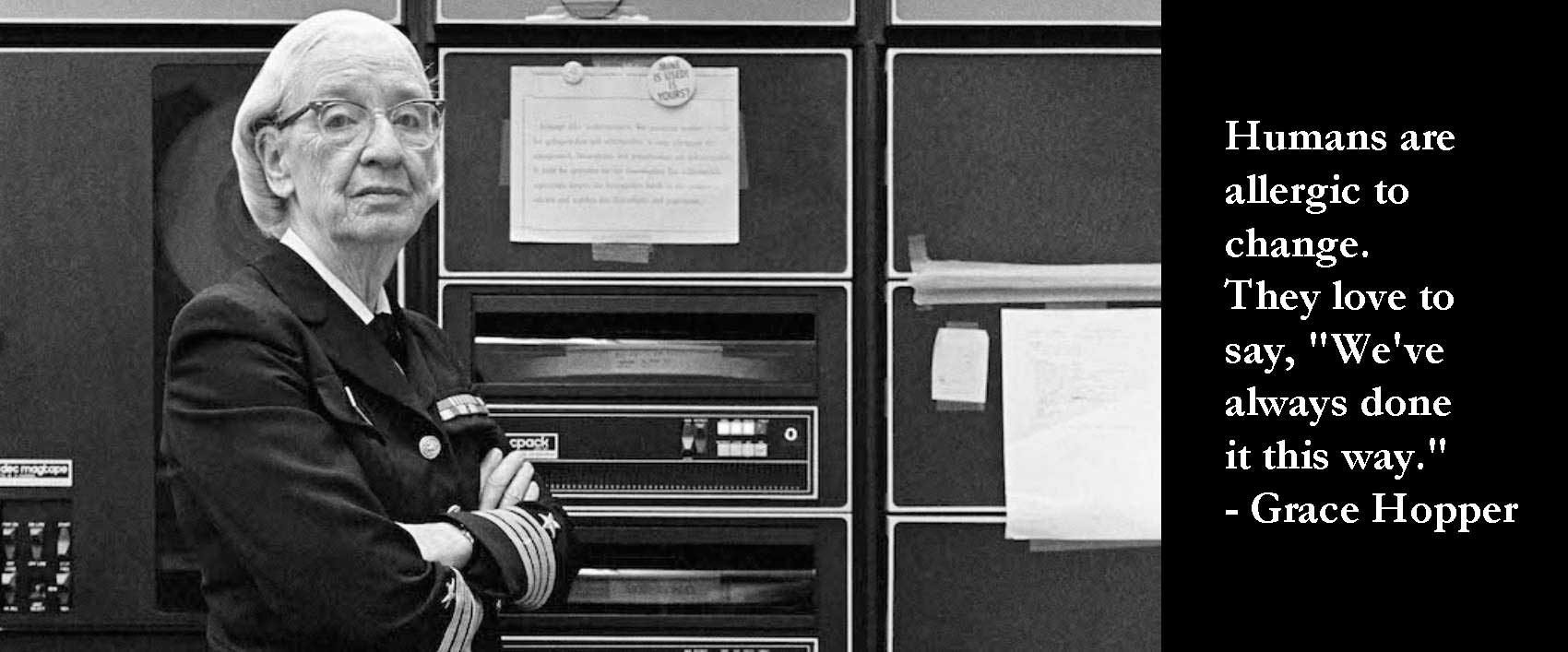
And if we do not change our “we’ve always done it this way” mindset, then we are simply going to repeat the mistakes of the past. Others are changing, so why aren’t we?

In today’s post, we will consider one possible alternative approach.


I hope you know who Grace Hopper is – if not, click here. Source: Mentalfloss

Why is ‘the drug‘ the focus of a clinical trial?

The way we clinically test drugs makes absolutely no sense when you actually stop and think about it.

Other medical disciplines (such as oncology) have woken up to this fact, and it is time for the field of Parkinson’s research to do this same.

Let me explain:

Continue reading “Making. It. Personal.”

The dilemma of success

Late last year, I wrote a post for Parkinson’s UK‘s excellent blog on Medium.

My piece was called the Dilemma of Success, and it explored a hypothetical situation that we may very well face in the not-so-distant future.

Optimistic as I am about the future of Parkinson’s research, I think this is a very serious issue – one which the Parkinson’s community needs to discuss and start planning for. I am re-posting it here today as I am keen for some thoughts/discussion on this matter.

 
BP

Lord Robert Baden-Powell. Source: Utahscouts

My scout master looked around the horse shoe, making eye contact with each of us, before asking a simple question:

“When did Noah build the ark?”

My fellow scouts and I looked at each other. Some of us were wondering if the guy had completely lost the plot and somehow thought that it was Sunday morning and he was doing the sermon. Others seriously looked like they were trying to calculate an exact date.

He waited a moment for one of us to offer up some idiotic attempt at an answer, before he solemnly said:

“Before the rain”

It’s one of those childhood moments that didn’t make sense at the time, but comes back to haunt you whenever you can foresee certain troubles coming over the hill towards you.


The dilemma of success

It will be nice to have this problem, but it will still be a problem.
And we need to plan for it

Continue reading “The dilemma of success”

The EMPRSN talk #1

Recently I was invited to speak at the 6th Annual East Midlands Parkinson’s Research Support Network meeting at the Link Hotel, in Loughborough. The group is organised and run by the local Parkinson’s community and supported by Parkinson’s UK. It was a fantastic event and I was very grateful to the organisers for the invitation.

They kindly gave me two sessions (20 minutes each) which I divided into two talks: “Where we are now with Parkinson’s research?” and “Where we are going with Parkinson’s research?”. Since giving the talk, I have been asked by several attendees if I could make the slides available.

The slides from the first talk can be found by clicking here.

I have also made a video of the first talk with a commentary that I added afterwards. But be warned: my delivery of this second version of the talk is a bit dry. Apologies. It has none of my usual dynamic charm or energetic charisma. Who knew that talking into a dictaphone could leave one sounding so flat.

Anyways, here is the talk – enjoy!

I hope you find it interesting. When I have time I’ll post the second talk.

Resveratrol’s neglected siblings


We have previously discussed the powerful antioxidant Resveratrol, and reviewed the research suggesting that it could be beneficial in the context of Parkinson’s disease (Click here to read that post).

I have subsequently been asked by several readers to provide a critique of the Parkinson’s-associated research focused on Resveratrol’s twin sister, Pterostilbene (pronounced ‘Terra-still-bean’).

But quite frankly, I can’t.

Why? Because there is NO peer-reviewed scientific research on Pterostilbene in models of Parkinson’s disease.

In today’s post we will look at what Pterostilbene is, what is known about it, and why we should seriously consider doing some research on this compound (and its cousin Piceatannol) in the context of Parkinson’s disease.


Blue berries are the best natural source of Pterostilbene. Source: Pennington

So this is likely to be the shortest post in SoPD history.

Why?

Because there is nothing to talk about.

There is simply no Parkinson’s-related research on the topic of today’s post: Pterostilbene. And that is actually a crying shame, because it is a very interesting compound.

What is Pterostilbene?

Like Resveratrol, Pterostilbene is a stilbenoid.

Stilbenoids are a large class of compounds that share the basic chemical structure of C6-C2-C6:

Resveratrol is a good example of a stilbenoid. Source: Wikipedia

Stilbenoids are phytoalexins (think: plant antibiotics) produced naturally by numerous plants. They are small compounds that become active when the plant is under attack by pathogens, such as bacteria or fungi. Thus, their function is generally considered to part of an anti-microbial/anti-bacterial plant defence system for plants.

The most well-known stilbenoid is resveratrol which grabbed the attention of the research community in a 1997 study when it was found to inhibit tumour growth in particular animal models of cancer:

Continue reading “Resveratrol’s neglected siblings”