An interesting commentary on the interpretation of the Nilotinib trial results

DSK_4634s

“The devil is in the detail”

A frequently used quote and sage words when analysing scientific data, especially clinical trial data.

Nilotinib is a cancer drug from Novartis that has the Parkinson’s community very excited. In October 2015, researchers at Georgetown University announced that a phase 1 open-label clinical study involving 12 people with Parkinson’s had demonstrated some pretty impressive results (click here to read more about this). The results of that first clinical trial have been published (click here to read more on this), but follow up studies have been hampered by study design issues (click here for more on this).

Today a letter to the editor of the Journal of Parkinson’s disease (published in this months issue) was brought to our attention (click here to read the letter). It queries one important aspect of the results from that first Nilotinib clinical trial for Parkinson’s disease.

In the letter, Prof Michael Schwarzschild of Massachusetts General Hospital (Boston) notes that 8 of the 11 subjects in the study had their monoamine oxidase-B (MAO-B) inhibitor treatment withdrawn less than a month after starting the trial. The change of treatment regime was made due to “increased psychosis in the first 2–4 weeks after Nilotinib administration”.


For reasons which we will outline below, a small change like this in a clinical trial could have major implications for the end results.

What are MAO-B inhibitors?

After the chemical dopamine is used by a neuron, it is reabsorbed by the dopamine cell and broken down for disposal. MAO-B is the enzyme that breaks down dopamine.

maoi-inhibitor
Selegiline is an example of a MAO-B inhibitor. Source: KnowMental

As the schematic above illustrates, dopamine is released by dopamine neurons and then binds to a receptor on a neighbouring cell. After this process has occurred, the dopamine detaches and it is reabsorbed by the dopamine neuron via a particular pathway called the dopamine transporter. Back inside the dopamine cell, dopamine is quickly broken down by the enzyme MAO-B into 3,4-Dihydroxyphenylacetic acid (or DOPAC).

Now, by blocking MAO-B, more dopamine is left hanging around inside the cell where it can be recycled and used again. Thus, this blockade increases the level of dopamine in the brain, which helps with alleviating the motor features of Parkinson’s disease. This simple concept has lead to the development of MAO-B inhibitors which are used in the treatment of the condition.

Why is this important to the Nilotinib results?

Dopamine is broken down by MAO-B into DOPAC. DOPAC can be further broken down into Homovanillic acid (HVA), and both DOPAC and HVA are often used in research studies to indicate levels of dopamine activity. Higher levels of both (in theory) should indicate higher levels of dopamine. It is a means of inferring greater dopamine production.

In the published results of the Nilotinib clinical trial, the researchers used increased HVA levels as an indication of greater dopamine production as a result of taking Nilotinib. But Prof Schwarzschild is correct in providing a cautionary warning of over-interpreting this result. You see, by discontinuing the treatment of MAO-B inhibitors shortly after starting the study, one would expect to see a rise in HVA levels regardless of any effect Nilotinib may be having. Without the MAO-B inhibitors, more dopamine will be broken down thus resulting in increased levels of HVA (compared to the baseline measurements at the start of the study).

And this issue is particularly important since HVA measurements taken at the start of the study (before the MAO-B inhibitors were removed) were compared with HVA measurement taken at the end of the study.

Another commentary discussing the Nilotinib results published in July of last year (in the same journal) actually questioned the value of measuring HVA levels, saying that prior studies have suggested that HVA levels can vary greatly between subjects at similar disease stages, and in general do not correlate well with disease progression.

Whether the removal of MAO-B inhibitors alters the overall interpretation of the first clinical study results is a subject for debate. Something interesting did appear to be happening in the participants involved in the first trial (whether this could have been a placebo effect could also be debated). Obviously, as Prof Schwarzschild’s letter indicates, what we really require now is a carefully designed, placebo-controlled, randomised clinical trial to determine if the initial results can be replicated.

And we are still awaiting news regarding a start date for that delayed trial.

NRF2 and Parkinson’s disease

nrf2-effects-on-cells

Over the Christmas festive period an interesting study was published in the journal Proceedings of the National Academy of Sciences (PNAS). It was about a protein called Nuclear Factor Erythroid 2-Related Factor 2 (Nrf2) that has some impressive properties that could be good for Parkinson’s disease.

In today’s post we will review the results of the study and discuss what they mean for Parkinson’s disease.


free-radical-n0864buocgw24nkj0fwain64rsquzlav3pxwjiibho

We are going to be talking about free radicals. Source: PRIMOH2

Antioxidants are one of those subjects that is often discussed, but not well understood. So before we review the study that was published last week, let’s first have a look at what we mean when we talk about antioxidants.

What is an antioxidant?

An antioxidant is simply a molecule that prevents the oxidation of other molecules.

OK, but what does that mean?

Well, the cells in your body are made of molecules. Molecules are combinations atoms of one or more elements joined by chemical bonds. Atoms consist of a nucleus, neutrons, protons and electrons.

Oxidation is simply the loss of electrons from a molecule, which in turn destabilises the molecule.

Think of iron rusting. Rust is the oxidation of iron – in the presence of oxygen and water, iron molecules will lose electrons over time. Given enough time, this results in the complete break down of objects made of iron.

1112dp_01rust_bustingrusty_bottom_of_door

Rust, the oxidation of metal. Source: TravelwithKevinandRuth

The exact same thing happens in biology. Molecules in your body go through a similar process of oxidation – losing electrons and becoming unstable. This chemical reaction leads to the production of what we call free radicals, which can then go on to damage cells.

What is a free radical?

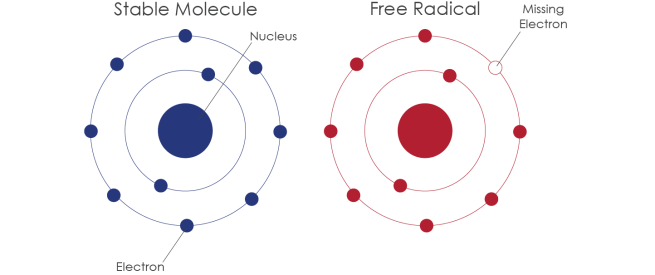
A free radical is an unstable molecule – unstable because it is missing electrons. They react quickly with other molecules, trying to capture the needed electron to re-gain stability. Free radicals will literally attack the nearest stable molecule, stealing an electron. This leads to the “attacked” molecule becoming a free radical itself, and thus a chain reaction is started. Inside a living cell this can cause terrible damage, ultimately killing the cell.

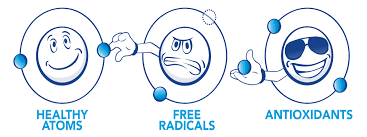
Antioxidants are thus the good guys in this situation. They are molecules that neutralize free radicals by donating one of their own electrons. The antioxidant don’t become free radicals by donating an electron because by their very nature they are stable with or without that extra electron.

imgres

How free radicals and antioxidants work. Source: h2miraclewater

Interesting, but what does all this have to do with this new gene Nrf2?

Well, Nrf2 is a ‘transcription factor’ with some interesting properties.

What is a transcription factor?

So you remember your high school science class when some adult at the front of the class was talking about biology 101 – DNA gives rise to RNA, RNA gives rise to protein.

maxresdefault

The basic of biology. Source: Youtube

Ultimately this is a circular cycle, because the protein that is produced using RNA is required at all levels of this process. Some of the protein is required for making RNA from DNA, while other proteins are required for making protein from the RNA instructions.

A transcription factor is a protein that is involved in the process of converting (or transcribing) DNA into RNA.

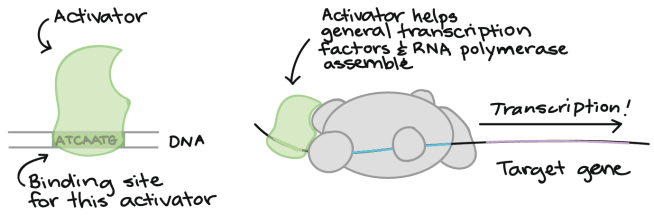
Now, a transcription factor can be an ‘activator’ of transcription – that is initiating or helping the process of generating RNA from DNA.

6567f50d30ad3ac65aff1e815caf202b3abd7111

An example of a transciptional activator. Source: Khan Academy

Or it can be a repressor of transcription – blocking the machinery (required for generating RNA) from doing it’s work.

6286f2dbd5e353145bef785aecb273d25176ff23

An example of a transciptional repressor. Source: Khan Academy

Nrf2 is an activator of transcription. When it binds to DNA to aids in the production of RNA, which then results in specific proteins being produced.

And this is where Nrf2 gets interesting.

You see, Nrf2 binds to antioxidant response elements (ARE).

What are ARE?

Antioxidant response elements (ARE) are regions of DNA is commonly found in the regulatory region of genes encoding various antioxidant and cytoprotective enzymes.

The regulatory region of genes is the section of DNA where transcription is initiated for each gene. They are pieces of DNA that a transcription factor like Nrf2 binds to and activates the production of RNA.

ARE are particularly interesting because these regions reside in the regulatory regions of genes that encode naturally occurring antioxidant and protective proteins. And given that antioxidants and protective proteins are generally considered a good thing for sick/dying cells, you can see why Nrf2 is an interesting protein to investigate.

By binding to ARE, Nrf2 is directly encouraging the production of naturally occurring antioxidant and protective proteins. And this is why a lot of people are excited by Nrf2 and call it the ‘next big thing’.

So what did the new research study report?

Well, this is where the story gets really interesting.

The researchers in the new study found that Nrf2 has some additional features that may be completely unrelated to the antioxidant properties:

nrf2

Title: Nrf2 mitigates LRRK2- and α-synuclein-induced neurodegeneration by modulating proteostasis.
Authors: Skibinski G, Hwang V, Ando DM, Daub A, Lee AK, Ravisankar A, Modan S, Finucane MM, Shaby BA, Finkbeiner S.
Journal: Proc Natl Acad Sci U S A. 2016 Dec 27. pii: 201522872.
PMID: 28028237

The researchers wanted to determine what effect introducing exaggerated amounts of Nrf2 into cell culture models of Parkinson’s disease would have on the behaviour and survival of the cells. There were two types of cell culture models of Parkinson’s disease used in the study: one produced a lot of the Parkinson’s associated protein alpha synuclein (normal un-mutated) and the other cell culture model involved two mutations in the Lrrk2 gene (we have previously discussed Lrrk2 – click here to read that post).

The researchers had previously demonstrated that both of these cell culture models of Parkinson’s disease exhibited increased levels of cell death when compared with normal cells. In the current study, when the researchers artificially exaggerated the amounts of  Nrf2 in both sets of cell cultures, they found that not only did Nrf2 reduce Lrrk2 and alpha-synuclein toxicity in cell culture, but it also influenced alpha-synuclein protein regulation, by increasing the degradation of the protein. This means that Nrf2 increased the disposal of the unnecessary excess of alpha synuclein.

In addition, Nrf2 also promoted the collection of free-floating mutant Lrrk2 and bundling it up into dense ‘inclusion bodies’ – dense clusters which are similar to the Lewy bodies of Parkinson’s disease but inclusion bodies are not associated with cell death. The scientists concluded that excessive levels of Nrf2 help to make the cells healthier and that this could represent a new target for future therapies of Parkinson’s disease. The researchers acknowledge that the ARE-related features of Nrf2 may be also playing a beneficial role in the cells, but this is the first time the alpha synuclein and Lrrk2 features have been identified.

Sounds great. Are there any catches?

Yes, a very interesting one.

The response of Nrf2 is time-dependent. The researchers found that over stimulation with Nrf2 leads to natural compensation from cells that eventually limits the activity of Nrf2. In other words, too much of a good thing loses it’s affect over time. Biology is one giant balancing act and sometimes when one factor is artificially introduced, cells will compensate regardless of whether it’s a good thing or not.

The researchers suggested that this issue could potentially be over come by periodic use of Nrf2, rather than simply chronic (or continuous) use of the protein. This still needs to be determined, however, in follow up experiments.

What does it all mean?

This new study provides us with new data relating to a protein that has been seen as holding great promise in the treatment of neurodegenerative conditions (not just Parkinson’s disease). The new research, however, demonstrates some interesting characteristic of Nrf2 specific to two Parkinson’s disease related genes.

Nrf2 has been considered a drug target for some time and agents targeting this protein have been patented and are under investigation (Click here to read more on this). We will be keeping an eye out for these compounds and we’ll report here the results of any research being conducted on them.


Interesting side note here:

We have previously discussed the treatments for Parkinson’s disease that were prescribed in India over 2000 years ago (Click here for that post). Outlined in the ancient texts, called the ‘Ayurveda’ (/aɪ.ərˈveɪdə/; Sanskrit for “the science of life” or “Life-knowledge”) was the use of the seeds of Mucuna pruriens in treating conditions of tremor. The seeds of this tropical legume we now know have extremely high levels of L-dopa in them (L-dopa being the standard therapy for Parkinson’s disease in modern medicine).

Here’s the interesting bit:

A second popular Ayurvedic treatment that is popular for Parkinson’s disease is Curcumin.

turmeric

Tumeric. Source: Cerebrum

Curcumin is an active component of turmeric (Curcuma longa), a dietary spice used in Indian cuisine and medicine. Curcumin exhibits antioxidant, anti-inflammatory and anti-cancer properties, crosses the blood-brain barrier and there are numerous studies that indicate neuroprotective properties in various models of neurological disorders.

Curcumin has also been shown to activate Nrf2 (Click here , here and here for more on this).

It has also been shown to prevent the aggregation of alpha synuclein (click here for more on this).

We are always amazed at the curious little connection with ancient remedies that can be found in modern research and medical practice, and we thought we’d share this one here.


EDITORIAL NOTE: The content provided by the Science of Parkinson’s website is for information purposes only. It is provided by research scientists, not medical practitioners. Any actions taken – based on what has been read on the website – are the sole responsibility of the reader. The information provided on this website should under no circumstances be considered medical advice, and any actions taken by readers should firstly be discussed with a qualified healthcare professional.


The banner for today’s post was sourced from NRF2 science

Improving the SoPD blog – any thoughts?

improve-yourself1

It has been a week since we posted our discussion regarding where we think things are going in 2017 in the world of Parkinson’s disease research. Today’s short post is a follow up piece on how we can improve the SoPD blog.

Specifically, we would like to ask for your thoughts as to what particular improvements you would like to this on this blog.


cwk7va-xgaa-vip

PPI in action. Source: Parkinson’s UK

Patient and public involvement (PPI)

PPI is a big deal in the world of Parkinson’s research.

It involves researchers and people affected by Parkinson’s disease (both sufferers and carers/family/friends) work in partnership to plan, design, implement, manage, evaluate and disseminate research. It is a win-win situation for everyone involved as it seeks to achieve a more patient-centric approach to the research.

Parkinson’s UK provides lots of very useful information on PPI (Click here to read more).

Here at SoPD, we see great value in PPI and we would like to embrace it by asking for your feedback on what we are doing here.

It is very easy in science to get very exciting about the details and fail to see the big picture (a ‘not seeing the forest for the trees’ scenario). This situation can make us blind to what the reader of this blog may be looking for. Similarly, we have certain ideas about how this blog is developing and where it could be going which may not be the best way to serve the Parkinson’s community.

So in this post, we will review where things at the SoPD currently stand, and then what future plans are being developed, before we then invite your feedback.

sotu201211

The State of the Union address. Source: Tngop

So lets begin with where we are at present.

The state of the blog:

The blog has been running since the 9th Sept, 2015. We currently have 90 posts dealing with all manner of Parkinson’s disease research-related content. If you are interested in a particular topic, you can use our site map page to search for key words across all of those post.

In addition, we have a menu bar of key topics related to Parkinson’s disease, such as dopamine and tremor. We also have a page of lectures that we would like to expand in the new year.

The post are usually focused around a particular topic, recent research publication, or clinical trial. We try to provide an easy to understand background on the topic before delving into what new discovery or result has been announced. At the end of each post, we try to sum up what it all means for the Parkinson’s community.

For shorter and more regular updates, we also have a twitter account that you can follow.

Future directions:

In this new year, we are planning to:

  • add more pages to our menu bar dealing with key aspects of Parkinson’s disease (such as “what is a Lewy body?”)
  • encourage great involvement and participation in Parkinson’s research
  • put some videos on the site which will explain some of the more commonly asked questions regarding Parkinson’s disease.

There are some other ideas, but these are the ones we are prepared to put on paper and be held to.

And this brings us to your feedback.

maxresdefault

Source: Youtube

What improvements can we make?

We are seeking feedback here – either in the comments section below or by contacting us directly by email – regarding what features or changes you would like to see on this blog.

Specifically:

  • what could we improve or do better that we currently do on the blog?
  • what new features could we add?
  • are there alternative ways of bringing the same information to you that would be better/easier for you to consume?

Any and all thoughts would be greatly appreciated. Please help us to improve the service we are providing.

We look forward to hearing from you.

The team at SoPD


The banner for today’s post was sourced from OnthecontraryKelly

The road ahead – Parkinson’s research in 2017

road

With the end of the 2016, we thought it would be useful and interesting to provide an overview of where we believe things are going with Parkinson’s disease research in the new year. This post can be a primer for anyone curious about the various research activities, and food for thought for people who may have some fresh ideas and want to get involved with the dialogue.

Never before has so much been happening, and never before has there been greater potential for real change to occur. It is a very exciting time to be involved in this field, and it really does feel like we are on the cusp of some major discoveries.

In today’s post we will outline what to expect from Parkinson’s research in 2017.


bright-future-ahead-1024x772

Things to look forward to. Source: Dreamstime

Before we start: something important to understand –

The goal of most of the research being conducted on Parkinson’s disease is ultimately focused on finding a cure.

But the word ‘cure’, in essence, has two meanings:

  1. The end of a medical condition, and
  2. The substance or procedure that ends the medical condition

These are two very different things.

And in a condition like Parkinson’s disease, where the affected population of people are all at different stages of the disease – spanning from those who are not yet aware of their condition (pre-diagnosis) to those at more advanced stages of the disease – any discussion of a ‘cure for Parkinson’s disease’ must be temporal in its scope.

In addition to this temporal consideration, everyone is different.

A ‘cure’ for one person may not have an impact on another person – particularly when genetics is included in the equation. Currently there is a clinical trial which is only being tested on people with Parkinson’s disease who have a particular genetic mutation (Click here to read more about this).

With all of that said, there are 4 key areas of ongoing/future research:

  • Defining and understanding the biology of the condition
  • Early detection
  • Slowing/halting the disease
  • Replacing what has been lost

EDITOR’S NOTE HERE: While we appreciate that this list does not take into account important research dealing with the improving the day-to-day living and quality of life of those affected by Parkinson’s disease (such as prevention of falling, etc), we are primarily focusing here on finding a ‘cure’.

Let’s now have a look at and discuss each of these key areas of research:

Defining and understanding the biology

maxresdefault

Complicated stuff. Source: Youtube

The first key area of research feeds into all of the others.

It is only through a more thorough understanding of the mechanisms underlying Parkinson’s disease that we will be able to provide early detection, disease halting therapies, and cell replacement options. A better conception of the disease process would open doors in all of the other areas of research.

Given the slow pace of progress thus far, you will understand that this area of research is not easy. And it is made difficult by many issues. For example, it may be that we are blindly dealing with multiple diseases that have different causes and underlying mechanisms, but display the same kinds of symptoms (rigidity, slowness of movement and a resting tremor). Multiple diseases collectively called ‘Parkinson’s’. By not being able to differentiate between the different diseases, we have enormous confounding variables to deal with in the interpretation of any research results. And this idea is not as far fetched as it may sound. One of the most common observations within a group of people with Parkinson’s disease is the variety of disease features the group presents. Some people are more tremor dominate, while others have severe rigidity. Who is to say that these are not manifestations of different diseases that share a common title (if only for ease of management).

This complication raises the possibility that rather than being a disease, ‘Parkinson’s’ may actually be a syndrome (or a group of symptoms which consistently occur together).

Recently there have been efforts to deal with this issue within the Parkinson’s research community. We have previously written about the improved diagnostic criteria for Parkinson’s disease (click here to read that post). In addition, as we mentioned above, some new clinical trials are focusing on people with very specific types of Parkinson’s disease in which the subjects have a particular genetic mutation (Click here to read more about this). Better stratification of the disease/s will help us to better understand it. And with the signing into law of the 21 century Cures Act by President Obama, the Parkinson’s research community will have powerful new data collection tools to use for this purpose – in addition to more funding for research at the National Institute of Health (Click here to red more on this).

More knowledge of the basic biology of Parkinson’s disease is critical to the road forward. Whether the Parkinson’s disease-associated proteins, like alpha synuclein, are actually involved with the cell death associated with the condition is a question that needs to be resolved. If they are simply the bio-product of an alternative (unseen) disease process is important to know.

It is impossible to know what the new year will bring for new discoveries in the basic biology of Parkinson’s disease. Compared to 20 years ago, however, when the new discoveries were few and far between, 2017 will bring with it major new discoveries every month and we’ll do our best to report them here.

Early detection for Parkinson’s disease

test

Consider the impact of a pregnancy test on a person’s life. Source: Wikipedia

Ethically, the ‘early detection’ area of research can be a bit of a mine field, and for good reasons. You see, if we suddenly had a test that could accurately determine who is going to get Parkinson’s disease, we would need to very carefully consider the consequences of using it before people rush to start using it in the clinic.

Firstly there are currently no disease halting treatments, so early knowledge of future potential events may not be useful information. Second, there is the psychological aspect – such information (in light of having no treatment) may have a dramatic impact on a person’s mental wellbeing. And thirdly, such information would have huge implications for one’s general life (for example, individuals are legally bound to tell their banks and insurance companies about such information). So you see, it is a very tricky field to tackle.

Having said all of that, there are some very positive aspects to early detection of Parkinson’s disease. Early indicators (or biomarkers) may tell us something new about the disease, opening novel avenues for research and therapeutic treatments. In addition, early detection would allow for better tracking of the disease course, which would enhance our ideas about how the condition starts and changes over  time.

There are numerous tests being developed – from blood tests (click here and here for posts we wrote about this topic) to saliva tests (again, click here for our post on this topic). There are even a simple urine test (click here for our post on this) and breath analysis test (click here for more on this) being developed. And there are ever increasing brain imaging procedures which may result in early detection methods (Click here for more on this).

How does the Parkinson’s research community study early detection of Parkinson’s disease though? Well, we already know that people with rapid eye movement (REM) sleep disorder problems are more likely to develop Parkinson’s disease. Up to 45 percent of people suffering REM sleep behaviour disorders will go on to develop Parkinson’s disease. So an easy starting point for early detection research is to follow these people over time. In addition, there are genetic mutations which can pre-dispose individuals to early onset Parkinson’s disease, and again these individuals can be followed to determine common ‘biomarkers’ (aspects of life that are shared between affected individuals).  Epidemiological studies (like the Honolulu Heart study – click here for more on this) have opened our eyes to keep features and aspects of Parkinson’s disease that could help with early detection as well.

Slowing/halting Parkinson’s disease

stop

Source: MyThaiLanguage

One of the most significant findings in Parkinson’s disease research over the last few years has been the discovery that transplanted dopamine cells can develop Lewy bodies over time. It is very important for everyone to understand this concept: healthy embryonic cells were placed into the Parkinsonian brain and over the space of one or two decades some of those cells began to display the key pathological feature of Parkinson’s disease: dense, circular clusters of protein called Lewy bodies.

The implications of this finding are profound: Healthy cells (from another organism) developed the features of Parkinson’s disease. And this is (presumably) regardless of the genetic mutations of the host. It suggests that the disease spreads by being passed from cell to cell. There is a very good open-access article about this in the journal Nature (click here to read that article).

Slowing down the progression of Parkinson’s disease is where most of the new clinical trials are focused. There are numerous trials are focused on removing free-floating alpha synuclein (the main protein associated with Parkinson’s disease). This is being done with both vaccines and small molecules (such as antibodies). Beyond possibly slowing the disease, whether these clinical trials are successful or not, they will most definitely provide an important piece of the puzzle that is missing: is alpha synuclein involved with the spread of the disease? If the trials are successful, this would indicate ‘Yes’ and by blocking alpha synuclein we can slow/halt the spread of the disease. If the trials fail, this would suggest that alpha synuclein is not responsible, and indicate that we need to focus our research attention elsewhere.

2017 will be very big year for Parkinson’s disease as some of these clinical trials will be providing our first glimpse at resolving this major question.

Replacing what is lost

fig1-liste

Cell transplantation for Parkinson’s disease. Source: AtlasofScience

So if we discover a means of stopping the disease with a vaccine or a drug, this will be fantastic for people who would be destined to develop the condition… but what about those still living with the disease. Halting the condition will simply leave them where ever they are on the course of the disease – a rather unappealing situation if one is in the latter stages of the condition.

Cell transplantation is one means of replacing some of the cells that have been lost in this disease. Most of the research is focused on the dopamine neurons whose loss is associated with the appearance of the movement features of Parkinson’s disease.

Unfortunately, this area of research is more ‘blue sky’ in terms of its clinical application. It will be some time before cell transplantation has a major impact on Parkinson’s disease. And while many research groups have plans to take this approach to the clinic, there are currently just two ongoing clinical trials for cell transplantation in Parkinson’s disease:

The former is behind schedule due to the technical matters (primarily the source of the tissue being transplanted) and the latter is controversial to say the least (click here and here to read more). In the new year we will be watching to see what happens with a major research consortium called G-Force (strange name we agree). They are planning to take dopamine neurons derived from embryonic stem cells to clinical trials in 2018. Embryonic stem cells represents a major source of cells for transplantation as they can be expanded in a petri dish (millions of cells from just one cell). If they can be pushed in the right direction and they develop into dopamine neurons, they would allow people to start having some of the cells that they have lost to Parkinson’s disease to be replaced.


Above we have discussed the key areas of Parkinson’s disease (dealing with ‘finding a cure’) for 2017. We would love to hear your thoughts on them. If not, here on the SoPD, then somewhere else. Please get involved with the discussion in which ever forum you choose. Speak up and add your personal account of things to the discussion.

It is only through the sharing of ideas, information, and experiences that we are going to figure out this debilitating condition.


And now we are going to change focus and discuss what we are expecting/hoping for in the new year (particularly from the clinical side of things):

Bright future ahead

beach-at-sunset-pics

Looking ahead to better times. Source: Journey with Parkinson’s (Great blog!)

So looking ahead, what is happening:

Recently some major players have come together to focus on Parkinson’s disease:

  1. Bayer and healthcare investment firm Versant Ventures joined forces to invest $225 million in stem-cell therapy company BlueRock Therapeutics. This venture will be focused on induced pluripotent stem cell (iPSC)-derived therapeutics for cardiovascular disease and neurodegenerative disorders, particularly Parkinson’s disease (co-founders Lorenz Studer and Viviane Tabar are world renowned experts in the field of cell transplantation for Parkinson’s disease). Importantly, BlueRock has acquired rights to a key iPSC intellectual property from iPS Academia Japan, and with 4 years of funding they will be looking to make things happen (Click here to read more on this).
  2. Evotec and Celgene are also jumping into the IPS cell field, but they are collaborating to screen for novel drug targets. (Click here to read more on this).
  3. For a long time we have been hearing that the major tech company Apple is working on software and devices for Parkinson’s disease. They already provide ResearchKit and CareKit software/apps. Hopefully in the new year we will hear something about their current projects under development (Click here to read more on this).
  4. In February of 2016, seven of the world’s largest pharmaceutical companies signed up to Critical Path for Parkinson’s set up by Parkinson’s UK. It will be interesting in the new year to see what begins to develop from this initiative.
  5. Parkinson’s UK has also set up the Virtual Biotech, which is looking at providing faster means for new drugs to be brought to market. Hopefully this will take off in 2017.

In addition, there are many clinical trials starting and also announcing results. Here are the top 20 that we are keeping an eye on:

  1. Herantis Pharma, a Finnish pharmaceutical company, will begin recruiting 18 people with Parkinson’s disease for their Conserved Dopamine Neurotrophic Factor (or CDNF) clinical trial. CDNF is very similar to GDNF which we have previously discussed on this site (Click here for that post). Herantis will be collaborating with another company, Renishaw, to deliver the CDNF into the brain (Click here to read more on this trial).
  2. The results of the double-blind, placebo controlled clinical study of the diabetes drug Exenatide will be announced in 2017. We have previously discussed this therapy (click here and here for more on this), and we eagerly await the results of this study.
  3. AAV2-hAADC, which is a gene therapy treatment – a virus that works by allowing cells in the body other than neurons to process levodopa. The results of the phase one trial were successful (click here to read about those results) and the company (Voyager Therapeutics) behind the product are now preparing for phase 2 trials (Click here for more on this).
  4. Donepezil (Aricept®) is an Alzheimer’s therapy that is being tested on dementia and mild cognitive impairment in Parkinson’s disease (Click here for more on this trial).
  5. Oxford Biomedica is attempting to proceed with their product, OXB-102, which is a gene therapy treatment – a virus that modifies neurons so that they produce dopamine. Phase 1 successful, but did not show great efficacy. Phase 2 is underway but not recruiting (click here for more on this trial).
  6. Biotie is proceeding with their product, SYN120, which is new class of combination drug (dual antagonist of the serotonergic 5-HT6 and 5-HT2A receptors) which is being tested as a treatment of cognition and psychosis in Parkinson’s disease (Click here for more on this).
  7. Acorda Therapeutics is continuing to take the new inhalable form of L-dopa, called CVT-301 to the clinic. Phase 1 trials were successful (Click here and here to read more) and phase 2 trials are being planned.
  8. Related to caffeine, Istradefylline, is an A2A receptor antagonist, already approved in Japan, that is designed to reduce “off” time and suppress dyskinesias. Phase 1 testing was successful (Click here for more on this) and phase 2 trials are being planned.
  9. Another product from Biotie, Tozadenant, is an A2A receptor antagonist designed to reduce “off” time and suppress dyskinesias.
  10. UniQure was developing AAV2-GDNF – A gene therapy treatment – a virus designed to deliver GDNF (a naturally occurring protein that may protect dopamine neurons) in the brain (Click here for more on this trial). The company has recently announced cost cutting, however, and removed AAV2-GDNF from it’s list of products under development, so we are unsure about the status of this product.
  11. AstraZeneca are taking their myeloperoxidase (MPO) inhibitor, AZD3241, through phase 2 trials at the moment (Click here for more on this trial). Oxidative stress/damage and the formation of excessive levels of reactive oxygen species plays a key role in the neurodegeneration associated with Parkinson’s disease. MPO is a key enzyme involved in the production of reactive oxygen species. By blocking it, AstraZeneca hopes to slow/halt the progression of Parkinson’s disease.
  12. Genervon Biopharmaceuticals will be hopefully be announcing more results from their phase 2 clinical trial of GM 608 (Click here for more on the trial). GM 608 has been shown to protect neurons against inflammatory factors floating around in the brain. Initial results looked very interesting, though the study was very small (Click here for more on those results).
  13. Neurimmune (in partnership with Biogen) is proceeding with their product, BIIB054, which is an immunotherapy – an antibody that clears free floating alpha-synuclein in an attempt to halt the spread of the disease (Click here for more on this trial).
  14. Neuropore is continuing to move forward with their product, NPT200-11, which is a drug designed to stabilize alpha-synuclein, preventing it from misfolding and aggregating. Phase 1 trial was successful (Click here and here to read more on this). Phase 2 trials are being planned.
  15. Prothena are very pleased with their product, PRX002 (an immunotherapy – an antibody that clears free floating alpha-synuclein in an attempt to halt the spread of the disease (similar to BIIB054 described above)). Phase 1 trials were successful (Click here for more on this).
  16. Edison Pharma is currently conducting a phase  2 trial of Vatiquinone on Visual and Neurological Function in Patients with Parkinson’s Disease (Click here for more on this trial). Vatiquinone modulates oxidative stress by acting on the mitochondria on cells.
  17. Isradipine (Prescal®) – a calcium channel blocker that is approved for treatment of high blood pressure – is being tested in Parkinson’s disease by the Michael J Fox Foundation (Click here for more on this).
  18. Inosine – which is a nutritional supplement that converts to urate, a natural antioxidant found in the body – is going to be tested in a phase 3 clinical trial (Click here for more on that trial).
  19. In 2015, Vernalis has licensed its adenosine receptor antagonist programme (including lead compound V81444) to an unnamed biotech company. We are hoping to see the results of the phase 1 trial that was conducted on V81444 for Parkinson’s disease sometime in the new year (Click here to read more about that trial).
  20. And finally, we are hoping to see progress with Nilotinib (Tasigna®) – A cancer drug that has demonstrated great success in a small phase 1 trial of Parkinson’s disease. Unfortunately there have been delays to the phase 2 trial due to disagreements as to how it should be run (Click here to read more). We have been following this story (Click here and here and here to read more), and are very disappointed with the slow progress of what could potentially be a ‘game-changer’ for the Parkinson’s community. Hopefully the new year will bring some progress.

Please note that this is not an exhaustive list – we have missed many other compounds being tested for Parkinson’s disease. For example there are always alternative versions of products currently on the market being tested in the clinic (eg. new L-dopa products). We have simply listed some of the novel approaches here that we are particularly interested in.

See the Michael J Fox Foundation Pipeline page for more information regarding clinical trials for Parkinson’s disease.


EDITORIAL NOTE HERE: All of the team at the SoPD wants to wish everyone a very enjoyable festive season where ever you are. And all the very best for the new year!

Happy New Year everyone,

The team at SoPD


The banner for today’s post was sourced from Weknowyourdreams

Update – Mannitol and Parkinson’s disease

152386jpg

Over the two weeks we have had a lot of interest in our post regarding the sweetener, Mannitol and preclinical studies suggesting that it prevents the clustering/aggregation of the Parkinson’s disease associated protein, alpha synuclein (Click here to read that post).

Such high levels of traffic had us scratching our heads as to why the sudden interest.

Yesterday the reason became very clear.

Today we are following up the Mannitol post with an update about some of the interesting developments.


On the Thursday December 15th, Channel 1 (MABAT) in Israel ran the following news article:

This presentation was in association with a new start-up called ‘CliniCrowd‘ which is a “crowd sourcing platform exploring disease treatments that Pharma companies have no interest to investigate or promote”.

clinicrowd-logo-final-2

CliniCrowd is a social impact company that has built an online platform, which provides a registry for people to sign up to and share personal experiences of researched nutriments.

Sounds interesting – how does it work?

The community at CliniCrowd “searches for nutriments that are safe for human consumption, recognized by FDA as GRAS (Generally Recognized as Safe), and have scientific evidence (in research papers) to be used to hopefully enhance wellbeing and possibly impact symptoms of diseases” (Source: CliniCrowd).

People with Parkinson’s disease are able to voluntarily sign up on the registry and start reporting back about their use of a particular ‘nutriment’, particularly what benefits or side effect that they may be experiencing. In turn, CliniCrowd will present its findings as is to the crowd.

The sweetener Mannitol is the first nutriment being proposed by the company.

After signing up on the website, “patients voluntarily register for the registry and enter their health information, purchase and administer the products themselves, and enter treatment outcome data on the website” (Source: CliniCrowd).

Cool idea. Where can I find more information?

In addition to the TV news article above and the company’s website (CliniCrowd.info), numerous videos have also been posted online, including this one introducing the scientist behind the original Mannitol research, Prof Danny Segal (who also sits on the Advisory board for ClinicCrowd):

There are also testimonials from people already taking part in the Mannitol-Parkinson’s disease assessment:

What happens to my personal information?

The information you provide will be used for the analysis conducted by the company. Some of your unidentifiable information may be shared with third parties, but the company’s privacy policy insures that your ‘identifiable’ information is kept strictly confidential.

And remind me again what is Mannitol?

Mannitol is a colourless sweet-tasting, poorly metabolized crystalline alcohol sugar that is Food and Drug Administration (FDA)-approved as an osmotic diuretic agent.

In plain English: it is a sweetener. Stick it on your tongue and it tastes like sugar.

Usually made from fructose and hydrogen, Mannitol increases blood glucose to a lesser extent than sucrose, and so it is commonly used as a sweetener for people with diabetes or sugar intolerance. The fact that Mannitol can be produced artificially is the only reason that it is often referred to as an ‘artificial sweetener’, but it does not fall into the same class as proper artificial sweetener, such as aspartame.

The Parkinson’s disease foundation in the US have a useful information sheet on Mannitol (Click here to read it – PDF files requires Adobe Acrobat to read).

Is Mannitol safe?

The short answer is yes. FDA approved and it is widely used in many processed foods.

The longer answer (specific to Parkinson’s disease) is more complicated.

A critic of the CliniCrowd concept may point out that the research supporting the beneficial effects of Mannitol in Parkinson’s disease is limited to just one peer-reviewed journal paper. And this is currently true. Supporters, however, would counter that Mannitol is widely available and already being privately tested by many individuals with Parkinson’s disease, so why not offer a forum where they can provide their personal feedback.

In addition, Mannitol is added to a wide variety of processed products (simply check the packaging of your shopping for ‘mannitol’ or food additive number e421 – Food Standards Agency, 2014). On top of this, Mannitol is naturally occurring. Cauliflower, for example, contains 3 grams of Mannitol per every 100 grams of weight. We are all consuming it on a daily basis.

A health warning here – Mannitol should not be taken in excess or abused as it can have an osmotic effect (in particular, attracting water from the intestinal wall). Consumed in excess, it will cause diarrhea, abdominal pain, and excessive gas. In addition to intestinal problems, Mannitol has also been associated with worsening heart failure, electrolyte abnormalities, or low blood volume. Importantly, we also do not know what effect it may have on absorption of L-dopa and other Parkinson’s disease medications. Thus, please discuss any change in your treatment regime that you may be considering with your doctor before doing so.

What does it all mean?

As the company suggests on their website, CliniCrowd is in essence a protest against big pharmaceutical companies who have and still are ignoring possibly effective therapeutic agents simply because they are un-patentable (and thus providing no protection from competition). Such treatments do not justify the cost of clinical trials for those companies, as the profits would be minimal.

Some of these un-patentable medications are currently being tested in clinical trials set up, funded and run by Parkinson’s disease charity groups, such as Parkinson’s UK, the Cure Parkinson’s Trust, and the Michael J Fox Foundation. The cost of those trials, however, is great. In addition, they are long and heavily regulated processes – it can take years to determine if a medication is effective. On top of this, there is always the possibility that a treatment which works for one individual won’t work for another. Across a large clinical trial population this effect can result in any positive result being cancelled out, and the trial failing to show any positive outcome at all.

CliniCrowd is not proposing an alternative system to the clinical trial process. It is simply providing a rapid method of filtering and identifying the agents that exhibit some level of benefit in humans with Parkinson’s disease. It is critical to understand that what CliniCrowd is proposing can not constitute or replace a clinical trial. Since the participants on the CliniCrowd registry would not be randomly allocated to a treatment or control group (nor would they be assessed by blinded clinical assessors), this process could not be described as scientifically valid. Any treatments that exhibit beneficial effects on the CliniCrowd website would still need to go through the clinical trial process to be considered thoroughly tested and ready for regular clinical use.

There is obviously the potential for the placebo effect to jump in here. Given that participants know that they are taking a particular treatment and are largely self assessing themselves, there is the possibility for people to start experiencing miraculous benefits that may have no pharmaceutical explanation. And the placebo effect is particularly strong in Parkinson’s disease when compared to other conditions. So this must always be kept in mind when considering the results of any treatment being taken by people on the registry.

Here at the SoPD, we are always looking for new treatments and innovative ways of speeding up the process of getting therapies to the clinic. In addition, we are keen to see more research on Mannitol and (if validated) have it tested in clinical trials. A platform like CliniCrowd could provide a Parkinson’s charity with some initial human validation data that would justify a clinical trial, saving precious time and money and allowing them to focus on treatments that have exhibited some kind of effect in humans with Parkinson’s disease.

Thus, we are very curious to see how the CliniCrowd registry system will work out, and we look forward to the discussion that will result from this innovative step forward.


EDITOR’S NOTE: Full disclosure – The TV news article and CliniCrowd website was brought to our attention by the people running the platform. Given that they are not selling a particular product and simply trying to do some good for the Parkinson’s community, SoPD is presenting an unbiased and balanced review of their efforts here. SoPD is in no way benefitting (financially or otherwise) from this presentation, and is providing it here to the Parkinson’s community for educational purposes.

In addition, under absolutely no circumstances should anyone reading this material consider it medical advice. Before considering or attempting any change in your treatment regime, PLEASE consult with your doctor or neurologist. SoPD can not be held responsible for actions taken based on the information provided here.


The banner for today’s post was sourced from Qualifirst

Mmmm, Chocolate…

chocolate_png38

INTERESTING RESEARCH FINDING 1: People with Parkinson’s disease eat more chocolate than people without Parkinson’s.

INTERESTING RESEARCH FINDING 2: This difference is specific to chocolate. There is no difference in the consumption of other forms of sugary treats between the two populations.

Today’s post deals with a topic very dear to me and it’s relationship with Parkinson’s disease.


year-supply-of-chocolate1

Mmmm, chocolate. Source: Saucefinefoods

Everyone likes chocolate, especially at this time of the year. Curious thing is though, people with Parkinson’s seem to like chocolate even more than non-Parkinsonian people.

Why is that? We’re not sure. But some interesting research has been conducted on chocolate and Parkinson’s disease, which we shall review in this post.

But first:

What is chocolate?

Silly question. Fascinating answer.

The word “chocolate” comes from the word xocolātl. This word is from the Aztec language (Nahuatl), and is a combination of the words xococ (meaning ‘sour or bitter’), and ātl (‘water or drink’). This is because for the vast majority of it’s existence, chocolate has been consumed as a drink.

maya-lord-chocolate

“Don’t touch my jar of xocolātl!” Source: Ancient-origins

Fermented beverages made from chocolate date back to 1900 BC in Mesoamerica. The Aztecs believed that cacao seeds were a divine gift from the god of wisdom, ‘Quetzalcoatl’. In fact, the seeds were so precious to the Aztecs that they once had so much value that they were used as a form of currency.

Chocolate was introduced to Europe in the 16th century by the Spanish who added sugar or honey to counteract the natural bitterness. Since then, it has had a rather successful rise in popularity.

child_crown_chocolate_86562_1920x1080

Chocolate: it’s popular stuff. Source: WallPapersCraft

How is chocolate actually made?

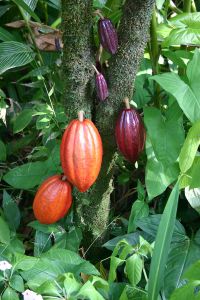
Chocolate comes from the beans of the Theobroma cacao tree – an evergreen native to the tropical regions of Central and South America. The beans are produced in pods, like these:

800px-cocoa_pods

Pods of the of Theobroma cacao tree. Source: Wikipedia

cocoa_beans_in_cocoa_pod_at_el_trapiche_costa_rica

Seeds inside the pod. Source: Wikipedia

Cacao beans are harvested from the pods, and then allowed to ferment over a period two weeks. Two things happen during this process: 1. outside of the pod, the beans are exposed to the warm heat which kills the germinating seed, and 2. natural yeasts – which like the heat – grow and help to develop complex flavours.

After this fermentation period, the beans are then sun-dried, which helps to preserve them for shipping. Next, the beans are roasted, which helps to further develop complex flavours and to remove unpleasant acidic compounds developed in the fermentation process. This is followed by mechanically separating the valuable nibs (interior of the bean) from the useless shells.

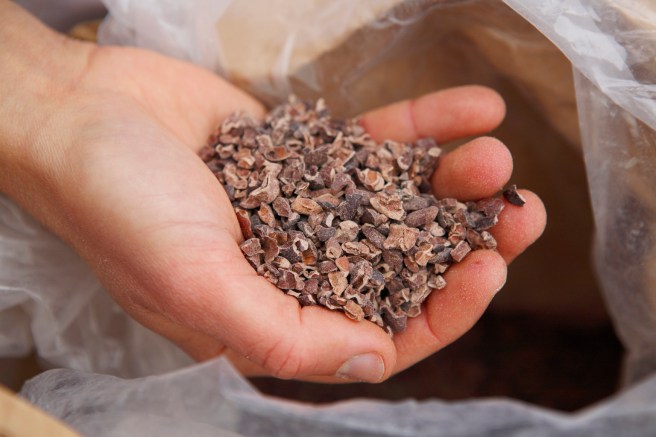
o-cacao-nibs-facebook

Cacao nibs. Source: HuffingtonPost

The nibs must then be refined, which involves extensive grinding. The raw cocoa liquor is then “conched“. This is the stage where the general characteristic tastes, smells and textures of chocolate are developed. Conching is a lengthy process which drives off the rest of the acidic flavoring compounds. The process also helps coat the ground up cocoa particles with fat to reduce the viscosity of the molten chocolate.

fb40xbignxwy87n-medium

Conching. Source: Instructables

Finally, the conched product is tempered which gives chocolate it’s gloss and affects how it melts in your hands/mouth. Tempering is necessary because cocoa butter can crystallise into at least six different forms (form V being the most desired). Each of these forms have different stability and properties. Form V has the most popular texture and ‘feeling in the mouth’, in addition it does not melt too quickly in the hand.

Why is chocolate soooo good?

No one is entirely sure. Chocolate contains many different chemicals which help in making chocolate tasty and (dare we say it) addictive. Among the most important ingredients are stimulants like phenylethylamine and caffeine (all in very small quantities), which can give you a positive boost.

Importantly, chocolate also contains a feel-good chemical called anandamine, which functions in the brain by binding to cannabinoid receptors (these are the same receptors that chemicals in marijuana bind to). Its name actually comes from ananda, the Sanskrit word for “bliss”. Normally anandamide is broken down quite quickly after it is produced, but some researchers believe that the anandamide in chocolate makes the natural anandamide in our brain persist for longer, giving us a longer-lasting “chocolate high”.

And what is the difference between dark and white chocolate?

Ok, now don’t be upset, but technically speaking white chocolate is not really a chocolate.

It is made without any cocoa powder or solids, containing just cocoa butter mixed with milk and sugar. Without the cocoa powder, chocolate has no colour thus it’s white. In addition, white chocolate doesn’t have many of the ‘happy’ ingredients likes caffeine.

Not actually being a chocolate makes white chocolate very useful, however, in research (as you shall see below). Given that it is missing many of the key components of normal chocolate (eg. cocoa, caffeine, etc), white chocolate can be used as a control substance in studies looking at the effect of chocolate on various conditions.

Are there health benefits of eating chocolate?

Mum always told me that chocolate was bad for me, but recent scientific research has altered this perception. Studies of the Kuna Indians of the San Blas islands of Panama, who consume large amounts of a natural cocoa beverage, have found lower blood pressures, better renal function and decreased cardiovascular mortality relative to mainland Panamanian control populations (Click here to read more on this).

hot-chocolate-and-blood-pressure

Kuna indians. Source: Superfoodsrx

The prevalence of hypertension in Kuna indians who have migrated to urban areas on mainland Panama is significantly higher (10.7% of the population compared with just 2.2% of those still on the islands). This is believed to be partly due to the reduction in cacao intake – Kuna indians on the islands eat 10 times more than their mainland equivalents.

Interesting. But what does all of this have to do with Parkinson’s disease?

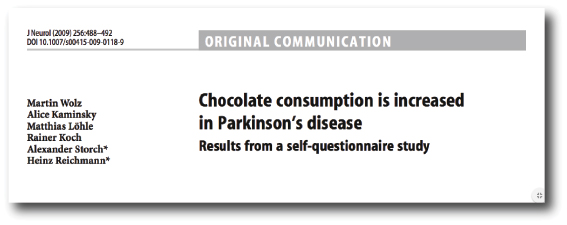
Right. Down to business. In 2009, this research report was published:

choco-1

Title:  Chocolate consumption is increased in Parkinson’s disease. Results from a self-questionnaire study.
Authors: Wolz M, Kaminsky A, Löhle M, Koch R, Storch A, Reichmann H.
Journal: J Neurol. 2009 Mar;256(3):488-92. doi: 10.1007/s00415-009-0118-9.
PMID: 19277767

These researchers conducted a survey of 274 people with Parkinson’s disease and 234 age-matched controls. They found that people with Parkinson’s disease ate approx. 100g of chocolate per week (on average) compared to just 57.3g for the control subjects.

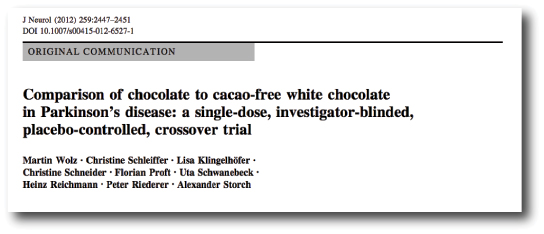
Using measures of mood (such as the Beck’s Depression Inventory survey), the researchers found that this increased consumption of chocolate was independent of feelings of depression. This interesting observations lead the researchers to conduct this clinical study:

choco-2

Title:  Comparison of chocolate to cacao-free white chocolate in Parkinson’s disease: a single-dose, investigator-blinded, placebo-controlled, crossover trial.
Authors: Wolz M, Schleiffer C, Klingelhöfer L, Schneider C, Proft F, Schwanebeck U, Reichmann H, Riederer P, Storch A.
Journal: J Neurol. 2012 Nov;259(11):2447-51. doi: 10.1007/s00415-012-6527-1.
PMID: 22584952

The researchers in this study (the same people who published the survey study above) tested the effects of 200g of (80% cacao) chocolate on Parkinsonian motor scores (as measured by UPDRS). They assessed 26 people with moderate non-fluctuating Parkinson’s disease at both 1 and 3 hours after eating the chocolate. The researchers used white chocolate as the control treatment in the study, and they (the assessors) were blind to which treatment each subject received.

At 1 hour after consumption, the researchers noted a mild decrease in both treatment groups (most statistically in the dark chocolate group) when compared to the measures taken at baseline (that is before the actual study started). Similar results were observed in the measures taken at 3 hours post consumption. The researchers also took blood samples and found no differences in β-phenylethylamine blood levels (we’ll come back to this shortly).

Altogether, while there was an improvement in motor performance after eating chocolate, the results indicated no difference between dark chocolate and white cacao-free chocolate on Parkinson’s motor function.

What is β-phenylethylamine?

β-phenylethylamine is a naturally occurring chemical in the body, which is produced in chocolate during the thermal processing of cocoa (click here for more on this). Functionally, β-phenethylamine is similar to amphetamine in its action, as it leads to the release of dopamine. Interestingly, people with Parkinson’s disease have almost 50% less β-phenethylamine in the fluid surrounding their brains (Click here to read more on this). Thus, in addition to any stimulant effect of caffeine, increasing β-phenethylamine levels by eating chocolate may be causing an increase in dopamine levels in the brains of people with Parkinson’s disease – resulting in better motor scores.

But the researchers in the clinical study of chocolate reviewed above did not register any change in blood levels of β-phenethylamine. Again, perhaps longer term usage is required in order to detect a significant rise.

What does it all mean?

Here at the SoPD, we feel that the effect of chocolate on Parkinson’s disease have not been fully explored. More research is required. And we are not just saying this because everyone likes chocolate.

Firstly, it would be interesting to replicate what has already been done, particularly the survey of chocolate consumption to determine if people with Parkinson’s disease really do eat more chocolate! This is the most interesting observation reported thus far and needs to be replicated. It would be interesting to determine if the difference pre-dates diagnosis – that is to say, do people who develop Parkinson’s disease eat more chocolate when they are younger (before they are diagnosed)? Could chocolate be actually having a negative effect on the development of the disease?

Second, if a longer term analysis of chocolate and Parkinson’s disease indicates an effect, it would be interesting to further investigate individual ingredients. If we are investigating the ingredients of coffee to assess beneficial components for Parkinson’s disease (click here for more on this), the same analysis of chocolate should be conducted.

I’m going to go off now and contemplate some of this with a piece of dark chocolate…


The banner for today’s post was sourced from pngimg.

Blood transfusions and Parkinson’s disease

blood_646x300

Donating blood helps to save lives. And an awful lot of blood is needed on a daily basis: In the England alone, over 6,000 blood donations are required every day to treat patients.

There has been concerns over the years about what can be transmitted via blood donation (from donor to recipient). The good news is that we now know that Parkinson’s disease is not.

Today’s post looks at recent research investigating this issue and discusses the implications of the findings.


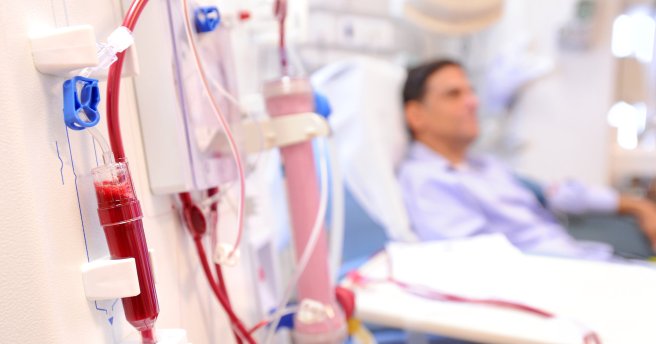
transfusion-superjumbo

Blood transfusions save lifes. Source: New York Times

The average adult human carries approx. 10 pints (about 6 litres) of blood in his body. So much blood, that we actually have an excess – we can survive with a little less. And this allows us to donate blood to blood banks on a regular basis (approx. every 8 weeks). Roughly 1 pint can be given during each blood donation and our bodies will have no trouble replacing it all.

These donations can be used in blood transfusions, replacing blood that has been lost via accident or during surgical procedures. It may surprise you that blood transfusion (from human to human) has been practised for some time. The very first blood transfusion was performed by an obstetrician named Dr. James Blundell in the late 1820’s.

dr

Dr. James Blundell. Source: Wikpedia

The exact date of that first procedure is the subject of debate, but Blundell wrote up his experience in the journal Lancet in 1829:

lancet

Blundell’s article in the journal Lancet. Source: Wikipedia

Since that time, blood transfusions have gradually become an everyday occurrence at hospitals all over the world. And as we suggested above a lot of blood is used on a daily basis, keeping people alive. Determining whether each donation of blood is safe to use is obviously a critical step in this process, and all donated blood is tested for HIV, hepatitis B and C, syphilis and other infectious diseases before it is released to hospitals. But for a long time there has been a lingering concern that not everything is being detected and filtered out.

In fact there has been a serious concern that some neurodegenerative conditions like Alzheimer’s and Parkinson’s disease may be transmissible. If these diseases are being caused by ‘prion-like behaviour’ from the particular proteins involved with these conditions (eg. beta amyloid and alpha synuclein, respectively), then there is a very real possibility that such rogue proteins could be transferred via blood transfusions.

This was a concern (note the past tense) until July of this year when this research report was published (with a rather mis-leading title):

transmissiontitle

Title: Transmission of neurodegenerative disorders through blood transfusion. A cohort study
Authors: Edgren G, Hjalgrim H, Rostgaard K, Lambert P, Wikman A, Norda R, Titlestad KE, Erikstrup C, Ullum H, Melbye M, Busch MP, Nyrén O.
Journal: Ann Intern Med. 2016 Sep 6;165(5):316-24.
PMID: 27368068

The researchers in this study took all of the data from the enormous nationwide registers of blood transfusions in Sweden and Denmark – collectively almost 1.5 million people have received transfusions in these two countries between 1968 and 2012 – and compared the medical records of the recipients to those of the donors (you have to love the Scandinavians for the medical databases!). Approximately 3% of the recipients received a blood transfusion from a donor who was diagnosed with one of the neurodegenerative diseases included in this study (Alzheimer’s, Parkinson’s and Motor neurone disease (or Amyotrophic lateral sclerosis – ALS). There was absolutely no evidence of transmission of any of these diseases.

For the statistic lovers amongst you, the hazard ratio for dementia in recipients of blood from donors with dementia versus recipients of blood from healthy donors was 1.04 (95% CI, 0.99 to 1.09). Estimates for individual diseases, Alzheimer disease and Parkinson disease were 0.99 (CI, 0.85 to 1.15) and 0.94 (CI, 0.78 to 1.14), respectively.

These statistics mean that if Parkinson’s disease is being transmitted via a blood transfusion, it is an extremely rare event.

So what does this mean for our understanding of Parkinson’s disease?

Well, we already know that you can’t catch Parkinson’s disease from your spouse (Click here to read more on this) and there is a lot of other evidence to suggest that Parkinson’s disease is not contagious (Click here to read more on this). So this is one less thing for carers, family members and friends to worry about.

But if Parkinson’s disease is not caused by some contagious agent, this knowledge has major implications for our understanding of the disease. Previous lab-based research has pointed toward a ‘Prion’-like nature to alpha synuclein (the protein most associated with Parkinson’s disease. Prions being small infectious agents made up entirely of protein material, that can lead to disease that is similar to viral infection. And researchers actually found that if you inject specific types of alpha synuclein into the muscles of mice, those animals would start to develop cell loss in the brain (Click here to read more about this).

If Parkinson’s disease is a ‘prion’ condition, then we have to ask one important question: why isn’t it being transmitted via blood transfusion? Alpha synuclein is certainly found in the blood of people with Parkinson’s disease.

It could be that an infectious agent initiated the condition many years ago and it has very slowly been developing (similar to chronic infections resulting from Hepatitis – click here to read more on this).

Research like we have reviewed today may result in a serious re-think of our theory of Parkinson’s disease.


The banner for today’s post was sourced from CampusCluj

PREP-ing to treat Parkinson’s disease

human-bran

Last week at the SoPD, we received an interesting email from reader Gabriel “from Tiana (near Barcelona) (Spain)”. The email brought our attention to an interesting new article that was published in a recent issue of the Journal of Neuroscience.

The research report involves prolyl oligopeptidase (PREP) inhibitors and some pre-clinical data involving a model of Parkinson’s disease.

In today’s post we will review the article and what we know about PREP-inhibitors.


kansikuva

How prolyl oligopeptidase may be working. Source: Timo Myöhänen

Yes, I know. The obvious first question is:

What is prolil oligoopep..tid… whatever?

It’s really very simple. Prolyl oligopeptidase is a serine protease, that cleaves short peptides containing proline-residue.

All clear?

Justing kidding.

Prolyl oligopeptidase (or PREP) is an enzyme that is involved in the making and destruction of certain types of hormones and neuropeptides (Neuropeptides are a group of small molecules used by brain cells to communicate with each other). PREP is required for cutting certain bonds on some of these small molecules, allowing them to function normally or be broken down and recycled.

PREP can be found in cells from most of species – from bacteria to human – suggesting that it has important functions across evolution. In addition, PREP has been associated with amnesia, depression and blood pressure control.

What is has PREP got to do with Parkinson’s disease?

Interestingly, PREP activity changes during the ageing process. It also changes during neurodegenerative conditions, such as Alzheimer’s and Parkinson’s diseases.

Given this situation, several PREP inhibitors were developed during the 1990s, and they were found to have a positive effect on memory and learning in animal models of Alzheimer’s disease (Click here for more on this).

So what is known about PREP in Parkinson’s disease?

Back in 1987, a group of researchers noticed something interesting in the cerebrospinal fluid (the liquid surrounding the brain) of people with Parkinson’s disease:

title-proplyl2

Title: Post-proline cleaving enzyme in human cerebrospinal fluid from control patients and parkinsonian patients.
Authors: Hagihara M, Nagatsu T.
Journal: Biochem Med Metab Biol. 1987 Dec;38(3):387-91.
PMID: 3481269

When the researchers compared normal healthy subjects with people who have Parkinson’s disease, they found that people with Parkinson’s disease exhibited a marked decrease in the activity of PREP in the cerebrospinal fluid. Interestingly, this decrease was not evident in the blood, suggesting that something was happening in the brain.

This observation was later followed up by other findings, including this journal report:

title-proplyl3

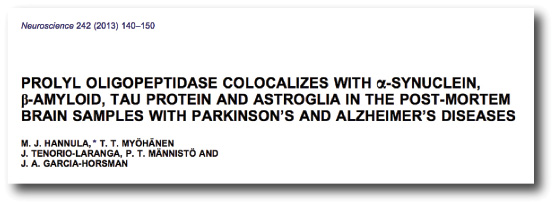
Title: Prolyl oligopeptidase colocalizes with α-synuclein, β-amyloid, tau protein and astroglia in the post-mortem brain samples with Parkinson’s and Alzheimer’s diseases.
Authors: Hannula MJ, Myöhänen TT, Tenorio-Laranga J, Männistö PT, Garcia-Horsman JA.
Journal: Neuroscience. 2013 Jul 9;242:140-50.
PMID: 23562579

The researchers in this study were investigating where PREP was actually located in the postmortem brain. In people with Parkinson’s disease, they found that a very strong presence of PREP in the substantia nigra (the region which loses dopamine neurons in this condition).

Interestingly, they also noted that PREP was co-localized with the Parkinson’s associated protein alpha synuclein (meaning where they found PREP, they also saw alpha synuclein). It is also interesting to note that they did not see this pattern in the brains of normal healthy controls or people with Alzheimer’s disease.

In 2008, another group found that PREP not only co-localised with alpha synuclein, but it was also doing something quite unexpected:

title-proplyl1

Title: Prolyl oligopeptidase stimulates the aggregation of alpha-synuclein.
Authors: Brandt I, Gérard M, Sergeant K, Devreese B, Baekelandt V, Augustyns K, Scharpé S, Engelborghs Y, Lambeir AM.
Journal: Peptides. 2008 Sep;29(9):1472-8.
PMID: 18571285

Since alpha synuclein and PREP were in the same locations in the Parkinsonian brain, the researchers in this paper were interested to see if the two protein actually functioned together and required each other to do their respective jobs. What they found, however, when they put the proteins together in cell culture was a surprise: an acceleration in the accumulation (or aggregation) of alpha synuclein.

Aggregation of alpha synuclein is a key feature of the Parkinsonian brain. It is believed to be responsible for the presence of Lewy bodies (the dense circular clusters in cells in the brains of people with Parkinson’s disease) and may be involved in the cell death associated with the condition.

Fig2_v1c

A lewy body (brown with a black arrow) inside a cell. Source: Cure Dementia

With the discovery that PREP is involved with the aggregation of alpha synuclein, the researchers suddenly had a new disease-related target to investigate further. And this is what the new Journal of Neuroscience paper has been explored.

So what was published in the recent Journal of Neuroscience report?

This is Timo.

dsc_0093_1

Dr Timo Myöhänen. Source: University of Helsinki

He’s a dude.

He is also an adjunct professor at the University of Helsinki where he has a research group focused on neurodegenerative disorders. They have a particular interest in PREP and they are the people behind the Journal of Neuroscience research report:

timo

Title: Inhibition of Prolyl Oligopeptidase Restores Spontaneous Motor Behavior in the α-Synuclein Virus Vector-Based Parkinson’s Disease Mouse Model by Decreasing α-Synuclein Oligomeric Species in Mouse Brain.
Authors: Svarcbahs R, Julku UH, Myöhänen TT.
Journal: J Neurosci. 2016 Dec 7;36(49):12485-12497.
PMID: 27927963

Previously Timo and co. have demonstrated that PREP inhibitors can reduce the levels of alpha synuclein in a genetically engineered mouse that produces very higher levels of alpha synuclein (click here to read that report).

In the current study, they modelled Parkinson’s disease in mice using viruses that cause the production of high levels of alpha synuclein in the dopamine neurons (that are affected by Parkinson’s disease). This over-production of alpha synuclein causes problems for the dopamine neurons and some of those cells die off, in effect modelling what is happening in the brains of people with Parkinson’s disease.

Using a PREP inhibitor (KYP-2047, which is crosses the blood–brain barrier), the researchers were able to rescue the behavioural impairment caused by the viral over-production of alpha synuclein. In addition, the administration of the PREP inhibitor reduced the levels of certain types of alpha synuclein in the brain.

The researchers also saw a mild neuroprotective effect with less dopamine neurons dying (perhaps if the study had continued for longer they might have seen a larger difference) and less dopamine dysfunction in the animals that received the PREP inhibitor, suggesting that treatment with the PREP inhibitor protected the dopamine neurons and restored their normal functions.

The critical aspect of this study was that the PREP inhibitor treatment was only given to the animals after the behavioural problems started, and it was still able to provide positive benefits to them. The researchers concluded that these results suggest that PREP inhibitors should be further investigated for Parkinson’s disease.

What does it all mean?

We have had a spate of promising therapies for Parkinson’s disease fail over the last 10-20 years:

Just to name a few…

We desperately need some new and novel targets to help attack this disease, and PREP inhibitors represent a completely new approach. Yes, they are going after alpha synuclein (and the jury is still out as to whether alpha synuclein is a causal agent in the disease), but they are certainly taking a different route.

While the alpha synuclein vaccines and antibodies currently being tested in clinic trials are removing free floating alpha synuclein, PREP inhibitors are stopping alpha synclein from actually aggregating. This is exactly the kind of new approach we are looking for.

Whether PREP inhibitors reducing alpha synuclein aggregation is functionally a good thing for Parkinson’s disease requires further testing. For example, if alpha synuclein is playing an antimicrobial function by aggregating around bacteria/viruses, inhibiting that aggregation might not be a good thing – it might leave us more vulnerable to illness.

But the good news here is that PREP inhibitors represent a new direction for us to explore in the treatment of Parkinson’s disease, and if blocking alpha synuclein aggregation does slow/halt the disease then PREP will definitely be worthy of further investigation.

EDITORIAL NOTE: Full disclosure here, the author of this blog is neither collaborating nor familiar with Dr Timo Myohanen. We just think his research is pretty cool and look forward to seeing where this line of investigation will ultimately lead.

And yes, we’re writing nice things about him in the hope that he won’t mind us borrowing some of the schematics and images from his lab website to better explain what PREP is. 


The banner for today’s post (PREP in the human brain) was also sourced from the lab of Dr Timo Myöhänen

A drug from Kalamazoo

diabetes60systemreview-1024x683

Last week a research report was published in the prestigious journal Science Translational Medicine (that means that it’s potentially really important stuff). The study involved a new drug that is being clinically tested for diabetes.

In last week’s study, however, the new drug demonstrated very positive effects in Parkinson’s disease.

In today’s post we will review the new study and discuss what it means for Parkinson’s.


Diabetic patient doing glucose level blood test

Diabetic checking blood sugar levels. Source: Gigaom

FACT:  One in every 19 people on this planet have diabetes (Source: DiabetesUK).

It is expected to affect one person in every 10 by 2040.

Diabetes (or ‘Diabetes mellitus’) is basically a group of metabolic diseases that share a common feature: high blood sugar (glucose) levels for a prolonged period. There are three types of diabetes:

  • Type 1, which involves the pancreas being unable to generate enough insulin. This is usually an early onset condition (during childhood) and is controlled with daily injections of insulin.
  • Type 2, which begins with cells failing to respond to insulin. This is a late/adult onset version of diabetes that is caused by excess weight and lack of exercise.
  • Type 3, occurs during 2-10% of all pregnancies, and is transient except in 5-10% of cases.

In all three cases inulin plays an important role.

What is insulin?

Insulin is a chemical (actually a hormone) that our body makes, which allows us to use sugar (‘glucose’) from the food that you eat.

Glucose is a great source of energy. After eating food, our body releases insulin which then attaches to cells and signals to those cells to absorb the sugar from our bloodstream. Without insulin, our cells have a hard time absorbing glucose. Think of insulin as a “key” which unlocks cells to allow sugar to enter the cell.

What does diabetes have to do with Parkinson’s disease?

So here’s the thing: 10–30% of people with Parkinson’s disease are glucose intolerant (some figures suggest the percentage may be as high as 50%).

Why?

We do not know.

Obviously, however, this ratio is well in excess of the 6% prevalence rate in the general public (Source:DiabetesUK). We have discussed the curious relationship between diabetes and Parkinson’s disease in a previous post (click here to read it).

And the relationship between Parkinson’s disease and diabetes is not a one way street: A recent analysis of 7 large population studies found that people with diabetes are almost 40% more likely to develop Parkinson’s disease that non-diabetic people (Click here for more on this).

EDITORIAL NOTE HERE: We would like to point out that just because a person may have diabetes, it does not necessarily mean that they will go on to develop Parkinson’s disease. There is simply a raised risk of developing the latter condition. It is good to be aware of these things, but please do not panic.

We have no idea why there is an association between diabetes and Parkinson’s disease, but each month new pieces of research are published that support the connection between Parkinson’s and diabetes, and this all provides encouraging support for an ongoing clinical trial (which we will discuss below).

So what research has been done?

Well, just this year alone there have been some interesting studies reported. The first piece of research deals with a drug that is used for treating type-2 diabetes:
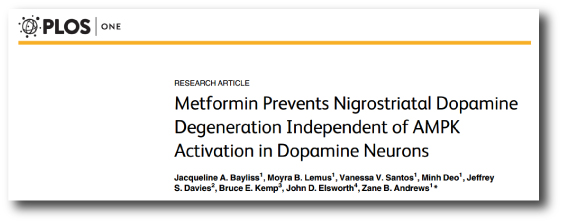
Metformin

Title: Metformin Prevents Nigrostriatal Dopamine Degeneration Independent of AMPK Activation in Dopamine Neurons.
Author: Bayliss JA, Lemus MB, Santos VV, Deo M, Davies JS, Kemp BE, Elsworth JD, Andrews ZB.
Journal: PLoS One. 2016 Jul 28;11(7):e0159381.
PMID: 27467571       (This article is OPEN ACCESS if you would like to read it)

Metformin (also known as Glucophage) has been one of the most frequently prescribed drugs for the treatment of type 2 diabetes since 1958 in the UK and 1995 in the USA. The mechanism by which Metformin works is not entirely clear, but it does appear to increase the body’s ability to recognise insulin.

Metformin treatment has previously been found to be neuroprotective. The researchers in this study wanted to determine if a protein called ‘AMPK’ was involved in that neuroprotective effect. They generated cells that do not contain AMPK and grew dopamine neurons – the brain cells badly affected by Parkinson’s disease.

In both cell cultures and in mice, the researchers found that Metformin was neuroprotective both in normal conditions and in the absence of AMPK. The study could not explain how the neuroprotective potential of Metformin was working, but it adds to the accumulating pile of evidence that some diabetes treatments may be having very positive effects in Parkinson’s disease.

A second piece of research from early this year goes even further:
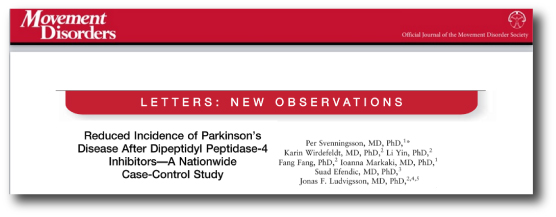
SWeds

Title: Reduced incidence of Parkinson’s disease after dipeptidyl peptidase-4 inhibitors-A nationwide case-control study.
Authors: Svenningsson P, Wirdefeldt K, Yin L, Fang F, Markaki I, Efendic S, Ludvigsson JF.
Journal: Movement Disorders 2016 Jul 19.
PMID: 27431803

Using the Swedish Patient Register, the researchers of this study identified 980 people with Parkinson’s disease who were also diagnosed with type 2 diabetes between July 1, 2008, and December 31, 2010. For comparative sake, they selected 5 controls (non-Parkinsonian) with type 2 diabetes (n = 4,900) for each of their Parkinsonian+diabetic subjects. Their analysis found a significant decrease in the incidence of Parkinson’s disease among individuals with a history of DPP-4 inhibitor intake.

DPP-4 inhibitors work by blocking the action of DPP-4, which is an enzyme that destroys the hormone incretin. Incretin helps the body produce more insulin only when it is needed and reduce the amount of glucose being produced by the liver when it is not needed. By blocking DPP-4, we are increasing the production of insulin.

Authors concluded that ‘clinical trials with DPP-4 inhibitors may be worthwhile’ in people with Parkinson’s disease.

So what was published last week?

Metabolic Solutions Development is a Kalamazoo (Michigan)-based company that is developing a new drug (MSDC-0160) to treat type 2 diabetes. Last week, Prof Patrik Brundin and colleagues from the Van Andel Institute in Grand Rapids published a research report that suggested MSDC-0160 may have very beneficial effects in Parkinson’s disease:

brundin-title

Title: Mitochondrial pyruvate carrier regulates autophagy, inflammation, and neurodegeneration in experimental models of Parkinson’s disease.
Authors: Ghosh A, Tyson T, George S, Hildebrandt EN, Steiner JA, Madaj Z, Schulz E, Machiela E, McDonald WG, Escobar Galvis ML, Kordower JH, Van Raamsdonk JM, Colca JR, Brundin P.
Journal: Sci Transl Med. 2016 Dec 7;8(368):368ra174.
PMID: 27928028

The drug from Kalamazoo, MSDC-0160, functions by reducing the activity of a recently identified protein that carries pyruvate into mitochondria.

What does this mean?

Pyruvate is a very important molecule in our body. The body can make glucose from pyruvate through a process called gluconeogenesis, which simply means production of new glucose. Thus, pyruvate is essential in providing cells with fuel to create energy (for more on pyruvate, click here for a good review article).

Pyruvate is carried into the power house of the cell – the mitochondria – by a protein called mitochondrial pyruvate carrier (MPC). The drug from Kalamazoo, MSDC-0160, is a blocker of MOC. It reduces the activity of MPC.

MPC also has other functions. It is known to be a key controller of certain cellular processes that influences mammalian target of rapamycin (mTOR) activation. mTOR responds to signals to nutrients, growth factors, and cellular energy status and controls the cells response. For example, insulin can signal to mTOR the status of glucose levels in the body. mTOR also deals with infectious or cellular stress-causing agents, thus it could be involved in a cells response to conditions like Parkinson’s disease.
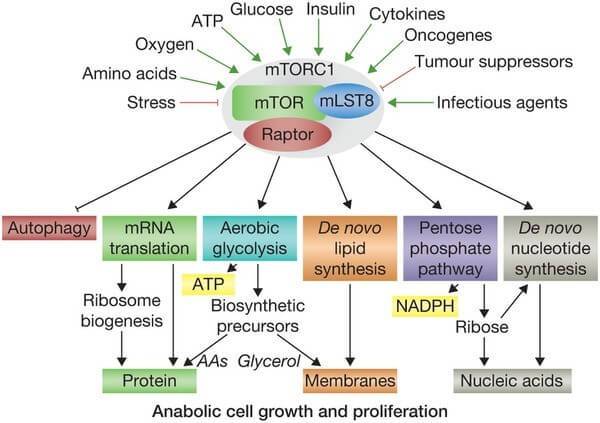
ncb2763-f11

Things that activate mTOR. Source: Selfhacked

Given the interaction with mTOR, the researchers in Michigan hypothesised that MSDC-0160 might reduce the neurodegeneration of dopaminergic neurons in animal models of Parkinson’s disease.

And this is exactly what they found.

The researchers reported that MSDC-0160 protected dopamine neurons in a mouse model of Parkinson’s disease. It also protected human midbrain dopamine neurons grown in cell culture when they were exposed to a toxic chemical. In addition, it demonstrated neuroprotective effects in a worm (called Caenorhabditis elegans) that produces a lot of the parkinson’s related protein alpha synuclein. MSDC-0160 even slowed the cell loss observed in a genetically engineered mouse that exhibits a slow loss of dopamine neurons. Basically, treatment with MSDC-0160 protected the cells from whatever the researcher threw at them.

How did it do this?

The researchers found that MSDC-0160 was reducing mTOR activity and also initiating a process called autophagy (which is the garbage disposal system of the cell). By kick starting the rubbish removal system, the cells were healthier. In addition, treatment with MSDC-0160 resulted in less inflammation – or activation of the immune system – in the brain.

Sounds very interesting. When do clinical trials start?

We’re not sure. They will most likely be in the planning stages though. If MSDC-0160 is approved for diabetes, it will be easier to have it approved for Parkinson’s disease as well.

Other diabetes drugs, however, are currently being tested in clinical trials for Parkinson’s disease. Of particular interest is Exenatide, which is just finishing a placebo-controlled, double blind phase 2 clinical trial. We are expecting the results for that trial early next year. Previous clinical studies suggested very positive results for Exenatide:


diabetes

Title: Exenatide and the treatment of patients with Parkinson’s disease.
Authors: Aviles-Olmos I, Dickson J, Kefalopoulou Z, Djamshidian A, Ell P, Soderlund T, Whitton P, Wyse R, Isaacs T, Lees A, Limousin P, Foltynie T.
Journal: J Clin Invest. 2013 Jun;123(6):2730-6.
PMID: 23728174     (This study is OPEN ACCESS if you would like to read it)

The researchers running this clinical study gave Exenatide to a group of 21 patients with moderate Parkinson’s disease and evaluated their progress over a 14 month period (comparing them to 24 control subjects with Parkinson’s disease). Exenatide was well tolerated by the participants, although there was some weight loss reported amongst many of the subjects (one subject could not complete the study due to weight loss). Importantly, Exenatide-treated patients demonstrated improvements in their clinician assessed PD ratings, while the control patients continued to decline. Interestingly, in a two year follow up study – which was conducted 12 months after the patients stopped receiving  Exenatide – the researchers found that patients previously exposed to Exenatide demonstrated a significant improvement (based on a blind assessment) in their motor features when compared to the control subjects involved in the study.

bydureon

Exenatide. Source: Diatribe

The results of that initial clinical study were intriguing and exciting, but it is important to remember that the study was open-label: the subjects knew that they were receiving the drug. This means that we can not discount the placebo effect causing some of the beneficial effects reported.

And Exenatide is not the only diabetes drug being tested

Pioglitazone is another licensed diabetes drug that is now being tested in Parkinson’s disease. It reduces insulin resistance by increasing the sensitivity of cells to insulin. Pioglitazone has been shown to offer protection in animal models of Parkinson’s disease (click here and here for more on this). And the drug is currently being tested in a clinical trial.

So what does it all mean?

People with diabetes appear to be more vulnerable than the general population to developing Parkinson’s disease, and many people with Parkinson’s disease have glucose processing issues. It would be very interesting to better understand the link between Parkinson’s disease and diabetes. Why is it that so many people with Parkinson’s disease are glucose intolerant? And why do so many people with diabetes go on to develop Parkinson’s? Answering either of these questions might provide further insight into how both conditions function. And given that drugs associated with one appear to help with the other only strengthens the curious association.

As mentioned above, 2017 will bring the results of Exenatide clinical trial, upon which a lot of hope is riding. If it provides positive benefits, then we will finally have a treatment that can slow the progression of the disease. In addition, we will be able to delve more deeply into how Exenatide is causing it’s effect. Positive outcomes for Exenatide will also open the flood gates for many of the other clinically approved diabetes medications which could be trialled on people with Parkinson’s disease.

So despite how you may be feeling about 2017 (based on the events of 2016), we here at the SoPD believe that there is a lot to look forward to in the new year.


The banner for today’s post was sourced from Diabetes60systems

The biology of immortality and Parkinson’s disease
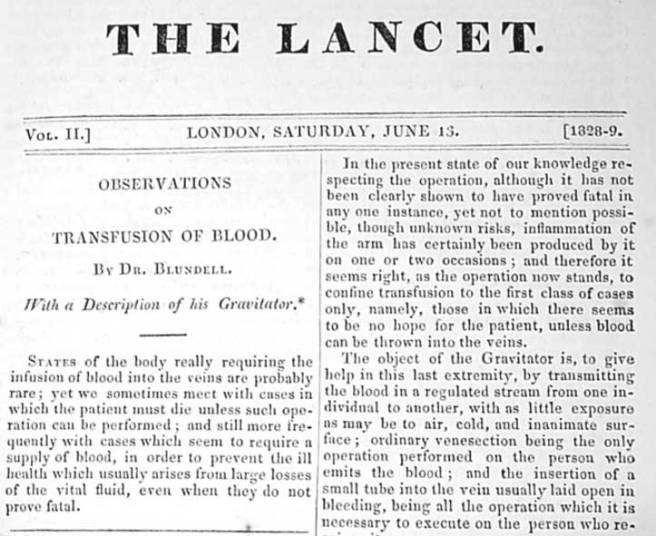


live-forever

A research paper was published in the prestigious journal Cell this week that has some people excitedly suggesting that we are one step closer to living longer.

Age is the no. 1 correlate with neurodegenerative conditions like Parkinson’s disease. A better understanding of the ageing process would greatly aid us in understanding these conditions.

In today’s post we will review the research paper in question and discuss what it will mean for Parkinson’s disease.


o-hela-cells-facebook

Henrietta Lacks with her husband David. Source: HuffingtonPost

The lady in this photo is basically immortal.

Henrietta Lacks was an African American woman who died in October, 1951, but (it could be argued) lives in almost every research institute in the world. Henrietta died with cervical cancer, and during her treatment, she had a (unethical) biopsy conducted on her tumor which give rise to the first human immortalised cell line that is named after her: Hela cells (Henrietta Lacks).

And I kid you not when I say that there are samples of Hela cells in a freezer in almost every research institute in the world. Since the 1950s, scientists have grown 20 tons (and counting) of her cells (Source). And some of our greatest advances have been made with Hela cells, for example in 1954, Jonas Salk used HeLa cells in his research to develop the polio vaccine.

Unwittingly, Henrietta achieved immortality.

tumblr_lyubehxk1h1qfcyz0o1_1280

Hercules fighting off death. Source: ProactionaryTranshumanist

We humans have a strange fascination with immortality. It could be argued that it underlies our religions, and also drives us to achieve great things during our live times.

During the last three decades, science has begun probing the biology of ageing with the goal of helping us to understand how and why our bodies degrade over time in the hope that it will lead to better treatments for disease that predominantly affect the elderly.

Last week research groups from Spain and the Salk institute in California published the results of a study that may be considered the first tentative steps towards actually extending life and perhaps reversing the ageing process.

This is the article:

cell-title-5

Title: In Vivo Amelioration of Age-Associated Hallmarks by Partial Reprogramming.
Authors: Ocampo A, Reddy P, Martinez-Redondo P, Platero-Luengo A, Hatanaka F, Hishida T, Li M, Lam D, Kurita M, Beyret E, Araoka T, Vazquez-Ferrer E, Donoso D, Roman JL, Xu J, Rodriguez Esteban C, Nuñez G, Nuñez Delicado E, Campistol JM, Guillen I, Guillen P, Izpisua Belmonte JC.
Journal: Cell. 2016 Dec 15;167(7):1719-1733.
PMID: 27984723

In their study, the researchers used something called the ‘Yamanaka factors’ to try and reverse the ageing process in mice.

What are the Yamanaka factors?

This is Prof Shinya Yamanaka:

yamanaka-s

Source: Glastone Institute

He’s a dude.

In 2012 he and Prof John Gurdon (University of Cambridge) were awarded the Nobel prize for Physiology and Medicine for the discovery that mature cells can be converted back to stem cells. Prof Gurdon achieved this feat by transplanting a young nucleus into an old cell, while Prof Yamanaka did the same thing with the ‘Yamanaka factors’.

The Yamanaka factors are a set of 4 genes (named Myc, Oct3/4, Sox2 and Klf4) that when turned on in a mature cells (like a skin cell) can force the cell to ‘de-differentiate’ back into an immature cell that is capable of becoming any kind of cell. This induced un-programmed state means that the once adult cell has changed into something similar to an embryonic stem cell.

This new cell is called an induced pluripotent stem (IPS) cell – ‘pluripotent’ meaning capable of any fate.

So what did the researchers in the Cell paper do with the Yamanaka factors?

150206-mouseresearch-stock

A lab mouse. Source: USNews

They genetically engineered mice that produced the Yamanaka factors in every cell in the body. They could turn on the Yamanaka factors by adding a special chemical to the drinking water of the mice for 2 out of every 7 days.

By turning on the 4 genes in this manner, the researchers found that they could extend the life span of the mice by 30%. In human terms, this would increase the average age of death from the current 80 years to 105 years!

Not only did they not the increase in the life span of the mice, but the researchers also found that the reprogramming of cells improved the regenerative ability of the cells in the aged mice. They even demonstrated this in human cells carrying the Yamanaka factors.

The study is very artificial – the mice and the human cell lines were engineered to produce the Yamanaka factors, which does not happen in normal nature – and we won’t be seeing any clinical trial for this kind of approach anytime soon. But the results will have big implications for the field of neurodegeneration.

Ok, but what has all this got to do with Parkinson’s disease?

Remember that the no. 1 correlate (association) with Parkinson’s disease is age. That is to say, your risk of developing Parkinson’s disease increases with age.

So this begs the question: if we had a better understanding of the ageing process (or even just a concept of what ageing is), could we beat off Parkinson’s disease?

Until the research paper reviewed above was published last week, this was all just silly hypothetical stuff. Now that we can extend the lives of mice by 30%, however, do we need to start actually considering the hypothetical as possible?

Science has brought us along way and provided us with many wonderful things (I would be lost without my Apple ipod). But we are now interesting a strange new world where science is going beyond normal basic biology and this may allow us to reverse what was previously un-negotiable facts. We can argue till the cows come home over the ethics of letting people live longer, but there is tremendous potential to use this technology to deal with the neurodegenerative conditions currently affecting us.

This is all very speculative, but it will be interesting to see where this leads. Stay tuned.


The banner for today’s post was sourced from TechieKids