Patients not patents

# # # #

Patent protection provides an inventor/discoverer with an exclusive right to prevent or stop others from commercially exploiting the patented invention for a set period of time.

Patents are supposed to encourage innovation by providing the patent holder with an unchallenged opportunity to develop and profit from an idea. But it could be argued that patents are increasingly generating more problems than they are solving. In addition, they have led to the hording of data, which reduces collaboration and further limits progress.

Luckily there are some ambitious efforts trying to change this.

In today’s post, we will discuss some examples of these efforts.

# # # #


The Venetian Patent Statute. Source: Wikipedia

Patents are a form of intellectual property that provide the holder with the legal right to block others from manufacturing or selling an invention during a limited period of time. In exchange, the patent holder will publicly disclose the invention.

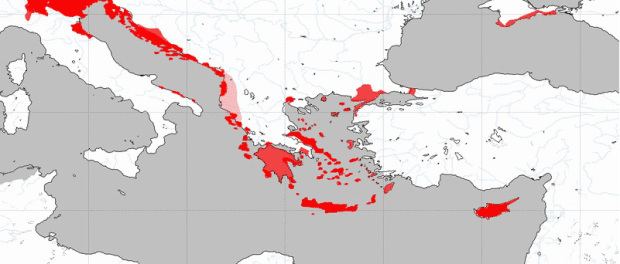
The use of patents began on the 19th March, 1474 when the the Venetian Patent Statute was established in the Republic of Venice.

The republic of Venice (in red) across the Mediterranean. Source: Alchetron

The Venetian Patent Statute provided that patents may be granted for “any new and ingenious device, not previously made“, IF that invention was considered useful.

More recently, some folks in the research and legal worlds have started arguing that patents themselves are no longer “useful”.

Patents are suppose to encourage innovation, but in the US alone, the costs brought on by patent trolls (these are holding companies that acquire strategic patents and use legal threats to extract steep royalties) now amounts to 12% of business R&D spending (Source). It is literally blocking innovation rather than stimulating it – if there is no certainty of a profit to cover the cost of royalties, there will be no innovation.

Patent troll. Source: Medium

And patents also inhibit medical research.

Many biotech firms will stop working on novel potential therapies (and even block others from working on them) because there is not a long enough period of time left in the patent to make a “business case” for supporting it.

As we have discussed in a previous post here on the SoPD, 30% of all Phase II clinical trials do not continue on to Phase III not because the therapy fails in terms of efficacy or safety, but rather the companies behind the agent can not find a business model that will justify continuing.

Pause and think about that for a moment.

1/3 of all Phase II trials…

…because limited profits can be made.

This is crazy. What can we do?

Continue reading “Patients not patents”

Are we Enterin a new age?


# # # #

A Parkinson’s-focused biotech company called Enterin has had a very busy start to the new year, with publication of some interesting preclinical research and the announcement of Phase II clinical trial results.

The clinical trial results met both the primary and secondary endpoints (the pre-determined measures of whether the treatment is effective) indicating a successful study, and the preclinical result provides new potential insights into the functions of the Parkinson’s-associated protein, alpha synuclein.

In today’s post, we will discuss both the clinical trial results and the preclinical work, and consider what this means for our understanding of Parkinson’s.

# # # #


Source: Discovery

In scientific nomenclature, they are referred to as Squalus acanthias.

Many people call them ‘Spurdogs’. Or ‘Mud sharks’. Or even ‘Piked dogfish’.

But they are more commonly known as spiny dogfish.

Source: X-ray Mag

Fun facts about spiny dogfish:

  1. They live in the shallow saltwater habitats of the North Pacific and the North Atlantic oceans
  2. The females are longer (49 inches or 124 cm) than the males (39 inches or 99 cm)
  3. They have two dorsal fins, both with venomous spines (hence the name)
  4. A pregnant females will have an average litter of 6 pups
  5. They have very long gestation periods – up to 24 months!
  6. The average lifespan ranges between 20 and 24 years
  7. Spiny dogfish are very fast swimmers – able to swim at about 6.2 feet/s (1.9 m/s)
  8. They have a special organ called the ‘Ampullae of Lorenzini‘ which they use to detect the electric field generated by their prey.
  9. They have a very keen sense of smell and two-thirds of their brain is involved in their sense of smell.

Oh, and they are extremely robust when it comes to infection.

Seriously, they never get sick, which is fascinating given that they have a relatively “primitive” immune system (Click here to read more on this).

Very interesting. But what does any of this have to do with Parkinson’s?

Continue reading “Are we Enterin a new age?”

The mannitol clinical trial results

# # # #

Without a shadow of doubt, one of the most popular topics that readers search for on this website is ‘mannitol’. 

It is a widely used sweetner that became very popular in the Parkinson’s community after a 2013 research report presented compelling results that this molecule exhibited robust anti-aggregation properties on the Parkinson’s-associated protein alpha synuclein.

Recently the results of a carefully designed clinical trial evaluating mannitol have been published.

In today’s post, we will look at what mannitol is, review the previous research conducted on this agent in the context of Parkinson’s, and consider the results of the clinical trial.

# # # #


Source: History

During the forty years that the Israelites wandered the desert after leaving Egypt, they faced many hardships, most notably a scarcity of food. To resolve this particular issue, God kindly provided the Israelites with “bread from heaven”.

According to the scriptures, it was a “fine, flake-like thing, fine as frost on the ground” and “It was like coriander seed, white, and the taste of it was like wafers made with honey” (Exodus, Chapter 16).

They called “manna”.

Hence the phrase: Like manna from heaven

More recently, a substance called manna, has been the focus of a lot of attention in the Parkinson’s community.

A group of Israeli researchers have been exploring the potential of the sweetener ‘Mannitol’ (also known as Manna sugar) in the context of Parkinson’s.

What is mannitol?

Continue reading “The mannitol clinical trial results”

Monthly Research Review: January 2022

# # # #

At the end of each month the SoPD writes a post which provides an overview of some of the major pieces of Parkinson’s-related research that were made available during January 2022.

The post is divided into 10 parts based on the type of research:

# # # #


So, what happened during January 2022?

In world news:

January 7th – COVID-19 pandemic: The number of COVID-19 cases exceeds 300 million worldwide.

January 10th – The first successful heart transplant from a pig to a human patient is reported.

January 11th to 13th – A rare rotating ice disk formation (300+ feet wide) developed on the Presumpscot River in Maine (USA) and someone thought it deserved to be on the news (and its own Twitter account).

January 15th – A large eruption of ‘Hunga Tonga’ – a submarine volcano in Tonga – triggered tsunami warnings in Australia, Canada, Chile, Fiji, Japan, New Zealand, Samoa, and the United States.

January 26th – An electronically tagged Arctic hare’s dash across northern Canada had researchers scratching their heads. The animal covered a total of 388 kilometers in 49 days – which is the longest such journey among hares and is changing how scientists think about tundra ecology.


In the world of Parkinson’s research, a great deal of new research and news was reported:

In January 2022, there were 1,073 research articles added to the Pubmed website with the tag word “Parkinson’s” attached (compared to 11,668 for all of 2021). In addition, there was a wave to news reports regarding various other bits of Parkinson’s research activity (clinical trials, etc).

The top 6 pieces of Parkinson’s news

Continue reading “Monthly Research Review: January 2022”

The luminance of a lighthouse

# # # #

LRRK2 inhibition represents one of several biological approaches to slowing the progression of Parkinson’s that is currently being clinically tested.

Leading the charge in the development of LRRK2 inhibitors is a biotech company called Denali Therapeutics (in partnership with Biogen).

Recently, the company provided news on the immediate future clinical development plans for their lead molecule BIIB122.

In today’s post, we will look at what is going to happen next for LRRK2 inhibition.

# # # #


Source: Denali

Founded in 2013 by a group of former Genentech executives, San Francisco-based Denali Therapeutics is a biotech company which is focused on developing novel therapies for people suffering from neurodegenerative diseases.

In particular, they have been leading the charge on a new class of drugs for Parkinson’s called LRRK2 inhibitors.

What are LRRK2 inhibitors?

Continue reading “The luminance of a lighthouse”

The “What would I do” post? Part 2

# # # #

I am very regularly asked “what would you do if you were diagnosed with Parkinson’s tomorrow?”

As a research scientist I don’t really feel comfortable answering it, but I can see how it is a fair question. I have previously attempted to address it (Click here to read that post), and I point folks who do ask in the direction of that post.

But a recent experience has me wanting to re-address it.

In today’s post, we will revisit this idea of what would I do if I were diagnosed with Parkinson’s tomorrow?

# # # #


Source: Newatlas

I lost someone extremely close to me early last year.

Even more than COVID19 or anything else that occurred, that singular event defined 2021 for me personally. There was life before, and now life adjusting to being without them.

And I’m not sharing this out of any desire for sympathy – honestly, I don’t want it. Everyone has suffered hardships over the last 2 years. Rather, I am telling you this for a very different reason.

It helps to set the context for the discussion today.

Continue reading “The “What would I do” post? Part 2″

The road ahead: 2022

# # # #

The first post at the start of each year on the SoPD website tries to provide an overview of where things are in the search for ‘disease modifying’ therapies for Parkinson’s. 

It is an exercise in managing expectations as well as discussing what research events are scheduled for the next year so that we can keep an eye out for them. I will also note aspects of ongoing research where I will be hoping to see an update on progress. Obviously, where 2022 will actually end is unpredictable, but an outline of what is coming over the next 12 months will hopefully provide the community with a useful resource.

While there is a great deal of interesting research exploring the causes of the condition, the genetics and biology of the condition, novel symptomatic therapies, and other aspects of Parkinson’s, the primary focus in this post is on the clinical trial research seeking to slow, stop or reverse the condition.

In this post, we will hopefully give readers a taste of what the landscape looks like for clinical research focused on disease modification for Parkinson’s.

# # # #


David Livingstone. Source: CT

If you have men who will only come if they know there is a good road, I don’t want them. I want men who will come if there is no road at all.

David Livingstone

The Scottish physician Dr David Livingstone – missionary and explorer – led an interesting life.

Most of us only know of him for his fabled adventures in Africa. But they are made more remarkable given his extremely humble beginnings.

Born into poverty, Livingstone started his working life at 10 years of age in a cotton factory, where he worked from 6am till 8pm everyday. He somehow managed to get some schooling around those work shifts, and his impoverished family saved enough money so that he could attend Anderson’s University (Glasgow) when he was 23.

Cotton factory (Source)

How he got from the cotton factory to becoming the first European to cross the width of southern Africa (as well as ‘discovering’ the Mosi-oa-Tunya waterfalls – aka Victoria Falls), was one of the great rag-to-riches stories of Victorian times and making him something of a celebrity of the age.

Mosi-oa-Tunya waterfalls. Source: Cblacp

But his mapping out of central Africa was his greatest legacy.

As a biographer wrote “Through him, the centre of Africa ceased to be a dark, unknown space on the map and became a real place, full of interesting human beings [and] wonderful wildlife. . . .” (Source)

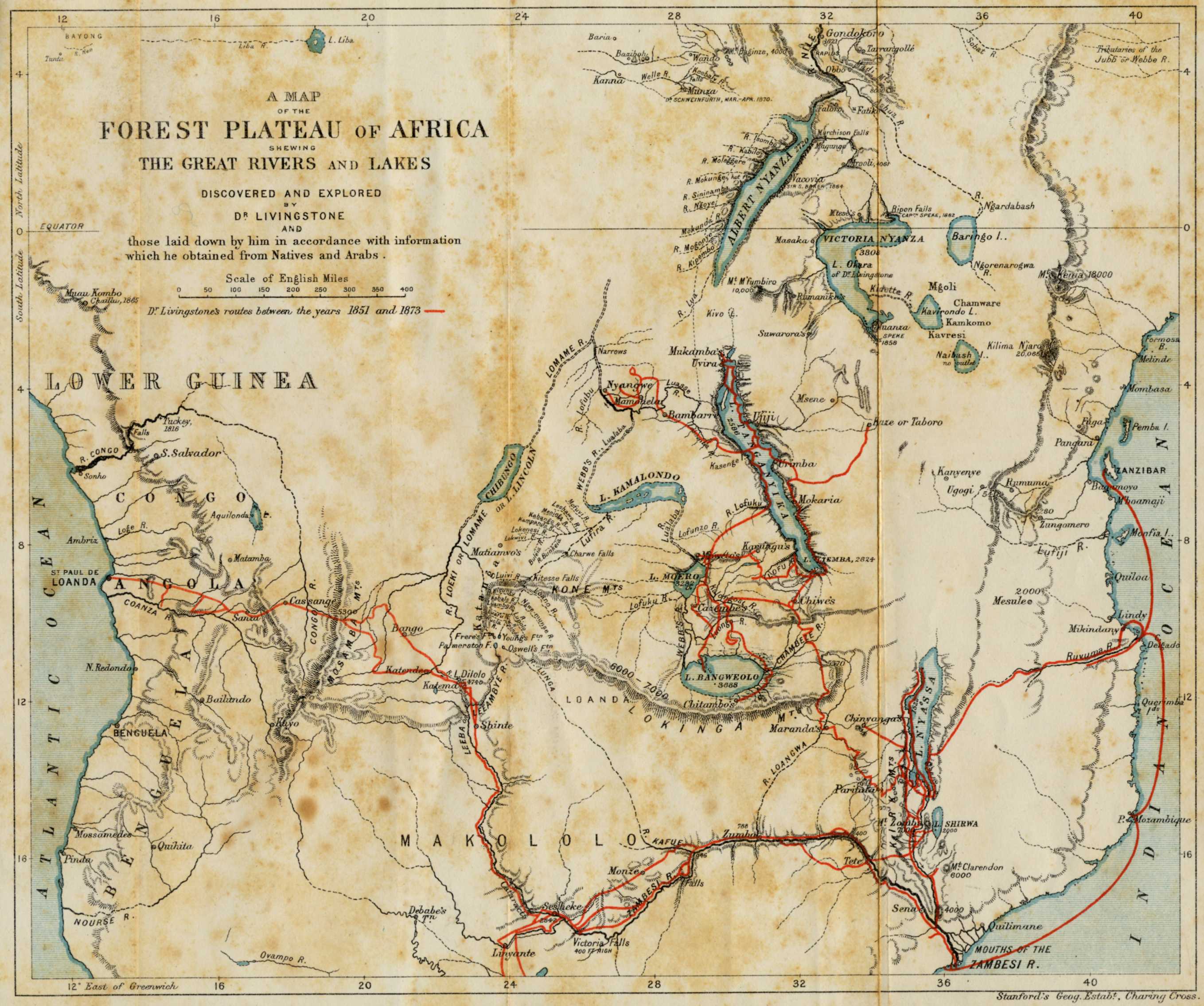
It has to be acknowledged, however, that Livingstone was not able to explore the entirety of the Zambezi River system himself so he would often ask the local people for information, and he would then incorporate their contributions into his maps.

Livingstone’s travels (Source)

“We travel in the company of men who are well acquainted with parts of the country by personal observation… They soon see that we are interested in the courses of rivers, names of hills, tribes…and make enquiries among the villagers to whom we come. Drawings are made on the ground and parts pointed out that bearings may be taken and comparisons drawn from the views of different individuals. We thus gain a general idea of the whole country” (Source)

It makes one appreciate that maps are collaborative efforts, incorporating the efforts of lots of different parties. And it is only by going through the process of mapping something out that we start to understand it, know our place in it, observe the limitations to our knowledge, and perhaps find something of what we are looking for.

At the start of each year, the SoPD publishes a horizon scanning post where we take a Livingstone-like approach towards mapping out the landscape of clinical research focused on disease modification for Parkinson’s, and what follows is the 2022 version.

Continue reading “The road ahead: 2022”

Year in review: 2021

# # # #

As with the preceding year, 2021 proved to be challenging due to the continuing COVID-19 pandemic (and it is not over yet). Vaccines were rolled out with remarkable speed, but equally new variants of the virus popped up and have kept Governments and health regulatory bodies on their toes.

An amazing feature of the last two years has been the response to the pandemic from the research community – not only in sequencing novel variants and testing new vaccines – but also in terms of keeping research projects ongoing in other fields of science. Despite everything pandemic-related, there has been significant progress in areas like Parkinson’s research.

In today’s post, we will consider three big Parkinson’s-related research takeaways of 2021 (based on our humble opinions here at the SoPD), and then we will provide an extended overview of some of the important discoveries and pieces of news from the last 12 months (Be warned: this will be a long post).

# # # #


Source: Thecalculatorsite

There are 52.143 weeks in a year, which equates to:

  • 365 sun rises and sunsets
  • Approximately 13.3 lunar orbits (Source)
  • 8 760 hours
  • US$93.86 trillion in global gross domestic production (nominal terms; 194 economies in 2021 – Source)
  • 525 600 minutes
  • 29.2 tons of adenosine triphosphate (ATP) production and recycling (per person – based on an average 80kg individual)
  • 31 622 400 seconds (Source)
  • Approximately 35 million heart beats and  8.4 million breaths

Basically, ample time and resources to do some useful stuff (beyond simply binging “Squid games” on Netflix or playing “candy crunch”).

The face of 2021? Source: Tasteofcinema

The last 52.143 weeks have been particularly challenging in many countries due to the ongoing COVID-19 situation. Despite these ongoing challenges, significant progress has been made in the research surrounding Parkinson’s and other neurodegenerative conditions in 2021.

Below we will discuss three of the main research-related pieces of news for Parkinson’s (as determined by the team here at SoPD HQ), before providing a month-by-month overview of the note worthy events.

The main events in Parkinson’s-related research for 2021

(in no particular order)

Continue reading “Year in review: 2021”

Monthly Research Review – December 2021

# # # #

At the end of each month the SoPD writes a post which provides an overview of some of the major pieces of Parkinson’s-related research that were made available during December 2021.

The post is divided into 10 parts based on the type of research:

# # # #


So, what happened during December 2021?

In world news:

8th December – The Belgian death metal rock band “Omicron” announced that they would not be changing their name despite sharing it with the recent COVID variant. Apparently “all publicity is good publicity” (Source).

14th December – Two Maryland zebras that escaped from a farm in mid-August were finally returned to their herd after almost four months on the run:

14th December – On April 28th, 2021, a small NASA probe the size of a small car called the Parker Solar Probe entered extended the atmosphere of the Sun – known as the corona – and spent 5 hours there – travelling at approximately 100 miles (163 kilometers) per second. On the 14th December, NASA researchers published the first results of that fly-by (Click here to read more about this).

17th December – UK Cabinet Secretary Simon Case recused himself from his one week old role of leading an inquiry into alleged government staff parties during the 2020 lockdown, after it is reported that a similar event was also held in his own office (it would all be comical if not for the fact that these people are actually in charge).

25th December – NASA, ESA, the Canadian Space Agency and the Space Telescope Science Institute successfully launched the $10 billion James Webb Space Telescope.

31st December – the UK finished the year on a new high (remember: every time a virus infects a cell there is the opportunity for variants)

And meanwhile in the more densely populated island of Taiwan:

In the world of Parkinson’s research, a great deal of new research and news was reported:

In December 2021, there were 703 research articles added to the Pubmed website with the tag word “Parkinson’s” attached (11,668 for all of 2021). In addition, there was a wave to news reports regarding various other bits of Parkinson’s research activity (clinical trials, etc).
 

The top 5 pieces of Parkinson’s news

Continue reading “Monthly Research Review – December 2021”

The terazosin pilot study results

# # # #

Drug repurposing represents a means of rapidly testing and bring novel therapies to the patient. By testing clinically available drugs – that have well characterised safety records in a particular medical condition – one can determine if a certain biological pathway is playing an influential role in another disease.

A good example of this is work currently being done by researchers at the University of Iowa with a drug called terazosin. Terazosin is a treatment used for enlarged prostate issues and high blood pressure, but recent epidemiological data and preclinical work indicates that it may also be useful for Parkinson’s.

Recently the team in Iowa published a report on a small pilot clinical study evaluating the agent in a group of people with Parkinson’s.

In today’s post, we will look at what terazosin does, discuss what the preclinical and epidemiological research suggests, review the results of the pilot study, and discuss what could happen next.

# # # #


Source: Worldtravelguide

There has been a lot of important Parkinson’s research conducted in the state of Iowa.

For example, in addition to producing a quarter of the USA’s corn and 1/3 of America’s pork, Iowa is also the home to a large family known to researchers as the ‘Iowa kindred‘ or ‘Spellman-Muenter kindred‘.

First described by Spellman in 1962, the Iowa kindred has a long history in which generations of the family have been inflicted with severe parkinsonisms (the symptoms/features of PD). In the family tree below, the black diamonds represent individuals with Parkinsonisms:

Source: Researchgate

In 2003, researchers discovered that this family was carrying a multiplication of their alpha synuclein gene:

Title: alpha-Synuclein locus triplication causes Parkinson’s disease.
Authors: Singleton AB, Farrer M, Johnson J, Singleton A, Hague S, Kachergus J, Hulihan M, Peuralinna T, Dutra A, Nussbaum R, Lincoln S, Crawley A, Hanson M, Maraganore D, Adler C, Cookson MR, Muenter M, Baptista M, Miller D, Blancato J, Hardy J, Gwinn-Hardy K.
Journal: Science. 2003 Oct 31;302(5646):841.
PMID: 14593171

The publication of this report was an important moment in Parkinson’s research history (Click here to read a SoPD post about the early history of alpha synuclein).

More recently, some researchers at the University of Iowa are hoping to continue this legacy of important Parkinson’s research by investigating the potential of a clinically available drug to slow the progression of Parkinson’s.

Source: Youtube

Which drug are they investigating?

Continue reading “The terazosin pilot study results”