Slow-wave sleep saves synucleinopathy?


# # # #

Good sleep patterns have important implications for all of us in terms of health and well being, but sleep is often disrupted for people with Parkinson’s.

Research suggests that people with Parkinson’s have reduced amounts of slow wave and REM sleep, and increased periods of wakefulness.

A new report has found that increasing levels of slow wave sleep could have beneficial effects in reducing the accumulation of alpha synuclein protein in the brain.

In today’s post, we will discuss what sleep is, how it is affected in Parkinson’s, and what the new research indicates about slow wave sleep.

# # # #


Source: Dlanham

I am a night owl.

One that is extremely reluctant to give up each day to [the waste of precious time that is] sleep. There is always something else that can be done before going to bed. And I can often be found pottering around at 1 or 2am on a week night.

Heck, most of the SoPD posts are written in the wee small hours (hence all of the typos).


Source: Iristech

As a result of this foolish attitude, I am probably one of the many who live in a state of sleep deprivation – I am a little bit nervous about doing the spoon test:

And the true stupidity of my reluctance to adopt a healthy sleep pattern is that I fully understand that sleep is extremely important for our general level of health and well being.

In addition, I am also well aware of an accumulating pool of research that suggests sleep could be influential in the initiation and progression of neurodegenerative conditions, like Parkinson’s.

Wait, how is sleep associated with Parkinson’s?

Continue reading “Slow-wave sleep saves synucleinopathy?”

From wearables to invisibles

# # # #

New technologies that can help us to better understand and track Parkinson’s over time has been a theme here on the SoPD. Such tools could create fantastic opportunities, particularly in the context of clinical trials evaluating new therapies, by providing comparable quantitative measures.

Many of these efforts have focused on wearable technologies that require user input – mostly in the form of actually remembering to put the device on or to manually input data on a regular basis.

More recently, however, some researchers have been investigating ‘invisibles’ rather than ‘wearables’, and the results have been rather remarkable.

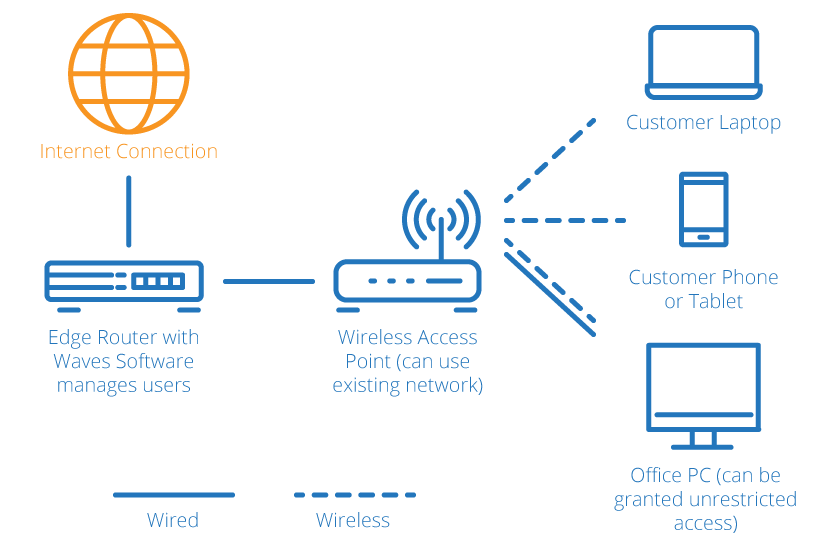
In today’s post, we will discuss how WI-FI technology is helping to better assess and measure Parkinson’s, and other medical conditions.

# # # #


Source: Pandasecurity

During the COVID19 pandemic, working from home has largely depended on availability of this strange thing called WI-FI. And as a result this strange thing called WI-FI has become a critical aspect of our daily lives.

The necessity of this strange thing called WI-FI becomes apparent when Zoom or Teams sessions are interrupted by a weak signal from this strange thing called WI-FI.

Source: Highspeedinternet

But what exactly is this strange thing called WI-FI?

It is often said to be short for “Wireless Fidelity“, but it is not.

The generic term “WI-FI” was actually created by the marketing firm Interbrand (Source) because the wireless industry was looking for a more user-friendly name to refer to the not so user-friendly technology known as “IEEE 802.11b Direct Sequence” (Source).

WLAN (or Wireless Local Area Network) was an option, but it didn’t really have a catchy ring to it. In the end, WI-FI – a pun upon the word HI-FI – was selected and the rest is history.

WI-FI refers to the communication standard for the wireless network that has been around since the 1990s. It works as a Local Area Network for electronic devices to operate without using any types of cable or wiring.

Source: Waveswifi

Most people use it for important tasks, like binge streaming ‘Squid Games’. But recently researchers have found other uses for this strange thing called WI-FI.

Like what?

Continue reading “From wearables to invisibles”

ADepTing to the UCB-Novartis deal

# # # #

Alpha synuclein has long been viewed at “Public enemy #1” by the Parkinson’s research community. This sticky, abundant protein starts to cluster (or aggregate) in Parkinson’s.

There have been several attempts to reduce levels of the protein floating around outside of cells (using “immunotherapy” approaches)

But now clinical research is ramping up to determine if reducing aggregated alpha synuclein levels in the brain could help to slow/stop the progression of the condition.

In today’s post, we will look at three different lines of clinical research focused on small molecule inhibitors of alpha synuclein aggregation. 

# # # #


When someone mentions the pharmaceutical firm Novartis, it feels like the company has been around forever, but it is actually not that old.

It was created in March 1996 via the merger of two Swiss companies: Ciba-Geigy and Sandoz. The roots of those companies can be traced back more than 250 years, but the combined entity is still a spring chicken compared to many of its major competitors.

The name Novartis results from the combination of two words “Nova Artes”, which means new art and innovation in simple forms, but there is little in what the company does that is ‘simple’. A good example of this was their block buster cancer drug Gleevec/Glivec (imatinib) which was developed by careful “rational drug design” for very specific types of cancer.

Source: NCBI

The reputation for Swiss precision seems to flow through this company and they are always making very carefully placed bets.

Which makes their news this week rather interesting.

What news did they have?

Continue reading “ADepTing to the UCB-Novartis deal”

Getting a handle on Miro1

# # # #

Novel therapeutic interventions are being proposed for Parkinson’s on a regular basis, with compelling data supporting their future development.

The case is strengthened when a measure of target engagement is also involved – providing not only a potential therapy but also a biomarker as well.

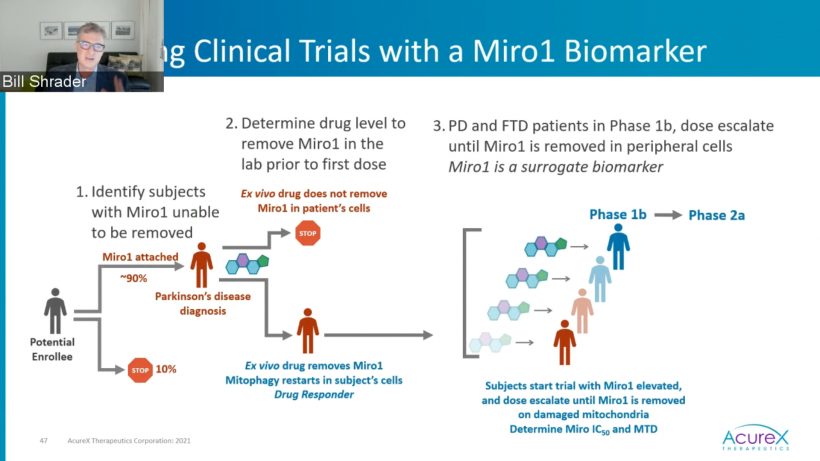
Recently, a biotech company called AcureX Therapeutics has been presenting just such a case, based on a biological mechanism involving the protein Miro1.

In today’s post, we will discuss what Miro1 is and how it might be useful for future clinical trials.

# # # #


Watching the recent Michael J Fox Foundation‘s Progress in the PD Pipeline webinar (Wednesday 10th November, 2021), I was really impressed by the presentation by Dr Bill Shrader (co-founder and CEO/CSO of AcureX Therapeutics)


In particular, I really liked their approach to potential patient selection for future clinical trials of their lead drug candidate. It all revolves around the analysis of Miro1 as a biomarker.

What is Miro1?

Continue reading “Getting a handle on Miro1”

Monthly research review – November 2021

# # # #

At the end of each month the SoPD writes a post which provides an overview of some of the major pieces of Parkinson’s-related research that were made available during November 2021.

The post is divided into 10 parts based on the type of research:

# # # #


So, what happened during November 2021?

In world news:

November 1 – American psychiatrist Professor Aaron Beck –  the father of cognitive therapy and cognitive behavioral therapy (or CBT) – passed away.


November 13th – The 2021 United Nations Climate Change Conference came to an ignominious conclusion with more blah-blah promises by world “leaders”, which included a “phasedown” of unabated coal power, a 30% cut in methane emissions by 2030, and plans for a halt to deforestation by 2030. And then they all hopped back on their planes and left. Perhaps in a world of zoom meetings, we can agree to “phasedown” COP conferences instead?


November 26 – The World Health Organization convened an emergency meeting in Geneva amid concerns over “Omicron” – a highly mutated variant of COVID-19 in South Africa that appears more infectious than Delta.


November 29th – Researchers presented synthetic multicellular assemblies (“xenobots”) that can replicate kinematically by moving and compressing dissociated cells in their environment into functional self-copies (Click here to read the report and click here to read a press release on the topic).

November 29th – The number of research reports on the Pubmed search engine with the keyword “Parkinson’s” climbed over 150,000. Approximately 118,000 (~80%) of them have been published since the year 2000, & 75,494 (~50%) since 2012.

In the world of Parkinson’s research, a great deal of new research and news was reported:

In November 2021, there were 919 research articles added to the Pubmed website with the tag word “Parkinson’s” attached (10,965 for all of 2021 so far). In addition, there was a wave to news reports regarding various other bits of Parkinson’s research activity (clinical trials, etc).


The top 6 pieces of Parkinson’s news

Continue reading “Monthly research review – November 2021”

The influence of influenza

# # # #

The potential long-term consequences of viral infections is not a popular topic for a research blog in the middle of a pandemic (and yes, we are still in the middle of it!), but there is a recent Parkinson’s-related report that is worth discussing.

Researchers have recently looked at medical records dating back several decades and noticed something interesting about influenza infections: They are associated with diagnoses of Parkinson’s more than 10 years after infection.

NOTE: The data does not indicate a causal link, just an association.

In today’s post, we will discuss what influenza is, how it has previously been associated with PD, what the new report found, and we will speculate on potential mechanisms by which viral infections could be playing a role in Parkinson’s.

# # # #


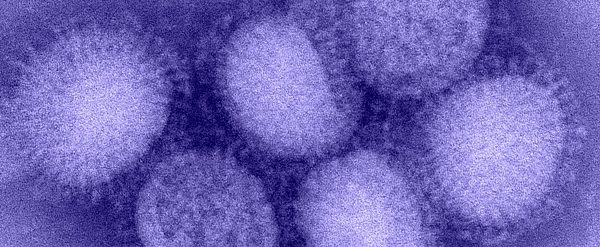
photo_66943_landscape_650x433

1918 Spanish flu. Source: Chronicle

Between January 1918 and December 1920, there were two outbreaks of an influenza virus during an event that became known as the 1918 flu pandemic.

Approximately 500 million people across the globe were infected by the H1N1 influenza virus, and this resulted in 50 to 100 million deaths (approximately 3-5% of the world’s population). Given that it occurred during World War 1, censors limited the media coverage of the pandemic in many countries in order to maintain morale.

The Spanish media were not censored, however, and this is why the 1918 pandemic is often referred to as the ‘Spanish flu’.

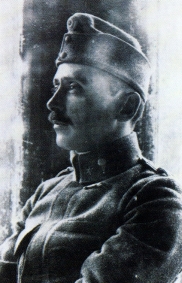
At the same time that H1N1 was causing havoc, a Romanian born neurologist named Constantin von Economo reported a number of cases involving unusual symptoms. The collection of symptoms was eventually given a name: encephalitis lethargica (EL).

Economo

Constantin von Economo. Source: Wikipedia

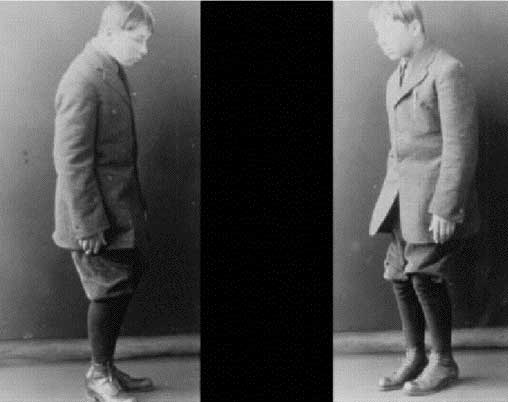
This disease left victims in a statue-like condition, speechless and motionless. By 1926, EL had spread around the world, with nearly five million people being affected.

vonecomo-parkinson

An individual with encephalitis lethargica. Source: Baillement

Was influenza causing EL?

Continue reading “The influence of influenza”

Turn back Bach?

# # # #

Cellular activity generates a lot of waste and by-products. Cells have developed very efficient methods of dealing with this situation.

As we age, however, these processes become strained, and in degenerative conditions they appear to be rather dysfunctional. 

New research highlights a novel mechanism – Bach1 derepression – which points towards a new class of potential therapeutics and interesting avenues of further study.

In today’s post, we will discuss the results of this new research and explore the implications of it.

# # # #


Source: Maxpixel

I am marveling at the fact that I am typing these words.

And that you are reading them.

Consider for a moment the requirements of this arrangement. And I’m not talking about the tiny muscles changing the size of the pupil in your eye, or the neurons in your visual cortex firing in unison to give you a correct and colour-rich representation of the world in front of you that has nothing to do with the actual content being observed.

Rather, I’m thinking more about about what is going on one level down – actually inside of each cell:

A liver cell. Source: Muhadharaty

There is a universe of frenzied molecular activity in each and every cell of our bodies. And we are only just starting to build up a user guide to the densely packed, fuzzy complexity of this inner world. This video gives an extremely simplified version of some of what is going on (in reality, the interior of cells is significantly more densely packed and the activity is a vastly quicker):

And as I suggested above it should be celebrated that what occurs in these cells is so rapid, efficient and precise that I can type these words and you can read them.

All of this crazy activity, however, produces waste and by-products.

Cells have of course developed very effective means of dealing with those issues. But as we age, cells can start to struggle with the task of waste disposal. And as a result, we can start to see an accumulation of these by-products, which can lead to stress on the cell, particularly in the form of oxidative stress.

What is oxidative stress?

Continue reading “Turn back Bach?”

ASAP 2021 funding


# # # #

Aligning Science Across Parkinson’s represents a major new funder for Parkinson’s research. They are focused on basic biology research and require their grant holders to take a very collaborative, interdisciplinary, “open science” approach.

In their first 2 years of funding, the organisation has awarded almost US$300 million in grants.

That is kind of… how should I put this?… a lot! 

In today’s post, we will look at the research projects being funded by ASAP in 2021.

# # # #


Source: iFunny

In a world of instant gratification for no effort or justification, I like people who have a little bit of foresight. Particularly when their goal is for the greater good (even if it is simply to make someone smile).

For example, in 2006, David Hampton (one of the owners of Hampton Lumber) and employees Dennis Creel and Mark Vroman, decided to do something that would take years to develop, but now amuses folks driving down Highway 18, between Grand Ronde and Willamina in Oregon.

They ‘planted’ a 300 foot wide smiley face on a hill side, by planting larch conifers which are predominantly orange/yellow in a specific arrangement, among the usual evergreen fir trees. Years later, the result is:

Source: Reddit

Another example of some inspiring farsighted thinking that is more related to our interests here is the Aligning Science Across Parkinson’s (or ASAP – click here to read a previous SoPD post on this initiative):

And recently the organisation made a major announcement.

What did they announce?

Continue reading “ASAP 2021 funding”

Administrative: No more Meta

# # # #

Administrative news: The Science of Parkinson’s page on Meta has been removed.

# # # #


Source: Gadgethacks

Hi folks,

This is just a quick post to say that the SoPD page on Meta (formerly Facebook) has been removed.

This is not a ‘holier-than-thou’ protest, but rather a philosophical difference of opinions: We simply do not want to be associated with them.

Facebook went in the wrong direction some time ago. If the company now wishes to think that people will trust them with their financial details (their libra project) in the wake of the Cambridge Analytica disaster or that a name change will solve everything (remember Blackwater, it became Xe Services in 2009, then Academi in 2011,…), then good for them.

I really fear that they are not even trying to solve the issues that plague their business as they now seek to offer the fully immersive experience of “the metaverse”. In all likelihood, the move will only supercharge the problems.

I wish them well, but SoPD will not be associated.


All of the material on this website is licensed under a
Creative Commons Attribution 4.0 International License
You can do whatever you like with it!


The banner for today’s post was sourced from Economictimes

Monthly Research Review – October 2021

# # # #

At the end of each month the SoPD writes a post which provides an overview of some of the major pieces of Parkinson’s-related research that were made available during October 2021.

The post is divided into 10 parts based on the type of research:

# # # #


So, what happened during October 2021?

In world news:

October 3rd – The International Consortium of Investigative Journalists and assorted media partners publish a set of 11.9 million documents leaked from 14 financial services companies known as the Pandora Papers, revealing offshore financial activities that involve multiple current and former world “leaders”… and nothing happened.


October 15th – TV scriptwriters Agustín Martínez, Jorge Díaz and Antonio Mercero shocked guests at the Planeta prize ceremony, when they took to the stage to collect the main €1m prize and reveal that the celebrated crime author, Carmen Mola, does not actually exist.


October 16th – The Lucy spacecraft is launched by NASA, the first mission to explore the Trojan asteroids (Click here to learn more about this).


October 22nd – The UK Health Security Agency announced the offshoot of COVID19-Delta, known as AY.4.2 (has two mutations in the spike protein) was designated a “variant under investigation”. Preliminary evidence suggests that this subvariant could be 10-15 per cent more transmissible than the original Delta (Click here to read more about this).

(Let’s play a game of “Find the mask”. And yes, I’m picking on West Ham fans)

October 31st – The month started badly for World “leaders”, and it finished much the same way. They began flying into Glasgow for COP26 to talk and… do nothing about rising levels of atmospheric green house gases (What a waste of public morale. Joe really missed a big opportunity, and Boris… was simply Boris)

In the world of Parkinson’s research, a great deal of new research and news was reported:

In October 2021, there were 868 research articles added to the Pubmed website with the tag word “Parkinson’s” attached (10,046 for all of 2021 so far). In addition, there was a wave to news reports regarding various other bits of Parkinson’s research activity (clinical trials, etc).

The top 5 pieces of Parkinson’s news

Continue reading “Monthly Research Review – October 2021”