Food for thought!

They say that “we are what we eat”, and food can certainly have a major impact on health and wellbeing.

Recently, a research report has been published that looks into the topic of food in the context of Parkinson’s disease.

And the results are interesting.

In today’s post we will outline the new research, discuss the results, and what they mean for people living with Parkinson’s disease.


Seattle. Source: Wikipedia

Established in 1978, Bastyr University is an alternative medicines institute.

The original campus (Bastyr now has a second campus in San Diego, California) is tucked into the idyllic forested area of Saint Edward State Park on the edge of Lake Washington, just north-east of downtown Seattle (Washington).

Source: Bastyr

Hang on a moment – ‘alternative medicines’?

While I can understand that some readers may immediately question why ‘alternative medicines’ are being mentioned on the “Science” of Parkinson’s disease website, here at the SoPD HQ we entertain any and all ideas with regards to Parkinson’s disease. And we are certainly open to any data that may be of interest to the Parkinson’s community.

Particularly, when that data comes from this individual:

Source: Bastyr

This is Dr Laurie Mischley. She’s awesome.

She is an Associate Clinical Investigator at Bastyr University, a guru when it comes to nutrition, and our first port of call when we field questions regarding Parkinson’s disease and diet. You can see her in action in this video (recommended viewing for those with Parkinson’s disease and interested in the topic of diet/nutrition):

https://vimeo.com/191664871

Importantly, Dr Mischley is also responsible for most of the clinical study data that we have on Acetylcysteine (also known as N-acetylcysteine or simply NAC) in Parkinson’s disease (Click here to read more about this).

And she is currently co-ordinating the “Complementary & Alternative Medicine Care in Parkinson’s Disease” (CAM Care in PD) study, which is attempting to ‘collect as much data as possible over a five-year period with the hope of finding dietary and lifestyle factors associated with a slower disease progression’. The study is still recruiting and I would encourage readers to take time to enrol in the study and fill in the survey (Click here to learn more).

This ongoing CAM study (and Dr Mischley’s efforts) has recently borne fruit that will be of real interest to the Parkinson’s community. It is a research report that reviews dietary and nutritional supplemental factors that can impact Parkinson’s disease progression.

This is the study here:
Continue reading “Food for thought!”

AAV-PHP.B: The future is apparently now

In addition to looking at current Parkinson’s disease research on this website, I like to look at where technological advances are taking us with regards to future therapies.

In July of this year, I wrote about a new class of engineered viruses that could potentially allow us to treat conditions like Parkinson’s disease using a non-invasive, gene therapy approach (Click here to read that post). At the time I considered this technology way off at some point in the distant future. Blue sky research. “Let’s wait and see” – sort of thing.

So imagine my surprise when an Italian research group last weekend published a new research report in which they used this futurist technology to correct a mouse model of Parkinson’s disease. Suddenly the distant future is feeling not so ‘distant’.

In today’s post we will review and discuss the results, and look at what happens next.


Technological progress – looking inside the brain. Source: Digitial Trends

I have said several times in the past that the pace of Parkinson’s disease research at the moment is overwhelming.

So much is happening so quickly that it is quite simply difficult to keep up. Not just here on the blog, but also with regards to the ever increasing number of research articles in the “need to read” pile on my desk. It’s mad. It’s crazy. Just as I manage to digest something new from one area of research, two or three other publications pop up in different areas.

But it is the shear speed with which things are moving now in the field of Parkinson’s research that is really mind boggling!

Source: Pinterest

Take for example the case of Squalamine.

In February of this year, researchers published an article outlining how a drug derived from the spiny dogfish could completely suppress the toxic effect of the Parkinson’s associated protein Alpha Synuclein (Click here to read that post).

The humble dogfish. Source: Discovery

And then in May (JUST 3 MONTHS LATER!!!), a biotech company called Enterin Inc. announced that they had just enrolled their first patient in the RASMET study: a Phase 1/2a randomised, controlled, multi-center clinical study evaluating a synthetic version of squalamine (called MSI-1436) in people with Parkinson’s disease. The study will enrol 50 patients over a 9-to-12-month period (Click here for the press release).

Source: Onemednews

Wow! That is fast.

Yeah, I thought so too, but then this last weekend a group in Italy published new research that completely changed my ideas on the meaning of the word ‘fast’. Regular readers will recall that in July I discussed amazing new technology that may one day allow us to inject a virus into a person’s arm and then that virus will make it’s way up to the brain and only infect the cells that we want to have a treatment delivered to. This represents non-invasive (as no surgery is required), gene therapy (correcting a medical condition with the delivery of DNA rather than medication). This new study used the same virus we discussed in July.

Continue reading “AAV-PHP.B: The future is apparently now”

O’mice an’ men – gang aft agley

This week a group of scientists have published an article which indicates differences between mice and human beings, calling into question the use of these mice in Parkinson’s disease research.

The results could explain way mice do not get Parkinson’s disease, and they may also partly explain why humans do.

In today’s post we will outline the new research, discuss the results, and look at whether Levodopa treatment may (or may not) be a problem.


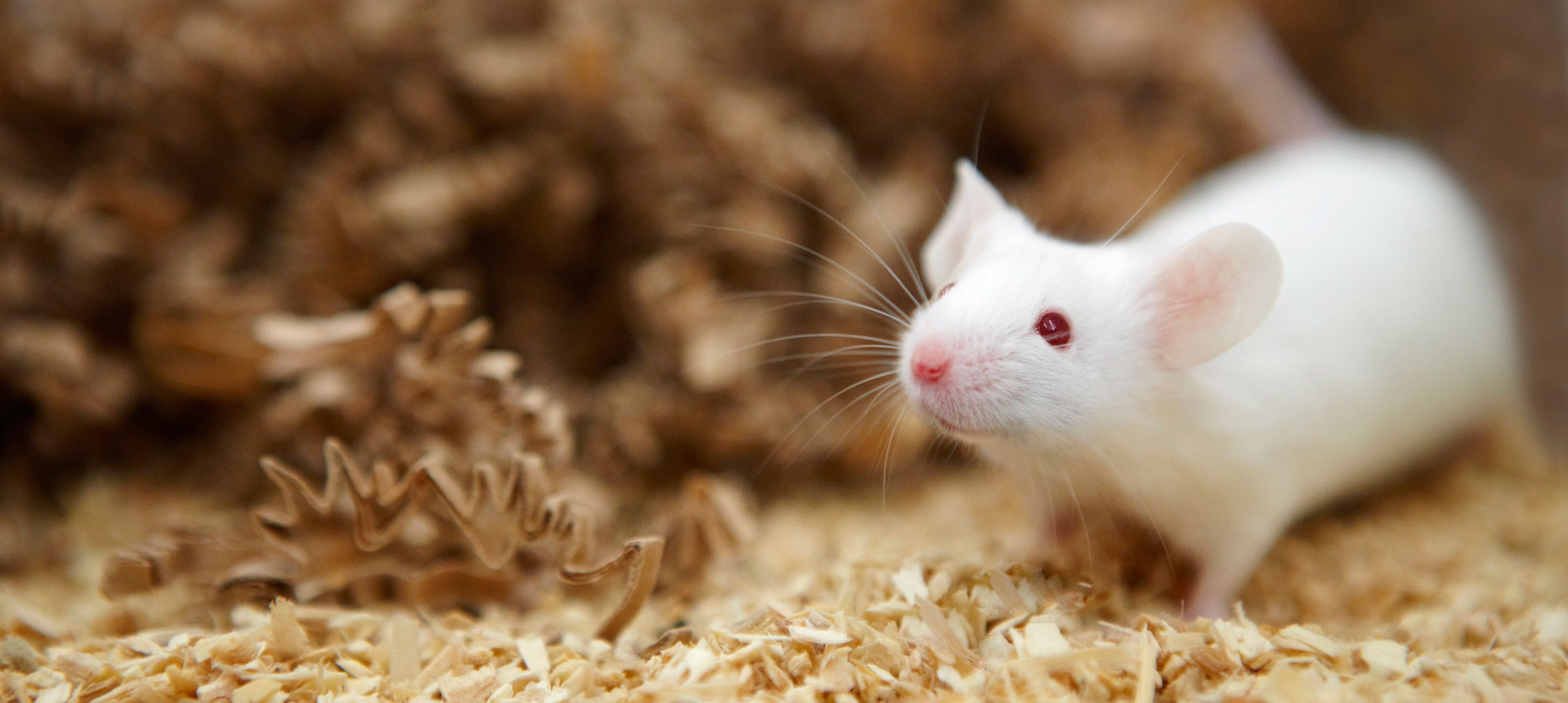
The humble lab mouse. Source: PBS

Much of our understanding of modern biology is derived from the “lower organisms”.

From yeast to snails (there is a post coming shortly on a snail model of Parkinson’s disease – I kid you not) and from flies to mice, a great deal of what we know about basic biology comes from experimentation on these creatures. So much in fact that many of our current ideas about neurodegenerative diseases result from modelling those conditions in these creatures.

Now say what you like about the ethics and morality of this approach, these organisms have been useful until now. And I say ‘until now’ because an interesting research report was released this week which may call into question much of the knowledge we have from the modelling of Parkinson’s disease is these creatures.

You see, here’s the thing: Flies don’t naturally develop Parkinson’s disease.

Nor do mice. Or snails.

Or yeast for that matter.

So we are forcing a very un-natural state upon the biology of these creatures and then studying the response/effect. Which could be giving us strange results that don’t necessarily apply to human beings. And this may explain our long history of failed clinical trials.

We work with the best tools we have, but it those tools are flawed…

What did the new research report find?

This is the study:


Title: Dopamine oxidation mediates mitochondrial and lysosomal dysfunction in Parkinson’s disease
Authors: Burbulla LF, Song P, Mazzulli JR, Zampese E, Wong YC, Jeon S, Santos DP, Blanz J, Obermaier CD, Strojny C, Savas JN, Kiskinis E, Zhuang X, Krüger R, Surmeier DJ, Krainc D
Journal: Science, 07 Sept 2017 – Early online publication
PMID: 28882997

The researchers who conducted this study began by growing dopamine neurons – a type of cell badly affected by Parkinson’s disease – from induced pluripotent stem (IPS) cells.

What are induced pluripotent stem cells?

Continue reading “O’mice an’ men – gang aft agley”

QUATS going on?!?

BE WARNED: THIS POST MIGHT UPSET SOME READERS

A recently published research report has caused a bit of a fuss in the media, and I have been contacted by a lot of concerned readers regarding this particular study.

It deals with some chemicals – which can be found in everyday products – that may be having a negative effect on biological processes that are related to Parkinson’s disease – specifically, the normal functioning of the mitochondria (the power stations of each cell).

In today’s post we will discuss the new research, what the chemicals do, and whether the Parkinson’s community should be concerned.


Source: Sacramentodentistry

Toothpaste.

It is something that most of us take completely for granted in the modern world. A product that sits in our bathroom, by the sink or on a shelf, and 2-3 times per day we stick some of it in our mouth and brush it around a bit. Given the well ingrained habit of repetitively ingesting of the stuff, we have little trouble with the idea of switching brands or trying new variations (“Oooh look, this one will make your teeth whiter. Let’s try it”).

I mean, come on – it’s just toothpaste. It’s safe, right?

It probably won’t surprise many of you to learn that the composition of toothpaste has changed quite a bit over the years, but what might amaze you is just how many years are involved with that statement: 

Egyptian toothbrush. Source: Nathanpaarth

The Egyptians recognised the importance of looking after one’s teeth at a very early stage. Apparently they had a lot of trouble with their teeth because their bread had grit in it which wore away their enamel. As far back as 5000BC, they had a form of toothpaste that they used to clean their teeth. It was a mix of powdered ashes of ox hooves, myrrh, powdered and burnt eggshells, and pumice (Source: Wikipedia). The Greeks, followed by the Romans, improved on the recipes (by adding abrasive ingredients such as crushed bones and oyster shells – delightful, huh?), but it wasn’t until after World War I that the modern day pre-mixed toothpastes became popular.

The cavity fighting chemical, Fluoride, was first added to toothpastes in the 1890s, and in 1908 Newell Sill Jenkins (an American dentist) invented the first toothpaste that contained disinfectants. It was called Kolynos (from the Greek words Kolyo nosos (κωλύω νόσος), meaning “disease prevention”). 

Source: Flickr

Following the advent of Kolynos, most toothpaste companies added antiseptic and disinfectant agents to improve the quality and effectiveness of their product. Being offered a tooth cleaning product with magical antibiotic properties seemed to reassure consumers that they were buying something that might actually work. And this led to more and more chemicals being added to toothpaste. Such additions included chemical like triclosan, cetylpyridinium chloride and benzalkonium chloride.

These chemicals are safe though…right?

Continue reading “QUATS going on?!?”

Voyager Therapeutics: phase Ib clinical trial results


This week a biotech company called Voyager Therapeutics announced the results of their ongoing phase Ib clinical trial. The trial is investigating a gene therapy approach for people with severe Parkinson’s disease.

Gene therapy is a technique that involves inserting new DNA into a cell using a virus. The DNA can help the cell to produce beneficial proteins that go on help to alleviate the motor features of Parkinson’s disease.

In today’s post we will discuss gene therapy, review the new results and consider what they mean for the Parkinson’s community.


Source: Joshworth

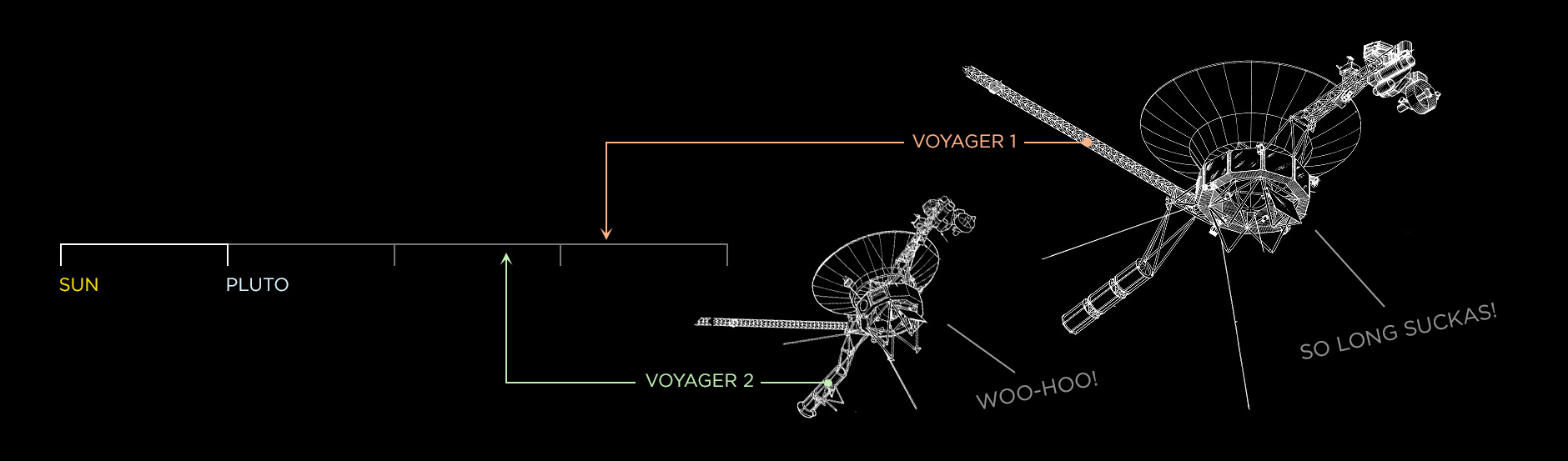
On 25th August 2012, the Voyager 1 space craft became the first human-made object to exit our solar system.

After 35 years and 11 billion miles of travel, this explorer has finally left the heliosphere (which encompasses our solar system) and it has crossed into the a region of space called the heliosheath – the boundary area that separates our solar system from interstellar space. Next stop on the journey of Voyager 1 will be the Oort cloud, which it will reach in approximately 300 years and it will take the tiny craft about 30,000 years to pass through it.

Where is Voyager 1? Source: Tampabay

Where is Voyager actually going? Well, eventually it will pass within 1 light year of a star called AC +79 3888 (also known as Gliese 445), which lies 17.6 light-years from Earth. It will achieve this goal on a Tuesday afternoon in 40,000 years time.

Gliese 445 (circled). Source: Wikipedia

Remarkably, the Gliese 445 star itself is actually coming towards us. Rather rapidly as well. It is approaching with a current velocity of 119 km/sec – nearly 7 times as fast as Voyager 1 is travelling towards it (the current speed of the craft is 38,000 mph (61,000 km/h).

Interesting, but what does any of that have to do with Parkinson’s disease?

Well closer to home, another ‘Voyager’ is also ‘going boldly where no man has gone before’ (sort of).

Continue reading “Voyager Therapeutics: phase Ib clinical trial results”

Dear FDA, this is bigly wrong…and you know it!

maxresdefault

Dopamine agonist treatments are associated with approximately 90% of hyper-sexuality and compulsive gambling cases that occur in people with Parkinson’s disease.

This issue does not affect everyone being treated with this class of drugs, but it is a problem that keeps popping up, with extremely damaging consequences for the affected people who gamble away their life’s saving or ruin their marriages/family life. 

The U.S. Food and Drug Administration (FDA) is yet to issue proper warning for this well recognised side-effect of dopamine agonists, and yet last week they gave clearance for the clinical testing of a new implantable device that will offer continuous delivery of dopamine agonist medication.

In today’s post, we will discuss what dopamine agonists are, the research regarding the impulsive behaviour associated with them, and why the healthcare regulators should acknowledge that there is a problem.


2000px-dopamine2-svg

Dopamine. Source: Wikimedia

Before we start talking about dopamine agonists, let’s start at the very beginning:

What is dopamine?

By the time a person is sitting in front of a neurologist and being told that they ‘have Parkinson’s disease’, they will have lost half the dopamine producing cells in an area of the brain called the midbrain.

Dopamine is a chemical is the brain that plays a role in many basic functions of the brain, such as motor co-ordination, reward, and memory. It works as a signalling molecule (or a neurotransmitter) – a way for brain cells to communicate with each other. Dopamine is released from brain cells that produce this chemical (not all brain cells do this), and it binds to target cells, initiating biological processes within those cells.

1471340161-dopamine-banner

Dopamine being released by one cell and binding to receptors on another. Source: Truelibido

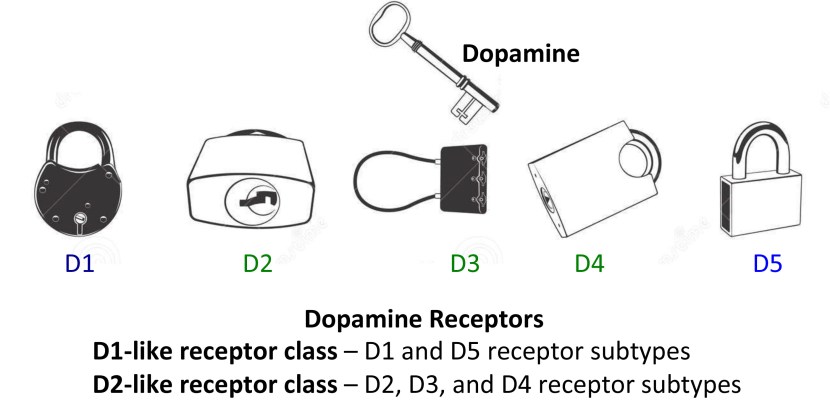
Dopamine binds to target cells via five different receptors – that is to say, dopamine is released from one cell and can bind to one of five different receptors on the target cell (depending on which receptor is present). The receptor is analogous to a lock and dopamine is the key. When dopamine binds to a particular receptor it will allow something to happen in that cell. And this is how information from a dopamine neuron is passed or transmitted on to another cell.

dopamine-receptors-150803

Dopamine acts like a key. Source: JourneywithParkinsons

Continue reading “Dear FDA, this is bigly wrong…and you know it!”

Hey DJ, I-so-sit-rate!

The title of this post probably reads like the mad, drug-fuelled scream of a drunk Saturday night party animal, but the elements of it may be VERY important for a particular kind of Parkinson’s disease.

Mutations in a gene called DJ-1 can cause an early onset form of Parkinson’s disease. The protein of DJ-1 plays an important role in how cells handle oxidative stress – or the increase in damaging free radicals (explained below).

This week researchers announced that they have found an interesting new therapeutic target for people with DJ-1 associated Parkinson’s disease: A chemical called Isocitrate.

In this post, we will discuss what DJ-1 is involved with Parkinson’s disease, how isocitrate helps the situation, and what the results of new research mean for future therapeutic strategies.


original-26772-1364707371-8

Source: Listchallenge

In 2017, we are not only observing the 200 year anniversary of the first description of Parkinson’s disease (by one Mr James Parkinson), but also the 20th anniversary of the discovery of the first genetic variation associated with the condition (Click here to read more about that). Our understanding of the genetics of Parkinson’s disease since 1997, has revolutionised the way we look at Parkinson’s disease and opened new doors that have aided us in our understanding.

During the last 20 years, we have identified numerous sections of DNA (these regions are called genes) where small errors in the genetic coding (mutations or variants) can result in an increased risk of developing Parkinson’s disease. As the graph below indicates, mutations in some of these genes are very rare, but infer a very high risk, while others are quite common but have a low risk of Parkinson’s disease.

The genetics of PD. Source: Journal of Parkinson’s disease

Some of the genetic mutation need to be provided by both the parents for Parkinson’s to develop (an ‘autosomal recessive‘ mutation – the yellow circles in the graph above); while in other cases the genetic variant needs only to be provided by one of the parents (an ‘autosomal dominant’ mutation – the blue circles). Many of the genetic mutations are very common and simply considered a region of increased risk (green circles).

Importantly, all of these genes provide the instructions for making a protein – which are the functional parts in a cell. And each of these proteins have specific roles in biological processes. These functions tell us a little bit about how Parkinson’s disease may be working. Each of them is a piece of the jigsaw puzzle that we are trying to finish. As you can see in the image below, many of the genes mentioned in the graph above give rise to proteins that are involved in different parts of the process of autophagy – or the waste disposal system of the cell. You may notice that some proteins, like SCNA (otherwise known as alpha synuclein), are involved in multiple steps in this process.

The process of autophagy. Source: Nature

In today’s post we are going to look at new research regarding just one of these genes/proteins. It is called DJ-1, also known as Parkinson disease protein 7 (or PARK7).

What is DJ-1?

Continue reading “Hey DJ, I-so-sit-rate!”

Mdivi-1: the small molecule that could?

Mitochondrial division inhibitor-1 (mdivi-1) is a small molecule drug that is demonstrating very impressive effects in preclinical models of Parkinson’s disease. With further research it could represent a potential future therapy for people with Parkinson’s disease, particularly those with genetic mutations affecting the mitochondria in their cells. 

What are mitochondria?

In this post, we will explain what mitochondria are, how they may be involved in Parkinson’s disease, and we will discuss what the results of new research mean for future therapeutic strategies.


Mitochondria are fascinating.

Utterly. Utterly. Fascinating.

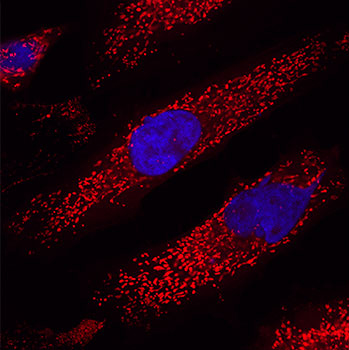
On the most basic level, Mitochondria (mitochondrion, singular; from the Greek words mitos (thread) and chondros (granule)) are just tiny little bean-shaped structures within the cells in our body, and their primary function is to act as the power stations. They supply the bulk of energy that cells require to keep the lights on. This chemical form of energy produced by the mitochondria is called adenosine triphosphate (or ATP). Lots of mitochondria are required in each cell to help keep the cell alive (as is shown in the image below, which is showing just the mitochondria (red) and the nucleus (blue) of several cells).

Lots of mitochondria (red) inside cells (nucleus in blue). Source: Clonetech

That’s the basic stuff – the general definition you will find in most text books on biology.

But let me ask you this:

How on earth did mitochondria come to be inside each cell and playing such a fundamental role?

I don’t know. Are you going to tell me?

No.

Why not?

Because we simply don’t know.

But understand this: Mitochondria are intruders.

Continue reading “Mdivi-1: the small molecule that could?”

Self monitoring: there’s something in your eye

Self tracking/monitoring has become a popular habit for the general population with the introduction of products like Fitbit and Apple watch.

It is particularly useful for groups like the Parkinson’s community though, who are tired of having just one hour per year of assessments with their neurologist.

In today’s post, we will look at some new tracking/monitoring technologies that are being developed that could have important implications for not only how we assess Parkinson’s disease, but also for how we treat it.


Homo deus. Source: RealClearLife

I have recently finished reading ‘Homo Deus‘ by Yuval Noah Harari – the excellent follow-up to his previous book ‘Sapiens‘ (which is an absolute MUST READ!). The more recent book provides an utterly fascinating explanation of how we have come to be where we will be in the future (if that makes any sense).

In the final few chapters, Harari discusses many of the technologies that are currently under development which will change the world we live in (with a lot of interesting and cautionary sections on artificial intelligence – the machines that will know vastly more about us than we know about ourselves).

Of particular interest in this part of the book was a section on the Google-Novartis smart lens.

What is the Google-Novartis smart lens?

In 2014, a company called Alcon, which is a wholly owned subsidiary of Novartis formed a collaboration with the Google offshoot Verily Life Sciences that would focus on developing smart lens.

The initial project is rather ambitious: develop and take to the clinic a glucose-sensing contact lens for people with diabetes. The idea has been particularly championed by Google founder Sergey Brin (a prominent figure within the Parkinson’s community with his significant contributions to Parkinson’s research each year).

People with diabetes have to keep pricking their finger over the course of a day in order to check the levels of insulin in their blood. A less laborious approach would be welcomed by the diabetic world (an estimated 415 million people living with diabetes in the world).

This is what the lens may eventually look like:

Continue reading “Self monitoring: there’s something in your eye”

Lrrking in low orbit

Last Monday, a SpaceX rocket lifted off from the Florida peninsular on route to the International Space Station.

On board that craft was an experiment that could have big implications for Parkinson’s disease. It involves a Parkinson’s-associated protein called Leucine-rich repeat kinase 2 (or LRRK2).

In today’s post, we will discuss why we needed to send this protein into orbit.


The International Space Station. Source: NASA

When you look up at the sky tonight – if you look for long enough – you may well see a bright little object hurtling across the sky (Click here to learn more about how to track the International Space Station). Know that inside that bright little object passing over you there is currently some Parkinson’s disease-related research being conducted.

What is the International Space Station?

The International Space Station (or the ISS) is the largest human-made object that we have ever put into space. It is so big in fact that you can see it with the naked eye from Earth.

(How’s that for exciting viewing?)

The current space station is 73.3 metres (240 feet) long and 44.5 metres (146 feet) wide, weighing approximately 420 tonnes (924,740 lb), and it has been continuously occupied for 16 years and 289 days, making it the longest continuous human presence in low Earth orbit. The ISS travels at a speed of 7.67 km/second, maintains an altitude of between 330 and 435 km (205 and 270 mi), and completes 15.54 orbits per day (it has made over 102,000 orbits!).

The size of the the ISS compared to a Boeing Jumbo jet. Source: Reddit

First approved by President Ronald Reagan in 1984, it was not until November 1998 that the first components of the International space station were first launched into orbit. 36 shuttle flights were made to help build the station. The first crew members took up residence on the 2nd November 2000, and the station was completed in 2011. There is always 6 crew members on board – the current team are Expedition 52 – and it has been visited by 220 astronauts, cosmonauts and space tourists from 17 different nations since the project began.

Oh yeah, and if you want to see what it looks like on board the ISS, in 2015 the European Space Agency provided an interactive tour and earlier this year Google Maps added an interactive tour of the ISS.

Continue reading “Lrrking in low orbit”