O’mice an’ men – gang aft agley

This week a group of scientists have published an article which indicates differences between mice and human beings, calling into question the use of these mice in Parkinson’s disease research.

The results could explain way mice do not get Parkinson’s disease, and they may also partly explain why humans do.

In today’s post we will outline the new research, discuss the results, and look at whether Levodopa treatment may (or may not) be a problem.


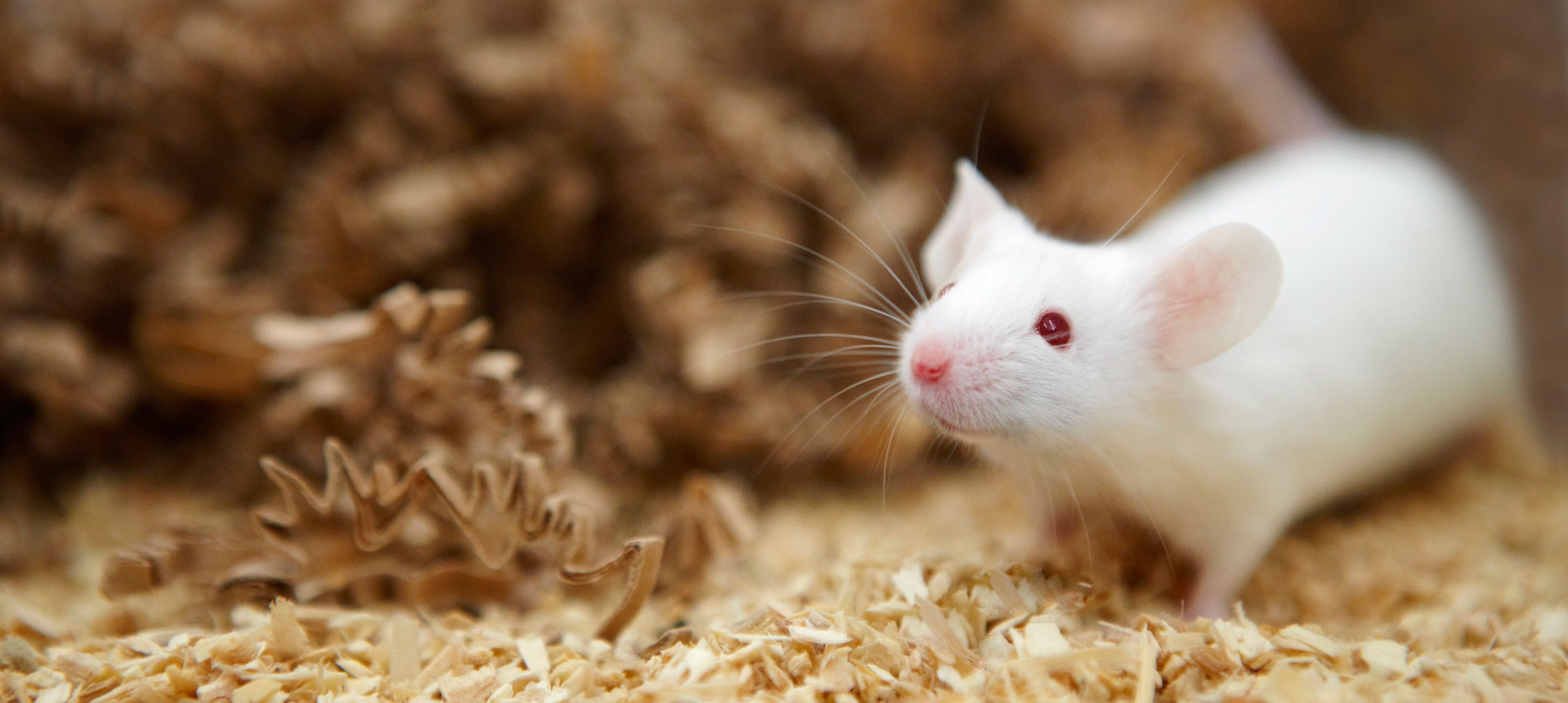
The humble lab mouse. Source: PBS

Much of our understanding of modern biology is derived from the “lower organisms”.

From yeast to snails (there is a post coming shortly on a snail model of Parkinson’s disease – I kid you not) and from flies to mice, a great deal of what we know about basic biology comes from experimentation on these creatures. So much in fact that many of our current ideas about neurodegenerative diseases result from modelling those conditions in these creatures.

Now say what you like about the ethics and morality of this approach, these organisms have been useful until now. And I say ‘until now’ because an interesting research report was released this week which may call into question much of the knowledge we have from the modelling of Parkinson’s disease is these creatures.

You see, here’s the thing: Flies don’t naturally develop Parkinson’s disease.

Nor do mice. Or snails.

Or yeast for that matter.

So we are forcing a very un-natural state upon the biology of these creatures and then studying the response/effect. Which could be giving us strange results that don’t necessarily apply to human beings. And this may explain our long history of failed clinical trials.

We work with the best tools we have, but it those tools are flawed…

What did the new research report find?

This is the study:
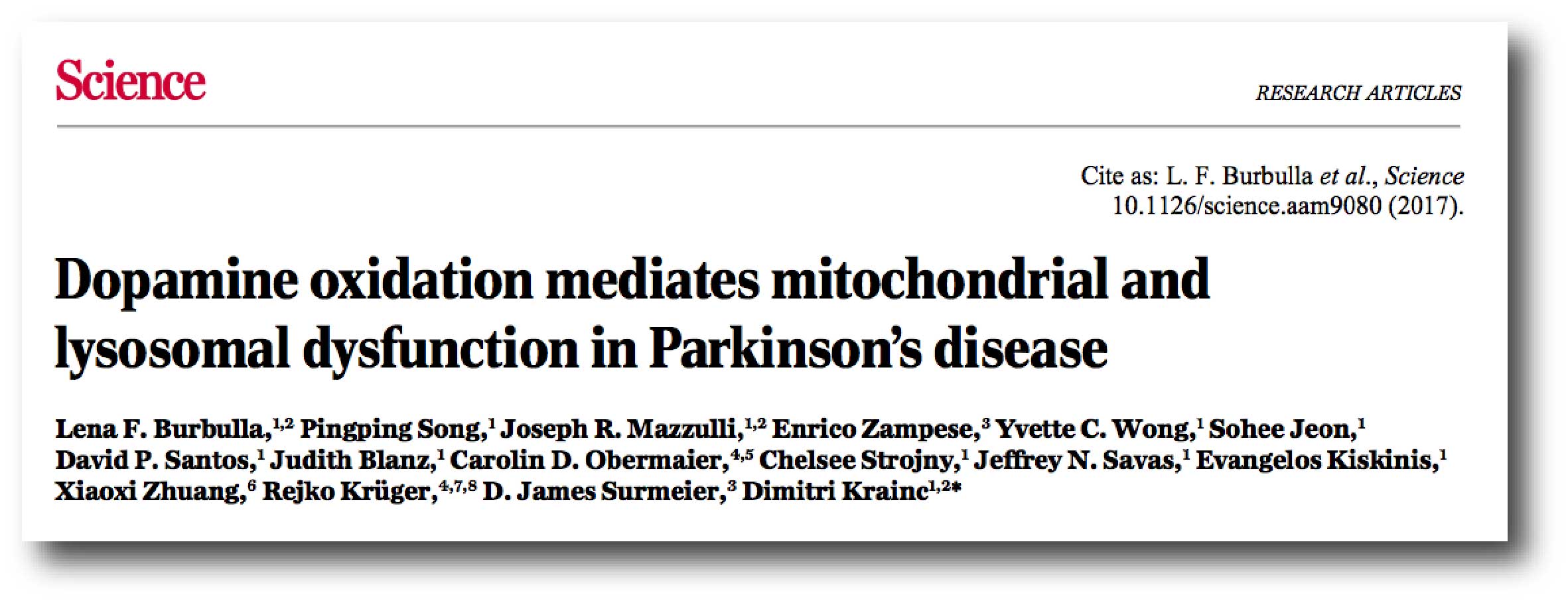

Title: Dopamine oxidation mediates mitochondrial and lysosomal dysfunction in Parkinson’s disease
Authors: Burbulla LF, Song P, Mazzulli JR, Zampese E, Wong YC, Jeon S, Santos DP, Blanz J, Obermaier CD, Strojny C, Savas JN, Kiskinis E, Zhuang X, Krüger R, Surmeier DJ, Krainc D
Journal: Science, 07 Sept 2017 – Early online publication
PMID: 28882997

The researchers who conducted this study began by growing dopamine neurons – a type of cell badly affected by Parkinson’s disease – from induced pluripotent stem (IPS) cells.

What are induced pluripotent stem cells?

Continue reading “O’mice an’ men – gang aft agley”

Hey DJ, I-so-sit-rate!

The title of this post probably reads like the mad, drug-fuelled scream of a drunk Saturday night party animal, but the elements of it may be VERY important for a particular kind of Parkinson’s disease.

Mutations in a gene called DJ-1 can cause an early onset form of Parkinson’s disease. The protein of DJ-1 plays an important role in how cells handle oxidative stress – or the increase in damaging free radicals (explained below).

This week researchers announced that they have found an interesting new therapeutic target for people with DJ-1 associated Parkinson’s disease: A chemical called Isocitrate.

In this post, we will discuss what DJ-1 is involved with Parkinson’s disease, how isocitrate helps the situation, and what the results of new research mean for future therapeutic strategies.


original-26772-1364707371-8

Source: Listchallenge

In 2017, we are not only observing the 200 year anniversary of the first description of Parkinson’s disease (by one Mr James Parkinson), but also the 20th anniversary of the discovery of the first genetic variation associated with the condition (Click here to read more about that). Our understanding of the genetics of Parkinson’s disease since 1997, has revolutionised the way we look at Parkinson’s disease and opened new doors that have aided us in our understanding.

During the last 20 years, we have identified numerous sections of DNA (these regions are called genes) where small errors in the genetic coding (mutations or variants) can result in an increased risk of developing Parkinson’s disease. As the graph below indicates, mutations in some of these genes are very rare, but infer a very high risk, while others are quite common but have a low risk of Parkinson’s disease.

The genetics of PD. Source: Journal of Parkinson’s disease

Some of the genetic mutation need to be provided by both the parents for Parkinson’s to develop (an ‘autosomal recessive‘ mutation – the yellow circles in the graph above); while in other cases the genetic variant needs only to be provided by one of the parents (an ‘autosomal dominant’ mutation – the blue circles). Many of the genetic mutations are very common and simply considered a region of increased risk (green circles).

Importantly, all of these genes provide the instructions for making a protein – which are the functional parts in a cell. And each of these proteins have specific roles in biological processes. These functions tell us a little bit about how Parkinson’s disease may be working. Each of them is a piece of the jigsaw puzzle that we are trying to finish. As you can see in the image below, many of the genes mentioned in the graph above give rise to proteins that are involved in different parts of the process of autophagy – or the waste disposal system of the cell. You may notice that some proteins, like SCNA (otherwise known as alpha synuclein), are involved in multiple steps in this process.

The process of autophagy. Source: Nature

In today’s post we are going to look at new research regarding just one of these genes/proteins. It is called DJ-1, also known as Parkinson disease protein 7 (or PARK7).

What is DJ-1?

Continue reading “Hey DJ, I-so-sit-rate!”

Self monitoring: there’s something in your eye

Self tracking/monitoring has become a popular habit for the general population with the introduction of products like Fitbit and Apple watch.

It is particularly useful for groups like the Parkinson’s community though, who are tired of having just one hour per year of assessments with their neurologist.

In today’s post, we will look at some new tracking/monitoring technologies that are being developed that could have important implications for not only how we assess Parkinson’s disease, but also for how we treat it.


Homo deus. Source: RealClearLife

I have recently finished reading ‘Homo Deus‘ by Yuval Noah Harari – the excellent follow-up to his previous book ‘Sapiens‘ (which is an absolute MUST READ!). The more recent book provides an utterly fascinating explanation of how we have come to be where we will be in the future (if that makes any sense).

In the final few chapters, Harari discusses many of the technologies that are currently under development which will change the world we live in (with a lot of interesting and cautionary sections on artificial intelligence – the machines that will know vastly more about us than we know about ourselves).

Of particular interest in this part of the book was a section on the Google-Novartis smart lens.

What is the Google-Novartis smart lens?

In 2014, a company called Alcon, which is a wholly owned subsidiary of Novartis formed a collaboration with the Google offshoot Verily Life Sciences that would focus on developing smart lens.

The initial project is rather ambitious: develop and take to the clinic a glucose-sensing contact lens for people with diabetes. The idea has been particularly championed by Google founder Sergey Brin (a prominent figure within the Parkinson’s community with his significant contributions to Parkinson’s research each year).

People with diabetes have to keep pricking their finger over the course of a day in order to check the levels of insulin in their blood. A less laborious approach would be welcomed by the diabetic world (an estimated 415 million people living with diabetes in the world).

This is what the lens may eventually look like:

Continue reading “Self monitoring: there’s something in your eye”

Helicobacter pylori: Unwanted passengers?

helicobacter-pylori


Whether we like it or not, we house a great deal of microbes.

Many of these tiny creatures aid us in our daily living by conducting important functions. Some of these microbes, however, may not be helping us, getting a free ride, and potentially causing trouble.

In today’s post we will review recent research regarding one particular family of bacteria, Helicobacter pylori, and what they might be doing in relations to Parkinson’s disease.


yong

Source: ScienceFriday

In his magnificent book, I contain multitudes, science writer/journalist Ed Yong writes that we – every single one of us – release approximately 37 million bacteria per hour. By talking, breathing, touching, or simply being present in the world, we are losing and also picking up the little passengers everywhere we go.

Reminds me of that Pascal Mercier book “Night Train to Lisbon” – We leave something of ourselves behind when we leave a place,… I’m not sure if this is what he was referring to though.

Yong also points out that: 80% of the bacteria on your right thumb are different to the bacteria on your left thumb.

It’s a fascinating book (and no, I am not receiving any royalties for saying that).

12-microbes.w710.h473.2x

Microbes. Source: NYmag

We have discussed microbes several times on this blog, particularly in the context of the gut and its connection to Parkinson’s disease (Click here, here and here to read some of those posts). Today we are going to re-visit one particular type of microbe that we have also discussed in a previous postHelicobacter pylori.

helicobacter-pylori-1

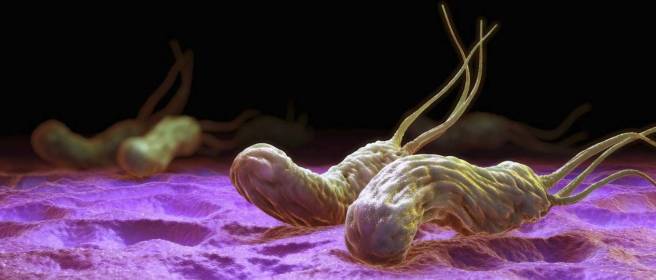
Helicobacter pylori. Source: Helico

Continue reading “Helicobacter pylori: Unwanted passengers?”