The ADHD study from Utah


This week a new research report was released that got a few readers concerned.

The article published in the journal Neuropsychopharmacology suggested that there may be an association between early onset Parkinson’s and Attention Deficit Hyperactivity Disorder (or ADHD).

In today’s post, we will discuss what ADHD is, look at what the results of the study are proposing, and we will try to calm some nerves by explaining that while the results are very interesting (if they can be replicated and validated in a larger data set), the association only affects a very small number of individuals.


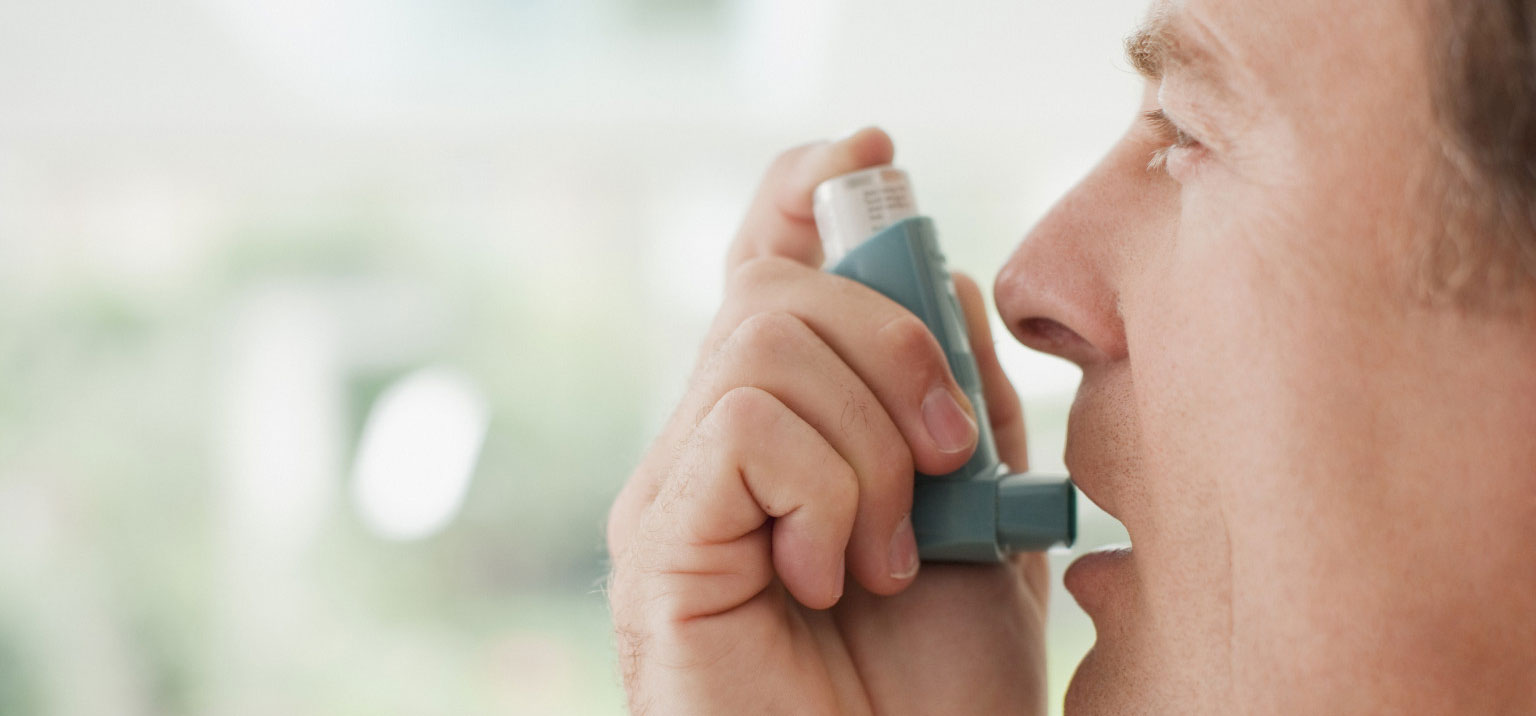
o-ADHD-facebook

Source: Huffington Post

It may come as a bit of a surprise, but one of the most popular pages on this website deals with Attention Deficit Hyperactivity Disorder (or ADHD – click here to read that post).

I am not sure why this is the case.

At the time of writing that particular post, there was very little in the way of any associations between Parkinson’s and ADHD. But this week the number of views for that ADHD post went through the roof.

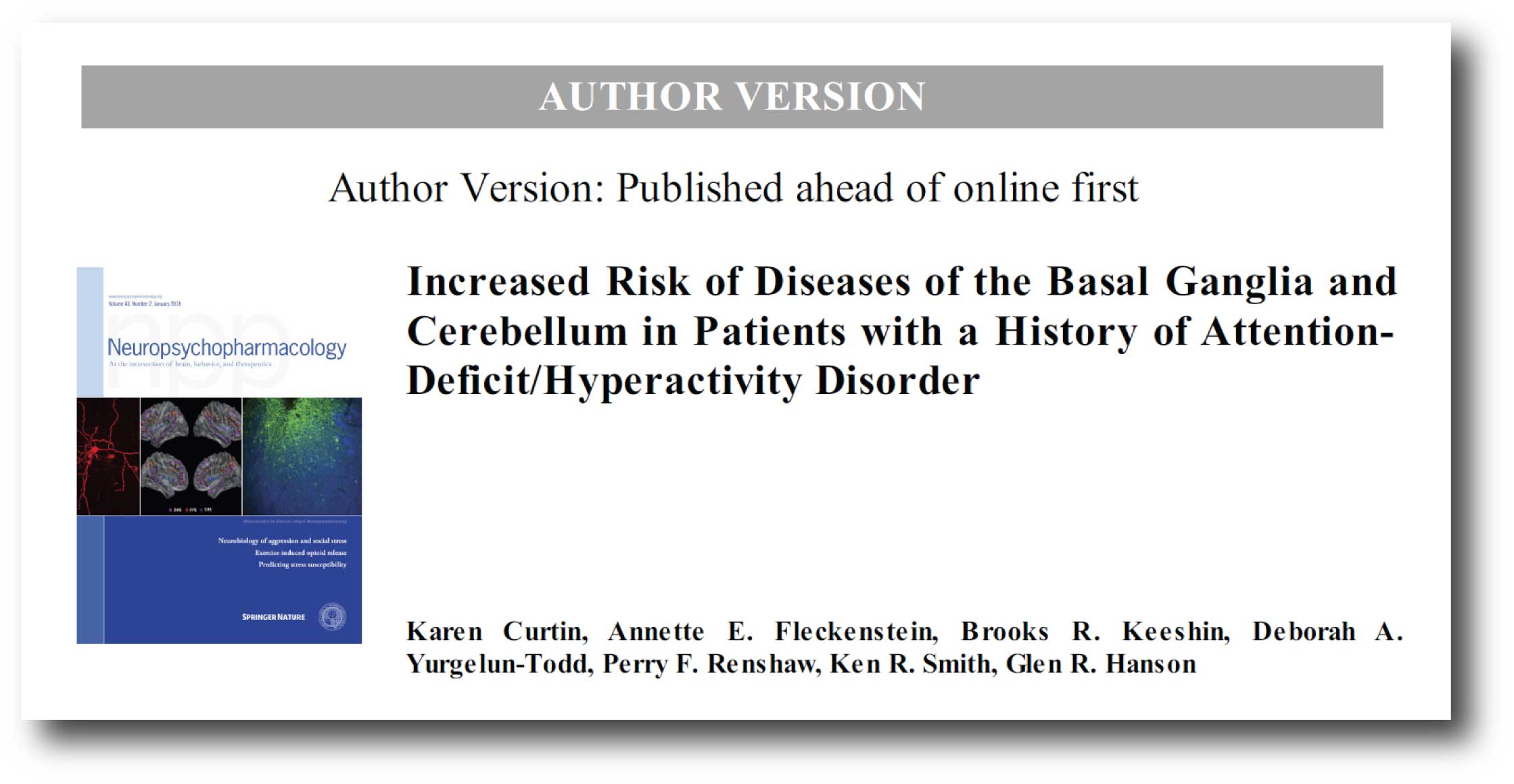
This increase in activity probably had less to do with my amazing prose and more to do with the release of this research report:

Title: Increased risk of diseases of the basal ganglia and cerebellum in patients with a history of Attention-Deficit/Hyperactivity Disorder
Authors: Curtin K, Fleckenstein AE, Keeshin BR, Yurgelun-Todd DA, Renshaw PF, Smith KR, Hanson GR.
Journal: Neuropsychopharmacology. 2018 Sep 12.
PMID: 30209407

The release of this report has been led to all kinds of media headlines (Click here and here for examples), and some panicked emails to SoPD HQ from concerned readers (particularly parents).

For those who don’t have time to read on, here is the short version of what today’s post is going to say: the results of the study are interesting, but the observed association only affects a very small number of individuals. And until the results are replicated and validated in a much larger study, there is little reason to panic.

And now for the ridiculously long version of this post – let’s start with the obvious first question:

What is ADHD?

Continue reading “The ADHD study from Utah”

Aspirin: Barking up the right tree?


Aspirin is one of the oldest drugs in medical use today.

Recently researchers noticed something interesting about ‘low doses’ of aspirin that could have implications for Parkinson’s: It raises the amount of dopamine in the brain

Specifically, low doses of aspirin triggers an increase in the levels of an enzyme called tyrosine hydroxylase, which is involved in the production of chemical dopamine. Given that levels of dopamine are severely reduced in the brain of a person with Parkinson’s, this new result is kind of interesting.

In today’s post, we will have a look at what aspirin and tyrosine hydroxylase are, what the new research results report, and what this could mean for the Parkinson’s community.


Source: Ancientpages

The Ebers Papyrus (also known as the also known as Papyrus Ebers) is considered one of the most oldest medicinal “encyclopedias”.

It outlines 700 Egyptian medicinal formulas and remedies dating back to circa 1550 BC. We know nothing about who wrote the document (even the source of the papyrus is unknown – it may have been found with a mummy in the El-Assasif district of the Theban necropolis).

One thing is clear though: the people who wrote it were a very far sighted bunch.

Interestingly, the papyrus mentions use of Willow bark and Myrtle to treat fever and pain. Both of these plants are rich in Salicylic acid.

What is Salicylic acid?

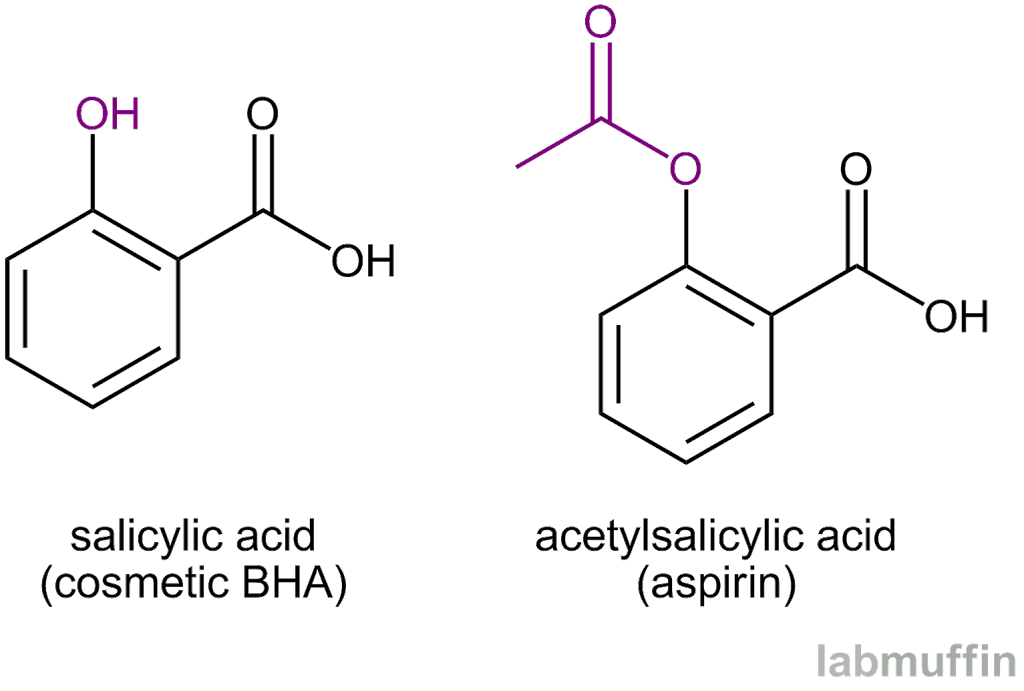
It is an active precursor (or metabolite) of acetylsalicylic acid – which is also known as ‘Aspirin’.

Source: Labmuffin

What exactly is aspirin?

Continue reading “Aspirin: Barking up the right tree?”

The Kiwi Ketogenic study

Being a patriotic ‘kiwi’, I am always very pleased to write about interesting Parkinson’s research originating from the homeland. And recently the results of an interesting clinical study that was designed and conducted in New Zealand have been published.

The clinical study was focused on whether a diet manipulation could influence motor and non-motor symptoms/features of Parkinson’s. 

Specifically, the researchers were looking at the low-fat versus ketogenic diets. 

In today’s post, we will discuss what is meant by a ketogenic diet, we will assess the results of the study, and consider what they might mean for the Parkinson’s community.


The All Blacks. Source: Newshub

Aotearoa (also known as New Zealand) is a remarkable little country (and yes, I know I’m slightly biased).

It flies under the radar for most folks who are not interested in rugby, amazing scenery, great quality of life, or hobbits, but historically this tiny South Pacific nation of 4.6 million people has punched well above its weight on many important matters.

For example, on the 19th September 1893, the governor, Lord Glasgow, signed a new Electoral Act into law. And as a result of that simple act, New Zealand became the first self-governing country in the world in which all women (over the age of 21) had the right to vote in parliamentary election (Australia followed in 1902, the US in 1920, & the Britain in 1928). That achievement, it should be said, was the result of years of dogged effort by suffrage campaigners, led by Kate Sheppard who is today acknowledged with her portrait on the $10 note:

The NZ $10 note. Source: Whaleoil

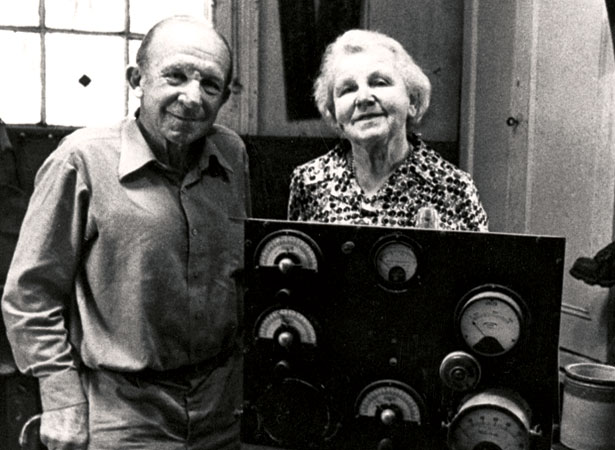
A New Zealander made the first trans-global radio transmission on the 18th October 1924. Invalided during WWI, Frank Bell revived his childhood interest in wireless communication, and after being the first kiwi to have two-way radio contact with Australia and North America, he achieved something far more impressive. From the family sheep station in ‘Shag Valley’ (East Otago – bottom of the South Island), he sent a Morse code transmission (“Greetings from New Zealand, signed Bell Z4AA”) which was received and replied to by amateur operator Cecil Goyder at Mill Hill School (London).

Frank and his older sister Brenda. Source: NZhistory

New Zealand was also where jet boats was first invented by Sir Bill (William Hamilton). His first jet boat was a 3.6 meter (12 foot) plywood hull with a 100 E Ford engine, and the jet a centrifugal type pump. This craft was tested on the Irishman Creek dam, before it ran successfully upriver in 1953. And from there it kind of went viral. In 1960, three Hamilton jet boats (the Kiwi, Wee Red and Dock), became the first and only boats to travel all the way up through the Grand Canyon.

Sir Hamilton and his first jet boat (1958). Source: ipenz

And the list doesn’t stop there. We could go on with other great firsts:

  • Sir Ed (Hillary) – first to summit Everest (to be fair, it was a team effort)
  • Sir Ernest (Rutherford) – first to split the atom
  • Sir Peter (Blake) – first to sail around the world in less than 75 days (again, a bit of a team effort)
  • Sir John (Walker) – first to run the mile in under 3:50 (now a member of the Parkinson’s community)
  • Georgina Beyer – first openly transsexual mayor, and then the world’s first openly transsexual Member of Parliament
  • AJ Hackett & Henry van Asch –  set up the first commercial bungy jump on the Kawarau Bridge, near Queenstown
  • Helen Clark, Dame Siliva Cartwright & Sian Elias – first country to have women in the top three senior public roles (Prime Minister, the Governor General, & the Chief Justice, respectively)
  • Rocket Lab – first private company in the Southern Hemisphere to reach space (in 2009)

And I guess we better stop there (if only out for fear of making larger nations feel somewhat inadequate), but you get the idea – small nation, doing lots of great stuff.

There is also a very proactive Parkinson’s community – with groups like Parkinson’s New Zealand organising and running support groups across the country, and helping to fund some of the great local Parkinson’s research.

And some of that local Parkinson’s research has been discussed previously on this website (Click here, here and here for examples of previous posts), and it is also the focus of today’s post:

Continue reading “The Kiwi Ketogenic study”

Monthly Research Review – August 2018


At the end of each month the SoPD writes a post which provides an overview of some of the major pieces of Parkinson’s-related research that were made available during August 2018.

The post is divided into five parts based on the type of research (Basic biology, disease mechanism, clinical research, other news, and Review articles/videos). 


So, what happened during August 2018?

In world news:

August 1 – American technology company became the world’s first public company to achieve a market capitalization of US$1 trillion.

August 12th – NASA launched the unmanned ‘Parker Solar Probe’ which will study the Sun (up close and personal)

August 16th – Singer, song writer and pianist Aretha Louise Franklin passed away (sad day)

August 31st – Joe Giaglia, director of California Skateparks, who had previously made a x12.5 scale replica of a skate board finally got it certified by Guinness World Records as the largest in the world.

Seriously, it measures 35 feet, 7 inches long (10.8 meters)!


In the world of Parkinson’s research, a great deal of new research and news was reported:

In August 2018, there were 679 research articles added to the Pubmed website with the tag word “Parkinson’s” attached (5372 for all of 2018 so far). In addition, there was a wave to news reports regarding various other bits of Parkinson’s research activity (clinical trials, etc).

The top 5 pieces of Parkinson’s news

Continue reading “Monthly Research Review – August 2018”

EDITORIAL: BREXIT


The SoPD website is politically neutral.

We do, however, occasionally investigate and comment on proposals/new legislation/political events that may affect the Parkinson’s community, particularly those matters affecting the research community.

Today’s post is going to discuss some unintended consequences of BREXIT.


Source: Oxpol

I would like to tell you a story about a friend of mine. For reasons of anonymity, we shall call her ‘Simone’.

We are very similar – Simone and I – in three ways:

1. She is also an academic researcher here in the UK, who came here over a decade ago and has made a nice little life for herself – starting a family and buying a house.
2. She is also a colonial – from a boomerang throwing member of the commonwealth (but we won’t hold that against her).
3. She is also very active in research engagement with her research field (maintaining some popular social media efforts).

Recently, Simone – like myself and many other foreign researchers – had to reapply for her residency permit to continue to stay and work in the UK.

Source: Wales

And this is where the story really begins:

Continue reading “EDITORIAL: BREXIT”

Exenatide: Identifying the responders

In a recent post we discussed the results of the Exenatide clinical trial from last year, and looked at some further analysis of the data, which hinted at the possibility that the drug may be having additional benefits (Click here to read that post).

The researchers behind the Exenatide study have now published the results of a second deep dive into the data and found something potentially very interesting and useful: they may have identified certain characteristics of those participants in the study who responded the best to the drug. 

The researchers are quick to point out that this type of post hoc analysis is only conducted for the purpose of generating hypotheses, but it will be interesting to determine if this is finding is validated in further clinical investigations of Exenatide.

In today’s post, we will review the new finding and discuss what they could potentially mean.


Tom Isaacs. Source: GrannyButtons

For most of the Parkinson’s community, Tom Isaacs requires no introduction.

In 1996 – at just 27-years of age – the London-based surveyor was diagnosed with Parkinson’s. After dealing with the initial shock of it all, Tom embraced his situation and became a committed, (utterly) tireless activist. He first walked the entire coastline of the UK to raise money and awareness for Parkinson’s. His book, “Shake well before use“, discusses that trip and adapting to life with Parkinson’s. It is a fantastic read.

And upon returning from his epic walk, he (along with three others) founded and set up the Cure Parkinson’s Trust.

It is pretty safe to say that beyond Michael J Fox and Muhammad Ali, Tom was one of the most impactful members of the Parkinson’s community on marshaling scientific research efforts to find a cure for Parkinson’s.

And he did it all with style and humour:

https://www.youtube.com/watch?v=b6mnmGymU6s

This was a video of Tom in 2009, talking about life with Parkinson’s:

His passing last year was a terrible loss to the community, and this month, the European Journal of Neuroscience has a special tribute edition dedicated to the memory of Tom.

One of the research reports in that issue involves a study that was very close to Tom’s heart: The Exenatide study.

And the report provides some very interesting new results based on re-analysis of the results of the clinical study.

What does the new report say?

Continue reading “Exenatide: Identifying the responders”

On the hunt for biomarkers


The monitoring and assessment of the symptoms/features of Parkinson’s is a big deal in the research community at the moment.

There is currently a mad hunt for ‘biomarkers’ – reliably measurable physical characteristics – that could help not only with the assessment of individuals living with the condition, but could also aid in the running of clinical trials by providing additional measures of efficacy/benefit.

Recently an interesting perspective was written by some of the leading researchers in this field.

In today’s post, we review what the perspective outlined, and we will discuss other aspects of the biomarker research that need to be considered by the wider Parkinson’s community.


Perspective. Source: Huffingtonpost

Scientific journals will often invite the research leaders in a particular field of investigation to write a brief journal article that deals with unique view of a common problem.

Articles of this nature are called ‘Perspectives‘.

And recently a very interesting perspective was published in the journal Science on the topic of biomarkers for Parkinson’s.

Title: Finding useful biomarkers for Parkinson’s disease
Authors: Chen-Plotkin AS, Albin R,….a lot of additional authors…, Zhang J
Journal: Science Translational Medicine, 15 Aug 2018, 10 (454), eaam6003.
PMID: N/A

This perspective included a rather long list of a ‘who’s-who’ of Parkinson’s researchers – both academic and industry. Even members of the Michael J Fox Foundation and Verily/Google Life Sciences were included.

The perspective sought to highlight ‘the “ecosystem” of shared biofluid sample biorepositories and data sets will focus biomarker efforts in Parkinson’s‘. It is a very enlightening read, one that begs for reader responses. But sadly the article is behind a ‘pay wall’, and so many in the Parkinson’s community won’t be able to provide any thoughts or feedback.

Shame.

But not to worry, we can discuss the matter here. And the best place to start that discussion is with the obvious first question:

What is a biomarker?

A biomarker is an objectively measurable physical characteristic associated with a condition. It is a biological component of a condition that correlates with that condition in some way. For example, the DaTscan brain imaging technique provides a ‘biomarker’ for Parkinson’s by measuring the amount of dopamine re-absorption in the brain. By labelling the dopamine neurons with a radioactive marker, we can quantify the levels of dopamine activity in a person.

An example of a DaTscan. Source: Cedars-sinai 

What did the perspective say about biomarkers for Parkinson’s?

Continue reading “On the hunt for biomarkers”

DBS 3.0: Magnetise me?


Today’s post discusses some interesting new research that could potentially have ‘blue sky’ implications for the treatment of Parkinson’s (‘blue sky‘ meaning somewhere in the longer-term framework).  

The research deals with the amazing activity of a newly discovered protein, isolated from tiny little fish. The protein responds to magnetic fields. And with a lot more work, the researchers behind this discovery think that this protein could be useful in the future for the treatment of Parkinson’s.

In today’s post, we will have a look at this new protein, review the research report, and explore how this novel discovery could possibly be used for treating Parkinson’s.


Source: Flickr

The two fish in the image above are called Kryptopterus bicirrhis (or more commonly “glass catfish”).

These wondrous little creatures are typically found in the river waters of Thailand and Indonesia, they grow to a final length of approximately 8-12 cm (4-5 inches), and they live for 6-8 years.

But immediately you notice their most striking feature: the semi-transparent-ness of their bodies:

Why am I starting this post by talking about these curious little fish?

Some researchers in Baltimore (Maryland) recently made an amazing discovery related to them.

Which was?

Continue reading “DBS 3.0: Magnetise me?”

The genetics of Parkinson’s: New mutants


The Parkinson’s research community is currently drowning in data related to genetics.

It feels like every time one comes up for air, there is a new study highlighting not one, but half a dozen novel genetic variants associated with an increased risk of developing the condition. This week alone, a new research report has been made available that by itself proposes 39 new genetic risk factors. 

The researchers analysed the DNA of 37,700 people with Parkinson’s and 1.4 million (!!!) healthy control subjects and found a total of 92 genetic risk factors for PD.

But what does it all mean? How much influence does genetics have on Parkinson’s?

In today’s post, we will outline the genetics of Parkinson’s, review some of the new studies, and discuss what the new findings mean for Parkinson’s.


Source: Screenrant

When I say the word ‘mutant’, what do you think of?

Perhaps your imagination drifts towards comic book superheroes or characters in movies who have acquired amazing new super powers resulting from their bodies being zapped with toxic gamma-rays or such like.

Alternatively, maybe you think of certain negative connotation associated with the word ‘mutant’. You might associate the word with terms like ‘weirdo’ or ‘oddity’, and think of the ‘freak show’ performers who used to be put on display at the travelling carnivals.

Circus freak show (photo bombing giraffe). Source: Bretlittlehales

In biology, however, the word ‘mutant’ means something utterly different.

What does ‘mutant’ mean in biology?

Continue reading “The genetics of Parkinson’s: New mutants”

ACT UP: Advocacy is Critical To Undoing Parkinson’s


In March of 2017, activists all over the world celebrated the 30th anniversary of ACT UP.

ACT UP was an international direct action advocacy group that was set up to help people with Human immunodeficiency virus (HIV) infections and acquired immune deficiency syndrome (AIDS), and more importantly to encourage legislation/policy, medical research and treatment for this devastating.

Some people might say that there have been few advocacy efforts for a medical condition that have had as much impact, or had such a lasting legacy. Others, on the other hand, would suggest that a collective AIDS advocacy effort and a paralysing fear of the deadly condition at the time stimulated most of the action action that followed. Regardless of which opinion is correct, an analysis of the AIDS advocacy makes interesting food for thought.

In today’s post, we will have look at what ACT UP did, what was the result of the overall AIDS advocacy movement, and we will discuss what the Parkinson’s (and neurodegenerative) community could learn from it.


Every week, the U.S. Centers for Disease Control and Prevention (CDC) publishes the Morbidity and Mortality Weekly Report (or MMWR).

It provides public health information and recommendations based on information collected by the CDC from all of the various state health departments. The material published in each report is provided as a public service and may be reprinted and used without permission.

On the 5th June 1981, the CDC published a MMWR, describing five cases of a rare lung infection (called Pneumocystis carinii pneumonia). This was an extremely rare, but opportunistic infection – it generally occurred in people with very compromised immune systems.

All of the five cases were young (29-36 years of age), and had previously been healthy, homosexual men living in the Los Angeles area. All of the men had additional unusual infections, which suggested to doctors that their immune systems were not working properly.

Two of the men had already died by the time the report is published.

One month later, on the 3rd July (1981), a second MMWR was published. This one mentioned further cases of Pneumocystis carinii pneumonia and cited 26 cases of a rare form of cancer known as Kaposi’s sarcoma, which is caused by a viral infection:

These two MMWRs were the first official reports mentioning what would go on to become known as the AIDS epidemic – a devastating, ongoing global health issue that has thus far claimed 35+ million lives.

It was also the very beginning of what would be an amazing story of patient advocacy. The one that would become the template for many future efforts. Part of that advocacy effort was called “ACT UP”, and in today’s post we will discuss what the movement was and how they achieved some amazing accomplishments.

But before we get to that, let’s start at the beginning:

What exactly is AIDS?

Continue reading “ACT UP: Advocacy is Critical To Undoing Parkinson’s”