The Mannitol results

Last week the first results of an ambitious project are being shared with the Parkinson’s community.

Clinicrowd is a “crowd sourcing platform exploring disease treatments that Pharma companies have no interest to investigate or promote”. Their initial focus was Parkinson’s (though they now have additional projects for other medical conditions), and their first experimental treatment for Parkinson’s was the sweetener ‘mannitol’.

The results provide some interesting insights into the properties of mannitol and into crowd sourced projects.

In today’s post, we will discuss what mannitol is, why it is interesting, outline the Clinicrowd project, and review the results of the mannitol study.


152386jpg

Mannitol. Source: Qualifirst

Without a shadow of doubt, one of the most popular topics searched for on this website is ‘mannitol’.

In 2017, the second most visited page on the site (behind only the main/home page) was a post called “Update – Mannitol and Parkinson’s“. And as if to put an exclamation point on the matter, the fourth most visited page was “Manna from heaven? Mannitol and Parkinson’s

Understand though, that both of these posts were actually written in 2016!

Throughout 2017-18, not a week has gone by without someone contacting me to ask about mannitol and the ‘CliniCrowd‘ project.

Thus, it brings me great pleasure to sit down tonight and write this post.

What is mannitol?

Continue reading “The Mannitol results”

To B3 or not to B3, that is the question

The results of a recent clinical study for Parkinson’s conducted in Georgia (USA) has grabbed the attention of some readers.

The study involved Niacin (also known as nicotinic acid), which is a naturally occurring organic dietary compound and a form of vitamin B3.

The study was very small, but the researchers noticed something interesting in the blood of the participants: Niacin was apparently switching some of the immune cells from an inflammatory state to an anti-inflammatory state.

In today’s post, we will discuss what Niacin is, how it relates to Parkinson’s, and we will consider some of the issues with having too much niacin in your diet.


Source: Universal

It is one of the most common requests I get:

“Can you give an opinion on this supplement ____ or that vitamin ____ as a treatment for Parkinson’s?”

And I don’t like giving opinions, because (my standard disclosure) “I am not a clinician, just a research scientist. And even if i was a clinician, it would be unethical for me to comment as I am not familiar with each individual’s medical history. The best person to speak to is your personal doctor“.

But I also don’t like giving opinions because of a terrible fear that if I write anything remotely positive about anything remotely supplemental or vitamintal (is that a word?), a small portion of readers will rush off and gorge themselves on anything that sounds remotely similar to that supplement or vitamin.

So you will hopefully understand why I am hesitant to write this post.

But having said that, the recently published results of a small clinical study conducted in Augusta (Georgia, USA) are rather interesting.

Continue reading “To B3 or not to B3, that is the question”

Two birds, one stone?

This week interesting research was published in the journal EMBO that looked at the Parkinson’s-associated protein Leucine-rich repeat kinase 2 (or LRRK2).

In their study, the researchers discovered that lowering levels of LRRK2 protein (in cells and animals) affected the ability of Mycobacterium tuberculosis – the bacteria that causes Tuberculosis – to replicate.

In today’s post, we will discuss what Tuberculosis is, how it relates to LRRK2 and Parkinson’s, and we will consider why this is potentially REALLY big news for Parkinson’s.


Daedalus and Icarus. Source: Skytamer

In Greek Mythology, there is the tale of Daedalus and Icarus.

Daedalus was a really smart guy, who designed the labyrinth on Crete, which housed the Minotaur (the ‘part man, part bull’ beast). For all his hard work, however, Daedalus was shut up in a tower and held captive by King Minos to stop the knowledge of his Labyrinth from spreading to the general public.

Source: Clansofhonor

But a mere tower was never going to stop Daedalus, and he set about fabricating wings for himself and his young son Icarus (who was also a captive).

Being stuck in the tower limited Daedalus’ access to feathers for making those wings, except of course for the large birds of prey that circled the tower awaiting the demise of Daedalus and his son. But he devised a clever way of throwing stones at the birds in such a way, that he is able to strike one bird and then the ricochet would hit a second bird.

And thus, the phase ‘killing two birds with one stone’ was born (or so it is said – there is also a Chinese origin for the phrase – Source).

Interesting. And this relates to Parkinson’s how?!?

Well, this week researchers in the UK have discovered that a protein associated with Parkinson’s is apparently also associated with another condition: Tuberculosis. And they also found that treatments being designed to target this protein in Parkinson’s, could also be used to fight Tuberculosis.

Two birds, one stone.

What is Tuberculosis?

Continue reading “Two birds, one stone?”

BIIB054: An immunotherapy update

Immunotherapy is an experimental treatment that is being tested in Parkinson’s in the hope that it will be able to slow down the progression of the condition.

This week the Pharmaceutical company Biogen provided an update regarding their immunotherapy program for Parkinson’s.

It involves a drug called BIIB054.

In today’s post we will look at what BIIB054 is, how it works, and review the results of Biogen’s first clinical trial with this treatment.


This week the 2018 American Academy of Neurology ANN Annual Meeting is being held in Los Angeles (California). The meeting is an opportunity each year for researchers to meet and share new discoveries. A lot of neuroscience-focused biotech companies use the meeting to release new clinical trial results.

And this year one result in particular has been rather encouraging.

At 3:30pm on 24th April, the pharmaceutical company Biogen made a presentation entitled “Randomized, Double-Blind, Placebo-Controlled, Single Ascending Dose Study of AntiAlpha-Synuclein Antibody BIIB054 in Patients with Parkinson’s Disease,” which provided some of the first insights into the companies immunotherapy program for Parkinson’s.

What is immunotherapy?

Continue reading “BIIB054: An immunotherapy update”

O’mice an’ men – gang aft agley

This week a group of scientists have published an article which indicates differences between mice and human beings, calling into question the use of these mice in Parkinson’s disease research.

The results could explain way mice do not get Parkinson’s disease, and they may also partly explain why humans do.

In today’s post we will outline the new research, discuss the results, and look at whether Levodopa treatment may (or may not) be a problem.


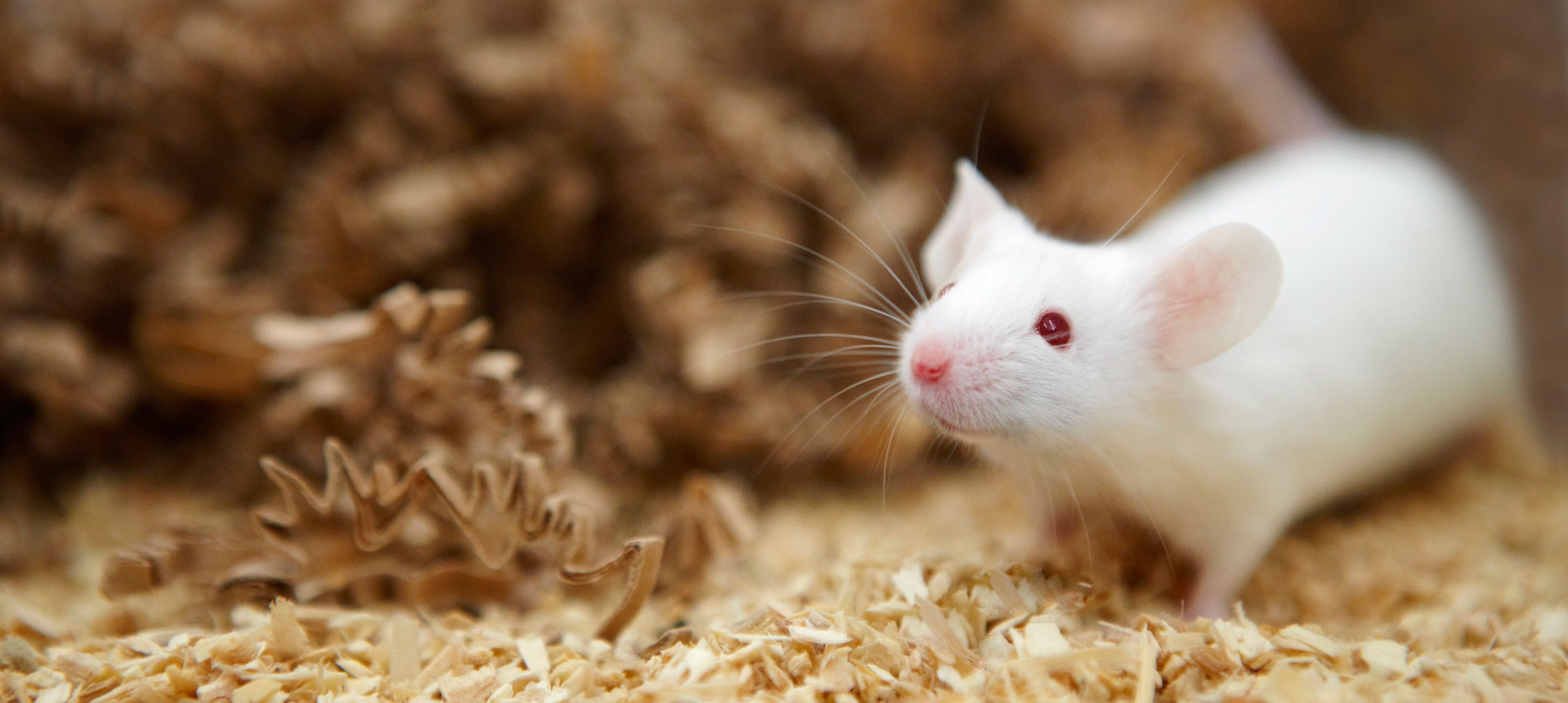
The humble lab mouse. Source: PBS

Much of our understanding of modern biology is derived from the “lower organisms”.

From yeast to snails (there is a post coming shortly on a snail model of Parkinson’s disease – I kid you not) and from flies to mice, a great deal of what we know about basic biology comes from experimentation on these creatures. So much in fact that many of our current ideas about neurodegenerative diseases result from modelling those conditions in these creatures.

Now say what you like about the ethics and morality of this approach, these organisms have been useful until now. And I say ‘until now’ because an interesting research report was released this week which may call into question much of the knowledge we have from the modelling of Parkinson’s disease is these creatures.

You see, here’s the thing: Flies don’t naturally develop Parkinson’s disease.

Nor do mice. Or snails.

Or yeast for that matter.

So we are forcing a very un-natural state upon the biology of these creatures and then studying the response/effect. Which could be giving us strange results that don’t necessarily apply to human beings. And this may explain our long history of failed clinical trials.

We work with the best tools we have, but it those tools are flawed…

What did the new research report find?

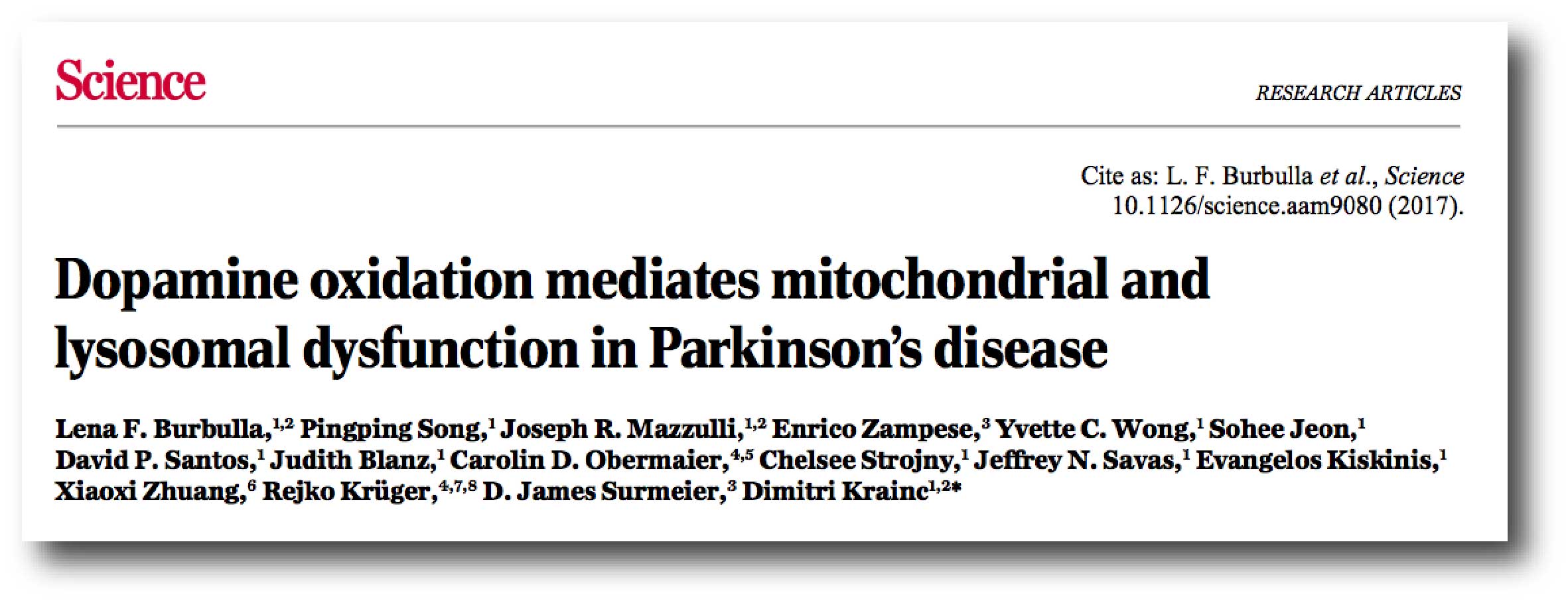
This is the study:


Title: Dopamine oxidation mediates mitochondrial and lysosomal dysfunction in Parkinson’s disease
Authors: Burbulla LF, Song P, Mazzulli JR, Zampese E, Wong YC, Jeon S, Santos DP, Blanz J, Obermaier CD, Strojny C, Savas JN, Kiskinis E, Zhuang X, Krüger R, Surmeier DJ, Krainc D
Journal: Science, 07 Sept 2017 – Early online publication
PMID: 28882997

The researchers who conducted this study began by growing dopamine neurons – a type of cell badly affected by Parkinson’s disease – from induced pluripotent stem (IPS) cells.

What are induced pluripotent stem cells?

Continue reading “O’mice an’ men – gang aft agley”

Hey DJ, I-so-sit-rate!

The title of this post probably reads like the mad, drug-fuelled scream of a drunk Saturday night party animal, but the elements of it may be VERY important for a particular kind of Parkinson’s disease.

Mutations in a gene called DJ-1 can cause an early onset form of Parkinson’s disease. The protein of DJ-1 plays an important role in how cells handle oxidative stress – or the increase in damaging free radicals (explained below).

This week researchers announced that they have found an interesting new therapeutic target for people with DJ-1 associated Parkinson’s disease: A chemical called Isocitrate.

In this post, we will discuss what DJ-1 is involved with Parkinson’s disease, how isocitrate helps the situation, and what the results of new research mean for future therapeutic strategies.


original-26772-1364707371-8

Source: Listchallenge

In 2017, we are not only observing the 200 year anniversary of the first description of Parkinson’s disease (by one Mr James Parkinson), but also the 20th anniversary of the discovery of the first genetic variation associated with the condition (Click here to read more about that). Our understanding of the genetics of Parkinson’s disease since 1997, has revolutionised the way we look at Parkinson’s disease and opened new doors that have aided us in our understanding.

During the last 20 years, we have identified numerous sections of DNA (these regions are called genes) where small errors in the genetic coding (mutations or variants) can result in an increased risk of developing Parkinson’s disease. As the graph below indicates, mutations in some of these genes are very rare, but infer a very high risk, while others are quite common but have a low risk of Parkinson’s disease.

The genetics of PD. Source: Journal of Parkinson’s disease

Some of the genetic mutation need to be provided by both the parents for Parkinson’s to develop (an ‘autosomal recessive‘ mutation – the yellow circles in the graph above); while in other cases the genetic variant needs only to be provided by one of the parents (an ‘autosomal dominant’ mutation – the blue circles). Many of the genetic mutations are very common and simply considered a region of increased risk (green circles).

Importantly, all of these genes provide the instructions for making a protein – which are the functional parts in a cell. And each of these proteins have specific roles in biological processes. These functions tell us a little bit about how Parkinson’s disease may be working. Each of them is a piece of the jigsaw puzzle that we are trying to finish. As you can see in the image below, many of the genes mentioned in the graph above give rise to proteins that are involved in different parts of the process of autophagy – or the waste disposal system of the cell. You may notice that some proteins, like SCNA (otherwise known as alpha synuclein), are involved in multiple steps in this process.

The process of autophagy. Source: Nature

In today’s post we are going to look at new research regarding just one of these genes/proteins. It is called DJ-1, also known as Parkinson disease protein 7 (or PARK7).

What is DJ-1?

Continue reading “Hey DJ, I-so-sit-rate!”

Dementia with Lewy Bodies: New recommendations

jnnp-2015-January-86-1-50-F1.large

Last year – two years after actor Robin Williams died – his wife Susan Schneider Williams wrote an essay entitled The terrorist inside my husband’s head, published in the journal Neurology.

It is a heartfelt/heartbreaking insight into the actor’s final years. It also highlights the plight of many who are diagnosed with Parkinson’s disease, but experience an array of additional symptoms that leave them feeling that something else is actually wrong.

Today’s post is all about Dementia with Lewy bodies (or DLB). In particular, we will review the latest refinements and recommendations of the Dementia with Lewy Bodies Consortium, regarding the clinical and pathologic diagnosis of DLB.


robin-williams

Robin Williams. Source: Quotesgram

On the 28th May of 2014, the actor Robin Williams was diagnosed with Parkinson’s disease.

At the time, he had a slight tremor in his left hand, a slow shuffling gait and mask-like face – some of the classical features of Parkinson’s disease.

According to his wife, the diagnosis gave the symptoms Robin had been experiencing a name. And this brought her a sense of relief and comfort. Now they could do something about the problem. Better to know what you are dealing with rather than be left unsure and asking questions.

But Mr Williams sensed that something else was wrong, and he was left unsure and asking questions. While filming the movie Night at the Museum 3, Williams experienced panic attacks and regularly forgot his lines. He kept asking the doctors “Do I have Alzheimer’s? Dementia? Am I schizophrenic?”

Williams took his own life on the 11th August 2014, and the world mourned the tragic loss of a uniquely talented performer.

Source: WSJ

When the autopsy report came back from the coroner, however, it indicated that the actor had been misdiagnosed.

He didn’t have Parkinson’s disease.

What he actually had was Dementia with Lewy bodies (or DLB).

What is Dementia with Lewy bodies?

Continue reading “Dementia with Lewy Bodies: New recommendations”

Exenatide: An editorial

editorial

In my previous post, we briefly reviewed the results of the phase II double-blind, randomised clinical trial of Exenatide in Parkinson’s disease. The study indicates a statistically significant effect on motor symptom scores after being treated with the drug.

Over the last few days, there have been many discussions about the results, what they mean for the Parkinson’s community, and where things go from here, which have led to further questions.

In this post I would like to address several matters that have arisen which I did not discuss in the previous post, but that I believe are important.


bydureon

I found out about the Exenatide announcement – via whispers online – on the afternoon of the release. And it was in a mad rush when I got home that night that I wrote up the post explaining what Exenatide is. I published the post the following evening however because I could not access the research report from home (seriously guys, biggest finding in a long time and it’s not OPEN ACCESS?!?!?) and I had to wait until I got to work the next day to actually view the publication.

I was not really happy with the rushed effort though and decided to follow up that post. In addition, there has been A LOT of discussion about the results over the weekend and I thought it might be good to bring aspects of those different discussion together here. The individual topics are listed below, in no particular order of importance:

1. Size of the effect

There are two considerations here.

Firstly, there have been many comments about the actual size of the effect in the results of the study itself. When people have taken a deeper look at the findings, they have come back with questions regarding those findings.

And second, there have also been some comments about the size of the effect that this result has already had on the Parkinson’s community, which has been considerable (and possibly disproportionate to the actual result).

The size of the effect in the results

The results of the study suggested that Exenatide had a positive effect on the motor-related symptoms of Parkinson’s over the course of the 60 week trial. This is what the published report says, it is also what all of the media headlines have said, and it sounds really great right?

The main point folks keep raising, however, is that the actual size of the positive effect is limited to just the motor features of Parkinson’s disease. If one ignores the Unified Parkinson’s Disease Rating Scale (UPDRS) motor scores and focuses on the secondary measures, there isn’t much to talk about. In fact, there were no statistically significant differences in any of the secondary outcome measures. These included:

Continue reading “Exenatide: An editorial”

The next killer APP: LRRK2 inhibitors?

maxresdefault

In Silicon valley (California), everyone is always looking for the “next killer app” – the piece of software (or application) that is going to change the world. The revolutionary next step that will solve all of our problems.

The title of today’s post is a play on the words ‘killer app’, but the ‘app’ part doesn’t refer to the word application. Rather it relates to the Alzheimer’s disease-related protein Amyloid Precursor Protein (or APP). Recently new research has been published suggesting that APP is interacting with a Parkinson’s disease-related protein called Leucine-rich repeat kinase 2 (or LRRK2).

The outcome of that interaction can have negative consequences though.

In today’s post we will discuss what is known about both proteins, what the new research suggests and what it could mean for Parkinson’s disease.


Seattle

Seattle. Source: Thousandwonders

In the mid 1980’s James Leverenz and Mark Sumi of the University of Washington School of Medicine (Seattle) made a curious observation.

After noting the high number of people with Alzheimer’s disease that often displayed some of the clinical features of Parkinson’s disease, they decided to examined the postmortem brains of 40 people who had passed away with pathologically confirmed Alzheimer’s disease – that is, an analysis of their brains confirmed that they had Alzheimer’s.

What the two researchers found shocked them:

PDAD

Title: Parkinson’s disease in patients with Alzheimer’s disease.
Authors: Leverenz J, Sumi SM.
Journal: Arch Neurol. 1986 Jul;43(7):662-4.
PMID: 3729742

Of the 40 Alzheimer’s disease brains that they looked at nearly half of them (18 cases) had either dopamine cell loss or Lewy bodies – the characteristic features of Parkinsonian brain – in a region called the substantia nigra (where the dopamine neurons are located). They next went back and reviewed the clinical records of these cases and found that rigidity, with or without tremor, had been reported in 13 of those patients. According to their analysis 11 of those patients had the pathologic changes that warranted a diagnosis of Parkinson’s disease.

And the most surprising aspect of this research report: Almost all of the follow up studies, conducted by independent investigators found exactly the same thing!

It is now generally agreed by neuropathologists (the folks who analyse sections of brain for a living) that 20% to 50% of cases of Alzheimer’s disease have the characteristic round, cellular inclusions that we call Lewy bodies which are typically associated with Parkinson disease. In fact, in one analysis of 145 Alzheimer’s brains, 88 (that is 60%!) had chemically verified Lewy bodies (Click here to read more about that study).

url

A lewy body (brown with a black arrow) inside a cell. Source: Cure Dementia

Oh, and if you are wondering whether this is just a one way street, the answer is “No sir, this phenomenon works both ways”: the features of the Alzheimer’s brain (such as the clustering of a protein called beta-amyloid) are also found in many cases of pathologically confirmed Parkinson’s disease (Click here and here to read more about this).

So what are you saying? Alzheimer’s and Parkinson’s disease are the same thing???

Continue reading “The next killer APP: LRRK2 inhibitors?”

Nilotinib: the other phase II trial

DSK_4634s

In October 2015, researchers from Georgetown University announced the results of a small clinical trial that got the Parkinson’s community very excited. The study involved a cancer drug called Nilotinib, and the results were rather spectacular.

What happened next, however, was a bizarre sequence of disagreements over exactly what should happen next and who should be taking the drug forward. This caused delays to subsequent clinical trials and confusion for the entire Parkinson’s community who were so keenly awaiting fresh news about the drug.

Earlier this year, Georgetown University announced their own follow up phase II clinical trial and this week a second phase II clinical trial funded by a group led by the Michael J Fox foundation was initiated.

In todays post we will look at what Nilotinib is, how it apparently works for Parkinson’s disease, what is planned with the new trial, and how it differs from the  ongoing Georgetown Phase II trial.


FDA-deeming-regulations

The FDA. Source: Vaporb2b

This week the U.S. Food and Drug Administration (FDA) has given approval for a multi-centre, double-blind, randomised, placebo-controlled Phase IIa clinical trial to be conducted, testing the safety and tolerability of Nilotinib (Tasigna) in Parkinson’s disease.

This is exciting and welcomed news.

What is Nilotinib?

Nilotinib (pronounced ‘nil-ot-in-ib’ and also known by its brand name Tasigna) is a small-molecule tyrosine kinase inhibitor, that has been approved for the treatment of imatinib-resistant chronic myelogenous leukemia (CML).

What does any that mean?

Basically, it is the drug that is used to treat a type of blood cancer (leukemia) when the other drugs have failed. It was approved for treating this cancer by the FDA in 2007.

Continue reading “Nilotinib: the other phase II trial”