Curasen: Shifting the focus from just dopamine

# # # #

In September, a small biotech company called CuraSen announced that they had dosed the first participant in a clinical trial of their new experimental drug for Parkinson’s.

This news did not garner a lot of attention, but was of great interest to us here at the SoPD because the drug – currently named CST-2032 – is the first of a novel class of drug to be tested in Parkinson’s.

It also represents a shift in our approach to disease modification in neurodegenerative conditions (like Parkinson’s) as the focus moves away from solely being on the dopamine neurons.

In today’s post, we will look at what CST-2032 is, what evidence exists that supports this drug going into clinical trial, and why it might represent a turning point in how we approach the treatment of Parkinson’s.

# # # #


The first thing you notice when you go to the CuraSen website are the words “Think, again“.

A curious introduction to a biotech, but it grabs the attention.

Next – and I don’t want to ruin things for anyone (Spoiler alert!) – the words fade away…

… only to be replaced by: “Rethinking neurodegeneration”

At that point (if you are a curious creature) you start thinking: Ooh, this looks interesting.

And with a little bit of digging, you realise that it is interesting.

Very interesting.

Why is Curasen interesting?

Curasen is a California-based biotech taking a slightly different approach towards neurodegenerative conditions like Parkinson’s.

What are they doing?

Continue reading “Curasen: Shifting the focus from just dopamine” →

The drug development pipeline for Parkinson’s

# # # #

For a long time a regular request from SoPD readers has been to provide an overview of the clinical trial landscape for Parkinson’s, particularly in the area of drug development.

Such projects are difficult, however, as the landscape is broad and dynamic – lots of different approaches being applied and new entrants continually entering the arena. These are positive features, but to characterise the whole field is beyond my simple cognitive abilities.

But recently three Parkinson’s research advocates (with help from the research department at The Cure Parkinson’s Trust) tackled this challenge, and the output of their efforts was published in the Journal of Parkinson’s disease in July of this year.

In today’s post, we will discuss advocacy, review the current clinical trial pipeline for Parkinson’s, and explore how an analysis of this pipeline could be improved.

# # # #


Raymond Carver (Source)

“He understood that it took only one lunatic and a torch to bring everything to ruin”
– Raymond Carver

I enjoy old Raymond Carver short story collections (his 1983 ‘Cathedral‘ in particular).

He is not for everyone, but I like him. Particularly ‘What We Talk About When We Talk About Love‘. It is a story about two couples sitting at a kitchen table, drinking gin, and trying to describe what is meant by love.

Source: Encorespotlight

I thought of this short story last year when I was asked during a Q&A session at a support group meeting, “What do we mean when we talk about advocacy?” (that was the exact wording).

I didn’t mention Carver in my answer. Rather I listed some of the various ways that people can become advocates for Parkinson’s. And there are many, and it really depends on what you want to do and what skills you have or want to learn (we will come back to this near the bottom of today’s post).

Source: Endslaverynow

Advocacy comes in many forms. And in today’s post I’d like to share one inspiring example of advocacy.

Earlier this year I played a small role in a wonderful project led by a team of Parkinson’s research advocates who were focused on trying to provide an overview of the clinical trial pipeline for therapies for Parkinson’s, with the goal of raising awareness within the PD community.

The results of their efforts were published in July.

What did they find?

Continue reading “The drug development pipeline for Parkinson’s” →

Monthly Research Review – November 2020


At the end of each month the SoPD writes a post which provides an overview of some of the major pieces of Parkinson’s-related research that were made available during November 2020.

The post is divided into seven parts based on the type of research:

  • Basic biology
  • Disease mechanism
  • Clinical research
  • New clinical trials
  • Clinical trial news
  • Conferences/lectures
  • Other news
  • Review articles/videos


So, what happened during November 2020?

In world news:

November 2nd – While COVID antibodies do not appear to last very long (similar to seasonal flu), a new study suggests that another aspect of the immune response to a COVID infection can last more than 6 months. Analysis of blood samples from a cohort of 2000+ clinical and non-clinical healthcare workers (including 100 who tested seropositive for SARS-CoV-2) found that virus specific T cells were detectable more than six months after infection (Click here to read the study and click here to read a summary).

November 9th – Potential COVID vaccine #1 – Early data from the Pfizer/BioNTech Phase III trial indicates that their COVID vaccine is 90% effective (Click here to read more about this).

10th November – Best. Shot. Ever – During the US Masters practice round Jon Rahm hit an impossible hole in one:


16th November – Potential COVID vaccine #2 – biotech firm Moderna announced its coronavirus vaccine is 94.5% effective against COVID-19 (Click here to read more about this).

22nd November – New Zealand-based rocket company Rocket lab launched their ‘Return to Sender’ mission – the company’s 16th Electron rocket mission that deployed 30 small satellites into orbit (to date the company has launched 96 satellites), and they managed to recover the first stage of the vehicle. But more importantly, the flight also carried “Gnome Chompski” into space:

23rd November – Potential COVID vaccine #3 – a coronavirus vaccine developed by the University of Oxford (along with AstraZeneca) was reported to be highly effective (providing at least 70% protection – Click here to read more about this).

In the world of Parkinson’s research, a great deal of new research and news was reported:

In November 2020, there were 885 research articles added to the Pubmed website with the tag word “Parkinson’s” attached (9811 for all of 2020 so far). In addition, there was a wave to news reports regarding various other bits of Parkinson’s research activity (clinical trials, etc).

The top 5 pieces of Parkinson’s news

Continue reading “Monthly Research Review – November 2020” →

EDITORIAL: Paywalls

# # # #

Today’s post is a rant about the research publishing industry – explaining the hole they have dug for themselves and us (via profiteering and a lack of innovation), discussing how the research community supports the system, and exploring efforts to solve the problem.

You will be forgiven if you don’t read on, but understand that this subject is important.

# # # #


Source: Fifteendesign

A reader recently emailed me regarding the 500th post with a list of questions. One of which was: if you were not doing Parkinson’s research, what would you be doing?

In a previous SoPD post I have discussed my “Plan B“, but that involves Parkinson’s subject matter so it doesn’t really count here.

If I’m honest, and I wasn’t working in the area of Parkinson’s, I would be doing one of two things:

OPTION  #1:  I would be working for Eric Eisner.

Eric Eisner. Source: Yes

In 1998, Mr Eisner quit a high-flying career in Hollywood deal-making and walked into a forgotten corner of Los Angeles education system.

In the Lennox School District – with the support of the Richstone Family Center – he sat down with a group of 7th graders with the simple goal: identifying underserved academically promising students. Once identified, Mr Eisner would equip them with resources and support to facilitate their success through high school, college, and beyond.

In 2010, a not-for-profit program had grown out of his efforts and it became known as the Young Eisner Scholars (or simply “YES”).

Source: Twitter

I first learnt about this amazing initiative from an episode of Malcolm Gladwell’s podcast, Revisionist History, called “Carlos doesn’t remember” (seriously, you should listen to that episode).

Mr Eisner’s YES program is now nation-wide in the US, and in 2017 they were supporting more than 500 students from elementary school through to graduate school (source).

YES is my kind of capitalism, but Mr Eisner needs to think globally – the next Ramanujan is out there.

OPTION #2:  I would be working to help solve the problem of scientific research publishing.

Source: Tsepustuksia

This is a constant source of frustration for yours truly.

At present, large publishing houses control the dissemination of most of the research being generated around the world by keeping it behind pay-to-view paywalls (they also charge researchers an “administration fee” to publish in their journal and insist that they sign over the copyright of the publication to the publisher).

Charging a fee on what should be public information is the worse kind of capitalism: It is rent seeking.

And this week one of the big academic publishing companies made an announcement that made me shake my head.

What did they announce?

Continue reading “EDITORIAL: Paywalls” →

Very Keynesian: Cell painting

# # # #

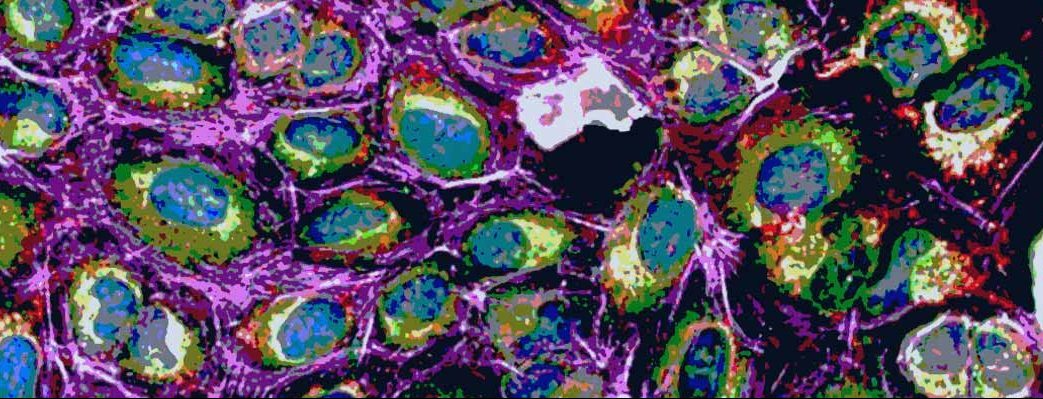
Our ability to grow cells in culture (in petri dishes and flasks in laboratories) has been critical to our efforts to learn more about the biology of Parkinson’s and to screen for novel potential therapies.

Recently, researchers have employed more sophisticated methods of characterising cells in culture, to achieve greater insights. These effort have led to some interesting work from investigators at Google Research and The New York Stem Cell Foundation Research Institute.

They used a powerful new technique called “Cell Painting”.

In today’s post, we will outline what Cell Painting is, discuss what the new research demonstrates, and explore what their findings could mean for Parkinson’s research.

# # # #


John Maynard Keynes. Source: NYTimes

I recently read an interesting story about the economist John Maynard Keynes.

In 1918 Keynes was working as a Treasury adviser when a friend – the art critic Roger Fry – told him about a sale of impressionist works that was about to occur in Paris. The collection was from the artist Edgar Degas, who had died in late 1917.

Edgar Degas. Source: Wikimedia

With the great war still raging in northern France, intrepid Keynes somehow managed to convince not only the UK Government to give him money, but also for the director of The National Gallery, Sir Charles Holmes, to join him on his mad dash to Paris. They boarded a boat to Boulogne and then travelled by train to Paris, carrying a suitcase containing £20,000 in French banknotes (understand that this is equivalent to £1.1 million in todays money).

As the auction started, Paris was rocked by the sound of German artillery. Many of the hopeful bidders at the auction fled, but Keynes and Holmes stood their ground and secured some incredible bargains (not only for the British Government, but also for themselves – such as a still life with seven apples, by Paul Cézanne that Keynes purchased for himself).

Cézanne’s seven apples. Source: Wikimedia

Upon arrival back in England, Keynes could not carry all of his newly acquired luggage, so he left his Cézanne under a hedge on the side of the road. Upon arrival at their lodgings for the night, he instructed their host that ‘if you’d like to go down to the road, there’s a Cezanne just behind the gate‘.

It was a very Keynesian enterprise as that Cézanne painting alone is probably worth well over £30 million if it went to auction today.

Interesting, but what does this have to do with Parkinson’s?

Nothing, but today’s post is about a different kind of painting, so I thought I’d start off with this little anecdote.

What does painting have to do with Parkinson’s?

Continue reading “Very Keynesian: Cell painting” →

CMT-3: A better option than doxy?

# # # #

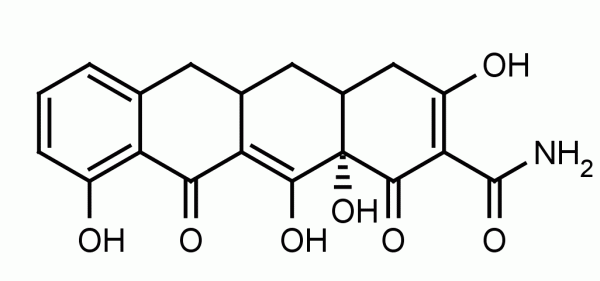
It has been reported by multiple independent research groups that tetracycline-based antibiotic drugs (such as doxycycline) have exhibited neuroprotective properties in models of Parkinson’s.

Translation of these preclinical findings into the clinic has, however, been difficult. In addition, concerns have been expressed that long-term use of such agents could bring forward the emergence of antibiotic resistance in the bacteria that they are used to control.

Recently, researchers have investigated a different type of tetracycline-based molecule that has reduced antibiotic activity, crosses the blood-brain-barrier, and is pharmacologically safe. It is called chemically modified tetracycline 3 (or CMT-3).

In today’s post, we will look at the research that has been done on tetracycline-based antibiotic drugs, discuss why we should not be testing antibiotics in Parkinson’s, and consider if CMT-3 could be different.

# # # #


image-title1

Sir Alexander Fleming. Source: Biography

Sir Alexander Fleming is credited with discovering the antibiotic properties of penicillin.

But – as he himself notes – the discovery was a purely chance event. An accident, if you like.

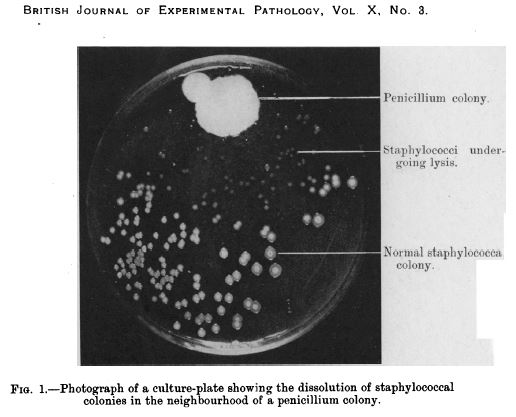
After returning from a two week holiday, Sir Fleming noticed that many of his culture dishes were contaminated with fungus, because he had not stored them properly before leaving. One mould in particular caught his attention, however, as it was growing on a culture plate with the bacteria staphylococcus. Upon closer examination, Fleming noticed that the contaminating fungus prevented the growth of staphylococci.

In an article that Fleming subsequently published in the British Journal of Experimental Pathology in 1929, he wrote, “The staphylococcus colonies became transparent and were obviously undergoing lysis … the broth in which the mould had been grown at room temperature for one to two weeks had acquired marked inhibitory, bactericidal and bacteriolytic properties to many of the more common pathogenic bacteria.”
photograph_from_1929_paper_by_fleming

Penicillin in a culture dish of staphylococci. Source: NCBI

Fleming isolated the organism responsible for prohibiting the growth of the staphylococcus, and identified it as being from the penicillium genus.

He named it penicillin and the rest is history (Click here to read that history).

Fleming himself appreciated the serendipity of the finding:

“When I woke up just after dawn on Sept. 28, 1928, I certainly didn’t plan to revolutionise all medicine by discovering the world’s first antibiotic, or bacteria killer” (Source)

And this gave rise to his famous quote:

“One sometimes finds what one is not looking for” (Source)

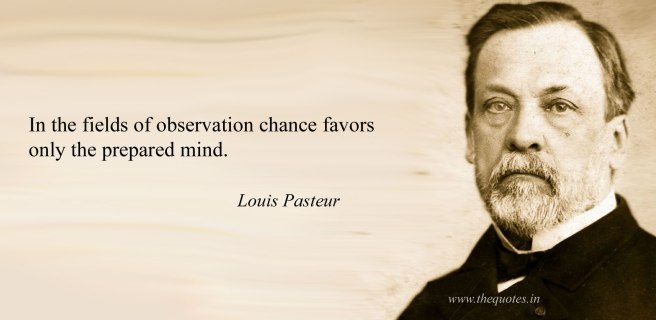
While Fleming’s discovery of the antibiotic properties of penicillin was made as he was working on a completely different research problem, the important thing to note is that the discovery was made because the evidence came to a prepared mind.
Louis-Pasteur-Quotes-1

Pasteur knew the importance of a prepared mind. Source: Thequotes

And this is the purpose of all the training in scientific research – not acquiring the keys to some special knowledge, but preparing the investigator to notice the curious deviation.

That’s really interesting, but what does any of this have to do with Parkinson’s?

Continue reading “CMT-3: A better option than doxy?” →

ALS: From ice bucket to centaur

# # # #

Amyotrophic lateral sclerosis (or ALS) is the third most common neurodegenerative condition. It is characterised by the loss of motor neurons, which leads to loss of muscle control.

As with Parkinson’s, there is no cure for ALS, and there are only two FDA approved therapies for the condition.

Recently, a biotech company – called Amylyx Pharmaceuticals – announced positive Phase II clinical trial results with their experimental combination therapy AMX0035.

In today’s post, we will discuss what ALS is, explore the results of the AMX0035 trial, and consider why this could be an important development for Parkinson’s as well.

# # # #


lou-gehrig

Lou Gehrig. Source: NBC

In 1969, Henry Louis “Lou” Gehrig was voted the greatest first baseman of all time by the Baseball Writers’ Association. During his career, he played 17 seasons with the New York Yankees, having signed with his hometown team in 1923.

For 56 years, he held the record for the most consecutive games played (2,130), and he was only prevented from continuing that streak when he voluntarily took himself out of the team lineup on the 2nd May, 1939, after his ability to play became hampered.

A little more than a month later (at age 36) he retired from the game – his farewell being capped off by his iconic “Luckiest man on the face of the Earth” speech:

And sadly, less than two years later he passed away from the disease that now bears his name: Lou Gehrig’s disease.

Or as it is more commonly known as motor neuron disease.

What exactly is motor neuron disease?

Continue reading “ALS: From ice bucket to centaur” →

Yo DJ, stop mis-splicing

# # # #

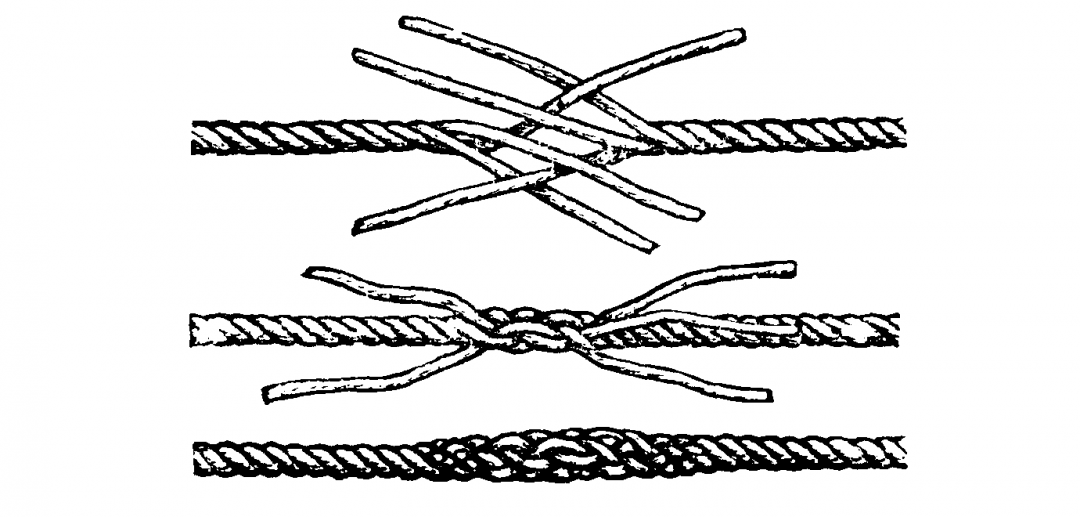
RNA – the usable copy of a section of DNA – has regions called introns that need to be removed before the RNA can be used for the production of protein. The process of removing introns is called splicing.

Recently researchers have noticed that a genetic mutation in a Parkinson’s-associated gene – called DJ-1 – affects the splicing of the associated RNA and this has serious consequences on the activity of the DJ-1 protein.

Interestingly, they were able to pharmacologically rescue the effect, and noticed that DJ-1 might not be the only Parkinson’s-associated gene affected by this splicing error.

In today’s post, we will discuss what splicing is, review the new research, and discuss the wider implications for the Parkinson’s community.

# # # #


Source: Wikibooks

Today’s post starts off with a definition:

Splice – /splʌɪs/; verb;
Meaning: “to combine, interweave”.
Origin: 16th century: probably from Middle Dutchsplissen,
Similar:  braid, plait, entwine, intertwine, interlace, knit
Additional/alternative meanings:
1.  (From the arts) When two pieces of recorded music – with a similar key and tempo – are combined:

2.  (From biology) The process that removes the intervening, non-coding sequences of genes (introns) from pre-mRNA and joins the protein-coding sequences (exons) together in order to enable translation of mRNA into a protein:

Ok, so the first alternative definition about music I understood and the video was helpful, but can you explain the second definition in more detail please?

Continue reading “Yo DJ, stop mis-splicing” →

Administrative post: Approaching 500

# # # #

A week or so ago, I was poking around in the cluttered back room of this website when I found something that truly stunned me: The SoPD website had 468 posts (This post is #470)

For a moment I was speechess. And as I looked at the number, a mix of horror and awe passed over me. If I had to have a guess, I would have said there were perhaps 300 or so posts on the website, but definitely not 500. That’s a ridiculous number!

Having given it some thought, a round number like 500 deserves something special.

Today’s post is a request to readers for ideas on how to mark the occasion.

# # # #


Beau Miles. Source: Youtube

The guy in the image above is Beau Miles – University lecturer, filmaker, adventurer, “poly-jobist”.

When I need a break and I want something off beat, Beau’s Youtube channel is my usual first port of call. If you have never heard of him, I would recommend starting off gently with his Run the line video and then diving head first into the madness that is A mile an hour.

Beau is one of those “exploring the human experience” types and he films himself doing it. He’s a great story teller and his quirky adventures are always good viewing – like the time Steinbeck inspired him to eat his own body weigh in canned beans. Just beans. It took him 40 days (Click here for that video).

Source: Hedonistica

What does this have to do with Parkinson’s?

Continue reading “Administrative post: Approaching 500” →

Ending Par(aquat)-kinson’s

# # # #

Today’s post is an open letter to Jacinda Ardern – Prime minister of New Zealand.

# # # #

Dear Jacinda (if I may),

Firstly, let me thank you for your actions during your first term as Prime Minister of New Zealand. The empathy and compassion you expressed in the face of tragic events like Christchurch and White Island have been exemplary, and the stewardship that you have demonstrated on COVID-19 has been a template for the rest of the world to follow. Even though I have lived away from NZ for almost 20 years now, the example you present makes one proud to be a kiwi. And congratulations on winning another term in the recent elections – Godspeed.

The reason for my letter today is to bring your attention to a matter that should be addressed by your Government: a complete ban on the continued use of the non-selective chemical herbicide, paraquat.

Continue reading “Ending Par(aquat)-kinson’s” →