The Parkinson’s Nebula?


There is a great deal of interest in genetic risk factors in Parkinson’s at the moment. A number of companies are providing direct-to-consumer services which provide individuals with some information about their family history and whether they have any of the more common genetic variations that are associated with medical conditions, like Parkinson’s.

Recently a new genetic data company has started – called Nebula Genomics – and they are offering a slightly different kind of service.

While many of the direct-to-consumer genetic companies have a business model that involves selling on genetic information to third parties, Nebula is offering a more patient-empowering option.

In today’s post, we will discuss the genetics of Parkinson’s, what Nebula Genomics is offering, and how this new service could be useful for the Parkinson’s community.


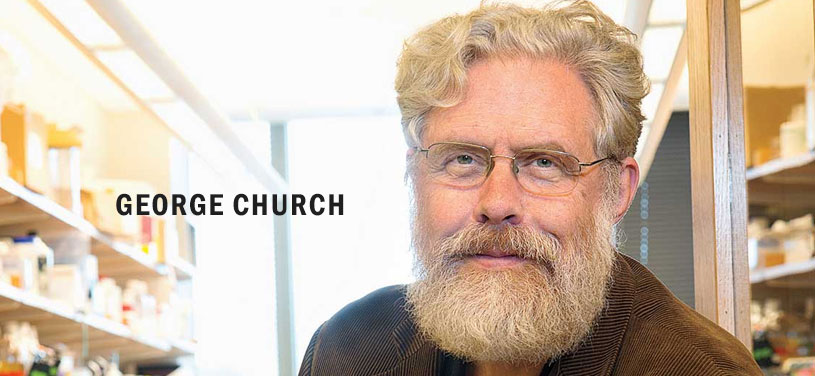
Prof George Church. Source: Biospace

Professor George Church is a person most readers will have never heard of.

He is the Robert Winthrop Professor of Genetics at Harvard Medical School and Professor of Health Sciences and Technology at Harvard and MIT, and was a founding member of the Wyss Institute for Biologically Inspired Engineering at Harvard.

He has co-author of over 500 academic papers, 143 patents and co-founded 22 biotech companies. In addition, he has participated in technology development, advising most of the major Genetic Sequencing companies, and he has been at the forefront of genetic research since the 1980s when he was involved with setting up the Human Genome Project.

His impact in the world of genetics has been tremendous.

But Prof Church is also something of a maverick. A left-field thinker. A disrupter.

He is a great supporter of open access genome sequencing and shareable human medical data. He is also keen to bring back extinct species, such as the Woolly Mammoth (Click here for more on this idea).

The return of the woolly mammoth. Source: Phys

Most recently, however, his name has been associated with a new company called Nebula Genomics.

What does Nebula Genomics do?

Continue reading “The Parkinson’s Nebula?”

EuPaTh: The Italian connection


The SoPD has a policy of not advertising or endorsing products/services.

This rule is in place to avoid any ethical/conflict of interest situations. It does little, however, to stop folks from bombarding the comments sections with links for wondrous magical cures which probably involve more ‘magical’ than actual cure.

Having said all that, every now and then I find or read about something that I think may be of interest to readers. In many of those cases, I can not vouch for the information being provided, but where I think there is the potential for readers to benefit, I am happy to take a chance and share it.

Today’s post is all about one such case: The European Parkinson Therapy Centre


Until very recently, I was working in Parkinson’s research centre in Cambridge (UK).

I conducted both lab- and clinic-based research on Parkinson’s in the lab of Prof Roger Barker. And it was in the clinic – several years ago – that I started hearing about a mysterious place that was not offering ‘to cure’ people of Parkinson’s, but rather helping them to live a better life with the condition.

Initially it was just a trickle of questions:

“Have you ever heard of this therapy place in Europe for people with Parkinson’s?” (“Nope, sorry” was my response).

But then an individual came in for their assessment, and spoke with tremendous enthusiasm about their own personal experience of visiting “this wonderful place in Italy” (“Sounds very interesting,” was my response, “Tell me more“).

Gradually, more and more people started sharing their own stories with me (both in the clinic, at support group meetings, and via correspondence to the SoPD website) about the place in Italy. And eventually it all led to me making some inquiries about the European Parkinson Therapy Centre.

What is the European Parkinson Therapy Centre?

Continue reading “EuPaTh: The Italian connection”

The lipidomics of Parkinson’s


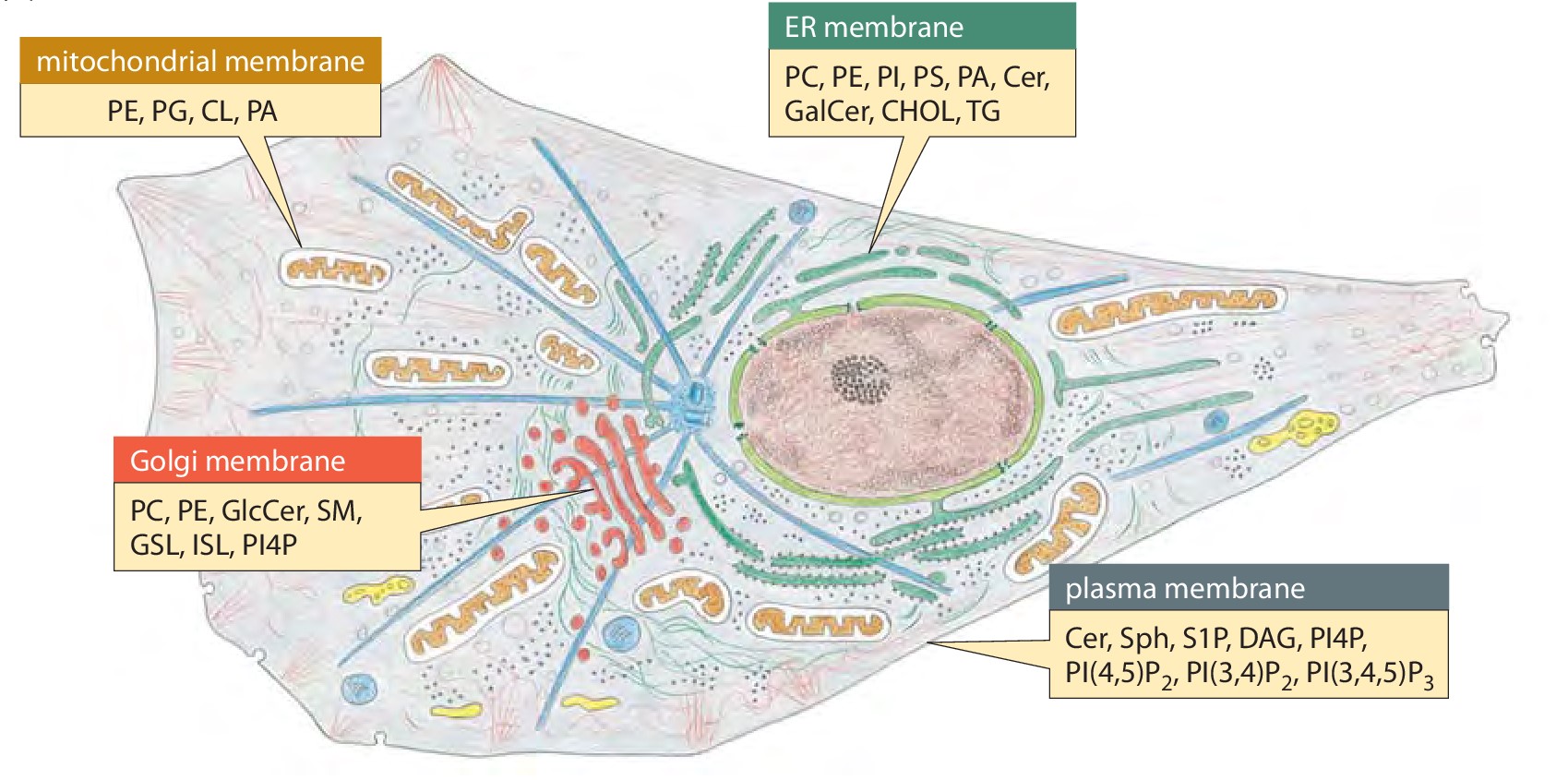
Lipids are ‘waxy’ molecules that make up a large proportion of your brain and they play very important roles in normal brain function. For a long time researchers have also been building evidence that lipids may be involved with neurodegenerative conditions as well.

Recently, new research was presented that supports this idea (in the case of Parkinson’s at least), as two research groups published data indicating that certain lipids can influence the toxicity of the Parkinson’s associated protein alpha synuclein.

One of those research groups was a biotech company called Yumanity, and they are developing drugs that target the enzymes involved with the production of the offending lipids.

In today’s post, we will look at what lipids are, what the new research suggests, and discuss some of the issues that will need to be considered in the clinical development of these lipid enzyme inhibitors.


Yummy. Source: Healthline

Adherence to the ‘Mediterranean diet‘ has been associated with a reduced risk of developing Parkinson’s (Click here and here to read more about this), but no one has ever really explained why.

There has been the suggestion from some corners that this association may be due to the richness of monounsaturated fats in the foods generally included in this diet.

For example, olive oil is rich in monounsaturated fat.

What are monounsaturated fats?

Mmmm, before I answer that we need to have a broader discussion about “what is fat?“.

Fat is one of the three main macronutrients (carbohydrate and protein being the other two) that the body requires for survival.

Source: Visionpt

Fat serves as a ready source of energy for the body and can also provide insulation against cold temperatures or compression. All fats are derived from combinations of fatty acids (and also glycerol).

What are fatty acids?

A fatty acid is simply a chain of hydrocarbons terminating in a carboxyl group (having a carbonyl and hydroxyl group both linked to a carbon atom). Don’t worry too much about what that means, just understand that fatty acids are basically chains of hydrocarbons that look like this:

A chain of hydrocarbons ending in a carboxyl group (right). Source: Wikipedia

Fatty acids come in two forms:

  • Saturated
  • Unstaturated

In the case of a saturated fat, each carbon molecule in the chain of hydrocarbons is bonded to two other carbons by a single bond. Whereas in the case of a saturated fat, one or more carbon molecule in the chain of hydrocarbons is bonded to another carbon molecule by a double bond. For example:

Saturated fatty acids vs unsaturated fatty acids. Source: Medium

And unsaturated fatty acids can be further divided into:

  1. Monounsaturated fatty acids (or MUFAs) are simply fatty acids that have a single double bond in the fatty acid chain with all of the remainder carbon atoms being single-bonded.
  2. Polyunsaturated fatty acids (or PUFAs) are fatty acids that have more than one double bond.

Source: Medium

OK, but how might monounsaturated fats be involved with Parkinson’s?

That, dear reader, is the focus of numerous studies in the field of lipidomics.

What is lipidomics?

Continue reading “The lipidomics of Parkinson’s”

Denali: Phase Ib clinical trial starts


Biotech firm Denali announced the dosing of the first person in their Phase Ib clinical study of their experimental treatment for Parkinson’s called DNL201.

DNL201 is an inhibitor of a Parkinson’s-associated protein called Leucine-rich repeat kinase 2 (LRRK2).

In Parkinson’s, there is evidence that LRRK2 is over activate, and by inhibiting LRRK2 Denali is hoping to slow the progression of Parkinson’s.

In today’s post, we will discuss what LRRK2 is, what evidence exists for DNL201, and what the new clinical trial will involve.


Founded in 2013, by a group of former Genentech executives, San Francisco-based Denali Therapeutics is a biotech company which is focused on developing novel therapies for people suffering from neurodegenerative diseases. Although they have product development programs for other condition (such as Amyotrophic Lateral Sclerosis and Alzheimer’s disease), Parkinson’s is their primary interest.

And their target for therapeutic effect?

The Parkinson’s-associated protein called Leucine-rich repeat kinase 2 (or LRRK2).

What is LRRK2?

Continue reading “Denali: Phase Ib clinical trial starts”

The good, the GAD, and the not-so ugly


This post is a game of two halves.

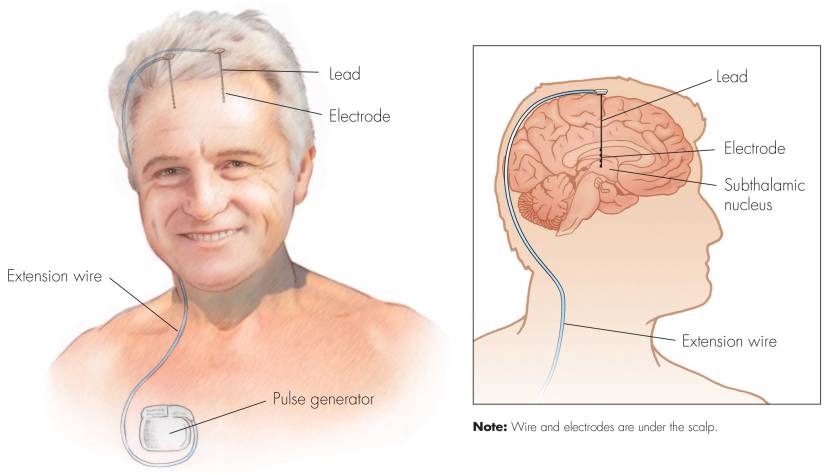
The first half will explain the concept of a surgical procedure for Parkinson’s called ‘subthalamic deep brain stimulation‘, in which doctors permenantly implant electrodes into the brain to stimulate a region – the subthalamic nucleus. By stimulating this region with electrical impulses, doctors can provide a better quality of life (in most cases) to people with severe features of Parkinson’s.

In the second half of this post, we will look at an approach to doing the same thing,… but without the electrodes.

Rather, researchers are using gene therapy.

In today’s post, we will discuss what deep brain stimulation is, what gene therapy is, and how the gene therapy approach is having a different kind of impact on the brain to that of deep brain stimulation.


maxresdefault

Source: Youtube

Welcome to the first half of today’s post.

It begins with you asking the question:

What is deep brain stimulation?

Deep brain stimulation (or DBS) is a treatment method that involves embedding electrodes into the brain to help modulate the brain activity involved in movement.

It is a prodcedure that is usually offered to people with Parkinson’s who have excessive tremor or debilitating dyskinesias.

First introduced in 1987, deep brain stimulation consists of three components: the pulse generator, an extension wire, and the leads (which the electrodes are attached to). All of these components are implanted inside the body. The system is turned on, programmed and turned off remotely.

Shahlaie_DBS_Illustration-full

Source: Ucdmc

Continue reading “The good, the GAD, and the not-so ugly”

Not bohemian, just ‘Rapsodi’


Moving forward into 2019 and beyond, we are going to be getting more sophisticated and targetted with our clinical trials for Parkinson’s. We are gradually moving away from the days when a drug was tested on anyone in the Parkinson’s-affected community, and heading for an age of sub-type specific treatments (Click here for a previous SoPD post on subtyping efforts for PD).

As part of this shift, there are a series of ongoing studies that are trying to identify not only the clinical & biological characteristics of those Parkinson’s sub-types, but also individuals who may already be in those groupings.

One such study is called “Rapsodi” – and it is focused on the identification of people with a particular genetic risk factor of PD – the GBA gene – who also demonstrate the early signs of Parkinson’s.

In today’s post, we will discuss what GBA is, how it is associated with Parkinson’s, and why the Rapsodi study is worthy of the PD community’s attention.


1082760

Ambroxol. Source: Skinflint

The clinical trial of Ambroxol in Parkinson’s that has been conducted in London (UK) is close to announcing their final results. The Ambroxol study report should be published in early 2019.

What is the ambroxol study?

Started in February 2017, the Ambroxol study (named AiM-PDAmbroxol in Disease Modification in Parkinson Disease) is a phase IIA prospective, single-centre, open label clinical trial to evaluate the safety, tolerability and pharmacodynamic effects of Ambroxol in Parkinson’s (Click here to read more about this trial and click here for the press release announcing the start of the study).

This trial, which is funded by the Cure Parkinson’s Trust and the Van Andel Research Institute (USA), has been conducted at the Royal Free Hospital in London (UK). The study has involved 20 people with Parkinson’s self-administering Ambroxol (in 60 mg per tablet) over a 6 month time frame. The participants were given 5 escalating doses of the drug for the first few weeks of the study (from 60 mg three times per day, gradually building up to 420 mg three times a day after the first month of the study).

But hang on a second. What is exactly is Ambroxol?

Continue reading “Not bohemian, just ‘Rapsodi’”

Thyme to look east: Baicalein


Recently I wrote a post about research investigating an interesting compound called Epigallocatechin gallate (or EGCG – click here for that post). Several eagle-eyed readers, however, noted something interesting in the details of one of the research reports that was discussed in that post.

The study in question had used EGCG as a positive control for evaluating the ability of other compounds for their ability to inhibit the clustering of Parkinson’s-associated protein alpha synuclein.

But there was also a second positive control used in that study.

It is called baicalein.

In today’s post, we will discuss what baicalein is and what research has been done on it in the context of Parkinson’s.


Lake Baikal. Source: Audleytravel

Once upon a thyme, in a far away land, there was a mysterious little flowering plant.

The “far away land” was the southern parts of eastern Siberia.

And the flowering plant is Scutellaria baicalensis – which is more commonly referred to as Baikal skullcap.

What is Baikal skullcap?

Baikal skullcap is a perennial herb that is indigenous to Southern Siberia, China and Korea. For centuries, traditional Chinese medicine has used the dried roots – which is called huángqín (Chinese: 黄芩 or golden root) – for a variety of ailments.

Baikal skullcap. Source: Urbol

The plant grows to between 1-4 feet in height, with lance head-shaped leaves and blue-purple flowers. Baikal skullcap belongs to the same family of flowering plants (Lamiaceae) as thyme, basil, mint and rosemary.

For traditional Chinese medicinal use, the roots are usually collected in spring or autumn once the plant is more than 3-4 years old. They are dried and then used to treat hypertension, to reduce “fire and dampness”, and to treat prostate & breast cancers.

And one of the key constituents of Baikal skullcap (and huángqín) is a compound called baicalein.

What is baicalein?

Continue reading “Thyme to look east: Baicalein”

Monthly Research Review – November 2018


At the end of each month the SoPD writes a post which provides an overview of some of the major pieces of Parkinson’s-related research that were made available during November 2018.

The post is divided into five parts based on the type of research (Basic biology, disease mechanism, clinical research, other news, and Review articles/videos). 


So, what happened during November 2018?

In world news:

4th November – Kiwi Mike Lloyd finished his 10th New York marathon! Diagnosed with Parkinson’s 6 years ago, his story is truly inspiring – “To me it’s a celebration of what I can do, & what we can do as people, rather than what we can’t do”

Oh, and did I mention he’s also blind?

Click here to read more about his most recent marathon and click here to see his website.

6th November – Mining company BHP suspended all rail operations in Western Australia after a train (consisting of 4 locomotives & 268 wagons) ladened with iron ore travelled over 92km (57miles) with no driver on board. It was finally deliberately derailed by the authorities. And that’s not the only crazy story out of Australia this month – check out Knickers the giant steer!


9th November – Supermarket Iceland had their Christmas advert banned in the UK because it was “deemed to breach political advertising rules” (Can anyone please explain to me why? I quite liked it):


11th November – New Zealand space company ‘Rocket Lab‘ announced the successful orbital launch and deployment of customer satellites – their first commercial project, named ‘It’s Business Time’ – at 16:50 NZDT (03:50 UTC – Click here for the press release). Little old NZ punching above its weight yet again. The launch can be seen from 20 minutes into this video:


22nd November – Engineers at the Massachusetts Institute of Technology announced that they have developed a model aircraft with no moving parts that is capable of flight. The age of ionic wind has begun.


In the world of Parkinson’s research, a great deal of new research and news was reported:

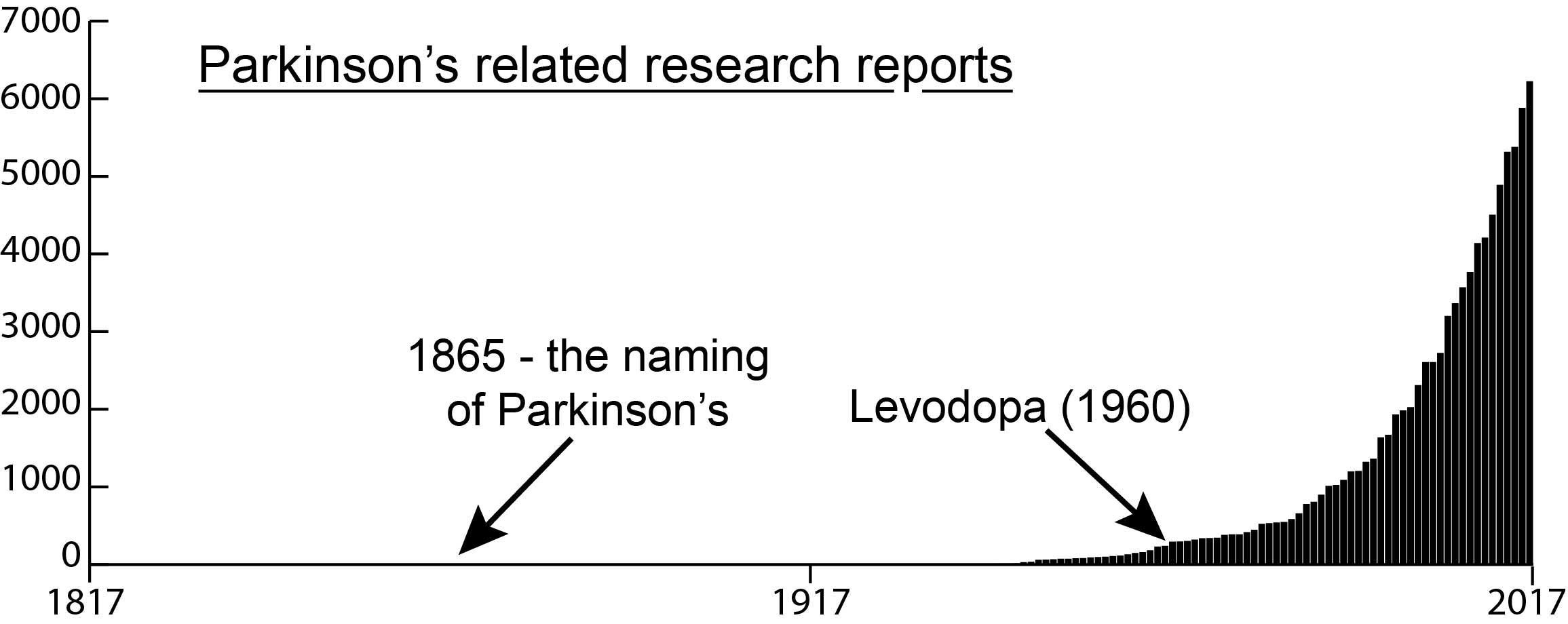
In November 2018, there were 762 research articles added to the Pubmed website with the tag word “Parkinson’s” attached (7172 for all of 2018 so far – we should easily beat last years total of 7644). In addition, there was a wave to news reports regarding various other bits of Parkinson’s research activity (clinical trials, etc).

The top 8 pieces of Parkinson’s news

Continue reading “Monthly Research Review – November 2018”

Brain. On. Fire.


Inflammation is part of the immune system’s response to damage or infection. It is a very natural process that our bodies undergo when we come into harms way.

Researchers at the University of Queensland, have recently demonstrated something interesting about the inflammation associated with Parkinson’s: by inhibiting a very specific part of the inflammatory process, they can reduce the spread of Parkinson’s associated alpha synuclein pathology in models of PD.

And they have developed a drug – called MCC950 – that specifically targets that component of the inflammation process which they are now seeking to test in clinical trials.

In today’s post, we will discuss what inflammation is, review this new research, and consider what it could all mean for the Parkinson’s community.


Spot the unhealthy cell – exhibiting signs of stress (yellow). Source: Gettyimages

No silly preamble today – this is going to be a very long post, so we’re diving straight in:

When cells in your body are stressed or sick, they begin to release messenger proteins which inform the rest of your body that something is wrong.

When enough cells release these messenger proteins, it can cause inflammation.

What is inflammation?

Inflammation is a vital part of the immune system’s response to trouble. It is the body’s way of communicating to the immune system that something is wrong and activating it so that it can help deal with the situation.

By releasing the messenger proteins, injured/sick cells kick off a process that results in multiple types of immune cells entering the troubled area of the body and undertaking very specific tasks.

The inflammatory process. Source: Trainingcor

The strength of the immune response depends on the volume of the signal arising from those released messenger proteins.

And the level of messenger proteins being released partly depends on multi-protein structures called inflammasomes.

What are inflammasomes?

Continue reading “Brain. On. Fire.”

York: #Parkinsons2018


On the 12th and 13th November, Parkinson’s UK held their biennial research conference in York.

It is not only an opportunity for the charity to showcase some of the research that they have funded over the last few years, but it was also a chance for members of the Parkinson’s research community to come together to share ideas, network and form new collaborations.

I was lucky enough to attend the event this year, and wanted to share some of the take away messages from the conference with the readers.

In today’s post, we will review Parkinson’s UK 2018 research conference (#Parkinsons2018).


Parkinson’s UK is the largest Parkinson’s research and support charity in the United Kingdom. Since 2015, they have invested over £18 million in a variety of research projects focused on all aspects of Parkinson’s – from new experimental treatments to the Parkinson’s UK Brain Bank.


Every two years, Parkinson’s UK holds a conference highlighting some of the research that the organisation has funded over the last few years. The meeting is usually held in the beautiful walled city of York – lots of history and narrow streets to explore.

Th “The Shambles” in York. Source: hauntedrooms

Continue reading “York: #Parkinsons2018”