ALS: From ice bucket to centaur

# # # #

Amyotrophic lateral sclerosis (or ALS) is the third most common neurodegenerative condition. It is characterised by the loss of motor neurons, which leads to loss of muscle control.

As with Parkinson’s, there is no cure for ALS, and there are only two FDA approved therapies for the condition.

Recently, a biotech company – called Amylyx Pharmaceuticals announced positive Phase II clinical trial results with their experimental combination therapy AMX0035.

In today’s post, we will discuss what ALS is, explore the results of the AMX0035 trial, and consider why this could be an important development for Parkinson’s as well.

# # # #


lou-gehrig

Lou Gehrig. Source: NBC

In 1969, Henry Louis “Lou” Gehrig was voted the greatest first baseman of all time by the Baseball Writers’ Association. During his career, he played 17 seasons with the New York Yankees, having signed with his hometown team in 1923.

For 56 years, he held the record for the most consecutive games played (2,130), and he was only prevented from continuing that streak when he voluntarily took himself out of the team lineup on the 2nd May, 1939, after his ability to play became hampered.

A little more than a month later (at age 36) he retired from the game – his farewell being capped off by his iconic “Luckiest man on the face of the Earth” speech:

And sadly, less than two years later he passed away from the disease that now bears his name: Lou Gehrig’s disease.

Or as it is more commonly known as motor neuron disease.

What exactly is motor neuron disease?

Continue reading “ALS: From ice bucket to centaur”

Yo DJ, stop mis-splicing

# # # #

RNA – the usable copy of a section of DNA – has regions called introns that need to be removed before the RNA can be used for the production of protein. The process of removing introns is called splicing.

Recently researchers have noticed that a genetic mutation in a Parkinson’s-associated gene – called DJ-1 – affects the splicing of the associated RNA and this has serious consequences on the activity of the DJ-1 protein.

Interestingly, they were able to pharmacologically rescue the effect, and noticed that DJ-1 might not be the only Parkinson’s-associated gene affected by this splicing error.

In today’s post, we will discuss what splicing is, review the new research, and discuss the wider implications for the Parkinson’s community.

# # # #


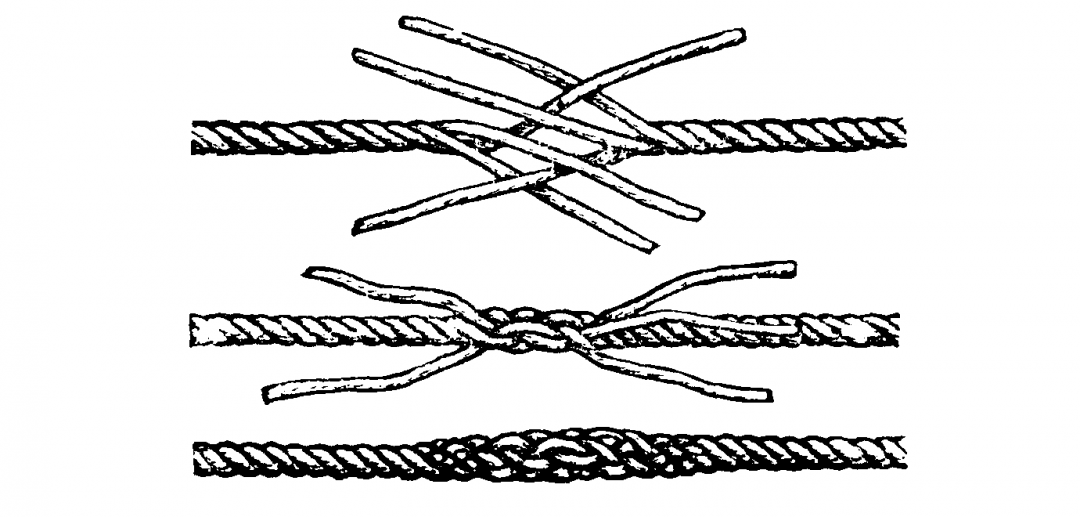
Source: Wikibooks

Today’s post starts off with a definition:

Splice/splʌɪs/; verb;
Meaning: “to combine, interweave”.
Origin: 16th century: probably from Middle Dutchsplissen,
Similar:  braid, plait, entwine, intertwine, interlace, knit
Additional/alternative meanings:
1.  (From the arts) When two pieces of recorded music – with a similar key and tempo – are combined:

2.  (From biology) The process that removes the intervening, non-coding sequences of genes (introns) from pre-mRNA and joins the protein-coding sequences (exons) together in order to enable translation of mRNA into a protein:

Ok, so the first alternative definition about music I understood and the video was helpful, but can you explain the second definition in more detail please?

Continue reading “Yo DJ, stop mis-splicing”

Administrative post: Approaching 500

# # # #

A week or so ago, I was poking around in the cluttered back room of this website when I found something that truly stunned me: The SoPD website had 468 posts (This post is #470)

For a moment I was speechess. And as I looked at the number, a mix of horror and awe passed over me. If I had to have a guess, I would have said there were perhaps 300 or so posts on the website, but definitely not 500. That’s a ridiculous number!

Having given it some thought, a round number like 500 deserves something special.

Today’s post is a request to readers for ideas on how to mark the occasion.

# # # #


Beau Miles. Source: Youtube

The guy in the image above is Beau MilesUniversity lecturer, filmaker, adventurer, “poly-jobist”.

When I need a break and I want something off beat, Beau’s Youtube channel is my usual first port of call. If you have never heard of him, I would recommend starting off gently with his Run the line video and then diving head first into the madness that is A mile an hour.

Beau is one of those “exploring the human experience” types and he films himself doing it. He’s a great story teller and his quirky adventures are always good viewing – like the time Steinbeck inspired him to eat his own body weigh in canned beans. Just beans. It took him 40 days (Click here for that video).

Source: Hedonistica

What does this have to do with Parkinson’s?

Continue reading “Administrative post: Approaching 500”

Further support for GLP-1R agonists

# # # #

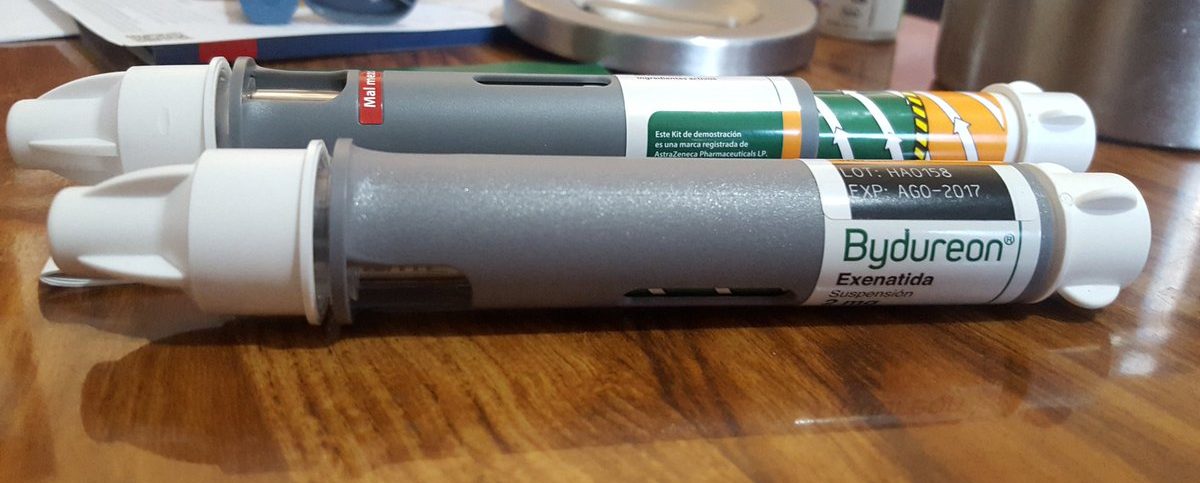
Glucagon-like peptide 1 receptor (or GLP-1R) agonists are a frontline treatment for diabetes – improving glycaemic control by reducing glucose concentrations in the blood.

In 2008, multiple research groups reported that this class of drugs exhibited neuroprotective properties in models of Parkinson’s. Subsequent clinical trials have provided encouraging data supporting this assertion.

Recently, researchers have found further support for potential beneficial effects in a large epidemiological study.

In today’s post, we will discuss what GLP-1R agonists are, what has previously been done with them in Parkinson’s, and what the new report found.

# # # #


static1.squarespace

In 2012, the Golden Goose Award was awarded to Dr John Eng, an endocrinologist from the Bronx VA Hospital.

rudw9esurtnukjwruf7q

Dr John Eng. Source: Health.USnews

The Award was originally created in 2012 to celebrate researchers whose seemingly odd or obscure federally funded research turned out to have a significant and positive impact on society.

And despite the name, it is a very serious award – past Nobel prize winners (such as Roger TsienDavid H. Hubel, and Torsten N. Wiesel) are among the awardees.

Sounds interesting. What did Dr Eng do?

Continue reading “Further support for GLP-1R agonists”

The 2020 Linked Clinical Trials meeting

# # # #

Each year in September, The Cure Parkinson’s Trust and Van Andel Institute hold the international Linked Clinical Trials (iLCT) meeting.

This is a drug-repurposing initiative focused on disease modification in Parkinson’s. For two days the iLCT committee discuss and debate the virtues of 20+ molecules to decide which should be prioritised for clinical evaluation. 

Due to the current COVID-19 situation, the 2020 iLCT meeting was held virtually.

In today’s post, we will discuss what the iLCT program is and provide an overview of what happened at the 2020 meeting.

# # # #


The top line results of the PD-STAT clinical trial evaluating the cholesterol-reducing drug simvastatin in Parkinson’s were recently announced (Click here to read more about this). Preclinical data had suggested that this agent displayed neuroprotective properties in models of Parkinson’s, and given its long history of clinical use and agreeable safety profile, simvastatin seemed like an ideal candidate for repurposing to Parkinson’s.

A large Phase II clinical trial was set up and conducted across nation-wide network of 23 hospitals in the UK. It recruited over 230 brave individuals to be treated with the drug for 2 years and undergo regular clinical assessments.

The results of the study found that the treatment has had no impact on slowing the progression of Parkinson’s (Click here to read more about this).

That’s disappointing. What happens next?

Disappointing as the result is, the findings of the study provide us with a definitive answer, allowing us to move forward with testing other drugs of interest.

Simvastatin was a drug that was prioritised by the international Linked Clinical Trials programme, and while this agent might not have shown any beneficial efforts in Parkinson’s the good news is that there are lots of other drugs that have been prioritised by the international Linked Clinical Trials programme and they are now being clinically tested.

What is the international Linked Clinical Trials programme?

Continue reading “The 2020 Linked Clinical Trials meeting”

Problems with PARKIN in PARIS

# # # #

PARKIN is a protein that is associated with a young-onset form of Parkinson’s. Individuals carrying tiny genetic variants in the region of DNA producing this protein have a higher risk of developing Parkinson’s before the age of 40 than non-carriers.

The PARKIN protein is believed to play an important role in the disposal of old/damaged mitochondria (the power stations of cells). But recent research points towards another protein – that interacts with PARKIN – which may also be implicated in the health and well being of mitochondria.

That other protein is called PARIS.

In today’s post, we will discuss what PARKIN does, explore how PARIS could be involved, and reflect on what this could mean for future therapies targeting PARKIN-associated Parkinson’s.

# # # #


paris

No label required. A magnificent city. Source: HathawaysofHaworth

Paris is not my favourite city (Hanoi takes that spot), but it is probably in the top 10.

Like London and New York, La Ville Lumière is an incredible place to be fortunate enough to visit.

If you ever find yourself in Paris, bored of all the art, culture, food, etc, and you feel like something more scientific, make your way up the Seine river to the 5th arrondissement, and try to find the Muséum national d’histoire naturelle. Once you get there, ask for the “Galerie de Paléontologie et d’Anatomie comparée” (Paleontology and comparative Anatomy Gallery):

This is the realm of Georges Cuvier – the French paleontologist who researched fossils and in 1796 laid out the first ideas for extinction theory. It is a hall of scientific wonder.

As I say, it is worth a visit if ever you are bored in Paris. But be warned that parking is an issue at the Jardin des plantes where the gallery is located.

In fact, parking is an issue everywhere in Paris.

It seems like Parking and Paris do not mix.

I’m sorry, but what does this have to do with Parkinson’s?

Continue reading “Problems with PARKIN in PARIS”

$161 million over three years


# # # #

The Aligning Science Across Parkinson’s (or ASAP) initiative is a major new source of funding for Parkinson’s research. And I mean MAJOR!

It is a global basic research initiative focused on fostering collaboration and resources to better understand the underlying causes of Parkinson’s. A return to basics in order to get a better grip on the biology of the disease.

Recently, the initiative announced their first round of grant awardees – handing out US$161 million for 3 year projects. This is one of the largest single rounds of research funding for Parkinson’s research ever!

In today’s post, we will look at what ASAP is, what the awarded projects will be investigating, and what this means for Parkinson’s research.

# # # #


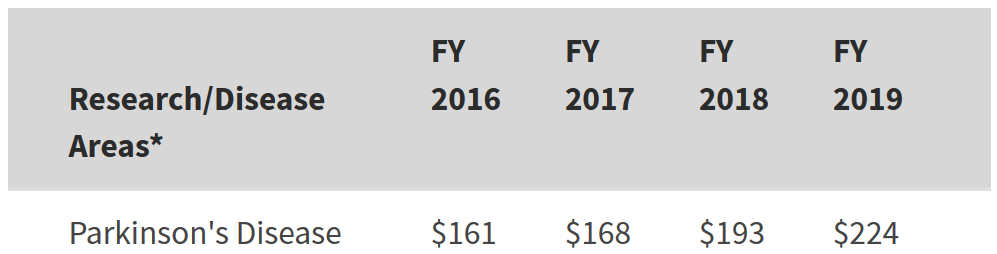
NIH Parkinson’s research funding. Source: NIH

In 2016, the US National Institutes of Health (NIH – the world’s largest funder of medical research) allocated $161 million to Parkinson’s research.

It was a small fraction of the $30+ billion spent by the NIH on medical research that year, but it was still a much needed amount of money invested into research on this neurodegenerative condition.

This week, a major new Parkinson’s research program – called Aligning Science Across Parkinson’s (or ASAP – click here to read a previous SoPD post on this initiative) – announced the rewarding of $161 million in research funding to 21 projects involving 96 research leaders from 60 institutions across 11 countries (and 31 of the research leaders are female). Importantly, all of them are seeking to “accelerate targeted basic research and move us toward more meaningful advancements for Parkinson’s” (Click here to read the annoucement).

Think about that for a second:

ASAP has basically just allocated the same amount of funding to Parkinson’s research as the entire US Government did in 2016.

Wow!

Continue reading “$161 million over three years”

The PASADENA study announcement (part 2)

# # # #

In April of this year it was announced that the closely watched Phase II PASADENA clinical trial had not to met its primary objective. This was a large clinical evaluation of an immunotherapy approach (called prasinezumab) for disease modification in Parkinson’s. 

At the time of the announcement, it was indicated that the researchers who conducted the study had seen “signals of efficacy” in the data.

This week the results of the study were presented at an international conference and it was reported that prasinezumab “significantly reduced decline in motor function by 35% (pooled dose levels) vs. placebo after one year of treatment“.

In today’s post, we will discuss what the PASADENA study was, review the results that have been released, and discuss what might happen next.

# # # #


At 7am (just prior to the opening of the Swiss Stock Exchange) on Wednesday 22nd April 2020, the pharmaceutical company Roche published its sales results for the 1st Quarter. The financial report looked good, particularly considering the current COVID-19 economic climate, but there was one sentence on page 133 of the results (highlighted below) that grabbed a lot of attention:

From page 133. Source: Roche

For those of you (like myself) who struggle with fine print, the sentence reads:

Study did not meet its primary objective, but showed signals of efficacy

This was how the Parkinson’s community found out about the top line result of the closely followed Phase II PASADENA study evaluating the immunotherapy treatment prasinezumab in individuals recently diagnosed with Parkinson’s.

Many within the Parkinson’s community were basically:

Yet another negative clinical trial result.

But then, later that same day, the biotech firm Prothena – which developed prasinezumab and is partnered with Roche in the clinical testing – kindly provided a press release.

And in that document, the company repeated that prasinezumab “showed signals of efficacy, but importantly: “These signals were observed on multiple prespecified secondary and exploratory clinical endpoints“.

And then the Parkinson’s community was like:

This week we found out more about those “signals of efficacy” and the results of the PASADENA study, and they look interesting.

What do the results show?

Continue reading “The PASADENA study announcement (part 2)”

CPTX: Gluing the brain back together

# # # #

Current clinical efforts at restorative medicine for neurodegeneration are still largely focused on stem cell and neurotrophic factor-based methods. Novel techniques are being preclinically proposed however, and some of them employ some radically different approaches.

An international group of researchers have recently published a report describing a means of repairing the damaged central nervous system that involves ‘gluing’ neurons together via an artificial protein.

They called this new method CPTX.

In today’s post, we will explore what this artificial protein does, what was reported in the new study, and consider how this could potentially be used for Parkinson’s.

# # # #


Source: Howtogeek

Earlier in the year I wrote a post called the 2020 wish list, where I discussed some hopes for Parkinson’s research this year. Despite everything that 2020 (annus horribilis) has thrown at us, there have been significant developments regarding Parkinson’s research and some of those wishes.

One of those hopes was the announcement of new and innovative methods for restorative techniques for Parkinson’s. At present, all of the restorative approaches in clinical trial for Parkinson’s are focused on stem cell transplantation (Click here to read a recent SoPD post describing an example of this), and it would be good to broaden the range of approaches being tested.

As a result of this particular wish, a theme here on the SoPD this year has been to write posts highlighting new restorative research as it has been published (Click here, here and here to read some examples).

In today’s post, we are going to continue that theme with an extremely radical bit of research that utterly boggled my mind.

Me after reading this report. Source: 1zoom

Be warned, this is very futuristic, blue sky, “way out there on the horizon”-kind of stuff.

But when I read this report in August, I was left stunned… and rather excited by the potential possibilities.

Sounds interesting, what was the research report about?

Continue reading “CPTX: Gluing the brain back together”

Monthy research review – August 2020


At the end of each month the SoPD writes a post which provides an overview of some of the major pieces of Parkinson’s-related research that were made available during August 2020.

The post is divided into seven parts based on the type of research:

  • Basic biology
  • Disease mechanism
  • Clinical research
  • New clinical trials (Oooh, new section for 2019!)
  • Clinical trial news
  • Other news
  • Review articles/videos


So, what happened during August 2020?

In world news:

August 4th – Two explosions caused by unsafely stored ammonium nitrate killed over 220 people, injure thousands, and severely damage the port in Beirut, Lebanon.

August 16th – In Death Valley (California), the appropriately named Furnace Creek (population of 24) logged a day time high temperature of 130° Fahrenheit (54.4° Celsius).

Augst 20th – The US FDA holds on Emergency Use Authorization for convalescent plasma the treatment of COVID–19, with health regulators stating the “importance of robust data through randomized control trials” and “that a pandemic does not change that”. Apparently the emerging data on the treatment was “too weak”

August 23rd – The US FDA issued “Emergency Use Authorization for convalescent plasma as potential promising COVID–19 treatment, Another Achievement in Administration’s Fight Against Pandemic” (Source). What a difference 3 days and no data makes….

August 24th – A 33 year old man in Hong Kong became the first confirmed case of coronavirus reinfection (additional cases have been confirmed). Humans appear to have a short immunity to COVID-19 (2-3 months, similar to influenza).

In the world of Parkinson’s research, a great deal of new research and news was reported:

In August 2020, there were 890 research articles added to the Pubmed website with the tag word “Parkinson’s” attached (6,948 for all of 2020 so far). In addition, there was a wave to news reports regarding various other bits of Parkinson’s research activity (clinical trials, etc).

The top 6 pieces of Parkinson’s news

Continue reading “Monthy research review – August 2020”