Monthly Research Review – December 2020

At the end of each month the SoPD writes a post which provides an overview of some of the major pieces of Parkinson’s-related research that were made available during December 2020.

The post is divided into seven parts based on the type of research:

  • Basic biology
  • Disease mechanism
  • Clinical research
  • New clinical trials
  • Clinical trial news
  • Conferences/lectures
  • Other news
  • Review articles/videos

So, what happened during December 2020?

In world news:

December 2nd – The United Kingdom approved the Pfizer/BioNTech BNT162b2 vaccine for COVID-19.
December 8th – Nepal and China officially agree on Mount Everest’s actual height, which is 8,848.86m (0.86m higher than previously officially calculated).

December 9th – The SpaceX Starship prototype SN8 made a first test flight – reaching an altitude of 41,000 feet (12,500 metres) – at the company’s rocket facility in Boca Chica, Texas. The flight was a pretty spectacular feat of engineering (the landing not so much).

December 23rd – Scientists from The Wistar Institute (Philadelphia) reported a new class of compounds that uniquely combine direct antibiotic killing of pan drug-resistant bacterial pathogens with a simultaneous rapid immune response for combating antimicrobial resistance (Click here to read more about this and click here to read the press summary).

December 24th – The UK Government announced that the UK ‘decided not to stay in Erasmus‘ under the Christmas eve Brexit deal. The Erasmus exchange programme, which the UK joined in 1987, has allowed approximately 17,000 young UK citizens each year to study and work at universities across Europe, but more importantly has encouraged 32,000 EU students to come to the UK (approximately 200,000 students across the EU take part each year). In January, Boris Johnson assured MPs there was “no threat to the Erasmus scheme”. A replacement UK scheme named after computing pioneer Alan Turing will be set up (backed by £100 million in its first year), but the new scheme is not expected to fund students coming to the UK, which suggests UK universities will miss out on a source of income (>£200m a year – Click here and here to read more about this. (an absolute disaster for small UK universities).

In the world of Parkinson’s research, a great deal of new research and news was reported:

In December 2020, there were 773 research articles added to the Pubmed website with the tag word “Parkinson’s” attached (10,584 for all of 2020). In addition, there was a wave to news reports regarding various other bits of Parkinson’s research activity (clinical trials, etc).


The top 5 pieces of Parkinson’s news

Continue reading “Monthly Research Review – December 2020”

PARP-kinson’s goes chlorogenic

# # # #

For a long time it was been reported that coffee may be able to reduce the risk of developing Parkinson’s, but the mechansim by which this association could be occurring has remained elusive.

Now researchers from South Korea have discovered a biological pathway that could help to explain the protective association.

It involves a protein called PARP and a chemical called chlorogenic acid.

In today’s post, we will explore the research suggesting a link between coffee and a lower risk of Parkinson’s, discuss what PARP and chlorogenic acid are, and review the new research that may bring all four topics together.

# # # #


kaldi-adapted-from-uker

Kaldi the goat herder. Source: CoffeeCrossroads

Legend has it that in 800AD, a young Ethiopian goat herder named Kaldi noticed that his animals were “dancing”.

They had been eating some berries from a tree that Kaldi did not recognise, but being a plucky young fellow – and being fascinated by the merry behaviour of his four-legged friends – Kaldi naturally decided to self-experiment by eating some of the berries for himself.

The result?

He became “the happiest herder in happy Arabia” (Source).

This amusing encounter was apparently how humans discovered coffee. It is most likely a fiction as the earliest credible accounts of coffee-consumption emerge from the 15th century in the Sufi shrines of Yemen, but since then coffee has gone on to become one of the most popular drinks in the world.

coffee-cup-images-5

Fancy a cuppa? Source: Science-All

Interesting, but what does coffee have to do with Parkinson’s?

Continue reading “PARP-kinson’s goes chlorogenic”

Prevail lands on a Lilly pad

# # # #

2020 has been a dreadful year for most of the world – burdened by the outbreak and consequences of COVID-19. Despite this, there has been a steady stream of biotech acquisitions related to Parkinson’s which have helped to keep morale high in the PD research community.

In October alone, we saw the Portuguese pharmaceutical company Bial purchase GBA-associated Parkinson’s biotech firm Lysosomal Therapeutics (Click here to read more about this) and the acquisition of the inflammasome-focused biotech firm Inflazome was being bought by Roche (Click here to read more about this).

Today brought news of yet another pharmaceutical company – this time Eli Lilly purchasing a Parkinson’s-focused biotech company (Prevail Therapeutics).

In today’s post, we will explore what Prevail Therapeutics does, why Eli Lilly might be so interested in this company, and why it could be an encouraging move for individuals with a sub-type of Parkinson’s.

# # # #


Colonel Eli Lilly. Source: SS

The civil war veteran, Colonel Eli Lilly started his pharmaceutical career in a drug store in Greencastle (Indiana) in 1869.

Several years later (in 1873) he shifted into the manufacturing of pharmaceuticals (in association with John F Johnston). Two years after that, Lily disolved their partnership, sold his assets, and used the proceeds to set up “Eli Lilly and Co” in Indianapolis.

Source: Wikimedia

He started the company in a rented building on the 10th May, 1876. He was 38 years old, with working capital of $1400 and just three employees. The first medicine that he produced was quinine – a drug used to treat malaria.

Since that humble start, the company (now more commonly known as just “Lilly”) has grown to become one of the 20 largest pharmaceutical companies in the world (Source), with offices in 18 countries and products sold in 125 countries (Source).

Lilly was the first company to mass-produce the polio vaccine and it was also one of the first pharmaceutical companies to produce human insulin using recombinant DNA. Lilly is currently the largest manufacturer of psychiatric medications, including Prozac (Source).

Today, the company employs approximately 38,000 people worldwide, and operates through two key business divisions:

  • Human Pharmaceutical Products, which involves the production and sale of prescription medications in the fields of endocrinology, oncology, cardiovascular health, and neuroscience
  • Animal Health Products, comprising the development and sale of treatments for domestic and farm animals

This is all very interesting, but what does any of it have to do with Parkinson’s?

This week the biotech world was alerted to the news that Eli Lilly was purchasing a biotech company that is focused on developing a novel treatment for a subtype of Parkinson’s.

That company is called Prevail Therapeutics.

What does Prevail Therapeutics do?

Continue reading “Prevail lands on a Lilly pad”

TGF-beta: The Parkinson’s superfamily?

# # # #

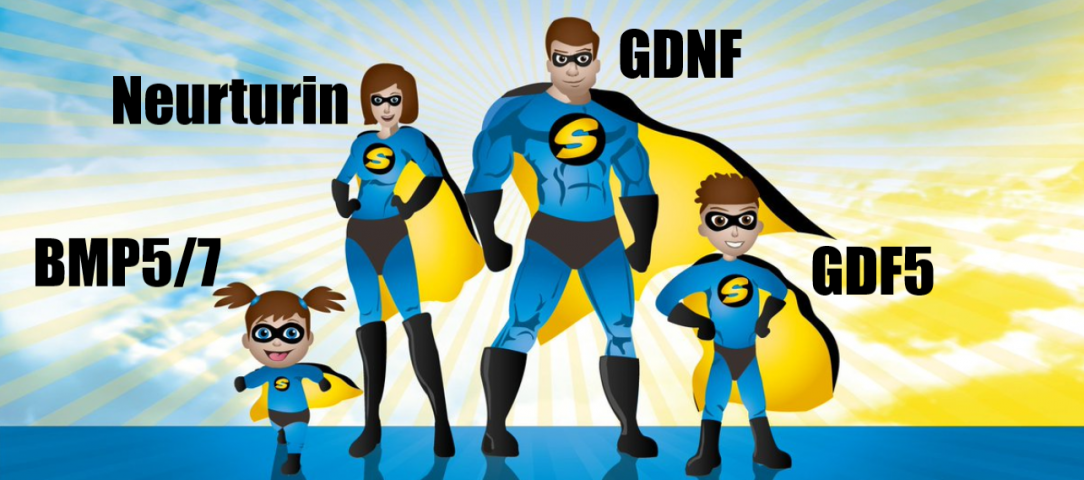
A lot of Parkinson’s research has focused on a neurotrophic factor called glial cell-derived neurotrophic factor (or GDNF).

But GDNF only represents a small fraction of a much larger class of neurotrophic factors, called the Transforming growth factor-β (TGF-β) superfamily.

Recently, researchers have been investigating some of the other TGF-β family members in preclinical models of Parkinson’s and they have been making some interesting discoveries.

In today’s post, we will discuss what is meant by neurotrophic factor, explore who else is in the TGF-β superfamily, and look at two recent reports highlighting family members in the context of Parkinson’s.

# # # #


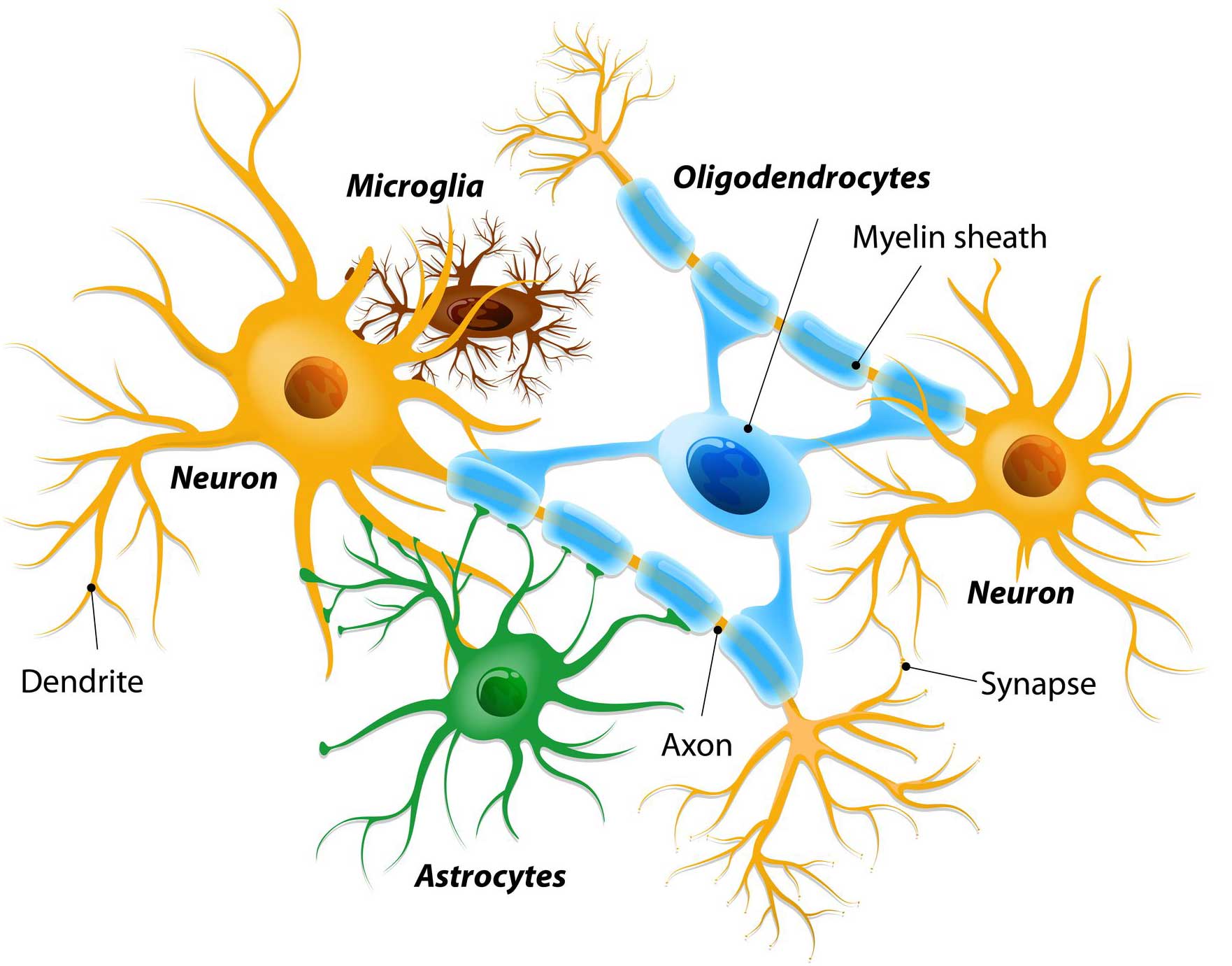
Different types of cells in the brain. Source: Dreamstime

Glial cells are the support cells in the brain. While neurons are considered to be the ‘work horses’ of neurological function – passing messages and storing memories – glial cells are in the background making sure that neurons are protected and well nurtured.

There are different types of glial cells, including astrocytes, oligodendrocytes and microglia. And each type has a specific function, for example microglia are the brain’s resident immune cells checking up on the health of the neurons while oligodendrocytes provide the neurons with a protective covering (called myelin sheath) which also helps to speed up the signalling of neurons.

A human astrocyte. Source: Wikipedia

Astrocytes provide nutrients and neurotrophic factors to neurons and make sure the environment surrounding the neurons is balanced and supportive. Glial cells are absolutely critical to the normal functioning of the brain.

What are neurotrophic factors?

Continue reading “TGF-beta: The Parkinson’s superfamily?”

Bayer doubles down on Parkinson’s?

# # # #

News today of two biotech companies merging did not cause much of a ripple in the media, but the wider implications of the move are rather significant for Parkinson’s.

Today it was announced that Brain Neurotherapy Bio (BNB) is going to merge with Asklepios Biopharmaceutical (aka AskBio). BNB are currently clinically testing a GDNF gene therapy approach for Parkinson’s, and AskBio is a subsidary of the large Pharmaceutical company Bayer.

This is the same ‘Bayer’ that last year bought BlueRock Therapeutics – a biotech company focused on cell transplantation for Parkinson’s (Click here to read a previous SoPD post about that).

In today’s post, we will discuss what BNB are doing and why this merger is particularly interesting.

# # # #


Source: BBRF

One of the themes this year on the SoPD website has been an effort to highlight (and encourage) more focus on alternative restorative therapies for Parkinson’s. There are a lot of different approaches exploring very different methods of slowing the progression of Parkinson’s, but most of the current clinical efforts investigating restorative therapies are oriented solely around cell transplantation.

What we really need are some novel strategies for replacing what is lost and encouraging re-growth from cells that remain.

Most of the SoPD posts exploring this idea during 2020 have been looking at very blue sky ideas (Click here, here, here and here to read some examples). But we have also been keeping an eye on biotech efforts in this domain, and today we received some interesting news which involved the merger of two biotech companies.

The merger occurred between Asklepios Biopharmaceutical (aka AskBio) and Brain Neurotherapy Bio.

ASKBio is a “gene therapy company dedicated to improving the lives of patients with rare diseases and other genetic disorders“. Gene therapy involves using DNA to treat medical conditions, rather than drugs. The DNA is usually delivered to the tissue requiring correction by carefully engineered viruses.

Brain Neurotherapy Bio is also a gene therapy biotech company that is currently clinically testing a GDNF gene therapy approach for Parkinson’s.

What is GDNF?

Continue reading “Bayer doubles down on Parkinson’s?”

Curasen: Shifting the focus from just dopamine

# # # #

In September, a small biotech company called CuraSen announced that they had dosed the first participant in a clinical trial of their new experimental drug for Parkinson’s.

This news did not garner a lot of attention, but was of great interest to us here at the SoPD because the drug – currently named CST-2032 – is the first of a novel class of drug to be tested in Parkinson’s.

It also represents a shift in our approach to disease modification in neurodegenerative conditions (like Parkinson’s) as the focus moves away from solely being on the dopamine neurons.

In today’s post, we will look at what CST-2032 is, what evidence exists that supports this drug going into clinical trial, and why it might represent a turning point in how we approach the treatment of Parkinson’s.

# # # #


The first thing you notice when you go to the CuraSen website are the words “Think, again“.

A curious introduction to a biotech, but it grabs the attention.

Next – and I don’t want to ruin things for anyone (Spoiler alert!) – the words fade away…

… only to be replaced by: “Rethinking neurodegeneration”

At that point (if you are a curious creature) you start thinking: Ooh, this looks interesting.

And with a little bit of digging, you realise that it is interesting.

Very interesting.

Why is Curasen interesting?

Curasen is a California-based biotech taking a slightly different approach towards neurodegenerative conditions like Parkinson’s.

What are they doing?

Continue reading “Curasen: Shifting the focus from just dopamine”

The drug development pipeline for Parkinson’s

# # # #

For a long time a regular request from SoPD readers has been to provide an overview of the clinical trial landscape for Parkinson’s, particularly in the area of drug development.

Such projects are difficult, however, as the landscape is broad and dynamic – lots of different approaches being applied and new entrants continually entering the arena. These are positive features, but to characterise the whole field is beyond my simple cognitive abilities.

But recently three Parkinson’s research advocates (with help from the research department at The Cure Parkinson’s Trust) tackled this challenge, and the output of their efforts was published in the Journal of Parkinson’s disease in July of this year.

In today’s post, we will discuss advocacy, review the current clinical trial pipeline for Parkinson’s, and explore how an analysis of this pipeline could be improved.

# # # #


Raymond Carver (Source)

“He understood that it took only one lunatic and a torch to bring everything to ruin”
– Raymond Carver

I enjoy old Raymond Carver short story collections (his 1983 ‘Cathedral‘ in particular).

He is not for everyone, but I like him. Particularly ‘What We Talk About When We Talk About Love‘. It is a story about two couples sitting at a kitchen table, drinking gin, and trying to describe what is meant by love.

Source: Encorespotlight

I thought of this short story last year when I was asked during a Q&A session at a support group meeting, “What do we mean when we talk about advocacy?” (that was the exact wording).

I didn’t mention Carver in my answer. Rather I listed some of the various ways that people can become advocates for Parkinson’s. And there are many, and it really depends on what you want to do and what skills you have or want to learn (we will come back to this near the bottom of today’s post).

Source: Endslaverynow

Advocacy comes in many forms. And in today’s post I’d like to share one inspiring example of advocacy.

Earlier this year I played a small role in a wonderful project led by a team of Parkinson’s research advocates who were focused on trying to provide an overview of the clinical trial pipeline for therapies for Parkinson’s, with the goal of raising awareness within the PD community.

The results of their efforts were published in July.

What did they find?

Continue reading “The drug development pipeline for Parkinson’s”