Monthly Research Review – April 2020


At the end of each month the SoPD writes a post which provides an overview of some of the major pieces of Parkinson’s-related research that were made available during April 2020.

The post is divided into seven parts based on the type of research:

  • Basic biology
  • Disease mechanism
  • Clinical research
  • New clinical trials (Oooh, new section for 2019!)
  • Clinical trial news
  • Other news
  • Review articles/videos


So, what happened during April 2020?

In world news:

April 2nd – Billionaire Amazon founder Jeff Bezos donated $100 million to Feeding America, a nonprofit that helps food banks feed families in need (Source).

April 6th – In March, billionaire Jack Ma donated 1.1 million COVID-19 testing kits, 6 million masks and 60,000 medical use protective suits/face shields to Africa. On this date, he sent a second shipment (including 500 ventilators – source).


April 7th – Billionaire founder of Twitter, Jack Dorsey, announced he was donating $1billion (28% of his net wealth) to help fund COVID-19 relief (source).

(For more on how billionaires are supporting the COVID-19 effort – click here)


April 20th – Oil prices reached a record low (falling into negative values) due to the ongoing coronavirus pandemic and the Russia–Saudi Arabia oil price war

April 30th – Captain Tom Moore – a war veteran who has raised over £32.79 million for the NHS by completing 100 laps (25m/27yd) of his garden in 10 days – celebrated his 100th birthday


In the world of Parkinson’s research, a great deal of new research and news was reported:

In April 2020, there were 976 research articles added to the Pubmed website with the tag word “Parkinson’s” attached (3340 for all of 2020 so far). In addition, there was a wave to news reports regarding various other bits of Parkinson’s research activity (clinical trials, etc).

The top 6 pieces of Parkinson’s news

Continue reading “Monthly Research Review – April 2020”

The Pasadena study announcement

# # # #

This week the outcome of an ongoing Parkinson’s clinical trial was announced.

Data collected during Part 1 of the ongoing Phase 2 PASADENA alpha synuclein immunotherapy study for Parkinson’s apparently suggests that the treatment – called prasinezumab – has not achieved it’s primary endpoint (the pre-determined measure of whether the agent has an effect in slowing Parkinson’s progression – in this case the UPDRS clinical rating scale).

But, intriguingly, the announcement did suggest ‘signals of efficacy‘ in secondary and exploratory measures.

In today’s post, we will discuss what immunotherapy is, what we know about the PASADENA study, and why no one should be over reacting to this announcement.

# # # #


At 7am on Wednesday, April 22nd, 2020, the pharmaceutical company Roche published its sales results for the 1st Quarter. This was just prior to the opening of the Swiss Stock Exchange. The financial report looked very good, particularly considering the current COVID-19 economic climate.

There was, however, one sentence on page 133 of the results that grabbed some attention:

Source: Roche

For those of you (like myself) who struggle with fine print, the sentence reads:

Study did not meet its primary objective, but showed signals of efficacy

This was how the pharmaceutical giant announced the top line result of the ongoing Phase II PASADENA study evaluating the immunotherapy treatment prasinezumab in recently diagnosed individuals with Parkinson’s (listed on the Clinicaltrials.gov as NCT03100149).

At the time of publishing this SoPD post, Roche are yet to provide any further information (press release, announcement, memo, tweet, etc) regarding the results of the study.

Thankfully, a smaller biotech firm called Prothena – which is also involved in the development of the agent being tested in the Pasadena study – has kindly provided a few more details regarding these results.

I usually don’t like discussing clinical trial results on the SoPD until the final report is published, but in this circumstance I will make an exception.

In today’s post we will discuss what details have been shared in the Prothena press release regarding the Prasinezumab clinical trial in Parkinson’s (Click here to read the press release).

What is Prasinezumab?

Continue reading “The Pasadena study announcement”

CasRx Reprogramming

# # # #

Parkinson’s is a neurodegenerative condition – this means that certain cells in the brain are being lost. Restorative therapies are those focused on replacing the lost cells in the hope that the new cells will be able to take up the lost function.

Tremendous efforts are being made in cell transplantation programs for Parkinson’s. But this month scientists have published a new research report proposing a novel method of changing the fate of cells already in the brain (removing the need to introduce new cells).

Their approach involves new technology and remarkably only requires the manipulation of a single protein.

In today’s post, we will explore the growing world of in vivo reprogramming, review the new research report, and discuss where in vivo reprogramming could go next.

# # # #


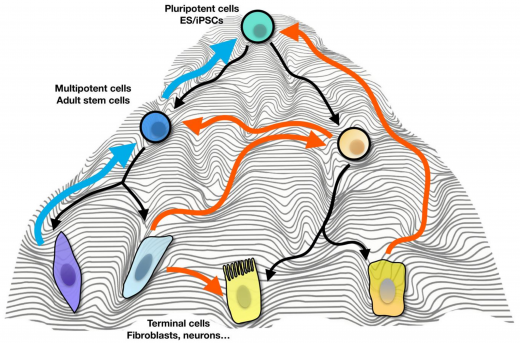
Changing cell fates. Source: MDPI

In vivo reprogramming of cells is a red hot topic in restorative research at the moment. The ability to change the fate of mature cells inside of an organism represents a ‘holy grail’-like goal for regenerative medicine.

Rather than transplanting ‘foreign’/external cells into the body (and having to deal with an immune system response), in vivo cellular reprogramming offers the possibility of simply changing the fate of a cell that is already present inside the body. And there are a lot of research groups around the world now exploring various methods of achieving this goal.

We have discussed the background research associated with in vivo cellular reprogramming for Parkinson’s in a previous SoPD post (Click here to read that post).

In today’s post, we are going to discuss a new research report that was published this month on this topic:

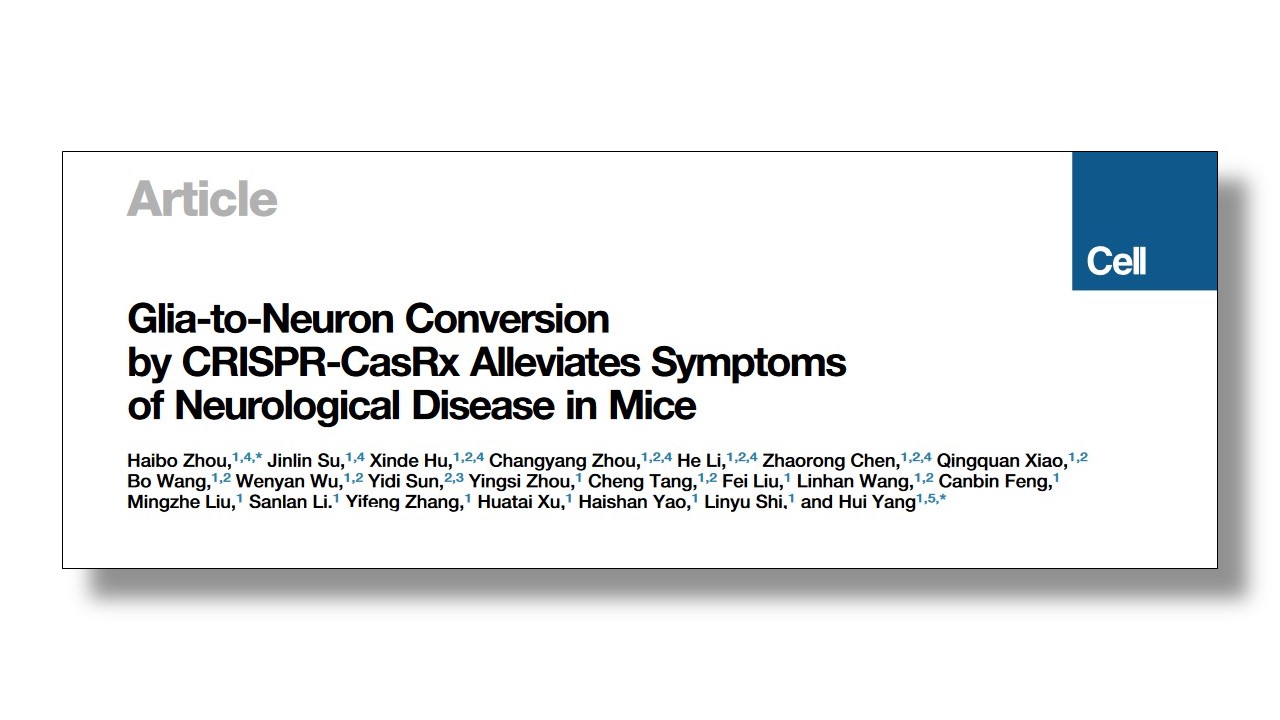
Title: Glia-to-Neuron Conversion by CRISPR-CasRx Alleviates Symptoms of Neurological Disease in Mice.
Authors: Zhou H, Su J, Hu X, Zhou C, Li H, Chen Z, Xiao Q, Wang B, Wu W, Sun Y, Zhou Y, Tang C, Liu F, Wang L, Feng C, Liu M, Li S, Zhang Y, Xu H, Yao H, Shi L, Yang H.
Journal: Cell. 2020 Apr 1. pii: S0092-8674(20)30286-5. [Epub ahead of print]
PMID: 32272060

In this study, the researchers used a new technology (called CRISPR-CasRx) to reduce levels of a single protein, and the reduction of this protein appears to have aided the conversion of cells in the brains of mice to become dopamine neurons – the population of cells that are severely affected in Parkinson’s.

What is CRISPR-CasRx?

Continue reading “CasRx Reprogramming”

The Aspirations of Aspen

San Diego-based biotech firm Aspen Neuroscience recently announced that it has raised US$70 million in Series A funding to help its efforts to develop the first autologous neuron replacement therapy for treating Parkinson’s.

Cell replacement therapy represents a treatment approach that carries a lot of hope for the Parkinson’s community – providing new cells for the ones that have degenerated in the condition, and taking up lost function.

In today’s post, we will explore what “autologous neuron replacement therapy” means, look at what Aspen Neuroscience is doing, and discuss what will happen next.


In the SoPD ‘Road Ahead’ post at the start of this year (in which we discussed what is planned for Parkinson’s research in 2020 – click here to read that post), I briefly mentioned a biotech firm called Aspen Neuroscience.

It was one of the companies that I was going to be watching this year for signs of progress and development. I had no expectations, but was interested in what they are working on because it is in a rather exciting area of Parkinson’s research.

What does Aspen Neuroscience do?

The company works with stem cells.

It was co-founded by stem cell scientist Prof Jeanne Loring:

Prof Jeanne Loring. Source: SDT

She is a leading expert in the field of stem cell biology. Here is a video of Prof Loring talking about the potential of induced pluripotent stem cells:

What are induced pluripotent stem cells?

Continue reading “The Aspirations of Aspen”

The STEADY-PD trial results


The results of the STEADY-PD Phase 3 clinical trial have been published. This study was evaluating the calcium channel blocker isradipine in 300 people with recently diagnosed Parkinson’s.

The results suggest that this blood pressure medication did not impact the course of the disease over the 36 months of testing (based on clinical evaluations; compared to a placebo treated group).

While this study did not reach its primary endpoint (the predetermined measure by which the treatment was assessed), a lot can be learned from this trial and it could be of interest to follow up this cohort long-term.

In today’s post, we discuss why calcium is important in Parkinson’s, explain what isradipine is, review the results of the STEADY-PD study, and explore what still could be learnt from this study.


Me and Brie. Source: Wikipedia

When I turned 25, I realised that my body no longer accepted cheese.

It had become… (how should I put this)… ‘socially embarrassing’ for me to eat cheese.

And this was a extremely serious problem.

You see, to this very day I still really like cheese.

I mean, a bottle of red wine, a baguette and a chunk of brie – is there any better combination in life?

So obviously my body and I had a falling out about the situation. And yes, it got ugly. I wanted things to keep going the way they had always been, so I tried to make things interesting with new and exotic kinds of cheeses, which my body didn’t want to know about it and simply refused to consider. It rejected all of my efforts. And after a while, I gradually started resenting my body for not letting me be who I felt I really was.

We sought help. We tried all kinds of interventions – I was really desperate, I couldn’t live without cheese. But sadly, nothing worked.

And then things went from bad to worse: My body decided that it didn’t have room in its life for yogurt, milk or even ice cream anymore (not even ice cream!!!). Basically no dairy what so ever.

Something’s missing in my life. Source: Morellisices

OMG. How did you survive without ice cream?!?

Continue reading “The STEADY-PD trial results”

Monthly Research Review: March 2020


At the end of each month the SoPD writes a post which provides an overview of some of the major pieces of Parkinson’s-related research that were made available during March 2020.

The post is divided into seven parts based on the type of research:

  • Basic biology
  • Disease mechanism
  • Clinical research
  • New clinical trials (Oooh, new section for 2019!)
  • Clinical trial news
  • Other news
  • Review articles/videos


So, what happened during March 2020?

In world news:

March 1-31st – Obviously, COVID-19.


March 9th – A research team at the Los Alamos National Laboratory (US) has developed a less expensive water electrolysis system, offering a more viable way to store energy from solar and wind power in the form of hydrogen fuel (Click here to read the study and click here to read the press summary).

March 10th – Researchers at the Dark Energy Survey (DES) study reported the discovery of more than 300 trans-Neptunian objects orbiting the Sun (all were 30-90 times the distance of Earth to the sun away – Pluto is 40x; click here to read the study and click here to read the press summary).

March 15th – Faced with national lockdown due to the current coronavirus/COVID-19 situation, Italians kept themselves occupied in wonderful ways:


March 16th – Of the 44 COVID-19 vaccines under development, one of the first went into clinical trial on this day. Biotech firm Moderna announced the dosing of the first participant in their NIH-led Phase 1 study of mRNA Vaccine (mRNA-1273) against SARS-CoV-2 (The trial ready vaccine was delivered to NIH in just 42 days from sequence selection!!! – Click here to read more about this). #Godspeed

March 26th – Daniel Matarazzo made the world smile with his Coronarvirus-parody of Supercalifragilisticexpialidocious. In case you missed it, enjoy:


In the world of Parkinson’s research, a great deal of new research and news was reported:

In March 2020, there were 719 research articles added to the Pubmed website with the tag word “Parkinson’s” attached (2475 for all of 2020 so far). In addition, there was a wave to news reports regarding various other bits of Parkinson’s research activity (clinical trials, etc).

The top 4 pieces of Parkinson’s news

Continue reading “Monthly Research Review: March 2020”

Something new for neurturin


In 2013, a biotech company called Ceregene reported disappointing results from their experimental gene therapy clinical trial for Parkinson’s. The data from the study suggested that the therapy had no clinical effect on the progression of Parkinson’s (Click here to read the press release).

Today, however, researchers associated with that biotech company have published a new report that suggests that the treatment had beneficial effects in the brain, but not enough of it was delivered.

The treatment was a gene therapy approach (which involves using DNA rather than drugs to treat medical conditions), and it involved a protein called neurturin.

In today’s post, we will discuss what neurturin is, we will review what this new study found, and consider what the implications could be for future gene therapy trials in Parkinson’s.


Source: Medium

Reanalysing clinical trial data (called post-hoc analysis) provides a very useful way of generating new hypotheses even if the initial study did not reach its primary endpoint (that is to say the study did not demonstrate a successful outcome. Post-hoc analysis must be handled carefully, as the findings of such investigations can be viewed as selective ‘cherry picking’ of interesting outcomes. They will need to be tested to determine if they are real effects.

Even more important than post-hoc analysis, however, is following up participants who took part in a trial to see if there were any long-term benefits from the treatment. I often wonder how much important data is lost after a clinical trial simply becomes there is no long term follow up and study investigators lose track of participants as they drift away.

Precious nuggets of information can be gained from long-term analysis. And this week we saw a really interesting example of this.

Here is the research report:

Title: Long-term post-mortem studies following neurturin gene therapy in patients with advanced Parkinson’s disease.
Authors: Chu Y, Bartus RT, Manfredsson FP, Olanow CW, Kordower JH.
Journal: Brain. 2020 Mar 1;143(3):960-975.
PMID: 32203581                    (This report is OPEN ACCESS if you wouldl like to read it)

In this study, the researchers were looking at postmortem brain sections from 2 participants who took part in a clinical trial investigating a treatment called neurturin.

What is neurturin?

Continue reading “Something new for neurturin”

Direct dopamine delivery


In the Parkinsonian brain, there is a severe reduction in a substance called dopamine. Reduced levels of this chemical are associated with the appearance of the motor features of Parkinson’s.

Dopamine replacement therapies has been the front line therapy for the condition for the last 50 years. But long-term use of drugs like L-dopa are associated with the rise of motor complications, like dyskinesias.

In the an effort to correct this, researchers in France have recently developed a method of continuously and directly delivering dopamine to the brain. They have now published the results of a study evaluating the safety and feasibility of this approach in a primate model of Parkinson’s.

In today’s post, we will discuss what dopamine is, review the results of this new research, and explore what might happen next for this new potential treatment method.


Prof David Devos. Source: Youtube

This is Dr David Devos.

He is Professor of medical pharmacology at University of Lille (France), world-renowned Parkinson’s researchers, a passionate advocate for the Parkinson’s community, and on top of all that he’s a really (and I mean REALLY) nice guy as well.

Recently, his research group (in collaboration with other scientists) published a report presenting a novel way of treating Parkinson’s, that he is now hoping to take to the clinic.

Here is the report:

Title: Intraventricular dopamine infusion alleviates motor symptoms in a primate model of Parkinson’s disease.
Authors: Moreau C, Rolland AS, Pioli E, Li Q, Odou P, Barthelemy C, Lannoy D, Demailly A, Carta N, Deramecourt V, Auger F, Kuchcinski G, Laloux C, Defebvre L, Bordet R, Duce J, Devedjian JC, Bezard E, Fisichella M, David D.
Journal: Neurobiol Dis. 2020 Mar 20:104846.
PMID: 32205254                    (This report is OPEN ACCESS if you would like to read it)

In this study, the researchers wanted to explore how to directly deliver a chemical called dopamine to the brain.

What is dopamine?

Continue reading “Direct dopamine delivery”

The COVID-19 post


I have been extremely reluctant to write a post on this topic because the nature of it is well outside of my circle of confidence. But many concerned readers have emailed me about the current SARS-CoV-2/Covid-19 crisis asking questions.

Specifically, they want to know if people with Parkinson’s are more at risk and what can be done.

My answers to these emails has been very simple: There simply isn’t enough data to know at present if people with Parkinson’s are more vulnerable, but there is ample historic evidence to suggest that social distancing is a very good course of action.

In today’s short post, we discuss the SARS-CoV-2/Covid-19 situation.


Crystal Mill, Gunnison County, Colorado. Source: Pinterest

In 1918, as the young men of America returned from the Great War in Europe, they brought with them a terrible souvenir: Influenzia (or “The Spanish flu”).

By early October of that year, the virus had made its way across the midwest and it had reached the great state of Colorado. And on the 8th October – sensing the invisible enemy closing in – the officials in the sparsely populated mountainous Gunnison County (Colorado – pop. 5,600), isolated themselves off from the rest of the world. They immediately closed all of their schools, and insisted visitors undergo a five-day quarantine before being allowed to walk their streets.

Gunnison 1918. Source: 9News

Barricades with lanterns went up on the major highways. They carried warning signs instructing drivers to pass straight through the county without stopping. Absolutely no interaction between these visitors and the local residents was allowed. And anyone getting off a train at the main station was immediately put into mandatory quarantine.

The county maintained the quarantine order until the morning of February 5th, 1919 (4 months). The economy suffered, but the community survived – during that period of isolation, only two people in the entire county got the flu (one of whom passed away – Source).

The point of this historical tale is that social distancing is a very good defence in a pandemic.

The goal is to simply deprive a virus of any opportunity to move from person-to-person.

Perhaps the residents of “sparsely populated” Gunnison county just got lucky?

Continue reading “The COVID-19 post”

A case for chondroitinase?


Given that the condition is defined by the loss of specific types of neurons in the brain, any future therapy for Parkinson’s should include some form of restorative treatment. Much of the current clinical research exploring restoration in Parkinson’s is focused on cell transplantation – replacing the cells that have been lost in the brain.

But the adult brain is very different to the developing brain. While youngsters have lots of nurturing and supportive protein floating around – encouraging plasticity and survival – once we reach adulthood, our brains appear to be full of inhibitory molecules that reduce rejuvenation in the case of injury.

What if we could re-introduce some of those supportive factors and remove the inhibitory proteins? Could this help with restorative therapies for Parkinson’s?

In today’s post, we will look at new research exploring how we may be able to reduce some of those inhibitory factors and provide a more supportive environment for restorative therapy in Parkinson’s.


Source: restorativejustice

As we regularly state here on the SoPD, any ‘curative therapy’ for Parkinson’s is going to require three core components:

  1. A disease halting mechanism
  2. A neuroprotective agent
  3. Some form of restorative therapy

Now, the bad news is (as far as I am aware) there is no single treatment currently available (or being tested) that can do all three of these things. By this I mean that there is no disease halting mechanism therapy that can also replace lost brain cells. Nor is there a restorative therapy that stop the progression of the condition.

That statement can obviously be read as bad news, but it shouldn’t.

Let me explain:

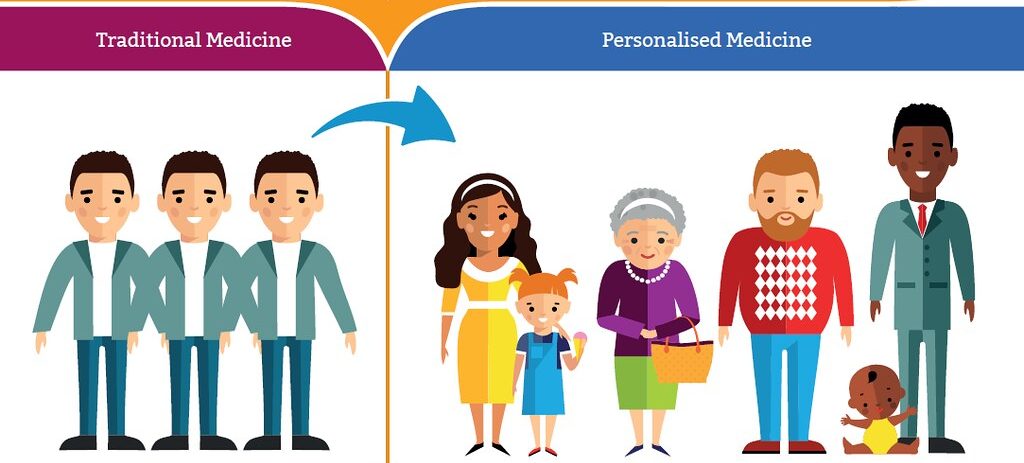
A curative therapy for Parkinson’s is going to need to be personalised to each individual, with varying levels of each of the three component listed above. It will be a multi-modal approach designed for each individual’s needs.

Making things personal. Source: Flickr

By this I mean, there is a great deal of heterogeneity (or variability) between individuals with regards to their symptoms and the amount of time that they have had the condition. Some folks are more tremor dominant, while others do not experience tremor at all. Likewise, some individuals have only just been diagnosed, while others have lived with the condition for many years.

The treatment needs of each individual will be different, and thus what we will require is different amounts of the disease halting mechanism component, the neuroprotection component, and the restorative therapy components for each affected person.

In today’s post we are going to explore some alternative approaches being tested for restorative therapy.

What do you mean ‘alternative’?

Continue reading “A case for chondroitinase?”