Monthly Research Review – March 2018

At the end of each month the SoPD writes a post which provides an overview of some of the major pieces of Parkinson’s-related research that were made available during March 2018.

The post is divided into four parts based on the type of research (Basic biology, disease mechanism, clinical research, and other news). 


So, what happened during March 2018?

In world news:

March 25th – Qantas launches direct non-stop Boeing 787 Dreamliner flights between Perth Airport and Heathrow Airport, making it the first commercially non-stop service between Australia and the United Kingdom (17 hours on a plane – strewth!).

Boeing 787 Dreamliner. Source: Deredactie

March 14th – Prof Stephen Hawking, English theoretical physicist and cosmologist, sadly passed away at age 76. Diagnosed with in a very rare early-onset, slow-progressing form of Amyotrophic lateral sclerosis (ALS; also known as motor neurone disease or MND) in 1963 at age 21, he was gradually left him wheel chair bound. An amazing mind and a sad loss.

p03dn27d

Prof Stephen Hawking. Source: BBC

A funeral for Prof Hawking was held in Cambridge. The bell at Great St. Mary’s tolled 76 times at the start of the service. His remains will be cremated and his ashes will be interred at London’s Westminster Abbey near the remains of Isaac Newton.

King’s Parade in Cambridge was absolutely packed with mourners. Source: News.rthk

March 19th – In other sad news, ‘Sudan’, the world’s last male northern white rhinoceros died in Kenya, making the subspecies ‘functionally extinct’. Poachers had reduced the population from 2000 in the 1960s to just 15 1980s, and efforts to keep the species alive .

Sudan, the last surviving male northern white rhino. Source: PBS

March 24 – In over 800 cities internationally, people participated in student-led demonstrations against gun violence and mass shootings, calling for stronger gun control in the ‘March for our lives‘.

Source: Marchforourlives

And finally, on the 17th March, a driver in Milton Keynes (UK) got into big trouble with the law when he was pulled over and presented a police officer with an obvious fake drivers license (Source: Sky News):

Fake news Mr Trump? Clearly a fake. Everyone knows Homer lives at 742 Evergreen Terrace!

In the world of Parkinson’s research, a great deal of new research and news was reported:

Continue reading “Monthly Research Review – March 2018”

Objective measures: Getting smart about pills

There has been a lot of discussion on this site (and elsewhere on the web) regarding the need for more objective systems of measuring Parkinson’s – particularly in the setting of clinical trials.

Yes, subjective reports of patient experience are important, but they can easily be biased by ‘placebo responses’.

Thus, measures that are beyond the clinical trial participants conscious control – and focused on biological outcomes – are needed. 

In today’s post, we will consider one possible approach: Smart pills. We will discuss what they are, how they work, and how they could be applied to Parkinson’s research.


Source: Chicagotribune

In order to encourage a growing discussion regarding objective measures of Parkinson’s (and to follow up on previous rants – Click here and here for examples), I have decided to regularly (once a month) highlight new technologies that could provide the sort of unbiased methods of data collection that are required for assessing whether a treatment is having an impact on Parkinson’s.

Today, we will look at smart pills.

What is a smart pill?

Continue reading “Objective measures: Getting smart about pills”

Making. It. Personal.

This is one of those posts (read: rants) where I want to put an idea out into the ether for someone to chew on. It starts with a very simple question:

Why is ‘the drug’ the focus of a clinical trial?

If our goal is to find beneficial therapies for people with Parkinson’s, then the way we currently clinically test drugs is utterly nonsensical.

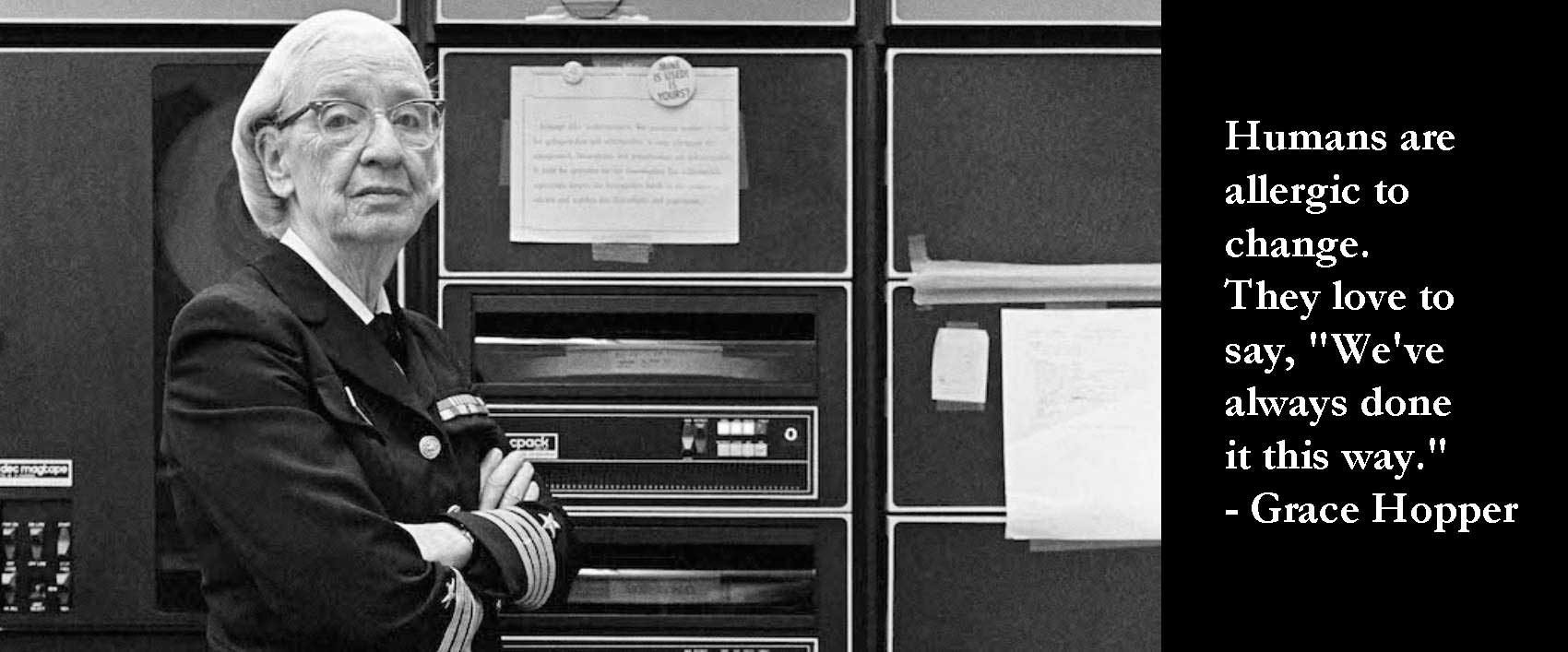
And if we do not change our “we’ve always done it this way” mindset, then we are simply going to repeat the mistakes of the past. Others are changing, so why aren’t we?

In today’s post, we will consider one possible alternative approach.


I hope you know who Grace Hopper is – if not, click here. Source: Mentalfloss

Why is ‘the drug‘ the focus of a clinical trial?

The way we clinically test drugs makes absolutely no sense when you actually stop and think about it.

Other medical disciplines (such as oncology) have woken up to this fact, and it is time for the field of Parkinson’s research to do this same.

Let me explain:

Continue reading “Making. It. Personal.”

Something is interesting in the state of Denmark


Gaucher disease is a genetic disorder caused by the reduced activity of an enzyme, glucocerebrosidase. This enzyme is produced by a region of DNA (or a gene) called GBA – the same GBA gene associated with a particular form of Parkinson’s.

Recently, a Danish company has been testing a new drug that could benefit people with Gaucher disease.

It is only natural to ask the question: Could this drug also benefit GBA-associated Parkinson’s?

In today’s post, we will discuss what Gaucher disease is, how this experimental drug works, and why it would be interesting to test it in Parkinson’s.


Will Shakespeare. Source: Ppolskieradio

The title of this post is a play on words from one of the many famous lines of William Shakespeare’s play, Hamlet.

The original line – delivered by Marcellus (a Danish army sentinel) after the ghost of the dead king appears – reads: If the authorities knew about the problems and chose not to prevent them, then clearly something is rotten in the state of Denmark.

(Act 1, Scene 4)

The title of this post, however, is: Something is interesting in the state of Denmark

This slight change was made because certain Danish authorities know about the problem and they are trying to prevent it. The ‘authorities’ in this situation are some research scientists at a biotech company in Denmark, called Orphazyme.

And the problem is Parkinson’s?

No, the problem is Gaucher disease.

Huh? What is Gaucher disease?

Continue reading “Something is interesting in the state of Denmark”

“What’s the evolutionary advantage of Parkinson’s?”

Each year King’s College London holds the Edmond J. Safra Memorial Lecture. It is a public event – exploring cutting-edge research on Parkinson’s – held in honour of the late philanthropist and financier, Mr Edmond J Safra, .

I was lucky enough to attend this year’s event (entitled A vision of tomorrow: How can technology improve diagnosis and treatment for Parkinson’s patients?). It highlighted the fantastic research being carried out by Professor Marios Politis and his team.

During the Q&A session of the event though, a question was asked from the audience regarding what the evolutionary advantage of Parkinson’s might be. The question drew a polite chuckle from the audience.

But the question wasn’t actually as silly as some might think.

In today’s post we look at some evidence suggesting an evolutionary advantage involving Parkinson’s.


King’s College London Chapel. Source: Schoolapply

Despite the impressive name, King’s College London is not one of the grand old universities of England.

Named after its patron King George IV (1762-1830), the university was only founded in 1829 (compare this with 1096 for Oxford and 1209 for Cambridge; even silly little universities like Harvard date back further – 1636). The university is spread over five separate campuses, geographically spread across London. But if you ever get the chance to visit the main Strand campus, ask for the chapel and take a moment to have a look – it is very impressive (the image above really doesn’t do it justice).

As I mentioned in the intro, each year King’s College London holds the Edmond J. Safra Memorial Lecture. It is an event that is open to the public and it involves a discussion regarding innovative new research on Parkinson’s. The evening is held in honour of the late Mr Edmond J Safra.

Edmond J. Safra. Source: Edmondjsafrafoundation

This year, Professor Marios Politis and members of his research group were presenting lectures on “How can technology improve diagnosis and treatment for Parkinson’s”. The lectures were very interesting, but the reason I am writing about it here is because during the question and answer session at the end of the lectures, the following question was asked:

“What’s the evolutionary advantage of Parkinson’s?”

Given the debilitating features of the condition, the audience was naturally amused by the question. And there was most likely several people present who would have thought the idea of any evolutionary advantage to Parkinson’s a ridiculous concept.

But it’s not.

And there is actually research to suggest that something evolutionary could be happening with Parkinson’s.

?!?!? What do you mean?

Continue reading ““What’s the evolutionary advantage of Parkinson’s?””

Happy birthday: Silverstein Foundation

Over the last 12 months, the Silverstein Foundation has quickly established itself as a major focused force in the fight against Parkinson’s.

And when I say ‘focused’, I mean ‘focused’ –  the foundation is “actively pursues and invests in cutting edge research with the goal of discovering new therapies for the treatment of Parkinson’s Disease in glucocerebrosidase (GBA) mutation carriers”.

But the output of this effort may well have major benefits for the entire Parkinson’s community.

In today’s post, we will discuss what GBA is, how it functions inside cells, its association with Parkinson’s, and what all of this GBA focused research being funded by the Silverstein Foundation could mean for the Parkinson’s community.


Jonathan Silverstein. Source: Forbes

This is Jonathan Silverstein.

He’s a dude.

He is also a General Partner and a Co-Head of Global Private Equity at OrbiMed – the world’s largest fully dedicated healthcare fund manager. During his time at OrbiMed, the company has invested in healthcare companies that have been involved with over 60 FDA approved products.

In February 2017, he was diagnosed with Parkinson’s disease at just 49 years of age.

Rather than simply accepting this diagnosis, however, Mr Silverstein decided to apply the skills that he has built over a long and successful career in funding biotech technology, and in March 2017, he and his wife, Natalie, set up the Silverstein Foundation.

They raised $6 million from donors and then provided another $10 million of their own money to fund the endeavour, which has funded a dozen research projects and started a new company called Prevail Therapeutics (we’ll come back to this shortly).

Source: Businesswire

The foundation has just one mission: “to actively pursue and invest in cutting edge research with the goal of discovering new therapies for the treatment of Parkinson’s Disease in GBA mutation carriers”

And it seeks to address this by achieving three goals:

  1. to find a way to halt the progression of Parkinson’s with GBA.
  2. to identify regenerative approaches to replace the damaged/lost cells
  3. to find preventative measures

What is ‘GBA’?

Continue reading “Happy birthday: Silverstein Foundation”

One black sheep per week

Each time a cell divides, the DNA inside the resulting pair of cells has changed slightly. These small alterations – known as genetic mutations – provide a method by which an organism can randomly determine traits that may be beneficial.

New research indicates that in certain parts of the brain, post-mitotic (non-dividing) cells are taking on as many as one mutation per week across the span of our lives. This results in thousands of genetic variations accumulating in each cell by the time we eventually pass away in old age.

In today’s post we will review new research and consider what this gradual build up of genetic mutations could mean for our understanding of neurodegenerative conditions, like Parkinson’s.


Source: Pexels

Coming from the back waters of third world New Zealand, you will understand that sheep hold a very special place in my heart.

I grew up a simple country lad, and each year I had a pet lamb that I would raise and train to do silly tricks in the hope of impressing the judges at the annual agricultural/farm day at school. In addition to instilling me with a crazy fanaticism for the sport (read: religion) of rugby, my parents figured that having a pet lamb each year would teach me a sense of responsibility and a sort of discipline.

I’m not really sure how this practice has influenced my later life, but I certainly do have very fond memories of those early years (the first lamb was named ‘Woolly’, the 2nd lamb was named ‘Woolly2’, the third lamb was actually a goat – bad lambing season – which I named ‘Billy the kid’, the 4th lamb was named ‘MacGyver’,…).

Lots of happy memories.

Source: Countryliving

But as I grew into the teenage years, there was one thing that really bothered me with regards to my pet lambs.

It was that whole negative stigma associated with the ‘black sheep’.

Why, I would wonder, was it the ‘black sheep of the family’ that was the bad kid? And why was the one black sheep in every flock considered the worst of the bunch?

Source: theodysseyonline

Why was this association applied to sheep?

Why not dogs? Or cows? Why do we pick on sheep?

Continue reading “One black sheep per week”

Trazodo or Trazodon’t?

“Repurposing” in medicine refers to taking drugs that are already approved for the treatment of one condition and testing them to see if they are safe and effective in treating other diseases. Given that these clinically available drugs have already been shown to be safe in humans, repurposing represents a method of rapidly acquiring new potential therapeutics for a particular condition. 

The antidepressant, Trazodone, has recently been proposed for repurposing to neurodegenerative conditions, such as Parkinson’s. 

In today’s post we will look at what Trazodone is, why it is being considered for repurposing, and we will review the results of a new primate study that suggests it may not be ideal for the task.


Opinions. Everyone has them. Source: Creativereview

I am regularly asked by readers to give an opinion on specific drugs and supplements.

And I usually cut and paste in my standard response: I can not answer these sorts of questions as I am just a research scientist not a clinician; and even if I was a clinician, it would be unethical for me to comment as I have no idea of your medical history.

In many of these cases, there simply isn’t much proof that the drug/supplement has any effect in Parkinson’s, so it is hard to provide any kind of “opinion”. But even if there was proof, I don’t like to give opinions.

Eleven out of every ten opinions are usually wrong (except in the head of the beholder) so why would my opinion be any better? And each individual is so different, why would one particular drug/supplement work the same for everyone?

In offering an answer to “my opinion” questions, I prefer to stick to the “Just the facts, ma’am” approach and I focus solely on the research evidence that we have available (Useless pub quiz fact: this catchphrase “Just the facts, ma’am” is often credited to Detective Joe Friday from the TV series Dragnet, and yet he never actually said it during any episode! – Source).

Detective Joe Friday. Source: Wikipedia

Now, having said all of that, there is one drug in particularly that is a regular topic of inquiry (literally, not a week goes by without someone asking about): an antidepressant called Trazodone.

What is Trazodone?

Continue reading “Trazodo or Trazodon’t?”

When the zombies are all in your head

In your brain there are different types of cells.

Firstly there are the neurons (the prima donnas that we believe do most of the communication of information). Next there are the microglia cells, which act as the first and main line of active immune defence in the brain. There are also oligodendrocyte, that wrap protective sheets around the branches of the neurons and help them to pass signals.

And then there are astrocytes.

These are the ‘helper cells’ which maintain a comfortable environment for the neurons and aid them in their task. Recently, researchers in California reported an curious observation in the Parkinsonian brain: some astrocytes have entered an altered ‘zombie’-like state. And this might not be such a good thing.

In today’s post, we’ll review the research and discuss what it could mean – if independently replicated – for the Parkinson’s community.


Zombies. Source: wallpapersbrowse

I don’t understand the current fascination with zombies.

There are books, movies, television shows, video games. All dealing with the popular idea of dead bodies wandering the Earth terrifying people. But why the fascination? Why does this idea have such appeal to a wide portion of the populous?

I just don’t get it.

Even more of a mystery, however, is where the modern idea of the ‘zombie’ actually came from originally.

You see, no one really knows.

Huh? What do you mean?

Some people believe that the word ‘zombie’ is derived from West African languages – ndzumbi means ‘corpse’ in the Mitsogo language of Gabon, and nzambi means the ‘spirit of a dead person’ in the Kongo language. But how did a word from the African continent become embedded in our psyche?

Others associate the idea of a zombie with Haitian slaves in the 1700s who believed that dying would let them return back to lan guinée (African Guinea) in a kind of afterlife. But apparently that freedom did not apply to situations of suicide. Rather, those who took their own life would be condemned to walk the Hispaniola plantations for eternity as an undead slave. Perhaps this was the starting point for the ‘zombie’.

More recently the word ‘zonbi’ (not a typo) appeared in the Louisiana Creole and the Haitian Creole and represented a person who is killed and was then brought to life without speech or free will.

Delightful stuff for the start of a post on Parkinson’s research, huh?

But we’re going somewhere with this.

Continue reading “When the zombies are all in your head”

Monthly Research Review – January 2018

Today’s (experimental) post provides something new – an overview of some of the major bits of Parkinson’s-related research that were made available in January 2018.


In January of 2018, the world was rocked by news that New Zealand had become the 11th country in the world to put a rocket into orbit (no really, I’m serious. Not kidding here – Click here to read more). Firmly cementing their place in the rankings of world superpowers. In addition, they became only the second country to have a prime minister get pregnant during their term in office (in this case just 3 months into her term in office – Click here to read more about this).

A happy New Zealand prime minister Jacinda Ardine

In major research news, NASA and NOAA announced that 2017 was the hottest year on record globally (without an El Niño), and among the top three hottest years overall (Click here for more on this), and scientists in China reported in the journal Cell that they had created the first monkey clones, named Zhong Zhong and Hua Hua (Click here for that news)

Zhong Zhong the cute little clone. Source: BBC

Continue reading “Monthly Research Review – January 2018”