Plan B: Itchy velvet beans – Mucuna pruriens

Mucuna-Pruriens-Mood-and-Hormone-Velvet-Bean

The motor features of Parkinson’s disease can be managed with treatments that replace the chemical dopamine in the brain. 

While there are many medically approved dopamine replacement drugs available for people affected by Parkinson’s disease, there also are more natural sources.

In today’s post we will look at the science and discuss the research supporting one of the most potent natural source for dopamine replacement treatment: Mucuna pruriens


Plan.B-oneway

Source: Yourtimeladies

When asked by colleagues and friends what is my ‘plan B’ (that is, if the career in academia does not play out – which is highly probable I might add – Click here to read more about the disastrous state of biomedical research careers), I answer that I have often considered throwing it all in and setting up a not-for-profit, non-governmental organisation to grow plantations of a tropical legume in strategic places around the world, which would provide the third-world with a cheap source of levodopa – the main treatment in the fight against Parkinson’s disease.

Mucuna_pruriens_08

Plan B: A legume plantation. Source: Tropicalforages

The response to my answer is generally one of silent wonder – that is: me silently wondering if they think I’m crazy, and them silently wondering what on earth I’m talking about.

As romantic as the concept sounds, there is an element of truth to my Plan B idea.

I have read many news stories and journal articles about the lack of treatment options for those people with Parkinson’s disease living in the developing world.

South-Africa-hospital

Hospital facilities in the rural Africa. Source: ParkinsonsLife

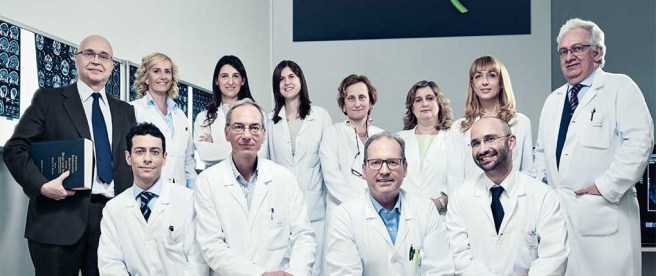
Some of the research articles on this topic provide a terribly stark image of the contrast between people suffering from Parkinson’s disease in the developing world versus the modernised world. A fantastic example of this research is the work being done by the dedicated researchers at the Parkinson Institute in Milan (Italy), who have been conducting the “Parkinson’s disease in Africa collaboration project”.
5x1000.banner-5x1000-2017-medicigk-is-331

The researchers at the Parkinson Institute in Milan. Source: Parkinson Institute 

The project is an assessment of the socio-demographic, epidemiological, clinical features and genetic causes of Parkinson’s disease in people attending the neurology out-patients clinic of the Korle Bu Teaching and Comboni hospitals. Their work has resulted in several really interesting research reports, such as this one:

Ghana
Title: The modern pre-levodopa era of Parkinson’s disease: insights into motor complications from sub-Saharan Africa.
Authors: Cilia R, Akpalu A, Sarfo FS, Cham M, Amboni M, Cereda E, Fabbri M, Adjei P, Akassi J, Bonetti A, Pezzoli G.
Journal: Brain. 2014 Oct;137(Pt 10):2731-42.
PMID: 25034897          (This article is OPEN ACCESS if you would like to read it)

In this study, the researchers collected data in Ghana between December 2008 and November 2012, and each subject was followed-up for at least 6 months after the initiation of Levodopa therapy. In total, 91 Ghanaians were diagnosed with Parkinson’s disease (58 males, average age at onset 60 ± 11 years), and they were compared to 2282 Italian people with Parkinson’s disease who were recruited during the same period. In long-term follow up, 32 Ghanaians with Parkinson’s disease were assessed (with an average follow period of 2.6 years).

There are some interesting details in the results of the study, such as:

  • Although Levodopa therapy was generally delayed – due to availability and affordability – in Ghana (average disease duration before Levodopa treatment was 4.2 years in Ghana versus just 2.4 years in Italy), the actual disease duration – as determined by the occurrence of motor fluctuations and the onset of dyskinesias – was similar in the two populations.

Ghana2

Source: PMC

  • The motor fluctuations were similar in the two populations, with a slightly lower risk of dyskinesias in Ghanaians.
  • Levodopa daily doses were higher in Italians, but this difference was no longer significant after adjusting for body weight.
  • Ghanaian Parkinson’s sufferers who developed dyskinesias were younger at onset than those who did not.

Reading these sorts of research reports, I am often left baffled by the modern business world’s approach to medicine. I am also left wondering how an individual’s experience of Parkinson’s disease in some of these developing nations would be improved if a cheap alternative to the dopamine replacement therapies was available.

Are any cheap alternatives available?

Continue reading “Plan B: Itchy velvet beans – Mucuna pruriens”

AAV-PHP.B: The future is apparently now

In addition to looking at current Parkinson’s disease research on this website, I like to look at where technological advances are taking us with regards to future therapies.

In July of this year, I wrote about a new class of engineered viruses that could potentially allow us to treat conditions like Parkinson’s disease using a non-invasive, gene therapy approach (Click here to read that post). At the time I considered this technology way off at some point in the distant future. Blue sky research. “Let’s wait and see” – sort of thing.

So imagine my surprise when an Italian research group last weekend published a new research report in which they used this futurist technology to correct a mouse model of Parkinson’s disease. Suddenly the distant future is feeling not so ‘distant’.

In today’s post we will review and discuss the results, and look at what happens next.


Technological progress – looking inside the brain. Source: Digitial Trends

I have said several times in the past that the pace of Parkinson’s disease research at the moment is overwhelming.

So much is happening so quickly that it is quite simply difficult to keep up. Not just here on the blog, but also with regards to the ever increasing number of research articles in the “need to read” pile on my desk. It’s mad. It’s crazy. Just as I manage to digest something new from one area of research, two or three other publications pop up in different areas.

But it is the shear speed with which things are moving now in the field of Parkinson’s research that is really mind boggling!

Source: Pinterest

Take for example the case of Squalamine.

In February of this year, researchers published an article outlining how a drug derived from the spiny dogfish could completely suppress the toxic effect of the Parkinson’s associated protein Alpha Synuclein (Click here to read that post).

The humble dogfish. Source: Discovery

And then in May (JUST 3 MONTHS LATER!!!), a biotech company called Enterin Inc. announced that they had just enrolled their first patient in the RASMET study: a Phase 1/2a randomised, controlled, multi-center clinical study evaluating a synthetic version of squalamine (called MSI-1436) in people with Parkinson’s disease. The study will enrol 50 patients over a 9-to-12-month period (Click here for the press release).

Source: Onemednews

Wow! That is fast.

Yeah, I thought so too, but then this last weekend a group in Italy published new research that completely changed my ideas on the meaning of the word ‘fast’. Regular readers will recall that in July I discussed amazing new technology that may one day allow us to inject a virus into a person’s arm and then that virus will make it’s way up to the brain and only infect the cells that we want to have a treatment delivered to. This represents non-invasive (as no surgery is required), gene therapy (correcting a medical condition with the delivery of DNA rather than medication). This new study used the same virus we discussed in July.

Continue reading “AAV-PHP.B: The future is apparently now”

O’mice an’ men – gang aft agley

This week a group of scientists have published an article which indicates differences between mice and human beings, calling into question the use of these mice in Parkinson’s disease research.

The results could explain way mice do not get Parkinson’s disease, and they may also partly explain why humans do.

In today’s post we will outline the new research, discuss the results, and look at whether Levodopa treatment may (or may not) be a problem.


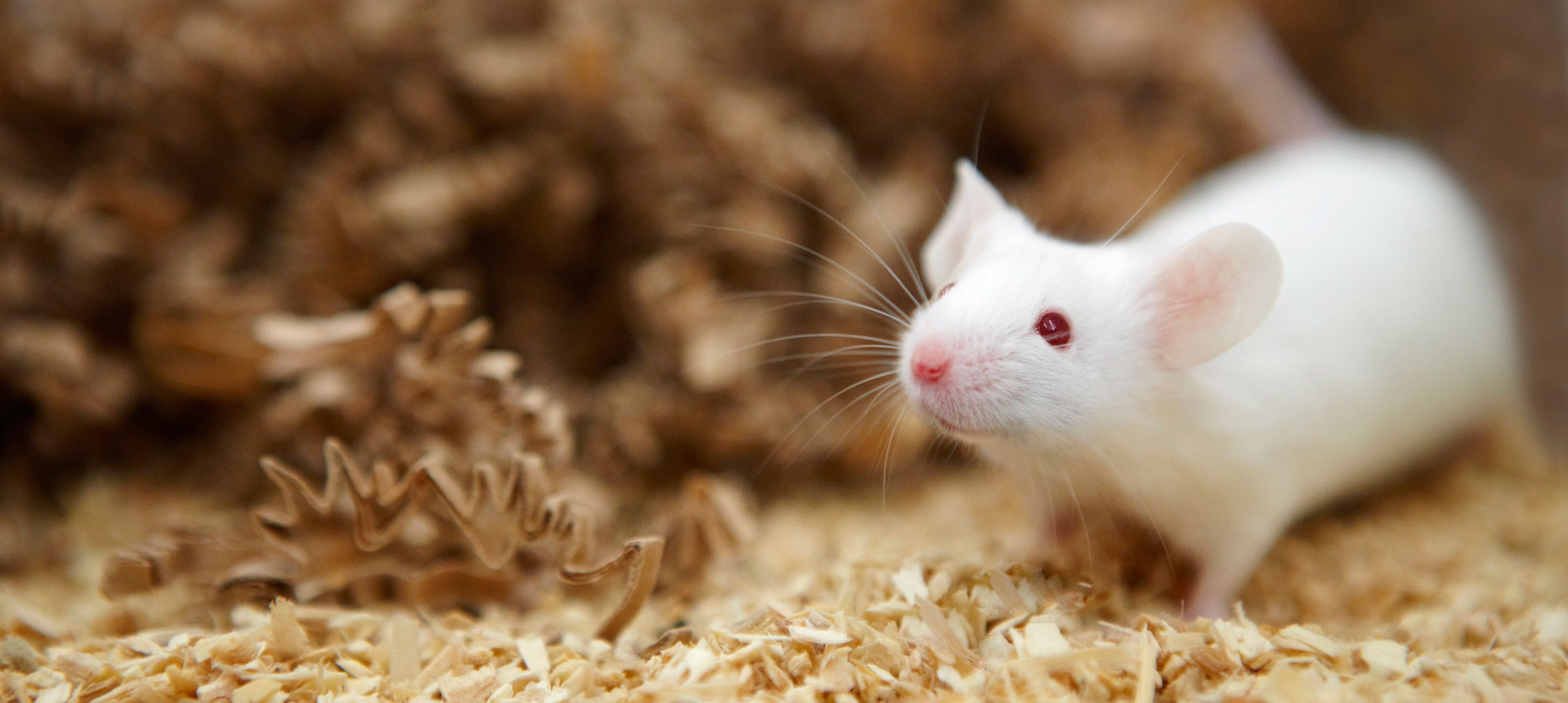
The humble lab mouse. Source: PBS

Much of our understanding of modern biology is derived from the “lower organisms”.

From yeast to snails (there is a post coming shortly on a snail model of Parkinson’s disease – I kid you not) and from flies to mice, a great deal of what we know about basic biology comes from experimentation on these creatures. So much in fact that many of our current ideas about neurodegenerative diseases result from modelling those conditions in these creatures.

Now say what you like about the ethics and morality of this approach, these organisms have been useful until now. And I say ‘until now’ because an interesting research report was released this week which may call into question much of the knowledge we have from the modelling of Parkinson’s disease is these creatures.

You see, here’s the thing: Flies don’t naturally develop Parkinson’s disease.

Nor do mice. Or snails.

Or yeast for that matter.

So we are forcing a very un-natural state upon the biology of these creatures and then studying the response/effect. Which could be giving us strange results that don’t necessarily apply to human beings. And this may explain our long history of failed clinical trials.

We work with the best tools we have, but it those tools are flawed…

What did the new research report find?

This is the study:


Title: Dopamine oxidation mediates mitochondrial and lysosomal dysfunction in Parkinson’s disease
Authors: Burbulla LF, Song P, Mazzulli JR, Zampese E, Wong YC, Jeon S, Santos DP, Blanz J, Obermaier CD, Strojny C, Savas JN, Kiskinis E, Zhuang X, Krüger R, Surmeier DJ, Krainc D
Journal: Science, 07 Sept 2017 – Early online publication
PMID: 28882997

The researchers who conducted this study began by growing dopamine neurons – a type of cell badly affected by Parkinson’s disease – from induced pluripotent stem (IPS) cells.

What are induced pluripotent stem cells?

Continue reading “O’mice an’ men – gang aft agley”

QUATS going on?!?

BE WARNED: THIS POST MIGHT UPSET SOME READERS

A recently published research report has caused a bit of a fuss in the media, and I have been contacted by a lot of concerned readers regarding this particular study.

It deals with some chemicals – which can be found in everyday products – that may be having a negative effect on biological processes that are related to Parkinson’s disease – specifically, the normal functioning of the mitochondria (the power stations of each cell).

In today’s post we will discuss the new research, what the chemicals do, and whether the Parkinson’s community should be concerned.


Source: Sacramentodentistry

Toothpaste.

It is something that most of us take completely for granted in the modern world. A product that sits in our bathroom, by the sink or on a shelf, and 2-3 times per day we stick some of it in our mouth and brush it around a bit. Given the well ingrained habit of repetitively ingesting of the stuff, we have little trouble with the idea of switching brands or trying new variations (“Oooh look, this one will make your teeth whiter. Let’s try it”).

I mean, come on – it’s just toothpaste. It’s safe, right?

It probably won’t surprise many of you to learn that the composition of toothpaste has changed quite a bit over the years, but what might amaze you is just how many years are involved with that statement: 

Egyptian toothbrush. Source: Nathanpaarth

The Egyptians recognised the importance of looking after one’s teeth at a very early stage. Apparently they had a lot of trouble with their teeth because their bread had grit in it which wore away their enamel. As far back as 5000BC, they had a form of toothpaste that they used to clean their teeth. It was a mix of powdered ashes of ox hooves, myrrh, powdered and burnt eggshells, and pumice (Source: Wikipedia). The Greeks, followed by the Romans, improved on the recipes (by adding abrasive ingredients such as crushed bones and oyster shells – delightful, huh?), but it wasn’t until after World War I that the modern day pre-mixed toothpastes became popular.

The cavity fighting chemical, Fluoride, was first added to toothpastes in the 1890s, and in 1908 Newell Sill Jenkins (an American dentist) invented the first toothpaste that contained disinfectants. It was called Kolynos (from the Greek words Kolyo nosos (κωλύω νόσος), meaning “disease prevention”). 

Source: Flickr

Following the advent of Kolynos, most toothpaste companies added antiseptic and disinfectant agents to improve the quality and effectiveness of their product. Being offered a tooth cleaning product with magical antibiotic properties seemed to reassure consumers that they were buying something that might actually work. And this led to more and more chemicals being added to toothpaste. Such additions included chemical like triclosan, cetylpyridinium chloride and benzalkonium chloride.

These chemicals are safe though…right?

Continue reading “QUATS going on?!?”

Hey DJ, I-so-sit-rate!

The title of this post probably reads like the mad, drug-fuelled scream of a drunk Saturday night party animal, but the elements of it may be VERY important for a particular kind of Parkinson’s disease.

Mutations in a gene called DJ-1 can cause an early onset form of Parkinson’s disease. The protein of DJ-1 plays an important role in how cells handle oxidative stress – or the increase in damaging free radicals (explained below).

This week researchers announced that they have found an interesting new therapeutic target for people with DJ-1 associated Parkinson’s disease: A chemical called Isocitrate.

In this post, we will discuss what DJ-1 is involved with Parkinson’s disease, how isocitrate helps the situation, and what the results of new research mean for future therapeutic strategies.


original-26772-1364707371-8

Source: Listchallenge

In 2017, we are not only observing the 200 year anniversary of the first description of Parkinson’s disease (by one Mr James Parkinson), but also the 20th anniversary of the discovery of the first genetic variation associated with the condition (Click here to read more about that). Our understanding of the genetics of Parkinson’s disease since 1997, has revolutionised the way we look at Parkinson’s disease and opened new doors that have aided us in our understanding.

During the last 20 years, we have identified numerous sections of DNA (these regions are called genes) where small errors in the genetic coding (mutations or variants) can result in an increased risk of developing Parkinson’s disease. As the graph below indicates, mutations in some of these genes are very rare, but infer a very high risk, while others are quite common but have a low risk of Parkinson’s disease.

The genetics of PD. Source: Journal of Parkinson’s disease

Some of the genetic mutation need to be provided by both the parents for Parkinson’s to develop (an ‘autosomal recessive‘ mutation – the yellow circles in the graph above); while in other cases the genetic variant needs only to be provided by one of the parents (an ‘autosomal dominant’ mutation – the blue circles). Many of the genetic mutations are very common and simply considered a region of increased risk (green circles).

Importantly, all of these genes provide the instructions for making a protein – which are the functional parts in a cell. And each of these proteins have specific roles in biological processes. These functions tell us a little bit about how Parkinson’s disease may be working. Each of them is a piece of the jigsaw puzzle that we are trying to finish. As you can see in the image below, many of the genes mentioned in the graph above give rise to proteins that are involved in different parts of the process of autophagy – or the waste disposal system of the cell. You may notice that some proteins, like SCNA (otherwise known as alpha synuclein), are involved in multiple steps in this process.

The process of autophagy. Source: Nature

In today’s post we are going to look at new research regarding just one of these genes/proteins. It is called DJ-1, also known as Parkinson disease protein 7 (or PARK7).

What is DJ-1?

Continue reading “Hey DJ, I-so-sit-rate!”

Mdivi-1: the small molecule that could?

Mitochondrial division inhibitor-1 (mdivi-1) is a small molecule drug that is demonstrating very impressive effects in preclinical models of Parkinson’s disease. With further research it could represent a potential future therapy for people with Parkinson’s disease, particularly those with genetic mutations affecting the mitochondria in their cells. 

What are mitochondria?

In this post, we will explain what mitochondria are, how they may be involved in Parkinson’s disease, and we will discuss what the results of new research mean for future therapeutic strategies.


Mitochondria are fascinating.

Utterly. Utterly. Fascinating.

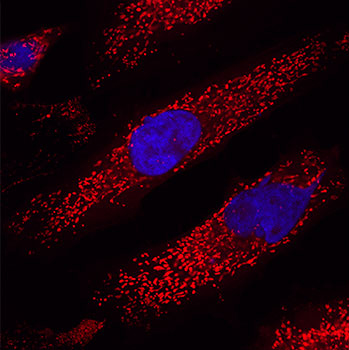
On the most basic level, Mitochondria (mitochondrion, singular; from the Greek words mitos (thread) and chondros (granule)) are just tiny little bean-shaped structures within the cells in our body, and their primary function is to act as the power stations. They supply the bulk of energy that cells require to keep the lights on. This chemical form of energy produced by the mitochondria is called adenosine triphosphate (or ATP). Lots of mitochondria are required in each cell to help keep the cell alive (as is shown in the image below, which is showing just the mitochondria (red) and the nucleus (blue) of several cells).

Lots of mitochondria (red) inside cells (nucleus in blue). Source: Clonetech

That’s the basic stuff – the general definition you will find in most text books on biology.

But let me ask you this:

How on earth did mitochondria come to be inside each cell and playing such a fundamental role?

I don’t know. Are you going to tell me?

No.

Why not?

Because we simply don’t know.

But understand this: Mitochondria are intruders.

Continue reading “Mdivi-1: the small molecule that could?”

Self monitoring: there’s something in your eye

Self tracking/monitoring has become a popular habit for the general population with the introduction of products like Fitbit and Apple watch.

It is particularly useful for groups like the Parkinson’s community though, who are tired of having just one hour per year of assessments with their neurologist.

In today’s post, we will look at some new tracking/monitoring technologies that are being developed that could have important implications for not only how we assess Parkinson’s disease, but also for how we treat it.


Homo deus. Source: RealClearLife

I have recently finished reading ‘Homo Deus‘ by Yuval Noah Harari – the excellent follow-up to his previous book ‘Sapiens‘ (which is an absolute MUST READ!). The more recent book provides an utterly fascinating explanation of how we have come to be where we will be in the future (if that makes any sense).

In the final few chapters, Harari discusses many of the technologies that are currently under development which will change the world we live in (with a lot of interesting and cautionary sections on artificial intelligence – the machines that will know vastly more about us than we know about ourselves).

Of particular interest in this part of the book was a section on the Google-Novartis smart lens.

What is the Google-Novartis smart lens?

In 2014, a company called Alcon, which is a wholly owned subsidiary of Novartis formed a collaboration with the Google offshoot Verily Life Sciences that would focus on developing smart lens.

The initial project is rather ambitious: develop and take to the clinic a glucose-sensing contact lens for people with diabetes. The idea has been particularly championed by Google founder Sergey Brin (a prominent figure within the Parkinson’s community with his significant contributions to Parkinson’s research each year).

People with diabetes have to keep pricking their finger over the course of a day in order to check the levels of insulin in their blood. A less laborious approach would be welcomed by the diabetic world (an estimated 415 million people living with diabetes in the world).

This is what the lens may eventually look like:

Continue reading “Self monitoring: there’s something in your eye”

Dementia with Lewy Bodies: New recommendations

jnnp-2015-January-86-1-50-F1.large

Last year – two years after actor Robin Williams died – his wife Susan Schneider Williams wrote an essay entitled The terrorist inside my husband’s head, published in the journal Neurology.

It is a heartfelt/heartbreaking insight into the actor’s final years. It also highlights the plight of many who are diagnosed with Parkinson’s disease, but experience an array of additional symptoms that leave them feeling that something else is actually wrong.

Today’s post is all about Dementia with Lewy bodies (or DLB). In particular, we will review the latest refinements and recommendations of the Dementia with Lewy Bodies Consortium, regarding the clinical and pathologic diagnosis of DLB.


robin-williams

Robin Williams. Source: Quotesgram

On the 28th May of 2014, the actor Robin Williams was diagnosed with Parkinson’s disease.

At the time, he had a slight tremor in his left hand, a slow shuffling gait and mask-like face – some of the classical features of Parkinson’s disease.

According to his wife, the diagnosis gave the symptoms Robin had been experiencing a name. And this brought her a sense of relief and comfort. Now they could do something about the problem. Better to know what you are dealing with rather than be left unsure and asking questions.

But Mr Williams sensed that something else was wrong, and he was left unsure and asking questions. While filming the movie Night at the Museum 3, Williams experienced panic attacks and regularly forgot his lines. He kept asking the doctors “Do I have Alzheimer’s? Dementia? Am I schizophrenic?”

Williams took his own life on the 11th August 2014, and the world mourned the tragic loss of a uniquely talented performer.

Source: WSJ

When the autopsy report came back from the coroner, however, it indicated that the actor had been misdiagnosed.

He didn’t have Parkinson’s disease.

What he actually had was Dementia with Lewy bodies (or DLB).

What is Dementia with Lewy bodies?

Continue reading “Dementia with Lewy Bodies: New recommendations”

DPP-4: Not a Star Wars character

Banner

Dipeptidyl peptidase-4 (or DPP-4) is an enzyme that breaks down the protein (GLP-1) that stimulates insulin release in your body. 

Inhibitors of DPP-4 are used in the treatment of Type 2 diabetes, because they help increase insulin levels in the body.

Recently some Swedish researchers noticed something curious about DPP-4 inhibitors: They appear to reduce the risk of developing Parkinson’s disease.

In today’s post, we will review what DPP-4 inhibitors do and look at how this could be reducing the risk of Parkinson’s disease.


januvia

Sitagliptin. Source: Diabetesmedicine

Last year an interesting research report about a class of medications that could possibly reduce the risk of developing Parkinson’s disease was published in the journal Movement disorders:

SWeds

Title: Reduced incidence of Parkinson’s disease after dipeptidyl peptidase-4 inhibitors-A nationwide case-control study.
Authors: Svenningsson P, Wirdefeldt K, Yin L, Fang F, Markaki I, Efendic S, Ludvigsson JF.
Journal: Movement Disorders 2016 Jul 19.
PMID: 27431803

In this study, the investigators used the Swedish Patient Register, to find the medical records of 980 people who were diagnosed with Parkinson’s disease but also had type 2 diabetes. Importantly, all of the subjects had been treated with Type 2 diabetes medication for at least 6 months prior to the date of Parkinson’s being diagnosed.

For comparative sake, they selected 5 controls (non-Parkinsonian) with Type 2 diabetes (n = 4,900) for each of their Parkinsonian+diabetes subjects. They next looked at whether GLP-1R agonists (such as Exenatide), Dipeptidyl peptidase-4 (or DPP-4) inhibitors, or any other oral Type 2 diabetic medication can influence the incidence of Parkinson’s disease.

Now, if all things are considered equal, then when looking at each diabetes medication there should be 1 person in the Parkinson’s disease + Type 2 diabetes for every 5 people in the Type 2 diabetes control group taking each medication right? That is because there are almost 1000 people in the first group and 5000 in the second group.

But this is not what the researchers found.

Continue reading “DPP-4: Not a Star Wars character”

Exenatide: One step closer to joblessness!

bydureon

The title of today’s post is written in jest – my job as a researcher scientist is to find a cure for Parkinson’s disease…which will ultimately make my job redundant! But all joking aside, today was a REALLY good day for the Parkinson’s community.

Last night (3rd August) at 23:30, a research report outlining the results of the Exenatide Phase II clinical trial for Parkinson’s disease was published on the Lancet website.

And the results of the study are good:while the motor symptoms of Parkinson’s disease subject taking the placebo drug proceeded to get worse over the study, the Exenatide treated individuals did not.

The study represents an important step forward for Parkinson’s disease research. In today’s post we will discuss what Exenatide is, what the results of the trial actually say, and where things go from here.


maxresdefault

Last night, the results of the Phase II clinical trial of Exenatide in Parkinson’s disease were published on the Lancet website. In the study, 62 people with Parkinson’s disease (average time since diagnosis was approximately 6 years) were randomly assigned to one of two groups, Exenatide or placebo (32 and 30 people, respectively). The participants were given their treatment once per week for 48 weeks (in addition to their usual medication) and then followed for another 12-weeks without Exenatide (or placebo) in what is called a ‘washout period’. Neither the participants nor the researchers knew who was receiving which treatment.

At the trial was completed (60 weeks post baseline), the off-medication motor scores (as measured by MDS-UPDRS) had improved by 1·0 points in the Exenatide group and worsened by 2·1 points in the placebo group, providing a statistically significant result (p=0·0318). As you can see in the graph below, placebo group increased their UPDRS motor score over time (indicating a worsening of motor symptoms), while Exenatide group (the blue bar) demonstrated improvements (or a lowering of motor score).

graph

Reduction in motor scores in Exenatide group. Source: Lancet

This is a tremendous result for Prof Thomas Foltynie and his team at University College London Institute of Neurology, and for the Michael J Fox Foundation for Parkinson’s Research who funded the trial. Not only do the results lay down the foundations for a novel range of future treatments for Parkinson’s disease, but they also validate the repurposing of clinically available drug for this condition.

In this post we will review what we know thus far. And to do that, let’s start at the very beginning with the obvious question:

So what is Exenatide?

Continue reading “Exenatide: One step closer to joblessness!”